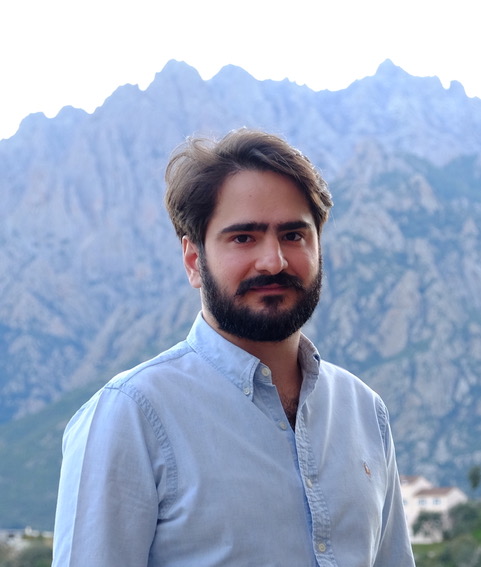
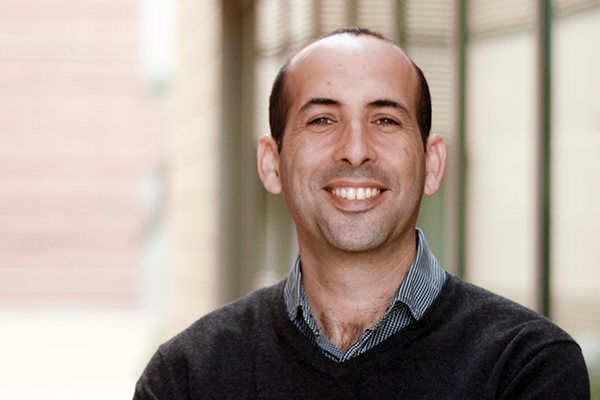
Xavier Puig is an Assistant Professor at the Universitat Politècnica de Catalunya (UPC) , affiliated with the Department of Statistics and Operations Research and the School of Mathematics and Statistics (FME). He is a member of the ADBD - Analysis of Complex Data for Business Decisions and GRBIO - Biostatistics and Bioinformatics Research Group . His research focuses on Bayesian data analysis , with applications in Epidemiology Ecology Public health Political science Industrial quality control Marketing analytics Recent publications reveal a strong trend in Bayesian spatiotemporal modeling for health data, alcohol-migraine interaction studies, and industrial error rate monitoring . His work combines methodological innovation with real-world applications across diverse sectors. Collaborations include researchers from biostatistics, clinical epidemiology, and industrial engineering. He has contributed to 44 indexed journal articles and participated in 49 congress presentations , with recent projects focusing on competitive research and non-competitive industrial collaborations in statistical modeling.
Cem Çakmaklı serves as Associate Professor of Economics at Durham University Business School and Koç University's College of Administrative Sciences and Economics (currently on leave). Previously, he held Assistant Professor positions at Koç University (2015-2023) and the University of Amsterdam (2011-2013), following an AXA Postdoctoral Fellowship at Koç University (2013-2015). His academic credentials include: Ph.D. in Economics/Econometrics, Tinbergen Institute, Erasmus University Rotterdam (2012) M.Phil in Economics (Cum Laude), Tinbergen Institute (2007) MA in Economics (with distinction), Istanbul Technical University (2005) B.Sc. in Management Engineering, Istanbul Technical University (2002) His research integrates advanced econometric methodologies with macroeconomic policy analysis, specializing in time series modeling for economic forecasting, pandemic impact assessment, and financial market dynamics. Recent work demonstrates innovative applications of Bayesian semiparametric techniques to yield curve modeling, GDP nowcasting, and vaccination economics, with particular emphasis on emerging market contexts. His methodological contributions bridge theoretical econometrics with real-world policy challenges. Publication trends reveal a strategic pivot toward pandemic economics since 2020, producing high-impact studies on global vaccination strategies and lockdown effectiveness, while maintaining core expertise in time-varying parameter models and financial econometrics. His work consistently addresses policy-relevant questions through rigorous quantitative frameworks. Scientific recognition includes: AXA Research Fund Post-Doctoral Fellowship (2013-2015) Fellowships at Economic Research Forum (ERF), Centre for Macroeconomic Policy, and Rimini Center for Economic Analysis (RCEA) Research funding comprises multiple TUBITAK grants totaling over 400,000 TL for projects on central bank credibility (2019-2020), large time-varying parameter VARs (2019-2020), and emerging market business cycle indicators (2017-2019). As an educator, he has developed and taught advanced econometrics curricula at PhD and graduate levels across multiple institutions, while his Capital magazine columns translate complex economic concepts for public discourse. His professional ecosystem integrates academic research through Ethos Economics Consulting with policy engagement via media commentary.
Charles Sprenger is a Professor of Economics at the California Institute of Technology (Caltech), affiliated with the Division of the Humanities and Social Sciences. He holds a B.A. from Stanford University (2002), an M.Sc. from University College London (2005), and a Ph.D. from the University of California, San Diego (2011). As Executive Officer for Caltech's HSS division (2022-2025), he oversees academic leadership and interdisciplinary research. B.A., Stanford University, 2002 M.Sc., University College London, 2005 Ph.D., University of California, San Diego, 2011 Professor Sprenger specializes in behavioral and experimental economics, focusing on intertemporal decision-making and choices under uncertainty. His research designs experiments to test deviations from standard economic models, with applications ranging from food consumption to vaccination programs and tax compliance. Key contributions include analyzing dynamic inconsistency, reference-dependent preferences, and the empirical validity of cumulative prospect theory. His recent publications examine procrastination in tax filing, risk preferences in high-stakes settings, and incentive customization for public health interventions. Awards include the Sloan Foundation Fellowship (2016-2018), and he serves on editorial boards for top journals like the American Economic Review and Journal of the European Economic Association. Sloan Foundation Fellowship (2016-2018) Sprenger is actively involved in Caltech's Ronald and Maxine Linde Institute of Economic and Management Sciences and the Center for Theoretical and Experimental Social Sciences (CTESS). He has co-authored foundational studies on time preferences, risk attitudes, and behavioral interventions in real-world contexts.
Dr. Edward Furman is a Professor in the Department of Mathematics and Statistics at York University, leading the Actuarial Science Program and serving as Founding Director of the Risk and Insurance Studies Centre (RISC). He holds a Master's (Distinction) and PhD (Summa Cum Laude) in Actuarial Science and Probability Theory from the University of Haifa, Israel. His research focuses on distribution theory, risk measurement, insurance pricing, and systemic risk modeling. Notable achievements include winning the Fortis Chair Best Paper Prize (K. U. Leuven) for collaborative work and serving as an external consultant for institutions like the Central Bureau of Statistics (Israel) and the Society of Actuaries (U.S.). Dr. Furman's work bridges theoretical and applied domains, with funded research by NSERC, the Society of Actuaries, and the Casualty Actuarial Society. He is a Fellow of the Science Leadership Program at the University of Toronto and an Associate Editor of the Journal of Statistical Distributions and Applications (Springer). His interdisciplinary RISC unit explores holistic approaches to insurance risk, integrating actuarial science with statistical and economic frameworks. Research Themes: Dependence modeling, risk capital allocation, systemic risk measurement, and inclusive insurance design. Consulting Expertise: Collaboration with public and private sector entities on actuarial and statistical challenges. Grants: Supported by NSERC, SOA, and CAS for projects on risk aggregation and insurance pricing models.
Joydeep Srivastava is the Robert L. Johnson Professor of Marketing and Supply Chain Management at Temple University's Fox School of Business. He previously held the Ralph J. Tyser Professorship at the University of Maryland and taught at the University of California, Berkeley. His research focuses on consumer and managerial decision-making, including pricing strategies, bargaining dynamics, and the psychology of money. He has contributed to leading journals such as Journal of Consumer Research and Marketing Science . Education: PhD in Business Administration from the University of Arizona (Tucson) and a Bachelor of Science in Geosciences from Presidency College, University of Calcutta, India. Research interests span partitioned pricing, payment mode effects, brand management, and consumer reactions to warranties and price-matching guarantees. He currently serves on the editorial board of the Journal of Consumer Psychology . Key contributions include studies on trade-in price evaluations, denomination effects, and the disparity between willingness-to-accept and willingness-to-pay. His work bridges theoretical insights with practical implications for marketing strategy and consumer policy.
Pierre-Alexandre Mattei is a research scientist at Inria, affiliated with the Maasai team in Sophia Antipolis and the J.A. Dieudonné Laboratory at Université Côte d'Azur. He holds a chair at the 3IA Côte d'Azur institute and has a strong academic background in applied mathematics, having earned his Ph.D. from Université Paris Descartes (now Université Paris Cité) under Charles Bouveyron and Pierre Latouche, followed by a postdoc at the IT University of Copenhagen with Jes Frellsen. Ph.D. in Applied Mathematics, Université Paris Descartes (2017) Postdoctoral Researcher, IT University of Copenhagen His research lies at the intersection of statistical machine learning, generative modeling, and uncertainty quantification, with a focus on hidden variables, missing data, and model interpretability. He has co-organized major workshops such as Artemiss, GenU, SophI.A Summit, and Statlearn, and teaches at the Generative Modeling Summer School (GeMSS). His recent work spans energy-based models, clustering, semi-supervised learning, and medical AI applications. The 15 most recent publications reflect a consistent trend in developing statistically principled methods for generative modeling, with emphasis on likelihood-based inference, missing data, and information-theoretic approaches to clustering and representation learning. His work frequently appears in top venues like NeurIPS, ICML, ICLR, and AISTATS, as well as in journals such as Statistics and Computing and JACC: Advances. Co-organizer, Generative Modeling Summer School (GeMSS) Co-organizer, Workshop on Generative Models and Uncertainty Quantification (GenU) Co-organizer, SophI.A Summit Co-organizer, Statlearn Mattei has advised several PhD students and postdocs, including Raphaël Razafindralambo, Hugo Senetaire, Louis Ohl, Federico Bergamin, and Hugo Schmutz, many of whom have gone on to research positions in Copenhagen, Grenoble, Linköping, and Marseille. He collaborates extensively with researchers across France and Denmark, particularly with Jes Frellsen, Frédéric Precioso, and Charles Bouveyron. He is actively involved in the development of open-source tools and libraries such as the GemClus Python library for discriminative clustering. He is a key member of the Maasai team at Inria Sophia Antipolis, which focuses on models and algorithms for artificial intelligence, and contributes to the broader 3IA Côte d'Azur initiative aimed at advancing AI research through interdisciplinary collaboration.
Dr. Eran Halperin is a Professor at the University of California, Los Angeles, affiliated with the School of Engineering (Computer Science Department) and the School of Medicine (Human Genetics, Computational Medicine, Anesthesiology). His research bridges computational biology, genomics, and machine learning, with a focus on developing statistical methods to analyze big medical data for disease prediction and treatment. Developed open-source software tools like FEAST, ReFACTor, and Bisque Recipients of prestigious awards including Rothschild Fellowship and ISCB Fellow (2021) Research Interests: Computational Genomics: Applying machine learning to genomic data (methylation, RNA expression) for disease understanding. Machine Learning in Medicine: Creating deep learning architectures for ophthalmology, anesthesiology, and acute care applications. Medical Data Science: Integrating electronic health records with genomic datasets for predictive modeling. Scientific Recognition: Rothschild Fellowship Technion-Juludan Research Prize Krill Prize in Science Elected ISCB Fellow (2021) Dr. Halperin's lab collaborates across disciplines, utilizing software platforms such as GLINT (methylation analysis) and MTV-LMM (microbiome prediction). His work has received funding from NIH, NSF, and international foundations.
Prof. Marco Caliendo is a Professor of Empirical Economics at the University of Potsdam and a faculty member of the Berlin School of Economics (BSoE). He holds a PhD from Goethe University Frankfurt and is a Research Fellow at IZA, DIW Berlin, and IAB Nuremberg. His research focuses on labor market policies, entrepreneurship, personality traits' economic impacts, and microeconometrics. Education: Bachelor/Master in Economics at University of Manchester and Goethe University Frankfurt PhD in Economics (April 2005), Goethe University Frankfurt Key Roles: Director of Research at IZA (2009–2011) Program Director for 'Evaluation of Labor Market Programs' at IZA (2011–2023) Speaker of the Center for Economic Policy Analysis (CEPA) His research interests include labor market program evaluations, self-employment dynamics, unemployment behavior, and the role of personality in economic decisions. He has led projects like 'Evaluation of Startchancen Program' and studies on minimum wage impacts. His work emphasizes policy relevance, with over 21,000 Google Scholar citations (h-index 54) and top global rankings in RePEc. Publications span journals such as Review of Economics and Statistics and Journal of Human Resources , focusing on labor market interventions, entrepreneurship, and behavioral economics. His recent work addresses pandemic effects on self-employed mental health, minimum wage reforms, and start-up subsidy outcomes. Prof. Caliendo advises PhD students through workshops (e.g., IZA Entrepreneurship Research) and collaborates with institutions like CEPA and PCQR. His lab coordinates research on human capital investments and policy evaluation.
Enrique Acosta is a demographer and Ramón y Cajal Fellow Research Scientist at the Centre d'Estudis Demogràfics (CED) in Barcelona, Spain, and a Guest Researcher at the Max Planck Institute for Demographic Research (MPIDR) in Rostock, Germany. He is affiliated with the Laboratory of Population Dynamics and Sustainable Well-Being at MPIDR and has been a member of the Technical Advisory Group of the UN Inter-agency Group for Child Mortality Estimation (IGME-TAG) since March 2023. Dr. Acosta specializes in analyzing mortality trends, epidemic and pandemic mortality, cohort and generational influences on mortality, and the drivers of behaviorally-driven causes of death. Methodologically, he has developed new techniques to study Age, Period, and Cohort (APC) effects on mortality and is an expert in measuring excess mortality. His research demonstrates sophisticated methodological approaches to demographic analysis, with particular emphasis on pandemic mortality measurement and international comparisons. His current research portfolio shows a strong focus on several key areas: demographic analysis of pandemic mortality (particularly related to COVID-19), international comparisons of mortality patterns, cohort-specific mortality trends (especially among baby boomers), and the development of methodological approaches for measuring and understanding mortality dynamics. His publications span high-impact journals including Nature, Science Advances, and Proceedings of the National Academy of Sciences. Ramón y Cajal Fellowship Dr. Acosta collaborates extensively with researchers across institutions and countries, as evidenced by his numerous co-authored publications. His work often involves large-scale demographic datasets and sophisticated statistical methods to address important population health questions. He maintains an active presence in the research community through platforms like GitHub (under the username kikeacosta), where he shares code and data related to his research projects. His research bridges the fields of demography, epidemiology, and public health, contributing valuable insights into how demographic factors influence health outcomes and how health trends evolve over time across different populations. Dr. Acosta's methodological innovations have provided researchers and policymakers with important tools for understanding and addressing population health challenges, particularly in the context of pandemics and other public health emergencies.
Casey Breen is an Assistant Professor in the Department of Sociology and Population Research Center at the University of Texas at Austin . He earned a Ph.D. in Demography and M.A. in Biostatistics from UC Berkeley, followed by a postdoctoral fellowship at the University of Oxford . His research combines computational demography and network-based methods to address critical questions in population health and mortality disparities , particularly in the United States. Key research areas: Formal Demography , Health and Mortality Disparities , Social Networks , Computational Methods Recent work explores digital inequality , death rate estimation in humanitarian crises , and historical mortality patterns . His publications appear in top journals like Demography , American Journal of Epidemiology , and Population and Development Review . He actively collaborates with institutions including the Max Planck Institute for Demographic Research , Berkeley Population Sciences , and Leverhulme Centre for Demographic Science , and participates in events such as the Population Association of America (PAA) 2025 conference.
Dr. Masato Inoue is a Professor at the Faculty of Science and Engineering , School of Advanced Science and Engineering at Waseda University. He holds a Doctor of Medical Science from Kyoto University. Education: 2003 - Kyoto University Graduate School of Medicine 2003 - Kyoto University His research spans multiple disciplines at the intersection of Medical Informatics , Bioinformatics , and Statistical Mechanics . Key areas include: Medical Imaging : Developing Bayesian super-resolution algorithms and Prior Ensemble Learning for improved MRI reconstruction Voice Analysis : Creating innovative voice quality quantification systems for clinical diagnostics Genetic Analysis : Advancing haplotype inference methods and gene network modeling Signal Processing : Applying statistical mechanics to diverse problems from coding theory to neuroscience His recent publications (2021-2012) demonstrate consistent contributions to medical imaging algorithms , voice disorder classification , and genetic data analysis . Notable collaborations include work with Kyoto University researchers , Swedish medical institutions , and cross-disciplinary teams in bioengineering.
Marie-Pier Bergeron Boucher is an Associate Professor at the Interdisciplinary Centre on Population Dynamics (CPop) within the Faculty of Business and Social Sciences at the University of Southern Denmark. Her research focuses on mortality forecasting, lifespan differentials, and the development of demographic methods to analyze health and mortality trends in industrialized societies. Key themes include mortality decomposition, cause-of-death analysis, and healthy life expectancy projections. Her work spans international comparisons of longevity, socioeconomic disparities in survival rates, and the application of advanced statistical techniques like compositional data analysis. Notable projects include the ERC-funded 'Unequal Lifespans' initiative and the AXA Chair in Longevity Research. She collaborates widely with institutions globally and contributes to policy-relevant topics such as pension age indexation and retirement age survival forecasts. Dr. Bergeron Boucher holds a Ph.D. in Demography and has taught courses on R programming for demographic analysis, introducing students to modern computational tools in population studies. She actively participates in academic conferences and has authored over 40 peer-reviewed publications, reflecting her expertise in formal demography and mortality modeling.
Arzu YİĞİT is an Associate Professor at the Department of Health Management , Faculty of Economics and Administrative Sciences , Suleyman Demirel University . She specializes in healthcare management, health economics, and health technology assessment (HTA). Her work includes meta-analyses, systematic reviews, and bibliometric studies on public health challenges. Licence: Health Administration, Hacettepe University (2000) Master’s: Hospital Management, Gazi University (2004) PhD: Healthcare Management, Suleyman Demirel University (2017) Her research focuses on: Healthcare management and organizational behavior Health economics and policy analysis Health technology assessment (HTA) and cost-effectiveness Meta-analysis and systematic reviews Medical supply procurement and hospital operations Her recent publications (2023–2024) span topics like GBD Study analyses, vaccine acceptance, visual impairment due to cataracts, and health system performance during the pandemic. She contributes to international journals such as The Lancet and Eye , with high-impact work on global health metrics and policy.
Juste Goungounga is an Associate Professor of Biostatistics and Health Data at the French School of Public Health (EHESP) and a researcher at the ARENES laboratory (UMR CNRS 6051) within the INSERM U1309 "Research on Health Services and Management" (RSMS) team. He previously worked at the Burgundy Digestive Cancer Registry/University of Burgundy (EPICAD Team - UMR 1231) as a postdoctoral researcher. Education: Doctor of Medicine (University of Ouagadougou), Master of Public Health (Aix Marseille University), PhD in Clinical Research and Public Health (Aix Marseille University) His research focuses on statistical methods in cancer epidemiology and non-communicable diseases (NCDs) , particularly: Cure models and time-to-cure estimators Excess hazard modeling (cluster heterogeneity, bias correction) Disease mapping techniques (Bayesian hierarchical models, cluster detection) Supervised classification methods (CART, PLS regression) R package development (xhaz) Application to population registries and clinical trials His work addresses health inequalities through quantitative frameworks, analyzing dynamics of NCD outcomes across socioeconomic and geographic dimensions. Articles highlight methodological innovations in survival analysis , spatial statistics , and clinical trial bias correction . Teaching and mentorship activities include: Lecturer in biostatistics and epidemiology Statistical programming instruction (R) Supervision of public health trainees He is affiliated with scientific societies such as the French Statistical Society (SFDS) , International Biometric Society , and International Society for Clinical Biostatistics (ISCB) . Current institutional affiliations include the Department of Quantitative Methods in Public Health (METIS) and the ARENES laboratory (UMR 6051) at Inserm U1309 RSMS team.
Ariel M. Aloe is a Professor of Educational Measurement and Statistics and currently serves as the Interim Associate Dean for Research in the College of Education at the University of Iowa. He holds affiliations in the Department of Psychological and Quantitative Foundations and the Office of the Dean (Administration) . His research focuses on meta-analytic methods, statistical synthesis, and educational measurement, with a particular emphasis on improving evidence-based practices in education and psychology. Aloe earned his BA in Physical Education from the Universidad de Flores, followed by an MA in Educational Psychology from Loyola University Chicago. He completed his MS in Statistics and PhD in Measurement and Statistics at Florida State University. His professional memberships include the National Council on Measurement in Education (NCME), American Educational Research Association (AERA), American Statistical Association (ASA), and Society for Research Synthesis Methodology (SRSM). His work emphasizes advancing statistical methodologies for synthesizing research evidence, particularly in quasi-experimental designs and meta-analytic frameworks. Aloe has led grants such as the National Science Foundation-funded project on partial effect sizes , demonstrating expertise in bridging quantitative methods with applied educational research. His publications span topics like ADHD treatment efficacy, summer reading program outcomes, and measurement invariance in intersectional groups.