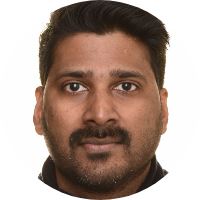
Garrett M. Morris is an Associate Professor in Systems Approaches to Biomedicine at the University of Oxford, affiliated with the Department of Statistics and Green Templeton College. He holds roles as Deputy Director of Graduate Studies, Co-Director of the SABS R³ Centre for Doctoral Training, and Research Fellow at Green Templeton College. His research focuses on computational chemistry, drug discovery, and AI integration in biomedicine. He earned his DPhil from Oxford under Prof. W. Graham Richards, with subsequent work at The Scripps Research Institute and Oxford spinouts like InhibOx and Crysalin. Research interests include protein-ligand docking, virtual screening, and machine learning applications in cheminformatics. Notable contributions include the AutoDock software and the FightAIDS@Home project. He co-organizes conferences like the Royal Society of Chemistry’s 'AI in Chemistry' and founded Comp Chem Kitchen. His lab, Oxford Protein Informatics Group (OPIG), develops novel methods for drug discovery and evaluates AI-based docking methods' validity (e.g., PoseBusters). Recent work critiques AI docking methods' physical plausibility and generalizability. He advises numerous graduate students in statistics and drug discovery, with alumni in academia, pharma, and venture capital. Publications span molecular generation, scoring functions, and computational tools for drug design. Collaborations emphasize reproducibility, responsible research, and cloud computing in biomedicine.
Prof. Dr. Matthias Rarey is a computer scientist and Professor at the University of Hamburg's Center for Bioinformatics. He holds a Ph.D. in Computer Science from the University of Bonn (1996) and has been leading the Algorithmic Molecular Design working group since 2002. His research focuses on molecular design algorithms, cheminformatics tools, and 3D bioinformatics. Co-founder of BioSolveIT GmbH Former cheminformatics group leader at Fraunhofer SCAI Former researcher at SmithKline Beecham and Roche Bioscience Head of Helmholtz Data Science Graduate School DASHH Director of Center for Data and Computing in Natural Science (CDCS) Research interests span algorithmic molecular design, cheminformatics, structure-based drug discovery, and machine learning applications in bioactivity prediction. His group developed widely used tools like FlexX, PoseView, and SpaceLight for molecular modeling and fragment space analysis. Recent publications focus on geometric pattern matching in protein-ligand interfaces, combinatorial fragment space encoding, adverse drug reaction network analysis, and efficient shape-based virtual screening. The work emphasizes scalable algorithms for billion-sized compound libraries and integration of machine learning with traditional cheminformatics approaches. Scientific awards include: GMD Award 1996 (Best Dissertation) GMD Award 2000 (Best Project) NRW Wissenschaftspreis 2002 Corwin Hansch Award 2005 Emerging Technologies Award 2011 Norddeutscher Wissenschaftspreis 2020 Academic leadership roles: Founding director of Center for Bioinformatics Co-founder of M.Sc. Bioinformatics and B.Sc. Computing in Science programs Chair of doctoral committee at Faculty of Computer Science Member of EMBL-EBI's Molecular and Cellular Structure advisory board Former Associate Editor of Journal of Chemical Information and Modeling
Dr. Joonsang Baek is an Associate Professor at the School of Computing and Information Technology, University of Wollongong (since 2021). His research focuses on Cybersecurity , Cryptography , and Network Security , with notable contributions to digital signature revocation, attribute-based encryption, and privacy-preserving protocols. Member, Institute of Cybersecurity and Cryptology (since 2017) Supervision interests: Cybersecurity, Applied Cryptography, Network Security Research Highlights: Innovations in withdrawable signatures, secure cloud data sharing, and 5G authentication protocols. His work combines theoretical cryptography with practical applications in edge computing and AI-driven security systems. Grants: Led projects on ransomware datasets, dynamic access control, and TLS optimization. Collaborated with Data61, Discovery Projects, and industry partners on cybersecurity resilience initiatives. Collaborations: Frequent co-author with researchers like Willy Susilo, Cao Cao, and Xinyu Liu. Active in ACM Asia CCS, IEEE Transactions, and LNCS publications.
Shiva Jahangiri is an Assistant Professor in the Department of Computer Science and Engineering at Santa Clara University's School of Engineering. His research focuses on Big Data Management Systems, Databases for AI/ML, and Query Optimization. He leads the DBIS Lab, which explores database internals, vectorized data processing, and open-source projects like Apache AsterixDB. Education: Ph.D. in Computer Science from the University of California, Irvine; M.S. in Computer Science (Data Science) from the University of Southern California. Current courses taught include Advanced Programming, Advanced Database Systems, and Introduction to Database Systems. He advises Ph.D. and Master’s students on topics like Vector Databases, Query Scheduling, and Resource Management. Recent research trends involve optimizing group-by/aggregation operators, schema inference for semi-structured data, and memory management in complex join queries. His work bridges theoretical advancements with practical implementations in open-source systems. DBIS Lab activities include student participation in senior design projects, directed research, and volunteer roles. The lab emphasizes industry collaboration for hands-on experience in database systems development.
Benne de Weger is an Associate Professor in the Department of Coding Theory and Cryptology at Eindhoven University of Technology (TU/e). His research focuses on cryptology, information security, computational number theory, and lattice-based cryptography. He holds MSc and PhD degrees in Mathematics from Leiden University. Prior to his academic position at TU/e, he worked in industry roles as a cryptographic software engineer and information security consultant. Research interests include RSA cryptanalysis, hash collision applications, Diophantine equations, and the abc-conjecture. His work bridges theoretical mathematics with applied cryptography, particularly in lattice-based systems and security protocol analysis. He has contributed to over 98 research outputs, including peer-reviewed articles and conference proceedings. Notable recent work involves lattice vector analysis and hybrid algorithms for cryptographic problem-solving. Benne has supervised 45 academic works but no specific student names are listed in the provided text. No scientific awards are explicitly mentioned. His research collaborations span global institutions, focusing on cryptographic systems and number theory applications.
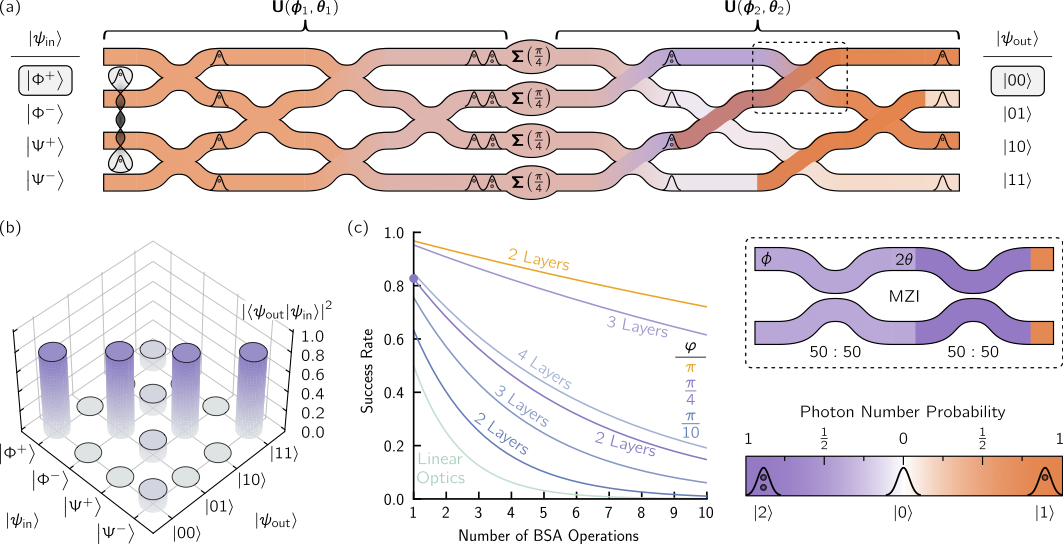
Bhavin J. Shastri is an Assistant Professor in the Department of Physics, Engineering Physics and Astronomy at Queen's University in Canada. His research explores the physics of light for computing , pushing frontiers in information and signal processing through photonic computing and quantum/neuromorphic photonics . He is affiliated with the Centre for Nanophotonics and NUCLEUS , a pan-Canadian photonic computing program funded by NSERC CREATE, bridging artificial intelligence and quantum information . Canada Research Chair & Principal Investigator Faculty Affiliate at Vector Institute (2020-) Editorial Board Member of JPhys Photonics (2019-) Member of IEEE Photonics Society Technical Affairs Council (2019-) Visiting Researcher Scholar at Princeton University (2018-) Shastri Lab members have access to world-class shared facilities, including the Centre for Nanophotonics (CFI-Innovation Fund), Nanofabrication Kingston , the Centre for Advanced Computing , and the Digital Research Alliance of Canada . The lab takes an interdisciplinary approach combining nanophotonics with complex systems on emerging substrates. His research focuses on silicon photonics , nanophonic processors , and photonic integrated circuits with applications to deep learning , nonlinear programming , and quantum information science . His articles show consistent exploration of quantum photonic neural networks , photonic memory systems , and optical signal processing for machine learning and quantum technologies . 2020 IUPAP Young Scientist Prize in Optics 2014 Banting Postdoctoral Fellowship 2012 D. W. Ambridge Prize 2011 IEEE Photonics Society Graduate Student Fellowship 2011 NSERC Postdoctoral Fellowship Multiple Best Student Paper Awards Shastri's lab supervises Ph.D. candidates and postdoctoral fellows working on quantum photonics , neuromorphic computing , and photonic AI systems . His recent work includes photonic tensor cores for scientific computing , quantum photonic neural networks , and all-optical memory systems. Shastri Lab designs programmable nanophotonic processors with potential to outperform microelectronic processors in energy efficiency and computational speeds by seven and four orders of magnitude respectively. Their work spans from device design to system-level implementations in optical computing for machine learning and quantum information processing .
Henry Corrigan-Gibbs is an Assistant Professor at the Massachusetts Institute of Technology (MIT) in the Department of Electrical Engineering and Computer Science. He is affiliated with the Computer Science and Artificial Intelligence Laboratory (CSAIL) and collaborates with the PDOS and CSS research groups. Henry co-hosts the MIT Security Seminar series. Education : PhD in Computer Science from Stanford University (advisor: Dan Boneh), Postdoc at École polytechnique fédérale de Lausanne (EPFL) (host: Bryan Ford), and B.S. in Computer Science from Yale University . Research Interests Henry focuses on computer security , cryptography , and systems research , building technologies that: Empower end users through privacy-preserving design Implement strong cryptographic security in real-world deployments Scale to millions of users while maintaining security Key projects include: Tiptoe for private web search Prio for privacy-preserving aggregate statistics used by Apple and Google Express for metadata-hiding communication SafetyPin and True2F for secure authentication Scientific Contributions Standards Influence : IETF and NIST standards recommend his private-aggregation systems Industry Impact : Deployed in Apple iOS , Google Android , and Mozilla Firefox Non-profit Deployment : Co-founder of Divvi Up for real-world Prio implementations Academic Recognition 2023 MIT EECS Jerome Saltzer Award for teaching excellence 2020 ACM Doctoral Dissertation Honorable Mention 2016 Caspar Bowden Award for PET research 2015 IEEE Security & Privacy Distinguished Paper Award Multiple IACR Best Young Researcher Paper Awards (2015–2018) Advising and Collaborations Current advisees include: PhD students: Alexandra Henzinger , Ryan Lehmkuhl Postdoc: Emma Dauterman Collaborates with industry (Apple, Google, Mozilla) and standards bodies (IETF, NIST) to translate research into practice.
Jovan Stojkovic is an incoming Assistant Professor at the Department of Computer Science at the University of Texas at Austin, set to join in Fall 2026. Prior to his appointment at UT Austin, he will spend a year at Meta working with the AI and Systems Co-design group. His research focuses on cloud computing and datacenters, with particular emphasis on cloud-native workloads and machine learning inference. Education: PhD in Computer Science from the University of Illinois at Urbana-Champaign, advised by Professor Josep Torrellas Undergraduate studies at the School of Electrical Engineering, University of Belgrade, Serbia, where he was recognized as the best student of the Computer Engineering and Information Theory Department every year from 2017-2020 Research Interests: Jovan's research focuses on cloud computing and datacenters , with two primary domains: Cloud-native workloads , such as microservices and serverless computing. He investigates how to co-design novel hardware platforms and software systems that deliver orders-of-magnitude improvements in performance, energy efficiency, and resource utilization for these emerging workloads. Machine Learning (ML) inference , particularly large language models (LLMs). His work addresses the challenges of ML inference through smart scheduling, workload placement, and system-level configuration tuning to reduce energy, power, and thermal overheads while maintaining performance and accuracy guarantees. Publication Trends: Jovan's publications demonstrate a strong focus on optimizing cloud infrastructure for emerging workloads. His research spans across serverless computing, microservices, and large language model inference. A clear trend emerges in his work: addressing the performance, energy efficiency, and resource utilization challenges of modern cloud workloads through innovative hardware-software co-design approaches. His most recent work shows increasing focus on LLM inference optimization, particularly in the areas of thermal management, power efficiency, and scheduling for many-adapter environments. Awards and Honors: HPCA Best Paper Award (2025) IEEE MICRO Top Picks Honorable Mention (2024) 6 patents with IBM and Microsoft on: Serverless systems, Processor overclocking in the cloud, and Energy-efficient LLM inference W. J. Poppelbaum Memorial Award (2025) for hardware and architecture innovation Mavis Future Faculty Fellowship (2024–2025) Invited to present at 11th Heidelberg Laureate Forum (2024) Kenichi Miura Award (2022) for excellence in High Performance Computing Multiple student travel grants to ISCA, MICRO, ASPLOS, and HPCA Advising and Grants: Jovan is actively seeking prospective PhD students for his research group at UT Austin. His research has been supported through collaborations with major tech companies including IBM, Microsoft, and Meta. His six patents with IBM and Microsoft demonstrate the practical impact of his research in serverless systems, processor overclocking, and energy-efficient LLM inference. His work on serverless computing (MXFaaS, EcoFaaS) and LLM inference optimization has received significant recognition in top-tier computer architecture conferences. Research Groups: During his PhD at UIUC, Jovan worked with Professor Josep Torrellas on cloud infrastructure research. He has collaborated extensively with researchers at IBM Research (particularly Hubertus Franke) and Microsoft (particularly Íñigo Goiri and Ricardo Bianchini). His upcoming position at UT Austin will establish his independent research group focused on cloud computing and datacenter systems. His year at Meta working with the AI and Systems Co-design group will further strengthen his expertise in AI infrastructure.
Hongjun Wu is an Associate Professor at the Division of Mathematical Sciences, School of Physical & Mathematical Sciences, Nanyang Technological University, Singapore. His research focuses on Cryptography and Computer Security , with contributions to authenticated encryption, stream ciphers, hash functions, and cryptographic vulnerabilities. Doctor of Engineering (2005-2008), Electrical Engineering, Katholieke Universiteit Leuven Master of Engineering (1998-2000) & Bachelor of Engineering (1994-1998), Electrical Engineering, National University of Singapore Research spans Lightweight Cryptography (TinyJAMBU finalist 2021), Authenticated Encryption (CAESAR winners ACORN/AEGIS), Hash Function Design (JH finalist in SHA-3), and Stream Cipher Development (HC-128 in eSTREAM). He has advised PhD students Huang Tao, Ivan Tjuawinata, Yu Haiwan, and Master students Peng Lunan. Former team members include Tao Biaoshuai, Wei Lei, and Yosua Michael Maranatha. Key publications include work on AES biclique attacks (2015), ICEPOLE differential-linear analysis (2015), Microsoft Office encryption flaws (2005), and CAESAR/AEGIS (2013-2015). Awards: Finalist, NIST Lightweight Competition (2021) CAESAR Competition Winner (2019) SHA-3 Finalist (2011) eSTREAM Selection (2008) He leads the JH Hash Function and TinyJAMBU projects, with hardware/software implementations and active participation in cryptographic standards development. His work involves security analysis of Microsoft Office encryption (2005) and advisories on Adobe Reader vulnerabilities (CVE-2014-0522 to CVE-2014-9165).
Prof. Dr. Willi Meier serves as a Lecturer for mathematics and cryptology at the Institute for Sensors and Electronics within the School of Engineering and Environment at FHNW (University of Applied Sciences and Arts Northwestern Switzerland) in Windisch, Switzerland. With an extensive publication record spanning over three decades (1988-2025), he maintains an active research profile in cryptographic analysis. Dr. Meier's research primarily focuses on cryptanalysis of symmetric cryptographic primitives, with particular expertise in stream ciphers, block ciphers, and hash functions. His work frequently employs algebraic techniques, differential cryptanalysis, and mathematical modeling approaches to analyze cryptographic security. Recent research has centered on analyzing modern ciphers like Grain, Keccak, RIPEMD-160, and various lightweight cryptographic designs, often developing novel attack methodologies such as coefficient grouping and algebraic meet-in-the-middle approaches. His publication trends over the last five years show consistent high productivity in top-tier venues including CRYPTO, EUROCRYPT, ASIACRYPT, and IACR Transactions on Symmetric Cryptology. The research spans both theoretical advancements in cryptanalytic techniques and practical applications to real-world cryptographic standards. A significant portion of his recent work involves collaborations with international researchers, particularly Fukang Liu, Takanori Isobe, and Santanu Sarkar, reflecting his integration within the global cryptographic research community. Dr. Meier's work has practical implications for cryptographic standardization and implementation security, with analyses of protocols used in telecommunications (TETRA), lightweight IoT applications, and post-quantum cryptographic candidates. His research continues to contribute to the fundamental understanding of symmetric cryptographic primitives and their security margins.
Dominique Unruh is a Professor at RWTH Aachen University , leading the Chair for Quantum Information Systems . Additionally, they hold a Professorship in Cryptography at the Institute of Computer Science of the University of Tartu , Estonia. Their research spans quantum computing , quantum cryptography , post-quantum cryptography , and formal verification of cryptographic protocols and programs. Research Focus : Quantum programs, zero-knowledge proofs, lattice-based cryptography, and quantum random oracle model. Key Contributions : Advancements in NTRU encryption efficiency, quantum Hoare logic, and rewinding techniques for security proofs. Tools : Active development in the EasyCrypt framework for cryptographic verification. Email : unruh@cs.rwth-aachen.de
Diego F. Aranha is an Associate Professor in the Department of Computer Science at Aarhus University . His research focuses on cryptographic systems, cybersecurity, and privacy-preserving technologies with applications in voting systems, post-quantum cryptography, and secure computation. He has contributed extensively to homomorphic encryption, secure multiparty computation (MPC), and cryptanalysis of cryptographic implementations. Key projects include: MPCC (2025-2028) : Multi-Party Computation in the Confidential Cloud SCI (2024-2027) : Secure Computation Infrastructures for the Retail Industry RENAIS (2021-2026) : Residue Number Systems for Cryptography His work emphasizes practical efficiency and formal verification of cryptographic protocols. Recent publications highlight advancements in lattice-based cryptography, secure voting schemes, and mitigating side-channel vulnerabilities in post-quantum algorithms. He actively collaborates on open-source cryptographic libraries and standards, with a focus on bridging theoretical security and real-world implementation challenges.
Jeremiah M. Blocki is an Associate Professor in the Department of Computer Science at Purdue University. His research focuses on cryptography, usable privacy and security, and authentication protocols. He joined Purdue in Fall 2016, previously completing his PhD at Carnegie Mellon University and a postdoc at Microsoft Research New England. Education: PhD in Computer Science, Carnegie Mellon University, 2014 Bachelor of Science in Computer Science, Carnegie Mellon University, 2009 Research Interests: Dr. Blocki’s work emphasizes applying theoretical computer science to practical security challenges, including password management, memory-hard functions, and differential privacy. His recent projects include developing distribution-aware password throttling and analyzing the post-quantum security of cryptographic algorithms. Publications: His research spans cryptographic protocols, security mechanisms, and privacy-preserving algorithms. Notable contributions include advancements in memory-hard functions (e.g., CRYPTO 2016, 2019) and differential privacy techniques (e.g., ITCS 2025). Recent work explores the intersection of cryptography with quantum computing and sublinear-time algorithms. Awards: NSF CAREER Award (2021) Purdue Seed for Success Award (2019) Allen Newell Award for Excellence in Undergraduate Research (2009) Advising & Grants: Supervised multiple PhD students and postdocs. Key grants include the NSF CAREER award ($591k) and a $10.7M HACCLE project (IARPA) for secure multi-party computation. Labs/Teams: Co-leads the HACCLE project, focusing on high-assurance cryptographic languages and environments. Active in Purdue’s CERIAS security initiatives.
Carsten Baum is an Associate Professor at the Department of Applied Mathematics and Computer Science, Technical University of Denmark, working within the Cybersecurity Engineering Center for Quantum Technologies. His research focuses on cryptography, particularly post-quantum security, secure multi-party computation, and quantum-resistant protocols. Primary Affiliation: Technical University of Denmark (DTU) Academic Rank: Associate Professor Research Centers: Cybersecurity Engineering Center for Quantum Technologies Research Interests: Carsten Baum specializes in cryptographic protocols, including zero-knowledge proofs, multi-signatures, and oblivious computation. His work addresses quantum computing threats to classical cryptography and develops resilient post-quantum solutions. Key areas include: Secure multi-party computation (MPC) Post-quantum key agreement Quantum computing's impact on cryptographic security Privacy-preserving technologies Hash function security analysis (e.g., SHA-3) Time-based cryptographic primitives Advising and Projects: As a main or co-supervisor, Baum mentors multiple PhD candidates in post-quantum cryptography and secure protocols. His projects include proactive post-quantum cryptography, quantum key agreement, and long-term security frameworks, reflecting collaborations with institutions across Europe and Asia. Recent Activities: Baum actively organizes and participates in Nordic cryptography workshops, including NordiCrypt Spring 2024 and 2023, fostering academic exchange in cryptographic research.
Dr. Arish Sateesan serves as Professor and Chair of the Institute for Networked Systems at RWTH Aachen University's Faculty of Electrical Engineering and Information Technology, located at Kackertstrasse 9 in Aachen, Germany. His research group operates from House C (Room C046) with direct contact via asa@inets.rwth-aachen.de. His primary research domains center on hardware-accelerated network security solutions, specializing in FPGA implementations for high-speed networking. Key focus areas include: Real-time network monitoring and intrusion detection systems Hardware-optimized cryptographic and non-cryptographic algorithms Machine learning integration for wireless beamforming and LiDAR processing Ultra-high-speed flow measurement architectures His work bridges theoretical computer science with practical hardware constraints, emphasizing throughput optimization for security-critical applications. Analysis of his 15 most recent publications (2021-2025) reveals a pronounced shift toward hardware-software co-design for next-generation networks. The research trajectory shows increasing integration of quantized neural networks with traditional security primitives, particularly for mm-Wave and 5G/6G applications. A consistent theme across all publications is the prioritization of hardware friendliness through algorithmic simplification and architectural innovation. As Institute Chair, he leads a research ecosystem focused on developing deployable security solutions for modern network infrastructures, with current projects targeting autonomous vehicle communication systems and infrastructure protection against distributed denial-of-service attacks.