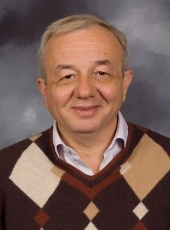
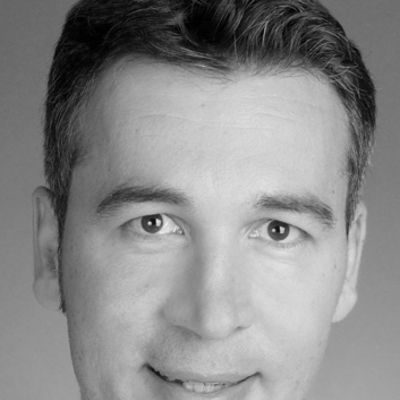
Andrew Nelson is a part-time Assistant Professor at the Electronic Systems department, College of Engineering , Eindhoven University of Technology . He also serves as a founder and R&D lead at Verintec Solutions B.V. . Research Focus : Predictable and composable embedded systems, real-time robotics, multi-sensor fusion for industrial positioning, multi-core processor optimization. Key Contributions : Development of the CompSOC platform, CompROS architecture for ROS2, and novel multi-rate control strategies. Recent Article Trends : His work emphasizes predictable execution on multi-core platforms, sensor fusion techniques (linear encoders + vision systems), and real-time robotics. Articles span 2015–2025, highlighting collaborations with institutions like TU/e and ECSEL JU grant projects IMOCO4.E (2021–2023) and COMP4DRONES (2021).
Dr. Roland Ryndzionek is an Associate Professor at Gdańsk University of Technology with dual affiliations in the Department of Power Electronics and Electrical Machines and the Department of Mechanics of Materials and Structures. His research bridges electromechanical systems and renewable energy, specializing in: Piezoelectric ultrasonic motors with multi-rotor designs Fault-tolerant multiphase doubly-fed induction generators (DFIGs) for wind turbines Power Hardware-in-the-Loop (PHIL) emulation of synchronous generators He leads the BLDFIG project (2023–present), developing gearless wind turbines using multiphase DFIGs, and co-leads the EU-funded DigiWind initiative for wind energy digitalization. His publications emphasize real-time control systems, harmonic reduction in power converters, and mechatronic integration, with recent work in IEEE Transactions and COMPEL journals. No awards or student advising roles are documented in available sources.
Keyhan Sheshyekani is a Full Professor in the Department of Electrical Engineering at Polytechnique Montréal. He holds membership in the NSERC/Hydro-Québec/RTE/EDF/OPAL-RT Industrial Research Chair, specializing in multi time-frame simulation of transients for large-scale power systems. His work bridges industry and academia through partnerships with major energy stakeholders. Research interests span: Smart grids : Cybersecurity, EV-grid integration, and demand response Electromagnetic systems : Grounding design, field modeling, and compatibility Energy control : Optimization algorithms for microgrids and converter systems Recent publications (2021-2025) show strong focus on: Machine learning applications in energy dispatch Cybersecurity frameworks for grid IT/OT convergence Real-time simulation of power electronics Advanced control strategies for EV charging infrastructure He actively mentors graduate students, with 10+ advised in the past five years working on projects like: EV aggregator controls for grid ancillary services FPGA-based real-time simulation Cybersecurity for synchrophasor networks
Yufei Ding is an Associate Professor in the Computer Science & Engineering Department at the University of California, San Diego (UCSD), where she leads the PICASSO Lab. Her research spans domain-specific language design, architecture and compiler optimization, and hardware acceleration, with current focus on developing high-performance, energy-efficient, and high-fidelity programming frameworks for quantum computing and machine learning. Dr. Ding received her Ph.D. in Computer Science from North Carolina State University and a B.S. in Physics from the University of Science and Technology of China. Her interdisciplinary background bridges physics and computer science, enabling her to tackle challenges in emerging computing paradigms. Her research interests focus on Compiler Technology, Machine Learning, and Quantum Computing , with specific expertise in domain-specific language design, architecture and compiler optimization, and hardware acceleration. Dr. Ding's work addresses critical challenges in programming frameworks for emerging technologies, particularly in making quantum computing more accessible and efficient through innovative compiler techniques and runtime systems. Dr. Ding's scientific contributions have been recognized with prestigious awards including the NSF CAREER Award (2020) and the IEEE Computer Society TCHPC Early Career Researchers Award for Excellence in High-Performance Computing (2019) . As an active researcher and educator, Dr. Ding serves on program committees for major conferences including PLDI, PPoPP, and SPLASH. She currently has Ph.D. openings in quantum computing and machine learning systems research, as well as a postdoc position in quantum computing for physics Ph.D. candidates with relevant background. Dr. Ding founded and leads the PICASSO Lab at UCSD, which focuses on developing innovative solutions for programming emerging computing technologies. The lab's work bridges theoretical foundations with practical implementations to address real-world challenges in high-performance computing.
Dr. Suruz Miah is an Associate Professor in the Department of Electrical and Computer Engineering at Bradley University's Caterpillar College of Engineering & Technology, with a joint appointment as Adjunct Professor at the University of Ottawa. He holds a Ph.D. in Electrical and Computer Engineering from the University of Ottawa and a B.Sc. in Computer Science and Engineering from Khulna University of Engineering & Technology. His research focuses on cyber-physical systems with specialization in: Mobile robot navigation and control systems Multi-agent systems and distributed control Reinforcement learning applications in robotics Autonomous vehicle technologies Biomedical sensor systems RFID and sensor network applications He leads the Cyber-Physical Systems Laboratory at Bradley and collaborates with the Machine Intelligence, Robotics, and Mechatronics Laboratory at Ottawa. Dr. Miah's recent publication trends show strong focus on: Reinforcement learning for robotic control (6 of 15 recent papers) Multi-agent coordination systems (4 papers) Biomedical sensor applications (3 papers) Aerial and ground robotics (5 papers) Autonomous vehicle technologies (3 papers) He has developed several courses including Autonomous Robotics and Introduction to Mechatronics and teaches both undergraduate and graduate courses in control systems, robotics, and embedded systems. Professional service includes: Senior Member of IEEE Associate Editor for IEEE Transactions on Industrial Informatics Reviewer for 10+ IEEE journals and conferences
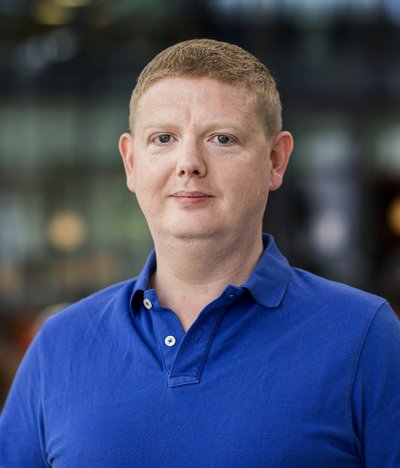
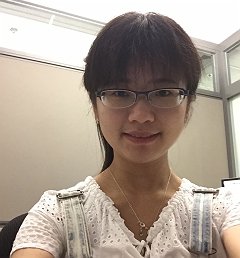
Professor Magnus Karlberg serves as Professor and Head of Department within the Department of Engineering Sciences and Mathematics at Luleå University of Technology. He leads the Division of Product and Production Development and focuses his research on machine design and autonomous systems for forestry applications. His work bridges engineering sciences with practical forestry solutions, positioning him at the forefront of robotics innovation in natural resource management. Professor Karlberg's research interests center on autonomous forestry operations, with particular emphasis on machine vision, path planning algorithms, and virtual environment simulation for training autonomous systems. His work explores how virtual training data can be effectively transferred to real-world forestry applications, addressing challenges in object detection, navigation, and task execution in complex forest environments. This research has significant implications for developing sustainable, efficient, and safe forestry practices through advanced robotics and machine learning. His recent publication record demonstrates a strong trajectory in autonomous forestry systems, with multiple high-impact publications between 2024-2026. These works show a consistent focus on solving practical challenges in forestry automation, with increasing technical sophistication from basic feasibility studies to advanced path planning and species-specific regeneration techniques. The research spans computer vision, robotics, and sustainable forestry, indicating a multidisciplinary approach that integrates engineering principles with environmental considerations. Professor Karlberg's work is supported by significant funding from multiple sources including Norrbotten County Council, Interreg Aurora, Vinnova, and The Kempe Foundations. His research projects, particularly SAMHand (Sustainable Autonomous Material Handling) and AutoPlant, focus on developing practical autonomous systems for forestry operations. These projects involve collaboration with multiple researchers and institutions, reflecting the interdisciplinary nature of modern forestry technology development. While specific laboratory information isn't provided in the available materials, Professor Karlberg's research appears to involve substantial work with virtual environments, digital twins, and real-world forestry equipment testing. His publications suggest access to both simulation environments and physical forestry machinery for hardware-in-the-loop validation, indicating a well-equipped research infrastructure capable of bridging theoretical development with practical field testing.
Dr. Chen-Wei Yang is a Senior Lecturer at Luleå University of Technology specializing in Dependable Communication and Computation Systems. He works within the Department of Computer Science, Electrical and Space Engineering, focusing on the intersection of computer science and energy systems. His research interests include: Engineering Smart Energy Systems Systems engineering of cyber-physical systems Data and communication interoperability Distributed automation system design Semantic modelling Dr. Yang has developed significant expertise in substation automation systems (IEC 61850) and distributed automation systems (IEC 61499) for industrial applications. His recent publications show a strong focus on energy automation systems, smart grid technologies, and digital twin implementations for energy infrastructure. His work spans both theoretical research and practical implementation, with emphasis on maintainability, interoperability, and real-time performance. Professional affiliations include: IEEE IES TCII - Sub-TC Chair on Smart Energy and Smart Grids IEEE P2805.1 WG - Self-Management Protocols for Edge Computing Node Luleå Toastmasters - Vice-president of Education Dr. Yang actively supervises PhD students and teaches multiple undergraduate and graduate courses related to programming, software design, and real-time systems. His approach combines strong theoretical foundations with practical applications in the energy sector.
Professor William Holderbaum is a faculty member at the School of Science, Engineering & Environment at the University of Salford, with additional affiliation to the Centre for Future Engineering. His academic career demonstrates sustained research productivity with 46 documented research outputs spanning from 2012 to 2025. Professor Holderbaum's research interests encompass several interconnected domains: Control Systems Theory and Applications Hybrid Dynamical Systems (particularly power converters) Robotics (Geometric Control, nonholonomic systems, Reinforcement Learning) Rehabilitation Engineering (Robust Control Design) Energy Management (Electric Vehicles, Smart Grids, Multiple Agent Systems) Autonomous Vehicles (Motion planning, AI) His recent publication activity (11 papers in 2025, 13 in 2024) reveals a strong emphasis on power systems protection challenges, particularly addressing microgrid protection issues arising from distributed generation integration. He has developed innovative approaches for overcurrent relay coordination, microgrid frequency stability, and protection schemes for inverter-dominated grids. His work also extends to robotics applications in textile manufacturing, wearable sensor technology for gesture recognition, and digital twin applications for power system protection. Professor Holderbaum maintains an active research program with significant recent output, demonstrating continued scholarly productivity and relevance in his fields of expertise. His interdisciplinary approach bridges theoretical control systems with practical engineering applications across multiple domains.
Anthony Finn serves as Research Professor of Autonomous Systems at the Defence and Systems Institute (DASI), University of South Australia, where he has been employed since 2010. His academic career builds upon extensive practical experience in defense and navigation systems. His educational background includes a PhD in Satellite Navigation from Cambridge University (1989). Prior to joining UniSA, he worked as a research consultant for European commercial and government organizations, then joined Australia's Defence Science & Technology Organisation in 1991. Finn's research focuses primarily on Autonomous and Unmanned Systems, with particular expertise in multi-vehicle systems. His exceptionally broad technical portfolio spans spacecraft design, atmospheric modeling, radio wave propagation, geodetic surveying, satellite navigation, navigation warfare, distributed electronic warfare, communications electronic warfare, hardware-in-the-loop simulation, and systems integration. His work has directly informed governmental and international policy bodies and been cited as evidence in criminal trials. His scholarly output includes two authored books and approximately eighty publications comprising book chapters, journal articles, research reports, and refereed conference papers. Finn serves as editor for three international academic journals and sits on the editorial review board of a fourth. Key research trends show strong emphasis on practical implementation of autonomous vehicle technology Publications demonstrate interdisciplinary approach bridging engineering, defense applications, and transportation systems Work consistently addresses real-world challenges in safety, regulation, and system integration Finn has received international recognition for his research contributions and is frequently invited to deliver keynote presentations at major conferences worldwide. His editorial roles across multiple journals demonstrate his standing in the academic community. As an active researcher and educator, Finn engages in research supervision, consulting, and speaking engagements, maintaining strong connections between academic research and practical defense and transportation applications. His work at DASI places him at the forefront of autonomous systems development in the Australian defense context.
Soner Onder is a Professor in the Department of Computer Science at Michigan Technological University, with an affiliated appointment in the Electrical and Computer Engineering department. His work focuses on computer architecture, programming languages, and simulation techniques, contributing significantly to processor design and memory systems research. Dr. Onder received his PhD in Computer Science from the University of Pittsburgh in 1999. His academic career has established him as a leading researcher in computer architecture with publications spanning two decades in top-tier conferences. Dr. Onder's research spans multiple areas of computer architecture and compiler design, with emphasis on processor design, memory systems, and compiler optimizations. He has made significant contributions to memory disambiguation techniques, branch prediction mechanisms, and energy-efficient processor designs. His work often bridges hardware and software domains, exploring how compiler techniques can better exploit architectural features. Recent research focuses on memory dependence prediction, recovery mechanisms for mispredictions, and energy-efficient data access patterns, with his "Future Gated Single Assignment Form" representing an innovative approach to program representation that bridges compiler design and architectural support. US Patent 7747993: Methods and systems for ordering instructions using future values (2010) Dr. Onder has advised numerous PhD students to completion, including Scott Pomerville (2024), Gorkem Asilioglu (2020), Omkar Javeri (2020), and Zhaoxiang Jin (2018). His research has been supported by grants including "Statically Controlled Asynchronous Lane Execution (SCALE)" and "Vectorized Instruction Space (VIS)" projects. He developed the FAST (Flexible Architecture Simulation Tool) for architectural research and continues to lead an active research program with publications appearing in top-tier venues through 2018. Dr. Onder leads research in computer architecture with a focus on practical implementations. His FAST simulation tool provides a flexible platform for testing architectural innovations. His work often involves collaboration with both compiler researchers and hardware designers to create holistic solutions to performance bottlenecks in modern processors, demonstrating the interdisciplinary nature of his research that bridges hardware and software concerns in computer system design.
Professor Roustiam Chakirov serves as a faculty member in the Department of Engineering and Communication at Bonn-Rhein-Sieg University of Applied Sciences (H-BRS), specializing in control engineering for automotive systems. His work bridges theoretical research and industrial applications in sustainable mobility and energy systems. Education: Doctorate in Electrical Drives/Control Engineering, Nizhny Novgorod University of Technology, Russia Studies in Automation Engineering Research Focus: Chakirov's work centers on electromobility , mechatronic vehicle systems , and renewable energy integration . His expertise spans rapid control prototyping , neural networks for photovoltaic systems , and energy efficiency optimization through adaptive control. Current projects address vehicle electrical system management, wind-to-heat conversion, and smart microgrid integration for electric vehicles. Publication Trends: His 2006-2015 publications reveal a consistent trajectory from foundational control theory toward applied sustainable mobility solutions. Key themes include photovoltaic optimization (2015), multi-bus vehicle power management (2014), and electric vehicle charging coordination (2013), demonstrating interdisciplinary convergence of control engineering, renewable energy, and automotive systems. Scientific Recognition: Honorary Doctorate from Chernihiv National University of Technology (2016) for German-Ukrainian research cooperation in Renewable Energies and Electromobility Research Leadership: Chakirov directs third-party funded projects including the TREE-Energy Lab (TRE³L) partnership with GKN Driveline and GKN Sinter Metals. His work receives support from the German Academic Exchange Service and involves Horizon 2020 collaborations, focusing on hydrogen technology, powder metallurgy, and eco-mobility solutions. Laboratory Infrastructure: He operates within H-BRS's TREE-Energy Lab complex comprising Powder Fabrication-Lab, Mobility-Lab, Hydrogen-Lab, and Simulation-Lab, enabling integrated research from component design to system-level energy management.
Thierry Aubert is a Lecturer at the Lucerne University of Applied Sciences and Arts, within the School of Engineering and Architecture. He has taught in the Industrial Engineering - Innovation program and the MAS in Design Engineering since 2010. His expertise bridges engineering and industrial design, with a focus on translating technical concepts into innovative product solutions. Aubert holds a Master of Arts in Integrated Design from Anhalt University of Applied Sciences (Germany) and a Diploma in Engineering (Automotive Technology) from Biel School of Engineering. His career includes founding Spirit Technology GmbH (specializing in industrial/vehicle design and engineering simulators) and leading vehicle/office chair development at Girsberger. His research and teaching emphasize problem-solving methodologies , digital prototyping (3D printing, CAD/VR), and electromobility . Key areas include: Industrial design processes Integration of technology in design Hardware-in-the-loop (HiL) simulator development Product innovation strategies Award recognition spans multiple prestigious design and innovation prizes: RedDot Design Awards iF Design Awards German Design Awards German Innovation Awards AIT Innovation Prize XXL He supervises student theses and industry projects, leveraging his experience in accreditation processes and engineering-design interface challenges. His work at Spirit Technology GmbH continues to influence global engineering training and product development.
Prof. Reiner Marchthaler is a Professor at Esslingen University of Applied Sciences within the Faculty of Computer Science and Information Technology. He serves as Deputy Director of the Institute for Intelligent Systems (IIS), Scientific Director of the Green IT 2026 Conference, and Liaison Lecturer for the Friedrich Ebert Foundation. His academic leadership spans autonomous systems research and educational initiatives in embedded technologies. His research centers on Embedded Systems and Sensor Data Fusion, with pioneering work on Kalman filters for autonomous systems. He maintains the authoritative resource kalman-filter.de and has developed real-time capable SLAM algorithms, camera-based reference systems, and parking space detection frameworks. His expertise extends to entropy-based safety evaluation in autonomous driving and semantic segmentation using mixed real/synthetic data. Analysis of his 2020-2025 publications reveals dominant trends in autonomous driving systems, emphasizing real-time sensor fusion, deep learning for perception, and safety validation. Key subfields include adaptive Kalman filtering (ROSE-Filter), landmark-based navigation, neural network training with synthetic data, and maximum entropy safety frameworks. His work bridges theoretical innovation with automotive applications, particularly in model vehicle testing environments. Prof. Marchthaler leads research at the Institute for Intelligent Systems, directing the Green IT 2026 initiative and advising the Friedrich Ebert Foundation. His team develops ROS-based validation environments for autonomous algorithms and maintains the Kalman filter knowledge portal. Current projects focus on connected traffic systems using conventional infrastructure landmarks and entropy-optimized safety protocols for production vehicles.



 Magnus Karlberg2.jpg)