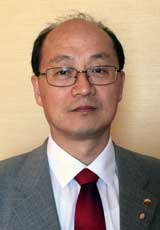
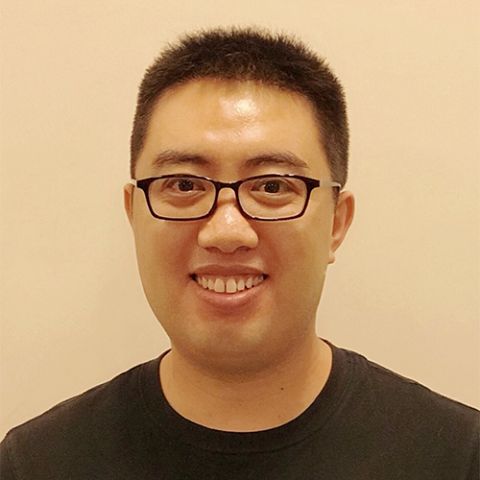
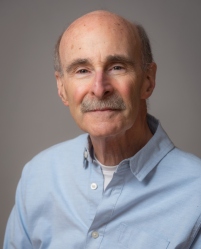
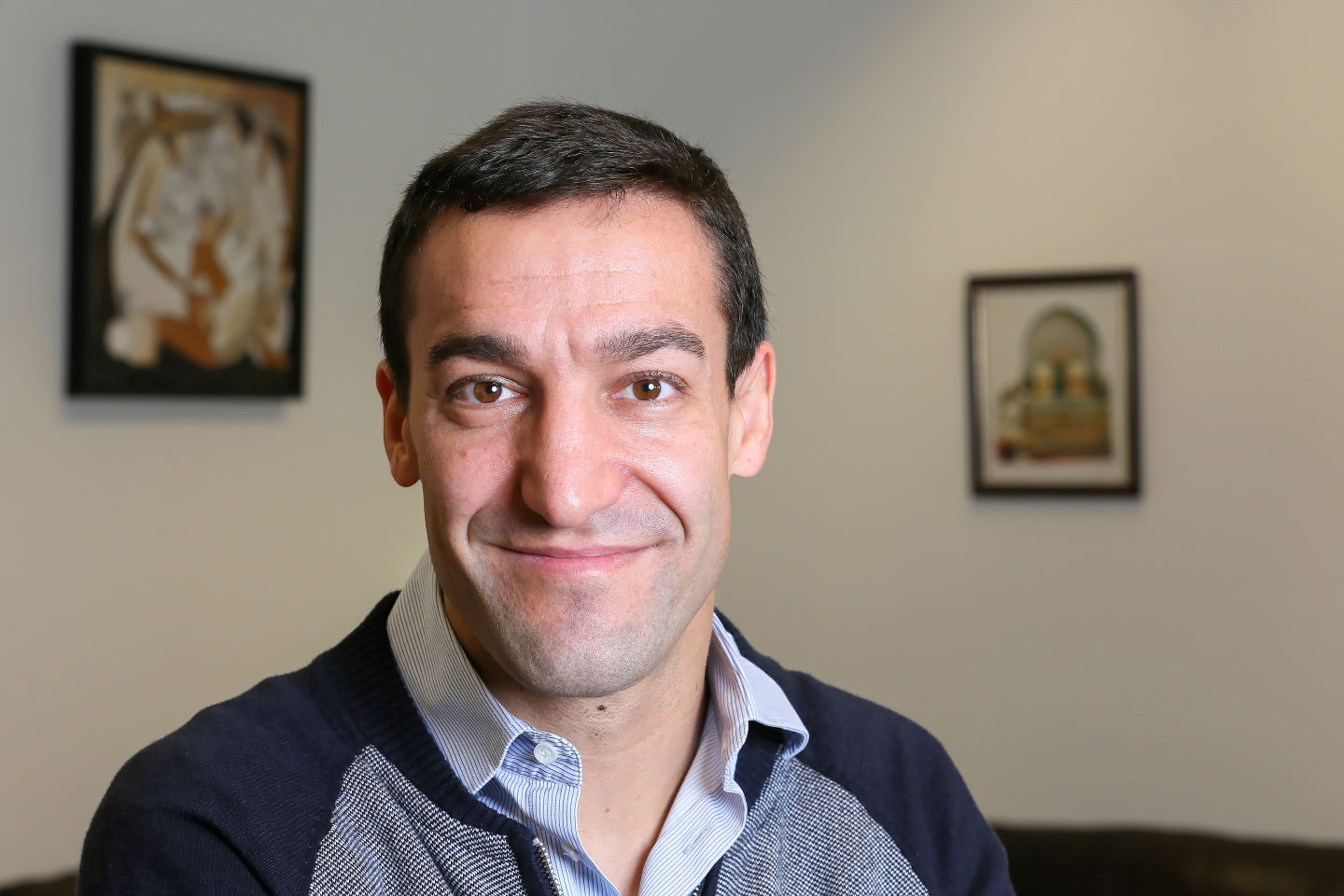
Dr. Yun Zhang is a Professor and Canada Research Chair in the Department of Geodesy and Geomatics Engineering at the University of New Brunswick. He holds a PhD from the Free University of Berlin and has pioneered research in remote sensing, image processing, and computer vision since 2000. His patented technologies are licensed to global companies including PCI Geomatics and DigitalGlobe. Research Focus: Optical/radar image processing, digital photogrammetry, AI applications in geomatics, and sensor fusion for UAV systems. His work enables advanced geospatial analysis across environmental, urban, and defense sectors. Distinctions: First Giuseppe Inghilleri Award (ISPRS 2012) NSERC Synergy Innovation Award from Governor General of Canada (2011) ASPRS Talbert Abrams Grand Award (2005) Featured in CFI 20th Anniversary Book for breakthrough innovations Technology Impact: Solutions deployed by NASA, USGS, Google Earth, and DND Canada across five continents. Recognized among top 9 Canadian research achievements in AUTM's global case studies alongside MIT and Stanford innovations.
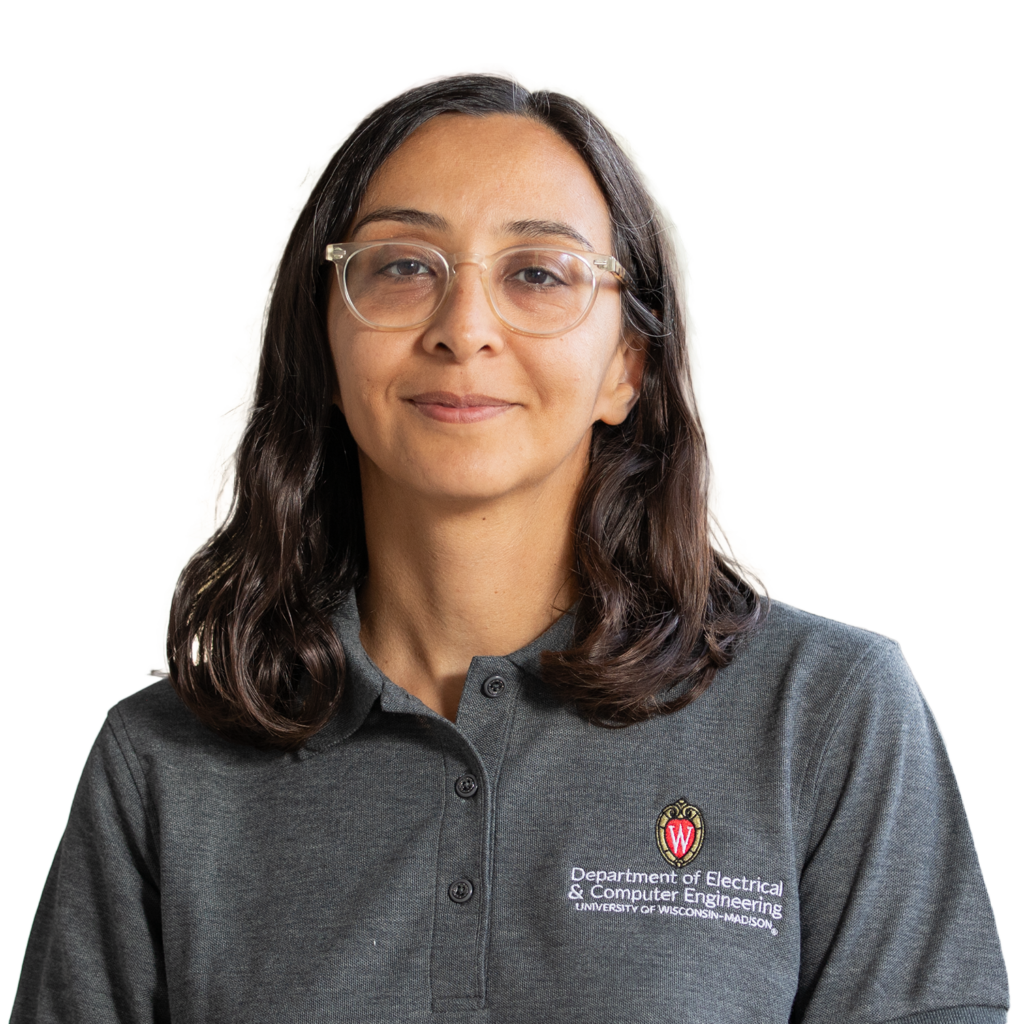
Azadeh Davoodi is a Vilas Distinguished Achievement Professor and Associate Chair of Undergraduate Studies in the Department of Electrical and Computer Engineering at the University of Wisconsin-Madison. Her research focuses on Electronic Design Automation (EDA), integrated circuit debug, and machine learning applications in VLSI design. She holds editorial roles in journals like IEEE TCAD and ACM TRETS, and has chaired major conferences such as ISPD 2015 and served on technical program committees for DAC, ICCAD, and others. Education: PhD in Electrical Engineering, University of Maryland-College Park (2006) Research Interests: Machine learning for VLSI chip design VLSI design automation for machine learning IC-CAD for emerging nanotechnologies Hardware security Recent Research Trends: Her work bridges machine learning and hardware design, with publications on neural network optimization, distributed inference, and explainable AI for circuit design. She emphasizes energy-efficient CNNs, latency reduction in edge computing, and security in split manufacturing. Awards: 2025 DATE Best Paper Candidate 2024 Vilas Distinguished Achievement Professor 2015 ACM Best Paper Award 2011 NSF CAREER Award Service and Grants: Leads NSF-funded projects on explainable ML for CAD and holds grants for distributed neural network synthesis. Her service includes roles as IEEE HKN member and editorial board positions. Labs/Teams: Engages in interdisciplinary research teams at UW-Madison, focusing on EDA innovation and hardware-software co-design.
Peiyi Wang is an Assistant Professor at Peking University's School of Electronics Engineering and Computer Science, Institute for Artificial Intelligence. With strong research output spanning both natural language processing and robotics, Wang maintains significant collaborations with Southern University of Science and Technology and National University of Singapore, particularly in soft robotics research with Professor Cecilia Laschi. Additionally, Wang is actively involved with DeepSeek-AI, contributing to several major language model initiatives including DeepSeek-R1 and DeepSeek-V2. Peking University, School of EECS, Institute for Artificial Intelligence (Primary) Southern University of Science and Technology (Collaborative) National University of Singapore (Collaborative) DeepSeek-AI Research Organization Dr. Wang's research spans two primary domains with significant intersection points. In natural language processing, Wang focuses on large language model reasoning capabilities, mathematical verification, uncertainty estimation, and preference alignment. The robotics work centers on soft robotics, particularly origami-inspired designs, strain-based modeling, and control systems for continuum manipulators. These domains converge in Wang's work on vision-language models, embodied AI, and multimodal reasoning systems. Recent work demonstrates particular innovation in mathematical reasoning verification (Math-Shepherd), soft robotic control systems, and red teaming frameworks for language model safety. Wang's publication record shows remarkable productivity, with over 40 publications between 2021-2025 across top-tier venues including ACL, EMNLP, CVPR, and IEEE Transactions on Robotics. The work demonstrates consistent progression from foundational NLP tasks to increasingly sophisticated multimodal and reasoning systems. The most recent publications (2024-2025) show particular emphasis on mathematical reasoning verification, soft robotics control, and language model safety evaluation. While specific awards aren't documented in the provided materials, Wang's work has clearly gained significant recognition through acceptance at top-tier conferences and collaborations with leading researchers in both NLP and robotics fields. Wang's research demonstrates strong interdisciplinary connections, bridging theoretical NLP work with practical robotics applications. The work with DeepSeek-AI suggests active industry collaboration while maintaining strong academic research output. Current research directions appear focused on improving language model reasoning reliability while developing novel soft robotic systems that can interact safely and effectively with complex environments.
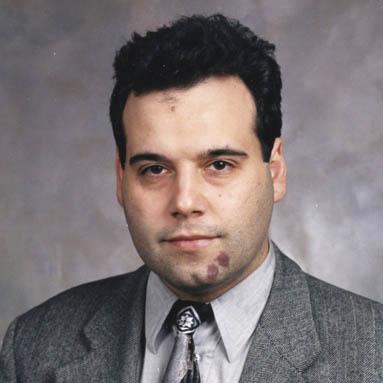
Pierre-Emmanuel Gaillardon is a Professor in the Department of Electrical & Computer Engineering and Adjunct Professor in the School of Computing at the University of Utah. He holds a joint appointment since July 2024, having previously served as Assistant Professor (2016–2019) and Adjunct Assistant Professor in Computing (2016–2019). His research focuses on FPGA design, VLSI systems, nanoelectronics, and hardware security. He leads projects in emerging devices like TIGFETs, compute-in-memory architectures, and radiation-hardened FPGA fabrics. Teaching includes courses on Digital VLSI Design, Embedded Systems Design, and thesis supervision. He has secured grants from NSF, DARPA, and industry partners totaling over $10M, addressing topics like FPGA redaction, neuromorphic systems, and environmental sensors. Notable awards include the NSF CAREER Award (2018) and IEEE Senior Member elevation (2016). He actively serves on IEEE committees for nanoelectronics and EDA tools, contributing to standards like OpenFPGA.
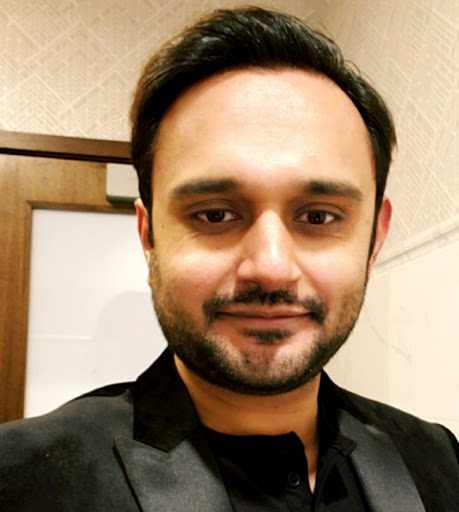
Rohan Tabish is an Assistant Professor in the Department of Computer Science at the University of Illinois at Urbana-Champaign (UIUC), specializing in real-time systems, embedded systems, and cybersecurity. His work focuses on developing predictable and secure software frameworks for multi-core and heterogeneous architectures. Education: Ph.D. in Computer Science and Engineering Master's in Computer Science and Engineering B.Sc. in Electrical Engineering with Telecommunications specialization Research Interests: Real-Time Task Scheduling Fault Tolerance in Embedded Systems Inter-Core Communication Frameworks Memory Bandwidth Management Cyber-Physical Systems Scratchpad-Centric Operating Systems Awards: Outstanding Paper & Best Paper Award (RTSS 2020) Outstanding Paper & Best Student Paper Award (RTSS 2020) Best Presentation Award (RTAS 2016) Nominated for Best Paper Award (ECRTS 2019) Teaching: CS 431: Embedded Systems (Instructor, 2015-2018) CS 424: Real-Time Systems (Instructor, 2019) CS 438: Communication Networks (TA, 2019) Labs/Teams: Active member of the Real-Time Systems Lab (RTSL) at UIUC, focusing on safety-critical embedded systems and real-time software frameworks.
Berk Sunar is a Professor of Electrical & Computer Engineering and the founder of the Vernam Applied Cryptography and Cybersecurity Laboratory at Worcester Polytechnic Institute (WPI). He joined WPI in 2000 after holding postdoctoral and research roles at Oregon State University (OSU) and Trust Inc. His work focuses on applied cryptography, microarchitectural security, AI security, post-quantum cryptography, and homomorphic encryption. Sunar received his BSc from Middle East Technical University (1995) and PhD from Oregon State University (1998). Research interests include vulnerabilities in hardware (e.g., Rowhammer, TPM-FAIL), side-channel attacks, and cryptographic implementations. Notable contributions include discovering flaws in Intel CPUs and TPM chips affecting billions of devices, as well as developing defenses like cuHE (GPU-accelerated homomorphic encryption). Publications highlight breakthroughs in transient execution attacks (e.g., LVI, RIDL), post-quantum signature schemes (Dilithium), and cloud security (Firecracker VMM vulnerabilities). Awards include NSF CAREER (2002) and IBM Pat Goldberg Best Paper (2007). Advised over 30 graduate students, many of whom hold senior roles in academia and industry. Current research addresses AI security, quantum-resistant algorithms, and automated attack detection via machine learning. The Vernam Lab remains a hub for cybersecurity innovation.
James S. Plank is a Professor in the Department of Electrical Engineering and Computer Science at the University of Tennessee. He holds a PhD from Princeton University (1993) and has been at UT since 1993. His research focuses on fault-tolerant computing, erasure coding, distributed systems, and neuromorphic computing. He teaches programming courses from introductory to graduate levels and has won multiple teaching awards, including seven departmental awards, the College of Arts and Sciences Senior Faculty Teaching Award, and the Chancellor’s Citation for Excellence in Teaching. Plank is a member of the IEEE Computer Society and has contributed to open-source software like JGraph and Jerasure. His recent research emphasizes neuromorphic computing systems, including projects like NeuroPong and RISP Neuroprocessor. He collaborates with industry and academia on storage systems, checkpointing, and hardware-software co-design. Plank advises numerous graduate and undergraduate students, evident in his annual summer student gallery. He has secured grants such as the NSF-funded "Ground-roaming autonomous neuromorphic targeter" (2020). His lab, Neuromorphic UT, explores applications in control systems, vision, and robotics. Plank’s contributions to erasure coding and storage reliability include seminal works like the RAID-6 Liberation Code and SD codes for mixed failure modes.
Fenglong Ma is an Associate Professor at Pennsylvania State University, affiliated with the Institute for Computational and Data Sciences and the Center for Socially Responsible Artificial Intelligence. His research focuses on data mining, healthcare informatics, machine learning, natural language processing, and multimodal learning. He holds a Ph.D. from the University at Buffalo (2019) and degrees from Dalian University of Technology. His work addresses challenges in federated learning, medical AI, adversarial robustness, and multimodal systems. Key contributions include innovations in quantization for large language models, federated knowledge injection, and medical vision-language benchmarking. Recent publications explore topics like collaborative fairness in federated learning, robust medical vision-language models, and adversarial attack mitigation. His research bridges theory and practical applications in healthcare, cybersecurity, and personalized recommendation systems. He leads the PSU Data Science Lab and collaborates on projects involving AI ethics, multimodal data integration, and scalable medical foundation models.
Professor Roger Woods is a prominent academic and researcher affiliated with Queen's University Belfast's School of Electronics, Electrical Engineering and Computer Science, part of the Faculty of Engineering and Physical Sciences. He holds the rank of Professor and is actively involved in advancing research and innovation in embedded systems, FPGA technologies, and AI-driven solutions for industry challenges. His work emphasizes practical applications through close collaboration with industry partners. His research interests span novel computing architectures (e.g., multi-precision and edge computing), FPGA-based systems for data analytics, and secure IoT communication protocols. Notably, he co-founded and serves as Chief Scientist of Analytics Engines Ltd, a data analytics company. He has led significant initiatives like the Kelvin-2 Tier-4 High Performance Computing centre and contributed to semiconductor reviews through EFutures. Professor Woods has been recognized with prestigious awards, including the IET Northern Ireland Engineering Excellence Award and IEEE Fellowship. He has supervised numerous PhD students focusing on topics like FPGA-based image processing, secure wireless communications, and embedded AI platforms. His publications reflect interdisciplinary strengths in hardware acceleration, physical layer security, and structural health monitoring. Key Collaborations : Projects with industry and institutions on semiconductor design, bridge monitoring, and AI hardware. Grants : Principal Investigator for multiple research grants, including Core Equipment Awards for advanced instrumentation. Labs/Teams : Active in Queen's Advanced MicroEngineering Centre and the EFutures network.
Ed Grant is a Professor in the Department of Chemistry at the University of British Columbia (UBC), Faculty of Science. He leads research in chemical physics, focusing on laser spectroscopy, ultracold plasmas, and Raman spectroscopy. B.A., 1969, Occidental College Ph.D., 1974, University of California, Davis Research Interests: Grant's work spans fundamental and applied domains. His team investigates ultracold plasmas using molecular beam techniques, revealing Coulombic interactions and strong correlations. In Raman spectroscopy, they develop instruments for microscale biological sample analysis and employ multivariate classification. Recent projects integrate quantum computing, machine learning, and environmental science (e.g., microplastics' atmospheric impact). Scientific Awards: R&D 100 Award (1998) Fellow of the American Physical Society (1992) Humboldt Research Award (1992, 2012) Kelly Award for Excellence in Undergraduate Teaching (1990) Fulbright Senior Scholar (1988)
Sarah Azimi is a fixed-term researcher at the Department of Control and Computer Science (DAUIN) within the College of Computer, Film and Mechatronics Engineering at Politecnico di Torino. She actively contributes to research and teaching in the domains of reliable computing, reconfigurable systems, and AI applications for space and smart city security. Research Interests: Reliability and fault tolerance in safety-critical and space systems RISC-V and FPGA-based architectures High-performance computing (HPC) and reconfigurable computing AI resilience and real-time gesture recognition for public safety Radiation effects and hardening techniques for aerospace applications Publication Trends: Her recent publications focus on RISC-V reliability, radiation effects in space missions, AI resilience in reconfigurable platforms, and smart city security through gesture recognition. Her work spans both journal and conference venues, emphasizing practical and mission-tailored solutions in embedded and aerospace computing. Scientific Awards: No awards explicitly mentioned in the provided text. Advising and Grants: Sarah Azimi supervises multiple PhD students including Federico Buccellato, Aobo Cui, and Giorgio Cora. She leads the competitive research project Safe Smart City: Detecting Violence and Requests for Help in Real Time Through Video Surveillance Devices (2024). She is also a member of the RAMSES CubeSat-1 Development project (2025–2026) and led the commercial research project on the Rempro fault-tolerant processor (2022–2023). Labs and Teams: She is a key member of the CAD - Electronic CAD & Reliability Group (DAUIN) at Politecnico di Torino, contributing to cutting-edge research in electronic design automation and system reliability for aerospace and terrestrial applications.
Prof. Dr. Moritz Helias is a University Professor and leads the Theory of Multi-Scale Neuronal Networks group at the Institute for Advanced Simulation (IAS-6), Computational and Systems Neuroscience, Forschungszentrum Jülich. His research bridges biological and artificial neural networks, focusing on dynamics, information processing, and the physics of AI. The group is part of a larger interdisciplinary institute that integrates theory, simulation, and data analysis to understand the brain. Institution: Forschungszentrum Jülich School: Institute for Advanced Simulation Department: IAS-6, Computational and Systems Neuroscience Position: Professor and Group Leader Email: m.helias@fz-juelich.de His research interests lie at the intersection of statistical physics and neuroscience. He investigates how structure shapes dynamics in both biological and artificial networks, aiming to uncover general principles of information processing. Using methods from statistical physics, his work enables a unified framework for understanding collective phenomena, learning, and generalization. Key areas include spiking neural networks, renormalized field theory, and the theoretical foundations of AI. The recent publications reflect a strong trend toward multi-scale modeling of neural systems, integrating statistical physics with neuroscience. Topics include spiking network dynamics, mean-field theory, renormalization, and applications of machine learning in physics. The work spans biological realism and artificial intelligence, with implications for neuromorphic computing and brain-inspired AI architectures. While no scientific awards are listed in the provided texts, his group actively contributes to open science through tools like NEST and theoretical frameworks that influence both neuroscience and AI. Prof. Helias supervises a research group focused on theoretical and computational approaches, contributing to collaborative projects involving large-scale simulations and data analysis. His team works closely with experimentalists and theorists to validate models and advance understanding of brain function. The group is also involved in developing simulation technologies and theoretical tools that support reproducible neuroscience. The Theory of Multi-Scale Neuronal Networks group is embedded within a vibrant research environment at IAS-6, collaborating with teams in statistical neuroscience, computational neurophysics, and future simulation architectures. This fosters a loop between data, theory, and simulation, enabling cutting-edge research on brain function and artificial intelligence.
Nader Sadegh is a Professor in the Woodruff School of Mechanical Engineering at the Georgia Institute of Technology's College of Engineering, where he also serves as Associate Director and Education Director of the Robotics Ph.D. Program. His research spans robotics, control theory, and artificial intelligence with applications in industrial automation and public health. Dr. Sadegh's educational background includes: B.S. from University of California, Santa Barbara (1982) M.S. from University of California, Berkeley (1984) Ph.D. from University of California, Berkeley (1987) His research evolved from pioneering work on adaptive learning controllers for robotic manipulators—which enable robots to learn repetitive tasks without precise models—to neural network applications and nonlinear system identification. Current work focuses on barrier state theory for safety-critical control systems, safe trajectory optimization in robotics, and epidemiological modeling for disease transmission control. His methodologies consistently bridge theoretical control frameworks with industrial implementations to enhance system accuracy and autonomy while reducing hardware complexity. Analysis of his recent publications reveals a dominant trend toward safety-critical control architectures using barrier states and functions, with expanding applications in quadrotor navigation, agricultural robotics, and pandemic response systems. The interdisciplinary nature of his work connects control theory with machine learning, epidemiology, and industrial automation. Scientific distinctions include: Associate Editor, Journal of Dynamic Systems, Measurement, and Control (1993-1997) Registered Professional Engineer in Georgia U.S. Patent 5,946,449 for precision apparatus with non-rigid structures Dr. Sadegh has secured significant industry-sponsored research including Xerox Corporation projects on photoreceptor speed regulation, Ford Motor Company collaborations on assembly operations and continuously variable transmissions, and Visteon-funded work on high-precision manufacturing systems. His grants consistently target practical implementations where theoretical control methods solve real-world problems in automotive systems, electro-hydraulic valves, and glass forming processes. Based at the Georgia Tech Manufacturing Institute (GTMI), his lab develops integrated control solutions for complex mechanical systems, with recent emphasis on safety-guaranteed autonomous operations in unstructured environments and data-driven modeling for biological processes.
Professor Ben Horan is the Head of School of Engineering at Deakin University , Faculty of Science Engineering and Built Environment. He holds a Doctor of Philosophy and Bachelor of Engineering from Deakin University, with expertise in electrical engineering , control systems , and human-centred computing . As a leading researcher in virtual reality (VR) applications, he focuses on safety training, aged care, and extended reality (XR) systems. PhD in Electrical Engineering (Deakin University) Graduate Certificate of Higher Education (Deakin University) Bachelor of Engineering (Deakin University) His research spans VR for electrical safety training , automated vehicle interactions , and XR applications in museums . His work includes grants from the Department of Health, Melbourne Water Corporation, and City of Greater Bendigo. Recent publications analyze 360° video realism, cognitive load in virtual workplaces, and AR for Industry 5.0. Professor Horan supervises PhD candidates exploring topics like autonomous vehicle pedestrian interactions , VR stress mitigation , and industrial XR systems . He has completed supervision of 10+ PhD and Master’s students.
David Atienza is a Professor in the Department of Electrical Engineering at the School of Engineering, Swiss Federal Institute of Technology in Lausanne (EPFL), renowned for pioneering embedded systems education and research in ultra-low power computing. His innovative teaching methods, including using Nintendo DS consoles and smartphones to teach embedded systems, earned him the 2015 EPFL Teaching Award in Electrical Engineering. His research focuses on Embedded Systems , Edge AI , and Wearable Healthcare , with breakthroughs in energy-efficient hardware-software co-design for biomedical applications. Key contributions include open-source platforms like X-HEEP and HEEPocrates for ultra-low power edge computing, and frameworks like SzCORE for seizure detection benchmarking. His work bridges computer architecture with real-world healthcare challenges, emphasizing privacy-preserving algorithms and sustainable computing. Recent publications (2023-2025) reveal a dominant trend toward biomedical edge AI and sustainable computing , with 70% of articles targeting healthcare wearables (seizure detection, cough monitoring) and 30% addressing energy efficiency in data centers and edge devices. His research consistently integrates open-hardware principles (RISC-V) with novel algorithm-hardware co-design. Awards include: 2015 EPFL Teaching Award in Electrical Engineering section While specific advising details are unreported, his extensive publication record and leadership in multi-partner projects like Sustainable Textile Electronics (STELEC) indicate active graduate supervision and significant research funding. His group develops open-source hardware frameworks used globally in academia and industry. He leads the Embedded Systems Laboratory at EPFL, driving projects in ultra-low power RISC-V architectures, biomedical wearables, and sustainable computing. Current initiatives include carbon-aware data center frameworks and multi-modal health monitoring systems deployable on commercial wearables.