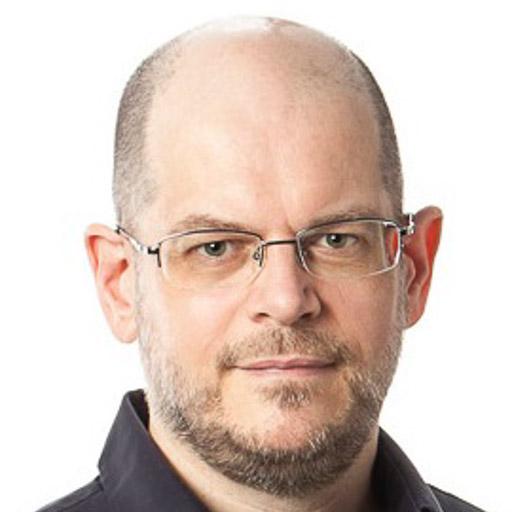
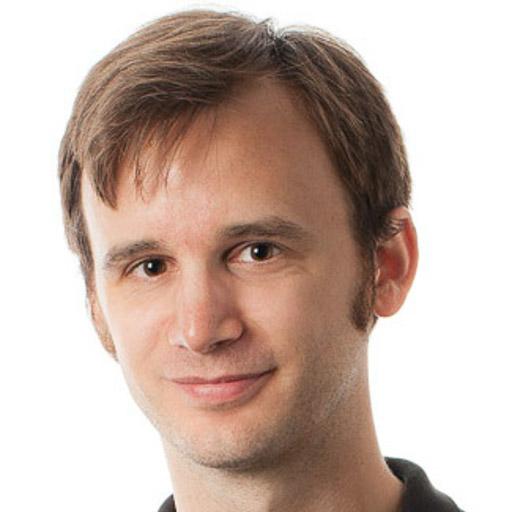
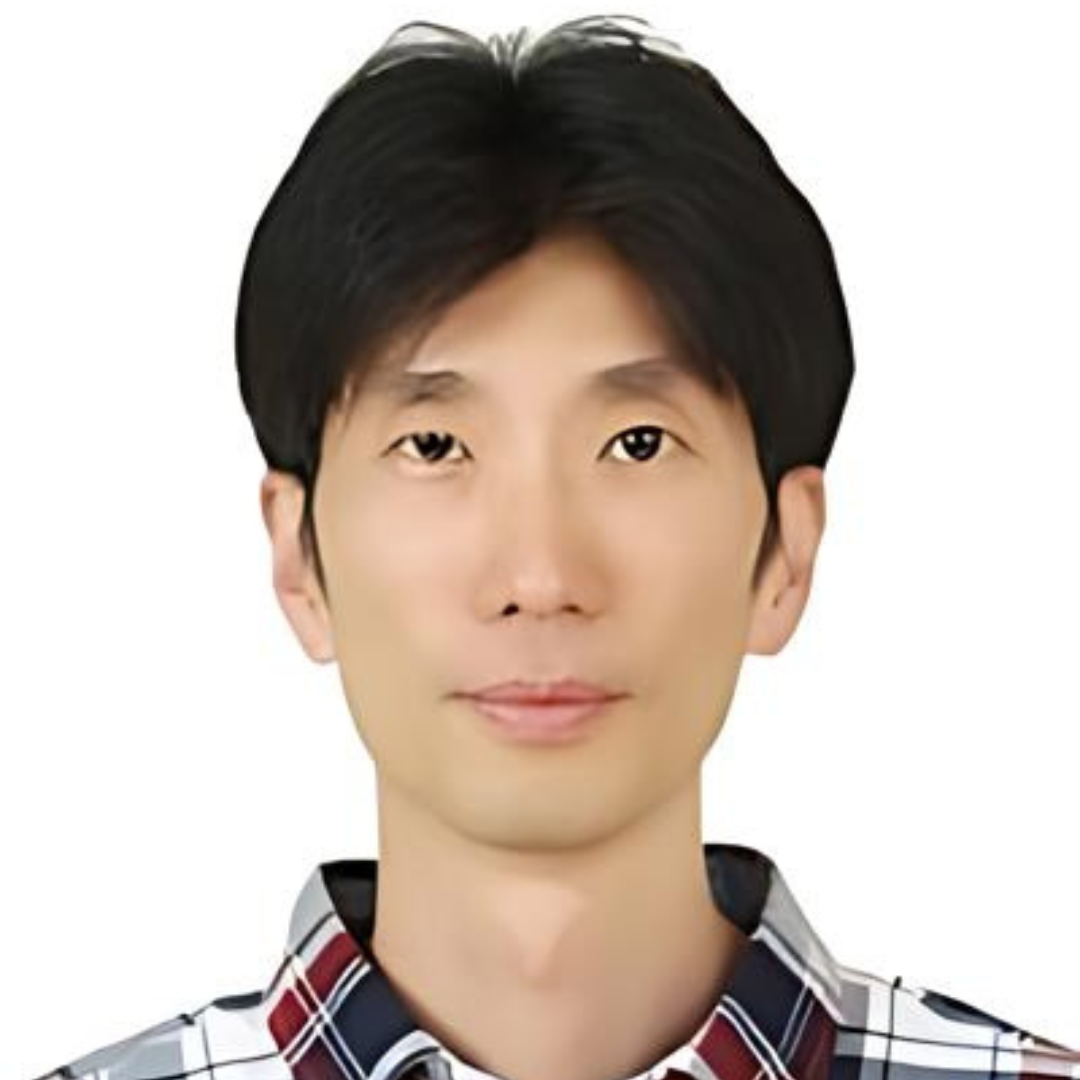
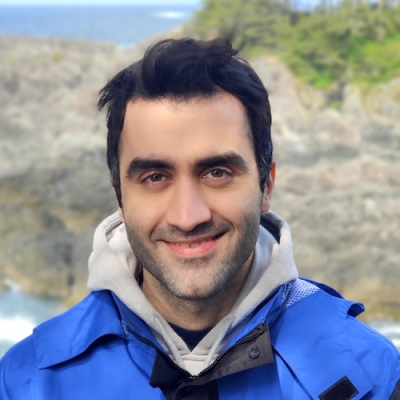
Thomas G. Fevens is a Professor in the Department of Computer Science and Software Engineering at Concordia University, and an Adjunct Professor in the Department of Surgery at McGill University. He holds a PhD in Computing and Information Science from Queen's University (1999), with prior degrees in Astrophysics and Physics. His research focuses on medical imaging applications of deep learning, computational geometry, and surgical software innovation. Notable work includes computer-aided diagnosis systems for breast cancer using cytological images, 3D surgical planning algorithms, and motion tracking frameworks for ACL injury assessment. Education: PhD in Computing and Information Science, Queen's University (1999) MSc in Computing and Information Science, Queen's University (1994) MSc in Physics (General Relativity), Queen's University (1993) BSc in Astrophysics (Honours), Queen's University (1990) Research emphasizes interdisciplinary applications of AI in healthcare, including: Medical image segmentation using U-Net architectures Deep learning for tumor localization Kinect-based motion analysis systems Generative adversarial networks (GANs) for medical imaging Publications demonstrate contributions to both core computer science (mobile ad hoc networks, computational geometry) and clinical applications (surgical planning, cancer diagnosis). Active in industry collaboration through the ML-MVP lab, focusing on translating AI research into clinical tools.
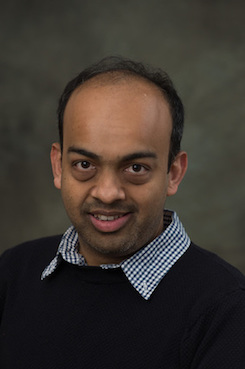
Mohamed-Yahia Dabbagh is an Associate Professor, Teaching Stream in the Department of Electrical and Computer Engineering at the University of Waterloo. He holds a PhD from North Carolina State University (1989), an MSE from the University of Michigan (1981), and a BSE from the University of Aleppo (1976). His research focuses on digital signal processing, image/video processing, and VLSI multiprocessor implementation of algorithms for communication systems and computer vision. He has developed architectures for digital filters and explored video motion estimation, segmentation, and pattern recognition. Dr. Dabbagh has authored numerous articles in IEEE and other venues, including work on wireless sensor anomaly detection, smartphone application monitoring, and FPGA-based digital filter implementations. His teaching includes courses such as Signals and Systems (ECE 207), Linear Circuits (ECE 140), and Probability and Random Processes (ECE 316). His research has spanned VLSI environments, Bayesian classification for video processing, and real-time signal processing techniques. Notable contributions include multiprocessor filter implementations and adaptive motion estimation algorithms. Dr. Dabbagh is a Professional Engineer (PEng) registered in Ontario and has contributed to technical reports on imaging systems and geographic information systems during his tenure at Kuwait-based institutions.
Geza Joos is a Professor at McGill University, holding dual Canada Research Chairs in Powering Information Technologies and NSERC/Hydro-Québec Industrial Research Chair on Renewable Energy Integration. His research focuses on power systems, smart grids, microgrids, and distributed energy resources, with emphasis on energy storage, electric vehicle infrastructure, and grid resilience. He leads projects on microgrid control systems, V2G technology, and grid integration of renewables. His work combines advanced control strategies, data-driven methods, and hardware-in-loop testing. Key achievements include pioneering work on cold load pickup management and DER aggregation for grid services. Dr. Joos has published extensively on topics like microgrid dispatch algorithms, machine learning for stability assessment, and cybersecurity in power systems. His research addresses both technical challenges and operational standards for modern grid infrastructure.
Dr. Guang Gong is a Professor in the Department of Electrical and Computer Engineering at the University of Waterloo and a former University Research Chair. She is an IEEE Fellow with expertise in cryptography, security, and wireless communications. Her research focuses on lightweight cryptographic systems, IoT security, blockchain-based security, privacy-preserving machine learning, and signal design for CDMA/OFDM/MIMO systems. Notable contributions include the WG stream cipher family and submissions to NIST's Lightweight Cryptography competition. Education: Post-doctorate in Electrical Engineering, Fondazione Ugo Bordani, Italy (1992) Doctorate in Electrical Engineering, UESTC, China (1990) Master's in Applied Mathematics, Northwest Telecommunication Eng. Inst., China (1985) Bachelor's in Mathematics, Xiachang Normal College, China (1981) Research Interests: Lightweight cryptography, IoT security, blockchain, privacy-preserving machine learning, physical-layer security, and signal design for wireless systems. Her work bridges theoretical cryptography with practical implementations for embedded devices and RFID systems. Recent Trends in Publications: Focus on zero-knowledge proofs (zkSNARKs), secure blockchain frameworks, relay attack detection, and optimized cryptographic algorithms. Recent work explores privacy-preserving protocols for high-dimensional data and secure hardware implementations of lightweight ciphers. Awards: 2023 George Boole International Prize 2016 Research Excellence Award (UWaterloo) 2006 Outstanding Performance Award (UWaterloo) Multiple fellowships and recognitions in China and Italy Teaching & Mentorship: Teaches courses like ECE 409 (Cryptography), ECE 628 (Network Security), and ECE 614 (Communications). Actively supervises graduate students in cybersecurity and wireless systems. Current openings for graduate applications. Labs & Collaborations: Leads research on secure IoT systems, blockchain integration, and hardware-software co-design for cryptographic primitives. Collaborations include projects with NIST and industry partners for lightweight cipher implementations.
Martin Ester is a Professor of Computing Science at Simon Fraser University (SFU), Canada. He holds a Ph.D. from ETH Zurich (1990) and a Diplom from the University of Dortmund (1984). His research focuses on Data Mining, Machine Learning, Causal Discovery, and Biomedical Applications. He leads the Ester Lab, co-directs the Databases and Data Mining Laboratory, and is part of the Omics Data Science Research Cluster. Education: Ph.D. Computer Science (ETH Zurich), Diplom (University of Dortmund) Lab affiliations: Ester Lab, Databases and Data Mining Laboratory Key research areas: Causal pattern discovery, transfer learning, network analysis, and drug response prediction His work bridges machine learning and biomedical challenges, employing probabilistic graphical models and deep neural networks. Notable achievements include patient stratification algorithms and drug response prediction frameworks. He has advised numerous graduate students, including recent Ph.D. recipients Ali Arab, Amirreza Kazemi, and Mehrdad Mansouri. In 2023, he was named a Fellow of the Royal Society of Canada.
Nachiket Kapre is an Associate Professor in the Department of Electrical and Computer Engineering at the University of Waterloo, Canada (2023–present). He previously held positions as Associate Professor (2016–2021) and on leave as Research Director at Xilinx Labs (AMD Research, Singapore, 2022–2023). Before that, he was an Assistant Professor at Nanyang Technological University (NTU), Singapore (2012–2016) and a Junior Research Fellow at Imperial College London (2010–2012). He earned a Ph.D. and two M.S. degrees from the California Institute of Technology (2010), and a B.E. from the University of Pune (2002). His research focuses on Concurrent and Spatial Architectures , Parallel Processing , and Communication-Centric Design , with a strong emphasis on FPGA-based acceleration for applications like machine learning, graph algorithms, and embedded systems. Key contributions include Hoplite NoC architectures and CaffePresso for deep learning acceleration. Notable awards include the FPT Best Paper Award (2024), TRETS Best Paper Award (2023), and the CASES 2016 Best Paper Award. He has led multiple grants, including NSERC Discovery Grants and A*STAR-funded projects. His advising spans 15+ students across PhD and MSc levels, contributing to FPGA toolflows, NoC design, and hardware acceleration. He has authored over 50 publications in top venues like FPGA, FPL, and ACM TRETS, and serves as a program chair for FCCM 2023. His work bridges theory and practice, emphasizing energy-efficient computing and reconfigurable systems.
Amirali Baniasadi is a Professor and Graduate Advisor in the Department of Electrical & Computer Engineering at the University of Victoria. He holds a BS from Tehran University, an MS from Sharif University, and a PhD from Northwestern University, with professional engineering (PEng) certification. His research focuses on low-power design, power-aware architectures, VLSI interconnect, and high-performance processors, with applications extending to GPU optimization and machine learning hardware integration. Education: BS, Tehran University MS, Sharif University PhD, Northwestern University Research Interests: Development of energy-efficient processor architectures GPU architecture optimizations and performance analysis Machine learning applications in hardware design and signal processing Quantum annealing for signal processing challenges Security and reliability in network-on-chip systems Recent Trends in Publications: Dr. Baniasadi’s work increasingly integrates AI and deep learning with traditional hardware domains, such as using neural networks for phase unwrapping in SAR imaging, lightweight edge detection networks, and explainable AI frameworks for signal-based models. His research also explores GPU design space optimizations, power-aware architectures, and security against thermal attacks in NoCs. Advising & Grants: Supervised over 15 graduate students, including prominent alumni now in academic and industry roles (e.g., Assistant Professors at Lakehead and Syracuse Universities). Active in securing funding for interdisciplinary projects combining computer architecture with emerging fields like quantum computing and healthcare AI. Labs & Teams: Leads a research group focusing on high-performance computing and low-power systems, collaborating with industry partners on GPU optimization and embedded processor design.
Jean Pierre David is a Full Professor in the Department of Electrical Engineering at Polytechnique Montréal. He has been with the institution since January 2006, was promoted to Associate Professor in June 2013, and became a Full Professor in June 2021. His research focuses on digital systems design, reconfigurable systems, and hardware implementations of artificial intelligence applications. David received his Electrical Engineering degree (specializing in electronics) from the University of Liège (Belgium) in 1995. He completed his Ph.D. in June 2002 at the Catholic University of Louvain, with research focused on reconfigurable systems (FPGAs). Before joining Polytechnique Montréal, he was a professor at the University of Montreal from August 2002 to January 2006. Jean Pierre David's research spans several key areas in electrical engineering and computer science. His primary focus is on digital systems design, configuration, and programming, with particular expertise in reconfigurable systems such as FPGAs and microcontrollers. He has made significant contributions to Hardware Description Languages (HDL), developing methodologies for fast, safe, and simple design of digital architectures. His work extends to Hardware-in-the-Loop (HIL) simulation, Deep Packet Inspection (DPI) for high-speed communications (10GBE, 40GBE, 100GBE), and applications of digital systems in artificial intelligence, particularly neural network implementations. David's recent research has increasingly focused on energy-efficient AI hardware, RISC-V processor design for neural network acceleration, and specialized architectures for low-precision computation. His publication record shows a clear evolution from foundational work in digital system design and FPGA implementation toward increasingly sophisticated applications in artificial intelligence and neural network acceleration. The most recent publications demonstrate expertise in creating specialized hardware for efficient AI computation, with a strong emphasis on low-precision and binary neural networks that can run efficiently on resource-constrained devices. His work bridges computer architecture, electrical engineering, and artificial intelligence, creating practical hardware solutions for emerging computational challenges. David is affiliated with several important research groups and institutions including the Strategic Microsystems Group of Quebec (ReSMiQ), the Institute of Electrical and Electronics Engineers (IEEE), and the Institute for Data Valorization (IVADO). His work has been recognized through numerous publications in high-impact journals and conferences, with a total of 108 publications to his name. Professor David has supervised an impressive number of graduate students throughout his career, mentoring 9 Ph.D. students and 24 Master's students to completion. His students have worked on diverse topics including FPGA-based neural network acceleration, hardware implementations of deep learning algorithms, energy harvesting systems for IoT devices, and specialized architectures for low-precision computation. His lab appears to maintain strong connections with industry through various research projects and collaborations with researchers like Yves Savaria. His research laboratory focuses on the intersection of hardware design and artificial intelligence, with particular emphasis on creating efficient implementations of neural networks on specialized hardware platforms. The lab maintains strong connections with industry partners and collaborates extensively on projects related to network processing, AI acceleration, and energy-efficient computing systems.
Christine Muschik is an Associate Professor and University Research Chair at the University of Waterloo. Her research focuses on quantum computing, quantum simulation, and theoretical physics, particularly in the context of lattice gauge theories and quantum algorithms. She explores applications of quantum technologies to problems in particle physics, condensed matter physics, and high-energy phenomena. Her work bridges quantum information science with experimental implementations in superconducting circuits, trapped ions, and optical systems. She is affiliated with research groups in Photonics, Atomic/Molecular/Optical Physics, and Quantum Information & Computing. Her research interests emphasize developing scalable quantum algorithms for simulating complex physical systems, error mitigation techniques, and hybrid quantum-classical methods. She investigates topological phases, gauge symmetries, and real-time dynamics in quantum systems. Recent work includes quantum simulations of quantum chromodynamics, variational approaches for hadron dynamics, and superposed quantum gate protocols. Muschik’s publications span quantum error correction, measurement-based algorithms, and the integration of quantum technologies with classical computational frameworks. She collaborates across disciplines to advance both theoretical and experimental quantum computing. Her research contributes to foundational understanding of quantum systems while addressing practical challenges in quantum hardware and algorithm design. Her articles highlight advancements in simulating lattice gauge theories, optimizing variational quantum eigensolvers, and applying neural networks to quantum state tomography. These contributions underscore her role as a leader in applying quantum computing to fundamental physics problems.
Michel Barbeau is a Professor and Director at the School of Computer Science, Carleton University. He holds a Ph.D. in Computer Science from Université de Montréal (1991) and has held academic roles at Université de Sherbrooke (1991–1999) and a visiting position at the University of Aizu, Japan. His research focuses on non-classical wireless networks, including underwater acoustic communication systems, quantum networks, and resilience assessment of cyber-physical systems. He leads projects involving acoustic signal processing, underwater node communication, and challenges like multipath propagation in aquatic environments. His team tested prototypes in Ottawa’s Rideau Canal. His work spans underwater communication protocols, quantum encryption, and AI-driven network optimization. He is active on YouTube and Twitter, and his ORCID profile highlights interdisciplinary contributions. His research emphasizes practical applications in environmental monitoring, coastal navigation, and secure quantum communication frameworks. Education: Ph.D. Computer Science, Université de Montréal (1991) M.Sc. Computer Science, Université de Montréal (1987) B.Sc. Computer Science, Université de Sherbrooke (1985) Research Interests: Underwater Acoustic Networks Quantum Communications and Cryptography Cyber-Physical Systems Resilience Ad Hoc and Mobile Networks Machine Learning for Network Optimization His current projects address challenges such as signal interference in underwater environments and developing quantum-safe cryptographic algorithms. Collaborations involve interdisciplinary teams of students and researchers. Advancement and Grants: Lead projects on underwater surveillance systems Explores quantum encryption protocols for post-quantum security Investigates AI-driven solutions for UAV and MIMO networks Labs and Teams: His research group focuses on experimental prototyping, including underwater acoustic networks and quantum communication frameworks. Collaborations span academia and industry for real-world applications.
Tristan Glatard is an Associate Professor in the Department of Computer Science and Software Engineering at Concordia University . He holds a Canada Research Chair (Tier II) on Big Data Infrastructures for Neuroinformatics . His work focuses on reproducible research methodologies, neuroimaging analysis pipelines, and open science frameworks. Key contributions include developing tools like NeuroCI for continuous integration of neuroimaging results and VIP (Virtual Imaging Platform) for collaborative research. Research interests span neuroinformatics , reproducibility in computational science , big data architectures , and machine learning applications in healthcare . His projects address challenges in analytical flexibility, software dependency management, and numerical stability in neuroimaging workflows. He actively promotes open data sharing through initiatives like the Neuroimaging Data Model (NIDM) and Brain Imaging Data Structure (BIDS). Recent work emphasizes cross-platform reproducibility, leveraging containerization (Docker/Guix) and cloud-based solutions. He collaborates with international teams to validate neuroimaging pipelines and benchmark computational tools for large-scale biomedical data analysis. Notably absent from the profile are explicit mentions of academic awards or named graduate students, though his work has significant impact on research methodologies. He is deeply involved in open science advocacy through platforms like Brainhack and the Montreal Neuroinformatics Ecosystem.
Suprio Ray is an Associate Professor in the Faculty of Computer Science at the University of New Brunswick, Canada, leading the Big Data Systems and Analytics Lab. He holds a PhD from the University of Toronto, an M.Sc. from the University of British Columbia, and a B.E. from NIT Trichy. Previously, he worked in industry roles at Oracle, Bell Labs, and Webtech Wireless, and completed a PhD internship at SAP. His research focuses on scalable data systems, spatial/spatio-temporal data management, and modern hardware utilization. Key projects include the Jackpine spatial database benchmark , DaskDB (a scalable data science system), and NUMA-aware query processing . He collaborates across disciplines with ECE and GGE departments, supported by grants from NBIF, NSERC, and industry partners. Research interests span Big Data systems, privacy/security in databases, blockchain analytics, and parallel/distributed computing. He has pioneered techniques like STILT multi-dimensional indexes , privacy-preserving spatial queries (Pystin) , and learned spatial indexes . Over 60 publications appear in top venues like SIGMOD, ICDE, and IEEE BigData. Education: PhD (Computer Science), University of Toronto (2015) M.Sc. (Computer Science), University of British Columbia (2003) B.E. (Computer Science & Engineering), NIT Trichy (2000) Teaching includes courses on big data systems (CS4545/6545), database foundations (CS6585), and data science (CS2545). He advises graduate students in scalable analytics and spatial systems, emphasizing industry-relevant software skills. Key awards include the 2024 ACM SIGSPATIAL best poster award , IBM Best Student Paper (2014) , and Harrison McCain Foundation award (2016) . His work has been recognized with 7 best paper awards and 3 patents. Current projects explore FPGA-accelerated joins , serverless data analytics , and privacy-preserving blockchain queries . Past contributions include the GEMM mobility model (2003) and foundational spatial benchmarks.
Dr. Jaho Seo is an Associate Professor in the Department of Automotive and Mechatronics Engineering at Ontario Tech University, part of the Faculty of Engineering and Applied Science. He holds a PhD in Mechanical Engineering from the University of Waterloo and has extensive experience in academia and industry. His research focuses on mechatronics, autonomous systems, intelligent construction/agriculture machinery, and control systems. Education: PhD (Mechanical Engineering), University of Waterloo, 2011 M.Ing (MSc in Mechanical Engineering), École de Technologie Supérieure (Montreal), 2006 BSc (Agricultural Machinery & Process Engineering), Seoul National University, 1999 Research Interests: Dr. Seo specializes in mechatronics, autonomous mobile machines, and intelligent systems. His work emphasizes safety-control mechanisms, electro-hydraulic systems, and hardware-in-the-loop simulation. He has developed algorithms for autonomous excavation, vehicle dynamics, and sensor integration. Professional Activities: Board Member, IT Convergence Technology Division of the Korean Society of Mechanical Engineers (2016–2017) Local Arrangement Co-Chair, 30th Institute of Control, Robotics and Systems Annual Conference (2015) Government R&D evaluator for Korean ministries (2014–2017) Awards: Multiple Best Conference Paper Awards (2014–2016) KIMM Technical Support Award (2015) University of Waterloo Graduate Scholarship (2009–2011) Grants & Labs: He leads the AVeC Lab (Automated Vehicle and Construction Lab). His grants focus on autonomous systems, safety-control, and energy-efficient machinery. He has secured funding for projects related to excavator automation and agricultural machinery. Future Work: Dr. Seo is advancing autonomous construction equipment, real-time safety systems, and sustainable agricultural technologies. His lab collaborates with industry partners to commercialize innovations in electro-hydraulic systems and machine learning.
Dr. Shahrukh Athar is an Assistant Professor in the Department of Electrical & Computer Engineering at McMaster University. His research focuses on perceptual image quality assessment (IQA), degraded-reference and multiply-distorted image analysis, and digital signal/video processing. He also emphasizes educational development, particularly active learning strategies and pedagogical training for colleagues and graduate students. He teaches courses such as COMPENG 2DX3 (Microprocessor Systems Project), COMPENG 2SH4 (Principles of Programming), ELECENG 2CI4 (Introduction to Electrical Engineering), and ELECENG 3CL4 (Introduction to Control Systems). His work bridges machine learning applications in IQA with practical educational methodologies. Dr. Athar's research includes developing robust no-reference IQA algorithms using deep learning and constructing large-scale datasets. He has published extensively on topics like image debanding, blind quality assessment, and FPGA-based signal processing implementations. His LinkedIn and other professional profiles highlight interdisciplinary contributions in both technical and educational domains.
Mohammad Shahrad is an Assistant Professor in the Department of Electrical and Computer Engineering at the University of British Columbia (UBC) and an Associate Faculty Member of UBC's Computer Science Department. He leads the UBC Cloud Infrastructure Research for Reliability, Usability, and Sustainability (CIRRUS) Lab. His research focuses on sustainable and efficient large-scale computing systems, particularly in cloud resource management and serverless systems. Education: Ph.D. in Electrical Engineering, Princeton University (2020) M.A. in Electrical Engineering, Princeton University (2016) B.Sc. in Electrical Engineering, Sharif University of Technology, Tehran (2014) Research Interests: Shahrad's work emphasizes energy-efficient cloud computing, serverless architecture optimization, and sustainability in distributed systems. His projects address challenges like carbon footprint reduction, resource allocation, and cold-start delays in serverless platforms. He employs interdisciplinary approaches, combining system design, algorithm development, and empirical analysis to tackle real-world cloud infrastructure problems. Recent Contributions: His research trends include carbon-aware scheduling, geospatial shifting for sustainability, and developer-centric compliance tools for serverless applications. These efforts aim to balance performance, cost, and environmental impact in modern cloud ecosystems. Scientific Awards: Community Award at USENIX ATC '20 for Serverless in the Wild: Characterizing and Optimizing the Serverless Workload at a Large Cloud Provider Advising & Grants: As CIRRUS Lab lead, Shahrad mentors researchers in cloud infrastructure and sustainability. While specific grant details are not listed, his work reflects substantial industry collaboration (e.g., Microsoft Research, Azure). Labs/Teams: The CIRRUS Lab focuses on creating sustainable cloud solutions through open-source frameworks like OpenPiton and collaborative industry partnerships.