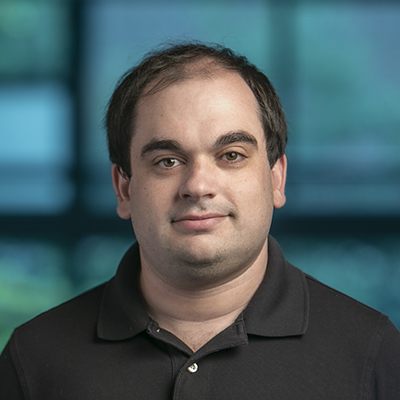
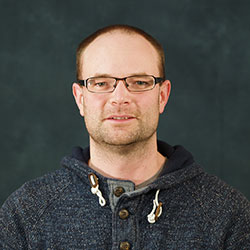
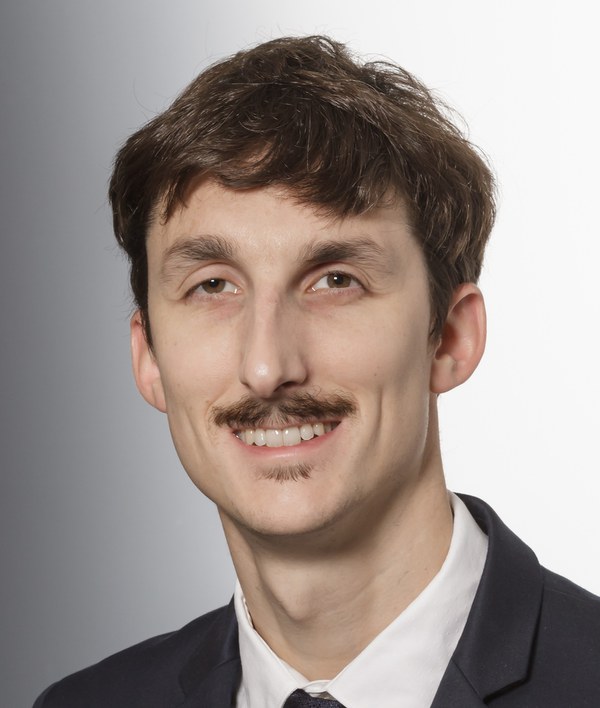
Mohamed Hamdy Khalil Eldefrawy is a Senior Lecturer at Halmstad University's School of Information Technology , specializing in cybersecurity and IoT-related domains. His research focuses on securing emerging technologies through advanced authentication mechanisms, threat detection, and forensic analysis. Cybersecurity IoT Security Digital Forensics His recent publications (2025-2019) highlight expertise in lightweight authentication for autonomous vehicles, deep reinforcement learning for intrusion mitigation, RFID protocol analysis , and side-channel forensic techniques . Key research trends involve industrial IoT security, formal verification of protocols, and AI-driven threat detection. Current affiliations include Halmstad University. No specific scientific awards or student advising details are mentioned in the provided texts.
Ryan Marcus is an Assistant Professor in the Department of Computer and Information Science at the University of Pennsylvania. His research focuses on integrating machine learning into data management systems to create adaptive tools that optimize hardware utilization, invent novel processing strategies, and interpret user intentions. Currently based in Office 407, Amy Gutmann Hall, he actively explores query optimization, index structures, intelligent clouds, programming language runtimes, program synthesis for data processing, and reinforcement learning applications to systems challenges. Key research themes include machine learning for databases , learned query optimization , intelligent cloud systems , and blockchain adaptability . Scientific achievements include the Best Paper Award at SIGMOD '21 for the Bao system and the development of AutoSteer, a cross-database learned query optimizer. Notable PhD advisees co-advised include Peizhi Wu (with Zack Ives), Jeffrey Tao (with Andrew Head), and Zixuan Yi (with Zack Ives). His recent work, presented at venues like VLDB and SIGMOD, emphasizes scalable LLM-augmented data systems (ScaleLLM), robust cardinality estimation, and adaptive Byzantine fault-tolerant consensus (BFTBrain). For full system evaluations, he created testing environments such as BFTGym. Contact: rcmarcus@seas.upenn.edu
Dr. Kevin Worrall is a Senior Lecturer in Robotics and Control at the University of Glasgow's School of Engineering, Aerospace Sciences division. He holds affiliations with both the Space Engineering and Technology group and the Centre for Medical and Industrial Ultrasonics. His academic journey includes a BEng in Electronics and Electrical Engineering from Glasgow (2003), an MSc in Robotics and Embedded Systems from the University of Essex (2004), and a PhD from Glasgow (2008) focusing on optimization algorithms for mobile robot guidance. Research interests span mechatronic systems for extreme environments (space, underground, Antarctica), precision medical applications, and agricultural robotics. His work integrates control theory, machine learning, and hardware development across: Spacecraft attitude control and satellite systems Ultrasonic drilling and granular material handling Medical ultrasound classification using ML Autonomous planetary exploration technologies Publications demonstrate strong focus on aerospace control systems (inverse simulation, attitude control), planetary drilling technologies, and medical imaging AI. Recent work shows increasing emphasis on machine learning applications in both space systems and healthcare diagnostics. Grant leadership includes: ERC: Interglacial Collapse of Ice Sheets (£339k, CoI) ESA: Drill for Extensive Exploration of Planetary Environments (£253k, CoI) UKSA: Roving with Rosalind (£30k, CoI) EC H2020: Robot for Underground Operations (£477k, CoI) Multiple PI-led industry collaborations in positioning systems and image testing Current PhD supervision covers fault-tolerant space algorithms, planetary rover navigation, spacecraft plume interactions, and infrastructure monitoring. He leads research within the Space Engineering and Medical Ultrasonics research groups.
Dr. Karol Kyslan serves as Associate Professor and Vice-Dean for Research at the Faculty of Electrical Engineering and Informatics, Technical University of Košice, where he leads research initiatives and doctoral education programs. His academic profile centers on advanced control systems for electrical drives, with institutional affiliation deeply rooted in industrial automation applications. His research expertise spans sensorless control of Permanent Magnet Synchronous Motors (PMSM) , finite control set model predictive control , and sliding mode observers , addressing critical challenges in low-speed operation, fault tolerance, and industrial implementation. Key application domains include material processing lines, rotary shears, and steel production systems, where his work bridges theoretical control algorithms with practical machinery dynamics. Analysis of his 2021-2025 publications reveals a strategic evolution toward integrating machine learning for fault diagnosis while maintaining core focus on high-frequency signal injection techniques. Recent work demonstrates increasing sophistication in torque ripple compensation and real-time optimization, with growing emphasis on multiphase machine control and hardware-in-the-loop validation for industrial deployment.
Kangwei Xu is a researcher at the Chair of Design Automation (Lehrstuhl für Entwurfsautomatisierung) under Prof. Ulf Schlichtmann at the Technical University of Munich (TUM), actively advancing Electronic Design Automation through AI-driven methodologies. His core research interests include: Electronic Design Automation (EDA) High-Level Synthesis Machine Learning for EDA Neural Network Accelerators Timing Analysis Hardware Reliability Analysis of his 2024-2025 publications reveals a decisive trend in leveraging Large Language Models to revolutionize hardware design flows. Key innovations span automated C/C++ code refactoring (HLSRewriter), behavioral discrepancy testing (HLSTester), and neural network logic optimization, demonstrating how AI integration significantly enhances efficiency and accuracy in EDA toolchains while addressing longstanding challenges in synthesis and verification. Scientific Awards: No awards documented in available sources. Advising and Grants: Public records indicate no formal student advisement roles or individually attributed research grants; his work operates within the broader funded projects of TUM's Design Automation chair. Labs and Teams: Xu contributes to TUM's interdisciplinary Design Automation research group, which spans Analog EDA, Electronic System Level design, Emerging Technologies, Microfluidics, Optical NoC, Novel Microfabrication, Timing Analysis, Neural Networks and Accelerators, and Reliability, maintaining strong industry collaborations and cutting-edge experimental facilities.
Edward F. Gehringer is a Professor in the College of Engineering at North Carolina State University, holding appointments in both the Department of Computer Science and the Department of Electrical and Computer Engineering. His academic journey includes a Ph.D. in Computer Science from Purdue University (1979), an M.S. in Computer Science from Purdue (1974), and dual undergraduate degrees in Mathematics from the University of Detroit (Mercy) and Wayne State University (1972). Ph.D. in Computer Science, Purdue University (1979) M.S. in Computer Science, Purdue University (1974) B.S. in Mathematics, University of Detroit (Mercy) (1972) B.A. in Math/Computer Science, Wayne State University (1972) Gehringer's research spans Advanced Learning Technologies , Computer Architecture , Operating Systems , High-Performance Computing , and Software Engineering . He is a pioneer in AI-enhanced peer assessment systems and collaborative learning in computing education, with a focus on leveraging large language models (LLMs) for feedback automation, rubric generation, and test-skeleton creation. His work addresses challenges in student team formation, GitHub contribution analysis, and ethical computing. His publications highlight trends in AI-driven educational tools , peer-review systems , and software engineering pedagogy . Recent studies explore LLM applications for code refactoring, chatbot-assisted teaching, and GitHub analytics for predicting student performance. Earlier work includes foundational contributions to distributed pair programming (Sangam/FaceTop) and hardware-assisted memory management. Scientific Awards: Google Research Award (2014) Sloan Consortium Effective Practice Award (2008) NC State Gertrude L. Cox Award Honorable Mention (2007) Gehringer has led multiple NSF-funded projects, including Collaborative Research: Research in Student Peer Review ($1.07M, 2014–2019) and Production and Assessment of Student-authored Wiki Textbooks ($110K, 2010–2012). His Expertiza platform enables peer-reviewed learning objects and active learning in large classes. He has mentored numerous students, with research groups focusing on educational data mining, collaborative coding, and ethical computing.
Vijaykumar is a Professor in the Elmore Family School of Electrical and Computer Engineering at Purdue University. His research focuses on computer architecture, VLSI design, and circuit optimization. He is affiliated with the Max W and Maileen Brown Family Hall at the West Lafayette campus. Education: B.E. (Hons) in Electrical and Electronics Engineering, M.Sc.(Tech) in Computer Science from Birla Institute of Technology and Science, Pilani, India (1990) M.S. in Computer Science from University of Wisconsin (1992) Ph.D. in Computer Science from University of Wisconsin (1997) His research spans machine learning acceleration, GPU computing, and hardware security. Recent work includes neural radiance field optimizations, speculative execution security, and processing-in-memory architectures. Publications demonstrate expertise in scalable verification, distributed rendering, and efficient data movement. He has contributed to GPU kernel concurrency, sparse tensor acceleration, and memory consistency verification. His email contact is vijay@ecn.purdue.edu , with office location at BHEE 320, Purdue University.
Juan Antonio Leñero Bardallo is a Professor at the University of Seville, Faculty of Physics, Department of Electronics and Electromagnetism. His research focuses on bio-inspired microelectronics, event-driven vision sensors, and CMOS integration techniques. Research Group: MICROELECTRÓNICA ANALÓGICA Y DE SEÑAL MIXTA Key Projects: SAMANTA2 (robotic vision), CAVIAR (event-based vision), VULCANO (event-driven imaging) His work spans asynchronous image sensors, thermography for medical diagnostics, stacked diodes for energy harvesting, and neuromorphic engineering. Recent publications highlight low-power sun sensors, self-powered imaging systems, and thermographic applications in dermatology. He has contributed to books on analog electronics and radiation detection. Patents include solar position sensors and electron energy detectors for scanning electron microscopy. His teaching subjects cover experimental techniques, integrated sensor design, and bio-inspired algorithms.
Jean-Luc Danger is a Professor at TELECOM Paris where he currently heads the Digital Electronic Systems Research Group. He is affiliated with the Secure and Safe Hardware (SSH) Research Team within the Information Processing and Communication Laboratory (LTCI). With a career spanning over three decades in academia after 12 years in industrial research at PHILIPS and NOKIA, Professor Danger has established himself as a leading expert in hardware security and cryptographic implementations. Professor Danger received his degree in electrical engineering from SUPELEC in 1981 before embarking on his industrial career. His academic journey began in 1993 when he joined TELECOM Paris, where he has since made significant contributions to the field of hardware security. His educational background in electrical engineering provided the foundation for his later specialization in secure hardware design and analysis. Professor Danger's research primarily focuses on embedded systems security , physically unclonable functions (PUFs) , side-channel attacks and countermeasures , and fault injection techniques . His work bridges the gap between theoretical cryptography and practical hardware implementations, addressing critical security challenges in modern computing systems. His research has evolved from foundational work on cryptographic algorithms to more recent investigations into hardware Trojans, aging effects on security primitives, and automotive security systems. Professor Danger has been particularly influential in developing methodologies for analyzing and protecting against electromagnetic fault injection attacks and side-channel information leakage. His extensive publication record demonstrates a consistent focus on hardware security challenges, with recent work showing increased attention to automotive security systems, machine learning applications for intrusion detection, and reliability issues in security primitives affected by aging and process variations. The trajectory of his research shows a natural progression from pure cryptographic implementations to more holistic security approaches that consider the entire hardware stack and its vulnerabilities. Through his leadership of the Secure and Safe Hardware research team, Professor Danger has fostered a collaborative environment that bridges theoretical security research with practical hardware implementation challenges. His work has contributed significantly to the development of standardized methodologies for evaluating hardware security and has influenced both academic research and industry practices in secure hardware design.
Idriss Dagal serves as an Assistant Professor at Beykent University's Department of Electrical and Electronics Engineering. With a PhD and Master's in Electrical Engineering from Yildiz Technical University (2015 and 2023 respectively), and additional academic credentials from Ethiopian Airlines Aviation University and Mongo Polytechnics University, his career bridges academic research with industry experience as a Sales Engineer. PhD: Yildiz Technical University (2015) Master's: Yildiz Technical University (2023), Ethiopian Airlines Aviation University (2008) Bachelor's: Mongo Polytechnics University (2006) His research focuses on renewable energy systems , particularly photovoltaic power optimization using metaheuristic algorithms (Hybrid PSO-Salp Swarm, Gray Wolf Optimization). He also explores control systems for solar energy and aircraft dynamics, including PID and fuzzy logic controllers. Additional work spans machine learning applications in energy and medical diagnostics, along with power electronics for battery charging. Recent publications highlight 15 2025 articles on topics like hybrid energy systems , AI-driven MPPT , and aircraft control frameworks . His work appears in journals such as Scientific Reports , IEEE Access , and International Journal of Aeronautical and Space Sciences . Teaching experience includes courses in Electrical Machines and Information Technologies . Non-university roles at Elektra Electronic Company and Aktif Group Company involved sales engineering, complementing his academic profile with industry insights.
Mohamed Faouzi Atig is a Professor in Computer Systems at the Department of Information Technology, Uppsala University. His career spans roles as Senior Lecturer (2018-2021), Associate Senior Lecturer (2014-2018), and Researcher (2012-2018) at the same institution. He obtained his Doctoral Degree in Computer Science from the University of Paris Diderot-Paris 7 (2010) and a Master in Engineering from Tunisia Polytechnic School (2005). Current Role: Professor in Computer Systems Institution: Uppsala University Research Focus: Model checking, verification of infinite-state systems, weak memory models, automata theory, string constraints, concurrent program analysis His research explores formal methods for concurrent programs, weak memory models (TSO/PSO/POWER), automata theory for verification, and SMT solvers for string constraints. Recent work integrates graph neural networks with word equation solving and advances stateless model checking techniques. Key article trends include Weak Memory Model Verification (TSO, PSO, POWER) Stateless Model Checking Algorithms String Constraint Solvers (TRAU, Norn) Timed Automata and Multi-Pushdown Systems Mohamed Faouzi Atig has led collaborations on fence insertion procedures, timed pushdown automata, and database-driven system verification. His contributions are recognized through publications in top-tier conferences and journals.
Francesca Vipiana is a Full Professor of Electromagnetic Fields at the Department of Electronics and Telecommunications at the Polytechnic University of Turin (POLITO). She is also a member of the Interdepartmental Center PolitoBIOMed Lab - Biomedical Engineering Lab. With over 20 years of full-time research experience, Prof. Vipiana has established herself as a leading expert in computational electromagnetics and microwave imaging systems. Her research interests span antenna design , computational electromagnetics , microwave imaging for medical applications, and food safety/security monitoring . She has pioneered work in numerical techniques based on integral equations and method of moments, with particular focus on multiresolution and hierarchical schemes, domain decomposition, and advanced integration methods. Prof. Vipiana's recent publications show a strong trend toward medical diagnostics using microwave technology, particularly for Alzheimer's disease detection and brain stroke imaging. Her work increasingly integrates machine learning with electromagnetic sensing, and she has developed portable, low-cost microwave imaging systems using off-the-shelf components. Lot Shafai Mid-Career Distinguished Achievement Award (2017) URSI Young Scientist Award (2005) IEEE WiEM best poster award (2009) ISMB Best Paper Award (2011) Prof. Vipiana serves as Principal Investigator for multiple significant research projects including the Marie Sklodowska-Curie Action EMERALD, the Proof of Concept FastFood project, and the national PRIN project BEST-Food. She currently supervises 13 PhD students working on diverse topics from microwave brain imaging to glide-symmetric metamaterials. As an Associate Editor for IEEE Transactions on Antennas and Propagation and the IEEE Antennas and Propagation Magazine, she plays a key role in advancing the field. Her research group focuses on bridging theoretical electromagnetics with practical applications in healthcare and food safety.
Dr.-Ing. Edoardo De Din is a researcher at Forschungszentrum Jülich GmbH, affiliated with the Institute of Climate and Energy Systems (ICE) and its Energy System Technology (ICE-1) department. His work focuses on developing control solutions for multi-modal energy systems, emphasizing real-time operation, voltage control, distributed control, and cyber-physical systems. He specializes in validating these solutions through hardware-in-the-loop (HIL) testing under realistic conditions. Research Highlights: His research addresses the challenges of implementing control methods in field environments, integrating cyber-physical systems with energy infrastructure. The work is aligned with energy system modernization and real-time control optimization. Contact: Forschungszentrum Jülich GmbH, Wilhelm-Johnen-Straße, 52428 Jülich, Germany. Phone: +49 2461/61-96095. Office location: Building 10.21, Room 4009.
Dr. Yulia Sandamirskaya is the Head of Research Center "Cognitive Computing in Life Sciences" at Zurich University of Applied Sciences (ZHAW), focusing on neuromorphic computing applications for embodied artificial intelligence. Her work bridges computational neuroscience and robotics, emphasizing neural-dynamic architectures for real-time decision-making, learning, and sensorimotor integration in autonomous agents. Key Research Areas: Neuromorphic hardware, dynamic neural fields, spiking neural networks, spatial language modeling, and autonomous sequence generation. Projects: Developed controllers for UAVs and robotic arms using event-based vision sensors, explored on-chip unsupervised learning, and designed models for spatial language interpretation in robots. Scientific Contributions: Her publications span robotics conferences and journals like Science Robotics and Frontiers in Neurorobotics , addressing topics such as path integration, obstacle avoidance, and cognitive architectures. Recent work (2024) includes visual odometry with resonator networks and hyperdimensional scene factorization on neuromorphic chips. Advising: Supervised multiple MSc theses at ETH Zurich and NSC/INI programs, mentoring students on neuromorphic navigation, spiking networks, and tactile learning. Collaborated with institutions like ETH Zurich, University of Queensland, and INI Bochum. Labs & Collaborations: Leads the "Neuromorphic Computing Applications: Embodied AI" group at ZHAW, partnering with INIvation (Zurich) and Jörg Conradt (KTH) on neuromorphic hardware implementations. Projects integrate cognitive models with robotic platforms, emphasizing energy efficiency and low-latency interaction.
Qirun Zhang is the Catherine M. and James E. Allchin Early Career Associate Professor in the School of Computer Science at Georgia Institute of Technology. He earned his Ph.D. in Computer Science and Engineering from The Chinese University of Hong Kong (2013) and bachelor's degree in Computer Science from Zhejiang University (2009). Zhang teaches graduate courses in compilers, software analysis, and program analysis, including CS 6340 Software Analysis and Test (Fall 2024) and CS 4240 Compilers and Interpreters (Spring 2025). His research focuses on improving software reliability and security through program analysis and compiler optimization techniques. Key research areas include computational complexity, analytic combinatorics, graph theory, and formal languages. Current projects include SLOT (SMT-LLVM Optimizing Translation) , Mutual Refinements of Context-Free Language Reachability , and Context-Free Language Reachability with Transitive Redundancy Elimination , among others. Zhang's research has produced award-winning work including the SIGSOFT Distinguished Paper Award (FSE 2023) and PLDI Distinguished Paper Award (2020). He has advised multiple students including Ph.D. graduates Shuo Ding (2024) and Yuanbo Li (now at Facebook), with Benjamin Mikek and Camille Bossut currently pursuing their Ph.D.s. As an academic leader, Zhang has served as: Artifacts Chair: PLDI'26, PLDI'25 Program Committee: PLDI'26, POPL'26, SAS'25, ASPLOS'25, SAS'24, FSE'24 External Reviewer: PLDI'19, PLDI'18 His group maintains active GitHub repositories for tools like Perses (syntax-guided program reduction) and Skeletal Program Enumeration (compiler testing framework). Zhang also contributes to educational resources by maintaining course materials on static analysis, symbolic execution, and webassembly analysis.