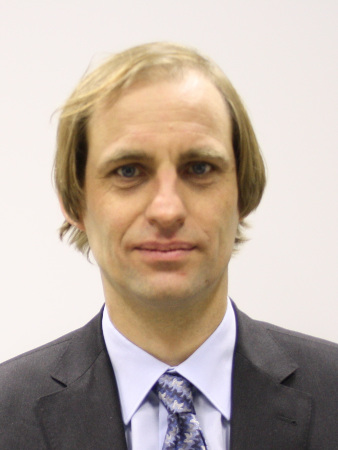
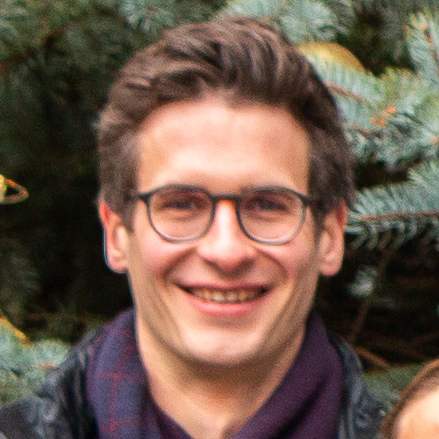
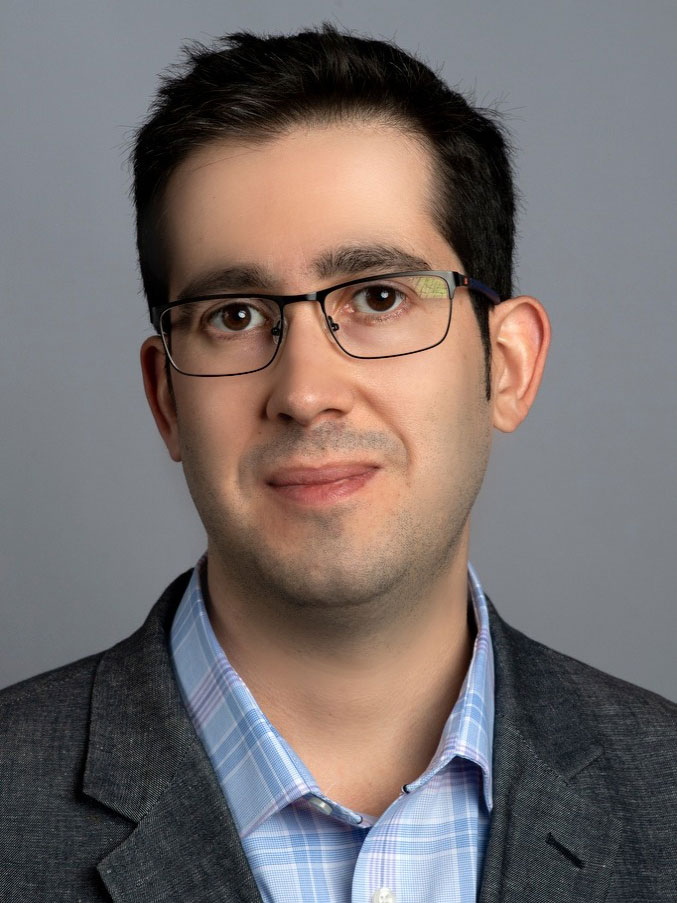
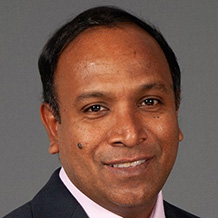
Marwan Hassani is an Assistant Professor at Eindhoven University of Technology's Department of Mathematics and Computer Science, affiliated with the Process Analytics and EAISI Foundational groups. He leads the streaming process mining research group and the Customer Journey track at the Data Science Center Eindhoven (DSC/e). His academic background includes a PhD from RWTH Aachen University (2015) and postdoctoral research there until 2016. Research focuses on unsupervised learning methods for streaming event data, including clustering, outlier detection, and sequential pattern mining, with applications in customer journey optimization and real-time process analytics. Over 65 publications span data mining, process mining, and related areas. He serves on program committees for ECML/PKDD, SDM, and journals like KAIS and DAMI, co-chairing multiple events. Key technical contributions include PrefixCDD for concept drift detection, BFSPMiner for sequential pattern mining, and autoencoder-based anomaly detection systems. His work addresses GDPR compliance in business processes and traffic flow prediction using contrastive learning. Awards include a 2025 Best Paper Award at ACM SIGAPP. Education: PhD in Computer Science (RWTH Aachen, 2015) Projects: Led GDPR compliance project (2018-2021), developed BPR4GDPR framework Teaching: Advanced Process Mining, Foundations of Data Analytics Editorial roles: Guest editor for Data & Knowledge Engineering , editorial board member for Process Science Research aligns with UN SDGs through contributions to efficient resource management and privacy-preserving analytics.
Dr. Ian Williams is a Research Fellow in Translational Implantable Devices at the Department of Electrical and Electronic Engineering, Faculty of Engineering at Imperial College London. His affiliations include the Centre for Bio-inspired Technology, Circuits and Systems, and the Neural Interfaces group. He holds a PhD from Imperial College London in Engineering. His research focuses on neural stimulation for providing artificial sensory feedback in prosthetic limbs, aiming to replicate natural proprioceptive and tactile signals. Key areas include implantable neural interfaces, wearable sensors (e.g., in-ear devices), and bidirectional neural communication systems. Applications span clinical neuroprosthetics, chronic disease monitoring (e.g., COPD), and cognitive workload assessment in gaming. Recent work emphasizes multimodal sensing platforms (BioBoard), wireless power solutions for brain-machine interfaces, and programmable neural interface technologies (Neuro-PULP). He has contributed to over 20 peer-reviewed articles since 2013, addressing challenges in electrode durability, real-time data processing, and clinical translation of neural interfaces. His research integrates hardware design, signal processing, and clinical validation to advance next-generation biomedical devices. Current projects include developing in-ear hearables for continuous health monitoring and bidirectional neural prostheses with closed-loop feedback systems.
Dick Botteldooren is a full Professor of Acoustics at Ghent University, Belgium, leading the WAVES (Wireless, Acoustics, Environment & Expert Systems) research unit. He serves as I-INCE vice-president for Europe and Africa and previously held leadership roles as Editor-in-Chief of Acta Acustica (2004-2013) and president of the Belgian Acoustical Society (until 2018). His educational background includes: MSc in Electronic Engineering (1986, Ghent University) PhD in Applied Science (1990, Ghent University) Professor Botteldooren's research spans acoustic modeling, noise mapping, environmental sensor networks, computational intelligence, and human-inspired machine listening. His work integrates biomonitoring (particularly EEG), health impact assessment of sound, urban sound planning, and soundscape design with strong policy implications. Recent focus areas include AI-driven analysis of animal vocalizations and therapeutic soundscape design for dementia care. Analysis of his 2021-2025 publications reveals three dominant trends: (1) Machine learning applications in bioacoustics (especially broiler chicken vocalization monitoring for welfare assessment), (2) EEG-based attention detection systems using spiking neural networks and cross-modal transfer, and (3) Soundscape augmentation for dementia care through auditory processing-driven environmental interventions. His work consistently bridges computational methods with real-world acoustic challenges. His scientific recognition includes: Fellow of the Acoustical Society of America Professor Botteldooren has advised national and international health councils and noise policymakers, translating research into practice. His work has received sustained funding from the Belgian National Fund for Scientific Research and other international bodies, supporting both fundamental acoustics research and applied policy development. The WAVES research unit under his leadership conducts interdisciplinary work combining wireless sensor networks, computational intelligence, and human-centered acoustics, with active projects in urban noise monitoring, bioacoustic surveillance, and neuroacoustic applications.
Laurent Vanbever is an Associate Professor at ETH Zürich and heads the Networked Systems Group (NSG). He specializes in network programmability, Internet routing, and network security, aiming to make networks more performant and manageable. Previously, he held a postdoctoral position at Princeton University and earned his PhD from the University of Louvain. Education: PhD in Computer Science, University of Louvain (2012) Postdoctoral Researcher, Princeton University (2012–2014) MSc in Computer Science, University of Louvain (2008) MSc in Management, Solvay Brussels School (2010) Research Interests: His work bridges theory and practice, focusing on network programmability, routing protocols, and sustainable networking. Recent projects include NetFabric, an ETH spin-off for network observability, and studies on energy-efficient router design (e.g., Fantastic Joules ) and BGP reconfiguration ( Taming the transient ). Key contributions include xBGP, Magnifier, and SP-PIFO. Awards: Best Paper Award at HotCarbon '24 SIGCOMM 2015 Best Paper Award Multiple IETF/IRTF Applied Networking Research Prizes Advising and Labs: Supervises PhD students (e.g., Benjamin, Weiran) and manages the NSG lab. Collaborates with NetFabric, offering student projects in network observability and sustainability. Labs & Teams: Leads the NSG and co-founded NetFabric, focusing on next-gen network observability using AI. Active in teaching Communication Networks and Advanced Topics in Communication Networks .
Matthias Janetschek holds the position of Associate Professor at the Management Center Innsbruck (MCI), Austria, since September 2020. Previously, he served as a Lecturer at MCI (2018–2020) and was a Co-Founder/Senior Developer at Felix Solution UG (2013–2015). He earned a PhD in Computer Science from the University of Innsbruck (2011–2019), alongside earlier degrees in Computer Science (BSc 2002–2007, MSc 2007–2011). His research focuses on distributed systems, workflow management, cybersecurity, and IoT , with notable contributions to scientific workflow execution on cloud/manycore architectures and AR/VR applications in education. He has supervised over 18 bachelor/master theses addressing topics like IoT security, reinforcement learning, and edge computing. Teaching responsibilities include courses such as Distributed Systems , Virtual Reality , and Computer Architecture at MCI. He has also completed further training in online education tools (e.g., Sakai, Adobe Connect) and corporate communication. His publications span journals like Multimodal Technologies and Interaction and conference proceedings on workflow systems, cloud computing, and AR usability. Current work emphasizes large-scale IoT security assessments and edge computing optimizations.
Jorge L. Salazar-Cerreno is an Associate Professor at the School of Electrical and Computer Engineering , University of Oklahoma , and a key member of the Advanced Radar Research Center (ARRC) and PAARD . His work bridges antenna design , phased array radar systems , and atmospheric research . Education: Ph.D. in Electrical and Computer Engineering (2012), University of Massachusetts Amherst Research Interests focus on dual-polarized phased arrays, mmWave and sub-terahertz antennas, radome modeling, and UAV-based radar calibration. His innovations aim to enhance scanning performance, reduce costs, and improve weather observation accuracy in challenging terrains. Article Trends highlight advancements in UAV metrology , real-time calibration , and rapid-scan imaging radars , particularly for storm analysis and atmospheric sensing. Key themes include wideband antenna design , array diagnostics , and material characterization . Scientific Awards NCAR Advanced Study Program postdoctoral fellowship Grants include a $3.01 million NSF award (2023) for developing a C-band mobile polarimetric imaging radar to improve severe weather warnings. Labs & Teams : Leads the Radar Innovations Lab , contributing to next-generation weather radar systems like Horus and PAIR .
Riccardo Lancellotti is an Associate Professor at the Department of Engineering 'Enzo Ferrari' of the University of Modena and Reggio Emilia, Italy. His primary research focuses on Fog/Edge computing, Cloud IaaS infrastructure management, and scalable resource allocation strategies. He actively contributes to international conferences and journals in computer science and networking. Research Interests: Current: Fog and Edge computing, Virtual elements management in SDN data centers, Cloud monitoring, IaaS optimization Past: Performance evaluation of web clusters, Social network analysis, P2P systems, cooperative caching His work emphasizes energy-efficient algorithms, load balancing in distributed systems, and genetic approaches for service placement. He has received a Best Paper Award for his 2014 publication on adaptive VM clustering techniques. Lancellotti collaborates closely with industry partners, including those involved in smart city infrastructure projects and multimedia processing optimization. Teaching Activity: Reti di calcolatori e lab (Computer Networks) Applicazioni Distribuite e Mobili (Distributed and Mobile Applications) Sistemi e Applicazioni Cloud (Cloud Systems and Applications) Lancellotti has advised on projects involving VM behavior analysis and cloud monitoring, though no formal student names are listed. He participates in significant initiatives like the SAMMClouds project and has a strong focus on open-source software advocacy, as seen in his contributions to Linux Day events. He is part of the Department’s research group exploring cloud and edge computing solutions, with a lab focusing on infrastructure optimization and sustainable computing practices.
Kotzanikolaou Panayiotis is an Associate Professor at the Department of Informatics , University of Piraeus, where he serves as Director of the Laboratory of Security. His work focuses on cybersecurity, blockchain, IoT, and smart grids. Academic Rank: Associate Professor Department: Informatics University: University of Piraeus His research spans cybersecurity , blockchain , and IoT security , with over 70 publications and 1700+ citations (h-index=23). He has participated in EU projects and contributed to critical infrastructure protection methodologies. Recent publications highlight trends in Wi-Fi security , UAV vulnerabilities , blockchain protocols , and smart grid resilience , reflecting his expertise in securing next-generation networks. He holds certifications such as CISSP and ISO 27001 Lead Auditor , and has served as guest editor for cybersecurity journals.
Josep Miquel Jornet is a Professor in the Department of Electrical and Computer Engineering at Northeastern University (NU), serving as Associate Dean of Research in the College of Engineering and Associate Director of the Institute for the Wireless Internet of Things (WIoT). He leads the Ultrabroadband Nanonetworking (UN) Laboratory, focusing on terahertz communications, wireless nano-bio networks, and the Internet of Nano-Things. His work spans theoretical, experimental, and policy dimensions, with over 250 publications and $30M+ in grants from NSF, AFRL, and industry. Education: Ph.D., Georgia Institute of Technology (2013) M.S. and B.S., Universitat Politècnica de Catalunya (2008) Visiting Researcher, MIT (2007-2008) Research Interests: Terahertz communications for 6G, nano-bio-communication networks, spectrum policy above 100 GHz, and wearable/implantable medical devices. His lab develops novel nano-devices, communication protocols, and experimental platforms, emphasizing societal impact through spectrum regulation and STEM outreach. Grants & Awards: NSF CAREER Award (2019), IEEE Fellow (2024) US FCC first-of-its-kind licenses for THz systems Over $30M in federal and industry grants Labs & Leadership: UN Lab at NU, co-director of MS programs in IoT/Wireless Engineering. Leadership roles in IEEE, ACM, ITU, and NextG Alliance. Editor-in-Chief of Nano Communication Networks and Associate Editor of multiple journals.
Meryl Pearce is a researcher affiliated with James Cook University , focusing on interdisciplinary studies at the intersection of environmental management, public health, and education. Her work examines water conservation behaviors, Indigenous community health, and doctoral education outcomes. Key Research Areas: Water conservation, climate change impacts on Indigenous populations, academic training for health professionals. Collaborations: Frequently partners with scholars like Eileen Willis, Lynne Eagle, and Bradley Jorgensen. Her publications highlight empirical studies in arid Australian regions, with a focus on policy implications and behavioral models. While her recent work centers on innovative doctoral programs, earlier studies address environmental health disparities and cultural responses to water scarcity.
Wayne Read is a researcher at James Cook University, specializing in interdisciplinary fields spanning Geotechnical Engineering, Applied Mathematics, and Computer Science. His work focuses on sensor networks, environmental monitoring systems, and computational methods for geomechanics and fluid dynamics. He has contributed to advancements in wireless sensor network management, fraud detection in online auctions, and numerical solutions for complex engineering problems. His research includes developing low-cost aquatic monitoring systems (e.g., SEMAT) and IoT-based sensors for environmental data collection. He has also explored mathematical models for soil consolidation, groundwater flow, and advection-diffusion processes. In computer science, he investigates auction protocols, collusion detection, and secure data storage solutions. Key collaborations include projects with the School of Information Technology and Environmental Science groups at JCU. His work bridges theoretical analysis (e.g., series methods for PDEs) with practical applications in environmental monitoring and cybersecurity.
Doris Aschenbrenner is a researcher specializing in human-robot interaction and augmented reality applications for industrial maintenance systems at Julius Maximilians University Würzburg. Her work bridges computer science, engineering, and human factors disciplines to develop practical solutions for Industry 4.0 environments. Her research focuses on Human-Robot Interaction , Augmented and Virtual Reality for industrial applications , Human-in-Command systems , and Industry 4.0 technologies . She has conducted extensive work on AR-assisted maintenance operations, digital twins for production environments, and human factors considerations in collaborative robotics systems. Her research demonstrates how immersive technologies can enhance manufacturing processes while maintaining appropriate human oversight and control. Her publication record shows significant contributions to conferences like ISMAR, VR, and Frontiers in Robotics and AI, with a consistent output from 2013 through 2024. Her recent work has focused on regulatory aspects of AI implementation in manufacturing, particularly regarding the EU AI Act, and developing platforms for digital remote maintenance services. Her research has practical implications for manufacturing industries seeking to implement advanced human-machine collaboration systems while addressing regulatory requirements and human factors considerations.
Shuchen Zhu is a Phillip Griffiths Research Professor of Mathematics at Duke University, affiliated with the Trinity College of Arts & Sciences. They hold a Ph.D. from Rutgers University (2024). Their research focuses on quantum computing, quantum algorithms, and theoretical physics, with notable contributions to quantum gate synthesis, optimization algorithms, and quantum simulation techniques. Recent teaching includes MATH 218D-2: Matrices and Vectors in Spring 2025. Key research areas include quantum circuit design, Trotter error analysis, and applications of quantum mechanics to combinatorial optimization. Publications emphasize advancements in qutrit systems, gluon field digitization, and super-quadratic speedups in quantum algorithms. Their work bridges theoretical foundations with practical implementations in quantum hardware and software. Publications span topics from quantum lookup tables to particle physics simulations, showcasing interdisciplinary expertise. No awards are explicitly listed, but their active publication record reflects sustained academic engagement. Advising details are not provided in available data.
Dr. Indu Bodala is a Lecturer in Computer Science at the University of Southampton. She holds a Ph.D. from the National University of Singapore, where her research focused on vigilance fluctuations using EEG and eye-tracking. She has conducted postdoctoral research at NUS and the University of Cambridge in areas such as Human-Robot Interaction (HRI), social robotics, and affective computing. Her work on a robotic mindfulness coach was featured in media outlets like BBC Look East and the Raspberry Pi Foundation's Hello World magazine. She is actively involved in interdisciplinary projects, including healthcare technologies and machine learning applications in oncology decision-making. She currently supervises multiple PhD students and leads research groups in robotics and AI. **Education:** Ph.D. in Computer Science, National University of Singapore Postdoctoral Research, NUS School of Computing Postdoctoral Research, University of Cambridge, Department of Computer Science and Technology **Research Interests:** Human-Robot Interaction (HRI) Social Robotics and Affective Computing Machine Learning in Healthcare Longitudinal User Studies **Awards:** Shortlisted for RSJ/KROS Distinguished Interdisciplinary Research Award (IEEE RO-MAN 2021) **Research Projects:** LLM-driven Social Stories Interventions for Child-Robot Interactions KTP With First Step Trust Her recent publications focus on advancing non-invasive neuroimaging techniques, predictive models for cancer treatment pathways, and robotic interventions for mental well-being.
Suresh Perinpanayagam is Professor of Engineering at the University of York, where he leads transformative research in digital/data-centric engineering, digital twins, and AI. His work aims to revolutionize system design by leveraging data and high-performance computing to provide a more realistic and synergistic approach to complex future systems. He is affiliated with the School of Physics, Engineering and Technology at the University of York, where he has established the Data-Centric Engineering and Digital Twinning Synergy (DACEDITS) research group. Professor Perinpanayagam holds a Bachelor's and Master's degree in Aeronautical Engineering from Imperial College, London, and a PhD in Mechanical Engineering from Imperial College, London (Rolls-Royce Vibration University Technology Centre). His research focuses on harnessing digital technologies to revolutionize engineering design, control, development, and through-life supportability within aerospace, transport, energy and built infrastructure domains. Digital twins form a cornerstone of his work, creating virtual replicas of physical systems that are continually updated with real-time data for remote monitoring and predictive analytics. His team combines advanced modeling and simulation with data analytics and machine learning algorithms to gain actionable intelligence from real-time data, facilitating predictive maintenance and fault detection. Key application areas include fusion energy systems, electric/hydrogen aircraft, and autonomous transport vehicles, where the goal is to minimize extensive testing and validation while addressing global challenges in energy, electrification, circular economy practices, and net-zero emissions goals. Analysis of Professor Perinpanayagam's recent publications reveals a strong focus on applying digital twin technology and machine learning to critical engineering systems. His research spans aerospace applications (particularly for more electric aircraft), railway systems, and power electronics reliability. A notable trend is the increasing emphasis on explainable AI for safety-critical systems in aerospace, addressing certification challenges while maintaining high reliability standards. His work consistently bridges theoretical advancements with practical industrial applications, particularly in collaboration with major aerospace companies. Professor Perinpanayagam has secured research grants exceeding £5 million throughout his career. He has cultivated extensive industrial collaborations with leading companies including Boeing, Rolls-Royce, BAE Systems, Thales, Airbus Group, Safran, Meggitt, UKAEA, Heathrow Airport, Assystem, Awaretag and Chitendai Ltd. He has served as Principal Investigator for significant projects such as the Future Landing Gear Phase 2 project (£2 million) and the LAND One project with Airbus, as well as a £1 million project from Safran/ATI for the OLLGA project. As an educator and mentor, Professor Perinpanayagam has been the principal supervisor for seven PhD candidates and one Master's by Research student, all of whom have successfully completed their degrees. He has also supervised Individual Research Projects for thirty-five Master's students. His teaching encompasses data-centric engineering for intelligent systems, covering machine learning, digital twin technology, intelligent transport systems, IoT/sensory systems, predictive analytics, asset management, resilience engineering, project management, and system availability and maintainability. Professor Perinpanayagam leads the Data-Centric Engineering and Digital Twinning Synergy (DACEDITS) research group at the University of York, which pioneers the integration of digital and data technologies to revolutionize engineering design and support. His team brings together cross-disciplinary expertise in advanced modeling and simulation, data analytics, and artificial intelligence to develop next-generation engineering systems that are highly efficient, reliable, and economically viable. The group maintains strong industry partnerships that facilitate the translation of research into practical applications.