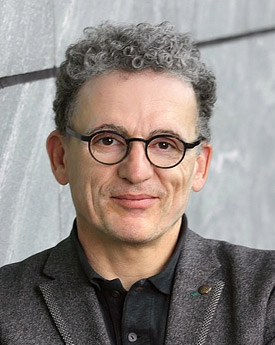
Prof. Dr. Andreas Mauthe is a Professor at the University of Koblenz, affiliated with Department 4 (IT and Data Security). He leads research in cybersecurity, network resilience, and multimedia systems. His work spans cyber-physical systems, adaptive streaming, and smart grid technologies. He has advised numerous research assistants and contributes to projects like Fogbanks and Tectons. Research interests focus on IT security , data privacy , and resilient network design . Recent work addresses challenges in adaptive content delivery, malware detection in cloud environments, and quality-of-experience (QoE) optimization in multimedia systems. Key contributions include frameworks for security cost modeling in cyber-physical systems and novel approaches to decentralized anomaly detection. He collaborates on interdisciplinary projects involving IoT, P2P systems, and emergency communication networks. Publications emphasize empirical studies and system prototyping, such as the Juno middleware for adaptive streaming and the PReSET toolset for network resilience evaluation.
Natalia Kushik is a Lecturer at Telecom SudParis, part of the Institut Polytechnique de Paris. Her primary affiliation is with the ACMES (Algorithmics and Computer Models for Engineering and Systems) research group. Her research focuses on model-based testing methodologies, formal verification of systems, and applications in software-defined networking (SDN), cloud computing, and distributed systems. Her work extensively employs finite state machines (FSMs) and automata theory to design test strategies for complex systems. Notable areas include deriving homing/synchronizing sequences for automata, race condition detection in distributed systems, and optimizing network configurations using timed models. She has contributed to improving the reliability and security of SDN controllers and cloud infrastructures through formal methods. Recent trends in her publications emphasize probabilistic approaches for test suite minimization, emulation-based validation of dynamic networks, and formal analysis of reactive systems. She has collaborated on projects involving QoE (Quality of Experience) evaluation for multimedia services and fault models for digital circuits. Her work often bridges theoretical computer science with practical system implementation challenges. Her articles frequently explore intersections between formal methods and real-world applications, such as applying cellular automata for network parameter modeling and using SMT solvers for configuration validation. She has also published on optimizing interpreted programming languages using state models and proactive trust assessment mechanisms for service systems. Kushik’s research is characterized by interdisciplinary collaborations, with contributions to both academic conferences (e.g., ICTSS, ENASE) and industry-oriented venues (e.g., IEEE NCA). Her work addresses challenges in system reliability, security, and scalability across diverse domains like telecommunications, cloud computing, and embedded systems.
Titus Zaharia is a Professor at Telecom SudParis, affiliated with the SAMOVAR research department. His work focuses on computer vision, 3D data compression, neural networks, and augmented reality applications. He has contributed extensively to standards like MPEG-4 and MPEG-7, particularly in 3D mesh compression and multimedia indexing. Zaharia leads research in assistive technologies for visually and hearing-impaired individuals, developing systems like DEEP-HEAR and wearable devices for navigation assistance. His work bridges theoretical advancements with practical industrial applications, such as optimizing AR systems for manufacturing and improving public transportation prediction through machine learning. Zaharia has collaborated on projects like the INVENIO platform for content reuse in multimedia production, and his contributions span over 20 years of academic and applied research. Key research areas include dynamic point cloud compression, lightweight neural network libraries (e.g., FasterAI), and multimodal fusion for video advertising and accessibility. He has published over 100 peer-reviewed papers in journals like IEEE Access and Image and Vision Computing, and presented at conferences including CVPR, ICCV, and ISMAR. His research emphasizes real-world impact, addressing challenges in efficient data representation, human-centric technology, and industrial automation.
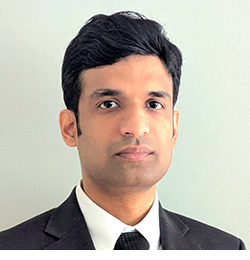
Dhritiman Bhattacharya is an Assistant Professor in the Department of Electrical & Computer Engineering at Rowan University, affiliated with the Henry M. Rowan College of Engineering. He holds a Ph.D. in Mechanical and Nuclear Engineering from Virginia Commonwealth University (2020) and a B.Sc. in Electrical and Electronic Engineering from Bangladesh University of Engineering and Technology (2013). Prior to his current role, he was a Postdoctoral Fellow in the Department of Physics at Georgetown University. His research focuses on overcoming energy limitations in CMOS-based computing through spintronic innovations, leveraging magnetic nanostructures and non-volatile materials to develop novel neuromorphic and memory technologies. Key areas include voltage-controlled skyrmions, magneto-ionic devices, and neuromorphic computing architectures. He has published over 25+ journal articles and received the 2021 Best Paper Award at the ASME Smart Materials Conference, alongside recognition as an Outstanding Reviewer for the Institute of Physics. His articles explore topics such as magnetic nanostructure design, strain-mediated switching, and reservoir computing with frustrated nanomagnet arrays. Notable contributions include studies on 3D interconnected nanowire networks and physically secure logic locking mechanisms. Professional memberships include IEEE and the American Physical Society.
Saleem Bhatti is a Professor at the School of Computer Science, University of St Andrews, UK, actively leading research and teaching with a focus on internet architecture evolution. His work centers on the Identifier-Locator Network Protocol (ILNP) as a practical solution for mobility, multihoming, and security without requiring fundamental changes to IPv6 infrastructure. He maintains an open lab for postgraduate researchers, particularly seeking PhD candidates to advance ILNP in multipath transport protocols, ubiquitous computing, datacentre operations, and energy optimization, while also engaging in industry consultancy for network technology deployment. His academic credentials include a PhD and MSc in Computer Science from University College London (UCL), complemented by a B.Eng (Hons) in Electronic and Electrical Engineering from UCL. This interdisciplinary background bridges hardware and protocol design, enabling his empirical approach to system development. Bhatti's research interests form a cohesive portfolio: Internet architecture (specifically ILNP's identity-locator separation), network security through protocol-level innovations, energy efficiency in wireless systems and video streaming, and mobile health applications leveraging social media platforms. His fingerprint analysis reveals dominant focus areas: Network Protocols (100%), Testbed development (93%), Internet Protocol (60%), Handoff optimization (37%), and Network Connectivity (36%). Recent publication trends (2023-2025) emphasize security through ephemeral identifiers and multipath defense mechanisms for encrypted traffic, alongside energy audits of decentralized networks like the Fediverse. Earlier works (2011-2017) established foundational insights on IEEE 802.11 energy profiles, demonstrating minimal real-world benefits of upgrading from 802.11n to 802.11ac in typical office deployments due to marginal throughput gains against significant costs. No scientific awards, fellowships, or medals were documented in the provided materials. As Principal Investigator, he secured major grants including the EPSRC-funded ILNP Demonstration Testbed (2020-2021), Scottish Funding Council's Open Health Data for Africa (2019), and the Data Lab EngD programme (2016-2022). His industry relevance extends beyond grants through bespoke consultancy on network technology and protocol implementations. Current PhD projects explicitly seek candidates to explore ILNP's impact on QUIC, datacentre operations, and energy usage in IP communications. His research operates through hands-on testbeds, with the ILNP project providing FreeBSD implementations for real-world IETF hackathons. The work integrates security, energy, and mobility concerns across contexts from military communications (MILCOM papers) to low-resource African health systems, demonstrating consistent commitment to practical, deployable solutions. He actively translates research into press coverage, including IETF Prague Hackathon contributions (2019) and critiques of broadband deployment (2007).
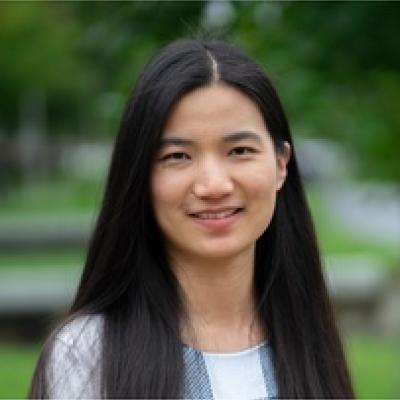
Kexin Rong is an Assistant Professor in the School of Computer Science at Georgia Institute of Technology. She leads the D2I Lab, which is part of the Georgia Tech database group, and maintains an affiliation with VMware Research Group as an affiliated researcher. Dr. Rong received her Ph.D. in Computer Science from Stanford University in 2021 (advised by Peter Bailis and Philip Levis) and her B.S. in Computer Science from California Institute of Technology in 2015. Her academic journey includes recognition as an EECS Rising Star by UC Berkeley and an Honorable Mention for the SIGMOD Jim Gray Doctoral Dissertation Award. Her research focuses on democratizing data science through systems that simplify large-scale data analytics for non-experts. She synthesizes techniques from data management, machine learning, and human-computer interaction to improve both computational and human efficiency. Current research directions include analytics over unstructured data (Video Labeling with SketchQL and Image Understanding with VCR) and data infrastructure for AI (Data preprocessing with LOTUS and DiffPrep, Checkpointing for DL training with Inshrinkerator). Her recent publications show a strong trend toward building user-friendly systems that bridge complex data analytics and non-expert users, with significant impact demonstrated by adoption of systems like ASAP by industry players including Datadog and TimescaleDB for time series visualizations. Amazon Research Award recipient (2024) SIGMOD 2024 Distinguished PC Award Multiple NSF awards (2023-2024) Best Paper Finalist at IISWC 2024 Catherine M. and James E. Allchin Early Career Professorship Dr. Rong actively mentors students, with recent PhD graduates including Peng Li (VLDB'23 Best Paper Award winner), Hantian Zhang, and Renzhi Wu now at leading tech companies. She teaches core database courses including CS6400 Database Systems Concepts and Design and CS4440 Emerging Database Technologies. The D2I Lab under her direction is committed to providing an inclusive environment that welcomes applicants from diverse backgrounds, especially those underrepresented in computer science.
Dr. Nebojša Stanković is an Assistant Professor at the Department of Information Technologies, Faculty of Technical Sciences, University of Kragujevac. With over 30 years of academic experience since 1992, he specializes in information technologies, programming education, and multimedia systems. His research focuses on artificial intelligence applications in education and innovative teaching methodologies. Education: BSc (1991): Technical Faculty Čačak, University of Kragujevac MSc (2009): Technical Faculty Čačak, University of Kragujevac PhD (2021): Faculty of Technical Sciences Čačak, University of Kragujevac Dr. Stanković's research spans multiple areas including artificial neural networks for predicting student success in programming, e-learning technologies, and multimedia systems. He has made significant contributions to understanding how AI can enhance educational outcomes, particularly in computer science education. His work also addresses cybersecurity in educational contexts and the impact of digital tools on teaching methodologies, with a strong focus on practical applications that improve learning experiences. His recent publications show a clear trend toward AI applications in education, with a particular emphasis on using machine learning to predict student success in programming. He has also explored cybersecurity challenges in educational environments, pollen level prediction using ML techniques, and optimizing solar energy yield through hybrid AI models. These works demonstrate his interdisciplinary approach connecting computer science with practical educational and environmental applications. Dr. Stanković has been an authorized ECDL (European Computer Driving Licence) examiner since 2005 and has co-authored three accredited teacher training programs. He has organized numerous computer training courses for employees and unemployed in cooperation with the Employment Bureau and has been actively involved in the "Technics and Informatics in Education" conference series since 2006. He has served as an organizer and technical editor for multiple academic conferences and has contributed to the development of educational materials including several textbooks on information technologies, multimedia systems, and computer applications.
Prof. Dr. Sven-Hendrik Voß is a Professor at the Berlin University of Applied Sciences (BHT Berlin) since 2011. His academic role includes mentoring first-year students, representing practical phase programs, and leading the Digital Laboratory (Department VI). He has extensive experience in high-speed hardware architectures, FPGA design, and optical communication systems. Doctorate in Electrical Engineering (Microelectronics) from TU Berlin Diploma in Electrical Engineering (Communications) from TU Berlin Research Interests span digital signal/image processing, FPGA-accelerated data processing, high-speed communication systems, embedded vision systems, and methods for image synthesis. He has contributed to light field imaging, real-time processing, and optical interconnects for maskless lithography. Publications focus on FPGA-based solutions for high-speed data processing, optical communication systems, and hardware implementations in fields like 3D media and industrial applications. His work often combines digital circuit design with optical technologies. Teaching includes digital systems design, computer architecture, machine-oriented programming, and image processing. He offers thesis topics involving FPGA development for audio/video applications and communication systems. Professional Background includes leadership roles at Fraunhofer HHI, where he headed the High-Speed Hardware Architectures department (2010-2014) and led hardware groups in earlier roles. He has industry experience in VHDL implementation and PCB design.
Salah Bourennane is a Lecturer and researcher in the Computer Science department at the Fresnel Institute , with a focus on advanced machine learning and multidimensional signal processing techniques. His research interests span: Machine Learning (deep learning, transfer learning, optimization algorithms) Signal Processing (hyperspectral analysis, tensor decomposition, noise reduction) Medical Imaging (diagnostic systems, brain mapping, cancer detection) Computer Vision (face recognition, surveillance systems, 3D verification) Security Applications (mask detection, concealed object classification, steganalysis) Recent publications highlight his work in: Tensor-driven methods for low-resolution face recognition Hybrid multilinear-linear architectures for camera network identification Deep learning frameworks for medical diagnostics (e.g., breast cancer segmentation, Alzheimer's disease mapping) Optimization algorithms (e.g., grey wolf optimizer variants) for sensor systems and image processing Real-time pandemic response technologies like social distance monitoring His work is implemented within the Fresnel Institute research laboratory, specializing in computer vision and data science applications.
Scott Huxtable is an Associate Professor and Associate Department Head of Undergraduate Studies in the Department of Mechanical Engineering at Virginia Tech (College of Engineering). He also holds an affiliate membership in the Department of Engineering Science and Mechanics. His research focuses on micro-nano-scale thermal transport, sensors/actuators, nanoscale energy conversion (e.g., thermoelectric devices), and thermal management of electronic systems. He has been recognized with awards including the 2010 Virginia Tech Dean’s Award for Excellence in Teaching and the 2006 NSF CAREER Award. His work bridges fundamental materials science with applications in clean energy, electric vehicles, and energy harvesting. Education: Ph.D. (2002) and M.S. (1999) in Mechanical Engineering from UC Berkeley, and B.S. (1997) in Mechanical Engineering from Bucknell University. Research interests emphasize nanotechnology-driven solutions for energy systems, including thermoelectric materials, thermal management in electronics, and bio-inspired multifunctional materials. His pedagogical work explores innovative educational tools to enhance engineering concept comprehension through virtual and hands-on learning environments. His publications span over two decades, with recent trends focusing on advanced materials characterization, automotive energy efficiency, and thermoelectric waste heat recovery systems. He has collaborated on projects funded by NSF and DOE, advancing scalable thermoelectric technologies for vehicle applications. Awards also include Virginia Tech College of Engineering’s Outstanding New Assistant Professor and Certificate of Teaching Excellence, reflecting his dual commitment to research and education.
Jørgen Andreas Michaelsen is an Associate Professor at the Department of Informatics, University of Oslo. He is affiliated with the Nanoelectronics (NANO) research group. His research focuses on nanoelectronic systems, analog and digital circuit design, radar systems, wireless sensor networks, and multimedia networking. He holds a Cand.Scient. (Master's equivalent) in Informatics from the University of Oslo, as evidenced by his 2006 thesis titled Suppression of ΔΣ DAC Quantisation Noise by Bandwidth Adaptation . His recent work (2017) includes low-power radar SoC designs for non-contact vital signs detection. Earlier contributions span topics like VCO linearization for ADCs (2013), low-power sensor interfacing (2011), and multimedia streaming optimization (2006–2007). His publications often appear in top-tier conferences such as IEEE ISSCC, NEWCAS, and Norchip, reflecting expertise in both hardware and system-level design. Michaelsen collaborates extensively with industry partners and colleagues on interdisciplinary projects, bridging nanoelectronics with practical applications in healthcare monitoring and wireless communication. His work emphasizes energy-efficient, high-performance circuit solutions for emerging technologies.
Assoc. Prof Daniel Patel holds a position in the Department of Computing, Mathematics, and Physics at Western Norway University of Applied Sciences (HVL). His research focuses on interdisciplinary applications of computer graphics and visualization techniques in geosciences, VR training systems, and educational technology. Key areas include collaborative software for subsurface CO2 storage, seismic data interpretation, and vision-training serious games for children. His work bridges computer science with geology, energy systems, and marine biology, emphasizing real-time visualization algorithms and secure rendering methods. He has pioneered VR training systems for safety assessment and developed web-based 3D geology visualization tools using open standards like X3DOM. His research also extends to acoustic marine species identification and GPU-optimized rendering techniques. Notable contributions include advancements in homomorphic-encrypted volume rendering for secure visualization, multi-GPU processing with the Vulkan API, and sketch-based geological modeling tools. His projects often integrate modern hardware (e.g., VR headsets) with game engines to enhance training and educational outcomes.
Prof Ingemar Cox is the Chair of Telecommunications at the Department of Computer Science, University College London (UCL). He specializes in leveraging digital technologies for public health surveillance, artificial intelligence, and information systems. His research focuses on using web search data, social media, and machine learning to predict health outcomes, detect disease outbreaks, and understand societal behaviors during pandemics. He is actively involved in advisory roles, expert witness work, and supervising research degrees. Research Interests: Applications of AI and machine learning in epidemiology and healthcare surveillance Analysis of online search patterns for early disease detection Development of hybrid computing architectures for neural networks Legal text analysis through NLP techniques Recent work includes the Virus Watch cohort study, which tracks community incidence and transmission of diseases like COVID-19. His publications span influenza forecasting, gynecological cancer prediction, and ethical AI in generative models. Grants & Advising: Prof Cox leads research projects on pandemic surveillance and advises on digital health strategies. He supervises students in AI, epidemiology, and information systems but no specific student names are listed. Labs/Teams: Central involvement in UCL’s Virus Watch initiative and collaborations with public health agencies.
Hui Guan is an Assistant Professor at the Manning College of Information and Computer Sciences (CICS) at the University of Massachusetts Amherst. Currently on leave, she works at Amazon AWS developing LLM systems. She holds a PhD in Electrical Engineering from North Carolina State University (2020) and is a member of the PLASMA lab at UMass. Education: PhD in Electrical Engineering, North Carolina State University, 2020 Research Interests: Focuses on machine learning systems, optimizing deep multitask and graph learning. Aims to improve efficiency, scalability, and reliability of ML through system innovations. Leverages principles like composability and locality awareness to democratize ML applications. Awards: NSF CAREER Award (2024) Amazon Research Award (2022) NCSU ECE Distinguished Dissertation Award (2020) IBM PhD Fellowship (2015-2018) Grants and Projects: Includes NSF support for projects like Adaptive Deep Learning Systems and Memory-Driven Collaboration for Embedded Systems. Received grants from Adobe and Dolby. Students and Advising: Advises PhD students including Lijun Zhang, Kunjal Panchal, and Qizheng Yang. Collaborates with students from other groups like Sohaib Ahmad. Labs and Teams: Active member of the PLASMA lab, focusing on programming languages and systems research.
Dr. Daniel Hugenroth is a Post-doctoral Researcher at the University of Cambridge's Department of Computer Science and Technology. His research focuses on applied cryptography, secure protocols, anonymity, and mobile systems, with an emphasis on bridging theoretical concepts and real-world implementations. He also emphasizes software engineering best practices, including maintainability and example-driven development. His work spans cryptographic protocol design, secure communication systems, and privacy-preserving technologies for mobile devices. Notable projects include Sloth (Secure Element-based encryption) and Spectrum (cross-platform image processing). He has contributed to open-source libraries like Fresco and authored articles on topics ranging from A/B testing to linear programming in scheduling. Recent research highlights include verifiable AI safety benchmarks using trusted execution environments, privacy-preserving user discovery in anonymity networks (e.g., Pudding ), and energy-efficient anonymity protocols for mobile systems. Dr. Hugenroth teaches Cryptography and Protocol Engineering at the MPhil/Part III level. His publications address both foundational security challenges and practical software engineering solutions.