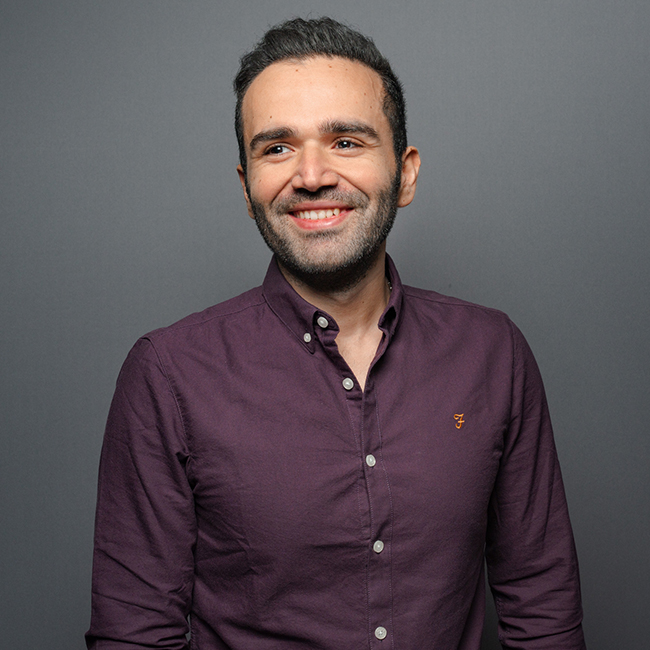
Dr. Sina Pournouri is a Lecturer in Cyber Security at Sheffield Hallam University, having joined in 2019. His research explores cybersecurity, information security management, and data mining. Recent publications focus on threat prediction during the COVID-19 pandemic, vulnerability assessments of drone systems, space governance frameworks, and automated penetration testing using AI. His scholarly work demonstrates consistent focus on cybersecurity analytics, with articles applying classification techniques for attacker profiling and malware prediction. Research spans both technical security mechanisms and policy implications, particularly in crisis contexts.
Dan S. Wallach is a Professor of Computer Science and Electrical and Computer Engineering at Rice University, and a Program Manager at DARPA's Information Innovation Office since June 2023. He holds a PhD (1999) and MA (1995) from Princeton University, and a BS (1993) from UC Berkeley. His research focuses on cybersecurity, electronic voting systems, and mobile security. He directed the NSF-funded ACCURATE Center (2005-2011), led the STAR-Vote project, and advised U.S. election security policies including testifying before state and federal committees. He also served on the Air Force Science Advisory Board (2011-2015), USENIX Board (2011-2013), and IEEE Technical Guidelines Committee (2019-2023). Recent work includes developing ElectionGuard cryptographic tools for verifiable elections and analyzing cyber warfare in Ukraine. His 15+ years of teaching include courses like Introduction to Program Design and Election Systems Technologies. Publications span secure voting protocols, smartphone security, and election auditing. Collaborations include Microsoft and VotingWorks on cryptographic voting systems like ElectionGuard and Arlo-CVR-Encryption.
Chad Johnson is an Assistant Professor at the University of Wisconsin-Stevens Point (UWSP), where he serves as the principal faculty member for the Cybersecurity option and teaches graduate courses in cybersecurity. He also coordinates the Digital Forensics and Recovery Analysis Lab. Education : Ph.D. in Cyber Defense from Dakota State University, M.S. in Criminology from University of Wisconsin-Platteville, and dual B.A. degrees in Political Science and Social Science from University of Wisconsin-Stevens Point. His research and teaching focus on cybersecurity, digital forensics, and the sociological aspects of technology. Key areas include authorship attribution, cyber-crime, hardware hacking, cyber-ethics, and digital behavioral analysis. He emphasizes a mindset of curiosity, creativity, and respect for diversity of thought in cybersecurity education. Professional Memberships : American Association of Forensic Scientists, IEEE, Scientific Working Group on Digital Evidence, Wisconsin Association of Certified Computer Investigator. On campus, he contributes to STEAMPoint Day for Boys/Girls and College Days for Kids, advocating for practical student experience in digital forensics. His philosophy underscores decentralized communication, information flow, and the ethical use of technology.
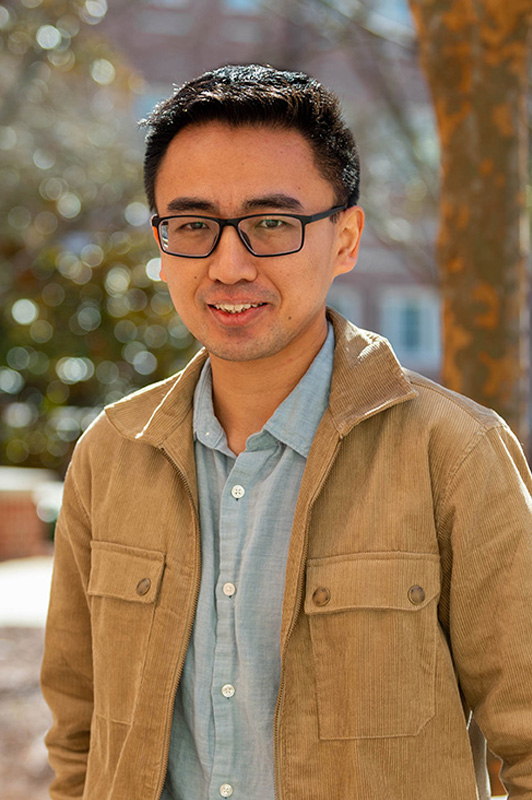
Edwin Hwu is an Associate Professor at the Department of Health Technology, Technical University of Denmark (DTU), leading the MIDAS research group focused on Micro Medical Devices and hardware hacking-based technologies. His work spans Atomic Force Microscopy (AFM), 3D printing, and drug delivery systems. Research Focus: Skin barrier function assessment, liver fibrosis treatment using siRNA, and repurposing consumer electronics for biomedical sensing. Projects: Currently leads "Repurposing Microelectronics for Gut Sensing" (2025-2028) and previously completed "Rapid Clinical Assessment of Skin Barrier Function by Corneocytes Nanotexture" (2021-2023). His publications highlight interdisciplinary work in Atomic Force Microscopy , 3D Printing , and Nanoscale Engineering , with applications in dermatology and neglected tropical diseases. He actively engages in guest lectures on hacking consumer electronics for scientific research. Awards: VILLUM Experiment Grant for micro/nanoscale 3D printing projects. Hwu supervises PhD students and collaborates with researchers like Anja Boisen (DTU) and others, focusing on translating microelectronics into medical solutions. His lab develops compact, high-resolution devices for diagnostics and drug delivery.
Daniel Tauritz is a Professor in the Department of Computer Science and Software Engineering at Auburn University and serves as Director for National Laboratory Relationships. He holds a Ph.D. and M.S. in Computer Science from Leiden University, along with propaedeutic studies in Computer Science and Mathematics. His research focuses on AI-driven cybersecurity, automated algorithm design using hyper-heuristics, computational game theory, and evolutionary computation. Tauritz leads initiatives such as the Auburn Cyber Research Center and collaborates with institutions like Los Alamos National Laboratory on critical infrastructure protection and satellite network security. His work bridges academia and national security through projects like the Cyber Fire Puzzles competition and the Satellite Tycoon economic simulation game. His educational background includes advanced studies at Leiden University, with a strong foundation in computer science and mathematics. Research contributions span evolutionary algorithms for molecular evolution, coevolutionary defense strategies, and generative hyper-heuristics. Tauritz has secured grants including an NSF award for AI-cybersecurity education and contributed to Auburn’s partnerships with national laboratories. He is actively involved in fostering student engagement through ethical hacking clubs and experiential learning programs. Notable achievements include moderating panels on AI in cybersecurity and AI workforce development, as well as developing frameworks like Galaxy for network emulation and DCAFE for automated cyber experiments. His publications emphasize applying evolutionary computation to real-world challenges, including satellite constellation economics and adversarial network defense strategies.
Yazhou Tu is an Assistant Professor in the Department of Computer Science and Software Engineering at Auburn University. He specializes in Cyber-Physical System Security, Side Channel Analysis, and Privacy in embedded systems. His work focuses on addressing vulnerabilities in sensors, actuators, and IoT devices to enhance security and privacy in critical systems. Education: Ph.D. Computer Science, University of Louisiana at Lafayette M.S. Software Engineering, Tsinghua University B.S. Software Engineering, Wuhan University Research Interests: Dr. Tu’s research explores cutting-edge topics such as adversarial control of embedded systems, acoustic and magnetic side-channel attacks, and privacy risks in robotic and biomedical systems. He develops novel defense mechanisms like ADC-Bank and Transduction Shield to counteract physical signal injection attacks. Key Contributions: His work spans sensor security, IoT exploitation, and healthcare technology, with notable studies on 3D printer IP theft, vehicle control via smart glasses, and keystroke tracking via audio. He also investigates physics-informed ML for porous media and glucose monitoring systems. Awards & Grants: No specific awards or grants listed in the provided data, but his prolific publication record highlights sustained research excellence. Labs & Collaborations: Engaged in Auburn’s Center for Artificial Intelligence and Cybersecurity Engineering and other interdisciplinary initiatives focused on secure embedded systems and cyber-physical infrastructure.
Tracy Camp is a Professor and Founding Department Head of Computer Science at the Colorado School of Mines. She leads the Toilers research group, focusing on ad hoc networks and wireless sensor systems for geosystems. With over 20 NSF grants and $20M in funding, her work has produced 12 software tools used globally. She holds ACM and IEEE Fellowships, a Fulbright Scholarship, and the Mines Outstanding Faculty Award. Education: B.S. Mathematics, Kalamazoo College (1987) M.S. Computer Science, Michigan State University (1989) Ph.D. Computer Science, The College of William & Mary (1993) Research Interests: Her work bridges machine learning and geosystems, including dam integrity monitoring via seismic data, UAV communication protocols, and secure encrypted traffic classification. She emphasizes interdisciplinary approaches for real-world challenges like disaster response and environmental safety. Awards: ACM Fellow (2017) IEEE Fellow (2015) NSF CAREER Award (2007) Fulbright Scholar (2006) Grants & Impact: Over 80 refereed publications and 12 invited articles, cited ~7,000 times. Her grants include initiatives to broaden participation in computing, such as the S-STEM scholarship program. Software tools developed under her grants have been adopted by 3,000+ researchers in 86 countries. Labs & Teams: Directs the Toilers group, advancing ad hoc network evaluation and geophysical monitoring. Collaborates on projects like the ADMIRE dam monitoring system and the DREAM master’s program for underrepresented students.
Jesse Howard is a Lecturer in the Design Lectorate at the Royal Academy of Art (KABK) in The Hague. A designer, researcher, and educator, he focuses on reimagining everyday objects through open-source systems, repair culture, and sustainable design. His work bridges design, technology, and community-driven practices. Education: BSc Mathematics (Colorado College), DesignLAB (Gerrit Rietveld Academie, 2011). Key affiliations include collaborations with Timelab, Creative Industries Fund NL, and Waag Society. Research interests include democratizing product design, ethical manufacturing, and privacy in smart home technologies. Notable projects: Hacking Households (2014), Data and Devices (2018), and Transparent Tools . He has led workshops at Design Academy Eindhoven, ECAL, and Design Museum London. His work explores repair as a political act, advocating for systems where users control design/production information. Recent initiatives include the Candle Smart Home project and modular motor experiments.
Jingjie Li is a Lecturer (Assistant Professor) in the School of Informatics at the University of Edinburgh, where he conducts interdisciplinary research at the intersection of computer systems, cybersecurity, and human-computer interaction. He is a member of the Institute for Computing Systems Architecture and the School of Informatics Ethics Committee. Ph.D. in Computer Engineering, University of Wisconsin-Madison (2017–2023) B.Eng. (R&D) with First-Class Honours, Australian National University (2015–2017) B.Sc., Beijing Institute of Technology (2013–2015) His research focuses on user-centric security and privacy , measuring human behavior in digital systems , and efficient human-machine interfaces . He investigates risks in emerging technologies such as smart homes, AR/VR, and AI systems, aiming to make them safer and more human-centric. His work combines technical innovation with behavioral insights to design practical privacy controls, measure digital risks, and build efficient computing platforms. The recent publications highlight a strong trend in privacy transparency , AI explainability , smart home and AR/VR security , and hardware-software co-design . His work frequently appears in top-tier venues including IEEE S&P, USENIX Security, ACM CHI, and ISCA, reflecting a consistent focus on both technical depth and human factors. Notable scientific awards include: ACM CHI Best Paper Award (2019) Facebook Trustworthy Products in AR, VR, and Smart Devices Award (2021) CPS Rising Star, NSF (2022) Generative AI Laboratory Seedcorn Award, University of Edinburgh (2024) Qualcomm Innovation Fellowship Finalist (2019, 2021) Jingjie Li actively supervises PhD students including Jiuming Jiang and Karen Jiamin Zheng, and co-supervises Lawrence Piao and Temima Hrle. He has received research support through fellowships such as the UW–Madison Chancellor’s Opportunity Fellowship and has collaborated globally with institutions including Max Planck Institute, Visa Research, and CSIRO. He serves on the program committees of major conferences like ACM CCS, USENIX Security, and ACM CHI. He leads a dynamic research team focused on systems security and human-centered computing, hosting undergraduate researchers and mentoring students through projects in privacy, AI transparency, and hardware security. His lab fosters interdisciplinary collaboration and real-world impact through community engagement, such as the 'Hack Your Age' workshop with intergenerational participants.
Max Dovey is a Lecturer in Brand Experience Design & Emerging Technology at the University of the Arts London, and a Visiting Lecturer at institutions such as Royal College of Art and Anglia Ruskin University. His practice explores computation through live, performative, and embodied art, informed by feminist techno-science and posthuman discourses. Lecturer in Brand Experience Design & Emerging Technology (UAL, 2019–2022) Pathway Leader - MAFA Computational Arts (UAL, 2021–present) Visiting Lecturer (Royal College of Art, 2019–2021) Visiting Lecturer (Anglia Ruskin University, 2018–2019) Researcher (Institute of Network Cultures, 2015–2016) His research investigates 'liveness' in human-computer interaction and the geological materiality of technology. Notable projects include The Treaty of Finsbury Park 2025 (2022) and Cologne, What is Your Mother's Maiden Name? (2019), which employ psychogeography, blockchain, and interspecies politics. Recent publications include State Machines (2019) and Flying Money (2018). He has co-edited symposiums on technology and finance, including MoneyLab, and presented at festivals like Ars Electronica.
Dr. David McKeown is an Assistant Professor in the School of Mechanical and Materials Engineering at University College Dublin (UCD). His research focuses on dynamics and control of space structures, nanosatellite hardware design, and attitude determination and control systems (ADCS). He leads the EIRSAT-1 project, Ireland's first satellite, launched in 2023, and manages the National Space Subsystems and Payloads Initiative (NSSPI), securing €7.9 million in funding. As an investigator for the European Space Agency’s DEAR project, he develops robotic systems to mitigate lunar dust effects. He collaborates with UCD’s School of Physics on ADCS projects and founded Dublin Maker and Science Hack Day Dublin. Education: Bachelor of Engineering (BE), University College Dublin Doctor of Philosophy (PhD), University College Dublin Research Themes: Spacecraft dynamics control, nanosatellite ADCS, space mission design, and space hardware testing. His work bridges academia and industry, with a focus on advancing Ireland’s space capabilities through projects like EIRSAT-1 and NSSPI. Grants & Funding: Principal Investigator for the €7.9M NSSPI project under DTIF and SFI grants supporting ADCS testbed development and lunar dust mitigation research. Advising & Leadership: Leads the Space Structure Dynamics and Control Theme at UCD’s Centre for Space Research (C-Space). Chair of SMME PhD transfer panels and member of various university committees. Public engagement includes roles in RTE’s Big Life Fix and Kildare Libraries’ Space Week. Labs & Teams: UCD Centre for Space Research, DEAR project collaborations, and partnerships with industry through NSSPI.
Sonia Solera Cotanilla is an Assistant Professor at the Universidad Politécnica de Madrid, specializing in cybersecurity, IoT security, and privacy protection in connected devices. She leads the RSTI research group, actively participates in European projects like DESIRE6G, 6Green, and ACROSS, focusing on 5G network security, energy efficiency, and cross-layer provisioning frameworks. Her work integrates hardware-software solutions for emerging technologies such as smart home systems, wearables, and e-voting infrastructure. Key affiliations: RSTI Group, Polytechnic University of Madrid Research areas: Cybersecurity frameworks, threat detection, privacy-preserving architectures Recent contributions include developing the SPEDIA system for insider threat detection, cybersecurity frameworks for FCAS risk assessment, and privacy analysis of wearable devices for minors. She has advised doctoral candidates like Mario Sanz Rodrigo and Carmen Sánchez Zas, both awarded PhDs in Telematic Systems Engineering. Notable awards: ISDEFE Prize for Best Doctoral Thesis (2024) Grants: National Cybersecurity Institute (INCIBE) funding, Horizon 2020 projects Labs/Teams: RSTI Group focuses on advanced cybersituational awareness platforms and secure IoT/IIoT infrastructure development. Current projects include GovTech4Impact, RAMONES, and e-Voting security audits for Minsait.
Kevin Driscoll is an Associate Professor in the Department of Media Studies at the University of Virginia. His research focuses on the alternative histories of the internet, technology, and communication , emphasizing the social and technical contributions of grassroots communities such as dial-up bulletin board systems (BBS) and France's Minitel network. Education : Ph.D. in Communication & Journalism from USC, M.S. in Comparative Media Studies from MIT. Research : Explores pre-web digital networks, platform governance, and the moral economy of software. His 2017 book Minitel: Welcome to the Internet (with Julien Mailland) examines France's pioneering online system. The 2022 book The Modem World traces social media's origins to 1980s-90s BBS culture. Projects : Maintains the Minitel Research Lab and modem.world archives. His Net Neutrality Research Database analyzes policy debates and discursive artifacts. Publications : Focus on comparative network histories, digital preservation, and the cultural implications of early internet technologies. His work connects media studies, technology history, and policy analysis, offering critical perspectives on platform economies , networked communities , and grassroots innovation .
Jacob R. Appelbaum is a Postdoc researcher at the Department of Mathematics and Computer Science, Eindhoven University of Technology. His work focuses on cybersecurity, privacy technologies, and network security. He obtained his PhD in 2022 with a thesis on counter-strategies against pervasive surveillance architectures. Appelbaum is a prominent figure in digital privacy advocacy, contributing to projects like the Tor network and the Autonomy Cube art installation, which promotes anonymous internet access through Tor routing. His research interests include DNS security, cryptographic protocols, and mitigating surveillance tactics by governments and organizations. He has been recognized with awards such as the Best investigative reporting (2014), Crypto Best Paper Award 2009 , and the Defensor Libertatis (2012). His work often bridges technical innovation with societal impact, addressing challenges in privacy preservation and secure communication. Appelbaum has contributed to standards like IETF RFC 7686 for the ".onion" domain and exposed NSA surveillance programs through investigative journalism. His interdisciplinary projects, such as the Autonomy Cube, highlight the intersection of technology and art in advocating for digital rights.
Toyosi Oyinloye is the Deputy Head of the School of Computer and Engineering Sciences at the University of Chester, and Programme Leader of the NCSC-certified MSc Cybersecurity programme. She holds a PhD in Cybersecurity from the University of Chester and has over 20 years of experience in software development, database management, and cybersecurity. Her academic roles include teaching final-year computer programming (Swift for iOS Development) and postgraduate cybersecurity modules like Software Exploitation and Research Methods. Education: PhD in Cybersecurity, University of Chester (2024) MSc in Cybersecurity, University of Chester BSc in Computer Science, University of Ilorin, Nigeria PGCert in Learning and Teaching in Higher Education, University of Chester Research Interests: Toyosi focuses on enhancing software protection mechanisms, particularly through Inter-Process Control Flow Integrity to mitigate control flow hijacks. She also investigates mitigating social engineering attacks and applying data visualization for incident response. Her work spans cybersecurity domains such as mobile application security, exploit development, and firmware forensics. Professional Recognition: Fellow of the Higher Education Academy (FHEA) Fellowship (2023) British Computer Society Membership (2022) Teaching & Leadership: Toyosi supervises undergraduate programming projects and postgraduate cybersecurity research. She leads initiatives to elevate programme quality across the School and serves as an Internal Examiner for PhD candidates. Her leadership extends to mentoring and collaborative projects. Labs & Teams: Her research is affiliated with the University of Chester's Culture and Society Research and Knowledge Exchange Institute, where she contributes to interdisciplinary cybersecurity advancements.