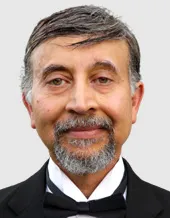
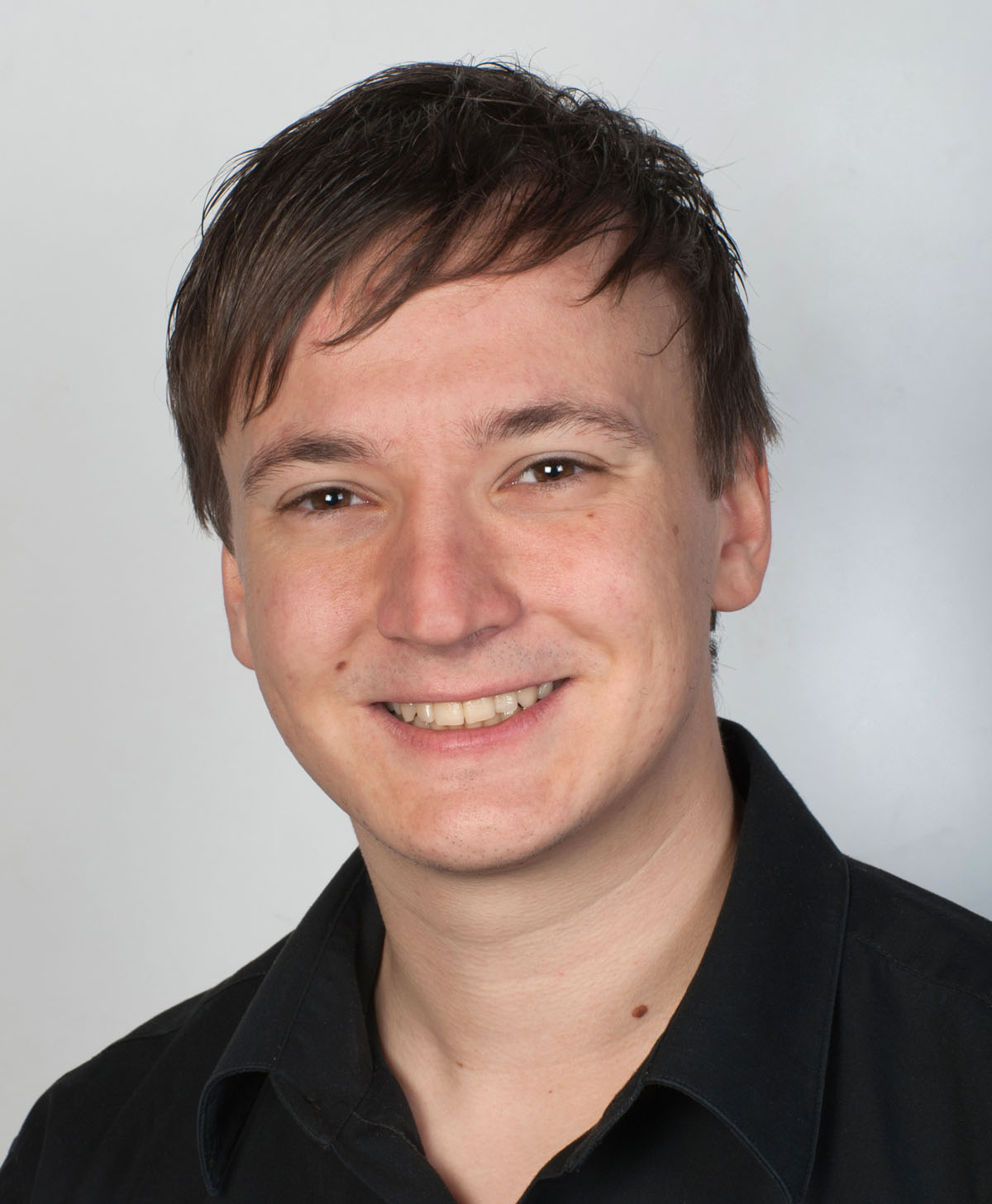
Jason Gallivan is an Associate Professor in the Department of Psychology at Queen's University. His research focuses on understanding the cognitive and neural mechanisms underlying goal-directed action, integrating techniques such as functional MRI, neurostimulation, and computational modeling. He leads the Memory, Action and Perception (MAPlab), exploring how processes like decision-making, working memory, and perception guide motor behavior. Gallivan holds a B.A. (2005), M.Sc. (2007), and Ph.D. (2011) from the University of Western Ontario. His work investigates brain networks involved in sensorimotor learning, with recent studies highlighting cortical manifold dynamics and their role in adaptive behavior. Key findings include the influence of higher-order association cortices during motor adaptation and the link between brain connectivity and learning performance. His research has implications for understanding neurological disorders and recovery mechanisms post-stroke.
Albrecht Schmidt is a Professor at Ludwig Maximilians University Munich, where he leads the Media Informatics Group. His research spans Human-Computer Interaction (HCI), Artificial Intelligence, Ubiquitous Computing, and Privacy. He holds a PhD from Lancaster University (2003) and has held positions at the University of Stuttgart, University of Duisburg-Essen, and Fraunhofer IAIS. His education includes a PhD in Computer Science from Lancaster University (UK), research at the University of Karlsruhe (1998–2001), and studies at Manchester Metropolitan University (1995–1996). Schmidt's research explores AI-enhanced interaction, privacy-aware systems, and sensory interfaces. Key projects include PrivacyHub (smart home privacy controls), BrailleBuddy (tangible interfaces for visually impaired learners), and studies on AI ethics. His work emphasizes human agency in technology design. Recent publications focus on generative AI in HCI, VR/AR sensory feedback, and human augmentation. Trends include AI ethics (e.g., bias in ML annotations), embodied interaction (e.g., robot expressions), and digital wellbeing (e.g., mitigating smartphone overuse). He leads the Media Informatics Group at LMU, which develops innovative interfaces for real-world applications, such as healthcare, accessibility, and smart environments. Collaborative projects address human-robot interaction, adaptive learning systems, and inclusive design.
Nitish Thakor is a Professor of Biomedical Engineering at Johns Hopkins University and a Hans Fischer Senior Fellow at the Technical University of Munich's Institute for Advanced Study (TUM-IAS). His work focuses on neuroengineering, including neural interfaces, neuroprosthetics, and biomimetic sensing systems. He leads the Human-Centered Neuroengineering focus group at TUM-IAS, collaborating with Prof. Gordon Cheng. Thakor has over 425 peer-reviewed publications and 16 patents, with notable contributions to tactile feedback systems, neuromorphic e-dermis for prosthetics, and brain-machine interfaces. His awards include election to the National Academy of Inventors and Fellowships from IEEE, AIMBE, and the Biomedical Engineering Society. Research interests include neural signal processing for prosthetics, soft robotics for delicate object manipulation, and sensory feedback systems enhancing phantom limb perception. He co-founded three companies commercializing neuroengineering technologies. His recent work integrates sensory stimulation to improve neural connectivity in amputees and explores bio-inspired reflex mechanisms for robotic systems. He actively contributes to scientific leadership as Editor-in-Chief of Medical & Biological Engineering and Computing .
Robert Radwin is a Professor at the University of Wisconsin-Madison, holding dual affiliations in the Department of Industrial & Systems Engineering and the Department of Biomedical Engineering. As the founding chair of the Biomedical Engineering department, he leads research at the Wisconsin Institute for Discovery. His work focuses on optimizing human-robot collaboration, ergonomics, and biomechanics in manufacturing and healthcare. Radwin earned his PhD (1986) and MS/MSE (1979) from the University of Michigan, and his BS (1975) from New York University Polytechnic Institute. His research interests span occupational ergonomics, biomedical engineering, and wearable technology applications. His awards include the 2023 Human Factors Society’s A.R. Lauer Safety Award, the 2022 Boeing Excellence Award, and multiple fellowships in professional societies. He has secured grants from government agencies and industry, specializing in ergonomic design for products, tools, and medical instruments. Recent research trends emphasize human-robot collaboration, with studies on shared autonomy systems, multi-robot coordination, and computer vision-based ergonomics assessment. His work bridges robotics and occupational safety to enhance workplace efficiency and reduce musculoskeletal injuries. Advising & Grants: Radwin oversees grants on cobot integration and ergonomic optimization. Courses include advanced ergonomics and independent research supervision. Labs/Teams: Leads interdisciplinary teams at the Wisconsin Institute for Discovery, focusing on biomedical and robotic ergonomics.
Jeannette Bohg is a Professor of Robotics and Computer Science at Stanford University, directing the Interactive Perception and Robot Learning Lab. Her work focuses on perception, learning, and real-time methods for autonomous robotic manipulation and grasping, emphasizing cross-embodiment learning. She previously led the Autonomous Motion Department at MPI for Intelligent Systems (2012–2017) and completed her PhD at KTH in Stockholm, with earlier studies at Chalmers and TU Dresden. Notable awards include the 2019 IEEE Early Career Award and the 2020 Robotics: Science and Systems Early Career Award. Education: PhD in Robotics, Perception and Learning (RPL), KTH Royal Institute of Technology, Stockholm (2012) Masters in Art and Technology, Chalmers University, Gothenburg Diploma in Computer Science, TU Dresden Research interests span robotic grasping, equivariant policies, and scalable data-driven approaches. Key projects include the DROID dataset for cross-embodiment learning and development of the Tidybot mobile manipulator platform. Her lab explores principles of human sensorimotor coordination to enhance robotic autonomy, integrating machine learning and computer vision. Recent work emphasizes leveraging human demonstrations and vision-language models for generalizable manipulation skills, alongside tactile sensing and sim-to-real transfer techniques.
Emily Graczyk is an Assistant Professor in the Department of Biomedical Engineering at Case Western Reserve University, affiliated with both the Case School of Engineering and the School of Medicine. She holds an external appointment as a Biomedical Engineer at the Louis Stokes Cleveland VA Medical Center (since 2021). Her research focuses on developing sensory neuroprostheses to restore somatosensory function for individuals with amputations, spinal cord injuries, mastectomies, autism, or other sensory impairments. Graczyk earned her BS in Biomedical Engineering from the University of South Carolina (2013) and her PhD from Case Western Reserve University (2018). Her work combines clinical studies, computational modeling, and psychometrics to study touch, proprioception, and pain perception. Key research areas include neural coding of sensation, user experiences with assistive technologies, and the functional/psychological impacts of neuroprostheses. Her lab has secured funding from the Department of Defense, Department of Veterans Affairs, and DARPA. Recent studies explore bidirectional neural interfaces, tactile percept integration via peripheral nerve stimulation, and clinical implementation of fully implanted neuroprosthetic systems. Graczyk’s publications emphasize translating neurotechnology into practical solutions, with a focus on improving usability and patient-centered outcomes.
Timo Ojala is a Professor of Computer Science at the University of Oulu, affiliated with the Faculty of Information Technology and Electrical Engineering. His research focuses on virtual reality (VR), augmented reality (AR), telepresence systems, and pervasive computing. He explores human-robot interaction, user experience in immersive environments, and the integration of physical and digital spaces. Recent work includes studies on VR-induced motion sickness, telepresence robot control mechanisms, and perceptual coherence in scaled virtual environments. Key research interests include enhancing user comfort in immersive technologies, improving navigation techniques for telepresence systems, and designing interfaces that bridge virtual and real-world interactions. His work often involves interdisciplinary collaborations, addressing challenges in education technology, urban computing, and human factors engineering. Notable contributions include investigations into viewpoint adjustment in 360° video, shared control paradigms for robots, and the impact of avatar design on social presence. While no specific awards are listed, his publications reflect a sustained focus on advancing interactive technologies and their societal applications.
Julian Frommel is a tenured Assistant Professor in the Interaction/Multimedia group at Utrecht University, within the Faculty of Science. He holds a Dr. rer. nat. from Ulm University (Germany) and previously worked as a postdoctoral researcher at the University of Saskatchewan (Canada). His research focuses on improving user experiences in interactive systems through emotion-based adaptivity, toxicity mitigation in games, and social interaction studies. He has published extensively in top HCI and game research venues, with contributions to VR, AR, and serious games. Education: PhD in Computer Science (Ulm University, 2019), M.Sc. and B.Sc. in Computer Science from Augsburg University (Germany). Research Interests: Human-Computer Interaction, Human-Centered AI, Player Experience Modeling, Toxicity in Online Games, and Game-Based Interventions. His work combines quantitative methods and mixed approaches to address challenges in digital experiences. Notable Projects: Development of adaptive game systems, studies on VR/AR interaction fidelity, and tools for assessing player states. Collaborations include projects on toxicity detection and mitigation in multiplayer environments. Labs/Teams: Part of the Dynamics of Youth (DoY) and Game Research initiatives at Utrecht University, focusing on healthy digital play and societal impacts of interactive systems.
Michael Weber is a Professor in the Institute of Media Informatics at the University of Ulm, Germany. His research focuses on Human-Computer Interaction, Virtual Reality, and Automotive Systems with an emphasis on privacy, multimodal interaction, and game design. He has extensively published on topics such as driver-vehicle cooperation in autonomous systems, player experience in VR environments, and adaptive user assistance technologies. Weber's work bridges theoretical computer science with practical applications in automotive interfaces and interactive gaming. Research Interests include: Multimodal Interaction Design, Privacy in Smart Environments, Procedural Content Generation in Games, and Human Factors in Automated Driving. Key Projects involve developing systems for cooperative driving, enhancing VR immersion through audio-visual integration, and creating adaptive game mechanics based on player emotions. His contributions span over 185 publications, including influential work on privacy-aware ubiquitous computing and the design of persuasive games for sustainable education. Weber collaborates with industry partners to ensure practical relevance of his research, addressing challenges like sensor limitations in autonomous vehicles and user-centric interface design.
Ravin Balakrishnan is Professor and former Chair (2015-2019) in the Department of Computer Science at the University of Toronto, where he co-directs the Dynamic Graphics Project laboratory. He earned his PhD from University of Toronto under Bill Buxton. A pioneer in HCI, his research spans input devices, interactive displays, 3D interaction, and tabletop computing. Balakrishnan has developed innovative interaction techniques including the Rockin'Mouse (integral 3D control), Digital Tape Drawing (sketch-based 3D modeling), and BumpTop (physics-enhanced desktop). His recent work explores muscle-computer interfaces, mid-air interactions, and VR storytelling tools. Honors include ACM CHI Academy (2011), MacArthur Fellowship (1993), Guggenheim Fellowship (2016), Royal Netherlands Academy induction (2018), and best paper awards at CHI/UIST. He co-founded Bump Technologies (acquired by Google) and holds 15+ patents. Current research examines novel input techniques for AR/VR, eye-free interaction, and high-DOF devices. He teaches graduate courses in HCI and advises PhD candidates in areas like gesture interfaces and video manipulation systems.
Georgios Marentakis is an Associate Professor at the Faculty of Computer Sciences, Østfold University College. His research focuses on human computer interaction (HCI), sound and music computing, and auditory perception. He holds an MSc in Electrical and Computer Engineering, an MSc in Acoustics and Signal Processing, and a PhD in Human Computer Interaction. His work spans sonic interaction design, auditory augmented reality, and accessibility technologies. Education: MSc in Electrical and Computer Engineering MSc in Acoustics and Signal Processing PhD in Human Computer Interaction Research Communities: Human Computer Interaction Acoustics and Psychoacoustics Audio Signal Processing Teaching: Sound Design and Production Interaction Design Software Development His research trends emphasize sound’s role in HCI, including assistive technologies for autism, multimodal interfaces, and spatial audio applications. Recent work explores accessibility through sound, such as eye fatigue reduction in mobile UIs and conversational interface impairments during locomotion. Marentakis contributes to initiatives like the Digital Society and collaborates with research groups like DeveLeP (Development Learning and Psychological Processes).
Roger Wheate is a Professor and GIS Coordinator in the Department of Geography, Earth, and Environmental Sciences at the University of Northern British Columbia (UNBC), Faculty of Environment. He holds a PhD and BSc Honours from the University of St. Andrews and an MA from Queen's University at Kingston. He previously served as Graduate Program Chair for the Natural Resources and Environmental Studies (NRES) program. Education: PhD, University of St. Andrews MA, Queen's University at Kingston BSc Honours, University of St. Andrews Dr. Wheate's research focuses on the integration of geomatic sciences, particularly GIS and remote sensing, in natural resource and environmental studies. His expertise includes cartography, map design, terrain visualization, mountain cartography, and glacier mapping using satellite imagery. He specializes in extracting topographic and environmental features from digital elevation models and satellite data for applications in ecology, conservation, and hazard assessment. His publication record shows a consistent focus on advancing geospatial techniques in mountainous and remote environments. Key trends include the development of methods for relief depiction, shaded relief analysis, principal component transformation for satellite data, and tactile map creation from GIS outputs. His work spans both theoretical cartographic innovation and applied environmental mapping, particularly in Canadian mountain systems. Professional Affiliations: Canadian Cartographic Association Friends of Nose Hill UNBC GIS Lab Dr. Wheate has supervised several graduate students in projects related to wildlife habitat modeling, vegetation phenology, and grizzly bear telemetry. His courses include GEOG 205 (Cartography and Geomatics), GEOG 300 (Geographical Information Systems), GEOG 440 (Internship), and GEOG 499 (Independent Studies). He is actively involved in research and education, with no indication of part-time status or retirement.
Jeremy D. Brown is the John C. Malone Assistant Professor of Mechanical Engineering at Johns Hopkins University, affiliated with the Whiting School of Engineering. He leads the Haptics and Medical Robotics (HAMR) Laboratory, where his research bridges engineering, neuroscience, and human-machine interaction to enhance human dexterity through robotic technologies. His research focuses on understanding touch perception and sensorimotor control, with applications in medical robotics, prosthetic devices, and neurorehabilitation. Key areas include haptics, neural circuits, computational neuroscience, and visual-haptic integration. The HAMR Lab develops innovative systems to restore sensory feedback in robotic surgery and improve motor function in impaired systems. The work conducted in the HAMR Lab demonstrates strong interdisciplinary trends, combining robotics, neuroengineering, and cognitive systems to address challenges in human function. Technologies developed aim to assess, restore, and enhance sensory-motor capabilities, particularly for individuals with neurological impairments or limb loss. Dr. Brown is affiliated with the Neuroscience Training Program at Johns Hopkins, reflecting the interdisciplinary nature of his research. He advises graduate students through this program and leads a dynamic research team focused on developing transformative haptic interfaces and robotic systems. The Haptics and Medical Robotics (HAMR) Laboratory serves as the core research environment, where robotic systems are used as scientific instruments to probe the mechanisms of touch and its integration with vision and movement. The lab is dedicated to advancing fundamental knowledge while creating practical technologies that improve quality of life.
Mark Colton is a Teaching Professor in the Department of Mechanical Engineering at Brigham Young University (BYU), within the College of Engineering. He has been a faculty member at BYU since 2005, initially as a Visiting Instructor, then as Assistant Professor (2006–2012), and Associate Professor (2012–present), with a current focus on teaching. Education: PhD, University of Utah, 2006 MS, University of Utah, 2001 BS, University of Utah, 1997 His research interests lie at the intersection of robotics, haptics, and dynamic systems, with a strong emphasis on human-robot interaction. He has made significant contributions in assistive robotics for autism therapy , where robots are used to enhance social engagement in children with Autism Spectrum Disorder (ASD). His work also spans haptic interfaces , enabling realistic tactile feedback in virtual environments, and micro air vehicle (MAV) control , particularly in aerial recovery and formation flight. Additional areas include compliant mechanisms, mechatronic system design, and control theory. His recent publications reflect a consistent focus on integrating sensory feedback (haptics, audio) into UAV control, optimizing flapping-wing mechanisms, and developing statically balanced compliant systems. The research combines experimental validation with modeling, often in collaboration with experts in perception, biomechanics, and clinical therapy. Scientific Awards and Professional Activities: Member, ASME (American Society of Mechanical Engineers) Member, IEEE (Institute of Electrical and Electronics Engineers) Member, ASEE (American Society for Engineering Education) Dr. Colton advises students through graduate research and senior design projects, such as ME EN 475/476 (Integrated Product and Process Engineering). He teaches core courses in dynamic systems, control, mechatronics, and scientific computing. His work bridges theoretical modeling and practical implementation, often involving hardware-in-the-loop testing and real-world applications in healthcare and aerospace. While no formal lab name is mentioned, his research is conducted within the broader Mechanical Engineering research ecosystem at BYU, likely involving student teams and interdisciplinary collaborations.
Delphine Picard is a Full Professor at Aix-Marseille University, affiliated with the Centre de Recherche en Psychologie de la Connaissance, du Langage et de l'Émotion (EA 3273 PSYCLE), specializing in Developmental Psychology. Her work focuses on developmental aspects of drawing behaviors, haptic perception, and food rejection in children. She holds a HDR (2007) and was a member of the Institut Universitaire de France (2009–2014). Education includes a PhD from Université de Bourgogne (1999) and postdoctoral research in sensory analysis at ENSBANA (2000–2001). She has directed numerous doctoral theses and supervised postdoctoral projects, including studies on prosocial behavior in infants, food categorization, and haptic processing. Research interests span developmental psychology, cognitive development, and the intersection of art and perception. Key contributions include studies on canonical size effects in drawing, tactile graphics interpretation by visually impaired individuals, and food neophobia in children. She has authored over 85 peer-reviewed articles and book chapters, with significant grants from institutions like the Fondation de France and the Institut Paul Bocuse Research Center. Awards include membership in the Institut Universitaire de France. Her lab work involves collaborations on projects like Haptic-2D testing and the development of educational tools such as the Child Food Rejection Scale.