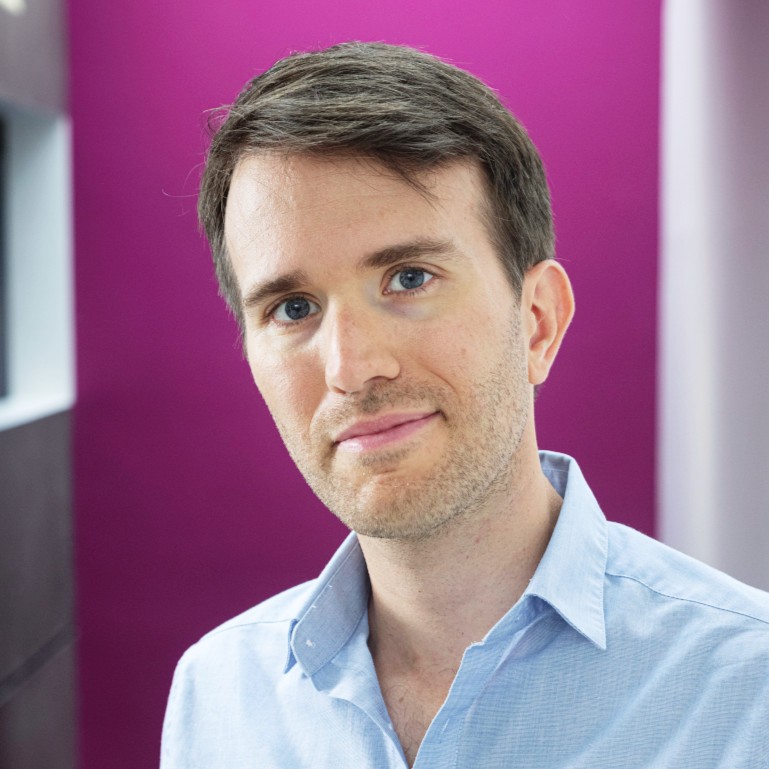
Claudio Pacchierotti is a CNRS Researcher (Chargé de Recherche de Classe Normale) at IRISA and Inria Rennes, France, leading the RAINBOW team. He holds a PhD in Automatic Control and Robotics from the University of Siena and the Italian Institute of Technology (IIT). His research focuses on haptics, wearable technologies, and their applications in robotics, virtual reality, and medical interventions. He has held visiting positions at the University of Pennsylvania (2014) and Sapienza University of Rome (2022). Education: B.S. in Computer Engineering, University of Siena (2009) M.S. in Computer Engineering, University of Siena (2011) Ph.D. in Automatic Control and Robotics, University of Siena/IIT (2015) Research Interests: Pacchierotti specializes in cutaneous haptic feedback systems, teleoperation, medical robotics, and human-robot interaction. His work bridges robotics, wearable technology, and virtual reality to enhance sensory experiences and precision in surgical and industrial applications. Awards: He received the CNRS Bronze Medal (2022) for his contributions to haptics and robotics, a Best Paper Award at Eurohaptics 2022, and the AsiaHaptics Silver Award (2016). His team has also won multiple grants and industry recognitions. Grants & Labs: His projects include EU-funded initiatives on haptic shared control and wearable devices. He leads the RAINBOW lab, collaborating with global institutions like the University of Pennsylvania and Sapienza Rome. Current research explores ultrasound mid-air haptics, graph neural networks for multi-robot systems, and thermal feedback in VR.
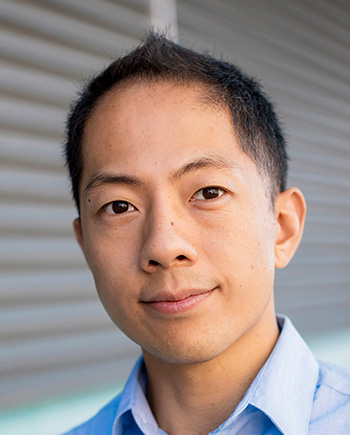
Professor Sylvia Xueni Pan is a leading researcher in Virtual Reality at Goldsmiths, University of London, where she holds the position of Professor of Virtual Reality in the Department of Computing. She co-leads the Goldsmiths Computing MA/MSc in Virtual and Augmented Reality and directs the SeeVR Lab. With nearly 20 years of experience in VR research, she has developed a unique interdisciplinary profile spanning both VR technology and social neuroscience. Previously, she worked as a research associate at University College London (UCL) in both the Computer Science Department (2009-2013) and the Institute of Cognitive Neuroscience (2013-2015), where she maintains an honorary research fellowship. Professor Pan received her PhD in Virtual Reality from UCL in 2009, fully funded by EPSRC and the Rabin Ezra Scholarship, under the supervision of Professor Mel Slater. She earned an MSc in Vision, Imaging, and Virtual Environments (VIVE) from UCL in 2005, and completed her BEng in Computer Science at Beihang University in Beijing, China in 2004. She attended Beijing Jingshan School and Beijing No.4 High School before moving to London in 2004. Professor Pan's research focuses on the intersection of Virtual Reality technology and social neuroscience, with particular emphasis on how immersive environments can be used to study and influence human behavior. Her work spans multiple application domains including cognitive neuroscience, social interaction studies, professional training, education, and psychotherapy. She has pioneered research in areas such as virtual character animation (particularly facial expressions and motion capture), photogrammetry-built virtual environments, and the application of VR for medical ethics training and mental health interventions. Her research on how people interact with virtual humans has been featured in prominent media outlets including BBC Horizon and New Scientist magazine. Analysis of Professor Pan's recent publications reveals a consistent focus on applying VR to understand and improve human social interaction across diverse contexts. Her work demonstrates a strong interdisciplinary approach, bridging computer science, psychology, neuroscience, and clinical practice. Recent research has expanded into novel applications including music performance anxiety, schizophrenia stigma reduction, smoking cessation, climate change education, and multisensory experiences like bubble tea drinking. Her publications consistently explore how different aspects of VR design (avatar appearance, haptic feedback, environmental fidelity) influence user experience, behavior, and physiological responses. Professor Pan has secured significant research funding from prestigious organizations including: Leverhulme Trust (for projects on moral judgment in VR and ethical challenges in professional practice) Wellcome Trust (in collaboration with HENCEL for VR ethics projects) European Research Council (ERC) for the INTERACT project studying subconscious copying in VR UCL Laws and UCL Computer Science (for collaborative projects) As an educator, Professor Pan has developed and taught several influential courses at Goldsmiths including 3D Virtual Environments and Animation, Data Visualisation, Audio-Visual Computing, and Perception and Multimedia Computing. She has also created a highly successful Coursera VR Specialisation with over 100,000 registered learners internationally. Her supervision focuses on the application of Immersive Virtual Reality in cognitive neuroscience, social interaction, training, education, and psychotherapy. Professor Pan leads the SeeVR Lab at Goldsmiths, which focuses on understanding how people see and interact in virtual environments. The lab brings together researchers from computer science, psychology, and neuroscience to develop and study novel VR applications. Current research directions include exploring multisensory VR experiences, developing VR for mental health interventions, and investigating how digital twins can enhance social interaction in location-based VR settings.
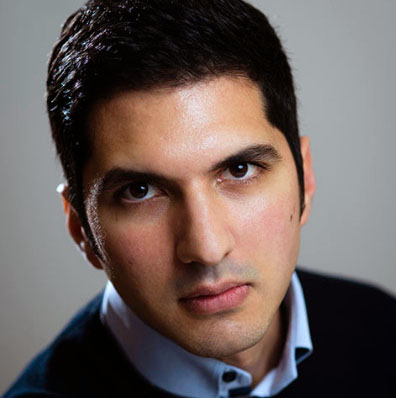
Sergei Adamovich is a Professor of Biomedical Engineering at the New Jersey Institute of Technology (NJIT), specializing in neurorehabilitation and advanced robotics for sensorimotor recovery. His work integrates virtual reality (VR), exoskeletons, and adaptive robotics into clinical training systems to enhance motor rehabilitation outcomes for individuals with neurological impairments such as stroke and cerebral palsy. Education: Ph.D., Moscow Institute of Physics and Technology (1988) M.S. and B.S., Moscow Institute of Physics and Technology (1983) Research Interests: Development of VR-based rehabilitation systems (e.g., R3THA™) Neuroplasticity mechanisms in motor recovery Exoskeleton control systems for lower limb rehabilitation Biometric assessment of engagement in gamified therapy Neuromuscular rehabilitation for hand and arm function Key Contributions: Pioneer of home-based virtual rehabilitation systems (HoVRS) Advances in combining transcranial stimulation with exergaming Development of kinematic protocols for stroke recovery assessment Exploration of visuomotor adaptation in clinical populations His research emphasizes translating engineering innovations into clinical practice, with a focus on improving patient autonomy through technology-augmented rehabilitation programs.
Dr. Tian Chen is the Kamel Salama Endowed Assistant Professor of Mechanical & Aerospace Engineering at the University of Houston, leading the Architected Intelligent Matter (A.I.M.) Laboratory. His research focuses on programmable matter, combining mechanics, computational design, and materials science to create adaptive materials. He holds a Ph.D. from ETH Zurich, an M.S. from Delft University of Technology, and a B.A.Sc. from the University of Toronto. Education: Ph.D., Swiss Federal Institute of Technology in Zurich (ETH Zurich) M.S., Delft University of Technology B.A.Sc., University of Toronto Research Interests: Dr. Chen’s work explores programmable shape transformation of surfaces and mechanical behavior of architected materials. His lab develops materials with digitally controlled functionalities, such as temperature-responsive architectures and self-reconfigurable systems. Applications span aerospace, robotics, and biomedical engineering. Awards & Honors: Haythornthwaite Foundation Research Initiation Grant Swiss National Science Foundation Post-Doc Mobility Fellowship ETH Medal for Outstanding Doctoral Thesis Cum Laude, Delft University of Technology Grants & Advising: His research is funded by NSF, NASA, and the Haythornthwaite Foundation. He advises students in mechanical engineering and collaborates on projects involving 4D printing, metamaterials, and smart structures. Labs & Teams: The A.I.M. Lab at UH focuses on interdisciplinary research in intelligent matter, with ongoing collaborations in computational design and materials science.
Salvatore Andolina is an Associate Professor at the Department of Electronics, Information and Bioengineering at Politecnico di Milano, Italy. His research focuses on Human-Computer Interaction (HCI), Artificial Intelligence (AI), and Information Retrieval, with a particular emphasis on designing human-centered AI systems for collaborative, social, and ubiquitous settings. He has held academic affiliations at the University of Palermo, Helsinki Institute for Information Technology HIIT, University of Helsinki, Aalto University, and served as a visiting scholar at Carnegie Mellon University's Human-Computer Interaction Institute. Key research areas include: Human-Centered AI Exploratory Search and Information Systems Crowdsourcing and Collaborative Creativity Augmented Reality and Wearable Technologies Entity-Centric Interaction Design Notable achievements include co-chair roles for the C&C conference (2025-2026), winning the Google Award for Inclusion Research (2023), and contributions to projects like the "Conversational Patterns for Inclusive Prompt Engineering" as a co-PI. He is an ACM Senior Member and has published extensively in top-tier venues including CHI, DIS, SIGIR, and TOIS. His work spans theoretical frameworks and applied systems, with recent focus on balancing sustainability in AI systems and advancing inclusive conversational interfaces.
Stella Doukianou is Senior Lecturer and Course Leader for BSc Creative Computing at University of the Arts London's Creative Computing Institute. She builds interdisciplinary communities through experimental pedagogies bridging technology and creativity. Holding a Ph.D. in Computer Science from Coventry University (2016), MSc in Design and Digital Media from University of Edinburgh, and PGCert from University of Greenwich, her career spans academia (University of Greenwich) and industry (EU FP7/HORIZON projects). Research explores XR applications for cultural engagement, serious games for behavioral change, and ethical computing. Current work includes refugee journey visualization through immersive media and Social XR frameworks for community participation. Key projects include EMOTIVE (emotive heritage storytelling) and OrbEEt (organizational energy efficiency). Publications (2014-2025) cluster into: 1) XR for cultural heritage (40%), 2) Gamification for behavioral change (30%), 3) HCI-art intersections (20%), and 4) Health applications (10%). Recurrent themes include participatory design, ethical technology deployment, and sensory interfaces. SEDA certification for PhD supervision FHEA, MBCS, Computer Arts Society membership Supervises 7 postgraduate researchers exploring transcultural representation, VR identity, and environmental sensing. Grants include EU Horizon 2020 funding for OrbEEt and EMOTIVE projects. Leads knowledge exchange on refugee narratives through immersive media. Directs research at the intersection of creative computing and community engagement, emphasizing ethical frameworks for technology-mediated experiences.
Dr. Aishwari Talhan is an Affiliated Faculty member in the Department of Electrical and Computer Engineering at the College of Nanotechnology, Science, and Engineering, University at Albany. With a PhD in Computer Engineering from Kyung Hee University, she serves as a Research Scientist in the Office of the Vice President for Research. Her international experience includes postdoctoral positions at McGill University and Kyung Hee University, along with industry experience as a software developer in Bengaluru. Her research explores the intersection of haptics, wearables, and human-computer interaction, with applications in extended reality (XR), artificial intelligence, rehabilitation engineering, and medical simulation. Key investigations include tactile feedback systems, soft robotics interfaces, and immersive training technologies for medical procedures. Publications demonstrate consistent focus on multisensory interaction design, with recent work emphasizing pneumatic actuation systems, wearable haptic devices, and virtual training environments. Research trends show progressive refinement of soft robotics techniques for tactile augmentation across healthcare and education domains. Professional affiliations include memberships in ACM and IEEE. Education history includes: Post Doctoral Researcher, McGill University Postdoctoral Researcher, Kyung Hee University PhD Computer Engineering, Kyung Hee University ME Embedded Systems, Nagpur University BE Information Technology, Nagpur University
Gaojian Huang is an Assistant Professor in the Department of Industrial and Systems Engineering at the Charles W. Davidson College of Engineering, San José State University . His research focuses on human-automation interaction , automated driving systems , and inclusive design for aging populations . He leads the Behavior, Accessibility, and Technology (BAT) Lab , which explores technologies to enhance accessibility, safety, and user experience in automated vehicles and smart environments. Education : Ph.D. Industrial Engineering, Purdue University (2021) M.S. Cognitive Psychology, Purdue University (2020) M.S. Safety Management, Indiana University-Bloomington (2016) Research Interests : Human-machine interfaces and haptic feedback systems Age-related interactions with automated vehicles Inclusive design for accessibility Smart home technology adoption among older adults Effects of alcohol use on driving performance Recent work emphasizes multimodal takeover requests in automated vehicles and non-chronological aging metrics . His studies blend experimental psychology, engineering, and human factors principles to address challenges in transportation and assistive technologies. Awards & Grants : No awards explicitly listed, but ongoing research is supported by institutional grants. Labs & Teams : Active leadership of the BAT Lab fosters interdisciplinary collaborations in human-centered technology design.
Dr. Jing Ren is an Associate Professor in the Department of Electrical, Computer and Software Engineering at Ontario Tech University. She holds a BSc from Shandong University (1993), an MSc and PhD in Electrical Engineering from the University of Western Ontario (2003, 2005), and an MBA from Schulich Business School, York University (2018). Her research focuses on haptics, virtual reality, robotics control, image processing, and soft computing applications. Education: PhD (Electrical Engineering), University of Western Ontario, 2005 MSc (Electrical Engineering), University of Western Ontario, 2003 BSc (Electrical Engineering), Shandong University (China), 1993 MBA, Schulich Business School, York University, 2018 Her work integrates robotics, medical imaging, and control systems with notable contributions to surgical guidance systems and neuro-fuzzy modeling. Recent publications emphasize medical robotics, motion planning algorithms, and software cost estimation frameworks. She has received awards including the University Faculty Award (2006-2011) and Ontario Graduate Scholarships. Teaching responsibilities include courses in control systems, image processing, and programming. Professional experience includes a postdoctoral fellowship at Robarts Research Institute (2005-2006).
Daniel Goldreich is an Associate Professor at McMaster University, holding joint appointments in the departments of Psychology and Neuroscience & Behaviour. His research bridges experimental and theoretical approaches to investigate tactile perception and neural processing. University: McMaster University School: College of Social Sciences Rank: Associate Professor Research Interests: Goldreich's laboratory explores how the nervous system decodes sensory input to generate perception, focusing on tactile phenomena such as perceptual learning, sensory compensation in blindness, sex differences in tactile acuity, developmental and aging changes in touch, and sensory illusions. His work integrates physics, neurophysiology, and probability calculus to build mathematically rigorous models of perception. Teaching Activities: He has taught advanced neuroscience courses since 2018, including Bayesian Inference (PSYCH 4KK3), Quantitative Methods (PSYCH 730), and various lab/research practicum courses at undergraduate and graduate levels. His teaching emphasizes hands-on learning and computational approaches. Contact: Phone: 905-525-9140 ext. 28666 Email: goldrd@mcmaster.ca
Sofiane Achiche is a Full Professor in the Department of Mechanical Engineering at Polytechnique Montreal, specializing in mechatronics, artificial intelligence, and design. His research focuses on applying AI and machine learning to manufacturing processes, product development, and design automation, as well as mechatronics design applications and intelligent condition monitoring of machines including machine tools and wind turbines. His research interests span mechatronics, artificial intelligence, and design, with a focus on the integration of AI/ML techniques in manufacturing and product development. He investigates design automation and decision support systems, mechatronics applications, and intelligent monitoring and diagnostic systems for machinery. His work bridges theoretical developments with practical applications in industrial settings. His recent publications demonstrate a strong trend toward interdisciplinary research combining AI with mechanical engineering applications. The articles span healthcare robotics, agricultural monitoring, aerial systems, and prosthetics, showing how machine learning techniques are being adapted to solve diverse engineering challenges. Key themes include hybrid AI approaches, optimization methods, and human-centered design applications. Professor Achiche actively supervises numerous graduate students, with 5 doctoral and 10 master's students currently in progress, and a substantial record of completed supervision (19 doctoral and 39 master's theses). His research is supported by multiple affiliations including the Polytechnique Laboratory for Assistive and Rehabilitation technologies (POLAR), the Institute of Biomedical Engineering, and the Institute for Data Valorization (IVADO). He leads and participates in several research groups including the Virtual Manufacturing Research Laboratory, the Product Development and Manufacturing Research Group (GRDFP), and the Research Group on Globalization and Management of Technology (GMT), fostering collaboration across engineering disciplines and with industry partners.
Tobias Gerstenberg is an Assistant Professor in the Department of Psychology at Stanford University , with additional affiliations as a Member of Bio-X , Faculty Affiliate at the Institute for Human-Centered Artificial Intelligence (HAI) , and Member of the Wu Tsai Neurosciences Institute . His research focuses on causal cognition , counterfactual reasoning , and moral psychology , exploring how people make causal judgments, assign responsibility, and interpret social evaluations. PhD in Cognitive Science from University College London (2013). Postdoctoral work at MIT (2013-2018). Gerstenberg’s recent work examines causal language and communication , human-AI interaction , and developmental aspects of counterfactual thinking . His Counterfactual Simulation Model (CSM) explains causal judgments through dynamic physical and social scenarios, emphasizing the role of intuitive physics and intuitive psychology . He teaches courses like PSYCH 198 Senior Honors Research , PSYCH 252 Statistical Methods , and PSYCH 275 Graduate Research . His lab, Causality in Cognition Lab , investigates how causal reasoning shapes human understanding of the world. Selected Publications (2023-2025): A Framework for Blaming Willful Ignorance (2025) - explores moral responsibility in epistemic contexts. Inference From Social Evaluation (2025) - computational models of praise/blame interpretation. Causation, Meaning, and Communication (2025) - causal language pragmatics. Children Use Disagreement to Infer What Happened (2024) - developmental social reasoning. Counterfactual Simulation in Causal Cognition (2024) - dynamic systems and responsibility.
Pulkit Agrawal is an Associate Professor at the Massachusetts Institute of Technology (MIT), holding dual appointments in the departments of Artificial Intelligence and Decision-making (AI+D), Computer Science (CS), and Electrical Engineering (EE) within the School of Engineering. He is a core member of the Embodied Intelligence Community of Research, focusing on advancing intelligent systems that interact with the physical world through robotics, AI, and machine learning. His work emphasizes bridging simulation and real-world applications in robotics, human-robot interaction, and medical technology. Key research areas include reinforcement learning for robotic manipulation, simulation-to-real transfer, and embodied intelligence. Notable projects include developing methods for robust home robot training using real-to-sim-to-real approaches, tactile-driven object retrieval systems, and AI-driven glucose control models for post-surgical care. He also explores ethical AI in healthcare and assistive technologies for cognitive impairment monitoring. Dr. Agrawal’s contributions span robotics hardware design (e.g., DEXOS hand exoskeleton), neuro-inspired algorithms (e.g., grid cell-based map building), and scalable robot learning via crowdsourced environments. His work often integrates interdisciplinary methods from control theory, computer vision, and biomedical engineering. He leads the MIT CSAIL Embodied Intelligence group and collaborates on projects like OpenEQA for embodied question answering and DexHub for large-scale robot data collection. His research has been recognized through promotions within EECS and featured in outlets like MIT News for innovations in home robotics and AI-driven medical solutions. He advises on grants related to intelligent systems and maintains active collaborations across academia and industry.
Jürg Alexander Schiffmann is an Associate Professor at École Polytechnique Fédérale de Lausanne (EPFL), leading the Laboratory for Applied Mechanical Design (LAMD). His work focuses on gas-lubricated bearings, small-scale turbomachinery, and automated design methodologies for energy systems. Academic Affiliation: EPFL School of Engineering Key Roles: Teaching, PhD program committee member (Energy & Robotics), Lab Director Research Interests His research bridges mechanical design optimization and small-scale energy systems , with a focus on gas bearings for turbocompressors, Organic Rankine Cycles for waste heat recovery, and herringbone grooved journal bearings . He pioneers AI-driven tools like DARTS-NETGAB for real-time turbomachinery simulation and surrogate modeling for robust design. Recent Publications span 2025–2023, emphasizing neural networks in optimization, experimental validation of gas bearings, and thermal management in high-speed turbomachinery. Trends highlight cross-disciplinary integration of AI and energy systems. Scientific Awards SwissElectric Research Award (PhD work) Advising includes supervising 25+ PhD students (e.g., Abramishvili Anna, Massoudi Soheyl) on topics like scroll expanders , rotordynamics , and haptics in automated driving . His grants involve collaborations with MIT, CERN, and industry partners like Fischer Engineering Solutions.
Dr. Rika Antonova is an Associate Professor at the Department of Computer Science and Technology, University of Cambridge , UK. Her research focuses on robot learning , data-efficient reinforcement learning , and simulation-to-reality transfer . She offers fully funded PhD positions in robot learning, novel robot hardware design, and reinforcement learning (RL) at Cambridge, where she also teaches an RL course. Educational Background: PhD in Robotics from KTH Royal Institute of Technology, Sweden (advisor: Danica Kragic). MSc in Robotics from Carnegie Mellon University (advisor: Emma Brunskill). Research Interests: Antonova's work bridges Bayesian optimization , deformable object manipulation , and multimodal sensor design . Her recent projects include equivariant diffusion policies and GPU-accelerated control frameworks . She has contributed to data-efficient RL algorithms and topological representations for deformable objects . Recent Publications: Antonova's 2024 articles on EquiBot (CoRL) and Runtime Monitoring (CoRL) highlight her focus on generalizable policies and safe AI. Earlier works include DiffCloud (IROS 2022) for real-to-sim rendering and Bayesian Optimization in Variational Latent Spaces (CoRL 2020). Scientific Awards: NSF/CRA Computing Innovation Fellowship (postdoctoral). Research Community Involvement: Antonova serves on the Board of Directors of the Robot Learning Foundation and has been an Associate Editor for ICRA (2024), Chair for CoRL Demos (2024), and reviewer for JMLR, Nature Machine Intelligence, and top robotics conferences.