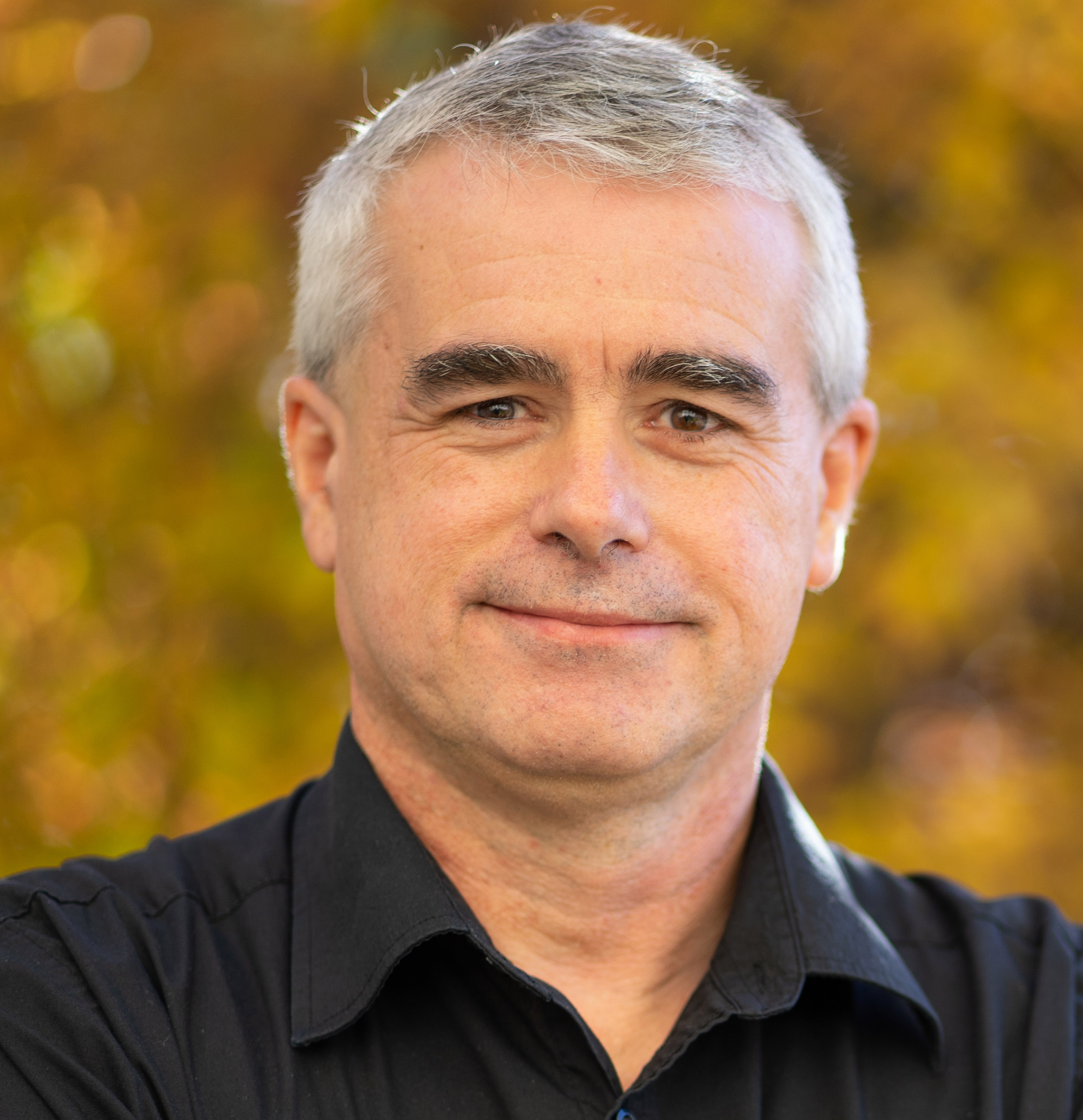
Dr. Marjorie Darrah is a Professor of Mathematics at West Virginia University (WVU), affiliated with the School of Mathematical and Data Sciences within the Eberly College of Arts and Sciences. She holds a Ph.D. and M.S. in Mathematics from WVU (1995, 1991) and B.S. in Mathematics and B.A. in Education from Fairmont State College (1989, 1988). Her roles include teaching, research, and leadership, including Interim Chair of the Mathematics Department (2018–2020). Research Focus: Biologically inspired algorithms (neural networks, genetic algorithms), UAV systems, haptic technology for education, and program evaluation. Education Projects: Mitigation of math anxiety, rural STEM student success, and accessibility for visually impaired students. Dr. Darrah has led over 20 funded projects, including NSF grants and Department of Defense initiatives. Her work spans cooperative UAV control, neural network verification, and educational technology. Notable awards include the Woman of the Year (2002) and TechConnect StartUp Innovation (2013). Her advising includes doctoral and master’s students in mathematics and engineering. Recent publications focus on LiDAR data analysis, math anxiety mitigation, and UAV swarm coordination.
Dr. Joel Lanovaz is an Associate Professor and Associate Dean Academic at the University of Saskatchewan's College of Kinesiology, where he teaches biomechanics courses and conducts research in human movement science. His work focuses on understanding balance control, neuromuscular adaptations, and bone health across various populations. B.Sc. Mechanical Engineering (1990), University of Saskatchewan M.Sc. Mechanical Engineering (1996), University of Saskatchewan Ph.D. Mechanical Engineering (2006), Queen's University Dr. Lanovaz's research primarily explores biomechanics and motor control, with specific emphasis on walking balance control in individuals with spinal cord injury, development of upper limb computational models, and the relationship between muscle strength and bone properties in children. His work in healthy aging investigates fall prevention strategies for older women, including the Fall Arrest Strategy Training (FAST) program. He also studies clinical applications such as ankle-foot orthoses for children with cerebral palsy and the effects of haptic input on balance control during walking. His research approach integrates engineering principles with human movement science to develop evidence-based rehabilitation interventions. Analysis of Dr. Lanovaz's recent publications reveals a strong focus on balance assessment and fall prevention across multiple populations including older adults, individuals with spinal cord injury, and children with cerebral palsy. His work consistently applies biomechanical principles to solve clinical problems, with increasing attention to sex and gender differences in balance research. The research demonstrates methodological diversity, utilizing motion capture systems, computational modeling, and clinical trials to address questions related to neuromuscular control, bone health, and rehabilitation effectiveness. Dr. Lanovaz co-directs the Biomechanics of Balance and Movement Lab at the University of Saskatchewan, where he supervises graduate students and collaborates with clinicians and researchers across disciplines. His research program includes multiple ongoing projects examining walking balance after spinal cord injury, upper limb computational modeling, bone health in children, and fall prevention strategies for older adults. While specific grant information is not provided in the available text, his extensive publication record suggests successful funding for his research initiatives.
Professor Georgios Kouroupetroglou is a leading academic at the National and Kapodistrian University of Athens (NKUA), serving as Professor in the Department of Informatics and Telecommunications. He holds significant roles including President of the Association for the Advancement of Assistive Technology in Europe (AAATE) and membership in the European Academy of Sciences and Arts. His research focuses on digital accessibility, voice processing, assistive technologies for disabilities, and music computing. He has pioneered initiatives such as the 'Accessibility Unit' and the Speech and Accessibility Research Laboratory at NKUA. Education: B.Sc. in Physics and Ph.D. in Communications and Signal Processing. He has held administrative roles including Chairman of the Department of Informatics and Telecommunications, Director of Postgraduate Studies, and Director of the M.Sc. Programme in 'Language Technology'. Research interests span: Computer Accessibility & Voice User Interfaces Accessibility of Documents and Mathematics Music Computing and Ancient Instruments Gesture-Based UIs and Haptics Inclusive Education Technologies Publications highlight innovations in: Assistive tech for mobility and motor disabilities Audio-tactile interfaces for blind users Accessibility in higher education Acoustic modeling of historical instruments He has authored over 180 papers and books, reviewed numerous EU projects, and teaches courses on accessibility, signal processing, and assistive tech. His work bridges clinical science and technology, emphasizing sustainability and global inclusivity.
Daniele Fontanelli is a Full Professor at the Department of Industrial Engineering , University of Trento, Italy. He holds a Ph.D. in "Automatics, Robotics, and Bioengineering" from the University of Pisa (2006) and a Laurea in Industrial Informatics (2001). He has taught courses such as Internet of Things , Distributed Measurement Systems , and Statistical Estimation at both Trento and Pisa. Research Interests: Robotics, human-robot interaction, signal processing for autonomous systems, UWB localization, distributed sensor networks, and smart grid measurement systems. His work spans mobile robotics, control theory, and embedded systems with applications in medical robotics, warehouse automation, and environmental monitoring. Scientific Contributions: Over 150 publications and leadership roles in European projects like AWARD2.0, SAFESTRIP, and ACANTO. He serves as Associate Editor in Chief for IEEE Transactions on Instrumentation and Measurement. Outstanding Associate Editor (2020) Most Productive Italian Reviewer (2020) Distinguished Service Award (2020)
Marie Babel is a Full Professor at INSA Rennes, affiliated with the Rainbow team within IRISA/Inria. She specializes in assistive robotics, focusing on mobility aids for people with disabilities, including sensor-based servoing, haptic interfaces, and virtual reality applications. She leads major projects like the DORNELL Challenge and coordinates international collaborations, such as the ISI4NAVE team with University College London. Her academic Chair IH2A (Innovations, Disability, Autonomy, Accessibility) drives interdisciplinary research in assistive technologies. She holds a PhD in image processing (2005) and an habilitation in signal processing (2012). Teaching: Robotics, Image Processing, Mathematics for Engineers at INSA Rennes. Key Projects: ADAPT (€2M budget), H2020 Crowdbot, PRISME/Ambrougerien. Research Interests: Multimodal sensor-based systems, human-robot interaction, and clinical trials for assistive technologies. Notable contributions include wheelchair navigation assistance, wearable haptic feedback, and VR simulators. Awards: Best Paper at Eurohaptics 2022, Innovation Award at SOFMER 2019. Grants & Labs: Leads INSA's contributions to ADAPT and coordinates DORNELL Challenge. Active in Inria's research networks.
Laura Hauck is Contract Faculty at Mount Royal University teaching courses in GNED, BIOL, PHYL, and HPED. She holds a PhD, MSc, and BSc from the University of Waterloo. Her research examines age-related changes affecting balance and mobility, specifically focusing on fall prediction and prevention in older individuals through interdisciplinary approaches combining neuroscience, biomechanics, physiology, motor learning, and psychology. Her publications demonstrate consistent focus on movement disorders and clinical assessment techniques, with recent work emphasizing neurophysiological parameters in mobility research and epidemiological studies of neurological conditions.
Kaiwen Chen is a Research Associate at the Department of Electrical and Electronic Engineering, Faculty of Engineering, Imperial College London. He holds a B.Sc. from the University of Illinois Urbana-Champaign and a B.Eng. from Harbin Institute of Technology, followed by M.Sc. and Ph.D. degrees from Imperial College London. His research focuses on nonlinear and adaptive control theory, particularly in time-varying systems, multi-agent systems, and applications in cyber-physical-human systems and soft robotics. He is affiliated with the Control and Power Research Group and the Hamlyn Centre for Robotic Surgery, contributing to advancements in medical robotics and resilient control systems. Dr. Chen’s work emphasizes adaptive control methodologies for uncertain systems, including robust designs for cyber-physical networks and surgical manipulators. He serves as an Associate Editor on the Conference Editorial Board of the European Control Association since 2022. His notable achievements include the 2023 IET Control and Automation Doctoral Dissertation Prize and the 2018 Hertha Ayrton Centenary Prize for academic excellence. His research portfolio spans theoretical control advancements and practical implementations, such as hybrid manipulators for gastrointestinal interventions and online data-driven adaptive control strategies. He actively explores interdisciplinary applications, integrating experimental robotics into remote teaching through platforms like quadrotor test-beds. Affiliations : Control and Power Research Group, Hamlyn Centre for Robotic Surgery, Mechatronics in Medicine Lab Editorial Role : Conference Editorial Board, European Control Association Key Contributions : Cyber-physical security, resilient control architectures, soft robotic systems
James Bisley is an Assistant Professor in the Department of Neurobiology at the University of California, Los Angeles . His research focuses on the neural mechanisms underlying visual attention allocation and motion encoding, particularly in posterior parietal cortex and cortical area MT. Techniques include single unit recording, microstimulation, and behavioral task analysis under naturalistic viewing conditions. Research Themes Visual perception and attention Short-term memory of motion stimuli Parietal cortex priority mapping Sensorimotor integration in robotics Key Methods Animal behavioral task design Neural inactivation/stimulation Haptic feedback engineering
Prof. Kristina Shea is a Full Professor of Engineering Design and Computing at ETH Zürich's Department of Mechanical and Process Engineering, leading the Institute of Design, Materials a Fabrication. Her research focuses on additive manufacturing innovations, sustainable design for low-resource settings, and computational design synthesis methods. Key areas include 4D printing, multi-material AM, topology optimization, and generative design applications in biomedical devices and robotics. She holds editorial roles in journals like Programmable Materials and AIEDAM, and has received awards including the Philip Leverhulme Prize (2001) and ASME Fellowship (2014). Her academic journey includes roles at Cambridge University, TU München, and postdoctoral work at EPFL. Current research emphasizes smart materials, deployable structures, and AI-driven design automation. Education: BS/MS (1993-1995), PhD (1997) - Carnegie Mellon University Positions: Visiting Professor at Cambridge (2002-2005), TU München (2005-2012) Key Projects: 4D printed actuators, sustainable construction materials, medical device heuristics Her work bridges theoretical design methods with practical applications, addressing global challenges through innovative manufacturing and material science solutions.
Aude Billard is a Full Professor at the Learning Algorithms and Systems Laboratory (LASA) within the École Polytechnique Fédérale de Lausanne (EPFL) , where she leads groundbreaking research in robotics and machine learning. She also holds teaching roles in the Microengineering and Mechanical Engineering Sections and serves as a member of the Conference of Section Directors (CDS) and the STI School Direction . PhD in Artificial Intelligence (University of Edinburgh, 1998) MSc in Knowledge-Based Systems (University of Edinburgh, 1996) BSc & MSc in Physics (EPFL, 1995) Her research focuses on machine learning techniques for robotics , particularly in dexterous manipulation , dynamical systems , and human-robot interaction . She has pioneered methods for constraint learning from demonstrations, obstacle avoidance in crowded environments, and adaptive control systems, with recent works exploring AI ethics, sustainability in robotics, and improving robotic dexterity beyond human capabilities. Awarded multiple times for her contributions, including IEEE Fellow , ERC Advanced Grant , and Swiss National Science Foundation Career Award , Billard has also received recognition for teaching and service leadership in robotics societies. Scientific Leadership : IEEE Robotics and Automation Society President Education Advocacy : Innovative Teaching Grant recipient PhD Mentorship : Supervised ~30 PhD students
Yves Perriard is an Adjunct Professor at École Polytechnique Fédérale de Lausanne (EPFL), where he serves as director of the Laboratory of Integrated Actuators (LAI) within the School of Engineering and Institute of Microengineering. His academic career spans over three decades, with significant contributions to actuator design and related electronic devices. Professor Perriard's research focuses on electric drives, linear transducers, complex system optimization, invasive blood pumps, piezo electric motors, and smart materials (EAP, SMA). His laboratory's research mission centers on transducers, electric drives, motor design, transportation, contactless energy transmission, and medical applications. Recent work has particularly emphasized dielectric elastomer actuators for medical applications including facial paralysis treatment, cardiac assistance, and diabetes management. His extensive publication record demonstrates a clear evolution from fundamental actuator design toward increasingly sophisticated medical applications. The most recent publications reveal a strong emphasis on cardiovascular engineering, soft robotics for medical applications, and smart materials for healthcare solutions, with significant funding including a 12 million CHF grant from the Werner Siemens Foundation to establish a Center for Artificial Muscles. Best paper awards at IEEE Conference on Electrical Machines and Systems (2014, three separate awards) Student awards for best teacher of the STI Faculty (2005, 2006) Elected to Senior Grade of the IEEE Society (2005) Professor Perriard has supervised 87 Master's projects at LAI across three sections (SMT, SEL, SME) between 2001-2014. His laboratory received significant funding including a 12 million CHF grant from the Werner Siemens Foundation in 2017 to establish a Center for Artificial Muscles. He serves as Associate Editor for IEEE Transactions on Industry Applications and the IEE Journal of Electrical Engineering, and has held numerous leadership positions including Past-President of the EPFL School Council. The Laboratory of Integrated Actuators (LAI) under Professor Perriard's direction has evolved into a leading research center focusing on advanced actuator technologies with strong medical applications. The lab maintains active collaborations with institutions including Zhejiang University in China and has expanded its focus to include cardiovascular engineering, diabetes management technologies, and facial reanimation systems.
Jacob Rosen is a Professor at the University of California, Los Angeles (UCLA) , affiliated with the College of Engineering in both the Department of Mechanical and Aerospace Engineering and Department of Bioengineering . He leads the Bionics Lab , focusing on cutting-edge robotics research. Ph.D. in Mechanical Engineering from Tel Aviv University (1997) His research spans Biorobotics , Human-centered robotics , and Medical robotics , with emphasis on rehabilitation engineering , exoskeleton systems , and human-machine interfaces . Additional expertise includes teleoperation , haptics , and virtual reality applications in robotics. Rosen's work integrates biomechanics and neuromuscular control to enhance robotic systems for surgical and rehabilitative use. His laboratory develops wearable robotics and virtual reality platforms for human-robot interaction. Contact: Office 37-146, Eng IV | jacobrosen@ucla.edu | Phone: (310) 206-0174
Regine Gilbert holds dual roles as an Industry Assistant Professor and James Weldon Johnson Professor at the Department of Technology, Culture, and Society within NYU Tandon School of Engineering. Her work bridges academia and industry through research focused on digital accessibility, inclusive design, and immersive technologies. She actively contributes to advancing accessibility standards in emerging media and technology sectors. Her research emphasizes creating universally accessible digital environments, with a particular focus on applying inclusive design principles to virtual reality (VR), augmented reality (AR), and other immersive experiences. Dr. Gilbert’s expertise spans compliance with accessibility standards like WCAG 2.1, user-centered design methodologies, and the ethical implications of technology adoption. In 2019, she authored Inclusive Design for a Digital World , a foundational text on accessibility practices. She is also collaborating on an upcoming book Human Spatial Computing with Doug North Cook, scheduled for 2025. Her work has been featured in media outlets like Forbes and Medium, reflecting her role as a thought leader in accessibility innovation. Key achievements include her James Weldon Johnson Professorship appointment and leadership in NYU Tandon’s efforts to integrate accessibility into technology curricula. Her speaking engagements at institutions like Stanford University and global conferences highlight her commitment to disseminating inclusive design knowledge.
Ylva Fernaeus is an Associate Professor in Interaction Design at KTH Royal Institute of Technology’s Division of Media Technology and Interaction Design, and a Digital Futures Faculty member. Her work focuses on tangible/embodied interaction, design philosophy, and sustainable technology. She leads the HumanScatter research project on batteryless human-powered communication. Active at KTH since 2010, she also collaborates with Umeå Institute of Design. Research interests include hybrid crafting, material-centric design, and energy-efficient systems. She teaches courses like Physical Interaction Design and Haptics/Tactile Interaction. Notable projects include studies of longevity in interactive systems, bricolage in design practice, and electricity as a design medium. Her work bridges art, craft, and technology with a focus on ethical, sustainable, and experiential dimensions.
Dr. Ekaterina Ivanova is a Lecturer (Assistant Professor) in Human-Machine Interaction at Queen Mary University of London's School of Electronic Engineering and Computer Science. She is affiliated with the Centre for Human-Centred Computing, focusing on multimodal human-robot interaction, haptic communication, and user-centred robotics for medical applications. Her research integrates robotics, data science, neuroscience, and clinical expertise to develop assistive technologies. Teaching: She teaches modules such as ECS7029P Research Methods and ECS733P Interactive System Design, emphasizing interdisciplinary and hands-on approaches. Research Interests: Her work spans haptic communication, neurorehabilitation, and robot-assisted motor learning. Recent studies explore human-robot collaboration in training, sensory augmentation, and motor performance optimization. Grants: Improving motor learning via haptic human-human and human-robot interaction (Royal Society, £12,000) Multimodal human-human Interaction in Negotiation Tasks (Royal Society, £12,000) UKRI CDT in Artificial Intelligence and Music (EPSRC, £6.5M) Labs/Teams: Active contributor to the Centre for Human-Centred Computing, collaborating on projects like supernumerary limb systems and haptic social interaction.