Lee Miller is a Professor of Physiology, Physical Medicine & Rehabilitation, and Biomedical Engineering at the University of Chicago. His research focuses on understanding how the brain encodes movement commands through neural signals, with applications in developing brain-machine interfaces (BMIs) to restore motor function in paralyzed patients. His work integrates neuroscience, engineering, and computational methods to study neural networks in motor systems. Key research areas include decoding cortical signals to predict muscle activity, developing closed-loop BMIs, and investigating functional connectivity in neural circuits. Miller collaborates extensively with the Biomedical Engineering Department and the Interdepartmental Neuroscience Program (NUIN). His lab combines experimental approaches (e.g., chronic neural recordings) with computational tools to study neural dynamics and develop therapeutic technologies. Recent work emphasizes restoring hand function via cortically controlled functional electrical stimulation (FES), translating neural signals into muscle activation. His publications span neural decoding algorithms, sensory feedback systems, and the neurobiology of motor control. Miller’s contributions bridge fundamental neuroscience and clinical neuroengineering, with potential impacts on spinal cord injury rehabilitation and prosthetic control systems.
Marc H. Schieber, M.D., Ph.D. is a Part-Time Professor in the Department of Neurology at the University of Rochester School of Medicine and Dentistry. He leads the Schieber Lab, which focuses on neural control of hand and finger movements and brain-machine interface technology development. His research has significant implications for restoration and repair of damaged neurological function. Dr. Schieber's educational background includes both an MD and PhD from Washington University School of Medicine (1982), followed by a Neurology residency at Massachusetts General Hospital (1983-1986) and an Internal Medicine internship at Barnes-Jewish Hospital South (1982-1983). His academic journey was supported by prestigious fellowships including the Medical Scientist Training Program Fellowship (1974-1982). His research primarily investigates how the brain controls fine finger movements used in activities like typing, playing musical instruments, or performing delicate surgery. More recent work explores the combination of reaching, grasping, and manipulating. His lab studies how the brain controls complex muscle movements to achieve required actions, with applications to brain-machine interface technology. His publications reveal consistent focus on neural coding, motor cortex function, and the development of neuroprosthetics for restoring lost function. Dr. Schieber's work shows strong trends in understanding neural representations of movement, cortical organization for motor control, and translating these findings to practical brain-computer interfaces. His recent publications (2023-2025) increasingly focus on intracortical microstimulation for injecting information into cortical networks, neural synchrony in sensorimotor systems, and computational approaches to motor control. Javits Investigator Merit Award (2003-2010) Clinical Investigator Development Award (1986-1989) Phi Beta Kappa (1974) A.B. summa cum laude (1974) Medical Scientist Training Program Fellowship (1974-1982) Dr. Schieber has mentored numerous graduate students and postdoctoral fellows who have gone on to successful careers in academia and industry. His lab has received substantial research funding supporting investigations into neural control mechanisms and brain-machine interface development. The Schieber Lab has been an important contributor to understanding distributed motor control in the cortex and translating these findings to potential clinical applications for neurological rehabilitation. His laboratory work has consistently examined the distributed nature of motor control in the cortex, challenging traditional views of somatotopic organization and demonstrating how multiple cortical areas work together to produce coordinated movements. Current research directions include investigating how to effectively inject information into cortical networks using microstimulation and understanding the computational principles underlying motor control.
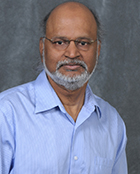
I.V. Ramakrishnan is a Professor in the Department of Computer Science at Stony Brook University. His research spans Artificial Intelligence, Computational Logic, Machine Learning, Information Retrieval, and Computer Accessibility. Ph.D. in Computer Science, University of Texas at Austin (1983) His work focuses on advancing AI and machine learning to solve accessibility challenges for visually impaired users, healthcare informatics, and robotic manipulation. Key contributions include leveraging large language models for multimodal text correction, developing gesture recognition systems for blind users, and applying reinforcement learning to medical data analysis. Recent publications highlight the integration of LLMs in accessibility tools, AI-driven healthcare solutions (e.g., mortality risk prediction, physician attribution), and robotics innovations (e.g., manipulation planning, vertical farming automation). Faculty Service Award (2014) He teaches courses CSE 352 (Artificial Intelligence) and CSE 537 (AI). His research bridges theoretical and applied domains, emphasizing inclusive technology and clinical decision support systems.
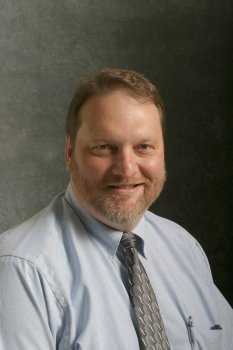
Daniel Moran is a Professor at Washington University in St. Louis since 2001, specializing in neuroprosthetics and brain-computer interfaces through the Division of Biology & Biomedical Sciences. His research restores motor function in paralyzed patients by decoding neural signals for neuroprosthetic control. Education PhD, Arizona State University, 1994 BS, Milwaukee School of Engineering, 1989 His lab investigates voluntary upper limb motor control mechanisms and alternative neural signal pathways for brain-computer interfaces. This work directly enables technologies like the FDA-approved IpsiHand, which translates ipsilateral brain activity into hand movement for stroke patients. Scientific Awards National Academy of Inventors (2021) for 'highly prolific spirit of innovation' Moran co-developed the IpsiHand neuroprosthetic (FDA approved 2021) and leads an NIH-funded neurotech training program (2022) cultivating engineering solutions for neurological disorders. His prior neurophysiology research at the Neurosciences Institute in San Diego established foundational motor control principles.
Bob Kirsch serves as Professor and Department Chair of Biomedical Engineering at Case Western Reserve University, where he also directs the Cleveland FES Center. His research focuses on restoring motor function for paralyzed individuals through neural engineering innovations in brain-computer interfaces and functional electrical stimulation systems. His educational background includes: Ph.D. in Biomedical Engineering from Northwestern University M.S. in Biomedical Engineering from Northwestern University (1986) B.S. in Electrical Engineering from the University of Cincinnati (1982) Dr. Kirsch's research spans intracortical brain-computer interfaces for movement restoration, neural decoding algorithms for grasp force and speech, and functional electrical stimulation integration with BCI systems. His work emphasizes closed-loop control architectures , artifact reduction in neural recordings , and reinforcement learning approaches for neuroprosthetic control, targeting clinical translation for tetraplegia rehabilitation. Analysis of his 2016-2020 publications reveals consistent focus on improving BCI calibration speed, enhancing movement decoding accuracy, and developing robust systems for real-world use. Key trends include leveraging human-generated rewards for controller training, addressing signal-independent noise limitations, and creating hybrid approaches combining cortical recordings with FES for functional movement restoration. His recognition includes: Faculty Distinguished Research Award from Case Western Reserve University (2023) As Department Chair and Cleveland FES Center Director, Dr. Kirsch leads multidisciplinary teams developing next-generation neuroprosthetics. His research program, supported by NIH and NSF grants, trains graduate students in neural engineering while advancing clinical applications through the BrainGate consortium collaboration. Current efforts focus on improving BCI communication rates and expanding movement restoration capabilities for paralyzed individuals. The Cleveland FES Center under his direction serves as a hub for neuroprosthetics innovation, integrating expertise in neural signal processing, biomechanics, and clinical rehabilitation to develop practical solutions for restoring lost motor function through implanted and non-invasive technologies.
Andrew Miri is an Assistant Professor in the Department of Neurobiology at Northwestern University's Weinberg College of Arts & Sciences. He holds a Ph.D. from Princeton University. His research focuses on understanding how the nervous system generates movement, particularly the interplay between spinal cord neurons and brain regions in the motor system. His lab employs advanced genetic, physiological, and data science tools to study motor system dynamics and functional units. Key research interests include motor system function, behavior quantification, systems neuroscience, and brain-behavior relationships. He investigates how motor cortical outputs engage spinal circuits and the elemental functional units underlying motor operation. Recent work explores skilled movement generation in real-time, cortical orchestration of movement, and corticospinal control mechanisms. Selected honors include the NIH Director's New Innovator Award (2020), Sloan Research Fellowship (2020), and Searle Scholar Award (2019). His lab includes students like Akiko Saiki (Ph.D.), Zhengyu Ma, and Sarah Hsu, alongside research technicians and undergraduates. Collaborative projects involve genetic tools, optogenetic inactivation, and EMG recordings to dissect neural mechanisms. Publications highlight studies on motor cortical influence, neural dynamics in gaze control, and motor neuron identity. His work bridges basic neuroscience with translational insights into movement disorders.
Stephen Helms Tillery is a professor at Arizona State University (ASU), holding the Lincoln Chair in Neural Engineering and Ethics. He is affiliated with the School of Biological and Health Systems Engineering and the Lincoln Center for Applied Ethics. His research focuses on neural mechanisms underlying sensorimotor control, particularly how the brain integrates sensory inputs to guide movement. He also leads ethical discussions on aligning research with societal benefit. Education: B.S. in Psychology (ASU), neuroscience studies at University of Minnesota (under John Soechting and Tim Ebner), postdoctoral work at SUNY Syracuse (under Peter Strick), and neuroprosthetics research at ASU with Andrew Schwartz. Research interests include brain plasticity, cortical neurophysiology, and neural prosthetics. His work combines human and nonhuman primate studies, with contributions to tactile feedback systems, cortical mapping, and neuroethical frameworks for translational research. Key research trends in his articles emphasize sensory integration, neuroprosthetic design, and ethical considerations in neural engineering. He has developed novel methods for non-invasive cortical mapping and advanced haptic feedback systems for prosthetics. He participates in the Global Futures initiative as a Senior Global Futures Scientist, addressing long-term societal impacts of neuroscience research. His work bridges technical innovation with ethical responsibility, ensuring technologies benefit broader communities.
Gunar Schirner is an Associate Professor of Electrical and Computer Engineering at Northeastern University's College of Engineering . He holds a Ph.D. and M.S. from the University of California, Irvine, and a B.Sc. from Berufsakademie Berlin. His research focuses on embedded systems, cyber-physical systems, and hardware/software co-design, with emphasis on embedded vision and system-level methodologies. Education: Ph.D. & M.S. in Electrical and Computer Engineering, University of California, Irvine (2008, 2005) Bachelor's in Computer Engineering, Berufsakademie Berlin, Germany (1998) Research Interests: Embedded system modeling, real-time AI on edge devices, accelerator-rich computing architectures, and assistive robotics. His work bridges algorithm design with system-level implementation, including projects on neural-controlled prosthetics and marine mammal monitoring via passive acoustic sensing. Grants & Collaborations: Schirner leads/navigate grants totaling over $2M from the National Science Foundation (NSF), U.S. Army, and Office of Naval Research, including a $13M Army contract for distributed sensing research. He co-directs the Embedded Systems Laboratory , advancing heterogeneous platform design and embedded vision systems. Students & Impact: His advisees, including Mo Han and Yagmur Gunay, have won best paper awards at PETRA 2019. He actively integrates industry experience (e.g., Alcatel-Lucent) into teaching, mentoring students in both academia and industry.
Abidemi Bolu Ajiboye, PhD, is the Robert & Brenda Aiken Professor of Biomedical Engineering at Case Western Reserve University's Case School of Engineering. He holds key administrative roles including Faculty Director of Postdoctoral Affairs, Associate Chair, and Executive Vice Chair of the Case School of Engineering. His research focuses on developing brain-computer interface (BCI) technologies to restore motor function in individuals with spinal cord injuries and stroke. Notable projects include the ReHAB initiative, aiming to reconnect paralyzed limbs to the brain through bidirectional neuroprostheses. Education: PhD Biomedical Engineering (Northwestern University, 2008), MS Biomedical Engineering (Northwestern, 2003), BS Biomedical & Electrical Engineering (Duke University, 2000) Research interests span neural control mechanisms, FES-based systems, and clinical translation of BCI technologies. He has pioneered closed-loop systems for natural movement restoration and received VA Career Development Awards. His work integrates neuroscience with engineering to address complex rehabilitation challenges. Publications emphasize BCI system design, neural signal processing, and clinical applications. Recent efforts focus on tactile feedback restoration and addressing biocompatibility challenges in neural implants. He advises on postdoctoral training programs and contributes to interdisciplinary neural engineering initiatives through the Cleveland Neural Engineering Workshop.
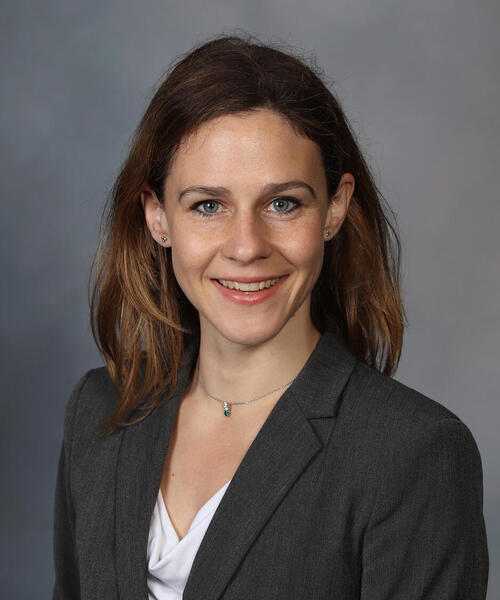
Dora Hermes Miller is an Associate Professor of Biomedical Engineering and holds Senior Associate Consultant II-Research roles in the Departments of Physiology & Biomedical Engineering, Radiology, and Neurology at Mayo Clinic. Her research focuses on human systems neuroscience, integrating multimodal imaging and computational modeling to understand neural signals in neurological and neuropsychiatric diseases. She collaborates with clinicians to develop therapeutic neuromodulation technologies and neuroprosthetics. Education includes a PhD from Utrecht University (Brain Center Rudolf Magnus) and postdoctoral fellowships at Stanford University, New York University, and UMC Utrecht. Her work emphasizes reproducible research practices, with contributions to neuroimaging standards like BIDS-iEEG and open source tools for electrode localization. Research interests span multimodal imaging integration, network dynamics via electrical stimulation, neural oscillations, and translational applications of brain-machine interfaces. Her lab explores how electrical stimulation modulates human connectomes, with implications for epilepsy treatment and psychiatric conditions. Collaborative efforts bridge clinical neurology, neurosurgery, and computational neuroscience. Awards and recognitions are not explicitly listed in the provided text. Her work has advanced understanding of somatotopic motor representations, limbic circuit modulation, and cortical stimulation effects, with over 70 peer-reviewed publications in journals like NeuroImage and Brain. Current projects include developing closed-loop neuromodulation systems, optimizing ECoG/MEG-fMRI integration, and advancing ethical brain-computer interface applications. She leads the Mayo Clinic NeuroEngineering Lab and participates in collaborative initiatives to standardize neuroelectrophysiological data sharing.
Professor Ingvars Birznieks is a Senior Research Fellow at the Department of Physiology, School of Medical Sciences, UNSW Medicine in Sydney, where he leads the Tactile Research Group at Neuroscience Research Australia (NeuRA). Previously, he held an academic position as Senior Lecturer (Physiology) at the School of Science and Health, Western Sydney University from 2011 to 2014. Dr. Birznieks is a sensory neurophysiologist specializing in sensory information encoding mechanisms, with research spanning tactile perception, neural coding, and bionic applications. His work integrates neuroscience, biomedical engineering, and clinical rehabilitation to understand how touch receptors encode information and how this knowledge can be applied to develop advanced prosthetics and rehabilitation technologies. His research program covers tactile receptors and sensorimotor control of the human hand, with applications in stroke rehabilitation, diabetic neuropathy, and bionic hand development. His recent publications reveal a strong focus on neural coding mechanisms in tactile perception, particularly the burst gap code for frequency perception, friction sensing mechanisms, and intensity coding. These studies consistently bridge fundamental neuroscience with practical applications in bionics and rehabilitation. His interdisciplinary approach connects neurophysiological findings with engineering solutions for artificial touch. Dr. Birznieks has secured significant grant funding, including ARC Discovery Projects and NHMRC Ideas Grants totaling over $2.5 million, supporting research on neural coding, sensorimotor control, stroke rehabilitation, and bionic technologies. His current major project 'The secret of tiny hand movements to feel and manipulate objects' (ARC DP230100048) investigates how humans use micro-movements to extract tactile information during object manipulation. He actively supervises students across neuroscience, biomedical engineering, and computer science disciplines, with recent publications featuring undergraduate and graduate students as first authors. His research group maintains collaborations with institutions in France and Sweden, providing international research opportunities for students. Dr. Birznieks' laboratory has developed unique non-invasive mechanical stimulation technology that allows precise control of neural communication at the single neuron level, enabling unprecedented investigation of how spiking activity influences perceptual experience.
Markus Rudolf Crell is a researcher at Graz University of Technology's Institute of Neural Engineering, specializing in Brain-Computer Interfaces (BCIs) using electroencephalography (EEG). His work focuses on decoding hand movements and handwritten characters for applications in Locked-in Syndrome communication, with active publications and conference participation from 2023-2025. His educational background includes: Bachelor of Science (B.Sc.) Master of Science (M.Sc.) Crell's research centers on neural signal processing for movement-based BCIs, addressing critical challenges in training data generation, motion termination detection, and handwritten character classification. Key focus areas include: Asynchronous movement-based BCI paradigms Continuous hand movement decoding from EEG Low-frequency EEG analysis for communication systems Machine learning integration for real-time BCI performance His 2023-2025 publications demonstrate consistent innovation in BCI data generation and decoding techniques, particularly through movement-offset information and kinematic approaches to handwritten character classification. This work bridges neuroscience and computer science to advance non-invasive communication systems for motor-impaired individuals. No scientific awards were documented in the provided information. While specific advisees and grants aren't listed, his active conference participation—including presentations at the Graz Brain-Computer Interface Conference and ÖGBMT Jahrestagung—indicates ongoing collaborative projects. His research trajectory suggests continued development of practical BCI applications through institutional partnerships. Crell operates within Graz University of Technology's neural engineering ecosystem, collaborating closely with G. R. Müller-Putz's research team. His work leverages institutional resources for EEG data collection and analysis, contributing to the university's prominence in BCI research through the Institute of Neural Engineering.
Anne Kavounoudias is a Professor at Aix-Marseille University, where she serves as Director of the Body & Multisensoriality team within the NeuroMarseille Institute. She also holds the position of Director of EUR Neuroschool, a University Research School that brings together L3, Master and PhD programs in Neurosciences from Aix-Marseille University. Since 2020, she has served as Deputy Director of the NeuroMarseille Institute and previously served as a member of CNU section 69 (2015-2022) and the Board of the Doctoral School of Life and Health Sciences (2019-2021). Dr. Kavounoudias' research focuses on the mechanisms and neural bases underlying multisensory integration in the representation and control of human body movement. Her work sits at the interface of neurophysiology and experimental psychology, examining how muscular proprioceptive, tactile, and visual sensitivities interact to ensure movement perception and control. She conducts studies with healthy adults, elderly subjects to understand adaptive processes during non-pathological aging, and individuals who are transiently deafferented (through immobilization) or permanently (amputees, deafferented patients). Her research methodology incorporates functional brain imaging (fMRI), structural imaging (DWI), MR-spectroscopy of the brain and spinal cord, psychophysical approaches, electromyography, and multisensory stimulations including tendon vibration, visual vection, and tactile vection. Current projects include the ANR ASTRID 'PhantomPain' Project (2021-2025) on phantom pain in amputees, an AMIDEX Excellence Incubator Project (2020-2021) on new therapies for phantom pain, and previous projects like 'DISREMO' (2017-2019) and the ANR JCJC 'MULTISENSE' project (2012-2016). Analysis of Dr. Kavounoudias' recent publications reveals a consistent evolution in her research focus, with increasingly sophisticated neuroimaging approaches to study multisensory integration. Her work demonstrates growing attention to age-related changes in sensory processing and expanding applications to rehabilitation contexts, particularly for amputees and individuals with movement disorders. The publications show a progression from basic research on sensory integration mechanisms to more translational work with clinical applications. Her research has been supported by multiple competitive grants including: ANR ASTRID 'PhantomPain' Project (2021-2025) - Phantom pain in amputees: understanding its central and peripheral origins AMIDEX Excellence Incubator Project (2020-2021) - New therapy for phantom pain after amputation 'DISREMO' Project (2017-2019) - Exploration of audio-haptic interactions in texture perception ANR JCJC 'MULTISENSE' Project (2012-2016) - Multisensory integration and kinesthetic perception As Director of EUR Neuroschool, Dr. Kavounoudias oversees graduate education in neuroscience at Aix-Marseille University, coordinating L3, Master and PhD programs. She previously served as Co-director of the ICN PhD Program and Co-manager of the Brain Master Program, both initiatives aimed at internationalizing neuroscience education at AMU. Dr. Kavounoudias leads the Body & Multisensoriality research team at the NeuroMarseille Institute, where her group investigates the neural mechanisms of body representation and movement control. Her laboratory employs a multidisciplinary approach combining neuroimaging, psychophysics, and electrophysiological techniques to study sensory integration in both healthy and clinical populations, with particular focus on developing rehabilitation approaches for movement disorders.
Dr. Ho Yeol Yu serves as an Assistant Professor of Sport and Recreation Management within the Department of Health and Human Performance at East Texas A&M University's College of Education and Human Services. He joined the university in 2024 following four years as an Assistant Professor of Sport Management at Arkansas State University, a Division I institution. His academic credentials include a Ph.D. in Kinesiology (Sport and Fitness Administration) from the University of Houston (2020), an M.S. in Sport Management from Florida State University (2015), and a B.S. in Sport Science from Daejin University (2011). Dr. Yu's research centers on sports consumer behaviors, with specific emphasis on game attendance patterns, team merchandise purchasing dynamics, sports team branding strategies, service quality perceptions, and fan team switching behavior. He employs rigorous quantitative research methods and sports analytics to decode fan psychology and decision-making processes, bridging theoretical sport marketing concepts with practical industry applications. His methodological approach consistently leverages advanced statistical modeling to extract actionable insights for sports organizations. Analysis of his recent 15 publications reveals a cohesive research trajectory focused on data-driven consumer behavior analysis across diverse sports contexts—from smart fitness apparel adoption to city branding effects during sporting events. The work demonstrates sophisticated application of reflective-formative modeling, technology acceptance frameworks, and pandemic-era consumer hesitation studies, all contributing to evidence-based sport management practices. Associated with the ROARHP Lab, Dr. Yu teaches Sport Marketing, Sport Analytics, and Finance in Sports, with Sport Analytics being his preferred course due to its hands-on data analysis components that students report as career-transforming experiences in sports industry roles.
Prof. Christian Cipriani is the Director of the BioRobotics Institute at Scuola Superiore Sant'Anna (SSSA) and Head of the Artificial Hands Area. He holds a Ph.D. in Biorobotics Science and Engineering (2008) and a Laurea degree in Electronic Engineering (2004). His academic career includes roles as Assistant (2011), Associate (2014), and Full Professor (2016) at SSSA. He leads research on mechatronic prosthetics, control systems, and bidirectional interfaces, sponsored by the ERC, EU, and Italian ministries. Key projects include the ERC-funded MYKI (2016-2021) and the DeTOP Project (H2020-ICT). Research Interests: His work focuses on advanced robotic hands, control architectures, non-invasive feedback, and clinical experimentation. He co-founded Prensilia S.r.l., a spin-off commercializing robotic hands. Awards: ERC Starting Grant, National Scientific Habilitation as Professor (2017), Premio Capitani dell'Anno (2015), and Fulbright Scholarship (2012). Grants & Projects: Coordinated over 40 national/international projects, including MY-HAND (FIRB 2010), WAY (EU-FP7), and ARLEM (2018-2022). Labs & Teams: Leads the Artificial Hands Area within the BioRobotics Institute, fostering innovation in prosthetics and neurorehabilitation.