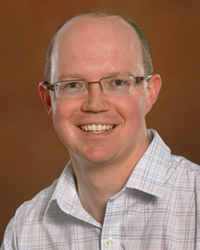
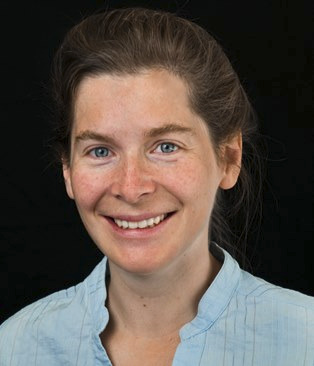
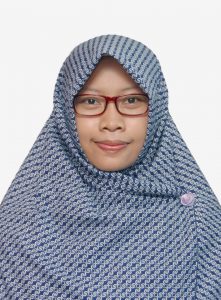
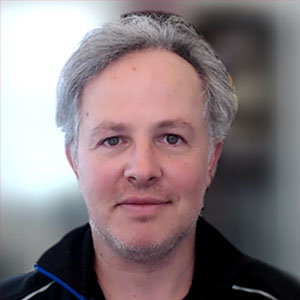
Alexis Berne is an Associate Professor at the Environmental Remote Sensing Laboratory (LTE) within the School of Architecture, Civil and Environmental Engineering (ENAC) at École Polytechnique Fédérale de Lausanne (EPFL). He co-directs the SSIE-GE program and serves as a member of the CDS (Commission for Doctoral Studies) . His research spans radar meteorology, precipitation microphysics, polar precipitation, and geostatistics, with a focus on mountainous and polar regions. Current Positions Associate Professor, LTE, EPFL (2013–present) Co-Director, SSIE-GE, EPFL PhD Program Committee Member, EDCE-GE, EPFL Research Interests include the remote sensing of precipitation, particularly snowfall and ice production mechanisms, using radar and geostatistical methods. His work addresses atmospheric processes in extreme environments like Antarctica and the Swiss Alps, leveraging machine learning and numerical modeling for climate analysis. Teaching encompasses courses on remote sensing, atmospheric processes, and climate change, emphasizing interdisciplinary approaches and spatiotemporal variability. He advises current PhD students such as Heather Anne Corden and Gionata Ghiggi, alongside mentoring past students like Jacopo Grazioli and Timothy Hugh Raupach.
Dr. John Allen is an Associate Professor of Meteorology in the Department of Earth and Atmospheric Sciences at Central Michigan University, where he also serves as Director of the Earth and Ecosystem Science Ph.D. Program and Associate Director of the NSF Artificial Intelligence Institute for Environmental Sciences (AI2ES). He is actively engaged in interdisciplinary research focusing on severe convective storms, their climatology, and responses to climate change. Education: Ph.D., Earth Sciences (Meteorology), The University of Melbourne, 2013 B.S., Research Honours (Meteorology), The University of Melbourne, 2008 B.S., Meteorology and Applied Mathematics, The University of Melbourne, 2007 Dr. Allen’s research centers on global severe weather, particularly tornadoes and hail, and their interactions with climate variability and change. He employs machine learning, statistical modeling, and environmental datasets to improve forecasting and risk assessment. His work spans climatology, atmospheric dynamics, and operational meteorology, with a strong emphasis on translating climate projections into actionable resilience strategies. His recent publications demonstrate a strong trend in applying artificial intelligence and deep learning to severe weather prediction, including hail nowcasting, frontal boundary detection, and hodograph analysis for hazard discrimination. These works reflect a focus on both theoretical understanding and practical forecasting applications. Scientific Awards: National Science Foundation CAREER Award (2020) Central Michigan University Provost’s Award for Outstanding Research (2019/2020) College of Science & Engineering Award for Outstanding Research (2019) AGU Editors' Citation for Excellence in Refereeing (2015) European Severe Storms Laboratory Heini Tooming Award (2015) AMS STAC Outstanding Early Career Award (2022) AMS Editor’s Award for Reviews (2022) Dr. Allen advises numerous Ph.D. students and postdoctoral researchers, and leads multiple funded projects with NSF and NIST. He has served as an editor for Weather and Forecasting and Artificial Intelligence for the Earth Systems . His research group, the Allen Research Group, conducts fieldwork and collaborates internationally on hail and tornado studies. Key Research Projects: NSF-funded ICECHIP hail field campaign (co-lead, summer 2025) Quantifying Risk of Wind and Hail Storms in a Warming Climate (NIST-funded) Geospatial Predictive Analysis of Hail and Wind (AON Inc.) Left-moving Supercell Storm Processes (NSF) Improving High-Impact Hail Forecasts (NSF PREEVENTS)
Prof. Olivia Romppainen-Martius is a Professor and Group Leader of the Climate Impacts research group at the Institute of Geography, University of Bern. She co-directs the Mobiliar Lab for Natural Risks and focuses on short-term climate dynamics, high-impact weather systems, and midlatitude weather patterns. Her work integrates advanced modeling techniques with real-world applications in disaster risk reduction. Her research spans climate variability analysis, probabilistic forecasting of extreme events, and the development of early warning systems. She leads collaborative projects combining machine learning with Earth system modeling to improve understanding of weather extremes under climate change. Key interests include flood forecasting, hailstorm dynamics, and Mediterranean cyclone behavior. Prof. Romppainen-Martius has pioneered web-based visualization tools for impact-based flood warnings and has contributed to kilometer-scale Earth system modeling frameworks like nextGEMS. Her methodologies emphasize statistical reconstruction of historical weather events and the application of AI to convective weather prediction. Her research outputs reflect a strong focus on bridging climate science with practical risk management strategies, particularly in alpine and pre-alpine environments. Current efforts include long-term analysis of Swiss hailstorms and development of crowd-sourced data integration for meteorological observations.
Lorenzo Giovannini is an Associate Professor at the University of Trento, affiliated with the Department of Civil, Environmental and Mechanical Engineering. His expertise spans air pollution meteorology, atmospheric physics, climate change, renewable energy, and urban meteorology, with a focus on numerical weather modeling and pollutant dispersion studies. His research interests include: Atmospheric boundary layer dynamics and turbulence Numerical weather prediction and dispersion modeling Renewable energy resource assessment Climate change impacts on Alpine and urban environments Mountain meteorology and thermally-driven flows His recent publications highlight interdisciplinary approaches combining field measurements, numerical simulations, and data analysis across atmospheric physics, environmental engineering, and climate science. Key article trends involve: Advancing WRF-HAILCAST for severe weather simulations Quantifying snowfall and climate variability in Alpine regions Developing machine learning tools for environmental sensitivity analysis Studying turbulence in complex terrain and urban settings Investigating CO2/H2O fluxes in vineyard ecosystems Applying nature-based solutions to urban heat islands
Fitria Puspita Sari is a Lecturer at the Indonesia State College of Meteorology, Climatology, and Geophysics (STMKG) who is currently on paid leave to pursue her Ph.D. in Atmospheric Sciences at the University of Illinois Urbana-Champaign. At UIUC, she works as a Graduate Research Assistant under the supervision of Prof. Sonia Lasher-Trapp and Prof. Jeff Robert Trapp in the Department of Climate, Meteorology & Atmospheric Sciences within the School of Earth, Society & Environment. Her educational background includes: Ph.D. in Atmospheric Sciences (in progress), University of Illinois Urbana-Champaign M.Sc. in Meteorology and Air Quality, Wageningen University, The Netherlands (2018) Applied B.Sc. in Meteorology, School of Meteorology Climatology and Geophysics (STMKG), Indonesia (2014) Dr. Sari's research focuses on high-impact weather phenomena, particularly hail events in Surabaya, Indonesia. Her work integrates cloud microphysics, thunderstorm dynamics, and numerical weather prediction to understand severe weather systems in maritime tropical regions. She applies machine learning techniques to enhance weather prediction models and specializes in studying how urbanization and sea surface temperature influence thunderstorm development in coastal urban areas like Surabaya. Her scientific contributions have been recognized through prestigious awards including the Fulbright Scholarship (2022-2025), Indonesia Endowment Fund for Education (LPDP) (2016-2018), and Indonesia Agency for Meteorology (BMKG) Scholarship (2009-2014). She also received a Travel Grant as a Sakura Science Young Researcher to attend a science talk with JAMSTEC, LAPAN, and BMKG young scientists at JAMSTEC HQ in Yokosuka, Japan (October 2-11, 2019). Before pursuing her doctoral studies at UIUC, Dr. Sari worked as a lecturer at STMKG where she taught courses including Numerical Weather Prediction, Coupled Atmosphere-wave-ocean Modelling, Numerical Technique, Basic Differential Equation, and Theoretical Basic Weather Satellite. She is an active member of Prof. Sonia Lasher-Trapp's cloud-physics research group, collaborating with researchers Holly and Toby on hailstorm research.
Professor Colin Clark is the Associate Dean (Research & Innovation) at the University of the West of Scotland's School of Education and Social Sciences. His expertise lies in Romani studies, migration, and ethnic/racial studies, with a focus on policy impacts and community integration. He holds a PhD in Social Anthropology and Social Policy from Edinburgh University and has held academic roles at Glasgow, Newcastle, and Strathclyde Universities. Clark advises the Scottish Government on Gypsy/Traveller accommodation and sits on boards of anti-racist organizations like the Coalition for Racial Equality and Rights and Friends of Romano Lav. His research combines ethnographic and intersectional methods, addressing issues such as Roma inclusion, border sociology, and human rights. Current projects include an Erasmus+ initiative with European partners and a Fundamental Rights Agency study on Roma integration in Glasgow. Key funders include the British Academy, Scottish Government, and ESRC. Awards include the China-Scotland Business Award (2023) and a student-nominated teaching excellence award (2017). Clark has supervised numerous PhD students and contributes to UN Sustainable Development Goals related to social inclusion and equity. His interdisciplinary collaborations span institutions like the Scottish Graduate School of Social Sciences and policy organizations such as the Scottish Human Rights Commission. Recent publications explore Roma visibility in higher education, labor mobility paradoxes, and health hazards linked to Traveller site provision.
Dr. Susanna Mohr is a Deputy Group Leader at the Center for Disaster Management and Risk Reduction Technology (CEDIM) and Managing Director for the Synthesis and Communication (SynCom) group at the Karlsruhe Institute of Technology (KIT). She specializes in extreme meteorological events associated with deep convection, including hail, lightning, and convective wind gusts, with a focus on hazard assessment, climate change impacts, and scale interactions.
Prof. Heini Wernli is a Full Professor at ETH Zurich's Department of Environmental Systems Science and Deputy Head of the department. His research focuses on extratropical weather systems, atmospheric transport processes, and diabatic processes influencing weather dynamics. He combines numerical modeling, field experiments, and diagnostic techniques in his work. He earned his physics degree (1989) and doctorate (1995) from ETH Zurich, followed by postdoc roles there. He was a professor at the University of Mainz (2003–2009) before returning to ETH Zurich. His honors include an ERC Advanced Grant, Golden Owl awards (ETH Zurich's top student honor), and teaching awards in Mainz and Rhineland-Palatinate. Education: Bachelor's in Physics, ETH Zurich (1989) Post-graduate degree at NADEL, ETH Zurich (1991) PhD in Atmospheric Science, ETH Zurich (1995) His research group explores weather system predictability, moisture transport, and climate change impacts. Notable projects include studying Arctic cyclones, European hail patterns, and the role of warm conveyor belts in cyclone intensification. Awards: ERC Advanced Grant 'INTEXseas' (2018) ECMWF Fellow (2016) Golden Owl ETH Zurich (2013, 2016) Rhineland-Palatinate Teaching Award (2008) Teaching contributions include courses on environmental fluid dynamics, atmospheric dynamics, and mathematics for systems analysis. He collaborates internationally on projects like the EUREC4A field campaign and Arctic Ocean expeditions.
Professor Gab Abramowitz is a faculty member at the Climate Change Research Centre (CCRC) within the Faculty of Science at the University of New South Wales (UNSW). He also serves as a Chief Investigator with the ARC Centre of Excellence for Climate Extremes. His research emphasizes understanding the utility and limitations of climate, hydrology, and ecology models, particularly in evaluating model performance, benchmarking, and quantifying uncertainties in predictions. He is actively involved in international initiatives such as the GEWEX Global Land-Atmosphere System Study and the management committee of the CABLE land surface model. Professor Abramowitz leads the development of modelevaluation.org, a platform offering automated tools for model evaluation and observational data access. He teaches courses including CLIM1001: Introduction to Climate Change and CLIM3001: Climate Systems Science. His work addresses critical issues like model independence in multi-model ensembles and the application of machine learning to reduce computational costs in climate downscaling. Current research focuses on land surface model benchmarking, drought metrics, and the integration of satellite data with climate models. Prospective students with backgrounds in mathematics, physics, or computing are encouraged to pursue PhD or Honours projects under his supervision, especially in areas such as uncertainty quantification, machine learning applications, and climate model evaluation. The CCRC provides a collaborative environment with a diverse PhD cohort and social support systems.
Andrés Merino Suances is a Professor at the Department of Applied Chemistry and Physics within the College of Biological and Environmental Sciences at the University of León, Spain. His research focuses on atmospheric physics, climate modeling, and meteorological remote sensing, particularly hailstorm prediction and numerical weather simulation. He is affiliated with the GFA FÍSICA DE LA ATMÓSFERA research group. PhD in Atmospheric Physics (University of León, 2013) with a thesis on hailstorm analysis in the Iberian Peninsula. Key research themes include satellite precipitation validation, climate classification systems, and extreme weather events over complex terrain. Recent publications highlight his work on hailstorm detection using GPM sensors, WRF model evaluations for snowfall and precipitation, and advancements in climate models for global warming characterization. Collaborates on international projects like JEM-EUSO, focusing on space-based cosmic ray observations and atmospheric monitoring.
Adam French is Associate Professor in Civil and Environmental Engineering at South Dakota Mines, specializing in severe weather phenomena and atmospheric modeling. His research examines thunderstorm organization, terrain-weather interactions, and forecasting improvements. Teaching responsibilities include Fundamentals of Weather Analysis, Atmospheric Dynamics, Radar Meteorology, and Synoptic Meteorology. Research employs observational analysis and numerical modeling to understand convective storm behavior in complex terrain. Recent publications investigate tornadic supercells, hailstorm forecasting, wildfire smoke impacts, and snow squall classification. Additional roles include undergraduate advising for Atmospheric and Environmental Sciences program.
Dr. Tim Raupach is a Scientia Fellow (Level C) at the University of New South Wales in the School of Biological, Earth & Environmental Sciences . His research focuses on the impacts of climate change on hailstorms , convective processes , and precipitation microstructure , using high-resolution numerical weather simulations and remote sensing techniques to analyze small-scale precipitation variability. Education: PhD, École Polytechnique Fédérale de Lausanne (2016) Master of Science, Australian National University (2009) Bachelor of Software Engineering, Australian National University (2004) Research Interests include: Climate change impacts on severe weather Advanced hailstorm and thunderstorm analysis Improvement of remote sensing techniques (radar, microwave links) Statistical modeling of precipitation patterns Recent Work Trends reflect studies on hail damage potential in Australian cities, hail-hazard mapping across Australia, Bayesian hailstorm detection frameworks , and multi-hazard climate risk assessments for decision-making. Teaching: In 2022, he served as primary convenor for CLIM3001/6001 Climate Systems Science . Research Supervision: He supervises students including Isabelle Greco and Quincy Tut .
Dr. Jan Handwerker serves as the Acting Head of the Boundary Layer and Convective Systems Working Group at the Institute of Meteorology and Climate Research Troposphärenforschung (IMKTRO) at Karlsruhe Institute of Technology (KIT). His research focuses on meteorological phenomena with particular expertise in boundary layer dynamics, convective systems, and radar meteorology. He has led and participated in numerous international field campaigns including Swabian MOSES, DACCIWA, and COPS, demonstrating his leadership in atmospheric observation studies. His research interests span several critical areas of modern meteorology: Boundary layer dynamics and convective initiation processes Radar observation techniques and polarimetric measurements Extreme weather events and precipitation modeling Field campaign design and implementation across diverse geographical regions Mediterranean and West African meteorological systems Interdisciplinary approaches connecting meteorology with hydrology Dr. Handwerker's publication record reveals significant contributions to understanding convective storm development, hail formation mechanisms, and boundary layer processes. His work frequently employs innovative observational strategies combining multiple radar systems with in situ measurements to capture complex atmospheric phenomena. Recent research has focused on comprehensive event chain analysis through the Swabian MOSES campaigns in southwestern Germany, examining how convective storms develop and lead to flooding events. His scientific approach bridges observational meteorology with numerical modeling, contributing to improved understanding of atmospheric processes that drive severe weather. Dr. Handwerker collaborates extensively with international research teams across Europe and Africa, reflecting the global nature of atmospheric research and the need for multinational cooperation in studying weather systems.
Dr. John Hillier is a Professor in Natural Hazard Risk at Loughborough University, holding academic roles since 2010, including Lecturer, Senior Lecturer, and Reader. His professional affiliations include editorial roles for EGU's Geoscience Communication and Heliyon (Elsevier). He specializes in natural hazard risk assessment, GIS applications, climate change impacts, and science communication. Research focuses on compound hazards (e.g., flood-wind co-occurrence), catastrophe modeling, and disaster risk finance. His work bridges academia with industry, particularly through NERC-funded projects and collaborations with insurers like Zurich. Key outputs include the Co-RISK tool for university-industry hazard mitigation projects and open-source R code frameworks for financial risk evaluation. His articles highlight trends in jet stream-driven extreme weather, permafrost degradation impacts on landslides, and AI applications in risk assessment. Awards include the 2017 Loughborough University Research Informed Teaching Award and 2012 Higher Education Academy Fellowship. He has advised on disaster risk finance in Indonesia and pioneered outreach through Nuffield STEM programs. Current projects emphasize climate gentrification and integrating AI into hazard modeling.
Dr. Monika Feldmann is a PostDoc researcher at the Institute of Geography at the University of Bern, specializing in climate impacts . She is affiliated with the Climate Impacts research group and focuses on severe convective storms, large-scale meteorological connections, and AI-based weather forecasting. Her work aims to improve predictability of extreme weather events and evaluate novel computational models. Research Projects: Severe convective outbreaks and large-scale atmospheric drivers Subseasonal predictability of convective events in Central Europe Performance of AI models in forecasting convective environments Key Research Interests: She examines how large-scale atmospheric patterns influence severe thunderstorms, particularly in complex topographies like the Swiss Alps. Her work bridges traditional meteorology with advanced AI techniques to enhance forecast accuracy. Publications Overview: Recent work includes studies on AI-driven convective outlooks, subseasonal forecasting challenges, and the role of mountain environments in storm intensification. Her research emphasizes both theoretical advancements and practical applications for societal resilience against extreme weather. Labs/Teams: Active member of the Climate Impacts team at the Institute of Geography, collaborating on interdisciplinary projects involving climatology, atmospheric science, and computational modeling.