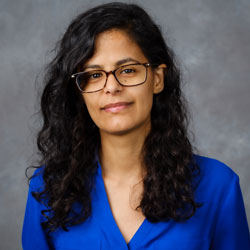
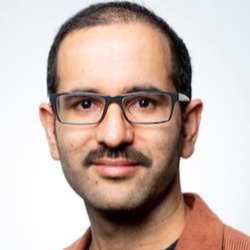
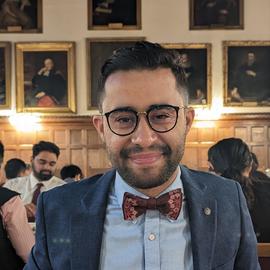
Dr. Timothy Robert Broady is a researcher at the University of New South Wales (UNSW) within the School of Arts, Design & Architecture, based in the 321 Goodsell Building. His contact information includes phone +61 2 9385 1086 and email t.broady@unsw.edu.au. His research spans multiple disciplines with primary focus areas in: Social and personality psychology Public health Infectious diseases Health equity Dr. Broady maintains an extensive publication record with 86 journal articles, 2 book chapters, 8 conference papers, 26 conference posters, 91 conference presentations, 7 conference abstracts, and 98 reports. His scholarly work is affiliated with the Centre for Social Research in Health at UNSW. He actively engages with academic communities through professional profiles on X, LinkedIn, ResearchGate, and Google Scholar, with an ORCID identifier of https://orcid.org/0000-0002-4341-1868.
Sebastian Diemer Mørk is a Research Fellow in the Department of Social Sciences and Business at Roskilde University . His work examines the interplay between artists and society, focusing on how social, economic, and gendered conditions shape creative practices. ORCID: 0009-0005-2852-138X Contact: Phone +45 4674 2358 | Email sdmoerk@ruc.dk Theoretically rooted in the French school of art sociology (e.g., Bourdieu, Heinich, Lahire), his research explores the relational dynamics of cultural fields and the institutional forces influencing craftspeople and designers. Methodologically, he employs text analysis using natural language processing (NLP) and multiple correspondence analysis to decode latent structures in artistic funding applications and field-based relationships. Research Output Highlights span interdisciplinary topics: (1) A 2025 Poetics article on funding disparities in the arts, (2) 2024 EU-commissioned reports analyzing digital and green transitions through policy lenses, and (3) a publicly available dataset on funding rejection patterns. His collaborations include partnerships with researchers like Anders G. Larsen (co-author on multiple works) and contributions to large-scale European Union projects, emphasizing systemic equity in research and innovation.
Artemisia Spyrou is a Professor at the Department of Physics and Astronomy at Michigan State University. Her research bridges experimental nuclear physics and astrophysics , focusing on nuclear reactions in stars and the structure of neutron-rich nuclei. She is affiliated with the National Superconducting Cyclotron Laboratory (NSCL) and will utilize the upcoming Facility for Rare Isotope Beams (FRIB) for her work. Education : Ph.D. in Physics (2007), National Technical University of Athens Undergraduate studies, Aristotle University of Thessaloniki Her work explores two primary areas: (1) astrophysical processes like the r-process and p-process , which synthesize heavy elements through neutron-induced reactions and β-decays, and (2) nuclear structure of light, neutron-rich nuclei near the neutron drip line. Using the SuN detector and MoNA collaboration , she investigates reaction rates, decay properties, and exotic nuclear configurations. Key trends in her publications include neutron decay mechanisms , gamma-ray spectroscopy for reaction rate measurements, and experimental validation of nucleosynthesis models . Her research has advanced understanding of dineutron decays , new magic numbers , and element formation pathways . As the Faculty Outreach Advisor for FRIB , she contributes to educational and community engagement initiatives. Her career spans appointments as Research Associate, Assistant Professor, and Associate Professor at MSU before becoming a full Professor.
Richard Massey is a Royal Society Research Fellow at Durham University's Institute for Computational Cosmology and Department of Physics. He specializes in dark matter mapping, gravitational lensing, and computational cosmology, with significant contributions to the Euclid mission and SuperBIT balloon telescope projects. Institution: Durham University Department: Department of Physics, Institute for Computational Cosmology Email: r.j.massey@durham.ac.uk Research Interests: Massey's work focuses on dark matter distribution, galaxy cluster dynamics, and gravitational lensing phenomena. His research employs advanced computational methods, machine learning, and space-based observations to study cosmic structure formation and planetary impact simulations. Recent Work Trends show a heavy emphasis on Euclid mission data analysis, including weak lensing, dark matter mapping, and high-redshift galaxy studies. He also contributes to planetary impact simulations ( dark matter cartography ), stratospheric balloon experiments, and development of open-source astronomical software like PyAutoLens and PyAutoCTI. Scientific Awards: Royal Society Research Fellow Key Collaborations include the Euclid Consortium, NASA missions, and international teams working on gravitational wave follow-up observations and cosmic web analysis.
Dr. Qingchun Tong is a Professor and the Cullen Chair in Molecular Medicine at the Department of Integrative Molecular and Biomedical Sciences (IMM) of McGovern Medical School at The University of Texas Health Science Center at Houston (UTHealth). He serves as Associate Director of the IMM-Center for Neuroimmunology and Glial Biology and holds adjunct faculty positions in the Department of Neurobiology and Anatomy of McGovern Medical School and the Endocrine division of the Department of Medicine at Baylor College of Medicine. Dr. Tong received his B.S. in Biology from Anhui Normal University of China in 1996, followed by an M.S. in Physiology from the Shanghai Institute of Physiology, Chinese Academy of Sciences in 1999. He then moved to the United States, earning his PhD in Neural and Behavioral Sciences from SUNY Downstate Medical Center in 2003. His postdoctoral training at Beth Israel Deaconess Medical Center and Harvard Medical School (2003-2009) focused on hypothalamic neurocircuits and feeding behaviors related to obesity and diabetes using extensive mouse genetics. He was recruited to IMM of UTHealth in 2009, where he has remained as faculty ever since. Dr. Tong's research program tackles the obesity epidemic by elucidating mechanisms behind defective feeding and body weight regulation. His laboratory employs animal models with advanced techniques including electrophysiology, optogenetics, chemogenetics, in vivo imaging, Cre-loxP/Flp-Frt genetics, CRISPR/Cas9-mediated mutagenesis, and single-cell RNA sequencing. A major research direction investigates how neurons and glial cells interact to maintain energy and behavioral homeostasis under normal and metabolically challenged conditions. His ongoing projects explore novel neural pathways for feeding regulation, brain efferent pathways controlling peripheral metabolism, brain mechanisms mediating blood hormone action, chronic stress effects on obesity, and glial contributions to metabolic diseases. Analysis of Dr. Tong's recent publications (2021-2023) reveals a strong interdisciplinary focus spanning neuroscience, metabolism, and immunology. His work demonstrates how neural circuits, particularly involving the melanocortin system and AgRP neurons, regulate energy homeostasis, with expanding research into neuroimmunology examining TREM2 and microglial functions in metabolic regulation. This research has significant implications for understanding and potentially treating obesity and related metabolic disorders. Hans J. Muller-Eberhard, MD, PhD and Irma Gigli, MD Distinguished Chair in Immunology Cullen Chair in Molecular Medicine As principal investigator of an active research laboratory, Dr. Tong mentors postdoctoral fellows, graduate students, and research assistants. His lab maintains strong collaborative networks with researchers at UTHealth, Baylor College of Medicine, and other institutions. The Tong Laboratory actively recruits motivated undergraduate students, graduate students, and post-doctoral fellows, providing substantial research funding to support innovative approaches to understanding obesity and metabolic disorders through cutting-edge techniques including viral vector-based tracing and neural circuit mapping. Dr. Tong leads the Center for Neuroimmunology and Glial Biology at IMM, where his team employs comprehensive approaches to study neural regulation of metabolism. His lab website (http://www.tong-laboratory.com/) details ongoing research and opportunities for prospective members interested in tackling obesity and related metabolic disorders through fundamental neuroscience research.
Prof. Johannes Vüllers holds the Chair of International Relations with a focus on Peace and Development Studies at the University of Duisburg-Essen’s Institute of Political Science. His contact details include an office at Lotharstr. 63, 47057 Duisburg (Space LF 188), phone number (0203) 379-4450, and email johannes.vuellers@uni-due.de . Office hours are Tuesdays 2-3pm after registration. His research focuses on International Relations and Peace and Development Studies , as indicated by his chair’s title. More details about his publications and projects can be found on his official website: https://www.uni-due.de/politik/vuellers.php .
Dr. Sarra Alqahtani is an Associate Professor in the Computer Science Department at Wake Forest University. With a Ph.D. from the University of Tulsa (2015) and a two-year postdoc there, she focuses on safety and explainability in reinforcement learning (RL) and multi-agent RL (MARL), particularly for environmental applications. NSF CRII grant for safe MARL research NASA grant for drone navigation in Amazonian rainforests Her work addresses adversarial vulnerabilities in RL systems, develops robust safety policies, and combines local/global explanations to enhance AI interpretability. She applies these techniques to autonomous vehicle platoons, environmental monitoring, and illegal gold mining detection. Recent publications appear in top venues like AAMAS, IJCAI, and Nature. Research emphasizes transitioning MARL algorithms from simulations to real-world deployment while ensuring safety and reliability. Email: sarra-alqahtani@wfu.edu | Personal Site
Stanisław Andrzej Barczak serves as a Lecturer in the Department of Applied Mathematics at the Faculty of Finance, University of Economics in Katowice. His research specialization includes: Economics Finance Time Series Analysis (szeregi czasowe) Dr. Barczak has published 2 scholarly works with a total ministerial score of 23 in the Polish academic evaluation system. His research primarily focuses on quantitative methods in economics and finance, with particular emphasis on time series analysis. Professional identifiers: ORCID: 0000-0003-2074-9580 Profile URI: https://economicus.ue.katowice.pl/info/author/UEKTe2d9ae1206db485cbdf2e98b2f68ebc7/ Contact: stanislaw.barczak@ue.katowice.pl
Vinod Kumar Chauhan Kumar is a Strathclyde Chancellor's Fellow in AI (Lecturer rank) in the Faculty of Science at the University of Strathclyde . He concurrently holds a Visiting Scholar position and the MPLS Enterprise and Innovation Fellowship (2025–26) at the University of Oxford . Education: PhD in Optimisation for Large-Scale Machine Learning, Panjab University, Chandigarh (Awarded 2019) Supported by University Grants Commission’s JRF and SRF Fellowships Research Focus: Dr. Chauhan pioneers data-driven Causal AI for personalized healthcare, bridging Causality , Healthcare , and Artificial Intelligence . His work develops novel methods for treatment effect estimation, bias correction in healthcare ML, and graph-based EHR analysis, with applications in gastric disease prediction and industrial optimization. The UN Sustainable Development Goals framework guides his healthcare impact initiatives. Publication Trends: Recent work (2023-2025) demonstrates three converging thrusts: (1) causal inference frameworks for composite treatments/outcomes in healthcare, (2) graph neural networks for EHR analysis (e.g., CliqueFluxNet), and (3) industrial AI applications. Over 30% of his publications address healthcare bias challenges, while 25% focus on handwriting recognition for Indic scripts. Scientific Recognition: Institute for Manufacturing Postdoctoral Award for Research Excellence (2021) Student Travel Grant Award (2017) Academic Service: Dr. Chauhan actively mentors future researchers and currently seeks PhD students for causal AI projects. He has reviewed 200+ articles across 50+ venues and serves as Associate Editor for PLOS Digital Health and Editorial Board Member for the International Journal of Artificial Intelligence in Healthcare . His NeurIPS AI4Science Area Chair role highlights community leadership. Collaborative Impact: His research integrates academic rigor with real-world validation through partnerships with clinicians and industry leaders including Boeing and Rolls-Royce, developed during six years of postdoctoral work at Oxford and Cambridge.
Sharon Vince is a Senior Lecturer at the University of West London in the School of Human and Social Sciences, teaching across BA Education Studies and BA Early Childhood Studies programs since 2021. PhD in Early Childhood Education Policy (UCL Institute of Education, 2024) Masters in Early Years Education (UCL, 2021) Research focuses on: Education Policy (funding mechanisms like England’s 15/30-hour ECEC model) Social Inequality (reproduction of educational disparities) Dialogic Pedagogy (student-teacher feedback dynamics) UN SDGs 2, 4, and 10 (hunger, education quality, inequality reduction) Key publications: Food Banks in Schools and Nurseries (Policy Press, 2025) – co-authored with Alice Bradbury " Using Reflection to Increase Student Engagement with Feedback " (2023, New Vistas ) Her work bridges practice and policy, examining how structural decisions impact early years education and advocating for collaborative pedagogical approaches.
Adel Bibi is a prominent Research Fellow at the University of Oxford 's Department of Engineering Science, with concurrent roles at Kellogg College and the ELLIS Society . He serves as R&D Distinguished Advisor for Softserve , specializing in AI Safety through robustness certification and optimization. Academic Background: PhD in Electrical Engineering (4.0/4.0), KAUST (2020) MSc in Electrical Engineering (4.0/4.0), KAUST (2016) BSc in Electrical Engineering (3.99/4.0), Kuwait University (2014) His research focuses on Trustworthy AI through three main pillars: AI Safety : Specializing in robustness certification, alignment, and security of foundational models in vision/language Continual Learning : Developing efficient frameworks for model updates and domain adaptation Optimization : Creating novel approaches for training stability and resource allocation Recent publications demonstrate expertise in large language model security , interpretable architectures , and robust training , with a particular focus on mitigating risks in agentic systems. Scientific Recognition: Systemic AI Safety Grant (~$250,000) - UK AI Security Institute (2025) Google Gemma 2 Academic Program - $10,000 GCP Credit (2024) Amazon Research Award - Machine Learning Algorithms & Theory (2022) 4 Best Paper Awards (NeurIPS23, ICML23, CVPR22, 2018 Optimization & Big Data) Notable Area Chair Award - NeurIPS23 (top 8.1%) He actively mentors through: 13 PhD/MSc students at Oxford (including 4 graduated PhDs) 3 Unofficial PhD Mentees at KAUST/MIT Supervision of 6 Graduated MSc Students
Cassandra Koh is a vector biologist and group leader at the Institut Pasteur in Paris, France, with EU funding support. Her research focuses on mosquito viromes, host-pathogen interactions, and vector biology, particularly in Aedes aegypti and Aedes albopictus mosquitoes. Her work bridges entomology , virology , and computational biology , with recent publications on mosquito core viromes, ribosomal RNA sequencing for metagenomics, and translating virome data into vector management strategies. She collaborates extensively with labs like the Saleh Lab and Lambrechts Lab . Key scientific contributions include understanding arbovirus transmission dynamics , Wolbachia-virus interactions , and environmental impacts on mosquito immunity . She actively recruits postdoctoral researchers for projects on mosquito-specific viruses and host interactions.
Mary Shaw is the A.J. Perlis Professor of Computer Science at Carnegie Mellon University's School of Computer Science (SCS), with a joint appointment at the Software Engineering Institute (SEI). She co-founded the SEI and served as Chief Scientist (1984-1987). Research Focus: Software architecture, value-based software engineering, end-user software engineering, and software reliability modeling. Education: Pioneered software engineering education frameworks and graduate curriculum guidelines. Grants: Involved in NSF-CCF-0438929, NSF-CCR-0325273, and Sloan Software Industry Center projects. Scientific Awards: National Medal of Technology and Innovation Stibitz Computer Pioneer Award Warnier Prize (1993) Fellow of IEEE Computer Society and AAAS Publications Trends: Recent work spans AI ethics in software, design space theory, adaptive systems, programming language philosophy, and empirical software research. She emphasizes bridging theoretical research with practical applications through projects like Vitruvius for software architecture and EUSES for end-user programming tools.
Qingwang Yuan serves as an Assistant Professor in the Department of Petroleum Engineering at Texas Tech University, joining the institution in 2020 after completing postdoctoral research at Stanford University and the University of Regina. He holds a PhD from the University of Calgary and leads The Hope Group, focusing on next-generation hydrogen production technologies. His educational background includes: PhD in Petroleum Engineering, University of Calgary Postdoctoral Research, Stanford University Postdoctoral Research, University of Regina Dr. Yuan's research pioneers carbon-zero in-situ hydrogen production from petroleum reservoirs, carbon-free natural hydrogen extraction from Earth's subsurface, and carbon-negative hydrogen production coupled with CO 2 sequestration. His work spans CO 2 /H 2 geologic storage and geothermal recovery, employing electromagnetic heating, catalytic conversion, and cyclic injection techniques to transform hydrocarbon resources into clean energy vectors. The research integrates experimental, numerical, and optimization approaches across reservoir types including heavy oil formations and shale systems. Analysis of his 2024-2025 publications reveals dominant themes in hydrogen generation through in-situ combustion gasification, electromagnetic stimulation, and mineral-catalyzed reactions. Key methodological trends include advanced numerical modeling (RNN frameworks), reaction mechanism elucidation, and techno-economic assessment of subsurface hydrogen systems. The work consistently targets decarbonization through carbon-negative pathways while optimizing energy recovery from geological formations. Dr. Yuan actively collaborates on multidisciplinary clean energy initiatives through The Hope Group ( www.TheHopeGroup.Tech ), focusing on practical implementation of hydrogen technologies for energy transition. His research program addresses critical gaps in subsurface hydrogen engineering while maintaining strong industry and cross-disciplinary academic partnerships.
Łukasz Klapiszewski is a Poznań University of Technology Professor at the Institute of Chemical Technology and Engineering within the Faculty of Chemical Technology . His research focuses on green chemistry , biopolymer composites , and functional materials with particular emphasis on lignin-based hybrids for cement and polymer applications. Education 2009 – Engineer's Degree in Chemical Technology 2010 – Master of Science in Chemical Technology 2014 – PhD in Chemical Technology 2019 – Habilitation in Chemical Sciences 2020 – Professor Title Research Focus Specializes in lignin valorization through ionic liquid modification , creating antimicrobial cement composites and photocatalytic materials . Leads research on hybrid biocomposites with applications in construction, environmental remediation, and biomedical fields. Article Trends Recent publications emphasize sustainable construction materials with carbon-TiO2/lignin hybrids showing photocatalytic activity, metal oxide composites for antibacterial properties, and polymer-lignin systems for medical applications. Key themes include green chemistry , nanostructure design , and environmental impact reduction . Scientific Recognition Recipient of multiple Ministerial Scholarships Awarded Prime Minister's Prize (2020) Editorial Board Member at Polymers (IF=3.426) Guest Editor for special issues in Molecules and Materials International collaborations with University of Edinburgh and University of Limerick Academic Leadership Chairman of Chemical Technology Program Council (2020–present) Member of Rector's Commission for Economy Cooperation (2020–present) Supervised 2 doctoral dissertations (including Patryk Jędrzejczak 2025) Coordinator of 'Poznaj chemiczne technologie przyszłości' exhibitions