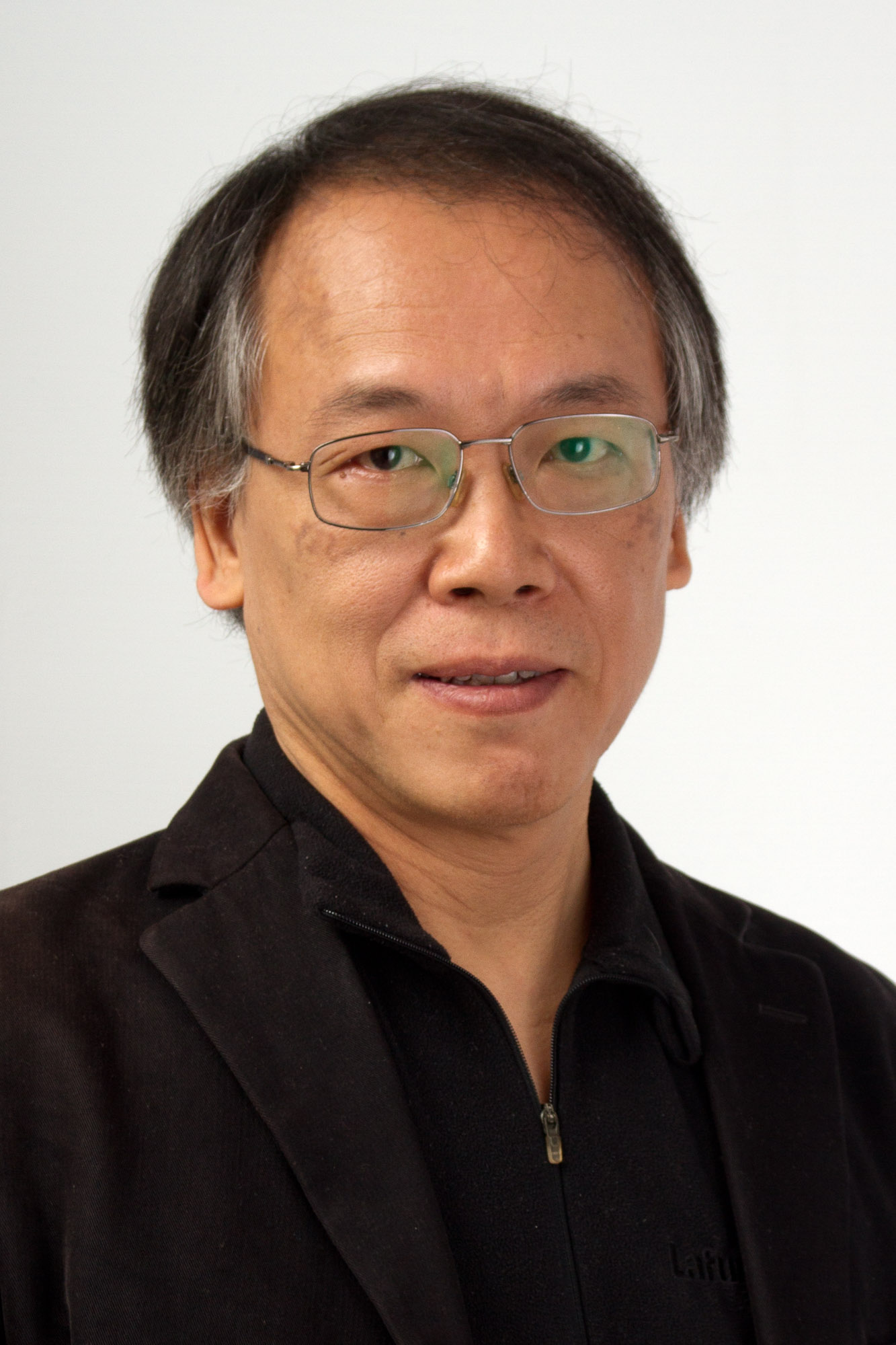
Annette Rios is a Researcher at the University of Zurich within the Language, Technology and Accessibility group. Her work focuses on machine translation , text simplification , and sign language translation , particularly for multilingual and indigenous language contexts. Research highlights include contributions to the European EASIER project on sign language translation, the ZurichNLP consortium, and the development of tools for emotion detection and gender bias reduction in NLP systems. She has published extensively in top-tier venues like ACL and WMT, with a focus on multimodal translation and German language processing . Developed emotion_detection GitHub repository for German emotion analysis Contributed to ContraPro and ContraWSD projects on translation evaluation Created datasets for German text simplification and emotion detection Her publications reveal a strong emphasis on machine translation (7/15 recent works), sign language technology (3/15), and text simplification (2/15). While no formal advising is documented in the provided text, she has mentored GitHub contributors to her repositories. Current research directions include improving multimodal translation systems and expanding emotion detection capabilities beyond English.
Ntzoufras Ioannis is a Professor in the Department of Statistics at the Athens University of Economics and Business (AUEB), School of Information Sciences and Technology, where he has served continuously since 2004 (promoted to Professor in 2015). Previously, he held teaching positions at the University of the Aegean (2000-2004) and completed military service (1999-2000). Education B.Sc. in Statistics and Insurance Science (1994) M.Sc. in Statistics with Application in Medicine, University of Southampton (1995, with distinction) Ph.D. in Statistics, Athens University of Economics and Business (1999) Research Focus His work centers on Bayesian and computational statistics , specializing in categorical data analysis, statistical modeling, and variable selection methodology. He develops sophisticated models for applications in medical research (clinical trials, risk estimation), psychometrics (latent variable models), and sports analytics (football/basketball modeling), with emphasis on computational efficiency and real-world implementation. Publication Trends Recent publications (2023-2025) reveal three dominant trends: (1) Advanced Bayesian variable selection methods for high-dimensional data, (2) Sports analytics applications in football (goal modeling, competitive balance) and basketball (in-play performance), and (3) Development of specialized R packages (ssifs, PEPBVS) for statistical computation. His work consistently bridges theoretical innovation with practical domain applications. Scientific Awards Lefkopouleion Prize for Greece's best statistics thesis (1999-2000) PROSE Award Honorable Mention for 'Bayesian Modeling Using WinBUGS' (2010) Academic Leadership He has supervised graduate students across AUEB's Statistics, Business Analytics, and Data Science programs, and taught postgraduate courses at the University of Athens (Biostatistics), University of the Aegean (Business Administration), and Italian institutions (University of Pavia, Universita Cattolica, University of Bicocca-Milan). As General Secretary of the Greek Statistical Institute (2006-2007), he advanced national statistical initiatives. Research Community He founded and maintains grstats (http://grstats.forumotion.net/), Greece's primary online statistics community, facilitating collaboration among 1,200+ statisticians and data scientists through forums, workshops, and resource sharing.
Noa Pinter-Wollman is a Professor in the Department of Ecology and Evolutionary Biology at the University of California, Los Angeles, within the College of Life Sciences . Her work integrates field experiments, laboratory assays, computational modeling, and social network analysis to understand how individual variation among animals translates into emergent collective behavior, and how these dynamics intersect with conservation challenges. Research Focus: Mechanisms underlying collective decision-making in social insects (especially Argentine ants and harvester ants) Social network structure and its ecological consequences in endangered griffon vultures Interface between spatial ecology and social behavior, including impacts on disease transmission and conservation management Biomimetic insights from social animals to inform resilient human-designed systems Across 2023–2025, her team has produced a steady stream of high-impact articles that collectively advance four thematic pillars: (1) microbiome–behavior feedbacks in ants, (2) conservation technology for scavengers, (3) network-analytic methods for disentangling spatial versus social drivers of interaction, and (4) cooperative strategies that underlie invasion success in ants. The work is notable for integrating high-resolution tracking technologies with rigorous statistical modeling. Funding & Collaborations: Current NSF awards include the collaborative grant “ The causes and consequences of Higher Order Interactions (HOI) ” and prior support for “ Uncovering how links between social and spatial interactions affect ecological processes .” These grants foster interdisciplinary partnerships spanning ecology, computer science, and conservation practice. Laboratory & Team: The Pinter-Wollman Lab at UCLA houses graduate researchers, post-docs, and undergraduates who conduct integrative studies on ants, paper wasps, spiders, and vultures. The lab website ( https://pinter-wollmanlab.weebly.com ) provides protocols, data resources, and outreach materials that translate basic findings into actionable conservation guidance for wildlife managers.
Hugo Paquet is a Researcher at INRIA Paris and a member of the ANTIQUE team at École Normale Supérieure , PSL University. He completed a PhD in Computer Science (2015–2019) at the University of Cambridge under Glynn Winskel , focusing on concurrent game semantics for probabilistic programming. His postdoctoral work includes positions at LIPN, Paris (2022–2024, funded by a Marie Skłodowska-Curie Award) and University of Oxford (2020–2022). He has contributed to conferences including LICS , ESOP , FSCD , and POPL . Education : PhD in Computer Science (University of Cambridge, 2019) Research Interests : Probabilistic programming (semantics, inference algorithms, nonparametric models), categorical semantics (game semantics, concurrency models, adjunctions), combinatorial species, and 2-dimensional categories. Teaching : Category Theory (2023–2024), Bayesian Statistical Probabilistic Programming (2021–2022), Lambda-calculus and Types (2020–2021), and small-group teaching at Cambridge (Logic, Discrete Mathematics, Semantics). Awards : Marie Skłodowska-Curie Award under the Paris Region Fellowship Programme Labs : INRIA Paris, ANTIQUE team (2024–present)
Claire Gaiani is a full Professor at the University of Lorraine, leading the Laboratoire d'Ingénierie des Biomolécules (LIBio). With an ORCID iD: 0000-0003-0434-8453 , she focuses on sustainable food ingredient development from agroresources and food-waste, specializing in the formulation of bioactive compounds (probiotics, glycans, PUFA, flavonoids) into functional powders through industrial-academic collaborations. Habilitation to supervise research (2012, University of Lorraine) PhD in Food Science (2006, University of Lorraine) Engineer (M.Sc.) from ENSAIA (2002, University of Lorraine) Her research combines atomic force microscopy (AFM), XPS analysis, and industrial partnerships (Nestle, Arla Foods) to optimize dairy and plant-based powder properties. Recent work explores cryogel monoliths for probiotic delivery, plant seed gums as structuring agents, and maltodextrin surface characterization. Key scientific contributions include: Over 140 peer-reviewed papers (90% Q1 Food Science/Chemistry/Biophysics) 2 book editions ( Engineering Plant-Based Food Systems , 2023; Atomic Force Microscopy for Food Research , 2023) 10 book chapters 2 patents (FR2807932A1, FR2112358A) 65 international lectures (17 invited) Honors include: 2023 Grand Prix en Sciences Lorraine-Luxembourg 2015 IUF junior member (5-year term) 2011 Marcel Loncin Prize 2014 NIZO Dairy Conference keynote She supervises 9 postdocs and 15 PhD students, and serves on the European Bioencapsulation Research Group board. Her work drives innovations in powder rehydration, probiotic encapsulation, and sustainable food systems through the Agria Grand Est association.
Liam Riley is an Adjunct Professor at the Balsillie School of International Affairs (Wilfrid Laurier University). His research focuses on urban food security, gender dynamics, and development challenges in African cities. PhD in Geography (2013), Western University His work combines participatory GIS and mixed-methods fieldwork in Malawi, Cameroon, South Africa, and Botswana to analyze: Gendered household food strategies Political economic dimensions of urban food security Informal settlement food environments Secondary city food systems Liam leads the SSHRC-funded project Mapping African Urban Foodscapes and contributes to Consuming Urban Poverty 2 and the Hungry Cities Partnership . His publications examine urban poverty, corruption perceptions, and cross-cultural food security comparisons. Scientific awards include: SSHRC Impact Award (Talent Competition): Finalist Banting Postdoctoral Fellowship SSHRC Postdoctoral Fellowship African Geographical Review Paper of the Year Joseph-Armand Bombardier CGS Doctoral Award International Development Research Centre Doctoral Research Award As Co-Editor of the Hungry Cities Partnership reports, he produces open-source information for Global South practitioners and researchers.
Sean Wilson is a Researcher at the Georgia Institute of Technology , affiliated with the College of Engineering and the School of Electrical and Computer Engineering . He serves as the Collaborative Autonomy Branch Chief at the Georgia Tech Research Institute (GTRI) and Director of the Robotarium Lab (https://www.robotarium.gatech.edu/), which provides free remote access to robotic hardware for algorithm testing. Educational Background: B.A. in Physics and Mathematics from State University of New York at Geneseo (2012) M.S. and Ph.D. in Mechanical Engineering from Arizona State University (2017) Dr. Wilson's research focuses on remotely-accessible robotic hardware , collaborative autonomy , and control of multi-agent and swarm robotic systems . His recent publications emphasize distributed control, swarm robotics, and bio-inspired robotic behaviors. The Robotarium Lab he directs enables global access to robotics testbeds for control research. Research Themes (2014-2023): Remote-access robotics (5), swarm coordination (7), bio-inspired algorithms (3), barrier functions (2), multi-robot systems (9), and control theory (4). Sean operates from the Robotarium Lab (Office Location: CCRF B11-3133D) as part of Georgia Tech's Institute for Robotics and Intelligent Machines (IRI) core faculty. His work bridges robotics infrastructure development with theoretical control research.
AnneMarie Luijendijk is the William H. Danforth Professor of Religion at Princeton University and Head of New College West , one of Princeton’s residential colleges, where she has served on the faculty since 2006. A leading papyrologist and historian of early Christianity, she specializes in the social history of Christianity in late-antique Egypt using both literary and documentary papyri. Education Ph.D., Harvard Divinity School, 2005 (New Testament and Early Christianity) Specialization in New Testament Studies, Vrije Universiteit Amsterdam (prior to Harvard) Research Interests Luijendijk’s scholarship bridges papyrology, early Christian studies, and social history. She investigates the everyday lives of early Christians through the papyrus letters and documents that survive from Roman and late-antique Egypt. Her current projects include: From Gospels to Garbage – a forthcoming monograph on the readers, owners, and eventual discard of the earliest Christian manuscripts; Papyrus acquisitions in the 1920s; Fashion, Footwear, and Faith in Late Antiquity – an exploration of dress, status, and religious identity. Her earlier work has illuminated Christian lot divination, the Gospel traditions in Oxyrhynchus, and the role of women and clergy in Egyptian communities. Selected Publications & Editorial Projects Greetings in the Lord: Early Christians and the Oxyrhynchus Papyri (Harvard University Press, 2008) Forbidden Oracles? The Gospel of the Lots of Mary (Mohr Siebeck, 2014) My Lots Are in Thy Hands: Sortilege and its Practitioners in Late Antiquity (co-edited with William E. Klingshirn, Brill, 2018) Re-Making the World: Christianity and Categories (co-edited, Mohr Siebeck, 2019) From Roman to Early Christian Cyprus: Studies in Religion and Archaeology (co-edited, Mohr Siebeck, 2020) Leadership & Service From 2013 to 2020 she chaired Princeton’s Committee for the Study of Late Antiquity , fostering interdisciplinary research across the humanities. She regularly organizes and participates in international workshops, including Princeton–Humboldt Strategic Partnership events, and has secured collaborative grants to advance papyrological research. No individual Ph.D. or master’s advisees are explicitly listed in the provided sources. Laboratories & Collaborations While no dedicated laboratory is mentioned, Luijendijk works closely with the Institute for the Study of the Ancient World (ISAW) at NYU, the Princeton Humanities Council , and international papyrology networks. Her research benefits from digital humanities resources such as the Papyrological Navigator and her Academia.edu profile, which has over 27,000 public views and ranks her among the top 2 % most followed scholars on the platform.
Dr. Jermo van Nes is an Assistant Professor of New Testament at Evangelische Theologische Faculteit Leuven , where he has held positions since 2017, including Senior Researcher in New Testament. He also serves as a Senior Tutor in New Testament studies at King’s Evangelical Divinity School, University of Chester, UK, and is a Research Associate at the University of Pretoria, South Africa. Education Ph.D. in Theology and Religious Studies (2017), ETF Leuven & Theologische Universiteit Kampen Master of Theology and Religious Studies (2010), ETF Leuven Bachelor of Theology and Religious Studies (2007), ETF Leuven Marnix Gymnasium, Rotterdam (2004) Dr. van Nes specializes in New Testament studies, with a focus on Pauline epistles, linguistic variation in the Corpus Paulinum, early Christian ethics, and the reception of disputed New Testament writings in church practice. His research intersects textual criticism, authorship debates, and the theological implications of grammatical and lexical analysis. His recent work explores textual authenticity via statistical analysis of hapax legomena, ethical frameworks in Titus , and historical context of the Pastoral Epistles . Publications include monographs on introductory Greek instruction and edited volumes addressing Pauline theology and boundary formation in early Christianity.
Jieh Hsiang is a Distinguished Professor at National Taiwan University , with affiliations in the Department of Computer Science and Information Engineering, the Digital Archives and Automatic Inference Laboratory, and the Digital Humanities Research Center. He holds concurrent roles at the Institute of Information Science, Academia Sinica, and the Higher Education Research & Development Office, National Taiwan University. Education PhD in Computer Science, University of Illinois at Urbana-Champaign (1979–1982) BS in Mathematics, National Taiwan University (1972–1976) Research Interests Hsiang's work spans automated reasoning , digital libraries , digital humanities , and information retrieval . His research focuses on integrating computational methods with cultural heritage preservation , particularly through tools like DocuSky and databases such as the Taiwan Historical Digital Library . He explores AI applications in patent analysis , historical text mining , and semantic relationships in legal documents . Recent Trends in Publications His recent articles highlight advancements in BERT and GPT-2 fine-tuning for patent classification , LARGE language models for legal automation , and GIS-based analysis of historical archives . Themes include digital preservation , AI-driven legal text analysis , and cross-disciplinary computational tools for humanities scholars. Scientific Awards 2019 Ministry of Science and Technology Distinguished Research Fellow 2009 National Taiwan University Outstanding In-House Service Award 2008 Chinese Library Association Special Contribution Award 2006 IEEE Test-of-Time Award 1997 & 1999 National Science Council Outstanding Research Award 1997 Ministry of Education Outstanding Industrial-Academic Collaboration Award 1998–2001 Founder and First Chair of IFIP WG1.6 Labs and Collaborations Hsiang leads the Digital Archive and Automatic Inference Laboratory , developing platforms like DocuSky for digital humanities, Taiwan Historical Digital Library , and QGIS Cloud Maps for spatial analysis. His team collaborates internationally on projects involving historical document digitization , patent automation , and cross-domain knowledge integration .
Dr. Julie Hearn is a Senior Lecturer and Senior Fellow of the Higher Education Academy (SFHEA) at the Lancaster University , affiliated with the Faculty of Humanities, Arts and Social Sciences and the Department of Politics . She convenes courses such as PPR.222 The Politics of Development and PPR.336 Africa and Global Politics , while supervising final-year and MA dissertations. As PPR Director of Equality, Diversity, and Inclusion (EDI), she received the 2024 EDI Faculty Award . Education : ESRC-funded PhD research in Kenya; collaborative projects with the Institute of Development Studies (IDS), University of Sussex, and institutions in Ghana, Uganda, and South Africa. Research Themes : Julie’s work spans five areas: (1) the global political economy of African civil societies, (2) labor movements in Argentina, (3) trade union mobilization of Latin American migrant workers in London, (4) Ecuador’s postneoliberal development model, and (5) the NGO-isation of the Syrian Revolution. Scientific Awards : 2024 EDI Faculty Award Elected four times to the UCU National Executive Committee Co-founder of the Lancaster University Race Equality Network (LUREN) Advising & Grants : Supervised PhD student David Murphy; secured a 2008 British Academy Small Grant and a 2014/15 ESRC grant for research on migrant workers and Ecuador’s development model, respectively. Publications Trends : Her work focuses on NGO-isation , civil society critiques, labor activism, and postneoliberal development, with key contributions to journals like Development and Change , Third World Quarterly , and International Socialism . Other Activities : Former President, VP, Equality Officer, and Membership Officer of Lancaster UCU; organizer of Black History Month events and decolonization campaigns.
Miklós Tibor Horváth is a Professor at the Department of Mathematics , Budapest University of Technology and Economics , specializing in inverse spectral problems and differential operators. He serves as Head of Department and holds the MTA doktora degree. Email: horvath@math.bme.hu Office: H226c Phone: +36-1-463-2630 Research Interests: His work focuses on inverse spectral theory, including reconstruction of linear differential operators from spectral data, eigenvalue distribution of Sturm-Liouville problems, and fixed-energy inverse scattering. Key areas include stability analysis of inverse problems and closed exponential systems. Publications & Teaching: Horváth has published extensively in journals like Inverse Problems and Transactions of the American Mathematical Society , with notable contributions to stability theorems and spectral shift functions. He teaches courses such as Analysis 2 , Functional Analysis , and Inverse Distribution Problems at both undergraduate and graduate levels. Additional Information: Personal Website: http://math.bme.hu/~horvath Mathscinet Profile: AMS Profile Google Scholar: Google Scholar Profile
Professor Michael Dumper is a leading scholar in Middle East Politics at the University of Exeter , specializing in contested urban spaces and the Arab-Israeli conflict. With a PhD completed in 1993, he has directed major comparative studies on divided cities including the 5-year ESRC-funded project Conflict in Cities and the Contested State , collaborating with institutions in Belfast, Cambridge, Ottawa, and Windsor. Key Research Areas: Jerusalem's political geography, Palestinian refugee rights, UNRWA sustainability, and religious institutions in conflict zones Policy Engagement: Advisor to governments, NGOs, and UNRWA, with briefings for the UK Foreign Office Publications include the acclaimed Jerusalem Unbound (2014) and Power, Piety and People (2011-2018). Current work focuses on UNRWA funding models supported by the Heinrich Boell Stiftung. Awards: ESRC Large Grant (2007-2013) Leverhulme Major Research Fellowship (2015-2018) British Academy/Leverhulme Senior Fellowship (2002) His interdisciplinary approach bridges political science, urban studies, and religious diplomacy, with a particular focus on Jerusalem's complex spatial and jurisdictional divisions.
Prof. Mariusz Jerzy Stolarski is a full-time faculty member at the University of Warmia and Mazury in Olsztyn, affiliated with the Department of Genetics, Plant Breeding and Biomaterial Engineering within the Faculty of Agriculture and Forestry. His research focuses on bioeconomy, renewable energy systems, and sustainable biomass production. Scientific discipline: Agriculture and horticulture ORCID: 0000-0003-0712-9678 Email: mariusz.stolarski@uwm.edu.pl Phone: +48 89 523 48 38 His research explores biomass valorization, biofuel processing, and environmental efficiency assessments across agricultural and forestry systems. Recent work examines supercritical CO2 extraction effects on biomass stability, intercropping systems in organic farming, and economic viability of multi-purpose energy crops like industrial hemp and Virginia fanpetals. Scientific indicators highlight significant contributions: 79/96 publications (WoS/Scopus), 878/1141 citations (WoS/Scopus), H-index 21/24, and Google Scholar H-index 29 with 3089 citations. He has promoted 4 doctors and currently supervises 2 doctoral students.
Neetesh Sharma is an Assistant Professor at the FAMU-FSU College of Engineering in the Civil & Environmental Engineering Department . His work focuses on enhancing community well-being through infrastructure resilience, socioeconomic impacts of natural hazards, and uncertainty quantification. He holds a Ph.D. (2020) and M.S. (2016) from the University of Illinois Urbana-Champaign and a B.Tech. (2010) from National Institute of Technology Tiruchirappalli, India. Research Interests include: Infrastructure Resilience and Post-disaster Recovery Socioeconomic Impacts of Natural Hazards Uncertainty Quantification in Infrastructure Systems Recent publications emphasize risk analysis, functional connectivity modeling, and seismic resilience. His work integrates mathematical frameworks with real-world applications to improve disaster preparedness and recovery strategies. Collaborative participatory approaches and digital twin technologies are key themes in his research. Current opportunities include 2 PhD student openings. Contact via email or visit his Google Scholar profile .