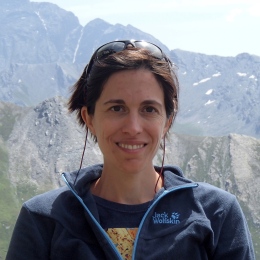
Jürgen Laudien is a researcher at the Alfred Wegener Institute specializing in Benthic Ecology . His work focuses on cold-water coral systems, macrozoobenthos community dynamics, and impacts of climate change on marine invertebrates. Key roles: Head of experimental cold-water aquarium, Scientific dive mission leader His research interests span ocean acidification effects on coral calcification, upwelling-driven ecological shifts, and resilience of benthic communities to environmental stressors. Google Scholar publications reveal a strong emphasis on Chilean fjord ecosystems and in situ experimental studies of cold-water corals. Notable technological contributions include advanced aquarium systems and underwater imaging for growth rate analysis. He actively participates in Arctic and Antarctic long-term observation programs and contributes to PANGAEA data preservation initiatives.
Sehwa Kim is an Assistant Professor in the Accounting Division at Columbia Business School. His research focuses on financial reporting standards and regulatory impacts on financial institutions, particularly banks and insurance companies. He joined Columbia in 2019 after earning a Ph.D. in Accounting, MBA, and MS in Statistics from the University of Chicago, and a BBA from Seoul National University. Prior to academia, he worked as a loan officer at Korea Development Bank. Key research areas include regulatory capital management, loan loss provisioning, and the economic consequences of accounting policy changes. His work has been published in top journals like the Accounting Review and Journal of Accounting Research , and has been featured in Columbia Business School's Ideas at Work and the Columbia Law School Blog . Teaching includes courses on financial accounting and accounting research in financial institutions. He has collaborated with institutions like the Federal Reserve and NYU Stern School of Business on projects related to banking regulation and CECL standards.
Sujin Kim serves as Associate Professor of Art at the School of Art, internationally recognized for pioneering animated documentaries that confront historical trauma and systemic violence through cutting-edge animation techniques. Her practice centers on amplifying marginalized voices, particularly women's experiences within contexts of colonization, war, and national division in Korea. Education: MFA in Experimental Animation, California Institute of the Arts (CalArts) Kim's research operates at the intersection of experimental animation and social justice, employing 3D visualization to transform personal testimonies into powerful visual narratives. Her methodology combines rigorous archival research with immersive interview processes, challenging conventional documentary forms through non-linear storytelling and symbolic materiality. This approach creates visceral engagements with collective memory while foregrounding ethical representation of trauma survivors. Her filmography reveals an evolving trajectory from intimate personal narratives toward complex explorations of national memory, consistently utilizing digital tools to materialize invisible histories. Recent works demonstrate increasing sophistication in merging traditional animation with real-time 3D engines, creating immersive experiences that bridge historical events with contemporary relevance. Scientific Awards: Gold Medal at the 49th Student Academy Awards for thesis film on WWII military sexual slavery Kim's artistic impact extends beyond academia through high-profile commissions from Grammy-winning band MUSE and Touché Amoré, demonstrating cross-disciplinary cultural resonance. Her preservation in the Academy Film Archive and War and Women Human Rights Museum underscores dual recognition of artistic merit and historical significance, cementing her role in documenting traumatic legacies through innovative visual language.
Stelios Rigopoulos is a Professor (Reader in Thermofluids) at Imperial College London's Department of Mechanical Engineering, part of the Faculty of Engineering. He holds a PhD in Chemical Engineering from UCL and has held academic positions at the University of Manchester and Imperial College London since 2010. His research focuses on advanced computational methods, including population balance, machine learning, and CFD, applied to environmental and engineering challenges like aerosols, nanoparticles, and net-zero energy systems. Education: MEng (Chemical Engineering, Aristotle University of Thessaloniki, 1997), MSc (Environmental Technology, UMIST, 1999), PhD (Chemical Engineering, UCL, 2003). Research interests include machine learning for sustainable energy, contrail climate impacts, volcanic ash dynamics, and CFD-PBE modelling. His group developed CPMOD, an open-source population balance solver, and authored the monograph 'Population Balance of Particles in Flows.' Awards include the Royal Society University Research Fellowship (2007 Hinshelwood Prize). His work addresses net-zero fuels, aerosol dynamics, and nanoparticle synthesis for battery materials.
Tufan Ekici serves as Assistant Professor of Economics at Ramapo College of New Jersey's Anisfield School of Business since 2019. His academic appointment is within the Economics Department under the Anisfield School of Business framework. Dr. Ekici holds a Ph.D. and M.A. in Economics from The Ohio State University and a B.A. in Economics/Mathematics from Ohio Wesleyan University. His scholarly profile demonstrates deep expertise in labor economics, political economy, and applied econometrics with specialized focus on Cyprus-related economic issues. Research interests center on shadow economy dynamics, political economy of divided societies, and consumer behavior analysis. His work frequently examines North Cyprus through lenses of institutional economics and development theory, with notable contributions to understanding informal labor markets, tax incidence, and historical economic trajectories in contested polities. Publications reveal methodological diversity spanning household surveys, cross-national comparisons, and historical institutional analysis. His publication record shows clear evolution from early credit card debt studies (2004-2010) toward Cyprus-focused political economy research (2015-2019), culminating in recent macroeconomic investigations of household behavior and taxation (2021-2024). Key thematic clusters include labor market informality, political legitimacy in non-recognized states, and behavioral responses to economic policy. Teaching responsibilities encompass Microeconomics, Macroeconomics, Industrial Organization, International Economics, and Econometrics at undergraduate level, reflecting his dual expertise in theoretical frameworks and empirical methods. Based in ASB 509 office with regular Tuesday/Thursday availability, Dr. Ekici maintains active research engagement while fulfilling departmental teaching obligations within Ramapo's business school structure.
Professor Martin Noble is a faculty member at Newcastle University , specializing in Structural Biology and Cancer Drug Discovery . His work focuses on Protein Kinase Inhibition , Fragment-Based Drug Design , and Crystallographic Techniques . Key Collaborations : Co-authored numerous studies with Professor Jane Endicott and Dr. Mathew Martin . Research Trends : Recent publications highlight structural studies of CDK2-cyclin complexes , MDM2-p53 inhibitors , and applications of Cryo-EM and Fragment Screening in drug development. Technical Contributions : Involved in CCP4 Suite software for macromolecular crystallography and FragLites/PepLites for bromodomain and peptide interaction studies.
Christoph Beckermann is the University of Iowa Foundation Distinguished Professor of Mechanical Engineering and Director of the Solidification Laboratory at the University of Iowa's College of Engineering. He has been a faculty member since 1987, progressing from Assistant to full Professor in 1996, and holds one of the highest academic honors at the university. His educational background includes a Vordiplom from the University of Hannover and M.S. and Ph.D. degrees in Mechanical Engineering from Purdue University. He served in the German military before pursuing higher education. Beckermann's research focuses on solidification science, metal casting, thermal and fluid sciences , with strong emphasis on computational modeling of multiphase systems, heat transfer, and materials processing. His work spans from fundamental phase-field simulations to industrial-scale casting and additive manufacturing. He integrates numerical methods with experimental validation to understand microstructure evolution, inclusion dynamics, and macrosegregation. The 15 most recent publications reflect a consistent trend in multiscale and multiphysics modeling of solidification phenomena, combining phase-field methods with fluid dynamics, thermomechanics, and granular flow. Keywords include solidification, materials processing, computational modeling, and transport phenomena, with subfields ranging from dendritic growth to residual stress prediction in additive manufacturing. Fulbright Award (1982–84) NSF Presidential Young Investigator Award (1989) Bruce Chalmers Award, TMS (2010) Heat Transfer Memorial Award, ASME (2017) Nagy El-Kaddah Award, TMS (2021) Founders' Choice Award, SFSA (2022) Beckermann has supervised 25 Ph.D. and 23 M.S. students , along with 12 postdocs and 20 visiting scholars. He has secured approximately $20 million in external research funding from federal and industrial sources. His editorial roles include long-term service on Metallurgical and Materials Transactions and the International Journal of Cast Metals Research . He has delivered over 60 invited seminars and 13 plenary lectures globally. He leads the Solidification Laboratory at the University of Iowa, which focuses on computational and experimental studies of solidification processes. The lab develops advanced models for inclusion transport, grain motion, and macrosegregation, with applications in steel casting, additive manufacturing, and aerospace materials.
Dr. Hui-Ling (Sunny) Liao is an Assistant Professor of Soil Microbial Ecology at the University of Florida's North Florida Research and Education Center (NFREC). Her work focuses on symbiosis research, particularly microbial mutualisms, with an emphasis on understanding how microbial diversity impacts ecosystem functions. She leads the Liao Lab, which integrates metaomics approaches to study soil microbiomes and their roles in nutrient cycling, plant fitness, and ecosystem processes. Dr. Liao holds a Ph.D. in Plant Pathology from the University of Florida and completed postdoctoral research at Duke University and the University of Florida's CREC. Her research spans both fundamental and applied aspects, including extension programs aimed at developing agricultural management plans to improve soil health and crop productivity through microbial dynamics. Current projects involve detecting/predicting microbial activity and applying emerging technologies to highlight microbiome-based ecosystem services. Professional activities include editorial roles for journals like Rhizosphere and Agronomy , international workshop organization, and outreach initiatives such as workshops on fungal biology and mushroom cultivation. Dr. Liao is affiliated with the Soil Science Society of America, Mycological Society of America, and other professional organizations. Her educational background includes a B.Sc. in Plant Pathology from National Chung Hsing University and an M.Sc. from National Taiwan University. Research interests include ectomycorrhizal fungal (EMF) interactions, soil carbon cycling, and the impacts of mycotoxins in Florida pastures. Her lab collaborates on projects funded by DOE, NSF, and USDA-NIFA, focusing on topics like Suillus-Pinaceae compatibility and heavy metal contamination effects.
Dany Garant is a Professor in the Department of Biology at Université de Sherbrooke, Quebec, Canada. His research focuses on understanding the processes that generate and maintain biodiversity through evolutionary processes in ecological contexts. He teaches advanced graduate courses including Ecological Data Analysis, Evolutionary Ecology, and Population Genetics and Evolution. Dr. Garant received his Baccalauréat en Biologie from Université de Sherbrooke in 1996, followed by a Maîtrise en Biologie from Université Laval in 1999, a Doctorat en Biologie from Université Laval in 2002, and completed a Post-doctorat en Écologie Évolutive at University of Oxford in 2005. His primary research interests include evolutionary ecology, molecular ecology, and quantitative genetics, with emphasis on animal population dynamics in fluctuating environments. Dr. Garant investigates how environmental variability affects evolutionary processes in wild animal populations, examining both genetic and epigenetic components of population resilience. His work frequently focuses on model species like eastern chipmunks, tree swallows, and brook charr to understand adaptation mechanisms across different taxa. Analysis of his recent publications reveals a strong emphasis on environmental variability impacts on evolutionary processes, with particular attention to climate change effects, agricultural intensification, and human disturbance on wildlife populations. His research integrates molecular, ecological, and evolutionary approaches across diverse taxa including mammals, birds, and fish, with recurring themes of phenotypic plasticity, transgenerational effects, and population resilience. Dr. Garant has secured substantial research funding from multiple sources: Fonds de recherche du Québec - Nature et technologies (FRQNT) Conseil de Recherches en Sciences Naturelles et Génie du Canada (CRSNG) Centre de la Science de la Biodiversité du Québec Université de Sherbrooke His grants total over $3 million, supporting research on biodiversity science, environmental effects on population dynamics, and evolutionary processes in animal populations. As principal investigator on multiple projects, he mentors graduate students and postdoctoral researchers while collaborating with scientists across Canada and internationally. Dr. Garant leads the Centre de recherche en écologie de l'Université de Sherbrooke (CREUS) and has established research teams focused on evolutionary ecology and biodiversity conservation. His laboratory investigates the genetic and epigenetic bases of adaptation in natural populations, with particular emphasis on how environmental fluctuations shape evolutionary trajectories and population resilience.
Dimitris Stathakis is a Professor at the University of Thessaly's School of Engineering, Department of Urban Planning and Regional Development Engineering. He directs the Spatial Analysis, Geographic Information Systems and Thematic Cartography Laboratory and chairs the Hellenic Land Registry since 2019. His research specializes in geospatial technologies for urban monitoring, notably using night-time satellite imagery to analyze urban sprawl, population dynamics, and economic activity. Education includes: PhD in Urban Planning (University of Thessaly, 2003) MSc in Geodetic/GIS (University College London, 1995) Engineering degree (University of Thessaly, 1994) Research focuses on GIS-driven urban analytics , including satellite-based population estimation, land use pattern evaluation, and spatial metrics for urban compactness. His work integrates AI techniques (neural networks, fuzzy logic) with geospatial data. Key projects include: Fulbright-funded work at Yale (2016-2017) on urban expansion EU Joint Research Centre postdoc (2004-2008) on food security applications Leading €150K project on seasonal population estimation via night lights (2018-2021) Awards: Fulbright Fellowship (2016-2017). Teaches courses in GIS, thematic cartography, and informatics.
Karen H. Beard is a Professor in the Wildland Resources Department at Utah State University, affiliated with the Quinney College of Natural Resources and Ecology Center . Her research focuses on species interactions under global change, particularly invasive species and climate impacts across ecosystems in Alaska, Hawaii, Brazil, and Utah. PhD, Yale University (2001) MS, Yale School of the Environment (1996) BA, Molecular and Cell Biology & Environmental Sciences, UC Berkeley (1994) Her research spans invasion ecology , ecosystem processes , and climate change responses , emphasizing how environmental shifts affect plant-animal interactions. Recent work examines herbivory impacts on Arctic tundra, root distribution dynamics , and invasive amphibian ecology . Publications highlight her contributions to invasive species management , soil-plant feedbacks , and biotic interactions in disturbed ecosystems. Key scientific awards include USU Researcher of the Year (2024) , QCNR Researcher of the Year (2006, 2024) , and Editor's Choice in multiple journals. She has mentored 22 graduate students and led undergraduate research initiatives . Her lab integrates field experiments , meta-analyses , and ecosystem modeling to inform conservation strategies.
Guochun Zhao (赵国春) is Chair Professor of Earth Sciences at The University of Hong Kong, internationally recognized for transformative work on Precambrian geology, supercontinent cycles and the tectonic evolution of the North China Craton. With an h-index exceeding 140 and more than 75 000 citations, he leads global efforts to decode Earth’s earliest crustal evolution. Research Interests Early Earth evolution and crustal formation Supercontinent assembly (Rodinia, Nuna, Gondwana) and breakup Metamorphic petrology and P-T-t paths of Precambrian terranes Tectonics of the North China Craton and East Asian blocks Planetary geology and comparative planetology His publications form the backbone of modern understanding of Neoarchean to Paleoproterozoic crustal processes, integrating field geology, metamorphic petrology, zircon geochronology and isotope geochemistry to illuminate the assembly and dispersal of continental fragments. Selected Publication Themes Zhao’s highly cited articles document the evolution of the North China Craton from Archean nucleii to 1.8 Ga final amalgamation, delineate lithotectonic provinces, and correlate Chinese crustal blocks with global Rodinia reconstructions. Recent work extends these insights to broader East Asian and planetary contexts. Scientific Awards & Recognition No specific awards are listed in the provided text; however, his citation metrics and international leadership roles imply significant peer recognition. Advising & Collaborations Zhao has mentored a large network of early-career researchers and collaborates extensively with teams at Ocean University of China, Chinese Academy of Sciences (Guangzhou, Beijing, Xi’an), Monash University, University of Glasgow, Peking University, Jilin University and many others. Co-author lists indicate active supervision of PhD students and post-doctoral researchers, although individual names are not enumerated in the text. Laboratory & Field Teams He heads a dynamic research group at HKU that integrates field mapping, high-precision geochronology (SHRIMP, LA-ICP-MS), metamorphic petrology and isotope geochemistry to tackle fundamental questions in Precambrian geodynamics.
Paola Manzotti is an Associate Professor of Geochronology and Tectonics at the Department of Geological Sciences, Stockholm University. She specializes in the study of mountain building processes, particularly focusing on the rock record of burial and exhumation cycles. Her research combines geological mapping, structural analysis, metamorphic petrology, and geochronology to understand the dynamics of orogenic systems. Dr. Manzotti's educational background includes: Bachelor's/Master's degree from the University of Milano (Italy), completed in 2007 PhD from the University of Bern (Switzerland), completed in 2012 under the supervision of Prof. M. Engi Her primary research interests center on mountain building mechanisms and the rock record of burial and exhumation cycles. Metamorphic rocks serve as windows into Earth's interior, documenting their journey toward the planet's center and subsequent return. Dr. Manzotti investigates the deformational and petrological history of the Alpine belt, the timing of burial and exhumation relative to mountain-building cycles, the geometry and kinematics of major crustal-scale shear zones, and the role of inherited structures in new mountain belt formation. Her current work focuses on temporal variations in exhumation rates across mountain belts, particularly in the Alps and Swedish Caledonides. Analysis of Dr. Manzotti's recent publications reveals a strong focus on Alpine geology, particularly the Dora-Maira Massif in the Western Alps. Her work integrates field observations with geochronological data to understand tectonic architecture, burial and exhumation timing, and metamorphic processes. A recurring theme is the study of garnet growth and textures as records of polycyclic rock histories. Her research spans multiple disciplines including structural geology, petrology, geochronology, and tectonics, with applications to understanding both ancient and modern orogenic systems. Scientific recognition includes: Swiss NSF postdoctoral fellowship at the University of Rennes (France, 2012-2015) Swiss NSF Ambizione Fellowship at the University of Lausanne (Switzerland, 2016-2018) Dr. Manzotti was appointed as Assistant Professor at Stockholm University in 2019 and promoted to Associate Professor in August 2022. Her research is supported by various grants that have enabled her to conduct fieldwork in the Alps and develop advanced analytical approaches. She is an active member of the IGV's Geology group at Stockholm University, which studies planet Earth as a dynamic system through integrated applications of geological, geochemical and geophysical methods. Her laboratory work focuses on detailed petrological and structural analysis of metamorphic rocks, particularly from Alpine tectonic units. Dr. Manzotti's team employs advanced techniques including microstructural mapping, mineral chemistry analysis, and geochronological methods to unravel complex tectonometamorphic histories.
Guangxing Wang is a Professor in Remote Sensing and GIS at Southern Illinois University Carbondale's Department of Geography and Environmental Resources. His research focuses on integrating geospatial technologies with environmental monitoring, particularly in carbon sequestration modeling, vegetation disturbance analysis, and terrain-based hydrology studies. Ph.D., Remote Sensing of Forest Resources, University of Helsinki (1996) M.Sc., Forest Biometrics, Central South University of Forestry and Technology, China (1985) B.S., Forestry, Central South University of Forestry and Technology, China (1982) His work emphasizes spatial statistics, sampling design optimization, and quality assessment of remote sensing/GIS products. Key applications include desertification monitoring, wetland classification, and military land condition analysis using LiDAR and satellite data. Recent publications highlight advancements in deep learning for drainage crossing detection (2023-2025), spectral unmixing techniques (2025), and enhanced carbon density mapping methodologies (2024). Earlier works (2015-2021) established foundational frameworks for forest biomass estimation and soil moisture modeling. Grants: PI for UAS vegetation mapping (2018-2022, $185,969); Permafrost monitoring in Alaska (2017-2020, $159,489) Courses Taught: Introduction to GIS, Advanced Remote Sensing, Spatial Analysis, Cartographic Design
Pranabendu Moitra is an Assistant Professor at the University of Arizona , leading the Moitra Lab. His research focuses on planetary volcanism , magma ocean crystallization , and explosive eruption dynamics across Earth, the Moon, and Mars. He employs experimental petrology, textural analysis, and rheometric modeling to study volatile interactions in magmatic systems. Research Themes: Planetary volatile evolution (H2O, COH degassing) Crystal-rich magma dynamics Explosive eruption mechanisms via bubble growth and permeability Comparative volcanism across the Solar System Recent Article Trends: 2023–2025 work emphasizes lunar magma ocean water budgeting, Martian explosive eruptions, and magma-water interaction rheology Methodologies include textural analysis of lunar glass beads, pMELTS modeling of Elysium Province, and capillary breakup experiments Key collaborations span planetary geology and volcanic risk modeling Labs & Teams: Moitra Lab at University of Arizona Collaborative projects on Martian volcanic provinces and submarine eruptions