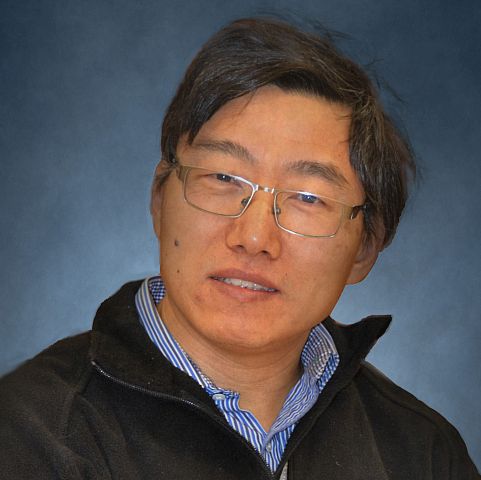
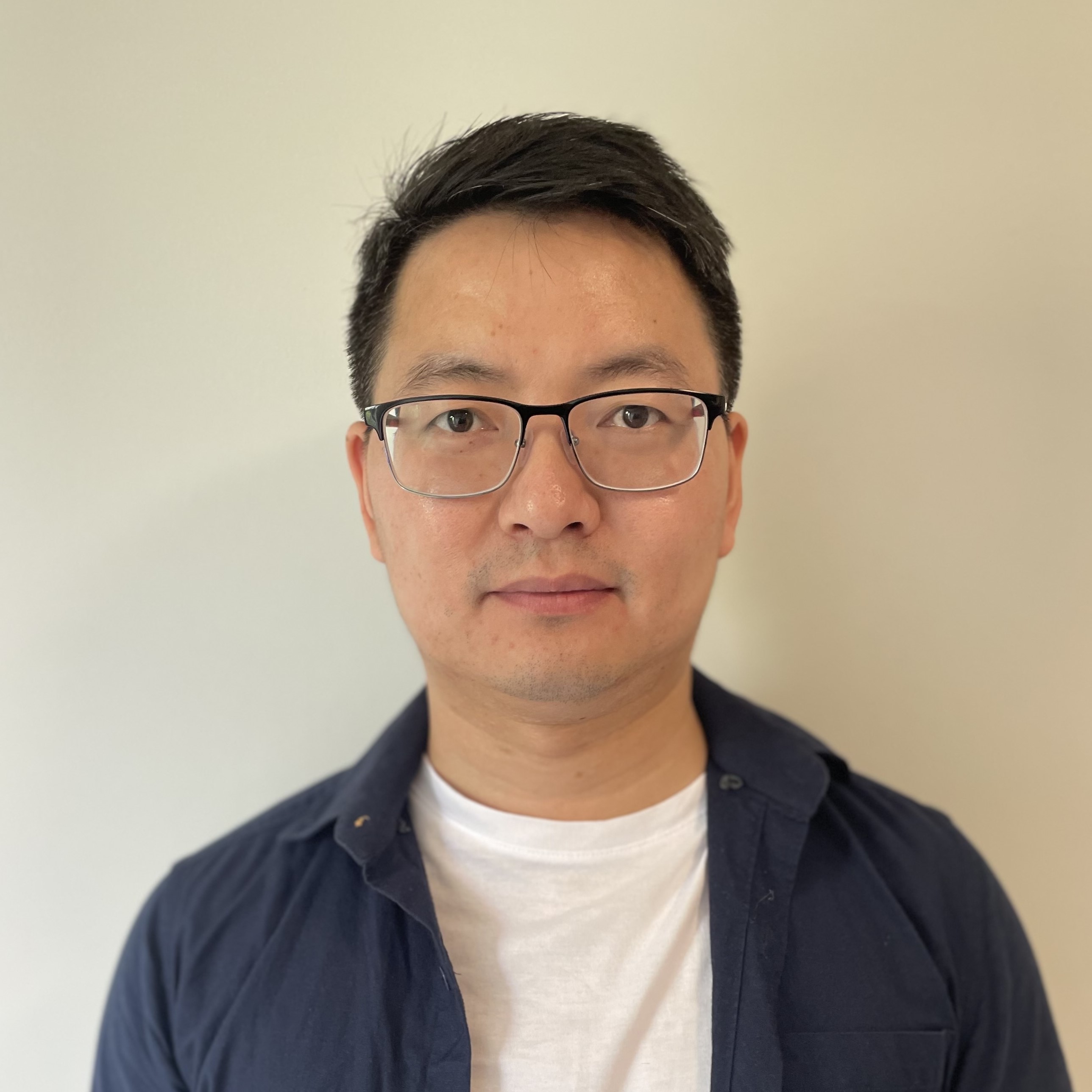
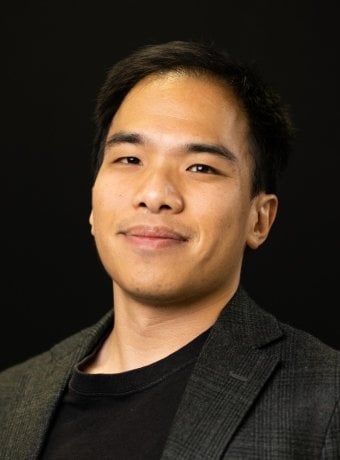
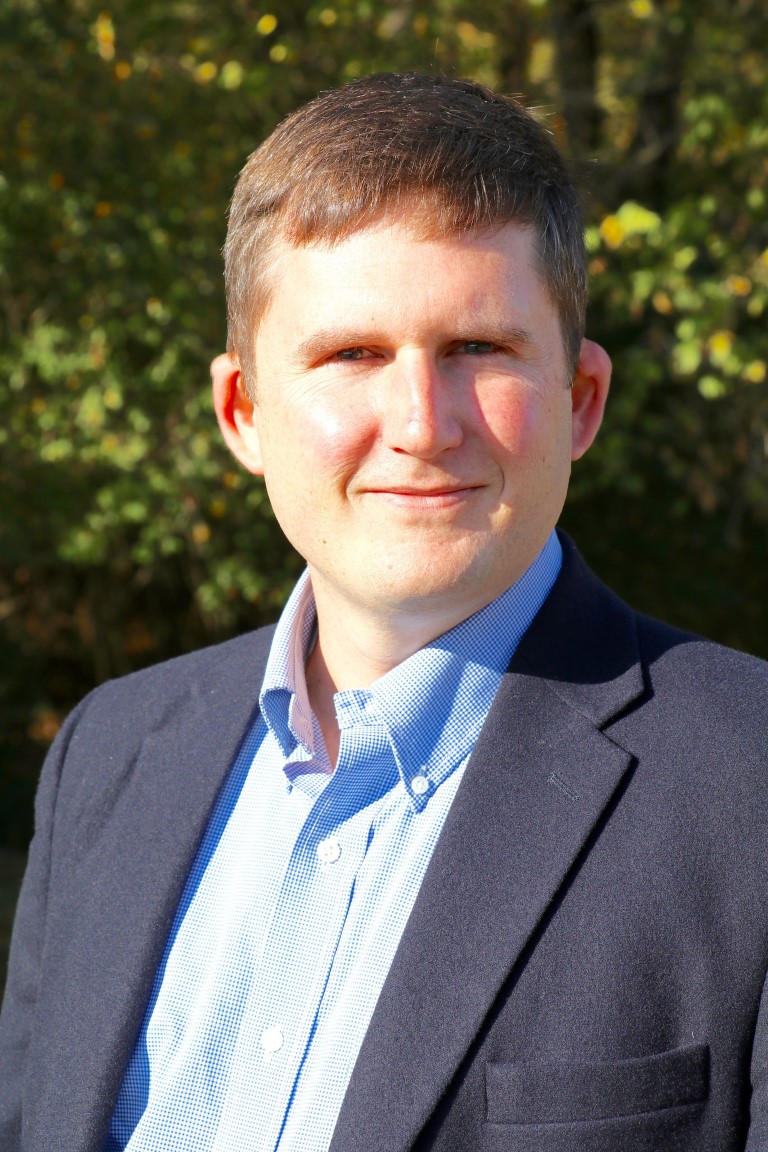
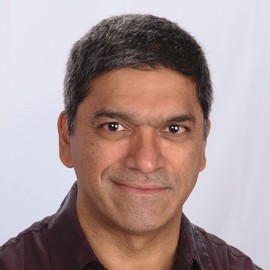
Qingguo Li is a Professor and Associate Head at the Department of Mechanical and Materials Engineering , Queen's University , and a member of the Ingenuity Labs Research Institute . He specializes in biomechanical system design, energy harvesting, wearable sensors, gait analysis, and load carriage systems. His research integrates robotics, biomedical engineering, and sensor technology to develop human-centric devices and mobility aids. Current Roles : Professor, Associate Head, Queen's University Research Institute : Ingenuity Labs Research Institute Lab : Bio-Mechatronics and Robotics Laboratory His work focuses on biomechanical energy harvesting , IMU-based motion analysis , and assistive device development . Key applications include stroke rehabilitation, gait monitoring, and wearable power generation systems. Articles span cable-driven robots , smart walkers , and 3D printing mechanisms , emphasizing human-robot interaction and dynamic modeling . The lab explores sensor calibration , adaptive control algorithms , and human movement optimization . Areas of impact include rehabilitation engineering , load carriage stability , wearable sensor accuracy , and assistive robotics . His team develops solutions for gait asymmetry detection , post-stroke mobility , and low-cost energy systems , leveraging machine learning and kinetic modeling .
Kevin A. Shinpaugh is Collegiate Professor in the Department of Aerospace and Ocean Engineering at Virginia Tech’s College of Engineering. Since 2019 he has led instruction and research in spacecraft design and propulsion, leveraging decades of experience in high-performance computing and space-systems engineering. Education Ph.D., Aerospace Engineering, Virginia Tech (1994) M.S., Aerospace Engineering, Virginia Tech (1989) B.S., Aerospace Engineering, Virginia Tech (1986) Research Focus Dr. Shinpaugh’s scholarship centers on the intersection of high-performance computing (HPC) and space systems engineering . He develops and applies advanced computational techniques to spacecraft design, propulsion analysis, and mission planning. His work spans numerical simulation of complex aerospace systems, optimization of propulsion architectures, and creation of scalable HPC frameworks that enable rapid design iteration for spacecraft and launch vehicles. Publication Trends Across more than thirty refereed papers and design-competition reports, a clear trajectory emerges: early contributions in experimental fluid-mechanics instrumentation (laser-Doppler velocimetry, fiber-optic sensors) evolved into large-scale computational studies of space systems, and most recently into student-led mission-concept designs for CubeSats, lunar exploration, and interplanetary missions. Keywords consistently include spacecraft design, propulsion, deployable structures, and mission architecture. Service & Committees Chair, Virginia Tech HPC User Committee (2004–2011) Member, VT HPC Advisory Board (2007–present) NSF TeraGrid/XSEDE Campus Champion for Virginia Tech (2006–2013) IBM HPC/AI Customer Advisory Council DC (2019–present) Member, VT AOE Seminar Committee (2019–present) Laboratory & Computing Resources Dr. Shinpaugh has long stewarded Virginia Tech’s high-performance computing ecosystem. He directs students and collaborators in leveraging the university’s Advanced Research Computing (ARC) clusters, as well as national facilities through XSEDE and DoD HPCMP, to execute spacecraft-design simulations and propulsion analyses at scale.
Dr. Tao Liu is an Assistant Professor in the Department of Mechanical and Manufacturing Engineering at the University of Ontario Institute of Technology, Faculty of Engineering and Applied Science. His research focuses on computational biomechanics, footwear science, wearable technology, and assistive devices. He holds a Ph.D. in Biomechanics (University of Alberta), MSc (Northeastern University), and BSc (Northeastern University) in Mechanical Engineering. Education: Ph.D. (Biomechanics) - University of Alberta MSc (Mechanical Engineering) - Northeastern University BSc (Mechanical Engineering) - Northeastern University Research Interests: Dr. Liu's work integrates computational modeling, biomechanical analysis, and medical device design. Key areas include musculoskeletal modeling, finite element analysis of orthopedic implants, and optimizing wearable technologies for clinical applications. His research emphasizes translating biomechanical insights into practical solutions for rehabilitation and sports performance. Key Achievements: 2024 Editor’s Choice Award (Journal of Medical & Biological Engineering & Computing) 2022 Mitacs Accelerate Award (Canada) Shortlisted for REHAB Innovation to commercialization (2021) and Calgary Life Science Fellowship (2020) Recipient of 2013 UAV Innovation Grand Prix (national level) Research Contributions: His publications span musculoskeletal modeling validation, implant design optimization, and biomechanical analysis of footwear and spinal mechanics. Recent work emphasizes subject-specific modeling techniques and clinical validation of biomedical devices.
Simon Clematide is an Academic Associate at the Department of Computational Linguistics within the Faculty of Arts and Social Sciences at the University of Zurich, where he has been actively engaged in research and teaching since the early 2000s. His work spans computational linguistics, natural language processing, and text mining with a particular focus on historical document processing, multilingual applications, and practical implementations of machine learning techniques. Dr. Clematide's research interests encompass Natural Language Processing , Computational Linguistics , Text Mining , Machine Learning , Sentiment Analysis , Named Entity Recognition , and Historical Document Processing . His interdisciplinary approach bridges computer science with humanities applications, particularly in analyzing historical newspapers and multilingual corpora. His work demonstrates strong expertise in developing practical NLP systems that address real-world challenges in document analysis and language processing. Over the past five years, his publication record reveals a consistent focus on historical text processing, multilingual NLP applications, and shared task competitions. His research shows particular strength in named entity recognition for historical documents (CLEF HIPE shared tasks), grapheme-to-phoneme conversion (SIGMORPHON shared tasks), and OCR post-processing for historical newspapers. The interdisciplinary nature of his work is evident in collaborations spanning computer science, linguistics, history, and geography. Dr. Clematide has been instrumental in organizing and participating in numerous shared tasks including CLEF-HIPE (2020-2022), SIGMORPHON (2017-2021), and CoNLL-SIGMORPHON (2017-2020), where his team achieved multiple first and second places. His teaching portfolio includes courses on Text Mining, Machine Learning for NLP, Deep Learning in Language Technology, and Sentiment Analysis, demonstrating his commitment to educating the next generation of computational linguists. He has led or participated in diverse research projects including NFP 77, impresso, Citizen Linguistics Projects (tonaccent.ch, dindialaekt.ch), SPARCLING, KTI project with Eurospider, and biomedical text mining initiatives (MANTRA, SASEBio). His interdisciplinary work extends to collaborations with material scientists and social scientists on concept extraction and text zoning applications. Dr. Clematide has contributed to the development of several computational tools and resources, including finite-state morphology systems for Rumansh Grishun, Standard German, and Swiss German, as well as the CLab web-based virtual laboratory for computational linguistics. His work on crowdsourcing OCR ground truth for heritage corpora demonstrates practical solutions to real-world digitization challenges.
Kobus Barnard is a Professor in the Department of Computer Science at the University of Arizona, with his office located in GS 708. His research bridges computer vision, machine learning, and interdisciplinary scientific applications across diverse domains. Education: Ph.D. from Simon Fraser University (1999) His research interests focus on extracting meaningful insights from complex data through computer vision and probabilistic modeling. Key areas include machine learning for environmental monitoring (flood detection, plant disease analysis), social dynamics (interpersonal coordination, emotional coregulation), astronomy (transient classification), and multimodal learning (visual-linguistic integration). His work consistently applies deep learning to real-world problems requiring high-resolution data interpretation. Analysis of his 2022-2025 publications reveals three dominant trends: (1) Environmental applications using satellite imagery for flood mapping and agricultural monitoring, (2) Cognitive modeling of human teams and emotional dynamics through probabilistic frameworks, and (3) Astronomical data analysis leveraging host galaxy properties for transient classification. These threads demonstrate his commitment to solving practical scientific challenges through computational innovation. While scientific awards aren't documented in available sources, his leadership in projects like FloodPlanet and ToMCAT indicates significant contributions to data infrastructure. His advising and grant activities remain unreported in the source material, though his extensive interdisciplinary collaborations suggest substantial mentorship impact. Barnard's work operates at the intersection of multiple scientific communities, evidenced by applications spanning neuroscience, agriculture, astronomy, and social science. His current focus on high-resolution data fusion and multimodal modeling positions him at the forefront of real-world AI deployment.
Eugene Chan is an Associate Professor in the Department of Marketing Management at the Ted Rogers School of Management, Toronto Metropolitan University. He holds a PhD in Marketing from the University of Toronto, a MA in Social Psychology from the University of Chicago, and an AB in Honors Psychology from the University of Michigan, along with an ARCT (Hons) in Piano Performance from the Royal Conservatory of Music, reflecting a multidisciplinary background. His research lies at the intersection of consumer psychology, political ideology, health communication, and sustainability. He employs experimental and survey methods grounded in social science theories to understand how individuals make judgments and decisions in marketplaces and society. Key themes include the influence of political ideology on consumer behavior, strategies for effective marketing and health communication, and promoting environmentally sustainable choices. His work often explores how emotional, moral, and cognitive factors shape consumer decisions. His recent publications span top journals such as Journal of Consumer Psychology , Global Environmental Change , Computers in Human Behavior , and Personality and Social Psychology Bulletin . These studies reveal consistent focus on behavioral interventions, ideological divides, health compliance, and environmental sustainability. Trends indicate a strong emphasis on moral psychology, emotional triggers, and real-world applications in public policy and marketing strategy. Scientific Awards: Emerging Researcher Award, Australian and New Zealand Marketing Academy (2018) Dean’s Award for Excellence in Research by an Early Career Researcher, Monash Business School (2018) He has secured research funding from diverse sources including the National Natural Science Foundation of China, ACR Transformative Consumer Research Grant, IHS Hayek Fund, and the Indiana Commission for Higher Education, supporting projects on fake news mitigation, brand revitalization, moral foundations, and pandemic behavior. He has taught at institutions worldwide, including the University of Toronto, Monash University, and Purdue University, demonstrating international academic engagement. Eugene Chan serves in editorial roles for several journals, including as Associate Editor for Australasian Marketing Journal and International Journal of Consumer Studies , and as Special Issue Editor for Frontiers in Psychology . He also co-authored the 2nd Asia-Pacific edition of the textbook Consumer Behavior , contributing to marketing education. He advises students in consumer behavior and marketing research, though specific advisees are not listed.
Vinh Nguyen is an Assistant Professor in the Department of Mechanical and Aerospace Engineering at Michigan Technological University, where he directs the Michigan Tech Center for AI and coordinates the NIST-PREP program. His research focuses on advanced manufacturing through Industry 4.0, human-robot-machine interaction, and physics-based/data-driven modeling. He has developed solutions for machining, additive manufacturing, metal forming, and robotic assembly to promote smart and sustainable manufacturing. Prior to joining Michigan Tech in 2022, he was a National Research Council Postdoctoral Fellow at NIST (2020–2022). Dr. Nguyen earned his PhD (2020), MS in Mechanical Engineering (2017), and MS in Electrical & Computer Engineering (2017) from Georgia Institute of Technology. He received dual bachelor’s degrees in Electrical and Mechanical Engineering from Rensselaer Polytechnic Institute (2014). His research portfolio spans Advanced Manufacturing Industry 4.0 and 5.0 Human-Robot Interaction Physics-Based/Data-Driven Modeling Industrial Automation based on his lab’s interdisciplinary focus on human-centric, resilient solutions. His recent publications address trends in Machine Learning for Manufacturing Autonomous Vehicle Sensors Hybrid Additive/Subtractive Manufacturing Augmented/Mixed Reality Interfaces Industrial Robot Diagnostics Material-Specific Machining with keywords spanning Robotics, Data Science, and Industrial Engineering.
Srirang Manohar is a Full Professor at the TechMed Centre , University of Twente, specializing in Multi-Modality Medical Imaging . His work focuses on photoacoustic imaging, ultrasound, and tomography, with clinical applications in breast cancer, prostate cancer, and thyroid disorders.
Dr. Nathanael L. Baisa is a Lecturer in Artificial Intelligence at De Montfort University (DMU), part of the Computing, Engineering and Media faculty within the School of Computer Science and Informatics. His academic career includes roles as a senior research associate at Lancaster University, researcher at AnyVision, and research fellow at the University of Lincoln, focusing on computer vision and machine learning projects funded by ERC, EPSRC, and Innovate UK. Education: PhD in Electrical Engineering (Computer Vision/ML - Heriot-Watt University, 2018) MSc in Computer Vision and Robotics (Erasmus Mundus program, 2013) Research focuses on computer vision applications including object detection, scene understanding, autonomous systems, and biometrics. He leads work on deep learning for visual tracking, hand-based person identification, and robotic perception. He teaches courses like Introduction to Computer Vision and Deep Learning frameworks. His recent publications emphasize vision-language models, multi-object tracking algorithms, and geoscience machine learning applications. He collaborates with the Institute of Artificial Intelligence (IAI) and contributes to interdisciplinary projects in robotics and energy exploration.
Benjamin Campbell serves as Professor & Extension Coordinator in the Agricultural & Applied Economics department at the University of Georgia's College of Agricultural & Environmental Sciences. His dual appointment combines 60% extension coordination with 40% teaching responsibilities, focusing on translating research into practical industry applications. Based at 208B Conner Hall in Athens, GA, he maintains active engagement with both academic and horticultural industry stakeholders through his extension role. His educational background includes a Ph.D. from Texas A&M University (2009), M.S. (2003), and B.S. (2001) from Auburn University. Campbell teaches AAEC 3200 (Selling in Agribusiness) and AAEC 4980 (Agribusiness Management), emphasizing practical business applications in agricultural contexts. Research interests center on consumer behavior in horticultural markets , with particular expertise in ornamental plant purchasing, labeling effects, and regulatory impacts. His work bridges economic theory and industry practice, frequently employing experimental methods like eye-tracking and contingent valuation. Recent projects address hemp/CBD consumer perceptions, pandemic-era industry adaptations, and long-term pesticide regulation consequences. Publication analysis reveals consistent focus on market segmentation , regulatory compliance , and consumer response to labeling across horticultural sectors. His 2023-2025 articles demonstrate methodological diversity (experimental auctions, conjoint analysis, eye-tracking) applied to emerging challenges like hemp product confusion and synthetic turf transitions following pesticide bans. The research portfolio shows strong continuity from foundational work on local food definitions to current investigations of novel plant products. As Extension Coordinator, Campbell oversees outreach programming connecting UGA research with industry stakeholders. His extension interests specifically target ornamental horticulture and agribusiness sectors, developing resources on market trends and regulatory compliance. While no formal grants are listed in the source material, his appointment structure suggests significant programmatic funding through extension mechanisms. Teaching responsibilities include developing curriculum for agribusiness sales and management courses.
Javier Rodriguez Sanchez is a Postdoctoral Associate at the Institute of Plant Breeding, Genetics and Genomics (IPBGG) within the Department of Crop & Soil Sciences at the University of Georgia's College of Agricultural and Environmental Sciences (CAES), based at the Tifton Campus under Dr. Nino Brown's mentorship. His research integrates advanced technologies with plant science to revolutionize agricultural practices, specializing in: Autonomous field phenotyping systems using robotics and terrestrial laser scanning Deep learning applications for 3D/4D crop trait extraction and yield estimation Genetic improvement of cotton and peanut through seedling vigor and morphological trait analysis Spatiotemporal data fusion for real-time crop monitoring and precision agriculture Publications from 2017-2025 reveal a clear trajectory from horticultural robotization toward sophisticated AI-driven phenotyping platforms, with cotton and peanut as primary models. His work consistently bridges computer vision, LiDAR, and machine learning to solve breeding challenges, demonstrating increasing methodological complexity in data acquisition and analysis. No scientific awards were documented in the source materials. As a postdoctoral researcher, Dr. Sanchez operates within Dr. Nino Brown's mentorship structure with no reported advisees or independent grant leadership. His collaborative framework focuses on technology deployment rather than traditional academic advising. He contributes to the IPBGG's mission through the Tifton Campus research facility, which features specialized laboratories and field sites for crop genomics and phenomics. This environment supports his development of mobile robotic platforms for in-field data collection, positioning him at the intersection of agricultural engineering and plant breeding innovation.
Tamás Lovas serves as Associate Professor at the Department of Photogrammetry and Geoinformatics, Faculty of Civil Engineering, Budapest University of Technology and Economics. He teaches advanced courses in Building Information Modeling, Laser Scanning, Remote Sensing, and Intelligent Transportation Systems while supervising diploma theses in Surveying and Geoinformatics Engineering. Education: 1994: High school graduation, Városmajor High School, Budapest 1999: Certified Surveyor and Geoinformatics Engineer, Budapest University of Technology, Faculty of Civil Engineering 2005: PhD (Earth Sciences), Budapest University of Technology and Economics, Faculty of Civil Engineering Research Interests: Dr. Lovas specializes in laser scanning technologies and geospatial data processing with emphasis on airborne and terrestrial point cloud analysis. His work bridges civil engineering applications and computational methods, particularly in infrastructure monitoring and digital representation. Processing, classification, and modeling of airborne laser scanned data Accuracy testing of terrestrial laser scanning Processing and modeling of terrestrial laser scanned data Comparative study of spatial data acquisition technologies His 2022-2025 publications demonstrate accelerating integration of artificial intelligence in point cloud processing, with significant contributions to road surface extraction, urban land cover classification, and BIM automation. Current research trends show strong focus on digital twin development for autonomous vehicles and infrastructure management. Scientific Awards: Republic Scholarship (1998-1999) Karlsruhe Chancellor's Scholarship (1999) ERASMUS scholarship (2000) Korányi Fellowship (2001-2002) János Bolyai Research Scholarship (2008-2011) OHV 1st place (2008) Dean's commendation for ERASMUS committee work (2014) For Students Award - Teaching Department (2017) Advising and Grants: Dr. Lovas mentors students through diploma theses and TDK research projects on topics including object survey with amateur sensors and hull modeling. His research funding includes the prestigious János Bolyai Research Scholarship and international fellowships supporting collaborations with institutions like The Ohio State University. Labs and Teams: As founding member and supervisory board member of the Hungarian BIM Association, he drives industry-academia collaboration. His leadership roles include Deputy Dean of Education at the Faculty of Civil Engineering and responsibility for English language training programs, facilitating international academic exchange.
Dr. Scott Nokleby is an Associate Dean, Academic and Professor in the Department of Automotive and Mechatronics Engineering at the University of Ontario Institute of Technology. He holds a PhD in Mechanical Engineering from the University of Victoria (2003), and has over two decades of academic leadership and research experience. His primary roles include academic administration and advancing robotics and mechatronics research. Education: PhD (Mechanical Engineering, UVic, 2003), MASc (Mechanical Engineering, UVic, 1999), BEng (Mechanical Engineering with Co-op, UVic, 1997). Research interests focus on advanced robotics topics including parallel manipulators, mobile-manipulator systems, kinematic redundancy analysis, and autonomous systems. His work emphasizes practical applications such as radiation mapping robots, perching drones, and robotic hazard management. Notable contributions include optimal design methodologies for mechanisms and control systems for human-robot interaction. Publications reflect expertise in robotics systems, mechatronics, and nuclear engineering applications. Recent work explores multi-robot task allocation, autonomous navigation, and advanced control algorithms. Awards: Fellow of ASME (2022) Fellow of CSME (2016) CSME Best Paper Award (2014) UOIT Research Excellence Award (2008) CSME I.W. Smith Award (2007) Teaches graduate courses in advanced robotics, mobile robotic systems, and mechanism design. Active in academic administration, he bridges teaching innovation with engineering education through projects like tablet computing integration in design courses. Labs/Teams: Leads robotics research initiatives focused on autonomous systems development, with collaborations spanning nuclear safety, mining automation, and aerospace applications.
Professor Wei Xiang holds the Cisco Chair of AI and IoT at La Trobe University, leading the Cisco-La Trobe Centre for AI and IoT and the Australian Centre for AI in Medical Innovation. He previously established Australia's first IoT Engineering degree program at James Cook University, earning recognition in the Pearcy Foundation's Hall of Fame. His expertise spans AI, IoT, wireless communications, and medical AI innovation. As an IEEE Associate Editor for multiple journals, he has published over 450 peer-reviewed papers and books. Key roles include: Director & Chief Scientist: Australian Centre for AI in Medical Innovation Founding Director: Cisco-La Trobe AIoT Centre Adjunct Professor: James Cook University Vice Chair: IEEE Northern Australia Section (2016-2020) Research focuses on AI-driven IoT systems, smart agriculture, and medical applications. Awards include La Trobe Research Excellence Award (2021), Pearcey Entrepreneurship Award (2017), and multiple fellowships. Current grants involve AIoT in smart farming, medical innovation, and satellite IoT. He supervises research students in AIoT and advises on collaborative projects. His labs pioneer technologies like radar-based health monitoring and UAV-enabled environmental sensing. Recent publications highlight advancements in wireless communication systems, deep learning models for remote sensing, and hybrid networks.
Lance Manuel is a Professor of Engineering at The University of Texas at Austin. His research focuses on uncertainty quantification in engineered systems, particularly wind energy and offshore structures. He has led projects related to wind turbine fatigue analysis, hurricane risk assessment, and climate change adaptation. Ph.D., Civil Engineering (Stanford University) M.S., Civil Engineering and Applied Mechanics (University of Virginia) B.Tech., Civil Engineering (Indian Institute of Technology, Bombay) His work bridges civil infrastructure with climate resilience, emphasizing probabilistic methods for structural reliability. Key areas include extreme climate modeling , floating offshore wind turbines , and fatigue damage prediction under non-stationary conditions. Recent publications highlight interdisciplinary trends in renewable energy systems and climate hazard quantification . He advises graduate students like Taemin Heo and Ding Peng Liu, whose work spans stochastic processes and offshore structural reuse.