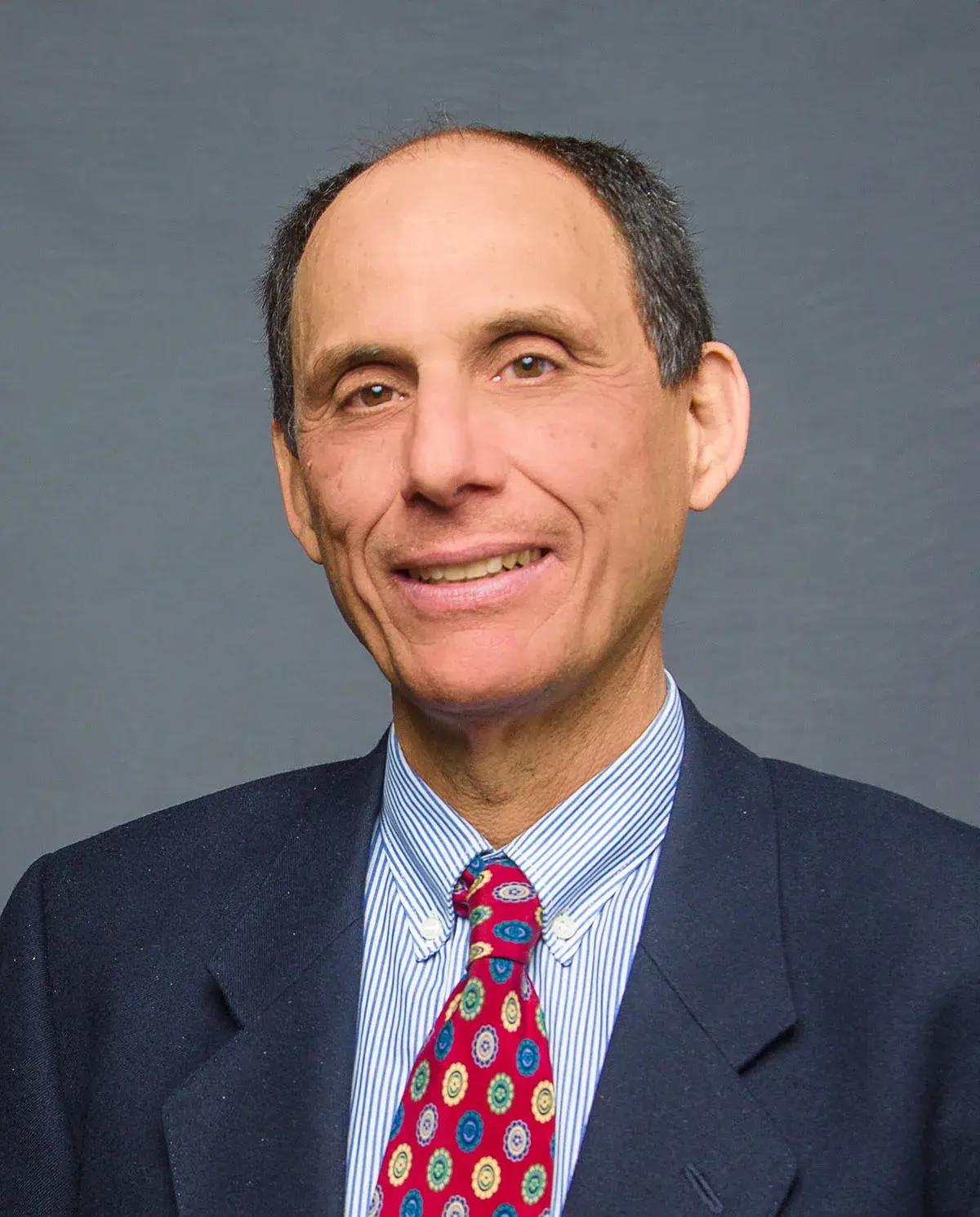
Abdel Ra'ouf Mayyas is an Associate Professor at The Polytechnic School of Arizona State University (ASU), specializing in Automotive Engineering. He is affiliated with the Human Systems Engineering (HSE) PhD program as a graduate faculty member and served as the lead faculty advisor for the ASU-Advanced Vehicle Technology Competitions (EcoCAR 3) from 2014-2018. Education: Ph.D. in Automotive Engineering (2010), Clemson University M.S. in Computer Engineering (Embedded Systems) (2006), Yarmouk University B.S. in Mechanical Engineering (Automotive) (1996), Mu’ta University His research focuses on autonomous driving, advanced driver assistance systems (ADAS), model predictive control (MPC) for energy management in urban autonomous fleets, V2V/V2I applications for smart cities, human-centric vehicle safety systems, and thermal modeling of connected powertrains. He has contributed to vehicle hardware-in-the-loop (VHiL) testing and energy optimization of automated vehicles. Mayyas has led funded projects by the U.S. Army Automotive Research Center, Toyota Motor Corp, and Salt River Project (SRP) for battery performance evaluation in hot climates. His work appears in journals like Energy Research , Applied Energy , and Journal of Power Sources . Labs: Autonomous Collaborative Research Laboratory Connected Powertrains Laboratory Vehicle Hardware In-the-Loop (VHiL) Laboratory Advanced Vehicle Technology Competitions (AVTCs) Laboratory
Pietro Rosatti is a Research Fellow at the Department of Industrial Engineering, University of Trento, specializing in electromagnetic systems and artificial intelligence applications. His research focuses on: Antenna Design for automotive radar and communication systems Microwave Engineering and mm-wave technologies Artificial Intelligence integration in electromagnetic problem-solving Inverse Problems and electromagnetic imaging System-by-Design optimization frameworks Real-world applications in medical imaging and radar systems Analysis of his 17 publications (2018-2025) reveals a dominant trend toward AI-driven solutions for electromagnetic challenges, particularly in automotive radar antenna design (77 GHz systems), microwave medical imaging, and ground-penetrating radar. His work consistently employs multi-objective evolutionary optimization and system-by-design methodologies to overcome the curse of dimensionality in inverse scattering problems, with increasing emphasis on real-time deep learning frameworks since 2021.
Zach Agioutantis is the Foundation Professor and Department Chair of Mining Engineering at the University of Kentucky's Stanley and Karen Pigman College of Engineering. He has held academic positions at the Technical University of Crete, Greece, from 1989 to 2014, including roles as Professor, Director of the Rock Mechanics Lab, and various faculty ranks. PhD, Mining and Minerals Engineering, Virginia Tech (1987) MSc, Mining and Minerals Engineering, Virginia Tech (1984) Diploma, Mining and Metallurgical Engineering, National Technical University of Athens (1982) His research spans Rock Mechanics, Geomechanics, Subsidence Engineering, Data Management, and Sustainable Mining . Recent work focuses on blast vibration modeling, groundwater flow simulation, and transitioning from open-pit to underground mining. He has pioneered LiDAR navigation in underground openings and developed software tools for mine design. Zach's 15 most recent publications (2025–2024) address dynamic subsidence prediction, coal pillar stability, autonomous mining systems, and environmental impacts of longwall mining. Key subfields include Blast Fragmentation , Geohazard Assessment , and Mine Automation . He has directed the Rock Mechanics Lab at Technical University of Crete and contributed to software development projects like Analysis of Coal Pillar Stability (ACPS). His work integrates machine learning and numerical modeling for methane gas forecasting and structural safety in mines.
Mariantonietta Morga serves as Senior Lecturer in the School of Engineering and the Built Environment within Anglia Ruskin University's Faculty of Science and Engineering. Since joining ARU in 2017 as a Research Fellow and advancing to Senior Lecturer in 2018, she has established herself as a specialist in structural dynamics and seismic engineering with extensive contributions to critical infrastructure resilience against natural disasters. Her academic credentials include: PhD in Sciences of Civil and Environmental Engineering – Structures from Technical University of Bari Master’s degree in Environmental Engineering (equivalent to MEng(Hons)) from Technical University of Bari PG Cert in Learning and Teaching (Higher Education) from Anglia Ruskin University Dr. Morga's research centers on enhancing structural resilience through advanced methodologies including computational modeling (AI-based algorithms and stochastic analyses), finite element analysis, and dynamic field testing. Her work specifically addresses seismic vulnerability of historical structures, liquefaction mitigation, vibration control systems, and corrosion mechanisms in reinforced concrete. This research directly informs practical applications in disaster management and infrastructure protection. Her publication record reveals a consistent trajectory toward integrated disaster resilience solutions, with recent works emphasizing multi-hazard risk frameworks, liquefaction countermeasures, and optimization of structural control systems. The research demonstrates strong interdisciplinary connections between geotechnical engineering, structural dynamics, and emergency management. Professional recognition includes: Fellow of the Higher Education Academy Dr. Morga has secured substantial research funding through European programs: MEDiate (2022-ongoing) : €5M HE project as Co-I focusing on multi-hazard risk management systems TURNkey (2019-2022) : €7.99M H2020 project as Co-I with €504,875 ARU grant for earthquake resilience LIQUEFACT (2017-2019) : €4.94M H2020 project as Co-I with €647,347.50 ARU grant for liquefaction mitigation NERA (2012-2014) : €12.01M FP7 project where she served as PI for AIT Austrian Institute She actively supervises research students and serves as reviewer for seven international journals and H2020/Newton funding bodies. Her collaborative work extends through European consortia and Austrian transport sector consultancy, focusing on translating research into practical disaster risk management frameworks and infrastructure protection strategies.
Karin Sein is a Professor of Civil Law at the University of Tartu, School of Law, where she has served since 2016. She also holds the position of Acting Head of the Private Law Department. Previously, she served as Associate Professor of Civil Law at the Institute of Private Law from 2009 to 2015, and has held various leadership roles including Deputy Head of the Institute of Private Law since 2011. Professor Sein earned her doctoral degree (dr iuris) from the University of Tartu in 2007, with her dissertation titled 'Foreseeability and the Purpose of the Obligation Theory as Grounds for Limitation of Damages in Contractual Relationships' supervised by Paul Varul. She completed her Master of Laws (LLM) at the University of Freiburg, Germany in 1999, and received her Bachelor of Arts in Law from the University of Tartu in 1997. Her research focuses on civil law with particular expertise in contract law, consumer protection, digital law, and data protection. Professor Sein has chaired the Contract Law Working Group of the Council of Europe during Estonia's EU Presidency in 2017, where the group handled drafts of directives on digital content and consumer sales contracts. Her work bridges traditional civil law concepts with contemporary challenges in digital markets and consumer protection. Professor Sein's recent publications (2023-2025) demonstrate a strong focus on consumer credit regulation, debt collection practices, data protection in digital services, and the intersection of traditional civil law with emerging technologies. Her scholarship shows consistent engagement with European regulatory frameworks while maintaining a strong national perspective on Estonian law implementation. The Prize of Büchner Foundation, Germany, 1999 Professor Sein serves on multiple editorial boards including the European Review of Contract Law (since 2023), Journal of Intellectual Property, Information Technology and E-Commerce Law (since 2017), and Juridica (since 2013). She is a member of the European Law Institute (since 2012) and represents Estonia in UNIDROIT (since 2010). Her administrative roles include serving as Deputy Head of the Institute of Private Law and coordinating private law research at the University of Tartu.
Hendrik Send is Professor at HTW Berlin University of Applied Sciences and Project Leader for the 'Internet-enabled Innovation' research area at the Humboldt Institute for Internet and Society (HIIG). His work bridges academic research with practical applications in digital innovation, focusing on user-driven and community-based approaches across energy, AI, and organizational contexts. His educational background includes Physics studies, a Diploma in Electronic Business from UdK Berlin, and a PhD from Universität St. Gallen investigating Innovation-Communities and idea generation. Send's research centers on Innovation Management and Open Innovation , with rapidly growing expertise in AI's organizational impact . Current projects examine generative AI in workplaces, people analytics, and smart energy systems, emphasizing employee empowerment amid surveillance concerns. His work uniquely connects co-determination frameworks with digital transformation, addressing tensions between autonomy and algorithmic control in German labor contexts through empirical studies of knowledge workers. Analysis of his 2021-2025 publications reveals a decisive pivot toward AI-human collaboration in knowledge work, featuring generative AI case studies and people analytics implementations. Earlier research (2017-2019) established foundations in open business models and energy user innovation, showing consistent methodology in community-driven design. His interdisciplinary approach spans computer science, labor economics, and innovation theory with strong empirical grounding in German organizations. No scientific awards were documented in source materials. Send secures major third-party funding including DFG's Open! project on collaborative design (with TU Berlin/Grenoble), innogy Foundation's Smart Energy User Innovation , and current generative AI initiatives. While student advisees aren't explicitly listed, his 15+ collaborative publications since 2021 indicate active mentorship. He frequently partners with Georg von Richthofen and Sonja Köhne on labor-AI intersections. As core member of HIIG's Innovation, Entrepreneurship & Society group, he co-organizes workshops like the 'KI in der Arbeitswelt' series with IG Metall and Spreehub, directly engaging labor representatives in shaping AI governance frameworks through initiatives like the 'Mitbestimmtes People Analytics' project.
Alastair F. Donaldson is a Professor in the Department of Computing at Imperial College London, where he leads the Multicore Programming Group. His primary affiliation is with Imperial College London's Department of Computing within the broader Faculty of Engineering structure. He serves as a Program Committee Member for major conferences including ASE, PLDI, and POPL. His research spans Programming Languages , Compilers , Verification , Testing , and Multicore Programming , with significant contributions to randomized testing techniques. He pioneered GraphicsFuzz (acquired by Google in 2018) and developed innovative approaches like grammar mutation for parser testing, metamorphic fuzzing for C++ libraries, and specialized tools for GPU API validation. His work bridges theoretical foundations with industrial impact, particularly in compiler correctness and GPU computing. Analysis of his recent publications reveals a strong trend toward fuzzing infrastructure development (40%), GPU/compiler testing (30%), and formal methods integration (30%). His research increasingly focuses on large-scale automated testing for complex systems including WebGPU, Dafny, and Rust, while maintaining rigorous theoretical grounding in concurrency models and memory semantics. Donaldson has held significant leadership roles including General Chair for PLDI 2020 and Program Chair for ECOOP. His research has been supported through conference organizational roles and industrial collaborations, notably the GraphicsFuzz spinout. He actively contributes to the PL community through mentoring initiatives like PLMW and community-building efforts such as The PLDI Song. He leads the Multicore Programming Group at Imperial College London, focusing on practical tools for compiler and GPU driver validation. The group's work combines theoretical program analysis with real-world testing frameworks, maintaining strong industry connections through projects adopted by Google and other technology companies.
Susanne Lunn is an Associate Professor at the Department of Psychology, University of Copenhagen, where she also serves as Coordinator of the Master Program in Clinical Psychology. She has been affiliated with the university since 1985, first as an Assistant Professor and then as Associate Professor since 1993. Her academic journey includes leadership roles such as Head of the University Clinic (1999-2007, 2009-2013) and President of the Danish Psychoanalytical Society (2010-2017). Her educational background includes: MSc in psychology (Cand. Psych.), University of Copenhagen (1978) Specialist in Psychotherapy and Supervision (1990) Certified group analytic psychotherapist (1985) Certified psychoanalyst (IPA) (1996) Certified training analyst (2002) Susanne Lunn's research focuses primarily on eating disorders and psychotherapy research. Her work on eating disorders encompasses theoretical, clinical, and empirical approaches, with special attention to personality characteristics, psychopathology, and the development of eating disorders. Her psychotherapy research centers on both effect and process: examining how different psychotherapies contribute to recovery from eating disorders, investigating non-specific factors like therapist and client characteristics (e.g., motivation and attachment patterns), and studying therapy relational patterns such as therapeutic alliance and therapist countertransference. Her research supports the hypothesis that one specific therapy does not suit all patients, indicating that the question 'which method is best' must be supplemented by 'what works for whom.' Her methodological approach combines both nomothetic and ideographic methods, exploring how quantitative and qualitative approaches contribute different kinds of knowledge. Her recent publications demonstrate continued focus on eating disorders, particularly bulimia nervosa, and psychotherapy process and outcome research. She frequently collaborates with Stig Poulsen and other colleagues in the Center for Psychotherapy Research. Her work spans clinical trials comparing different therapeutic approaches, investigations into attachment patterns and their impact on treatment, and explorations of mentalization in eating disorder treatment. The articles show a consistent trajectory of rigorous empirical work grounded in both psychoanalytic and cognitive-behavioral frameworks, with increasing methodological sophistication over time. Her scientific contributions have been recognized through research grants from prestigious organizations including: KU 2016, Governing obesity (DKK 750,000, 2014) The Egmont Fund (DKK 1,000,000, 2002) Danish Research Council for the Humanities (DKK 2,138,000, 2001) Multiple other grants totaling over DKK 3 million As an educator and mentor, Professor Lunn has supervised numerous PhD students including Louise Tækker, Sofie Folke, Karin Riber, Hannah Katznelson, Sarah I.F. Daniel, and Charlotte Sandros. She has coordinated external practicum programs and organized internal praxis teaching in clinical psychology for master students and postgraduate trainees. Her leadership extends to editorial roles, having served as Chief-editor of The Scandinavian Psychoanalytic Review (2002-2008) and Co-editor of Nordic Journal of Psychotherapy (1998-). Professor Lunn is actively involved in several research groups including the Center for Psychotherapy Research, the Bulimia Trial Research Group, and the Center of Psychoanalysis at the University of Copenhagen. She has organized numerous international conferences, including the Society for Psychotherapy Research international meeting in Copenhagen (2014) and the XXIII Nordic Psychoanalytic Congress (2012). Her current research projects include the Copenhagen Bulimia trial, identification of psychosocial factors affecting weight loss after surgery, historical studies of eating disorder diagnoses, and research on therapist responsiveness to clients.
Phillip S.K. Ooi is the Chair and Arthur N. L. Chiu Distinguished Professor in the Department of Civil, Environmental and Construction Engineering at the University of Hawaii at Manoa. His office is located in Holmes Hall 383 at 2540 Dole Street, with contact via phone (808-956-8512) or email (ooi@hawaii.edu). He holds professional engineering registration in geotechnical engineering since 1992. Education: Ph.D., Civil Engineering, Virginia Tech, 1991 M.S., Civil Engineering, MIT, 1984 B.Sc., Civil Engineering, University of Leeds (UK), 1983 Research Interests: Dr. Ooi specializes in geotechnical engineering with emphasis on soil-structure interaction, slope stability, landslide monitoring systems, geosynthetic-reinforced structures, recycled materials in construction, and advanced soil characterization techniques. His work integrates field instrumentation, laboratory testing, and numerical modeling to address transportation infrastructure challenges. Publication Trends: Recent articles (2011-2023) demonstrate a strong focus on practical geotechnical solutions for transportation systems, including landslide monitoring using InSAR, performance of geosynthetic-reinforced bridges, soil erosion modeling, and innovative testing methods for construction materials. Recurring themes include field validation of designs, tropical environment considerations, and sustainable material applications. Awards & Honors: Fulbright Research Grant (2019, 2022) Hi Chang Chai Excellence in Teaching Award (2008, 2014, 2024) Grants & Projects: As Principal Investigator, he secured over $3M+ in research funding from FHWA and Hawaii DOT, including: Landslide warning systems development GRS-IBS bridge performance monitoring Forensic analysis of pavement distress Recycled materials in highway applications Scour prediction in Hawaiian rivers Teaching (Recent): Courses include Geotechnical Engineering I/II, Deep Foundations, Earth Pressures, and Numerical Methods in Geotechnics, reflecting his technical specialization and educational leadership.
Dr. Xiaoye Liu is a Senior Lecturer in the School of Surveying and Built Environment at the University of Southern Queensland, specializing in Surveying and Spatial Science. Their research focuses on spatial data quality, remote sensing applications, and geospatial technologies for environmental and disaster management. Dr. Liu holds a PhD from Monash University, preceded by a MAppIT from Monash, and degrees from Wuhan University. Education: Bachelor of Engineering (BEng), Wuhan University Master of Engineering (MEng), Wuhan University Master of Applied Information Technology (MAppIT), Monash University Doctor of Philosophy (PhD), Monash University Research interests include LiDAR data analysis, crowdsourced data credibility assessment, and spatial modeling for environmental conservation and disaster response. Dr. Liu’s work bridges GIS applications with ecological monitoring, particularly in rainforest ecosystems and wildlife habitat studies. Research Trends in Publications: Recent work emphasizes crowdsourced data quality (VGI/CSD), LiDAR-derived environmental modeling, and machine learning applications in spatial science. Key themes include geospatial data fusion, disaster management automation via SDI, and biodiversity tracking through spatial analytics. Advising and grants information is not explicitly detailed in the provided data. Dr. Liu’s contributions include collaborations on projects such as bilby habitat modeling and Hendra disease spatial epidemiology.
Dr. Jayadev Vijayan is a Dame Kathleen Ollerenshaw Research Fellow and Head of the Quantum Engineering Lab at the University of Manchester's Department of Electronic and Electrical Engineering. His research focuses on developing quantum technologies using mechanical and atomic systems, particularly in optomechanics, levitated nanoparticles, and quantum sensors. He holds a PhD in Quantum Many-Body Physics from the Max Planck Institute for Quantum Optics and a Master's in Optics and Photonics from Karlsruhe Institute of Technology. Education: BSc Physics (Loyola College, Chennai), MSc Optics & Photonics (Europhotonics, Europe), PhD Quantum Many-Body Physics (MPQ, Munich) Research interests include quantum optomechanics, levitated systems, quantum control, and applications in inertial sensing. He leads collaborations with ETH Zurich, TU Vienna, and King's College London. Notable achievements include scalable optical cooling techniques and cavity-mediated interactions in levitated nanoparticles. Awards include the Horizon 2020 Seal of Excellence. His lab explores quantum engineering with doped quantum emitters and advanced optical systems.
Xiaowen Gong is currently the Godbold Associate Professor in the Department of Electrical and Computer Engineering (ECE) at Auburn University. They hold a PhD from Arizona State University and completed postdoctoral work at Ohio State University. Their research focuses on wireless networks , federated learning , and edge computing with an emphasis on heterogeneous environments and quality-aware systems . BEng, Huazhong University of Science and Technology (2008) MSc, University of Alberta (2010) PhD, Arizona State University (2015) Postdoc, Ohio State University (2015-2016) Assistant Professor, Auburn University (2017-2023) Godbold Associate Professor, Auburn University (2023-present) Research spans ML/AI in wireless networks , distributed computation , and socially-aware networking . Recent work includes anarchic federated learning , delay-optimal edge computing , and privacy-preserving crowdsensing . Publications address challenges in client heterogeneity , channel-aware scheduling , and secure data aggregation . Key contributions include NSF CAREER Award (2022) for efficient federated learning , IEEE Internet of Things Journal Best Paper Runner-Up , and organizing RET Site for rural STEM teacher education in ML/robotics. Teaching covers Wireless Communication Systems , Neural Networks , and Information Security , with outreach activities involving robotics demonstrations for K-12 students.
Douglas Landis is a University Distinguished Professor in the Department of Entomology at Michigan State University (MSU), with affiliations in the Ecology, Evolutionary Biology, & Behavior Program. He holds a BA in Biology from Goshen College and MS/PhD in Entomology from North Carolina State University. His work focuses on insect ecology in agroecosystems, particularly landscape structure's role in pest control and biodiversity conservation. Landis' research integrates ecological principles with agricultural sustainability, examining how landscape design enhances ecosystem services like natural pest suppression and pollination. Major funding sources include the U.S. Department of Energy, National Science Foundation, USDA NIFA, and Project GREEEN. He also leads extension programs addressing invasive species management and monarch butterfly conservation. His awards include the ESA Recognition Award, MSU Distinguished Faculty Award, and AAAS Fellowship. Landis teaches advanced courses on scientific practice and mentors 5-10 graduate students annually. His lab collaborates with the Kellogg Biological Station Long-term Ecological Research program and the Great Lakes Bioenergy Research Center. Recent work highlights include quantifying biodiversity benefits in bioenergy landscapes, developing precision conservation frameworks, and identifying landscape-scale solutions for pest management and pollinator support. He emphasizes integrating ecological research with practical agricultural applications to achieve sustainable land use.
Beatrice Belfiori serves as a Researcher at the National Research Council of Italy (CNR), specifically within the Institute of Biosciences and Bioresources (IBBR) at the Perugia Division. With over 13 years of continuous service since August 2011, she maintains active research in fungal genetics and truffle biology. Her academic foundation includes a PhD in Plant Biology and Biotechnology from the University of Perugia (2010) and a Laurea in Agricultural Sciences with highest honors from the same institution (2004). Her research focuses on the molecular ecology and reproductive biology of truffles, particularly Tuber species including T. melanosporum, T. aestivum, and T. borchii. Through extensive publication records spanning over 15 years, she has established expertise in mating type characterization, population genetics, genetic diversity assessment, and mycorrhizal symbiosis. Her work frequently employs molecular markers including SSRs and ITS sequences to investigate truffle biodiversity, reproductive modes, and phylogeographic patterns across European and international contexts. Analysis of her 15 most recent publications reveals a strong trend toward applied research with significant ecological and commercial implications. Her studies address critical challenges in truffle cultivation, biodiversity conservation in natural habitats, monitoring of truffle sites, and quality assessment of truffle products. Recent work demonstrates expanding international collaboration, particularly with Argentinian researchers studying T. melanosporum cultivation outside its native range. Belfiori's scientific contributions include pivotal discoveries regarding the heterothallic nature of truffle reproduction, which fundamentally changed understanding of Tuber life cycles. Her research bridges fundamental molecular biology with practical applications for truffle cultivation and conservation, making significant contributions to both academic knowledge and the truffle industry. She actively participates in major research initiatives including the INTACT RISE-MSCA Project, which supports global truffle research collaboration. Her work spans field studies in Italian truffle grounds, molecular laboratory analyses, and international comparative studies examining truffle biodiversity across different geographical regions.
Simone Sebben is a Professor at Chalmers University of Technology in the department of Automotive Engineering and Autonomous Systems. She leads the division VEAS and teaches the Aerodynamics course (MTF236) in the Automotive Master Program (MPAUT). Her research focuses on aerodynamics and thermal management of road vehicles, employing numerical methods and industrial collaborations for experimental validation. Key interests include CFD (Computational Fluid Dynamics), crosswind effects on vehicle stability, battery thermal encapsulation, and platoon aerodynamics. Her work addresses challenges such as drag reduction, cabin climate control in electric trucks, and driver perception of vehicle dynamics under aerodynamic excitations. She has contributed to over 69 publications since 1990, with recent projects funded by the Swedish Energy Agency and industry partners. Notable projects include optimization of base cavities for yaw-insensitive drag reduction and analysis of floating bridge dynamics affecting vehicle stability. Sebben’s team investigates tire aerodynamics, brake cooling systems, and wind tunnel interference effects, emphasizing practical applications in automotive design and safety. Her research bridges fundamental fluid dynamics with real-world engineering solutions.