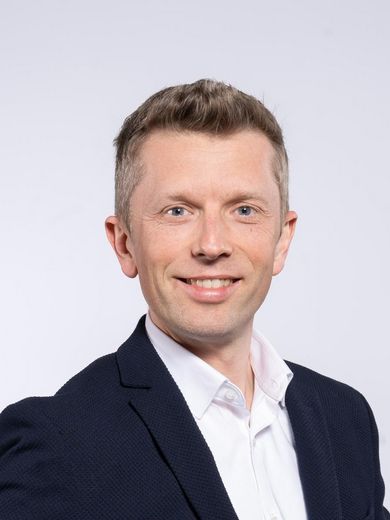
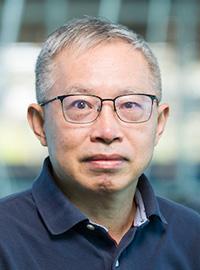
Dr. Bharatendra Rai is a Professor and Chairperson of the Decision & Information Sciences department at the University of Massachusetts Dartmouth's Charlton College of Business. His academic and research profile spans over two decades with contributions to business analytics, data mining, and reliability engineering. He teaches core business courses like MIS 101: The Business Organization and POM 212: Business Statistics , focusing on operations management and data-driven decision-making. PhD in Industrial Engineering (Wayne State University, 2004) MTech in Quality, Reliability & OR (Indian Statistical Institute, 1993) MSc in Statistics (Meerut University, 1991) His research interests include business analytics , deep learning , big data research , and reliability prediction , with applications in healthcare, manufacturing, and financial services. Recent publications cover topics from LSTM neural networks for sentiment classification to quantum computing in healthcare and energy efficiency optimization in renewable projects. Advising and grants: No formal advisees listed, but he has mentored students through University of Massachusetts Dartmouth's Big Data Club (winner of DataFest 2023's Best Data Visualization) and Data Challenge Kaggle initiatives. Collaborative projects include partnerships with NVIDIA and Dell on AI research.
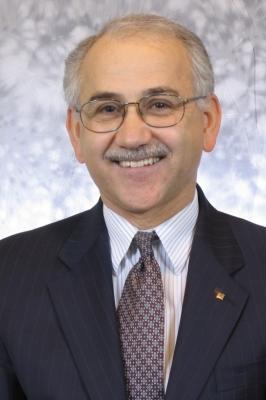
Dr. Scott Dwyer serves as an Associate Professor and Research Director at the Institute for Sustainable Futures (ISF) at the University of Technology Sydney (UTS). With 20 years of experience across multiple jurisdictions, he is an industry-focused leader in sustainability research and engagement, specializing in energy and transport sectors. As a senior member of the Energy Futures group at ISF and leader of its work on customer energy innovation, he delivers award-winning research through close collaboration with public and private sector partners. Dr. Dwyer holds a PhD in Engineering (Energy) from the University of Ulster, Belfast (2004-2009), an MSc in Energy Systems and the Environment from the University of Strathclyde, Glasgow (2002-2003), and a BSc (Honours) in Environment from Glasgow Caledonian University (1998-2002). His academic foundation spans electrical energy transmission, environment policy, and environmental engineering disciplines. His research focuses on the opportunities and challenges posed by disruption in energy and transport sectors, particularly regarding markets, customers, technologies, policy, and business models. Dr. Dwyer undertakes applied research primarily aimed at informing policy and practice, with expertise spanning solar, batteries, VPPs, microgrids, embedded networks, UrbanREZ, water and space heating/cooling, demand flexibility, HEMS/BEMS, fuel cell, hydrogen, electric vehicles, and related infrastructure. His work bridges technical, economic, and social dimensions of energy transition, with particular emphasis on community engagement and practical implementation pathways. Analysis of his recent publications reveals a strong focus on microgrid feasibility, community energy solutions, and the integration of distributed energy resources. His research demonstrates consistent attention to the intersection of technical possibilities and social acceptance, particularly in rural and remote communities. There's a clear pattern of investigating practical implementation challenges while developing frameworks for policy and business model innovation in the energy transition space. Dr. Dwyer regularly provides expert advice to policymakers and is a frequent media contributor on energy topics, appearing on ABC News, SBS World News, Nikkei-Asia, The Conversation, The Guardian, The Sydney Morning Herald, and The Monthly. His work involves leading transdisciplinary teams on complex research projects for diverse organizations including energy utilities, manufacturers, startups, industry bodies, communities, businesses, and government entities. As Research Director at ISF, he leads a team focused on customer energy innovation, working closely with partners to deliver research that informs real-world energy transition challenges. His approach emphasizes collaboration with communities and stakeholders throughout the research process, particularly evident in his microgrid and community energy projects across Australia.
Prof. Marielle Stoelinga is a Professor at the University of Twente, Netherlands, working within the Electrical Engineering, Mathematics and Computer Science faculty in the Formal Methods and Tools department. She leads significant research initiatives in formal methods with applications to safety, security, and reliability engineering. Her research spans predictive maintenance , fault tree analysis , attack tree modeling , and the integration of safety and security through formal methods. She focuses on applying big data analytics to predict system failures, with particular emphasis on critical infrastructure including railway systems, satellite missions, and nuclear reactors. Her work bridges theoretical formal methods with practical applications in asset management. Analysis of her recent publications reveals a strong trend toward integrating safety and security analysis through attack-fault-defense trees, developing formal frameworks for risk assessment, and applying model checking techniques to real-world maintenance problems. Her research increasingly addresses the human and organizational aspects of predictive maintenance systems while maintaining rigorous formal foundations. 5 million euros research grant from Dutch National Organization for Scientific Research (NWO) for PrimaVera project Prof. Stoelinga leads the PrimaVera research project ( Predictive maintenance for Very effective asset management ), which takes a holistic approach to predictive maintenance spanning sensor systems, data science, maintenance optimization, and human factors. Her research group actively contributes to formal methods applications in critical infrastructure sectors including energy, transportation, and aerospace.
Prof. Dr.-Ing. Dennis Kampen is a faculty member at the Faculty of Electrical Engineering and Computer Science at Bremen University of Applied Sciences , where he serves as an Honorary Professor for IT Security . He contributes to Bremen's cybersecurity strategy and advises on digital sovereignty, particularly addressing software monopoly risks and IT infrastructure diversification. Active in power electronics , transformer design , and cybersecurity since 2004 Consults on digitalization in industrial SMEs and IT risk centralization for Bremen's public administration Serves on the Weyhe municipal council for the CDU Research Focus: His work bridges power electronics and cybersecurity , emphasizing system architecture , digital sovereignty , and resilience against IT failures . Recent publications analyze DC grids , soft magnetic components , and filter technologies for renewable energy and industrial systems. Publication Trends: Over 15 years, his research evolved from transformer design (2004–2016) to wide bandgap semiconductors and DC grid architecture (2022–2024), with consistent emphasis on efficiency , stability , and system integration .
Eklas Hossain is a researcher with extensive contributions to power systems, smart grids, and renewable energy. His work spans power electronics, machine learning applications, and biomedical imaging, reflecting interdisciplinary expertise. Research Interests include: Power quality and grid stability in distributed generation systems Advanced DC-DC and inverter designs for renewable energy Optimal PMU placement and network optimization IoT-based load classification and demand response Publication Trends highlight: Innovations in multilevel converters and GaN devices (2023) Hybrid hierarchical networks and PMU analytics (2022) Smart grid optimization, cardiac imaging, and ceiling fan drives (2021)
A.P. Meliopoulos is a Professor and Georgia Power Distinguished Professor at Georgia Tech's College of Engineering, Department of Electrical Engineering. He has been a faculty member since 1976 and specializes in power systems engineering. Education : Diploma in Electrical and Mechanical Engineering (National Technical University of Athens, 1972), MSEE (Georgia Tech, 1974), Ph.D. (Georgia Tech, 1976) Research Interests : Focus on power systems reliability, risk assessment, operations planning, electromagnetic influence, power quality, protective relaying, disturbance analysis, and simulation/visualization techniques. His work integrates distributed generation, renewable energy, and power electronics with grid modernization. Scientific Contributions : Co-inventor of the Smart Ground Multimeter and Macrodyne PMU-based Harmonic Measurement System. Developed quadratization methods for power grid modeling, the SuperCalibrator for state estimation, and μGRID for stability analysis. Leads field demonstration projects with USVI-WAPA, NYPA, Southern Company, and PG&E. Laboratory : Established a state-of-the-art synchrophasor laboratory Leadership Roles : Site director for NSF I/URC PSERC, academic administrator for Power System Certificate program, chairman of Georgia Tech Protective Relaying Conference and Fault and Disturbance Analysis Conference Scientific Awards : IEEE Fellow (1993) IEEE-IAS Richard Kaufman Award (2005) George Montefiore Institute Award (Belgium, 2010) Sigma Xi Young Faculty Research Award IEEE/PES Best Paper Awards (1984, 1987) Holds three patents and published three books
Amin Salehi is a Doctoral Researcher at the Department of Electrical Engineering and Automation, Aalto University (Espoo, Finland). His work focuses on power and energy systems within smart grid technologies, with particular emphasis on voltage profile estimation and phasor measurement unit (PMU) placement optimization. Key Research Themes: Smart grid monitoring, energy storage, renewable energy integration Current Projects: PMU placement frameworks for active distribution networks, wind farm capacity assessment for hydrogen production Recent publications highlight trends in smart grid optimization and sustainable energy systems, including technical-economic analyses of PMU deployments and renewable energy-to-hydrogen conversion studies in Nordic contexts.
Carlo Bottasso is a Professor at the Technical University of Munich (TUM), with contact details including email carlo.bottasso@tum.de and telephone +49 (89) 289-16680. His professional homepage resides at the TUM Wind Energy Institute: https://www.wind.mw.tum.de . His research centers on Wind Energy systems, specifically turbine aerodynamics, structural dynamics, and renewable energy integration. This work spans the disciplines of Aerospace Engineering and Sustainable Power Generation, focusing on optimizing wind turbine performance and reliability through advanced computational modeling. Professor Bottasso leads research activities at the Wind Energy Institute, where his team develops cutting-edge methodologies for wind farm design and control systems. Current projects emphasize grid integration of wind power and next-generation turbine technologies for offshore applications.
Juan José Mesas García is an Associate Professor in the Department of Electrical Engineering at the School of Engineering of East Barcelona, Universitat Politècnica de Catalunya. He is affiliated with the QSE - Power Supply Quality research group and the GAECEQS - Electromechanical Drives, Energy Conversion and Power Supply Quality research group. His educational background includes an Industrial Engineering degree and a Ph.D. in Electrical Engineering. His research focuses on harmonic distortion and imbalance in power systems, numerical methods, and optimization. He has developed expertise in power quality analysis, stability assessment of electrical grids, and modeling of nonlinear electrical components. Mesas García's recent publications address cutting-edge topics in power system stability, including innovative software for multi-energy grid analysis, damping margin indicators for compensator design, and resonance mode analysis methodologies. His work appears in prestigious journals such as IEEE Transactions on Power Delivery, IEEE Transactions on Power Systems, and Electric Power Systems Research, demonstrating his significant contributions to the field of electrical power engineering. Consolidated Research Group Recognition AGAUR 2009-2013 h-index 9.0 He actively participates in the academic community as a member of scientific committees for major conferences including the IEEE Industrial Electronics Society Annual Conference and the International Conference on Modeling and Simulation of Electric Machines, Converters and Systems. His research aligns with UN Sustainable Development Goals 7 (Affordable and Clean Energy) and 11 (Sustainable Cities and Communities), contributing to the development of more reliable and sustainable energy systems.
Eugen Borcoci serves as a Full Professor in the Department of Telecommunications at the National University of Science and Technology Politehnica Bucharest. With an extensive publication record spanning networking technologies, he has established himself as a significant contributor to the field of telecommunications research. His work bridges theoretical networking concepts with practical implementations, particularly in next-generation network architectures. Professor Borcoci's research interests focus on advanced networking paradigms including Software Defined Networking (SDN), Network Function Virtualization (NFV), and 5G/6G network architectures. He has pioneered work in network slicing technologies, particularly for vehicular communications and Internet of Vehicles applications. His research demonstrates a consistent emphasis on practical implementations and validation of theoretical networking concepts through experimental frameworks and open-source platforms. His recent publication trajectory (2021-2025) reveals a strong focus on Open Source MANO for network automation, SDN controller optimization across different network topologies, and specialized applications of network slicing for electric vehicle infrastructure and vehicular communications. This work demonstrates a clear progression from theoretical networking concepts to practical deployment scenarios with industry relevance. Professor Borcoci actively collaborates with international researchers, particularly with Marius Vochin, Frank Y. Li, and Andra Ciobanu, indicating strong international research connections. His work appears primarily in networking conferences and journals focused on telecommunications infrastructure and next-generation network architectures.
Ágnes Vathy-Fogarassy is Habilitated Associate Professor and Head of the Department of Computer Science and Systems Technology at the University of Pannonia's Faculty of Engineering and Informatics. She also serves as the Rector's Commissioner for Artificial Intelligence Education and Development and the Dean's Representative for Quality Assurance and Accreditation. Additionally, she leads the Data-intensive Artificial Intelligence Methods and Systems Research Laboratory and the Healthcare Analytics Research and Development Center. Her educational background includes: PhD in Information Science (2009) Studies at Eötvös Loránd University in Computer Science (1999-2007) Studies at University of Pannonia in Computer Science (1995-1998) Mathematics-Physics and Computer Science Teacher training at Berzsenyi Dániel Teacher Training College (1995) Ágnes Vathy-Fogarassy's research focuses on machine learning, artificial intelligence, data science, and their applications in healthcare . Her work spans predictive analytics, network analysis, and medical informatics, with a particular emphasis on developing AI methods for healthcare data analysis. She has pioneered approaches for N-glycomics-based biomarker discovery, cancer treatment prediction, and heart failure risk assessment using machine learning techniques. Her interdisciplinary research bridges computer science with medical applications, creating innovative solutions for healthcare challenges. Her recent publications demonstrate a strong trend toward applied AI in healthcare , with significant work on diabetes classification, chemotherapy effectiveness prediction, and cardiovascular risk assessment. She also maintains active research in automotive AI applications (vehicle dynamics prediction) and renewable energy optimization (solar power plant modeling). Her work consistently combines theoretical machine learning advancements with practical implementations across diverse domains. Her notable scientific achievements include: László Méray Award, University of Pannonia (2024) Tarján Memorial Medal, John Neumann Computer Science Society (2022) Pro Sciencia Award, University of Pannonia (2021) Veszprém Women's Roundtable Association Women's Empowerment Award (2019) Pro Universitate Pannonica silver medal (2017) PE-MIK Best Female Instructor (2017) As an academic advisor, Ágnes Vathy-Fogarassy has successfully guided multiple PhD students to completion, including Dániel Leitold (2020), Szabolcs Szekér (2024), and János Kontos (2025). She currently supervises several ongoing doctoral research projects with Attila Knolmajer, Tamás Miseta, Veronika Gombás, and Eszter Szakács. Her commitment to talent development is evident through her students' numerous Best Paper awards at international conferences and successful TDK papers. She has developed the curriculum for several data science subjects and established the Data Science master's program at the University of Pannonia in 2023. She leads two major research entities: the Data-intensive Artificial Intelligence Methods and Systems Research Laboratory (founded 2021) and the Healthcare Analytics Research and Development Center (founded 2017). These teams focus on cutting-edge AI research with particular emphasis on healthcare applications, bringing together interdisciplinary researchers to tackle complex data challenges in medical domains.
Dr. Edward Stone is a Researcher at the University of Sheffield’s School of Electrical and Electronic Engineering, focusing on advanced electrical machine technologies. His work emphasizes thermal degradation analysis of stator coil insulation, impedance spectroscopy applications in material characterization, and energy storage solutions for urban transport systems. He holds a Research Associate position specializing in Electrical Machine Repair Technology. Research interests include optimizing insulation materials for high-performance electrical systems, improving reliability through thermal and material degradation studies, and integrating electric vehicles into urban light rail networks. His interdisciplinary approach bridges electrical engineering, materials science, and sustainable energy systems. Recent publications (2023–2025) explore thermal profiling of stator winding insulation via impedance spectroscopy, concentrated stator coil modeling, and EV energy storage synergies with light rail infrastructure. These studies contribute to advancing renewable energy applications and electrical machine reliability. No awards or grants are explicitly listed, though his active research portfolio indicates potential involvement in funded projects. He collaborates within the School’s research groups, contributing to cutting-edge developments in electrical engineering and sustainable technologies.
Bert Zwart is a Professor at Technische Universiteit Eindhoven and holds a Scientific Staff Member position at Centrum Wiskunde & Informatica (CWI), Amsterdam. He leads research groups in stochastic systems and optimization, with expertise in queueing theory, large deviations, and stochastic networks. His work bridges theoretical probability with applications in power systems, operations research, and telecommunications. Zwart has been awarded prestigious honors including the Dantzig Prize (2015), Erlang Prize (2008), and IBM Faculty Award (2008/2009). His research focuses on extreme-value analysis, heavy-tailed processes, and stochastic modeling of complex systems. Notable contributions include studies on fork-join queues, power flow dynamics, and random graph structures. Grants: Led or co-led multiple NWO-funded projects, including a €1.5M VICI grant (2015) for rare event research and a €420K TOP program grant for two-dimensional queueing models (2014–2018). Teaching: Recently taught courses such as Stochastic Decision Theory and Asymptotic Methods in Queueing Theory at TU Eindhoven. Labs/Teams: Active in CWI’s Stochastics group and collaborates with academic/industry partners like Shell and VU University. His recent articles analyze tail behaviors in fork-join systems, power grid optimization under stochastic loads, and dynamic random graph structures. Research emphasizes bridging theoretical insights with practical applications in high-reliability systems.
Dr. Lin Li is an Associate Professor in Marine/Ocean Technology at the Faculty of Science and Technology , University of Stavanger . With a PhD from NTNU and degrees from Shanghai Jiao Tong University , she leads research in marine structural dynamics, aquaculture-hydrodynamics, and offshore wind integration. PhD Marine Technology (NTNU) MSc Design and Construction of Ships/Ocean Structures (Shanghai Jiao Tong University) BSc Naval Architecture and Ocean Engineering (Shanghai Jiao Tong University) Her research focuses on: Dynamic analysis of marine structures Design of aquaculture systems Hydrodynamic modeling for offshore wind Statistical wave analysis Recent publications highlight advancements in: Hybrid offshore fish cage-wind turbine systems Metocean condition modeling Subsea spool deployment methods Extreme response prediction techniques She actively contributes to international marine technology conferences and applies open-source tools for hydrodynamic validation.
Ming Yu is a Professor in the Department of Electrical and Computer Engineering at Florida A&M University (FAMU) and Florida State University (FSU) College of Engineering. He holds a Ph.D. from Rutgers University (2002) and a Doctor of Engineering from Tsinghua University (1994). His research focuses on cyber-physical systems (CPS) security, smart grid communications, wireless sensor networks (WSN), and intelligent transportation systems (ITS). He has secured funding from agencies like NSA, ONR, NSF, and Florida DOT for projects such as the FREEDM smart grid initiative and WSN jamming attack detection. Dr. Yu has served on the DOE Smart Grid R&D Roadmap and NSF review panels. He has published extensively in top journals/conferences including IEEE Transactions and GLOBECOM, with a focus on secure communication protocols, network modeling, and fault management. His work bridges theory and practice, addressing critical challenges in CPS resilience and grid reliability. Education: Ph.D., Electrical & Computer Engineering, Rutgers University, 2002 Doctor of Engineering, Tsinghua University, 1994 Key Awards: IEEE Millennium Medal (2000) Senior Member of IEEE Grants & Projects: NSA/ONR-funded CPS security research NSF ERC FREEDM smart grid project Army R&D Center-funded WSN research

/prod01/production-cdn-pxl/media/umassdartmouth/profiles/charlton/180406-rai-bharatendra-tjc-002.jpg)