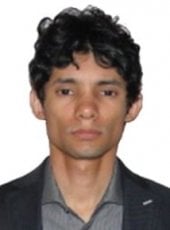
Juan C. Vasquez is a Professor at Aalborg University's Faculty of Engineering and Science, Department of Energy Technology, and Co-Director of the Center for Research on Microgrids (CROM). He holds a PhD in Automatic Control from the Technical University of Catalonia and has held academic positions at Aalborg University since 2011. His research focuses on microgrid control, renewable energy integration, power electronics, and smart grids. He has supervised numerous PhD and master’s students and leads projects funded by EU and national grants. Education: BS in Electronics Engineering (Autonomous University of Manizales, Colombia, 2004); PhD in Automatic Control (Technical University of Catalonia, Spain, 2009). Research interests include operation and control strategies for AC/DC microgrids, maritime microgrids, energy management systems, and IoT integration in smart grids. He has authored 648+ publications, including highly cited works, and received awards like the Young Investigator Award (2019) and Clarivate’s Highly Cited Researcher status since 2017. Key projects: EU-DREAM (Digital Services for Energy Transition), NEST (National Research Infrastructure), and ActRes (Resilience in Energy Systems). Collaborations include Virginia Tech and Ritsumeikan University.
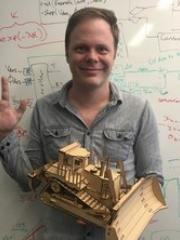
Flavio Bezerra Costa serves as an Assistant Professor in the Department of Electrical and Computer Engineering at Michigan Technological University's College of Engineering. His research focuses on critical areas of modern power systems, including smart grid technologies, renewable energy integration, power system protection, and advanced applications of signal processing and artificial intelligence in electrical power networks. Dr. Costa's research interests span a comprehensive range of power system topics with particular emphasis on Smart Grid technologies, Integration of Renewable Energy Systems, Power System Protection, Control, and Monitoring, Power Quality analysis, Power Systems and Power Electronics, AC/DC Microgrids, High-Voltage Direct Current (HVDC) Electric Power Transmission Systems, and the application of Signal Processing and Artificial Intelligence (including Machine Learning) in power systems. His work bridges traditional power engineering with modern computational techniques to address contemporary grid challenges. Analysis of Dr. Costa's recent publications reveals a consistent focus on wavelet transform applications for power system protection and monitoring, particularly in the areas of fault detection, classification, and location. His research demonstrates strong integration of machine learning techniques with traditional power system protection methods, with significant contributions to transformer protection, transmission line fault analysis, and microgrid stability. The work shows an evolving trajectory from fundamental wavelet-based protection techniques toward more sophisticated AI-enhanced approaches for modern power grid challenges. Dr. Costa maintains an active research program with numerous publications in top-tier IEEE journals and conferences, demonstrating his significant contributions to the field of power systems engineering and protection.
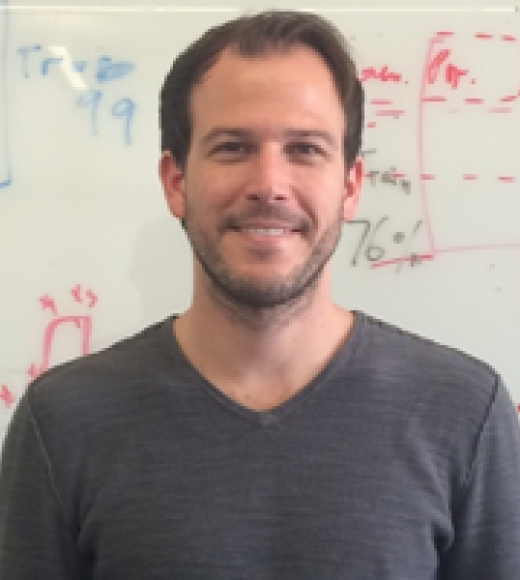
Dr. Tyson Phillips serves as Senior Lecturer and Director of Teaching and Learning at The University of Queensland's School of Mechanical and Mining Engineering within the Faculty of Engineering, Architecture and Information Technology. He is an active Affiliate of the Future Autonomous Systems and Technologies research group, focusing on translating robotics innovations into practical mining applications. His academic leadership includes curriculum development for engineering programs and direct industry engagement with major mining equipment manufacturers. He earned his Doctor of Philosophy (PhD) from The University of Queensland in 2016, with thesis research centered on LiDAR-based perception systems for autonomous excavators. His doctoral work established foundational methods for object pose verification in mining contexts. Phillips' research specializes in robotics perception for extreme mining environments, developing LiDAR-centric solutions for autonomous equipment operation amid dust, fog, and unstructured terrain. Key contributions include evidential reasoning frameworks for uncertainty management, real-time pose estimation algorithms, and sensor fusion techniques for excavators and bulldozers. His work bridges theoretical computer vision with industrial deployment, targeting operational safety and efficiency in mineral extraction. Publication analysis reveals consistent focus on mining robotics since 2012, with recent works (2021-2024) emphasizing minimal-sensor configurations, probabilistic terrain mapping, and vibration-assisted gripper technology. His 14 scholarly outputs demonstrate evolution from sensor evaluation (2012-2015) toward integrated autonomy systems (2018-2024), predominantly in Journal of Field Robotics and Sensors . He actively supervises graduate researchers as Principal Advisor for a PhD on multimodal perception mapping and Associate Advisor for two PhD projects involving spreader systems and physics-informed neural networks. Completed supervision includes a 2024 PhD on bulldozer terrain mapping and a 2021 Master's on shovel/hopper interaction strategies. Research funding spans 14 projects from 2012-2026, including current Australian Coal Association Research Program support (2025-2026) and major Caterpillar Inc. collaborations for ERS self-protection and articulated truck automation. Phillips operates within The University of Queensland's Future Autonomous Systems and Technologies group, which develops field-deployable autonomy solutions for mining partners. This team conducts real-world testing of perception systems using Caterpillar and FMG operational sites as validation environments.
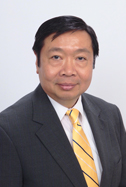
Ricardo Aguilera Echeverria is an Associate Professor at the University of Technology Sydney (UTS), School of Electrical and Data Engineering . With a Ph.D. in Electrical Engineering from the University of Newcastle (2012), he has held academic positions at UNSW Australia (2014-2016) and UTS since 2016. His research focuses on model predictive control (MPC) applied to power electronics , renewable energy integration , and microgrid control systems . He actively supervises Masters and PhD students and has developed courses such as Control Studio A and Control Studio B . Education: PhD in Electrical Engineering (University of Newcastle, 2012) MSc in Electronics Engineering (Universidad Tecnica Federico Santa Maria, 2007) BSc in Electrical Engineering (Universidad de Antofagasta, 2003) Research Interests: Model Predictive Control (MPC) for power converters Microgrid stability and cybersecurity Second-life battery integration Hybrid DC-AC microgrid solutions Recent Research Trends: Advancements in modular multilevel matrix converters (M3C) for LFAC systems Development of per-phase instantaneous power theories for LVRT compensation Sliding mode observers (SMO) for cyberattack mitigation in AC microgrids Optimal control strategies for delta-connected CHB converters in energy storage Grants & Projects: Lead investigator in HORIZON Europe (2024-2027) on digital solutions for renewable energy systems ARC Discovery Project (DP240102646) on extending second-life battery life (2024-2026) Collaborative grants with Sovereign Propulsion Systems Pty Ltd and NSW Department of Industry for hybrid-electric vehicle control
Charu Sharma is an Associate Professor in the Department of Electrical Engineering at UiT The Arctic University of Norway, specializing in power systems and smart grid technologies. Her work focuses on reactive power control, voltage stability, and optimization of renewable energy-integrated networks. Research on cyber-physical co-simulation frameworks for real-time grid management Development of hybrid renewable energy microgrids for rural and industrial applications Expertise in optimization algorithms (e.g., BFOA-PSO, ANFIS) for energy systems Recent publications highlight her contributions to DER-enriched distribution networks, low-inertia system stability, and intelligent load frequency control. She actively collaborates with researchers on projects like Cooperative Isolated Renewable Energy Systems and arcICE , addressing reliability and sustainability challenges.
Xiaonan Lu is an Associate Professor of Electrical Engineering Technology at Purdue University's School of Engineering Technology, with a courtesy appointment in the Elmore Family School of Electrical and Computer Engineering. His research focuses on critical challenges in modern power systems dominated by inverter-based resources, particularly stability and control in microgrids and renewable-integrated grids. His research interests span power systems engineering with emphasis on small-signal stability analysis, dynamic modeling of hybrid AC/DC microgrids, and advanced control strategies for grid-forming and grid-following inverters. He investigates AI-assisted modeling techniques, resilience enhancement through hydrogen integration, and data-driven optimization of microgrid operations to address challenges in low-inertia power systems and distributed energy resource coordination. Analysis of his recent publications (2024-2025) reveals dominant trends toward AI-aided stability assessment, seamless control transitions between inverter modes, and quantifiable trade-offs in voltage regulation and power sharing. His work consistently addresses practical implementation challenges including communication delays, cyber resilience, and standardized testing methodologies for inverter-dominated systems.
Dr. Mehrizi-Sani is Professor and Director of the Power and Energy Center at Virginia Tech, leading research in grid integration of renewables through inverter-based technologies. His work advances control systems for low-inertia power networks and cybersecurity for grid communications. Honors include the 2025 VT COE Research Award and IEEE PES Outstanding Young Engineer Award. He has supervised 8 PhD and 10 MSc graduates, with current projects exceeding $13M in funding.
Erie D. Boorman is an Associate Professor of Psychology at the University of California, Davis, and a core member of the Center for Mind and Brain. His research focuses on the computational and neural mechanisms of learning and decision-making, bridging psychology, neuroscience, artificial intelligence, and behavioral economics. He leads the Learning and Decision Making (LDM) Lab, investigating how the brain constructs predictive models of the environment and uses them for decisions involving rewards, social contexts, and latent states. Education: Ph.D. in Experimental Psychology, University of Oxford (2010) MSc (Distinction) in Neurosciences, University of Oxford (2006) B.A. (Honors) in Psychology, Stanford University (2004) Research Interests: Computational models of learning and decision-making Neural basis of prediction systems (reward, social, and state prediction) Cognitive flexibility and structure learning Role of the hippocampus and prefrontal cortex in decision processes Awards: NSF CAREER Award (2019–present) Wellcome Trust Sir Henry Wellcome Postdoctoral Fellowship (2010–2014) Wellcome Trust Prize Studentship (2005–2010) His work has been supported by grants such as the NSF CAREER and Wellcome Trust Fellowships. Laboratory: The LDM Lab explores how humans form and adapt cognitive maps, leveraging multi-disciplinary approaches to understand neural and behavioral mechanisms underlying decision strategies.
Dr. Daming Zhang serves as a Senior Lecturer in the School of Electrical Engineering and Telecommunications at the University of New South Wales (UNSW), Faculty of Engineering. His academic career spans over two decades with continuous scholarly contributions to power systems engineering. Dr. Zhang's research focuses on power systems, microgrids, and renewable energy integration , with particular expertise in constant-frequency microgrid operation, DC-AC conversion technologies, and energy storage applications. His work addresses critical challenges in grid stability, power system protection, and the integration of high-penetration renewable energy sources. He has developed innovative approaches for microgrid regionalization, load flow analysis in islanded systems, and fault detection in photovoltaic systems. His publication record shows a clear evolution from fundamental electromagnetic studies to applied power systems research, with recent work emphasizing practical solutions for decarbonized power systems. The majority of his recent publications appear in high-impact IEEE journals and conferences, demonstrating the significance of his contributions to the field. His research increasingly incorporates advanced computational methods including machine learning for fault detection and optimization techniques for energy system planning. While no specific awards are listed in the available information, Dr. Zhang's extensive publication record in top-tier journals indicates recognition within the academic community. His collaborative work with researchers across multiple institutions demonstrates his active engagement in the international power engineering community. Dr. Zhang's research has practical implications for modern power systems transitioning toward renewable energy integration. His work on constant-frequency microgrids, energy storage applications, and grid-forming converters addresses critical challenges in maintaining stability as power systems incorporate higher levels of inverter-based resources. His recent focus on long-duration energy storage and zero-carbon electricity systems reflects the evolving priorities of the power industry toward decarbonization.
Eduard Muljadi is the Danaher Professor in the Department of Electrical and Computer Engineering at Auburn University. He holds a Ph.D. in Electrical Engineering from the University of Wisconsin and a B.S. from Sepuluh Nopember Institute of Technology. His research focuses on power systems resilience, renewable energy integration, electric machines, and grid stability. Key areas include microgrid reliability, inverter-based resource control, and the optimization of renewable energy systems. Recent work emphasizes grid-forming inverters, hybrid AC/DC microgrids, and the impact of high renewable penetration on power quality and stability. His studies on cogging torque reduction in permanent magnet machines and thermal management of induction motors highlight his expertise in electric machine design. Muljadi also explores advanced pumped storage hydropower technologies and their role in stabilizing grids with high renewable integration. Publications from 2024-2025 reveal trends toward mitigating oscillations in power grids, enhancing frequency response via BESS coordination, and analyzing fault contributions of inverters. His research bridges theoretical advancements with practical grid solutions, such as optimizing wind farm layouts and improving protection systems in modern distribution networks.
Thomas Ebel is Professor and Head of the Centre for Industrial Electronics at the University of Southern Denmark (SDU) , Institute of Mechanical and Electrical Engineering. A leading expert in power electronics, high-voltage engineering and capacitor technology, he directs large, multi-partner research projects and teaches/supervises at both graduate and PhD levels. Education & Career Path Prof. Ebel holds the academic title Dr. rer. nat. and has been appointed full Professor at SDU. He concurrently serves as Head of Section at the Centre for Industrial Electronics, orchestrating cross-disciplinary research teams and infrastructure. Research Interests Power Electronics & Power Conversion: advanced converter topologies, WBG devices (GaN, SiC), high-frequency magnetics, grid-forming control. Dielectric Materials & Capacitors: polymer and hybrid nanocomposite dielectrics, self-healing metallized film capacitors, aluminium electrolytic capacitors, lifetime modelling and reliability. High-Voltage Engineering & Breakdown Physics: breakdown mechanisms in nanocomposites, corona and partial discharge, insulation coordination. IoT & Data-Driven Monitoring: real-time condition monitoring, digital twins, data-driven RUL estimation for power components. Publication Trends Across 133 research outputs (2018-2025) the dominant themes are (i) construction and reliability of 700 V-class aluminium polymer electrolytic capacitors, (ii) GaN-based power converter optimisation, (iii) hybrid AC/DC microgrid control and harmonic mitigation, and (iv) nanocomposite dielectrics for next-generation capacitors. The 15 most recent articles (2025) reinforce these directions while adding socio-technical energy analytics and green-vehicle powertrains. Scientific Awards Tek Innovation Prize 2023 – awarded for outstanding contributions to power electronics research and industrial innovation. Advising & Funding Prof. Ebel currently supervises ~10 PhD candidates and post-docs including L. Tavares, M. A. Khan, R. Maheshwari, S. Mateen, A. N. Pinky and others. He is Principal Investigator or Head Coordinator of six active projects (2024-2027) valued at >€8 M, spanning ultra-high-efficiency drives, hydrogen-PtX converters, self-healing capacitors and hybrid power-plant concepts. Laboratory & Teams He heads the High-Voltage Power Electronics Laboratory at SDU, equipped with 700 V/200 A capacitor test rigs, GaN/SiC converter prototyping benches, and environmental chambers for accelerated ageing studies. The centre collaborates with 20+ industrial partners and coordinates the international IEA Wind Task 50 on hybrid power plants.
Willem Leterme is a Professor of High Voltage Technology at RWTH Aachen University, specializing in advanced power systems engineering. His research focuses on high-voltage direct current (HVDC) grids, fault protection mechanisms, and grid integration challenges. His work addresses critical issues such as DC fault mitigation, converter control strategies, and system resilience under fault conditions. He leads projects on HVDC grid protection algorithms, cable aging analysis, and interoperability solutions for multi-vendor systems. Key research themes include: DC grid protection and fault detection Modular multilevel converter (MMC) control High-frequency insulation testing Renewable energy grid integration Recent studies (2023-2025) emphasize: Advanced DC fault response modeling Hybrid AC/DC grid stability Multi-terminal HVDC interoperability Transformer insulation under harmonic stresses Publications highlight contributions to protection system design, DC cable testing methodologies, and grid-forming wind turbine applications. He collaborates on EU-funded initiatives for HVDC infrastructure development and standardization efforts.
Nilanjan Ray Chaudhuri is an Associate Professor of Electrical Engineering at Pennsylvania State University , affiliated with the Institute of Energy and the Environment (IEE) . His research focuses on power system dynamics and control , including wide-area monitoring systems, power electronics integration, renewable energy systems, and grid resilience. He has been recognized as an IEE Fellow and has contributed to projects like Smart Traction Systems for Weak Power Grids . Research Interests : Power system dynamics and control Wide-area monitoring systems Renewable energy integration (wind, solar) FACTS and HVDC systems Cascading failure analysis Cyber-physical security Recent Contributions : His work emphasizes grid stability in high-renewable systems, cascading failure mitigation , and frequency support from grid-forming converters. Publications (2023–2025) highlight advancements in control strategies for inverter-dominated grids, cyber-physical attack resilience, and fast simulation methods for dynamic failures. Grants & Awards : Selected grants include DOE-funded projects on grid modernization and resilience. Awards include IEE Fellow (2024) and recognition for student mentorship (e.g., 2020 Department of Energy Collegiate Wind Competition). Labs & Teams : He leads research in power grid resilience and collaborates with industry partners on MTDC grid control and wide-area monitoring solutions.
Peiyuan Chen is an Associate Professor at the Department of Electric Power Engineering, Chalmers University of Technology. He holds a B.Eng. from Zhejiang University (2004), an M.Sc. from Chalmers (2006), and a Ph.D. from Aalborg University (2010). His research focuses on power system operation and planning with wind power integration, emphasizing time series modeling, statistical analysis, and optimization. He contributes to projects on grid-forming converters, inertia estimation, frequency control, and renewable energy system stability. Research Interests: • Power Systems and Renewable Integration • Grid-Forming Converters and Stability Analysis • Time Series Modeling and Statistical Methods • Machine Learning for Energy Applications • Frequency Control and Synthetic Inertia Recent Publication Trends include studies on deep learning for heating load classification, wind turbine type optimization, fault ride-through capabilities, and inertia estimation in converter-dominated grids. His work bridges theoretical power system analysis with practical implementations in Nordic and European energy networks. Projects (2017-2024) include grants from the Swedish Energy Agency, Swedish Research Council (VR), and collaborations with institutions in Sweden, China, and Italy. Key areas: grid strength metrics, multiport converter applications, and citizen energy communities.
Kirsten Gram-Hanssen is a Professor at Aalborg University, specifically within the Department of Construction, Urban and Environmental Engineering at the Faculty of Engineering and Science. Her academic work is centered in the Section for City, Housing and Property, where she leads the Research Group for Sustainable Cities and Everyday Practice. She maintains an active research profile with numerous publications and projects focused on sustainable energy systems. Her educational background is not explicitly detailed in the provided text, but her PhD specialization in socio-technical analyses forms the foundation of her interdisciplinary approach connecting social sciences with engineering perspectives on sustainability. Gram-Hanssen's research interests focus on housing, everyday life, and consumption from a climate and energy perspective . She examines differences in household consumption practices through a practice-theoretical lens that emphasizes routines and technical infrastructures. Her work demonstrates that social organization of everyday life matters as much for home energy consumption as the technical efficiency of buildings and appliances. She also investigates how new technologies like private solar panels and smart home controls affect both energy consumption and daily life practices. Her research has significant implications for sustainable transitions and energy policy. Her recent publications show a clear trend toward addressing the energy crisis, sustainable consumption practices, and the intersection of technology with everyday life. The research spans domains including housing, food, and mobility, with a strong focus on practical solutions for energy transition and sustainability challenges. Her work increasingly addresses inequality, ethics, and policy implications of energy transitions. Active Principal Investigator on multiple major research projects including SGD: Shared Green Deal (2022-2027), FoMoHo: Food, Mobility and Housing in the Sustainable Transition of Everyday Life (2021-2025), and GECKO: Building greener societies (2021-2024) Frequent media commentator on energy and sustainability issues, with 197 media appearances documented Extensive research dataset creation including the eCAPE energy crisis interviews (2024) and smart home interviews (2022) Regular contributor to international conferences and workshops on sustainable consumption and energy practices Professor Gram-Hanssen has supervised numerous PhD students (9 documented) and actively participates in the academic community through peer review, conference organization, and editorial work. Her research group, the Research Group for Sustainable Cities and Everyday Practice, works at the intersection of social science and engineering to address sustainability challenges through understanding everyday practices and their relationship to energy systems.