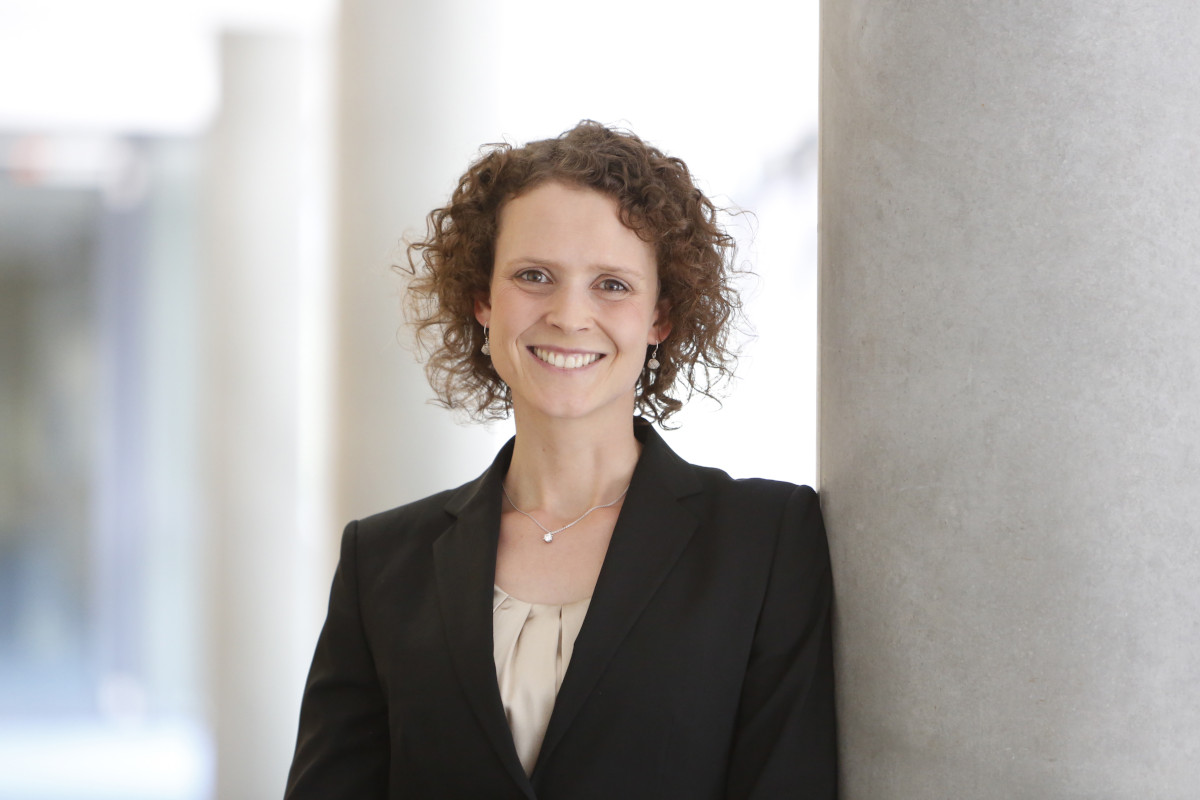
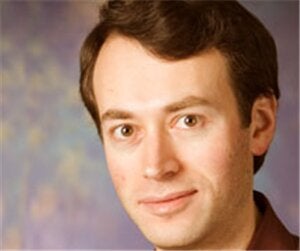
Verena Tiefenbeck is a Professor and Chair of Digital Transformation at Friedrich-Alexander-Universität Erlangen-Nürnberg (FAU), leading a Bavarian Ministry-funded junior research group since 2019. Her work bridges digital transformation with behavioral science, focusing on high-resolution behavioral data to drive sustainability in energy, mobility, health, and human-AI collaboration. Education: MSc in Mechanical Engineering & Management (TU Munich, Ecole Centrale Paris) Doctorate: ETH Zurich (2014) Research explores how digital technologies shape human behavior through real-time feedback, algorithmic transparency, and nudges. Key areas include energy conservation, sustainable mobility, and AI adoption in organizational contexts. Her recent publications examine peer-to-peer energy markets, digital food labeling, and algorithmic fairness in HR. Core research themes across 2024-2025 publications include: Digital feedback mechanisms for energy/water conservation Algorithmic transparency in AI-driven recruitment Behavioral economics of renewable energy communities Digital nudges in health decisions and sustainable consumption Methodological transparency in design science research
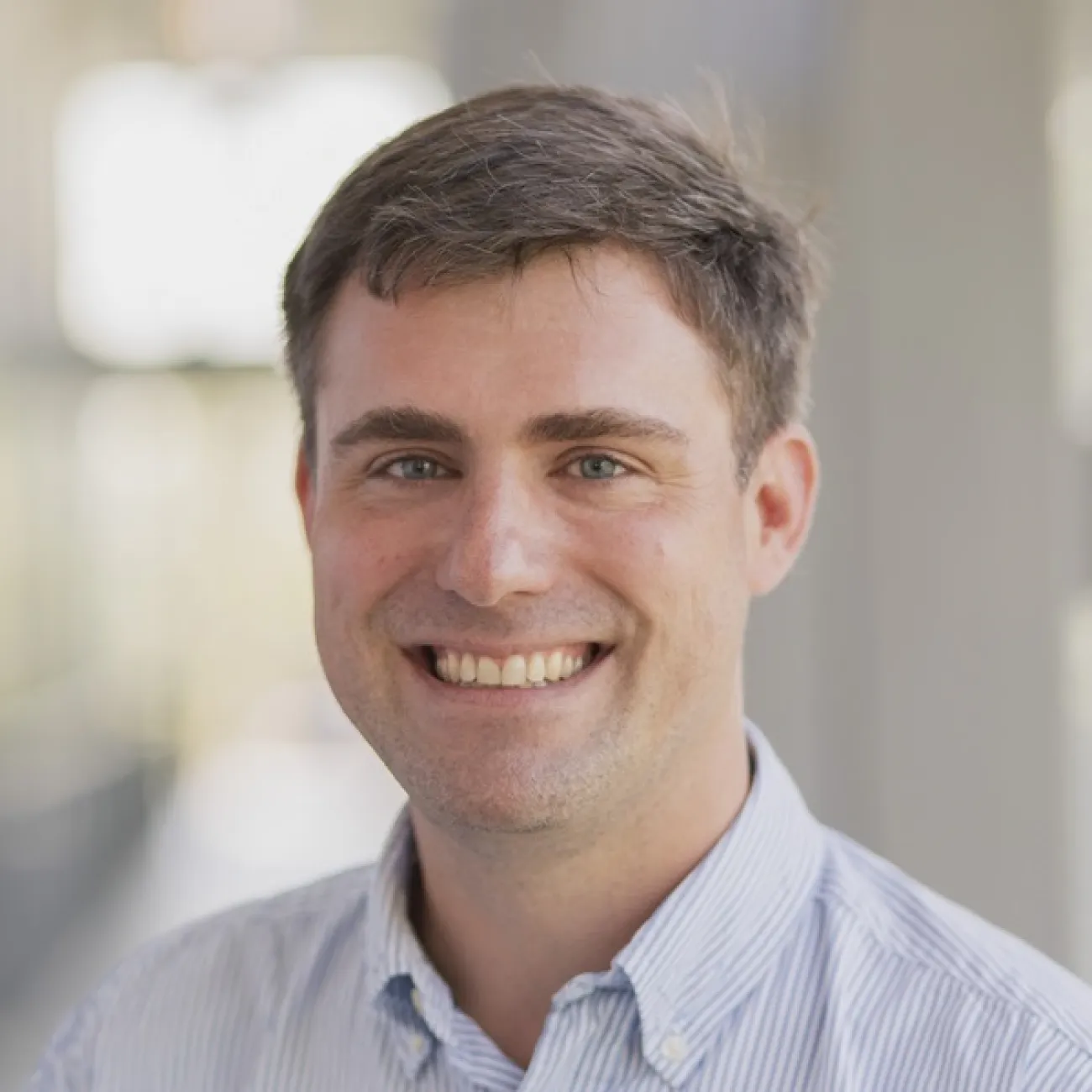
Mattia Bianchi is a Lecturer at the Department of Information Technology and Electrical Engineering, ETH Zurich, Switzerland. He is affiliated with the Automatic Control Laboratory under Prof. Florian Dörfler, with office location at ETL I 34, Physikstrasse 3, Zurich. His research focuses on developing distributed, efficient, and robust methods for decision and control problems in complex network systems, including power grids and cognitive radio networks. Bachelor’s degree in Information and Communication Engineering (2016), University of L’Aquila, Italy Master’s degree in Systems Engineering (2018), University of L’Aquila, Italy PhD in Systems and Control (2018–2023), TU Delft, The Netherlands Postdoctoral researcher (2023–present), ETH Zurich, Switzerland His methodological approach integrates operator theory, learning algorithms, game theory, and data-driven control. Key research themes include uncovering common structures in optimization and control algorithms, with applications in distributed feedback optimization, Nash equilibrium seeking, and stabilization of constrained systems. Current work explores partial-decision information frameworks and linear convergence guarantees. For detailed information on his publications, visit his Google Scholar profile . Mattia actively supervises Master’s theses and semester projects, inviting candidates to contact him with their academic credentials.
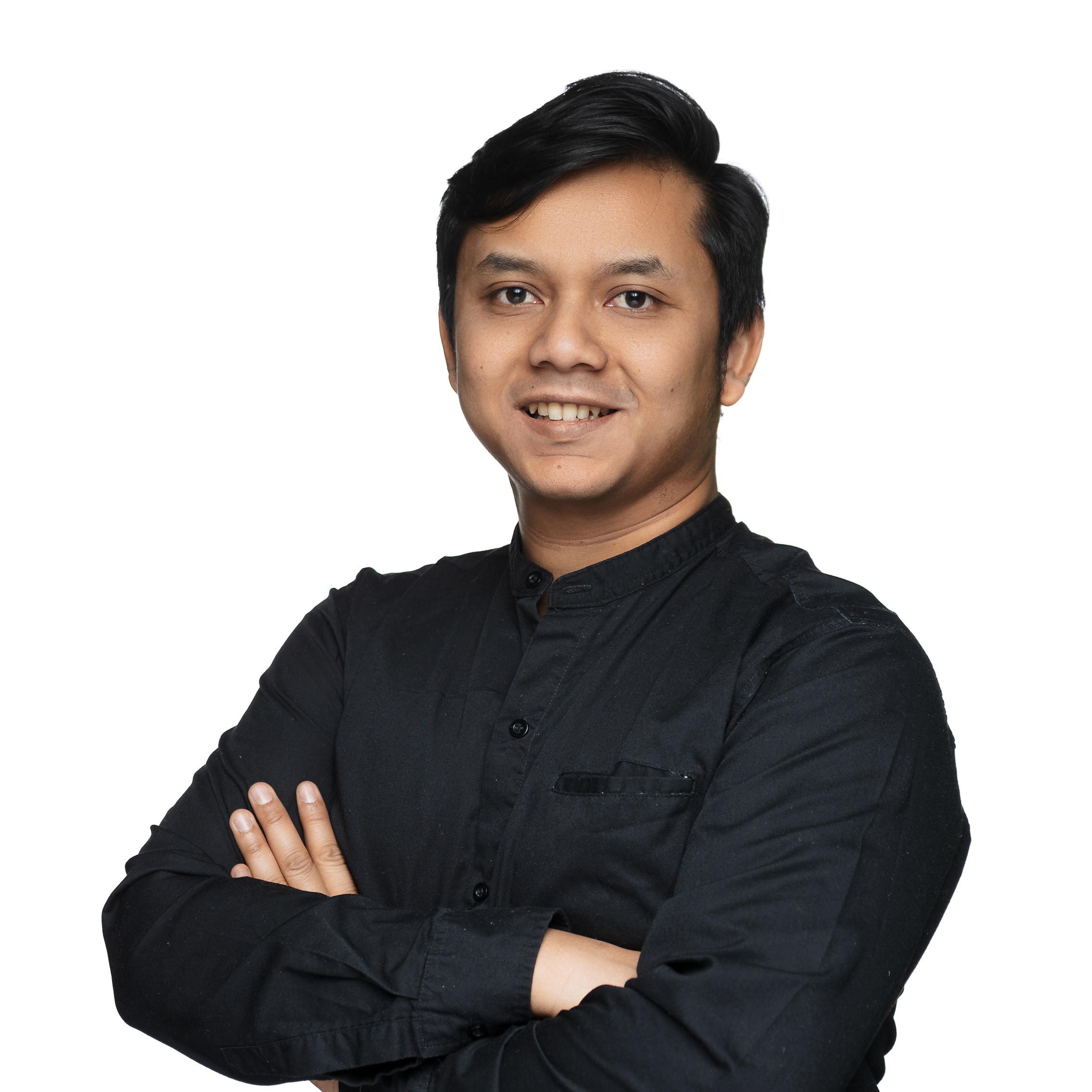
Michael Hyland is an Associate Professor in the Department of Civil and Environmental Engineering at the Samueli School of Engineering, University of California, Irvine. His research focuses on the modeling, analysis, and optimization of smart urban transportation systems, with particular emphasis on shared autonomous vehicles, microtransit integration with fixed-route transit, and sustainable mobility solutions. He employs methodologies from operations research (optimization, Markov decision processes), statistical modeling (discrete choice, regression), and economic analysis to address challenges in urban mobility. Education: Ph.D., Civil and Environmental Engineering (Transportation), Northwestern University, 2018 M.Eng., Civil and Environmental Engineering (Transportation), Cornell University, 2013 B.S. Civil and Environmental Engineering, Cornell University, Magna Cum Laude, 2013 His recent research explores emerging mobility paradigms through topics such as dynamic fleet management, vehicle miles traveled (VMT) impacts, equity in job accessibility, electricity demand implications of e-bikes, and human-machine collaborative planning frameworks. The work often combines large-scale simulation with interpretable modeling techniques. Hyland leads the Hyland Lab , which develops computational tools for evaluating integrated transportation systems. The lab's work spans theoretical modeling (e.g., state-space representations, decomposition heuristics) and applied policy analysis (e.g., assessing Senate Bill 1 infrastructure projects, AV-era parking reforms, and micromobility deployment strategies).
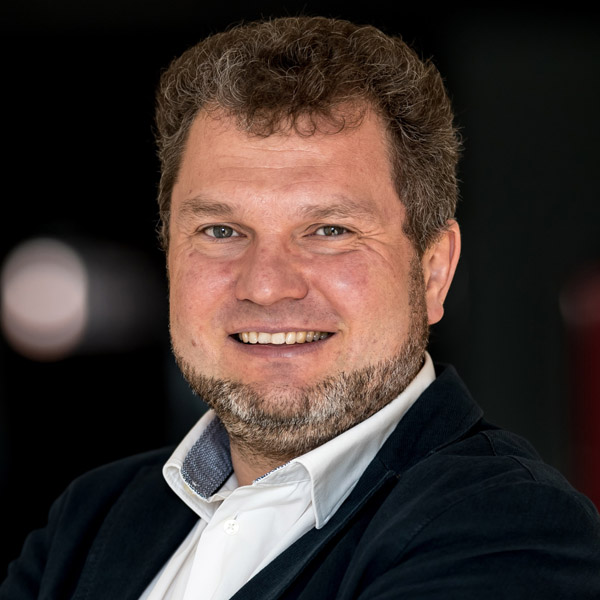
Jia Di serves as Professor and Department Head of the Department of Electrical Engineering and Computer Science at the University of Arkansas, holding the Rodger S. Kline Endowed Leadership Chair. He has been with the institution since 2004, progressing from Assistant Professor to his current leadership position within the College of Engineering. Education: B.S. in Automatic Control, Tsinghua University (1997) M.S. in Automatic Control, Tsinghua University (2000) Ph.D. in Electrical and Computer Engineering, University of Central Florida (2004) Research Focus: Dr. Di's work centers on asynchronous integrated circuit design and hardware security , with emphasis on Multi-threshold Null Convention Logic (MTNCL) for ultra-low-power secure systems. His research spans hardware Trojan detection, polymorphic logic gates, extreme environment electronics, and security solutions for IoT infrastructure. His Trustable Logic Circuit Design Lab has pioneered techniques for side-channel attack mitigation and cold boot attack prevention through self-destructive memory mechanisms. Publication Trends: Recent publications reveal a strategic shift toward hardware security applications for renewable energy systems and IoT edge devices, while maintaining core expertise in asynchronous circuit design. His work increasingly integrates machine learning (e.g., graph neural networks for hardware Trojan detection) and cross-platform verification frameworks, demonstrating evolution from pure circuit design to holistic cybersecurity solutions for critical infrastructure. Scientific Recognition: Senior Member of IEEE Eminent Member of Tau Beta Pi Elected Member of the National Academy of Inventors Research Leadership: Dr. Di has secured over $23 million in research funding for his Trustable Logic Circuit Design Lab, supporting development of 6 U.S. patents and two authoritative books. His lab collaborates with federal agencies and industry partners on hardware security challenges, with recent grants focusing on photovoltaic system protection and extreme-environment electronics. While specific student names aren't documented here, his extensive publication record indicates significant graduate mentorship in hardware security and asynchronous design. Lab Infrastructure: The Trustable Logic Circuit Design Lab maintains specialized capabilities for testing circuits in extreme environments (high temperature/radiation) and developing polymorphic security mechanisms. Current projects include RF aperture security, hardware-based IoT verification systems, and digital twin implementations for power electronics with integrated trust verification.
Haoming Shen is an Assistant Professor in the Department of Industrial Engineering at the University of Arkansas, College of Engineering. He received his Ph.D. in Industrial and Operations Engineering from the University of Michigan, Ann Arbor, along with master's degrees in Electrical and Computer Engineering and Mathematics from the same institution. His bachelor's degree is in Electrical Engineering from Xi'an Jiaotong University. Dr. Shen's research focuses on stochastic optimization and integer programming with applications in power grids and transportation systems. His work centers on data-driven decision-making under uncertainty, particularly using Wasserstein ambiguity sets for chance-constrained programming. His research has significant implications for optimizing critical infrastructure systems where uncertainty must be rigorously accounted for. His publications demonstrate a strong trajectory in optimization theory with applications to power systems. His work on Wasserstein ambiguity models for chance constraints has been published in top venues including Mathematical Programming and the IEEE Conference on Decision and Control. His 2022 paper on Wasserstein two-sided chance constraints with application to optimal power flow received an Honorable Mention in the INFORMS Optimization Society Best Student Paper Competition. Honorable Mention award in the 2022 INFORMS Optimization Society Best Student Paper Competition Rackham Professional Development DEI Certificate Dr. Shen actively engages in Diversity, Equity and Inclusion initiatives. While specific information about his advisees is not provided in the available materials, his research program appears to be actively developing with multiple recent publications in optimization theory and applications.
Dr. Saidi Siuhi serves as an Associate Professor of Civil Engineering at South Carolina State University, where he teaches undergraduate and graduate courses while conducting research and providing institutional service across departmental and university levels. His academic credentials include: Ph.D. in Civil Engineering from the University of Nevada, Las Vegas (2009) M.Sc. in Civil Engineering from Florida State University (2006) B.Sc. in Civil Engineering from the University of Dar-es-Salaam (2003) Specializing in transportation engineering, Dr. Siuhi's research focuses on traffic safety, transportation planning, and microscopic traffic simulation. His work addresses critical transportation challenges including distracted driving/walking behaviors, traffic management during special events (notably the 2017 solar eclipse), and the application of advanced computational methods to transportation networks. He integrates emerging technologies like virtual reality, machine learning, and deep learning to develop innovative safety solutions for complex transportation systems. Analysis of his recent publications (2021-2025) reveals a strong trajectory toward computational transportation safety, with increasing emphasis on AI-driven solutions for pedestrian safety, driver behavior analysis, and infrastructure monitoring. His work consistently bridges theoretical transportation models with practical safety applications, particularly in distracted behavior analysis and event-based traffic management. Dr. Siuhi actively mentors students through senior design projects (CE 459/460) and graduate coursework, though specific advisee names aren't documented. His service contributions span departmental, college, and university committees, supporting academic operations and strategic initiatives within the engineering program.
Dario De Marinis is an Assistant Professor at the Department of Mechanics, Mathematics & Management, Politecnico di Bari, Italy. His research focuses on fluid dynamics with applications in biomedical engineering, aerospace, and computational physics. Research Interests Fluid-structure interaction modeling Microfluidics and particle transport Biomedical applications (blood flow, valve mechanics) Aerospace engineering (hypersonic flows, turbulence) Numerical methods (Lattice Boltzmann, immersed boundary) Publications Trend Dario's recent work (2015–2025) spans computational fluid dynamics, with emphasis on multiphase flows, viscoelastic material behavior, and biomedical microfluidic devices. He has contributed to aerospace applications and turbulent thermal flows.
Ali Dorri is an Associate Professor in the School of Computer Science at Queensland University of Technology's Faculty of Engineering. His research focuses on the intersection of blockchain technology, Internet of Things (IoT), and cybersecurity, with significant contributions to privacy-preserving systems and energy trading applications. He maintains an active research profile with consistent publications in top-tier venues including IEEE Transactions, ACM Computing Surveys, and various IEEE conferences. Dr. Dorri's research interests center on blockchain technology and its applications to real-world problems. His work addresses critical challenges in IoT security, privacy-preserving systems, energy trading mechanisms, and supply chain management. He has developed innovative solutions including Tree-Chain (a lightweight consensus algorithm for IoT-based blockchains), LSB (a lightweight scalable blockchain for IoT security), and various blockchain storage optimization techniques. His research bridges theoretical concepts with practical implementations, often targeting specific industry challenges in manufacturing, energy, and supply chain sectors. Analysis of his recent publications reveals a strong focus on optimizing blockchain for resource-constrained environments like IoT networks, developing privacy-preserving mechanisms for sensitive applications, and creating practical implementations for energy trading systems. His work shows increasing sophistication in addressing scalability challenges while maintaining security and privacy guarantees. The interdisciplinary nature of his research connects computer science fundamentals with applications in energy systems, manufacturing, and supply chain management. Dr. Dorri has established productive research collaborations with colleagues at QUT including Raja Jurdak, Salil Kanhere, and Gowri Ramachandran, as well as international collaborators. His publications demonstrate consistent productivity with multiple high-impact papers each year, including several that have received significant citations within the blockchain and IoT research communities.
Hans-Joachim Hof is a Professor and Vice President for Teaching and Students at Technische Hochschule Ingolstadt (THI), where he has been employed since 2016. He serves as Head of Bachelor Cybersecurity (since 2022), Project Manager for THIsuccessAI (since 2021), and Head of the Research Group 'Security in Mobility' at the CARISSMA Institute of Electric, Connected and Secure Mobility. Additionally, he chairs the Scientific Board of the Center of Entrepreneurship and serves on the Supervisory Board of AININ. Professor, Head of INSecurity - Ingolstadt Applied IT Security Research Group (since WS 2016) Professor of Secure Software Systems, Head of MuSe - Munich IT Security Research Group at HAW Munich (2011-2016) Research Scientist at University of Karlsruhe (2008-2011) Research Assistant at Institute for Telematics, University of Karlsruhe (TH) (2003-2007) Professor Hof holds a doctorate in engineering and completed studies in computer science with a specialization in telematics and reliability architectures of systems, with a minor in law. His research spans automotive security, network security, and IT security, with recent focus on security in the Internet of Things, development processes for Secure Automotive Software, Automotive Blockchains, and Future Automotive Security Architectures. His work bridges theoretical security frameworks with practical automotive applications, particularly in electric vehicle security and battery management systems. Hof's recent publications reveal a strong trend toward automotive cybersecurity, with particular emphasis on electric vehicle infrastructure security, battery management systems, and vehicle security operations centers. His research increasingly addresses the security challenges of connected and autonomous vehicles, with growing attention to trust management systems and the security implications of AI in automotive contexts. The interdisciplinary nature of his work connects computer security with automotive engineering, energy systems, and digital forensics. Professor Hof has received numerous prestigious awards for his research contributions: Multiple Best Paper Awards at SECURWARE (2015, 2016, 2017) Best Paper Awards at CENTRIC (2010, 2012) Best Speaker Award at ESE Congress 2015 IARIA Fellow recognition Best Paper Award at ICIW 2010 As Editor-in-Chief of the International Journal on Advances in Security and Chairman of the German Chapter of the ACM, Hof plays a significant role in shaping security research discourse. His leadership extends to the German Informatics Society where he serves on the Executive Board. His research group INSicherheit (http://insi.science) actively collaborates with industry partners on real-world security challenges. Professor Hof leads the INSecurity research group at THI, which focuses on applied IT security with particular expertise in automotive contexts. The group maintains strong industry connections and operates within the CARISSMA research institute, which specializes in electric, connected, and secure mobility. Their work includes practical security testing, development of security architectures, and analysis of emerging threats in automotive systems, with notable contributions to EV charging security, battery management systems, and vehicle forensics.
Professor Sebastian Stein is a faculty member in the Electronics and Computer Science department at the University of Southampton, specializing in artificial intelligence and multi-agent systems. He holds a PhD from the University of Southampton (2008) and an MEng in Computer Science from the University of Warwick. His research focuses on citizen-centric AI, mechanism design, and applications in smart energy, transportation, and disaster response. He leads or collaborates on projects such as the EPSRC-funded 'Citizen-Centric Artificial Intelligence Systems' and 'Future Electric Vehicle Energy networks supporting Renewables (FEVER)'. Education: PhD in Multi-Agent Systems (University of Southampton, 2008), MEng Computer Science (University of Warwick) Research Groups: Agents, Interaction and Complexity research group His work emphasizes incentive engineering in dynamic systems, sequential decision-making under uncertainty, and societal challenges like smart mobility and electric vehicle infrastructure. Key awards include the Blue Sky Ideas Award (AAMAS-2021) and Best Demonstration Award (AAMAS 2025). He currently supervises multiple PhD students in computer science and engineering.
Fajar Juang Ekaputra is a Tenure Track Assistant Professor at the Institute of Data, Process, and Knowledge Management (DPKM), WU Vienna and a part-time Postdoctoral Researcher at the Data Science research unit, TU Wien . With a focus on Semantic Web , Knowledge Graphs , and their integration with Machine Learning in Neurosymbolic AI systems, his work spans domains like Cyber-Physical Systems and Materials Engineering . Education: Dr.techn. (2018), TU Wien M.T. (2010) and S.T. (2008), Institute Teknologi Bandung (ITB) Research Interests center on hybrid AI systems combining Semantic Web and Machine Learning , with applications in Cyber-Physical Systems (e.g., smart grids, smart buildings), data privacy in smart cities, and materials engineering . His 102+ publications include frameworks like SWeMLS-KG and SHACL4Protege . Recent Articles (2024) address explainable AI in cyber-physical systems, privacy trust in data infrastructures, and neurosymbolic frameworks . Earlier works (2023–2022) explore ontology-based data management , auditable AI , and hybrid system architectures . Scientific Awards: Best Paper Awards (ICoDSE 2023, ICoDSE 2016) Best Poster Nomination (SEMANTiCS 2019) PhD Scholarship (Austria’s Agency for Education and Internationalisation, 2012) Advising includes supervising PhD students (e.g., Majlinda Llugiqi, Katrin Schreiberhuber) and master’s theses on topics like knowledge graph characteristics and data quality assessment . He leads projects such as FAIR-AI (FFG-funded, 2024–2026) and SENSE (Horizon Europe, 2023–2025).
Robson E. De Grande is an Associate Professor in the Department of Computer Science at Brock University, Canada. He holds a PhD from the University of Ottawa (2012) and BSc/MSc degrees from the Federal University of São Carlos, Brazil. His research focuses on vehicular networks, intelligent transportation systems, distributed systems, and cloud computing. He serves on program committees for conferences like DS-RT, MobiWac, and MSWiM, and has organized multiple workshops and special sessions. Education: PhD in Computer Science, University of Ottawa, Canada (2012) MSc and BSc in Computer Science, Federal University of São Carlos, Brazil (2006, 2004) Research Interests: Vehicular Networks (5G, Handover Management) Edge Computing and IoT Performance Modeling/Simulation High-Performance Distributed Systems Intelligent Transportation Systems Publications: Over 100 peer-reviewed articles across journals like IEEE Transactions on ITS, Elsevier Internet of Things, and conferences like IEEE ICC and ACM MobiWac. Recent work emphasizes ML-driven vehicular network optimization and distributed simulation frameworks. Teaching: Teaches Advanced Computer Networks (COSC 4P14), Parallel Computing (COSC 3P93), and graduate-level Mobile Cloud Computing courses. Research Team: Supervises PhD/MSc students and undergraduate researchers in topics like vehicular edge computing, traffic prediction, and simulation systems.
Rafał Weron is a Full Professor at Wrocław University of Science and Technology, where he has held leadership roles since 2015, including Head of the Department of Operations Research and Business Intelligence and Chairman of the Scientific Discipline Council for Management and Quality Sciences. His expertise spans electricity price forecasting, computational economics, and risk management, with significant contributions to probabilistic forecasting methods. As a globally recognized scholar, he has received prestigious awards such as the Hugo Steinhaus Prize (2018) and the Tao Hong Award (2017). Key Affiliations : Wrocław University of Science and Technology; Polish Academy of Sciences (Statistics and Econometrics Committee); Polish Mathematical Society. Research Trends: Weron's work focuses on electricity price forecasting, leveraging machine learning and statistical models to enhance accuracy and reliability. His publications emphasize probabilistic forecasting frameworks, quantile regression, and hybrid modeling techniques, reflecting a commitment to methodological rigor and practical applications in energy markets. Scientific Awards: Top 1% globally ranked economist (IDEAS/RePEc, 2013-2022) World's Top 2% Most Widely Cited Scientist (2019-2021) 'Hugo Steinhaus' Prize (2018) Tao Hong Award (2017) Emerald Citation of Excellence (2017) Minister of Science & Higher Education Prize (2016) Commission of National Education Medal (2016)
Daniel M. Liberzon is the Richard T. Cheng Professor in the Department of Electrical and Computer Engineering and a Professor at the Coordinated Science Laboratory at the University of Illinois Urbana-Champaign . He is also an affiliate professor in the Department of Mathematics . His career spans theoretical and applied research in control systems, with a focus on hybrid control, nonlinear systems, and communication constraints. Education : Ph.D. in Mathematics (Brandeis University, 1998), advised by Roger W. Brockett (Harvard). Undergraduate studies in Mathematics at Moscow State University (1989-1993). Research Interests include: Switched and Hybrid Systems with stability criteria and control design. Nonlinear Control Theory covering Lyapunov functions, ISS, and synchronization. Control with Limited Information focusing on quantized control and entropy-based methods. Uncertain/Stochastic Systems with applications in power grid synchronization and networked control. Article Trends show a focus on stability analysis, entropy metrics, and hybrid control algorithms across nonlinear and switched systems. Key themes include robust observer design, synchronization under disturbances, and quantized feedback. Scientific Awards : ACM SIGBED HSCC Best Paper (2019) IFAC Fellow (2016) IEEE Fellow (2013) AACC Donald P. Eckman Award (2007) NSF CAREER Award (2002) Advising and Grants : Collaborates with students and researchers like Sayan Mitra, Hyungbo Shim, and others. Leads NSF projects on Nonlinear Systems with Fast/Slow Dynamics and AFOSR MURI on Hybrid Dynamics . Labs and Teams : Directs the Decision and Control group at the Coordinated Science Lab, contributing to interdisciplinary projects in control theory and power systems.
Anna Brunström is a Full Professor and Head of the Distributed Intelligent Systems and Communications Research Group (DISCO) at Karlstad University's Department of Computer Science. She holds a part-time role as a Researcher at the University of Malaga's Institute of Software Engineering and Technologies (ITIS). Her research focuses on computer networking, Internet architectures, low latency communication, and 5G/6G mobile systems. She leads the nationally funded DRIVE initiative and collaborates on European projects like 6G-PATH. She actively contributes to IETF standardization, notably as a former rmcat WG chair. Her work spans over 200 publications, emphasizing network measurement, latency optimization, and multipath protocols. Education: Ph.D. (1996) and M.Sc. (1993) from College of William & Mary, B.Sc. (1991) from Pepperdine University. Research Interests: Distributed systems, IoT networking (NB-IoT), satellite communication (Starlink), machine learning for positioning, and transport protocols (QUIC, MPTCP). Recent work includes latency-aware scheduling, 5G/6G performance analysis, and edge computing frameworks. Publications highlight trends in: 1) Satellite network throughput modeling, 2) 5G/6G architecture validation, 3) Machine learning applications for positioning and network analysis, 4) Cross-layer optimization of latency-critical services. Collaborations with industry and academia drive applied research in smart grids, healthcare, and automotive communication. Labs/Teams: DISCO group at Karlstad University, leading the DRIVE research profile and 6G-PATH consortium involvement.