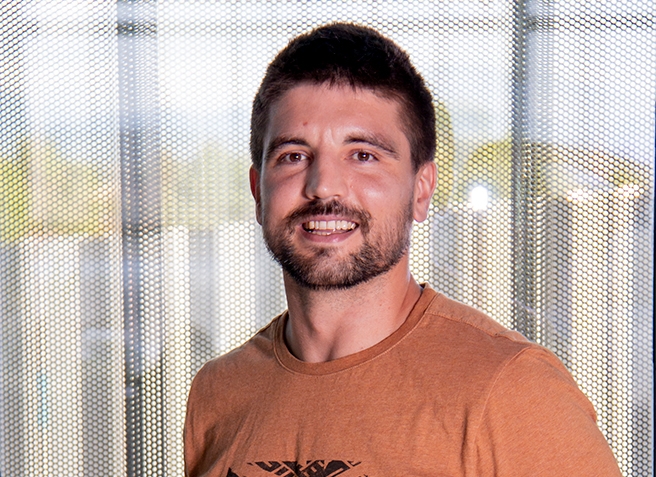
Qian Zhou is a researcher at Eindhoven University of Technology, specializing in Chemical Engineering and Chemistry. Their work focuses on polymer degradation, catalysis, and sustainable chemical processes, particularly for polyvinyl chloride (PVC) and acrylonitrile-butadiene-styrene (ABS) copolymers. Research output spans dechlorination, denitrogenation, and pyrolysis methods Develops green chemistry approaches using polyethylene glycol and ionic liquids Research interests center on chemical process intensification for polymer recycling and environmental remediation. Their publications demonstrate expertise in catalytic degradation mechanisms and reaction kinetics. Recent media contributions span interdisciplinary topics including Photoelectrochemical sensing Plant growth regulation under UV-B stress Climate economics impacts on agricultural markets Carbon nanomaterials for biomedical applications
Prof. Mirjana Minceva is an Assistant Professor in the TUM School of Life Sciences at Technische Universität München (TUM), holding the Biothermodynamics professorship. Her research focuses on developing efficient separation processes for biomolecules, integrating upstream and downstream bioprocessing through model-based design. She earned her BSc in Food Science and Biotechnology and MSc in Chemical Engineering from Ss. Ciryl and Methodius University in Skopje, followed by a PhD in Chemical Engineering from the University of Porto (2004). Her career includes postdoctoral work in Portugal and Macedonia, leadership of the Chromatography Research Group at Friedrich-Alexander-Universität Erlangen-Nürnberg (2007–2014), and habilitation in 2013. Research interests span separation technologies (e.g., chromatography, supercritical fluid extraction), bioprocess optimization, and application of deep eutectic solvents. Her work bridges molecular understanding with industrial-scale process implementation, targeting pharmaceuticals, food, and renewable resources. Key Awards: NATO Reintegration Grant (2006–2007), Solvay Ideas Challenge Prize (2004), and multiple fellowships from Fundação para a Ciência e Tecnologia (FCT), Portugal. Recent publications emphasize chromatographic innovation, hydrotropy-driven drug solubility, and sustainable extraction methods. Her research group collaborates on projects involving UAV-based crop monitoring, photocatalytic pollution control, and precision biomanufacturing.
Paul Kenis is a Professor in the Department of Chemical and Biomolecular Engineering at the University of Illinois at Urbana-Champaign (UIUC). He leads the Kenis Research Group, which focuses on microchemical systems for energy and biological applications. His work spans electrochemical systems for CO2 conversion, microfluidic platforms for crystallization and cell studies, and chemical synthesis in microreactors. Research Interests Electrochemical reduction of CO2 to valuable chemicals and fuels Microfluidic technologies for protein and pharmaceutical crystallization Development of microreactors for quantum dot synthesis and radiopharmaceuticals Autonomous materials discovery and high-throughput experimentation Recent Articles highlight advancements in CO2 capture/conversion, hydrogen production via ammonia electrolysis, and AI-driven nanomaterial synthesis. His team collaborates with institutions like the University of Illinois at Chicago and AbbVie. Awards include the ECS Carl Wagner Memorial Award and the Walter van Schalkwijk Award for contributions to sustainable energy technology. Current research involves optimizing CO2 electrolyzers and developing scalable membranes for carbon capture. Labs/Teams include the Electrosynthesis, Autonomous Synthesis, and Membranes groups, with projects funded by NSF, DOE, and industry partners.
Nikolaos Dimitratos is a leading researcher in heterogeneous catalysis and nanomaterials, with a prolific publication record spanning over 225 articles. His work focuses on the design and application of metal nanoparticles for catalytic processes, including oxidation, hydrogenation, and biomass valorization. He collaborates extensively with prominent researchers like Graham J. Hutchings and Laura Prati, contributing to high-impact studies in journals such as ACS Catalysis , Journal of the American Chemical Society , and Accounts of Chemical Research . Research Interests: Nikolaos Dimitratos's research spans several key areas: Heterogeneous Catalysis: Development of efficient catalysts for oxidation and hydrogenation reactions. Nanomaterials: Synthesis and characterization of metal nanoparticles (Au, Pd, Pt) for catalytic applications. Green Chemistry: Sustainable catalytic processes for biomass conversion and environmental remediation. Energy Applications: Hydrogen production, methane oxidation, and photocatalytic systems. Scientific Contributions: His work has significantly advanced the understanding of gold-based catalysts, bimetallic nanoparticles, and their role in selective transformations. Notable contributions include the oxidation of glycerol, methane activation, and the development of cluster-based catalysts. His studies often combine experimental and computational approaches to elucidate reaction mechanisms and optimize catalyst performance. Collaborations and Impact: Nikolaos Dimitratos has co-authored papers with over 50 collaborators, including Graham J. Hutchings, Laura Prati, Alberto Villa, and Christopher J. Kiely. His collaborative work has been instrumental in shaping the field of catalysis, particularly in the areas of gold catalysis and sustainable chemistry.
Dr. Shahnaz Mansouri serves as a Senior Lecturer at Monash University's School of Chemistry, where she actively leads research in food engineering and sustainable nanotechnology. Her institutional role includes accepting PhD students and directing projects that bridge chemical engineering with practical dairy industry applications, leveraging Monash's research-intensive environment for interdisciplinary collaboration. Her research centers on Food Engineering with specialized expertise in Crystallization Processes for dairy products, particularly lactose recovery from whey streams. She investigates impurity effects in crystallization systems and develops sustainable Nanotechnology solutions for self-cleaning materials, often utilizing plant-based polymers. This dual focus addresses critical challenges in Dairy Processing efficiency and Sustainable Materials innovation, with methodologies spanning process intensification to biomimetic surface design. Analysis of her 34 research outputs (2012-2023) reveals consistent contributions to crystallization science, evolving from fundamental dairy processing studies (2012-2019) toward sustainable nanotechnology applications (2021-2023). Her work demonstrates strong industry relevance, particularly in lactose purification techniques that optimize resource recovery from acid whey, while recent publications indicate strategic expansion into eco-friendly material science. Dr. Mansouri secured competitive research funding as Primary Chief Investigator for the 2017 project ' Ricotta shelf life extension and development of a dessert-style Nutella flavoured ricotta ', demonstrating her ability to translate academic research into novel food product development. She actively mentors graduate researchers as evidenced by her current acceptance of PhD students, with supervision spanning crystallization engineering and sustainable materials characterization.
Dr. Jesus Esteban Serrano is a Lecturer in Chemical Engineering at The University of Manchester, appointed in July 2020. His academic journey includes a PhD (2015), MEng (2010), and BEng (2009) from Universidad Complutense de Madrid, followed by postdoctoral positions at the University of Birmingham (2015–2017), Technical University of Dortmund (2014, 2017), and Max Planck Institute for Chemical Energy Conversion (2018–2020). Doctor of Philosophy, Chemical Engineering (2015), Universidad Complutense de Madrid Master of Engineering, Industrial Process Engineering (2010), Universidad Complutense de Madrid Bachelor of Engineering, Chemical Engineering (2009), Universidad Complutense de Madrid His research focuses on sustainable chemical production from renewable substrates, emphasizing Chemical Reaction Engineering , Green Chemistry , and Process Intensification . Specific areas include catalysis, separation processes, and reactor design for biobased feedstocks like glycerol and lignocellulosic sugars. Recent work explores organic solvents for FDCA purification, biphasic systems for biofuel additives, and eutectic solvents for metal recovery. Dr. Serrano’s contributions have been recognized with numerous honors, including: Excellence Award in Chemical Reaction Engineering (EFCE, 2018) CAS SciFinder Future Leaders Prize (2018) Hermann Neuhaus Prize (Max Planck Society, 2020) IUPAC’s Periodic Table of Younger Chemists (2019) He leads the Reaction Engineering and Sustainable Chemistry Lab , equipped with advanced tools like liquid chromatography-mass spectrometry and mini-plants. He actively supervises research on biorefinery processes and techno-economic analysis, aligning with UN Sustainable Development Goals (SDGs) for environmental sustainability.
Tapio Salmi is a Professor at the Faculty of Natural Sciences and Engineering at Åbo Akademi University , specializing in Technical Chemistry and Reaction Engineering . His research focuses on sustainable chemical processes, including catalysis, epoxidation, and waste valorization technologies. Current Projects: Sustainable Marine Science Center (SOS) Hydrochlorination of glycerol Catalytic ozonation for pharmaceutical waste removal Microwave-assisted vegetable oil epoxidation Research Trends: Development of solid foam catalysts Xylitol production from biomass Advanced oxidation processes for water treatment Continuous flow reactor technologies Global Collaborations: Università degli Studi di Padova University of Naples 'Federico II' EU-funded BioDemo project Publications: Over 498 research outputs spanning 30+ years, with recent focus on sustainable catalysis and environmental engineering. Active in peer-reviewed journals like Chemical Engineering Journal and Applied Catalysis A: General . External Engagements: Regularly participates in international collaborations, including visiting researcher appointments at Italian institutions in 2024. Contributes to conferences on biomass processing and green technologies.
Debanga Mondal is a faculty member at the Faculty of Science and Technology of Åbo Akademi University, where he conducts research in metallurgical engineering with a focus on sustainable steel production processes. His work contributes to the UN Sustainable Development Goals related to industry, innovation, and infrastructure. Dr. Mondal's research expertise spans multiple domains of industrial process engineering: Blast Furnace Engineering and Optimization Computational Fluid Dynamics for Industrial Applications Numerical Modeling of Gas Flow and Temperature Patterns Process Optimization in Metallurgical Systems Sustainable Production Methods in Steel Manufacturing Image Analysis Applications for Industrial Process Monitoring His publication record demonstrates a consistent focus on improving blast furnace operations through advanced computational methods. Recent research has particularly addressed challenges related to burden descent patterns, gas flow dynamics, and temperature distribution in blast furnaces. Dr. Mondal employs sophisticated modeling techniques including CFD and discrete element methods to analyze and optimize these complex industrial processes, with emphasis on sustainability and efficiency improvements. Dr. Mondal has established productive research collaborations with colleagues across multiple institutions, as evidenced by his co-authored publications. His work has garnered citations in the scientific literature, indicating recognition within the metallurgical engineering community. The research shows particular strength in numerical investigation methods applied to blast furnace engineering problems. His research on sustainable steel production methods aligns with global efforts to reduce the environmental impact of heavy industry while maintaining production efficiency. This work has potential applications for improving the sustainability profile of steel manufacturing worldwide, contributing to cleaner industrial processes and resource optimization in the steel industry.
Professor Prysor Williams is a faculty member at Bangor University, serving in the School of Environmental and Natural Sciences. He holds the academic rank of Professor in Agriculture and Environment and is actively involved in research, teaching, and policy advisory roles. His work bridges academic inquiry with practical farming, informed by his lifelong experience on an upland livestock farm. Research Interests: His research focuses on sustainable livestock systems, with emphasis on achieving Net Zero greenhouse gas emissions, managing organic resources like slurry and manure, understanding soil health, antibiotic resistance, and land use policy. He explores sustainable intensification and the provision of public goods through agriculture. His interdisciplinary work extends to the water-energy nexus, including energy efficiency in distilleries and leisure centres, and small-scale hydropower. Publication Trends: His recent articles reflect a strong focus on climate-smart agriculture, life cycle assessment, circular economy in food systems, and environmental monitoring. Key themes include carbon footprinting of livestock, nutrient management, heat recovery, and ecosystem services. His work often involves transdisciplinary collaboration and policy-relevant outcomes. Scientific Awards: 2023 External Award from the Welsh Farmers' Union for "services to agriculture" Advising and Grants: He supervises PhD and MRes students and has led multiple research projects funded by KESS, Hybu Cig Cymru, and EU Interreg programmes. Notable projects include Dŵr Uisce (water-energy nexus), Hydro-BPT (hydropower), and Land Use for Net Zero – Hub (LUNZ-Hub). He has served as Principal Investigator on numerous grants focusing on agricultural sustainability, carbon footprinting, and resource efficiency. Labs and Teams: He is a key member of the Global Farm Platform group and collaborates with the Centre for Ecology & Hydrology. His work involves close partnerships with Farming Connect, Hybu Cig Cymru, and the NFU Net Zero Scientific Advisory Panel, integrating research with industry and policy.
Alex Roger Maag is an Assistant Research Professor in the Department of Chemical Engineering at Worcester Polytechnic Institute (WPI). He joined WPI in 2021 after completing a postdoctoral associate position at Cornell University under Professor Goldfarb. His research focuses on biomass-derived renewable energy and sustainable commodity production, utilizing thermochemical conversion with heterogeneous catalysts and high-pressure systems. Education: Ph.D. in Chemical Engineering (WPI, 2019); B.S. in Chemical Engineering (University of Massachusetts Amherst, 2011) Maag's work emphasizes catalysis, surface science, and spectroscopic characterization, targeting process engineering benefits like enhanced product throughput and energy efficiency. His recent projects involve hydrothermal liquefaction of biomass and catalyst stability studies under extreme conditions. The four listed publications (2018–2020) highlight his contributions to biomass conversion technologies, catalytic material development (e.g., CeZrOx, ZSM-5), and comparative analysis of reaction phases in industrial chemistry. These works span subfields including catalyst degradation, phase behavior, and sustainable fuel production. Maag actively mentors students through hands-on projects and active learning strategies, integrating chemical engineering fundamentals into practical applications. He is affiliated with WPI's Chemical Engineering department, with prior academic ties to Cornell University and WPI through his doctoral research under Professor Timko.
Julia Gonzalez Alvarez is a Professor in the Department of Chemical Engineering at the University of Santiago de Compostela, affiliated with the Higher Technical School of Engineering. She is a member of the PROSUST research group focused on process intensification for sustainable development. Education: PhD in Chemical Engineering from the University of Santiago de Compostela (1994), with a thesis titled Delignification of lignocellulosic materials with acetic acid , supervised by Dr. Gonzalo Vázquez Uña and Dr. Gervasio Antorrena Alvarez. Research interests center on sustainable chemical processes, particularly the use of acetic acid in lignocellulosic material processing. Her work aligns with green chemistry principles and contributes to advancing biomass conversion techniques for eco-friendly industrial applications.
Maria Isabel Vidal Tato is a Professor at the Department of Chemical Engineering, affiliated with the Higher Technical School of Engineering at the University of Santiago de Compostela. Her research focuses on eco-efficiency and sustainable separation processes, particularly in solvent extraction and process intensification. She holds a doctoral degree from the same institution (1992), where her thesis investigated the extraction of low molecular weight alcohols from aqueous solutions under the guidance of Dr. Alberto Arce Arce and Dr. Antonio Blanco Seoane. Her work is embedded within the research groups GI-1615 (Ecoefficiency) and EQUIFASE (Sustainable Separation Processes). Key themes in her research include environmental sustainability in chemical processes, thermodynamics of mixtures, and biofuel production technologies. No scientific awards are explicitly mentioned in the provided text. Her academic trajectory includes continuous affiliation with the University of Santiago de Compostela, with no indications of part-time roles, retirement, or former staff status.
Ralf Takors is a Professor and Director of the Institute of Biochemical Engineering at the University of Stuttgart. His research focuses on metabolic engineering, systems biology, and bioprocess optimization, particularly in scaling-up microbial and mammalian cell processes to industrial scales. He leads the Takors research team, which integrates biochemical engineering principles with synthetic biology tools to enhance bioproduction efficiency. His academic career includes roles at Evonik Degussa GmbH (2004–2009) and habilitation at Forschungszentrum Jülich (1997–2004). He teaches courses in biochemical engineering, metabolic engineering, and bioreaction engineering. Key awards include acatech membership (2021) and the DECHEMA Young-Professor Award (2001). Research interests span gas fermentation scaling, bioreactor design optimization, and strain engineering. Notable contributions include studies on bubble column fermentations, co-culture systems, and genome-reduced microbial strains for enhanced bioproduction. His work emphasizes translating lab-scale innovations to industrial applications through rigorous modeling and process validation. Publications (2025–2024) highlight advancements in bioprocess engineering, including scaling strategies, metabolic modeling, and novel bioreactor configurations. Teaching engagements span multiple universities and workshops globally, emphasizing systems approaches in biotechnology.
Ekaterina Kholkina is a researcher in the Department of Chemical Engineering at Åbo Akademi University specializing in sustainable catalytic processes. Her work focuses on developing novel catalysts for green chemical transformations using waste-derived materials and energy-efficient methods. Her primary research interests include heterogeneous catalysis with emphasis on graphitic carbon nitride materials (g-CN), slag-based catalysts, and iridium-catalyzed systems. Key investigation areas encompass desulfurization, carboxymethylation of cinnamyl compounds using dimethyl carbonate, Prins cyclization of terpenes, and ultrasound-assisted catalyst synthesis. She explores sustainable pathways for fine chemical production through waste valorization and process intensification techniques. Analysis of her publication trends reveals consistent focus on alternative catalyst supports derived from industrial byproducts (slag) and advanced materials (g-CN). Her recent work demonstrates increasing sophistication in reaction selectivity control, particularly in hydrogenation and cyclization reactions, while maintaining environmental sustainability through solvent-free or green solvent systems. Dr. Kholkina maintains extensive collaboration within Åbo Akademi's catalysis research group under Professor Dmitry Murzin. Her work aligns with the university's "Technologies for a Sustainable Future" initiative, targeting industrially applicable catalytic processes with reduced environmental impact. Current research directions indicate progression toward scalable catalyst systems for biomass conversion and renewable feedstock utilization.
Angel Serrano Casero is a postdoctoral Researcher at CIC energiGUNE within the Thermal Energy Storage department. His work focuses on Phase Change Materials (PCMs), PCM encapsulation, and thermal regulation in building materials like polyurethane foams and bricks. Education: Chemical Engineering (UCLM, 2012) Chemical and Environmental Engineering (UCLM, 2014) PhD in "Passive Energy Storage Materials for building applications" (UCLM, 2018) Research Interests: Development of advanced functional coatings, microfluidic-based PCM synthesis, and flame-retardant materials for thermal energy storage systems. Key areas include PCM encapsulation, sol-gel nanoparticles, and hydrophobic additives for concrete. Scientific Contributions: His recent publications address PCM integration in building materials, microencapsulation techniques, and phase transition modeling in inorganic systems like Li2SO4–Na2SO4. Articles highlight sustainable lignin-based polyols and high-temperature composite stability. Awards: REPSOL award for best Undergraduate Thesis (2011/2012) REPSOL award for best Master Thesis (2013/2014)