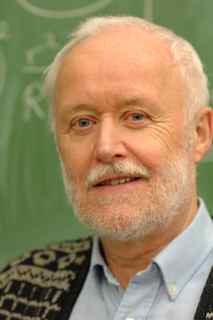
Finn Ravndal is a Professor of Theoretical Physics at the University of Oslo since 1976. His academic interests include Theoretical Physics, Particle Physics, Cosmology, and Quantum Field Theory. He has taught courses such as FYS1120 Electromagnetism and FYS5120 Advanced Quantum Field Theory. University of Oslo Theoretical Physics Department Ravndal’s research spans diverse areas of theoretical physics, including cosmology, quantum field theory, and condensed matter physics. His work explores topics like extra dimensions, gravitational models, and quantum effects in materials. His publications from 1990 to 2012 reflect a focus on Quantum Field Theory, Cosmology, and Condensed Matter Physics. Key themes include extra dimensions, Casimir effects, and gravitational models. Ravndal has collaborated with researchers such as Alnes, Olaussen, and Wehus on projects involving electromagnetic Casimir effects and Cardassian models. He utilizes variational principles and advanced field theory techniques in his research.
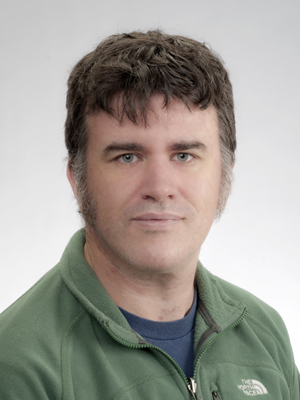
Jim Halverson is an Associate Professor of Physics at Northeastern University in Boston, Massachusetts. His research bridges string theory , particle physics , cosmology , mathematical geometry , and deep learning . He serves as a co-PI and Board Member of the NSF AI Institute for Artificial Intelligence and Fundamental Interactions (IAIFI) and co-organizes Physics ∩ ML . Halverson holds a PhD in Physics from the University of Pennsylvania (2012) and completed postdoctoral work at the Kavli Institute for Theoretical Physics (2012-2015). His research focuses on the string landscape and its implications for physics beyond the Standard Model, particularly through the lens of extra-dimensional geometries . He has pioneered the integration of deep learning into theoretical physics, applying it to problems in quantum field theory , knot theory , and cosmological model inference . Halverson has organized numerous workshops, including String Phenomenology and IAIFI Summer Schools , and serves on the editorial board of Machine Learning: Science and Technology . Halverson’s recent publications highlight neural network applications to conformal symmetry , Kolmogorov-Arnold networks , and geometric problems in string theory . His work intersects physics , mathematics , and machine learning to explore fundamental questions in cosmology and quantum gravity. He has received the NSF CAREER Grant and DOE Graduate Fellowship , underscoring his contributions to both research and education. Halverson teaches graduate courses in quantum mechanics and quantum field theory at Northeastern University.
Duncan A. Young serves as a Research Associate Professor at the University of Texas Institute for Geophysics (UTIG), part of the University of Texas at Austin's Department of Earth and Planetary Sciences. His expertise spans Antarctic ice sheet dynamics and planetary exploration of Jupiter's moon Europa, conducting field research on ice-penetrating radar applications for both terrestrial and extraterrestrial environments. His academic credentials include: Ph.D. in Geology from Southern Methodist University B.S. in Geological Sciences from University of Canterbury, New Zealand Young's research centers on radioglaciology and planetary geophysics , employing airborne geophysical surveys to investigate Antarctic subglacial hydrology, ice sheet evolution, and ancient ice preservation. He actively applies terrestrial analogs from Antarctica to interpret Europa's ice shell structure through NASA's Europa Clipper mission. His work integrates radar sounding, gravity, and magnetic data to map subglacial geology and ice-ocean interactions, with significant contributions to the NSF-funded Center for Oldest Ice Exploration (COLDEX). Analysis of his 2025 publications reveals concentrated expertise in Antarctic ice sheet dynamics and Europa exploration. Key methodologies include advanced radar reflectometry for subsurface characterization, multi-sensor geophysical integration, and development of the Open Polar Radar framework. His research addresses critical questions in sea level rise projections, ice sheet stability mechanisms, and extraterrestrial habitability through projects like COLDEX and REASON. Young leads major collaborative initiatives: Instrument science team member for REASON radar on NASA's Europa Clipper mission Principal investigator for NSF COLDEX aerogeophysical surveys in East Antarctica Lead scientist for UT-led aerial surveys revealing ancient subglacial landscapes His laboratory operates the Open Polar Radar system at UTIG's J.J. Pickle Research Campus, conducting field campaigns across Antarctica while developing radar technologies for planetary exploration missions. Current efforts focus on optimizing ice core site selection and advancing radar techniques for Europa's ice shell characterization.
Professor Bert L.L.A. Vermeersen is a distinguished academic at Delft University of Technology, holding positions in both the Civil Engineering & Geosciences school and the Aerospace Engineering faculty. He leads research in Physical and Space Geodesy with a strong focus on Planetary Exploration. His research interests span Planetary Geodesy , Subsurface Oceans on icy moons, Tidal Dissipation processes, and Sea Level Change studies. His work bridges terrestrial geophysics with planetary science, examining similar geophysical processes across different celestial bodies. Vermeersen's recent publications reveal a strong focus on two main research thrusts: Jovian system exploration (particularly Europa and Ganymede) through the ESA JUICE mission, and Holocene sea-level changes in the Bohai Sea region. His work on the PRIDE and GALA instruments demonstrates expertise in space mission instrumentation for planetary geodesy. As an active member of the scientific community, he has served as Editor for Geophysical Journal International (2011-2018) and Tectonophysics (2011-present), contributing significantly to scholarly discourse in his fields. Professor Vermeersen maintains a high public profile, with numerous media appearances discussing planetary exploration, particularly the JUICE mission to Jupiter's icy moons. His 2023-2024 media engagements with outlets like New Scientist and NOS demonstrate his commitment to science communication and public engagement.
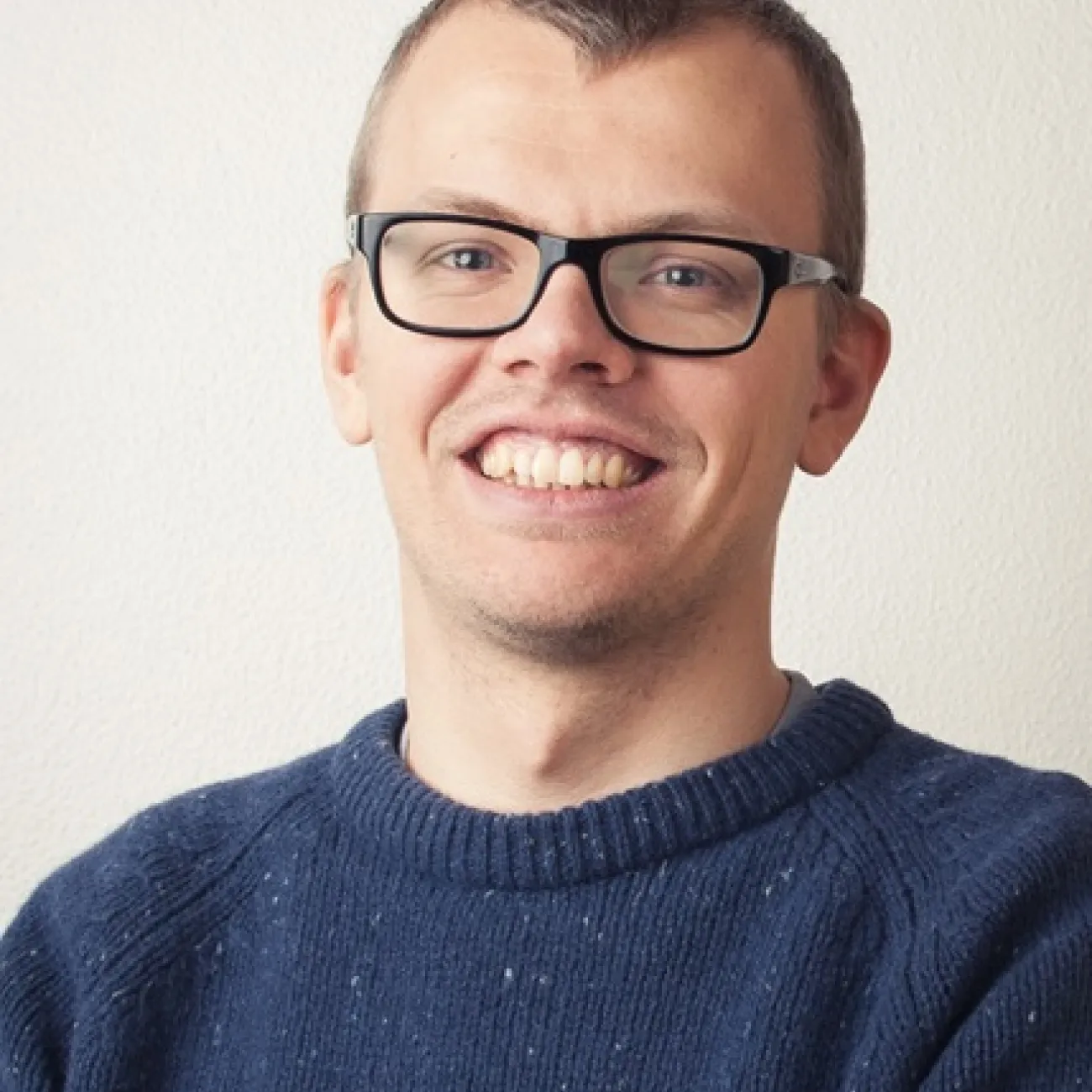
Fridrik Freyr Gautason serves as a Lecturer in String Theory within the School of Mathematical Sciences at the University of Southampton. His academic journey includes a PhD from Leibniz Universität Hannover (2014), followed by postdoctoral research at KU Leuven (2014-2020) and the University of Iceland (2020-2024) before joining Southampton in 2024. Gautason is an active researcher currently accepting PhD students and contributing to the String Theory and Holography research group within the Southampton Theory, Astrophysics and Gravity (STAG) Research Centre. Gautason's research centers on fundamental aspects of string theory in holographic backgrounds, with specific expertise in three interconnected domains: string theory proper, supersymmetric quantum field theories, and holography. His work explores the mathematical structures underlying quantum gravity through the lens of gauge/gravity dualities, with particular attention to brane physics, conformal manifolds, and supersymmetric configurations. The research has significant implications for understanding quantum aspects of black holes, wormholes, and the non-perturbative structure of string theory. Analysis of Gautason's publication record from 2021-2025 reveals a consistent focus on advancing holographic methods in string theory, with particular attention to precision calculations in supersymmetric settings. His work frequently examines brane configurations (D3-branes, spherical branes), conformal manifolds across different dimensions (3d, 5d), and connections to matrix models. The research demonstrates increasing sophistication in handling quantum corrections and non-perturbative effects, with recent papers pushing the boundaries of what can be calculated precisely in holographic dualities. Gautason is an active member of the String Theory and Holography research group within the Southampton Theory, Astrophysics and Gravity (STAG) Research Centre. His research program involves collaborations with prominent theorists including Nikolay Bobev, Jesse van Muiden, and Valentina Giangreco M. Puletti, reflecting a strong international research network. As a new lecturer accepting PhD students, he is building his research team while continuing his productive publication record in top theoretical physics journals including Journal of High Energy Physics (JHEP) and Physical Review Letters.
Marcelo Ketzer is a Professor of Environmental Science with a focus on sedimentary geochemistry at Linnaeus University's Department of Biology and Environmental Science, Faculty of Health and Life Sciences. His work spans teaching, research, and leadership in environmental science programs, particularly focusing on the Baltic Sea ecosystem and global marine environments. Professor Ketzer's research centers on sedimentary geochemistry, particularly examining the chemical composition of sediments and soils in both pristine and human-affected environments. His work explores the relationship between life and chemistry in geological settings, with special emphasis on biogeochemical cycles, particularly methane dynamics in marine sediments. He investigates how climate change affects these processes in the Baltic Sea, Atlantic Ocean, and Mediterranean Sea, with implications for global carbon budgets and marine ecosystem stability. His research also addresses the stability of methane hydrates in deep-sea environments under changing climate conditions, which has significant implications for understanding potential greenhouse gas emissions and seabed stability. Analysis of Professor Ketzer's recent publications reveals a strong focus on climate change impacts on marine biogeochemical processes, particularly methane cycling in the Baltic Sea. His work combines field expeditions with advanced modeling approaches to understand sediment dynamics, microbial responses to warming, and pollution impacts. The research demonstrates interdisciplinary collaboration across environmental science, microbiology, geochemistry, and climate science, with practical applications for environmental monitoring and climate change mitigation strategies. Professor Ketzer actively mentors students through doctoral projects and teaches in both the Environmental Analyst Programme (undergraduate) and Environmental Science and Sustainable Development Programme (master's level). His research is supported through multiple ongoing projects examining climate change impacts on coastal ecosystems, metal accumulation in Baltic Sea sediments, greenhouse gas production in fiberbanks, and methane dynamics in warming marine environments. He leads the Environmental Geochemistry research group, which investigates chemical processes in Earth's surface environments, with particular focus on sediment-water interactions, pollution dynamics, and climate change impacts. Professor Ketzer has participated in numerous expeditions to study methane emissions in the Baltic Sea, Atlantic Ocean, and Mediterranean Sea, contributing to our understanding of how marine systems respond to global warming.
Dr. Duncan Sutherland is a Senior Lecturer at UNSW Canberra within the School of Science, Department of Mathematics. He serves as deputy director of UNSW Bushfire and was appointed maths discipline coordinator in 2024. His academic journey began with a PhD in Applied Mathematics from the University of Sydney in 2014, followed by postdoctoral research at Victoria University Melbourne focusing on Physics-based Simulation of Bushfires, before joining UNSW Canberra in 2014 and being promoted to Senior Lecturer in 2022. His educational background includes: PhD in Applied Mathematics, University of Sydney (2014) Sutherland's research centers on computational fluid dynamics applied to bushfire problems, encompassing buoyancy-driven flows, entrainment and mixing, particle transport, contaminant modeling, and combustion modeling. His current work focuses on Large-Eddy Simulation (LES) of laboratory-scale extreme fire behavior and field-scale grassfires, along with Direct Numerical Simulation (DNS) of buoyancy-driven flows to understand gravity current dynamics and mixing processes. His research bridges theoretical mathematics with practical fire safety applications. An analysis of his recent publications reveals a strong focus on fire dynamics, with particular emphasis on junction fires, ember storms, and the effects of terrain and environmental conditions on fire behavior. His work demonstrates increasing sophistication in modeling complex fire phenomena, with a clear trajectory toward improving predictive capabilities for wildfire management and urban safety. His significant research contributions have been recognized through substantial grant funding: Black Summer Recovery Grant ($804,000, 2022-2024) Suburban Land Agency contract ($70,000, 2022-2023) ARC Discovery Project: Gravity Current Driven Smoke Dispersion ($250,000, 2021-2024) ARC Discovery Project: Understanding Extreme and Mega Bushfires ($590,000, 2021-2024) Bushfire and Natural Hazards CRC projects totaling over $600,000 Sutherland actively supervises graduate students including Tanvir Saurav, Nusrat Mehnaz, Will Swedosh, and Mohamad Sadeghi. His teaching responsibilities include ZPEM1304 Engineering Mathematics 1B and ZPEM3306 Waves and Fluids. His work with UNSW Bushfire demonstrates leadership in applying mathematical modeling to critical fire safety challenges, particularly at the wildland-urban interface where ember storms pose significant risks to communities. His research group collaborates extensively with fire science experts across Australia, contributing to national efforts in improving bushfire resilience through physics-based modeling approaches.
Professor Anya M. Reading is a distinguished academic in the School of Natural Sciences at the University of Tasmania, where she serves as Professor of Physics. She leads the Compute Antarctic Group and holds key leadership positions including Program Lead for Circum Antarctic and East Antarctic at the Australian Centre of Excellence for Antarctic Science (ACEAS) since 2021, and Chair of the Coordinating Committee for East Antarctica at the International Lithosphere Program. Professor Reading earned her PhD from the University of Leeds (1997), BSc from the University of Edinburgh (1991), and a Diploma of Music from the Open University (1998). Her academic journey has positioned her as a world leader in computational geophysics and Antarctic research. Professor Reading's research spans three interconnected domains that have defined her 30+ year career in geophysics. Her primary focus is on computational data inference , where she pioneers advanced techniques in inverse theory and machine learning applied to earthquake seismology, plate tectonic structure, and environmental applications of seismology. She has made significant contributions to pioneer geophysical data collection , leading observational seismology and interdisciplinary field programs in remote environments including Antarctica and outback Australia. Her work on interdisciplinary insight generation focuses on East Antarctica, developing innovative computational strategies to optimize data collection in regions of societal relevance. Her research bridges geophysics, climate science, and computational methods to address critical questions about ice sheet dynamics and Earth systems. Professor Reading's recent publications reveal a strong trend toward integrating machine learning with traditional geophysics to study Antarctic ice sheets. Her work increasingly focuses on cryoseismology - using seismic signals to monitor glacial processes hidden from satellite observation. A significant portion addresses the ice-bedrock interface, examining how geothermal heat flow influences ice sheet stability. Her publications demonstrate growing emphasis on interdisciplinary approaches combining seismology, magnetotellurics, and computational modeling. Professor Reading's significant honors include: University of Tasmania College of Sciences and Engineering Research Award (Medal, 2021) Vice-Chancellor's Leadership Award (Medal, 2019) Fulbright Senior Scholar (2016/17) As an educator and mentor, Professor Reading has supervised over 15 PhD students since 1998. She has secured substantial research funding, with current projects totaling over $6.5 million including an ARC Discovery Project on Antarctic outlet glaciers and the GRIT Phase 3 project for continental-scale geophysical monitoring in Antarctica. Her leadership extends to directing major research infrastructure initiatives that have transformed Australia's capacity for Antarctic research. Professor Reading leads the Compute Antarctic Group, a dynamic research team focused on computational geophysics and Antarctic research. She also plays a central role in the Australian Centre of Excellence for Antarctic Science, coordinating interdisciplinary research across multiple institutions. Through these groups, she fosters a collaborative environment that integrates field observations, computational modeling, and machine learning to address pressing questions about Antarctic systems and their global implications.
Sigbjørn Sødal serves as Principal at NLA University College in Kristiansand, Norway, providing academic leadership and strategic direction for the institution. His role as Principal represents the highest academic and administrative position at the university college. His educational background demonstrates remarkable interdisciplinary breadth: 1998: Dr. oecon. (Doctor of Economics) from NHH (Norwegian School of Economics) 1994: Cand. polit. (Master of Political Science) from University of Oslo with major in economics, intermediate studies in music, and basic studies in religious education 1986: Siv. ing. (Master of Science in Engineering) from NTNU in industrial mathematics 1986: Pedagogical exam from NTNU Sødal's research spans maritime economics, real options theory, and regional economic structures. His work examines shipping market dynamics, international trade flows, and investment decision-making under uncertainty. He has made significant contributions to understanding how maritime connectivity influences economic development patterns. His methodological approach combines economic theory with quantitative analysis, particularly in regional economic structures and shipping market behavior. His publication record shows a clear evolution from theoretical work on real options in the early 2000s toward more applied maritime economics research in recent years. This trajectory reflects both his theoretical expertise and practical engagement with shipping industry challenges. His research has been published in leading journals across economics, finance, and maritime studies, demonstrating consistent scholarly productivity over two decades. Sødal's professional interests extend well beyond traditional economics, encompassing over 50 fields including public administration, education, theology, music, philosophy, and social sciences. This exceptionally broad disciplinary scope informs his interdisciplinary approach to complex economic and maritime industry problems, connecting technical economic analysis with broader societal and cultural contexts.
KIMURA Taro is an Associate Professor at the Institute of Mathematics of Burgundy (IMB), University of Burgundy, with a focus on Mathematical Physics and Theoretical Physics. He holds a tenure-track position under the ISITE-BFC initiative and leads research at the intersection of algebraic geometry, quantum field theory, and topological materials. His academic roles include teaching advanced mathematics and physics courses in the International Master in Mathematical Physics (Math4Phys) program. Education: PhD in Physics from the University of Tokyo (2012), MA and BA from the University of Tokyo. Research: Explores quantum field theory, random matrix models, quiver gauge theories, and their applications to topological phases and integrability. Article Trends: His recent work bridges Mathematical Physics with High Energy Physics , emphasizing random partitions , quiver W-algebras , supergroup gauge theories , and topological materials . Publications reveal a focus on quantum integrability, non-perturbative methods, and algebraic structures in gauge theories. Scientific Awards: International Junior Fellowship (2019–2022) JSPS Research Fellowships (2013–2015, 2011–2013) Students & Collaborators: Mentors PhD and Master's students in projects related to quantum field theory and topological materials. Collaborates with researchers at institutions like RIKEN, Keio University, and the University of Tokyo. Leads the Mathematics-Physics team at IMB. Grants: Principal Investigator (PI) for projects including AQGQ (MITI CNRS 2024–2025), CQAG (ANR 2019–2022), and co-PI for SupToPhAG (EUR-EIPHI 2021–2024).
Christian Fleischhack is a Professor of Analysis at the Institute of Mathematics within the Faculty of Electrical Engineering, Computer Science and Mathematics at Paderborn University, Germany, a position he has held since October 2009. His research bridges mathematical rigor with theoretical physics, focusing on foundational aspects of quantum gravity and geometric structures. His educational background includes: Diploma in Physics (1998): Funktionalintegralzugang zu Eichtheorien und Gravitation im Rahmen des Ashtekarprogramms (Leipzig) Diploma in Mathematics (1999): Stratifizierung des verallgemeinerten Eichorbitraums im Ashtekarprogramm (Leipzig) PhD (2001): Mathematische und physikalische Aspekte verallgemeinerter Eichfeldtheorien im Ashtekarprogramm (Leipzig) Fleischhack's research centers on Functional Analysis (measures on topological spaces, operator algebras), Differential Geometry (stratifications, diffeomorphisms), and Mathematical Physics (quantum geometry, quantum gravity). His work explores quantization methods—particularly loop quantization versus symmetry reduction—with emphasis on mathematical consistency in quantum gravity frameworks. He investigates how algebraic structures and geometric constraints shape physical theories, often addressing foundational questions in gauge theories and cosmology. His publication record reveals a sustained focus on loop quantum gravity's mathematical underpinnings, evolving from early work on generalized connections (2003-2006) to cosmological applications (2016-2019). Key themes include representation theory of algebras in quantum geometry, spectral properties of operators, and the interplay between symmetry and quantization. Recent articles demonstrate increasing sophistication in handling non-unital algebras and cosmological models. His scientific recognition includes: Emmy Noether Fellowship from the Deutsche Forschungsgemeinschaft (funding an independent junior research group) Alumnus status in the prestigious Young Academy (Junge Akademie) Fleischhack actively shapes his field through academic service: serving on Paderborn's PhD Board (Promotionsausschuß) and Examination Board (Prüfungsausschuß), and securing DFG funding for his Emmy Noether group. He co-organizes the annual Tux Workshops on Quantum Gravity (since 2016) and LQP Workshops on local quantum physics, fostering international collaboration. His editorial contributions include co-editing the compendium Heureka – Evidenzkriterien in den Wissenschaften (2010) and reviewing for journals like Mathematische Semesterberichte . He leads a research environment centered around the Mathematical Physics group at Paderborn, with strong ties to the Max Planck Institute network. His workshop series in Tux, Austria, and northern Germany serve as critical hubs for the loop quantum gravity community, attracting leading researchers to advance theoretical frontiers.
Steven Strogatz is the Jacob Gould Schurman Professor of Applied Mathematics at Cornell University , renowned for his work in nonlinear dynamics and chaos theory. He contributes to The New York Times , The New Yorker , and hosts the Joy of x podcast for Quanta Magazine, exploring intersections of mathematics, physics, and biology. Research Interests : Applied mathematics, nonlinear systems, computational biology, quantum theory, and interdisciplinary science communication. Publications : Author of Nonlinear Dynamics and Chaos , Sync , and Infinite Powers: How Calculus Reveals the Secrets of the Universe . Media Engagement : Regular guest on Radiolab and Science Friday , with podcast discussions on topics ranging from quantum computing to biological evolution. Scientific Impact : Through his podcast, Strogatz delves into fundamental questions across disciplines, collaborating with experts like Maria Chudnovsky on graph theory, Monika Schleier-Smith on quantum gravity, and Franziska Michor on cancer treatment modeling.
Carlo Meneghelli is an Associate Professor at the Department of Mathematical, Physical and Computer Sciences, University of Parma. He holds a PhD from Humboldt University of Berlin (2011) and has held postdoctoral positions at DESY Hamburg, Simons Center for Geometry and Physics (Stony Brook), and University of Oxford. His research focuses on mathematical aspects of quantum field theory, particularly: Superconformal field theories (SCFTs) Bootstrap methods in theoretical physics Integrable models and Yangian symmetry Relations between supersymmetric gauge theories and geometric structures Free field realizations in algebraic frameworks He teaches courses in: Quantum Field Theory Probability Methods in Physics Highlights in Theoretical Physics His recent publications (2020-2025) demonstrate expertise in bootstrap techniques, superconformal structures, and connections between vertex operator algebras (VOAs) and gauge theories. The work spans both theoretical development (W-algebras, nilpotent operators) and concrete applications (Wilson line defects, Kaluza-Klein functions). His scientific collaborations include notable researchers such as Christopher Beem, Leonardo Rastelli, and Wolfger Peelaers. Current research explores the intersection of integrability, supersymmetry, and conformal symmetry through advanced mathematical methods.
Associate Professor Alan Aitken is affiliated with the School of Earth and Oceans at The University of Western Australia. His research focuses on geophysical and numerical techniques applied to Earth systems, with expertise in Antarctic ice dynamics, tectonics, and mineral systems. He leads projects like BEDMAP3, a comprehensive Antarctic ice bed dataset, and investigates crustal evolution in Western Australia and Antarctica. His work bridges geology and climate science, addressing global sea-level change and resource exploration. Research Interests: Potential field geophysics, tectonic processes, subglacial dynamics, and mineral system modeling. Key projects include Antarctic lithosphere studies and the evolution of cratonic Australia. Collaborations span international teams analyzing ice sheet stability and sedimentary basins. Grants and Collaborations: Principal investigator in ARC-funded projects such as the Australian Centre for Excellence in Antarctic Science and studies on Proterozoic rift basins. Active in global initiatives like BEDMAP3, involving 60+ international researchers. Labs/Teams: Part of interdisciplinary teams at UWA and international Antarctic research networks, contributing to ice-sheet modeling and geological data integration.
Evgeny Buchbinder is an Associate Professor at the School of Physics, Maths and Computing, Physics Department, University of Western Australia. He joined UWA as a Future Fellow in 2012 and became a permanent staff member in 2016. Prior to this, he held research positions at the Institute for Advanced Study (Princeton), Perimeter Institute for Theoretical Physics (Waterloo), and Imperial College London. He earned his PhD from the University of Pennsylvania and earlier degrees from Tomsk State University. His research focuses on superstring theory, particle physics, heterotic string theory, conformal field theory, and cosmology of the early universe. He teaches courses such as Differential Geometry, Relativistic Electrodynamics, and Advanced Quantum Mechanics. His work bridges theoretical physics and mathematics, particularly through studies of supersymmetry, superfield methods, and AdS/CFT correspondence. He has secured grants including 'Conformal Field Theories with Higher Spin Symmetry and Duality Invariance' (2023–2026) and 'Advances in Conformal Field Theory with Extended Symmetry' (2020–2023). His research outputs emphasize correlation functions, conserved currents, and higher-spin structures in supersymmetric systems. No scientific awards are explicitly listed. His grants and collaborations span topics like superconformal gravity, string model building, and holographic techniques. His work contributes to understanding fundamental aspects of quantum field theory and cosmology through advanced mathematical methods.