

Erik Brunvand is a Professor at the School of Computing , University of Utah, and holds an Adjunct Professor position in the Department of Electrical and Computer Engineering. He was a University Professor from 2014–2016 and is currently on leave at the National Science Foundation (CISE/CNS division) (Fall 2019–2021). His research focuses on computer architecture, VLSI systems, asynchronous circuits, and graphics processing, particularly GPU architectures for ray tracing. Teaching includes courses like Digital VLSI Design , Embedded Systems and Kinetic Art , and interdisciplinary classes like Making Noise: Sound Art and Digital Media . He has organized the ASYNC international symposium series and contributed to projects such as TRaX (ray tracing architecture) and ACK (asynchronous design framework). Grants include NSF awards for GPU architectures, ray tracing applications, and microengine-based control systems. His work spans hardware design, sustainable computing, and arts/technology collaborations, including kinetic art installations and educational initiatives like circuit bending.
جستوجوی استاد و پژوهشگر
استاد راهنما، استاد دانشگاه یا پژوهشگر مناسب برای مسیر پژوهشیتان را پیدا کنید و با او ارتباط بگیرید.
نمایش ۷۳۶-۷۵۰ از ۳٬۴۲۷ استاد راهنما
اطلاعات این پروفایلها از صفحات عمومی دانشگاهها جمعآوری شده و ممکن است بهروز نباشد.
Dhanya Sridharمشاهده پروفایل
استادیار
Dhanya Sridhar is an Assistant Professor at the Department of Computer Science and Operations Research (DIRO) of the University of Montreal and a core academic member of Mila - Quebec Artificial Intelligence Institute. She holds a Canada CIFAR AI Chair and co-leads the IVADO R3AI working group on safe and aligned AI. PhD from University of California Santa Cruz Postdoctoral research at Columbia University Data Science Institute Her research focuses on integrating causality and machine learning to build AI systems that are robust to distribution shifts, capable of efficient task adaptation, and aligned with human knowledge. Recent work includes causal effects of social interactions on US election participation and causal modeling in geriatric-oncology patient outcomes. Current research themes: Causal representation learning Temporal causal inference Counterfactual modeling Causal abstraction in large models Responsible AI development Scientific awards: Canada CIFAR AI Chair Major grants: NSERC Discovery Grant (PVX20965-RGP) 2023-2029 NSERC DGECR Grant 2023-2025 Multiple MITACS Acceleration Quebec grants Advising: PhD students: Philippe Brouillard, Shruti Joshi, Mizu Nishikawa-Toomey, Tom Marty, Cristian Manta
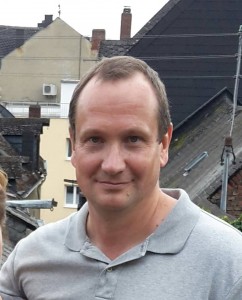
Professor Sergey Karabasov is a leading academic in computational modeling and aeroacoustics at Queen Mary University of London’s School of Engineering and Materials Science . As Director of the Centre for Intelligent Transport , he bridges aerospace engineering with environmental technology and bioengineering. Education: PhD (1999, Moscow State University), DSc (2010, Keldysh Institute) Affiliations: Fellow of the Royal Aeronautical Society (FRAeS), Fellow of the Higher Education Academy (FHEA), Associate Fellow of AIAA (AFAIAA) Research Interests span multiscale fluid dynamics, computational aeroacoustics, and high-performance computing. His work addresses: Future Mobility: Noise reduction in urban air mobility and conventional aircraft Environmental Technologies: Turbulence modeling for renewable energy and climate systems Digital Twins: Physics-based and data-driven simulations for aerospace and bioengineering Article Trends focus on: Hybrid LES-acoustic models for jet noise Multiscale methods in nanofluidics and molecular systems GPU-accelerated algorithms (e.g., CABARET) for complex flows Climate dynamics (Southern Ocean jets, Chandler wobble) Scientific Awards include: Fellowships at Royal Aeronautical Society and Higher Education Academy Associate Fellowship at AIAA Guest Editor for Royal Society Phil.Trans. A theme issues (2014, 2019) Advising includes current PhD student Hussain Ali Abid and alumni working on: Jet noise optimization Graphene suspension rheology Hybrid molecular-continuum simulations Labs & Teams involve the Centre for Intelligent Transport , GPU-Prime.Ltd consultancy, and collaborations with institutions like Cambridge University and Keldysh Institute.
Yuying Xieمشاهده پروفایل
دانشیار
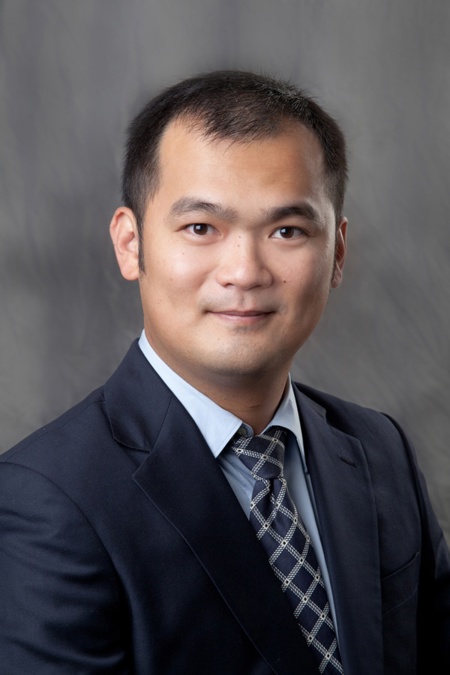
Yuying Xie is an Associate Professor holding dual appointments in the Department of Computational Mathematics, Science and Engineering and the Department of Statistics & Probability at Michigan State University. Her research bridges statistical theory, machine learning innovation, and biological discovery, with a focus on developing computational frameworks for high-dimensional biological data analysis. Education: B.S. in Biology, Fudan University, China (2005) Ph.D. in Genetics and Molecular Biology, University of North Carolina at Chapel Hill (2010) Ph.D. in Statistics, University of North Carolina at Chapel Hill (2015) Research Interests: Dr. Xie pioneers methodologies in single-cell data analyses , spatial transcriptomics , and statistical machine learning for biological applications. Her work addresses critical challenges in high-dimensional data analysis through graphical models and QTL/eQTL mapping , with emphasis on biological interpretability and computational efficiency. Current projects integrate deep learning with immunology and cancer biology to decode complex disease mechanisms. Recent Publications: Her 2023-2025 output reveals a strategic focus on transparent single-cell analysis tools (DANCE 2.0), tumor microenvironment modeling (MARVEL, SpatialCTD), and immune-microbiome interactions in disease. Key themes include graph neural networks for spatial data, generative models for biological imaging, and mechanistic studies of immune responses in Crohn's disease, food allergy, and cancer immunology, demonstrating consistent innovation at the statistics-biology interface. Academic Service: Dr. Xie contributes to computational biology through software development (DANCE framework) and large-scale dataset curation (SpatialCTD), enabling reproducible research in immuno-oncology and single-cell genomics.
Mark Dekkerمشاهده پروفایل
پژوهشگر
Dr. Mark Dekker is a Researcher at Utrecht University's Faculty of Geosciences, specifically within the Copernicus Institute of Sustainable Development and the Environmental Sciences department. He also holds a position at the Netherlands Environmental Assessment Agency (PBL). His work bridges data science, mathematical modeling, and environmental policy, with a particular focus on climate change mitigation strategies. Dr. Dekker completed his PhD in 2022 with a thesis titled 'Macroscopic Dynamics in Complex Systems,' which examined interactions between microscopic and macroscopic phenomena across various complex systems including climate tipping points, railway disruptions, ecological patterns, neuroscience data, and pandemic interventions. His educational background has equipped him with strong analytical skills in mathematical and computational modeling. His research interests span Dynamics of Complex Systems , Climate Dynamics , Critical Transitions , and Integrated Assessment Modelling . Dr. Dekker applies data science and mathematical techniques to climate change questions, particularly focusing on climate justice and mitigation effort-sharing. He distinguishes normative considerations from climatological uncertainties to understand what determines fair national emission reduction targets. His work includes developing the Carbon Budget Explorer webtool for visualizing fair climate targets. Dr. Dekker's publication record shows a clear evolution from fundamental complex systems research during his PhD (2017-2021) toward applied climate policy analysis. His recent work (2022-2025) focuses on energy system modeling, climate scenario analysis, and effort-sharing frameworks. He has made significant contributions to understanding variance in climate policy scenarios and identifying 'model fingerprints' in mitigation pathways. His interdisciplinary approach connects climate science with social considerations of fairness and justice. As an educator, Dr. Dekker contributes to several bachelor-level courses including Introduction to Adaptive Systems, Graphics, Image processing, Introduction to Complex Systems, and Introduction Project. His teaching reflects his expertise in complex systems and computational approaches. Dr. Dekker is actively involved in the IMAGE team within the Horizon-2020 ECEMF project, working on scenarios describing future energy economy evolution and identifying potential routes to climate neutrality. His research combines data analysis, network analysis, computational modeling, and mathematical modeling using Python and Matlab. His work has significant policy relevance, particularly for national and international climate target setting.
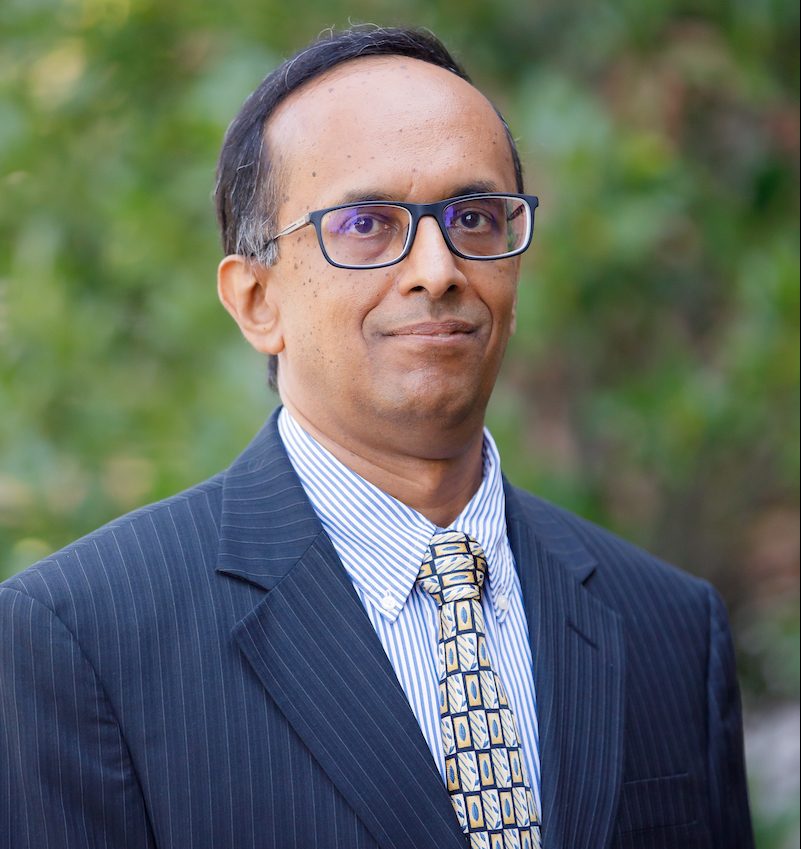
Dr. Purushotham V. Bangalore serves as the James R. Cudworth Professor in the Department of Computer Science at the University of Alabama's College of Engineering and holds the position of Associate Director for the Center for Understandable, Performant Exascale Communication Systems (CUP-ECS), a Predictive Science Academic Alliance Program (PSAAP) Focused Investigatory Center. His academic credentials include: B.E. in Computer Science and Engineering from Bangalore University (1991) M.S. in Computer Science from Mississippi State University (1995) Ph.D. in Computational Engineering from Mississippi State University (2003) Dr. Bangalore's research centers on High-Performance Computing (HPC) with emphasis on designing abstraction layers for heterogeneous architectures, predictive performance modeling, and portability. His work extends to fault-tolerant message-passing middleware, exascale storage security, and reliability frameworks. Additional expertise spans data analytics, object-oriented numerical libraries, grid computing environments, and adaptive systems development through three decades of HPC and cloud computing innovation. Analysis of his 2021-2025 publications reveals dominant themes in HPC security architecture, containerization for scientific workloads, and MPI communication advancements. Key application areas include hydrological modeling (NextGen framework), GPU-accelerated communication protocols, and data provenance systems for exascale platforms, reflecting interdisciplinary approaches to computational challenges. Dr. Bangalore has secured approximately $20 million in research funding as PI/Co-PI from NSF, NIH, DoE, and industry partners, resulting in over 90 peer-reviewed publications. His academic service includes editorial roles for IEEE Transactions on Parallel and Distributed Systems, MPI Forum contributions to the MPI-4.0 standard, and organization of DoD-sponsored HPC training workshops. He leads research initiatives through CUP-ECS while maintaining active participation in the MPI Forum. His team develops frameworks for exascale communication systems with focus on security posture analysis, performance portability, and fault tolerance in next-generation computing environments.
Zoë Woodمشاهده پروفایل
دانشیار
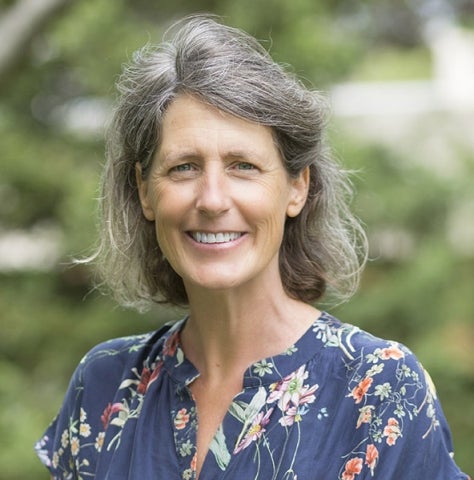
Zoë J. Wood is an Associate Professor in the Computer Science Department within the College of Engineering at California Polytechnic State University (Cal Poly). She leads the International Computer Engineering Experience (ICEX) program and serves as faculty advisor for Women Involved in Software and Hardware (W.I.S.H.), a student organization supporting female computing majors. Her educational background includes a Ph.D. and M.S. in Computer Science from the California Institute of Technology. Wood co-founded the interdisciplinary minor Computing for the Interactive Arts, reflecting her commitment to bridging artistic expression with technical skills. Wood's research spans computer graphics, scientific visualization, and computer science education, with a focus on geometric modeling and underwater archaeological visualization. Her work often integrates visual arts, mathematics, and computer science, creating innovative approaches to both research and teaching. Recent projects demonstrate an increasing emphasis on socially responsible computing, diversity in STEM, and community engagement. Her scholarly output shows a clear evolution from technical computer graphics research toward educational innovation and social impact, particularly in broadening participation in computing. The most recent publications focus on socially responsible computing, Latinx student retention, and community-based learning approaches in introductory courses. Wood actively promotes diversity in computing through multiple initiatives, including advising W.I.S.H., developing inclusive curricula, and conducting research on student belonging and retention. Her work with the Computing for the Interactive Arts program empowers students to realize artistic visions through coding. She teaches a range of courses from introductory computing with an arts focus (CSC 123) to advanced computer graphics (CSC/CPE 471), computer animation (CSC/CPE 474), and graduate-level computer graphics (CSC 572). Her teaching philosophy emphasizes creative approaches to computational thinking and technical skill development.

Laura Deeمشاهده پروفایل
استادیار مدعو
Laura Dee is an Adjunct Assistant Professor jointly affiliated with the University of Minnesota and the University of Colorado Boulder . She is a conservation and global change ecologist whose work sits at the intersection of ecology, economics, and decision science. Education Ph.D. in Environmental Science & Management, University of California Research Focus Laura’s research aims to understand how ecosystems provide benefits to people under accelerating global change, and how management can be adapted to sustain both biodiversity and ecosystem services. She uses statistical and mathematical modelling to tackle questions such as: How biodiversity and species interactions drive ecosystem services. How climate variability and extremes alter service provision. How to design conservation strategies that remain robust under uncertainty. Her work spans forests, grasslands, and marine & coastal systems from local to global scales. Publication Trends Across 15 recent publications (2012–2018), Laura has advanced understanding of biodiversity–ecosystem-function relationships, climate impacts on fisheries, ecosystem-service valuation, and decision-analytic conservation planning. Studies appear in high-impact journals such as Ecology Letters , Journal of Applied Ecology , and Global Change Biology , reflecting a strong interdisciplinary footprint across ecology, conservation, and environmental economics. Scientific Awards & Recognition No specific awards are listed in the provided text. Students, Grants & Collaborations No individual students are named, but Laura collaborates extensively with international teams; co-authors include researchers from Australia, France, Sweden, and the USA. Grant details are not provided. Labs & Teams Laura leads an active research group that integrates global change ecology, community ecology, and conservation science, employing quantitative tools from multiple disciplines to support evidence-based environmental management.
- Data Visualization
- Visual Analytics
- Big Data Analysis
- +۱۲ مورد دیگر
Professor Jang Yoon is a faculty member in the Department of Computer Engineering at Sejong University, South Korea. He currently holds the position of Daeyang Distinguished Professor and leads the Data Visualization Lab. His academic journey includes postdoctoral research at the Swiss National Supercomputing Center (2007-2009), ETH Zurich (2009-2011), and Purdue University (2011-2012). His educational background includes a Bachelor's degree from Seoul National University in Electrical Engineering (2000), and Master's and Doctoral degrees from Purdue University in Electrical and Computer Engineering (2002 and 2007). His academic progression at Sejong University shows his appointment as Assistant Professor (2012-2016), Associate Professor (2016-2022), and Professor (2022-present). Professor Jang's research spans multiple domains within data science and visualization, with primary focus on data visualization, visual analytics, and their applications in various domains. His work bridges theoretical computer science with practical applications in traffic analysis, healthcare, and smart city infrastructure. He has developed innovative techniques for spatiotemporal data visualization, volume rendering, and causal analysis in complex datasets. His recent publications (2023-2025) demonstrate a strong focus on integrating deep learning with visualization techniques, particularly in traffic analysis, volume rendering, and large language model interpretability. His work shows a clear trajectory toward combining causal inference with visual analytics, applying these methods to urban traffic systems, structural health monitoring, and public relations analysis. Professor Jang has served in numerous leadership roles in major visualization conferences including IEEE VIS, IEEE PacificVis (as General Chair in 2023), EuroVis, and HCI Korea conferences. His service contributions include program committee memberships and chair positions across multiple prestigious conferences in the visualization field. His laboratory work focuses on practical applications of visualization techniques with numerous patents registered in Korea. His research has resulted in multiple practical systems for traffic analysis, VR sickness detection, data quality improvement, and eye-tracking applications. The lab maintains strong industry connections through applied research projects addressing real-world problems.
Dr. Ji Sun Shin is a Professor in the Department of Computer and Information Security at Sejong University, where she has been faculty since 2012. Her research bridges theoretical cryptography with practical security applications across multiple domains including IoT, smart devices, and critical infrastructure systems. Education: Ph.D. in Computer Science, University of Maryland at College Park (2009) B.S. in Computer Engineering, Seoul National University (2001) Professor Shin's research focuses on applied cryptography and network security with particular expertise in authentication systems. Her work spans password-based key exchanges , keystroke dynamics authentication , privacy-preserving protocols , and IoT security . She has made significant contributions to provably secure cryptographic protocols including HB/HB+ protocols, forward-secure identity-based signatures, and functional signatures. Her research addresses both theoretical foundations and real-world implementation challenges in cryptographic systems. Analysis of her recent publications reveals a strong trend toward privacy-preserving techniques in distributed systems, with significant work in federated learning security, blockchain applications for IoT, and efficient cryptographic implementations. Her research demonstrates consistent evolution from theoretical cryptography toward practical security solutions for emerging technologies like smart grids, drone systems, and smartphone authentication. Research Leadership: Principal Investigator of the Information Security Lab at Sejong University Active research collaboration across multiple domains including smart cities, healthcare systems, and critical infrastructure security Extensive patent portfolio with numerous domestic and international patents related to location verification, blockchain security, and authentication systems Professor Shin's laboratory focuses on practical security implementations with research areas spanning smartphone security, short-range communication protocols, IoT authentication mechanisms, and smart car security systems. Her team develops fundamental security technologies that address both theoretical security guarantees and real-world usability constraints.
- Modelling and Requirements Engineering
- Systems Architecture
- Process and Project Management
- +۵ مورد دیگر
Ricardo J. Machado is a Full Professor of Information Systems Engineering at the University of Minho, where he founded this disciplinary area. He currently serves as President of the CCG/ZGDV Institute and has held strategic roles including Vice-Rector of UMinho. He is a member of the Board of GraphicsVision.AI, the leading academic network in Europe in computer graphics and vision. DEng in Electrical and Computer Engineering (U.Porto) MSc and PhD in Computer Science and Engineering Dr. Habil in Information Systems Engineering (UMinho) Certified Software Product Manager (ISPMA) Cybersecurity and Crisis Management programme from Portuguese National Defence Institute Professor Machado's research focuses on modeling and requirements engineering, systems architecture, process and project management, information semantics, ontologies, and cognitive computing. He has developed several methods and tools including the 4SRS method and the shobi-PN meta-model for requirements analysis, software architecture, ontology computation, and project portfolio management. His work bridges theoretical frameworks with practical industrial applications across various sectors. His recent publications demonstrate a strong trend toward digital transformation across multiple domains including smart cities, healthcare systems, industry 4.0, and higher education. The research shows increasing integration of semantic interoperability, logical architecture design, and data management frameworks. His work consistently addresses the challenges of aligning business processes with technical implementations while focusing on practical applications in real-world settings. IEEE MGA Achievement Award APLOG Excellence Award TAA Textbook Award nomination by Springer Professor Machado has supervised nearly one hundred PhD and MSc students, many of whom now hold leadership roles in academia and industry. He has led over 50 R&I projects funded by FCT, ANI, IAPMEI, and the European Union, partnering with institutions including Carnegie Mellon University, MIT, Fraunhofer, and Bosch. His project portfolio spans requirements engineering, systems architecture, and digital transformation initiatives across multiple sectors including healthcare, manufacturing, and smart cities. He founded the SEMAG research group at ALGORITMI and the EPMQ department on Software Engineering and Intelligent Data at CCG/ZGDV. As Director of the ALGORITMI Research Centre, he coordinated UMinho's participation in strategic initiatives such as CEDT, CMU | Portugal, EIT Digital, EUHubs4Data, and Gaia-X Portugal. He also co-founded DTx and ProChild CoLabs, and TICE.pt and CSCP Clusters.
Hanbaek Lyuمشاهده پروفایل
استادیار
Hanbaek Lyu is an Assistant Professor in the Department of Mathematics at the University of Wisconsin-Madison, with an affiliation in the Department of Computer Science and membership in the Institute for Foundations of Data Science. His research spans discrete probability, matrix factorization, and machine learning, focusing on large discrete systems including interacting particle systems, networks, and structured random matrices. His educational background includes: Ph.D. in Mathematics, The Ohio State University (2018); Thesis: "Combinatorial and probabilistic aspects of coupled oscillators" (Advisor: David Sivakoff) B.S. in Mathematics, Seoul National University Lyu's research bridges theoretical probability and practical machine learning, with emphasis on optimization for dependent data and complex systems. His work develops foundational algorithms for matrix/tensor factorization while exploring synchronization phenomena in oscillator networks and phase transitions in particle systems. Recent publications highlight interpretable models for biological data and rigorous convergence guarantees for nonconvex optimization. Analysis of his 15 most recent publications reveals three dominant threads: (1) optimization theory for constrained nonconvex problems applied to dictionary learning, (2) interacting particle systems and random matrix theory with combinatorial aspects, and (3) interpretable latent models for network dynamics and genomics. His work consistently combines probabilistic methods with computational applications. Lyu leads two active NSF grants: DMS-2206296 (2022-2025): "Online Dictionary Learning for Dependent and Multimodal Data Samples: Convergence, Complexity, and Applications" DMS-2010035 (2020-2023): "Combinatorial and Probabilistic Approaches to Oscillator and Clock Synchronization" He currently mentors five doctoral students across Mathematics and Computer Science departments, organizes UW-Madison's probability seminar, and collaborates with over 30 researchers including Janko Gravner, Lionel Levine, and Wenpin Tang on interdisciplinary projects spanning genomics, network science, and statistical physics.
Aleksandr Zagarskikh is an Associate Professor at the Game Development School of ITMO University, specializing in virtual reality, scientific visualization, and high-performance computing. He has led projects in quantum chemistry visualization, flight simulators, and urban simulation technologies. Developed real-time graphics systems for ultra-realistic image synthesis Created high-performance network protocols for distributed visualization Current research focuses on big data decision-making in finance and multiscale urban modeling His work spans predictive modeling, GPU optimization, and cloud-based infrastructure visualization, with publications in Procedia Computer Science. He teaches courses in game technologies, VR, and scientific computer graphics.

Marc Jochen Uetz is a Full Professor at the Mathematics of Operations Research department and affiliated with the Digital Society Institute. His research spans operations research and computer science, focusing on scheduling, game theory, and optimization problems. PhD in Mathematics from Technische Universität Berlin Research Interests: Active in algorithmic game theory and stochastic scheduling, he investigates equilibrium models, price of anarchy, and efficient resource allocation in transportation and network systems. His work contributes to UN Sustainable Development Goals related to education and infrastructure. Publication Trends: Recent work combines game theory with two-stage facility location, network routing, and stochastic scheduling of Bernoulli-type jobs. Key keywords include Nash equilibrium, approximation algorithms, and dynamic programming. Scientific Recognition: Excellent Reviewer Award (2017) Teaching Award (2018) Academic Activities: Currently chairs Platform Wiskunde Nederland, contributes to editorial work, and delivers invited talks at international conferences like IJCAI 2024.
Alex Tongمشاهده پروفایل
استادیار
Alex Tong is an incoming Assistant Professor at Duke University (as of 2025) and will join Aithyra in Vienna as a Principal Investigator. Previously, he completed postdoctoral research at Mila under Yoshua Bengio and a visiting postdoc at Oxford with Michael Bronstein. Education : PhD (2021) and MPhil (2020) in Computer Science from Yale University; BS/MS (2017) from Tufts University Research Interests span generative modeling , deep learning , optimal transport , and graph signal processing applied to protein design and single-cell biology . His work bridges mathematical formalism (e.g., SE(3) flows, Wasserstein manifolds) with biological discovery. Publication Trends (2023-2025) focus on diffusion models for protein structure prediction , optimal transport in single-cell analysis , and geometric machine learning for molecular dynamics . Collaborations include labs like Mila, Oxford, and Yale. Awards : Best Paper (Gen Bio @ ICML 2025), Outstanding Paper (DELTA @ ICLR 2025), Best Student Paper (IEEE MLSP 2020)
فقط ۷۵۰ نتیجه اول نمایش داده میشود. برای رسیدن به نتایج دقیقتر، جستوجو را با فیلترها محدودتر کنید.