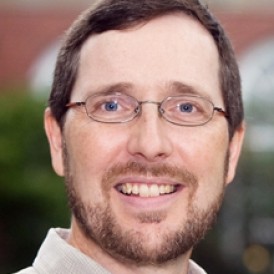
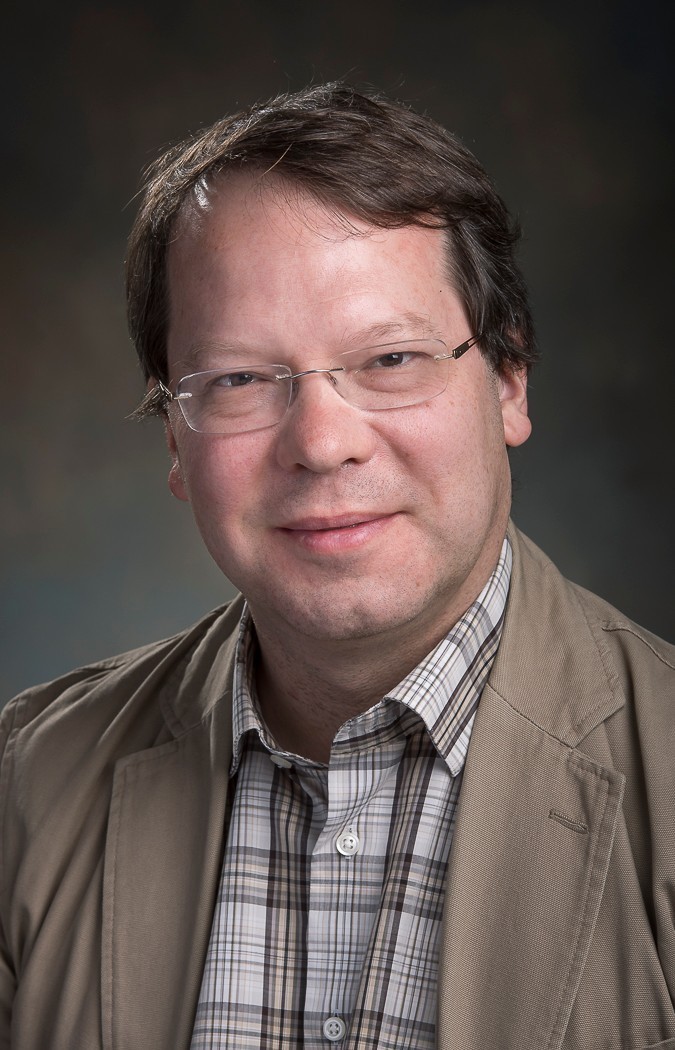
Professor Martin van Bommel is a faculty member in the Department of Mathematics and Statistics at St. Francis Xavier University. His research focuses on graph theory, particularly grid graphs and chessboard-related problems. He holds a Ph.D. and has worked on eternal domination strategies for m x n grids, recently solving 3 x n cases and currently investigating 5 x n grids. His work also explores queen's domination variants and two-player strategy games involving chess pieces. Additionally, he studies object-oriented database modeling and retrieval. Education: Ph.D. (specific institution and year not specified) Research interests include combinatorial optimization, graph algorithms, and applications of chess problems to mathematical theory. His recent studies combine classical n-Queens problem extensions with dynamic guard movement strategies in grid structures. Collaboration on two-player game theory applications of domination problems represents a novel direction in his work. No scientific awards or grants are explicitly listed in the provided text. Advising activity and lab affiliations remain unspecified.
Gabriel Spadon is an Assistant Professor in the Faculty of Computer Science at Dalhousie University, Halifax, Canada. He leads the MAPS Lab (Modeling and Analytics on Predictive Systems), focusing on spatiotemporal analytics, network science, and machine learning. His work is part of the Big Data Analytics, AI & Machine Learning research cluster. Education: PhD in Computer Science and Computational Mathematics, University of São Paulo (USP), 2021 MSc in Computer Science and Computational Mathematics, University of São Paulo (USP), 2017 BSc in Computer Science, São Paulo State University (UNESP), 2015 Research Interests: Gabriel Spadon’s research lies at the intersection of data science, machine learning, and geoinformatics . He specializes in spatiotemporal forecasting , complex network mining , and trajectory modeling , particularly in maritime and urban environments. His work integrates physics-informed AI, graph-based learning, and environmental data to improve predictive accuracy and decision support. Key domains include vessel movement prediction, environmental monitoring, and urban intelligence. Recent Publication Trends: His latest publications (2024–2025) focus on maritime mobility , using AIS data and physics-informed neural networks (PINNs) for vessel trajectory forecasting. He applies deep learning, clustering, and probabilistic fusion to model complex, multi-modal movement patterns. Other themes include fishing activity detection, port network analysis, and AI for public health and climate matching. Scientific Awards: Advising and Grants: Dr. Spadon supervises multiple graduate students and research assistants in the MAPS Lab, working on mobility data mining, physics-informed AI, and geospatial analytics. His research is supported by major grants from the Ocean Frontier Institute (OFI) , Canadian Space Agency (CSA) , Mitacs , and IMT Atlantique . He leads projects such as smartWhales , AISViz , and Physics-Informed Mobility Forecasting , involving international collaborations with institutions in Brazil and France. Labs and Teams: He is the Director of the MAPS Lab , which develops cutting-edge computational methods for predictive systems. The lab collaborates with the smartWhales initiative (DHI, WSP, Fisheries and Oceans Canada), MERIDIAN , and the Institute for Big Data Analytics . His team includes PhD and MCS students working on AI, data mining, and signal processing for real-world ocean and urban challenges.
Keng C. Chou is a Professor in the Department of Chemistry at the University of British Columbia (UBC), Faculty of Science. His research spans interdisciplinary fields combining chemistry, physics, and biomedical engineering. Education: PhD in Physics (2001) and MSc (1994) from University of California, Riverside; BS in Physics (1989) from Tunghai University Research Focus: Machine Learning for Chemical Analysis: Integrating AI algorithms with chemical analytical methods for data interpretation Optical Microscopy Development: Creating super-resolution microscopes (e.g., 3D structured illumination) for studying biological systems like virus-host interactions and cardiomyocyte receptors Surface Chemistry Investigations: Studying water interfaces for ice nucleation and oil sands extraction processes using nonlinear optical spectroscopy Publication Trends: Recent work (2018-2023) emphasizes super-resolution microscopy techniques, machine learning applications in chemical analysis, and environmental/industrial surface chemistry. Key areas include Nipah virus assembly, cardiac calcium signaling, and bitumen-water interfacial dynamics.
Christopher Mark Overall is a Professor in the Department of Oral Biological & Medical Sciences within the Faculty of Dentistry at the University of British Columbia (UBC). His research spans proteomics, terminomics, and protease biology with significant contributions to the Human Proteome Project. He supervises graduate students in Bioinformatics, Craniofacial Science, and Genome Science and Technology programs. His research focuses on proteolytic mechanisms in viral infections, inflammation, and immunodeficiency. Key areas include viral protease functions (particularly SARS-CoV-2), host-pathogen interactions, and the development of proteomic methodologies like TAILS (Terminal Amine Isotopic Labeling of Substrates). His work integrates 'One Health' perspectives across human, animal, and environmental systems. Analysis of his recent publications reveals dominant themes in viral protease evolution (SARS-CoV-2), bacterial membrane proteases, and strategic AI applications in proteomics. His work frequently appears in high-impact journals and contributes to major international consortia like HUPO. Overall maintains active research collaborations through UBC's Centre for Blood Research, Life Sciences Institute, and Vancouver Prostate Centre. His laboratory develops cutting-edge proteomic technologies for substrate identification and has received continuous funding for protease-related research.
Tamer Özsu is a University Professor at the David R. Cheriton School of Computer Science, University of Waterloo, where he previously served as Director (2007-2010) and currently holds the role of Associate Dean of Research. He is also a Distinguished Visiting Professor at Tsinghua University. Professor Özsu's research spans distributed data management, graph/RDF systems, and database fundamentals. His current work focuses on: Distributed graph processing algorithms SPARQL query optimization for RDF systems Streaming graph analytics Indexing techniques for modern hardware Distributed database architectures He has authored the seminal textbook Principles of Distributed Database Systems and co-edited the Encyclopedia of Database Systems . As founding Editor-in-Chief of ACM Books, he has shaped computing literature. His recent publications demonstrate continued innovation in graph partitioning, streaming graph algorithms, and scalable RDF processing. Özsu maintains active research leadership in database systems with over 30 years of influential contributions.
Oliver Schulte is a Professor and School Director at the School of Computing Science, Simon Fraser University. His research focuses on Machine Learning, particularly in relational databases and computational game theory. He holds a Ph.D. from Carnegie Mellon University (1997) and has held academic roles since 1997, including Adjunct Professorships at the University of Alberta. His work includes foundational contributions to learning theory, generative graph models, and sports analytics. Awards include the NSERC Discovery Award and Best Paper Awards in AI conferences. He leads the Structured Machine Learning Lab and collaborates with institutions like SportLogiq. His teaching spans database systems, AI, and societal impacts of technology. Education: Ph.D. (Logic & Computation, CMU, 1997), M.Sc. (CMU, 1993), B.Sc. (Computing Science, U Toronto, 1992). Research Interests: Machine learning for relational data, Bayesian networks, reinforcement learning in sports, computational game theory, and formal epistemology. Recent work includes subgraph prediction, rule-enhanced graph learning, and privacy-aware graph generation. Awards & Grants: Over $500K NSERC Strategic Project Award (2020s), Best Paper Awards, and leadership in grants with industry partners like SportLogiq. His research bridges theory and applications, including hockey analytics and predictive analytics labs.
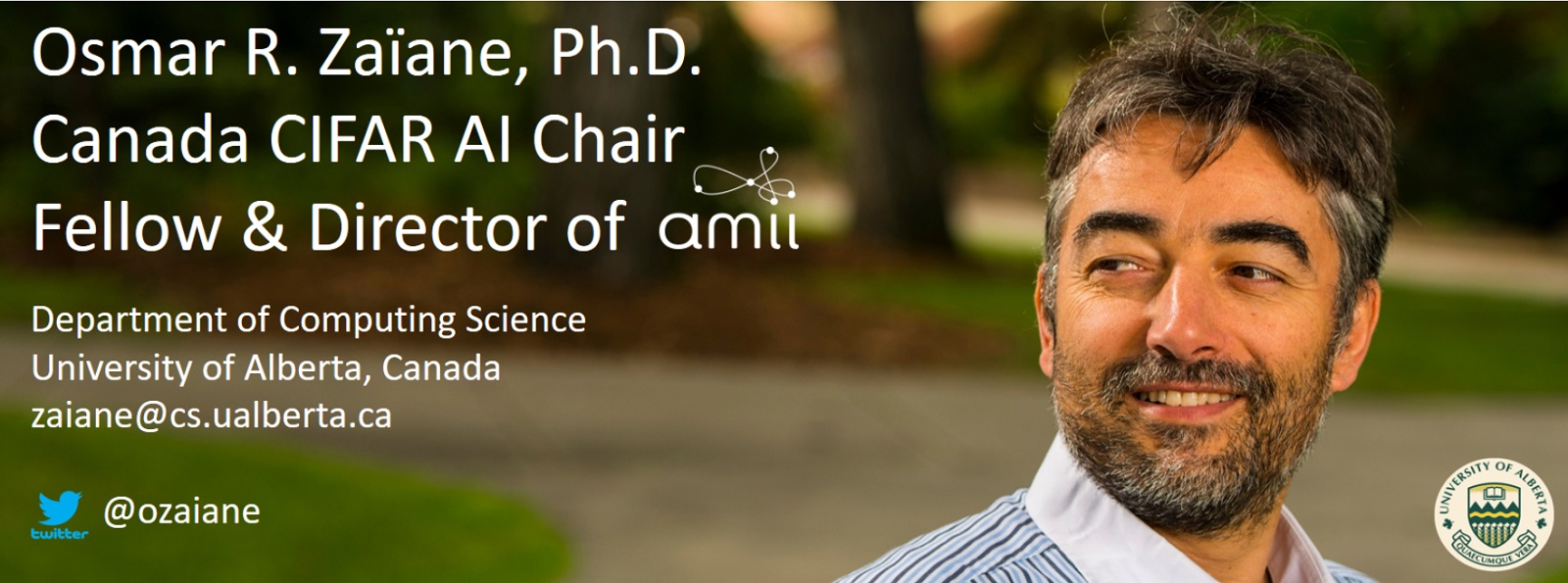
Osmar Zaiane is a Professor in the Department of Computing Science at the University of Alberta's Faculty of Science. With over 20 years of service at the university, he has established himself as a leading researcher in data mining and machine learning with applications across multiple domains. His educational background includes a Ph.D. in Computer Science from Simon Fraser University (1999), a Master's in Computer Science from Laval University (1992), a Master's in Electronics from Institut National des Sciences et Techniques Nucléaires and Paris XI University (1989), and a Bachelor's in Computing Science from Institut Supérieur de Gestion, Université de Tunis (1988). Zaiane's research focuses on discovering patterns in large complex datasets with practical applications. His primary research interests include data mining, machine learning, social network analysis (particularly community mining and link prediction), and precision health applications. He has made significant contributions to associative classifiers, class imbalance learning, explainable AI, and educational data mining. His work spans multiple application domains including healthcare (particularly for Alzheimer's disease prediction, diabetic retinopathy grading, and lung cancer detection), social media analysis, and natural language processing. His publication record shows a strong focus on medical AI applications, with numerous recent papers on medical image segmentation, brain network analysis, and diagnostic systems. His work increasingly integrates large language models and transformer architectures with traditional machine learning approaches. Best Paper Award at IEEE/ACM Int. Conf. on Advances in Social Network Analysis and Mining (2023) Best Paper Award at International Symposium on Foundations and Applications of Big Data Analytics (2022) Best Paper Award at International AAAI Conference on Web and Social Media (2019) Best Paper Award at 29th International Conference on Database and Expert Systems Applications (DEXA) (2018) Zaiane has supervised over 80 graduate students during his career at the University of Alberta. His research has been supported by numerous grants, particularly in the areas of precision health and educational data mining. He maintains an active research lab focusing on applied machine learning with strong industry and healthcare partnerships. His current work explores the intersection of traditional machine learning techniques with emerging large language models and vision-language models for healthcare applications.
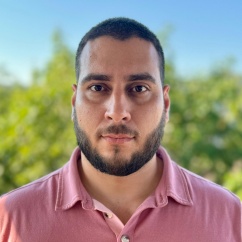
Dr. Omid Isfahani Alamdari serves as Assistant Professor in the Master of Data Analytics program at the University of Niagara Falls Canada, bringing expertise in mobility data analytics and big data systems developed through international research experience. Education PhD in Computer Science, University of Pisa, Italy MSc in Computer Engineering - Software (Distributed Systems), Iran University of Science and Technology BSc in Computer Engineering - Software, Urmia University, Iran Research Focus His research centers on developing efficient trajectory analysis methods and advanced indexing techniques for massive mobility datasets. Key applications include sustainable transportation solutions (electric vehicle adoption, carpooling optimization) and explainable event prediction systems combining historical patterns with real-time data streams. He actively explores generative AI applications for mobility challenges and time series analysis. Publication Trends Publications from 2018-2023 reveal consistent contributions to transportation analytics, with dominant themes in trajectory processing (40%), sustainable mobility (30%), and prediction systems (30%). His work appears in top transportation venues (IEEE Transactions on ITS) and data science conferences (IEEE BigData, SIGSPATIAL), featuring strong international collaboration patterns. Academic Activities Teaching: Agile Software Development, Python for Data Analytics, SQL Databases, and Data Analytics Case Studies Research: Currently leads EU-inspired projects on sustainable mobility and event prediction Specialization: Trajectory analysis, spatio-temporal indexing, EV simulation, graph embedding