Laurent Charlin is an Associate Professor at HEC Montréal and holds an adjunct appointment in Computer Science at Université de Montréal. His research focuses on machine learning for decision-making with applications in recommender systems, reinforcement learning, and optimization.
Mariam Adedoyin-Olowe is a Lecturer and Programme Leader for the MSc Artificial Intelligence at Birmingham City University . Her research focuses on Data Mining, Data Science, and Artificial Intelligence, particularly in analyzing social media data for event detection and decision-making support. Doctorate in Computing Science from Robert Gordon University First degree from University of Portsmouth Research Interests center on applying data mining techniques to Twitter data for tracking real-world events, sentiment analysis, and customer segmentation. Her work bridges computational methods with practical applications in politics, sports, and healthcare domains. Key Publications include studies on: Transformer-based transfer learning for cross-lingual news events AI-driven mental fatigue detection systems Temporal clustering methods for social media event resolution Deep learning approaches for sound classification Rule dynamics frameworks for political event detection Academic Affiliations include membership in BCU's Data Mining Group and Data Analytics & Artificial Intelligence Research Group, as well as former involvement with RGU's Data Science and Information Retrieval groups. She regularly reviews for international conferences and journals.
Dr. Aamna AlShehhi serves as an Assistant Professor in the Department of Biomedical Engineering and Biotechnology at Khalifa University, where she has pioneered AI-driven healthcare solutions since joining in 2020. Her interdisciplinary expertise bridges electrical engineering, computer science, and clinical medicine through innovative research collaborations with MIT, Imperial College London, and Novartis. Her educational foundation includes: Bachelor's in Software Engineering, United Arab Emirates University (2009) Master's in Computing and Information Science, Masdar Institute (MIT collaboration) (2013) PhD in Interdisciplinary Engineering, Masdar Institute (MIT collaboration) (2017) Dr. AlShehhi's research centers on artificial intelligence for healthcare transformation , with emphasis on neurodegenerative disease prediction, rare disease diagnostics, and wearable-based gait analysis. She develops constrained deep learning models for Alzheimer's biomarker discovery, self-supervised frameworks for emotion recognition using smartphone data, and physics-informed neural networks for biomechanical analysis. Her work integrates multimodal data including fMRI, genomic sequences, and real-world behavioral metrics to address critical gaps in dementia screening, cancer detection, and mental health monitoring. Analysis of her 2023-2025 publications reveals three dominant trends: (1) Explainable AI architectures for clinical decision support, particularly constrained graph neural networks analyzing comorbidity networks in Alzheimer's; (2) Multimodal sensor fusion systems combining wearables, keystroke dynamics, and fMRI for neurological assessment; (3) Self-supervised learning approaches enabling robust performance with limited medical data. Her work consistently targets real-world clinical deployment through portable systems like smart gait analyzers and remote depression screening tools. Dr. AlShehhi actively mentors the next generation of biomedical engineers: Ferial J. Abuhantash (Ph.D. candidate) Khalid Ahmed Abdulla (Master's student) Her research is supported through strategic partnerships with Novartis Institute for Biomedical Research and collaborative grants enabling AI-driven drug repurposing for dementia and genomic cancer detection. She leads projects analyzing skin lesions for melanoma screening and developing deep learning models for early-stage cancer detection using genomic data. As a core member of Khalifa University's Healthcare Engineering Innovation Group , she directs a multidisciplinary team including Postdoctoral Fellow Dr. Sherlyn Jemimah and Research Assistant Chahd Maher Musthafa Chabib. Current initiatives focus on creating deployable AI systems for clinical settings, with ongoing work on portable gait assessment tools for rehabilitation centers and real-time emotion recognition platforms for mental health monitoring.
Dongyi Wang is an Assistant Professor in the Department of Biological and Agricultural Engineering at the University of Arkansas, where he directs the Smart Agriculture and Food Engineering (SAFE) Lab. His work bridges advanced technologies like artificial intelligence, robotics, and machine vision with agrifood manufacturing to enhance product quality, safety, and worker welfare. Ph.D. in Bioengineering from the University of Maryland, College Park B.S. in Electrical and Computer Engineering from Fudan University Visiting experience at The Chinese University of Hong Kong Research interests span smart agrifood manufacturing , robotics , machine vision , and artificial intelligence , with applications in crop monitoring, food safety, and healthcare. His lab develops solutions like automated defect detection, pathogen sensing, and sustainable processing systems. Article analysis reveals a focus on AI-driven agricultural automation , hyperspectral imaging , robotic manipulation of bio-products , and food safety innovations . Recent works include YOLO-based tomato defect segmentation, E. coli biosensing, and UAV-based blackberry monitoring. Awards & Memberships College of Engineering Dean’s Award of Excellence Rising Star Research Award (UARK) Outstanding Mentor Award (UARK) Professional memberships in ASABE and IEEE As an educator, he teaches instrumentation and artificial intelligence in agrifood manufacturing . The SAFE Lab, funded by USDA NIFA, NSF, and federal/local agencies (> $7M), prioritizes workforce development in AI/robotics for agrifood industries.
Faiz Currim serves as Professor of Practice in Management Information Systems and Assistant Director of the INSITE: Center for Business Intelligence and Analytics at the University of Arizona's Eller College of Management. He joined the institution in 2011 after six years at the University of Iowa, having earned his PhD from the University of Arizona in 2004. His educational background includes: PhD in Management Information Systems, University of Arizona (2004) Dr. Currim's research focuses on data modeling, security, privacy, and specialized management of healthcare, temporal, and spatial data systems. His work bridges database theory with practical applications in urban mobility, patient care, and workplace wellbeing through advanced techniques including deep learning, network science, and big data analytics. Current projects address real-world challenges in healthcare analytics and smart city infrastructure. Analysis of his recent publications reveals strong trends in applying artificial intelligence to healthcare cost prediction and urban transportation systems, with consistent use of heterogeneous data sources and machine learning frameworks across diverse domains from patient monitoring to bike-sharing optimization. His scientific recognition includes: Best Paper Award at IEEE 2nd International Smart Cities Conference (2016) Dr. Currim directs the INSITE center's initiatives in business intelligence while teaching core courses including Enterprise Data Management and Business Data Communications. His academic leadership spans curriculum development in data security, XML schema, and spatial database applications, with active collaboration across healthcare and urban planning domains. He maintains leadership roles in professional organizations including the Association for Information Systems (AIS), INFORMS, and Association for Computing Machinery (ACM), driving interdisciplinary research through the INSITE center's industry partnerships and analytics projects.
Paul Boniol is a researcher at Inria, affiliated with the VALDA project-team—a collaboration between Inria Paris, École Normale Supérieure, and CNRS. His work focuses on time series analytics, anomaly detection, and machine learning applications. Ph.D. in Computer Science and Applied Mathematics (University of Paris, EDF R&D) Visiting Ph.D. at University of Chicago Education: Grenoble INP ENSIMAG Engineering School Research interests span: Unsupervised anomaly detection in large time series Time series management systems Machine learning for predictive maintenance Graph-based time series analysis Explainable AI for temporal data Recent publications emphasize advancements in: Weakly supervised anomaly localization Graph embedding techniques Model selection frameworks Interactive visualization tools Smart meter data analysis Scientific recognition: Paul Caseau Thesis Prize 2022 Lambdamu Congress Research-Industry Prize 2022 BDA & INFORSID Ph.D. Prizes 2022
Mauro Maggioni is a Professor in the Departments of Mathematics and Applied Mathematics and Statistics at Johns Hopkins University, holding the Bloomberg Distinguished Professorship. His research bridges theoretical mathematics with data science applications across physical and biological systems. His educational background includes: B.S. in Mathematics from Universitá degli Studi in Milan, Italy Ph.D. in Mathematics from Washington University in St. Louis Dr. Maggioni develops mathematical frameworks for high-dimensional data analysis using multiscale techniques from Harmonic Analysis and Approximation Theory. His work enables scalable algorithms for molecular dynamics simulation, agent-based system modeling, hyperspectral imaging, and reinforcement learning, emphasizing interpretability and generalizability in scientific discovery. His major scientific awards include: Popov Prize in Approximation Theory (2007) NSF CAREER Award (2008) Sloan Fellowship (2008) Fellow of the American Mathematical Society (2013) He mentors a diverse group of researchers including Dan Popescu, Jason Miller, Patrick-Martin, Jin Zhou, Christian Kummerle, Wenjing Liao, Stas Minsker, Nate Strawn, Mark Iwen, James M. Murphy, Anna V. Little, and Jason D. Lee. His research is supported by the National Science Foundation and Simons Foundation, including a 2020-2021 Simons Fellowship during sabbatical. His Johns Hopkins research group actively recruits graduate students and postdocs for projects in stochastic dynamical systems, statistical signal processing, and machine learning, maintaining strong collaborations with institutions like the Flatiron Institute.
Professor Damiano Varagnolo is affiliated with the Department of Engineering Cybernetics at the Norwegian University of Science and Technology (NTNU), where he conducts research spanning control systems, robotics, power systems, and data-driven modeling. His work bridges theoretical advances with practical applications in underwater vehicles, medical rehabilitation, and energy infrastructure. His research focuses on: Development of formation control algorithms for autonomous underwater vehicles (AUVs) and snake robots Transient stability enhancement for grid-forming converters in renewable energy systems Data-driven modeling of physiological signals for wheelchair propulsion and industrial processes Distributed optimization for underwater communication networks Recent publications (2024-2025) demonstrate strong emphasis on: Underactuated vehicle control using hand position concepts Energy expenditure estimation through physiological signal processing Consensus protocols for JANUS-based underwater networks Educational innovation through control-themed outreach initiatives like the Advent Calendar project He actively collaborates with NTNU colleagues across engineering disciplines and contributes to curriculum development through graph-theoretic approaches for educational coherence.
Dr. Mary Lauren Benton is an Assistant Professor in the Department of Computer Science at Baylor University's College of Engineering and Computer Science. She holds a Ph.D. and M.S. in Biomedical Informatics from Vanderbilt University (2020, 2018) and a B.S.I. in Bioinformatics from Baylor University (2015). Education: Ph.D. (Vanderbilt, 2020), M.S. (Vanderbilt, 2018), B.S.I. (Baylor, 2015) Her research focuses on computational biology and gene regulation, particularly how DNA sequences influence genome function and human disease risk through integrated datasets. Recent work explores enhancer-gene interactions, epigenetic mechanisms, and the application of graph neural networks to genomic problems. Selected publications highlight interdisciplinary trends across genomics (e.g., Cis-regulatory landscapes , CTCF motif accessibility ) and computer science (e.g., Dynamic graph attention , Node classification ).
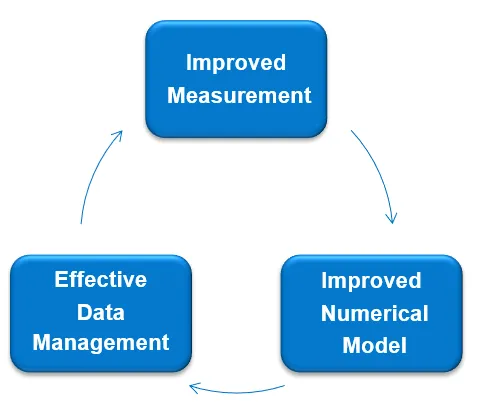
Zhongqi Liu, M.Sc., is a researcher at the Chair of Thermodynamics (Prof. Dongsheng Wen) at the Technical University of Munich. His work focuses on integrating machine learning with experimental heat transfer analysis for subcooled flow boiling applications. University: Technical University of Munich Department: Chair of Thermodynamics Academic Rank: Researcher Research interests include Heat Transfer , Machine Learning , Subcooled Flow Boiling , and Energy Systems . His projects aim to enhance experimental data processing and critical heat flux prediction using data-driven methods, as seen in the Boiling Image Dataset . Recent publications span biomedical imaging, cancer phototherapy, and nanotechnology, highlighting interdisciplinary applications of machine learning and optical imaging. Notable work includes optoacoustic dyes , photodynamic therapy , and nanocarrier development .
Holger Caesar is a tenured Assistant Professor at Delft University of Technology (TU Delft) in the Intelligent Vehicles Lab . He leads research on scalable approaches for autonomous vehicle perception, prediction, and data annotation, with a focus on sensor fusion, domain adaptation, and minimal supervision. His work has been cited over 15,000 times. Education PhD in Computer Vision, University of Edinburgh Prior studies at KIT Karlsruhe, EPF Lausanne, and ETH Zurich Research Interests span autonomous driving perception, weakly supervised learning, novel view synthesis (NeRFs), diffusion models, and collaborative perception. He emphasizes reducing reliance on manual annotations through active learning and partial labeling techniques. Recent Publications include work on 4D Gaussian Splatting, camera-radar fusion, open-set scene graph generation, and safety benchmarking. These reflect trends toward multi-modal perception, robust sensor fusion, and foundation models for scalable autonomous systems. Scientific Awards ELLIS Europe Scholar (2024) TU Delft Cohesion Grant (100k EUR, 2024) Climate Action Grant (30k EUR, 2024) TKI High Tech Systems Grant (502k EUR, 2022) AiNed XS Grant (80k EUR, 2023) Argoverse Scene Flow Challenge Winner (unsupervised track, 2024) Advising & Grants include EU Horizon funding for the MOSAIC project (1 PhD and 1 Postdoc, 2024), EU KDT Cynergie4MIE grant (450k EUR, 2024), and industrial collaborations with Bosch, Motional, and partners across Europe. Labs & Teams include the Intelligent Vehicles Lab at TU Delft and founding roles in Motional's Data Annotation, Autolabeling, and Data Mining teams. He co-organizes workshops at ICCV, CVPR, and NCCV, and leads the ELLIS Delft Unit seminar series.
Pavel Zemcik serves as a Visiting Professor in the Computational Engineering department at the School of Engineering Sciences, Lappeenranta University of Technology (LUT). His academic work spans multiple domains within computer science with a strong emphasis on visual computing technologies. Dr. Zemcik's research interests encompass a broad spectrum of visual computing disciplines, including computer graphics, computer vision, machine vision, and image processing. His work particularly focuses on light field rendering techniques, 3D display technologies, and advanced wavelet transform applications. He has made significant contributions to GPU acceleration methods for real-time visual processing and has explored applications in both industrial settings and medical imaging. Analysis of his recent publication trends reveals a concentrated research trajectory in light field technologies and 3D display systems over the past five years. His work demonstrates increasing sophistication in handling visual quality metrics, focus management, and compression techniques specifically tailored for 3D displays. The research shows strong interdisciplinary connections between computer graphics, signal processing, and human perception studies. His scholarly output demonstrates consistent productivity across multiple high-impact venues in computer graphics and computer vision. While specific grant information isn't detailed in the available materials, his publication pattern suggests sustained research funding supporting his work in visual computing technologies.
Zhenyue Qin is a Postdoctoral Associate at the Yale School of Medicine , affiliated with the Biomedical Informatics & Data Science department. His research focuses on AI for healthcare , large vision-language models , and 3D computer vision . Prior to Yale, he worked as a Senior Researcher at Tencent XR Vision Labs , following his PhD and undergraduate studies at the Australian National University . Education: PhD in Computer Vision (2022) BS (Hon) in Computer Science (2017) His research interests span AI applications in healthcare , with specific emphasis on medical imaging , emotion recognition , and skeleton-based action analysis . He also explores graph neural networks , vision-language models , and modularity-inducing systems in evolutionary computation. Zhenyue has published in top-tier conferences and journals including CVPR , AAAI , EMNLP , and TNNLS . His recent work addresses challenges in medical dataset benchmarking , diffusion model applications , and privacy-preserving action recognition . Scientific Honors Awarded 1st Honors in Computer Science at Australian National University
Joe Haley is a Professor in the Department of Physics at Oklahoma State University, where he has been a faculty member since 2013 (tenured 2018, full professor 2023). His research focuses on experimental high energy physics through the ATLAS experiment at CERN, particularly searching for vector-like quarks and new fundamental particles that could address Standard Model limitations. Dr. Haley earned a B.S. in Physics and Astronomy from the University of Washington (2003), followed by a Ph.D. in Physics from Princeton University (2009) for DZero experiment research at Fermilab. He conducted postdoctoral work at Northeastern University (2009-2013) with the CMS experiment at CERN. His research spans collider phenomenology, including Higgs boson studies, B meson lifetime measurements, and lepton universality tests in W boson decays. He employs neural simulation-based inference techniques and advanced τ-lepton reconstruction methods to analyze data from the Large Hadron Collider. Dr. Haley actively contributes to educational initiatives through multiple grants, including the US ATLAS Summer Undergraduate Program (2012-2025) and QuarkNet programs (2012-2024). He teaches core physics courses such as University Physics I-III and specialized topics in General Relativity and Particle Physics. As a strong advocate for equity in academia, Dr. Haley engages in inclusion programs and public outreach. His work intersects with Sustainable Development Goals in quality education, reduced inequalities, and clean energy research.
Farshad Firouzi serves as an Adjunct Assistant Professor in the Department of Electrical and Computer Engineering at Duke University, where he teaches EGR 393: Research Projects in Engineering. His academic work bridges hardware and software domains with a strong emphasis on practical applications in critical systems. His research spans Edge Computing, Internet of Things (IoT), Artificial Intelligence, Machine Learning, Healthcare Systems, Chip Design, and Reliability Engineering. This interdisciplinary focus manifests in projects ranging from Parkinson's disease monitoring using edge devices to LLM-enhanced chip design and security-hardened neural networks. His work consistently addresses real-world challenges in system dependability, particularly in healthcare and biomedical contexts where failure is not an option. Analysis of his 2024-2025 publications reveals three dominant research thrusts: (1) LLM applications in hardware design (ChipMnd, Spiced), (2) Edge-based healthcare monitoring systems (freezing of gait recognition, blood glucose prediction), and (3) Security and reliability in AI/ML systems (gradient inversion defense, silent data corruption mitigation). His work demonstrates a clear trajectory toward integrating cutting-edge AI techniques with hardware-aware solutions for mission-critical applications. No scientific awards were mentioned in the source materials. The absence of student listings or grant information suggests his current role may be primarily research-focused without formal advising responsibilities. Similarly, no dedicated labs or research teams were referenced in the available documentation.