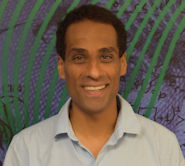
Dr. John Engbers is an Associate Professor and Undergraduate Chair in the Department of Mathematical and Statistical Sciences at Marquette University. His research focuses on Graph Theory and Combinatorics , with particular emphasis on extremal problems related to graph colorings, independent sets, and combinatorial structures. He teaches courses such as Calculus I and Foundations of Mathematics. Research Highlights Explores coloring conjectures (e.g., Tomescu’s conjecture) and extremal graph properties Analyzes maximal matchings and independent sets in structured graphs Investigates combinatorial identities and multipermutation structures Recent Work Recent publications (2023–2017) emphasize extremal graph theory and combinatorial enumeration, with applications to tree structures, H-colorings, and matrix inversion problems. His work bridges theoretical results with algorithmic and pedagogical insights. Academic Leadership Serves as Undergraduate Chair, overseeing program development and curriculum Active contributor to departmental teaching and research initiatives
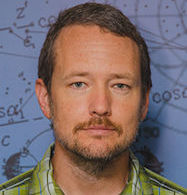
Theodore Molla is Associate Professor in the Department of Mathematics & Statistics at University of South Florida's College of Arts and Sciences. Research specializes in extremal and probabilistic graph theory, with focus on cycle decompositions, tournament tilings, and rainbow subgraphs. Funded by NSF grant for graph factor research (2018-2021). Core research areas: Hamiltonian cycle theory in directed graphs Graph tiling and factorization Rainbow subgraph problems Degree conditions for subgraph existence Publications demonstrate expertise in combinatorial proof techniques, with 65% focusing on cycle-related problems and 25% on directed graph structures. Recent work extends classical theorems to oriented and hypergraph settings.
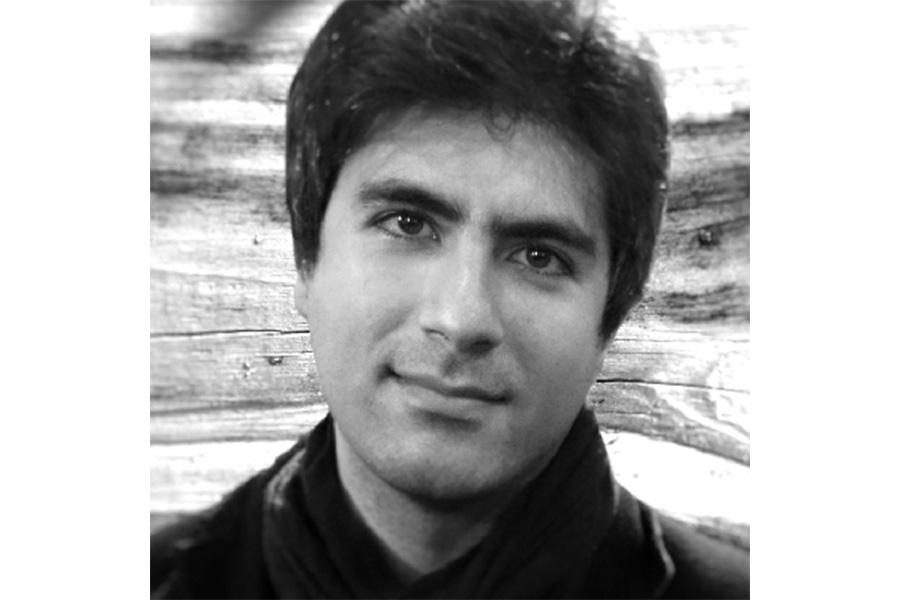
Brendan T. Nagle is Professor in the Department of Mathematics and Statistics at the University of South Florida's College of Arts and Sciences. He holds a PhD in Mathematics from Emory University. His research focuses on extremal and probabilistic combinatorics, with particular expertise in hypergraph regularity methods and algorithmic graph theory. His research examines: Hypergraph regularity lemmas and computational implementations Combinatorial packing and covering problems Extremal properties of discrete structures Algorithmic aspects of graph theory Recent publications demonstrate methodological innovations in combinatorial algorithms and computational approaches to regularity theory. He has supervised 7 PhD students to completion on topics ranging from hypergraph regularity implementations to combinatorial Ramsey theory. His research has been continuously funded by NSF grants since 2005, supporting work on combinatorial algorithms and hypergraph applications. Professional service includes directing graduate admissions for mathematics (2011-2018) and editorial contributions to multiple combinatorics journals.
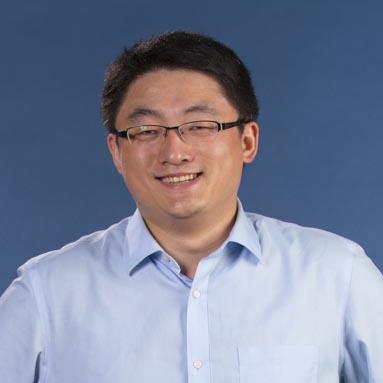
Leonid Gurvits is a Professor in the Department of Computer Science at the City College of New York. His research focuses on computational complexity, quantum computing, linear algebra, algorithmic mathematics, and discrete optimization. He has made significant contributions to operator scaling, quantum algorithms, and polynomial methods, with applications in combinatorics, statistical mechanics, and information theory. His work bridges theoretical computer science and mathematics, addressing challenges in algorithm design, complexity theory, and matrix analysis. Despite extensive publications, no formal awards or student advisement records are explicitly mentioned in the provided texts. His research often intersects with optimization principles and interdisciplinary applications in computational physics and quantum information.
Baruch Schieber is a Professor in the Department of Computer Science at New Jersey Institute of Technology (NJIT), part of the Ying Wu College of Computing. Previously, he served as a Distinguished Research Staff Member at IBM Research and a member of the IBM Academy of Technology. His research focuses on the mathematical foundations of AI, algorithm design, optimization, scheduling, and resource allocation, with applications in machine learning, deep learning, and real-world systems like airport security and fleet optimization. Education: Ph.D., Computer Science, Tel Aviv University (1987) M.S., Computer Science, Israel Institute of Technology (1984) B.S., Computer Science, Israel Institute of Technology (1980) Research Interests: Schieber’s work bridges theoretical computer science and practical applications. He has pioneered advancements in fair resource allocation, real-time scheduling, and algorithmic fairness. His contributions include optimizing AI-driven systems, minimizing tardiness in job scheduling, and leveraging mathematical programming for interpretable machine learning models. Recent projects include securing private keys via public methods and developing fairness-aware algorithms for voting systems and data queries. Publications & Impact: With over 140 publications and five patents, Schieber’s research spans algorithms, optimization, and distributed systems. His work on fleet optimization was featured in major media outlets. Current trends in his articles emphasize fairness in AI, efficient scheduling mechanisms, and energy-aware systems. His algorithms address challenges in parallel computing, graph analysis, and real-time resource management. Awards & Recognition: While no specific awards are listed, his IBM Research tenure and patented innovations highlight his impactful contributions to industry and academia. Grants & Advising: Schieber’s IBM projects involved high-impact collaborations, though specific grants or advising details are not detailed. His work often involves interdisciplinary teams tackling complex computational challenges. Labs & Teams: He leads NJIT’s research in AI foundations and collaborates with IBM’s Mathematics of AI group, focusing on foundational AI algorithms and their real-world applications.
Dr. Theodoros Chondrogiannis is a Post-doctoral Researcher at the University of Konstanz's Database and Information Systems group. He holds a PhD from the Free University of Bozen-Bolzano (2017) and previously worked as a postdoc there until joining Konstanz. His research focuses on route planning, graph database query processing, and spatial network analysis. He leads a DFG-funded project on multi-criteria path queries and teaches 'Graph Data Management and Analysis' annually. Education: BSc (Computer Science, University of Peloponnese, 2009), MSc (Advanced Information Systems, National Kapodistrian University of Athens, 2013), PhD (Free University of Bozen-Bolzano, 2017). Research interests include algorithm design for transportation networks, graph database systems, and geosocial network analysis. His work bridges theoretical foundations with practical applications in urban mobility and query optimization. He will assume an Associate Professor role at NTNU's Department of Computer Science (IDI) starting January 2025. Notable service roles include publicity chair for SSTD 2023 and co-chair for ACM SIGSPATIAL Student Research Competitions (2019-2020).
Theo Douvropoulos is an Instructor (postdoc) in the Department of Mathematics at Brandeis University. He holds a PhD from the University of Minnesota under the supervision of Vic Reiner, followed by postdoctoral positions at IRIF (Paris) with Guillaume Chapuy and as the Marshall H. Stone Visiting Assistant Professor at the University of Massachusetts Amherst. Currently (Fall 2024), he is on the academic job market. His research focuses on Algebraic Combinatorics, emphasizing Coxeter groups, Artin groups, hyperplane arrangements, and their interplay with representation theory, differential geometry, poset homology, and Frobenius manifolds. Key educational milestones include his PhD at the University of Minnesota, a postdoc at IRIF, and a visiting position at UMass Amherst. His work spans foundational questions in Cataland combinatorics, recursion-based proofs, and enumeration of factorizations in reflection groups. Recent publications address deformations of reflection arrangements, Hurwitz number generalizations, and combinatorial tilings, reflecting a blend of algebraic, geometric, and enumerative approaches. While his research has produced 15+ papers, he has not yet listed formal advisees or grants in the provided texts.
Margaret A. Readdy is a Professor of Mathematics at the University of Kentucky, where she has been a faculty member since Fall 2000. She is a member of the Discrete Mathematics group within the Department of Mathematics. Her academic journey includes a PhD in Mathematics followed by a two-year postdoctoral fellowship at Laboratoire de Combinatoire et d'Informatique Mathématiques (LACIM) at Université du Québec à Montréal (UQAM), and a three-year Visiting Assistant Professorship at Cornell University. She has held numerous prestigious visiting positions including at the Institute for Advanced Study in Princeton (1998-1999 and 2010-2011), Stockholm University, MIT (2006-2007), and Princeton University (2014-2015). Professor Readdy's research focuses on algebraic combinatorics, particularly the interactions of combinatorics with algebra, topology, discrete geometry, and number theory. Her work explores the deep connections between combinatorial structures and other mathematical fields, with significant contributions to the study of polytopes, root systems, Coxeter groups, and flag enumeration. She has developed important insights into the cd-index, Eulerian posets, and combinatorial identities arising from representation theory. Her research is supported by NSF grant DMS-2247382, continuing her long-standing record of externally funded research. Analysis of Professor Readdy's recent publications (2016-2024) reveals a consistent focus on combinatorial structures with geometric interpretations. Her work often centers on polytopes (particularly the Legendre polytope), triangulations, and the combinatorial properties of Coxeter arrangements. She frequently collaborates with Richard Ehrenborg and other mathematicians, producing results that bridge discrete geometry, algebraic combinatorics, and topology. A notable theme in her recent work is the application of combinatorial methods to solve geometric problems, such as the n-dimensional pizza theorem, and the exploration of connections between different combinatorial structures through bijections and enumerative techniques. Involved with Women and Mathematics program that won the AMS 2019 Award for Mathematics Programs that Make a Difference Guest editor for March 2018 Notices of the AMS special issue for Women's History Month Featured on the cover of the March 2018 Notices of the AMS Professor Readdy actively mentors students, currently advising PhD students Will Gustafson and Ben Reese. She has received consistent research support from the National Science Foundation, including current grant DMS-2247382. She co-organizes the KOI Combinatorics Lectures (funded by NSF DMS 2435236), which brings together researchers from Kentucky, Ohio, and Indiana. She has organized the Discrete CATS Seminar since 2000 (with some interruptions), fostering a vibrant research community in combinatorics at the University of Kentucky. Professor Readdy is deeply involved in academic service and outreach. She has been a key participant in the Women and Mathematics (WAM) Program at the Institute for Advanced Study and Princeton University since 2017, serving as Academic Program Manager (2017-2019) and on the WAM Committee (2020-2022). She co-founded the Math Ambassadors program at the University of Kentucky and has organized multiple Julia Robinson Math Festivals. Her commitment to promoting mathematics extends to K-12 education through presentations at local schools and participation in the Kentucky American Water Science Fair.
Shahin Kamali is an Adjunct Professor in the Department of Computer Science at the University of Manitoba. His research focuses on algorithm design, analysis, and limitations, particularly in online problems such as bin packing, list update, and k-Server. He also explores applications of algorithms in big data contexts, including text compression, graph partitioning, and cloud resource allocation. His work is further detailed on the Geometric, Approximation and Distributed Algorithms (GADA) lab website. Dr. Kamali teaches courses including COMP 3170 (Analysis of Algorithms), COMP 2140 (Data Structures), and COMP 7720 (Advanced Topics in Algorithms – Online Algorithms). He is affiliated with the GADA lab, which drives innovation in geometric algorithms, approximation techniques, and distributed computing systems.
Ryan Therkelsen is an Associate Professor Educator and MAT Program Director at the University of Cincinnati, affiliated with the Department of Mathematical Sciences in the College of Arts and Sciences. His academic career spans roles at institutions like Bellarmine University and Finger Lakes Community College, with expertise in algebraic structures and mathematics education. Education : Ph.D. in Mathematics, North Carolina State University, 2010 M.A. in Mathematics, San Diego State University, 2004 B.A. in Mathematics, University of Iowa, 2001 Research Interests : Focuses on algebraic combinatorics, monoid theory, and design theory. His work explores conjugacy decompositions in canonical monoids, rook monoids, and generalized partitions. He integrates these abstract algebraic concepts with combinatorial design principles. Presentations : Delivered talks on topics like the conjugacy order in canonical monoids, rook monoid structures, and generalized partitions at venues including Tulane University, the Fields Institute, and AMS Sectional Meetings. Advising & Grants : No student advisees or grants explicitly listed in the provided text. His role emphasizes teaching and program leadership in the MAT Program.
Xiangnan Kong is an Associate Professor in the Department of Computer Science at Worcester Polytechnic Institute (WPI), serving as the Graduate Coordinator of the Data Science Program. His academic journey includes a BS and MS from Nanjing University (2006, 2009) and a PhD from the University of Illinois at Chicago (2014). He maintains an active research program with significant contributions to data mining and machine learning. Dr. Kong's primary research interests focus on data mining and machine learning, with emphasis on addressing data science problems in biomedical and social applications. His work specifically targets data variety issues across multiple domains including neuroscience, biomedical informatics, social networks, and business intelligence. He has published extensively in top-tier conferences and journals such as KDD, ICDM, SDM, WWW, WSDM, CIKM, and TKDE. His recent publications demonstrate a strong trend toward interdisciplinary applications, with significant work in neuroimaging analysis, healthcare applications, urban traffic estimation, and efficient deep learning architectures. His research bridges theoretical advances in graph mining, heterogeneous information networks, and deep learning with practical applications in biomedical domains and social computing. Dr. Kong has successfully advised numerous PhD and Master's students, with former students now working at prominent organizations including Facebook Research, VISA Research, MIT CSAIL, and Amazon AI. His research is supported by multiple grants including NSF awards, Adobe Gift Grant, Huawei Research Grant, and WPI TRIAD Grant.
Evangelos F. Magirou is a Professor of Operations Research at the Department of Informatics of Athens University of Economics and Business (AUEB). He holds a BS in Electrical Engineering from Princeton University (1971), an MSc in Decision and Control Sciences from Harvard University (1972), and a Ph.D. in Decision and Control Sciences from Harvard (1976). His research focuses on theoretical and applied Operations Research, with specializations in Finance, Shipping, and Energy Policy. He has held significant administrative roles, including Deputy Chairman of the Department of Informatics at AUEB and Chairman of the Hellenic Procurement Institute (1994–1997). Education: BS in Electrical Engineering, Princeton University (1971) MSc in Decision and Control Sciences, Harvard University (1972) Ph.D. in Decision and Control Sciences, Harvard University (1976) Research Interests: Operations Research applications in Finance, Shipping, and Energy Policy Optimization, Game Theory, and Decision Theory Algorithm design and dynamic optimization Recent Publications Trends: Magirou’s work spans theoretical contributions to graph theory, kernel enumeration, and default logic, alongside applied research in shipping logistics, energy policy, and financial modeling. His 2000s publications emphasize computational finance and policy iteration methods, reflecting a shift toward quantitative finance and algorithmic innovation. Awards and Grants: No specific awards are listed, but his extensive involvement in energy policy research and industry partnerships (e.g., Public Power Corporation) highlights impactful applied work. Teaching and Advising: He teaches courses in mathematics of finance, operations research, and algorithms. His academic leadership includes directing the MSc Program in Business Mathematics (jointly with the University of Athens). Labs/Teams: Collaborates with the Center for Economic Research at AUEB and has contributed to shipping industry studies through collaborative projects with industry experts.
Panagiotis Liakos is a Researcher at the University of Athens (Department of Informatics and Telecommunications), specializing in graph mining for large-scale networks. He holds a Ph.D. in Distributed and Streaming Graph Processing (2015-2018), an M.Sc. in Computer Systems Technology (2008-2011), and a Ptychion in Informatics and Telecommunications (2004-2008), all from the University of Athens. His research focuses on developing scalable algorithms for graph processing, compression, and community detection in dynamic networks. Research interests include: Graph mining : Community detection, temporal graph analysis Large-scale systems : Distributed processing, cloud-based solutions Data optimization : Lossless compression, storage efficiency Stream processing : Real-time network analysis, dynamic algorithms His publications demonstrate strong focus on graph algorithms and data efficiency, with recent work on time-series compression (Chimp, Sim-Piece) and temporal graph processing. He has received multiple awards including: IEEE Big Data Travel Grants (2016, 2017) SIGIR Travel Grant (2016) WSDM Data Challenge 1st Place (2013) Greek State Scholarship (2006-2007) He has supervised 9 Master's students on topics spanning recommendation systems, MongoDB optimization, sports analytics, and traffic modeling. Contributed to European projects including GALENA, Interact, EarthServer, iMarine, and PERNASVIP. Leads the Hive Server project for distributed services and teaches Large Scale Data Management .
Dr. Andrea Cremaschi is an Assistant Professor at IE University, specializing in Bayesian statistics with applications in biomedical research, public health, and data science. His academic journey includes roles at institutions such as the Singapore Institute for Clinical Sciences (SICS) and the National University of Singapore (NUS), where he contributed to interdisciplinary projects in biostatistics and clinical research. He holds a Ph.D. in Statistics from the University of Kent and degrees in Mathematical Engineering from Politecnico di Milano. His research focuses on developing novel Bayesian statistical methodologies for healthcare challenges, including drug sensitivity analysis in oncology, maternal and child health outcomes, and cost-effectiveness studies. He also explores applications in digital humanities and climate action, aligning with UN Sustainable Development Goals 3 (Good Health), 4 (Quality Education), and 13 (Climate Action). Key contributions include studies on postpartum diabetes screening, pediatric growth modeling, and ex vivo drug response analysis in leukemia. His work bridges computational statistics with real-world health challenges, emphasizing algorithmic innovation and interdisciplinary collaboration. Education: Ph.D. in Statistics (University of Kent), M.Sc./B.Sc. in Mathematical Engineering (Politecnico di Milano) Professional Affiliations: IE University, Singapore Institute for Clinical Sciences (SICS), National University of Singapore
Guangliang Chen is an Associate Professor in the Department of Mathematics and Statistics at San José State University (SJSU), part of the College of Science. His research focuses on subspace/manifold clustering, dictionary learning, and classification with applications in image and document analysis. He earned a Ph.D. in Applied Mathematics from the University of Minnesota (2009) and a B.S. in Mathematics from the University of Science and Technology of China (2003). Key research contributions include scalable spectral clustering algorithms, geometric multi-resolution analysis, and advancements in compressive sensing. His work has been recognized with a Best Paper Award at the 2009 ICCV workshop for Kernel Spectral Curvature Clustering (KSCC). He teaches courses in applied statistics, machine learning, and data visualization at both undergraduate and graduate levels. Dr. Chen's recent projects involve developing efficient SVM classification techniques, large-scale spectral clustering frameworks, and MATLAB implementations for scalable algorithms. His research also extends to anomaly detection in hyperspectral imaging and functional genomics analysis through multiscale methods.