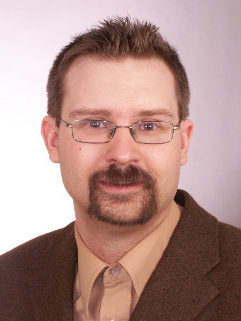
Hans-Arno Jacobsen is a Professor at Technische Universität München (Faculty of Computer Science, Germany) and the University of Toronto (Department of Electrical and Computer Engineering, Canada). His research spans distributed systems, blockchain technology, and machine learning for energy systems. Research Interests : Blockchain consensus algorithms, federated learning, graph neural networks, quantum computing applications, and energy-efficient distributed systems. Publication Trends : Recent work focuses on decentralized consensus in blockchains, energy-aware language model inferencing, quantum chemistry simulations, and graph neural network scalability. Collaborations : Regularly works with Ruben Mayer, Shashank Motepalli, and Gengrui Zhang on blockchain and machine learning projects.
Sara Grundel is a leading researcher at the Max Planck Institute for Dynamics of Complex Technical Systems in Magdeburg, Germany. Her work focuses on computational methods in systems and control theory, particularly in model order reduction, gas network simulation, and optimization of energy systems. Education: Diplom in Mathematics, ETH Zurich (2005) PhD in Mathematics, Courant Institute of Mathematical Sciences, New York University (2011) Research Interests: Sara’s research encompasses mathematical control theory, stability analysis, and numerical methods for differential-algebraic equations. She applies these techniques to gas and energy networks, epidemic modeling, and multi-agent systems. Her interdisciplinary work bridges computational mathematics with real-world engineering and public health challenges. Recent Publications: Her 15 most recent articles (2024–2012) demonstrate expertise in parametrized PDEs, model reduction for coupled systems, and control strategies for SARS-CoV-2 containment. Key subtopics include adaptive meshing, stability-preserving algorithms, and optimization of nonlinear network dynamics. Scientific Contributions: Developed clustering-based model reduction techniques for networked systems Investigated hyperbolic discretization methods using Riemann invariants Advanced polynomial root radius optimization with affine constraints Collaborations: Sara frequently collaborates with researchers like Peter Benner and Martin Gersen on energy grid simulations and control theory. She participates in international conferences (GAMM, IEEE CDC, MTNS) and contributes to edited volumes in applied mathematics.
Cristina G. Fernandes is an Associate Professor in the Department of Computer Science at the Institute of Mathematics and Statistics, University of São Paulo (IME-USP), where she conducts research in theoretical computer science, combinatorial optimization, and graph theory. She teaches advanced courses such as Advanced Data Structures and Topics in Algorithm Analysis. Her research interests include algorithms, combinatorial optimization, graph theory, approximation algorithms, data structures (persistent, retroactive, kinetic, succinct), and computational geometry. She applies theoretical methods to solve complex problems in network design, clustering, and discrete structures. The recent publications reflect a strong focus on structural and extremal graph theory, approximation algorithms, and combinatorial optimization. Key themes include tree and path packing, dominating sets, Steiner-type problems, and combinatorial properties of graphs. Her work often involves deep structural analysis and algorithmic design for NP-hard problems. Cristina G. Fernandes has not been mentioned with any specific scientific awards in the provided texts. She has supervised numerous postdoctoral researchers, PhD, MSc, and undergraduate students, many funded by FAPESP, CAPES, and CNPq. She leads significant research projects, including CAPES/MATH/STIC/CLIMAT-AMSU on energy efficiency in distributed computing and CNPq Universal projects on partitioning and connectivity. She is actively involved in academic advising and grant-funded research. She leads or participates in the Research Group in Theoretical Computer Science, Combinatorics and Combinatorial Optimization at IME-USP, fostering collaborative research in algorithms and discrete mathematics.
Jens Lemanski is an Associate Professor at the Philosophical Seminar of the University of Tübingen, with part-time roles as an Adjunct Professor at the University of Münster and a Researcher at Fernuniversität Hagen. His research spans Logic and Philosophy of Logic , Linguistic Communication , 19th Century German Philosophy , and Visualization in Mathematics . His work focuses on the historical and philosophical foundations of logic diagrams, including projects like Logic Diagrams in Kantianism (Fritz-Thyssen-Stiftung) and Gestures and Diagrams in Visual-Spatial Communications (DFG-priority programme). He has contributed extensively to understanding the evolution of logic from antiquity to modernity, emphasizing the role of diagrams in Euler-type systems , Byzantine logic , and Kantian thought . Lemanski co-edits Historia Logicae (College Publications) and serves as a Book Review Editor for History and Philosophy of Logic . His recent publications analyze the interplay between transcendental philosophy , formal logic , and AI-driven multimodal communication . He holds a PhD from Johannes Gutenberg University Mainz (2011) and contributes to conferences like Diagrammatic Representation and Inference (2024).
Anton Dignös is an Associate Professor at the Free University of Bozen-Bolzano, Italy. His research focuses on temporal databases, time series analysis, and database system optimization. He has co-authored numerous papers in top venues such as VLDB, ICDE, and ACM Computing Surveys, with a strong emphasis on query processing, indexing techniques, and benchmarking tools for database systems. Notable contributions include the SEER toolkit for time series benchmarking and foundational work on temporal anomaly detection in healthcare systems. His work spans theoretical advancements in join algorithms and practical applications in manufacturing and monitoring systems. He has collaborated extensively with researchers like Johann Gamper and Michael H. Böhlen, contributing to projects like TSM-Bench and the development of efficient interval join methods optimized for modern hardware.
André Nusser is a CNRS Researcher affiliated with the COATI group at Inria Center, Université Côte d’Azur. His work focuses on algorithms, computational geometry, and metric space analysis, particularly around the Fréchet distance, dynamic time warping, and graph hyperbolicity. Current Position: CNRS Researcher at Inria Université Côte d’Azur Primary Research Areas: Algorithms & Complexity, Computational Geometry, Metric Space Analysis Research Focus: André's research explores geometric optimization problems, trajectory analysis, and fine-grained complexity. Key contributions include advancements in dynamic time warping under translation, diameter computation for intersection graphs, and efficient algorithms for polygon partitioning. Awards & Recognition: Recipient of the Best Paper Award at VLDB 2014, Honorable Mention at AAAI 2014, and Best Poster Runner-up at SIGSPATIAL 2019. His work on Hausdorff distance and graph hyperbolicity has been invited to special issues. Academic Collaborations: Co-author on over 20 publications across conferences like STOC, SoCG, SODA, ESA, and journals including ACM Transactions on Algorithms and Discrete & Computational Geometry. Collaborates with leading researchers in computational geometry and algorithms. Software Advocacy: Actively promotes free software in research, highlighting tools like Ipe, Xournal++, Zotero, and Zulip for scientific productivity and collaboration.
Jaideep Srivastava is a Professor affiliated with Qatar Foundation (Doha, Qatar), University of Minnesota (Minneapolis, USA), and holds a PhD from University of California Berkeley. His research spans data mining, social network analysis, time series modeling, and health informatics. Recent work focuses on clinical deterioration prediction, sleep research, and computational analysis of pandemic behaviors. Key contributions in clustering algorithms and graph neural networks Active in multimodal learning and misinformation detection His publications from 2024-2022 demonstrate expertise in hierarchical clustering , large language model applications , and health data analytics . Articles often integrate machine learning , social network dynamics , and clinical monitoring systems . Current projects involve Covid-19 in-hospital mortality prediction , virtual influencer analysis , and low-light imaging techniques . Collaborations span institutions in Qatar, USA, and India with applications in urban mobility and precision medicine.
Petra Mutzel is a Professor of Computer Science at the University of Bonn. Her research focuses on graph algorithmics, temporal networks, and combinatorial optimization with applications in data science and bioinformatics. She holds a PhD in Computer Science from the University of Cologne (1994) and a Diplom in Mathematics from the University of Augsburg (1990). Her work emphasizes algorithmic solutions for complex graph problems, including temporal graph analysis, graph learning, and optimization frameworks for real-world networks. She has contributed to open-source libraries like Tglib for temporal graph processing and frameworks like Scaffold Hunter for medicinal chemistry. Her research spans theoretical foundations and practical implementations, with notable contributions to graph drawing, vehicle routing optimization, and protein complex analysis. Mutzel’s recent publications (2022-2025) explore temporal network dynamics, robust combinatorial optimization, and scalable graph kernel methods. She actively engages in academic leadership, organizing conferences such as WALCOM 2022, and serves on editorial boards for journals in algorithms and computational geometry.
Anders Møller is a Professor at the Department of Computer Science , Aarhus University , Denmark. His career spans roles as an author , committee member , and session chair in conferences like SPLASH, OOPSLA, ECOOP, ISSTA, ICSE, and PLDI. Affiliation: Aarhus University Co-founder: Coana Research Focus : Specializing in static and dynamic program analysis for JavaScript, TypeScript, Java, and Node.js applications, his work addresses: Pointer analysis precision in Java Race condition detection in Node.js Library evolution and semantic patching Soundness improvements in static analyzers Type safety in modern languages Concolic execution for web testing Publication Trends : Recent work (2021–2024) emphasizes security-critical static analysis (taint specifications, Node.js security), soundness optimization (approximate interpretation), and program verification (channel-based communication). Earlier work (2013–2018) includes foundational contributions to JavaScript refactoring , Dart type safety , and AJAX race detection . Scientific Recognition : ISSTA 2019 Distinguished Paper Award Leadership Roles : Active in steering committees for SPLASH, ECOOP, and SIGPLAN, with chairs in OOPSLA, ECOOP, and PLDI program committees.
Joachim Falk is a researcher at the Department of Hardware-Software Co-Design (Computer Science 12) at Friedrich Alexander University Erlangen-Nuremberg. With over 20 years of experience since joining the department in 2004, he specializes in electronic system level design, dataflow programming, and hardware-software co-design, contributing significantly to the field through publications, teaching, and research leadership. His educational background includes: Doctorate degree (Dr.-Ing.) in Computer Science from FAU (2014) Diploma degree in electrical engineering (data processing) from Georg-Simon-Ohm University of Applied Science Nuremberg (2002) Falk's research focuses on Electronic System Level Design, Hardware/Software Code Generation for Data-Flow Graphs, Compiler Optimizations, and Parallel Architectures. His work bridges theoretical computer science with practical embedded systems implementation, particularly through the SystemC framework and his contributions to the SysteMoC language. He actively explores energy-efficient computing approaches for dataflow networks and embedded systems, with recent work emphasizing self-powering networks, clock and power gating techniques, and multi-reader buffer implementations for heterogeneous architectures. His recent publication trends reveal a consistent focus on optimizing dataflow networks for energy efficiency and performance. Key themes include self-powering dataflow networks, innovative clock and power management techniques, buffer management strategies for heterogeneous many-core systems, and invasive computing approaches. His research demonstrates a strong connection between theoretical models and practical implementation challenges in embedded systems design. Dr. Falk teaches courses including 'Entwicklung interaktiver eingebetteter Systeme' (Development of Interactive Embedded Systems) for Winter Semester 2024/2025 and 'SystemC' for Summer Semester 2024, supervising multiple theses on security modeling at the electronic system level and sleep/wake-up strategies for hardware implementations of dataflow networks. His research is conducted within the framework of projects like SysteMoC (representation of computational models in SystemC) and SystemCoDesigner (design space exploration for embedded systems).
Prof. Dr. Jana Giceva is a Professor for Database Systems at the TUM School of Computation, Information and Technology since 2020. Her research bridges database systems with modern computer architecture, focusing on hardware-aware data processing, operating system integration, and efficient execution of big data workloads. She previously held roles at Imperial College London, Microsoft Research, and Oracle Labs. Education: PhD in Computer Science from ETH Zurich (2017) Awards: ERC Starting Grant (2024), ETH Medal (2018), VMware Early Career Faculty Award (2019), Google PhD Fellowship (2014) Her work explores database/operating system co-design , chiplet-aware scheduling , and disaggregated systems programming , with publications covering query optimization, graph data structures, and hardware acceleration. Collaborations with institutions like Imperial College London and ETH Zurich highlight her cross-disciplinary impact. Key Research Themes: Hardware-Software Integration High-Performance Query Execution Asynchronous I/O Optimization Adaptive Runtime Systems
Johanna Baehr is a researcher at the Chair of Information Security at the Technical University of Munich . Her work focuses on hardware security, reverse engineering, and threat detection. She contributes to academic research and teaching, particularly in the area of IT security fundamentals. Research Interests: Hardware reverse engineering, netlist analysis, hardware trojan identification, and hardware obfuscation. Teaching: Basics of IT security. Recent publications analyze hardware security frameworks, obfuscation techniques, and graph-based partitioning algorithms. Her work addresses vulnerabilities in sequential reverse engineering and cryptographic cores through structural interpretation. She collaborates with colleagues like Alexander Hepp and Georg Sigl on hardware security challenges. Publications: Hardware Honeypot: Setting Sequential Reverse Engineering on a Wrong Track (2024) Fault-Simulation-Based Flip-Flop Classification for Reverse Engineering (2024) Open Source Hardware Design and Hardware Reverse Engineering: A Security Analysis (2022) Post-Quantum Logic Locking (2022)
Julien Baste is an Associate Professor at the University of Lille, France, since September 2020. He teaches computer science at IUT de Lille (Institut Universitaire de Technologie de Lille) and conducts his research as a member of the ORKAD research team within CRIStAL (Centre de Recherche en Informatique, Signal et Automatique de Lille). Dr. Baste's research interests focus on theoretical aspects of computer science, particularly in Algorithms, reductions, graph theory, parameterized complexity, diversity, and multi-objective optimization. His work bridges theoretical foundations with practical applications, especially in optimization problems related to graph structures and computational complexity. An analysis of his recent publications reveals a consistent trajectory in parameterized algorithms and graph theory. His work frequently addresses problems parameterized by treewidth, developing fixed-parameter tractable algorithms for various graph problems. He has made significant contributions to understanding the complexity of graph modification problems, matchings, domination problems, and hitting set problems. His research has increasingly incorporated applications in areas like selective deconstruction and optimization of industrial processes, demonstrating the practical relevance of his theoretical work. Dr. Baste maintains an active research presence through numerous conference participations and collaborations with researchers across Europe. His research profile shows regular publication in top-tier theoretical computer science venues including SODA, IPEC, WG, and various IEEE conferences. The ORKAD research team at CRIStAL provides the institutional context for his ongoing research activities in algorithms and optimization.
Pascal Maillard is a Professor at the Department of Mathematics at Université Toulouse III - Paul Sabatier, affiliated with the Institut de Mathématiques de Toulouse (CNRS UMR5219). He has been a Junior member of the Institut Universitaire de France since October 2021. His research focuses on probability theory, particularly branching random walks, multiplicative cascades, and random energy models, with applications in statistical mechanics and mathematical physics. Maillard has coordinated the ANR-DFG funded project REMECO (2021-2024), investigating extreme value distributions, partition functions at complex temperatures, and optimization algorithms in random energy models. He has also co-organized the annual 'Les probabilités de demain' conference (2016–2019) to support early-career researchers in probability. His teaching spans advanced modules in stochastic modeling, probability theory, and mathematical statistics at both undergraduate and graduate levels. He is currently developing lecture notes on branching random walks and multiplicative cascades based on his Master's course at Université Paris-Sud. Research Interests: Extremal processes in branching systems, random energy landscapes, stochastic optimization, and applications to statistical physics. Awards: Junior member of Institut Universitaire de France (2021–present). Advising: Supervised three PhD students and multiple research projects in probability theory, including studies on SLE, Markov chain mixing times, and Erdős-Rényi graphs. Labs/Teams: Co-lead of REMECO project with Lisa Hartung, involving institutions in Toulouse and Mainz.
Yongqiang Chen is a Professor at the Chinese Academy of Sciences in the School of Engineering, Department of Computer Science and Engineering. With over 15 years of continuous research contributions spanning from 2005 to 2025, Dr. Chen has established himself as a versatile scholar working at the intersection of theoretical mathematics, machine learning, and practical engineering applications. Dr. Chen's research expertise encompasses: Machine Learning and Causal Inference, with recent focus on large language models and out-of-distribution generalization Signal and Image Processing, particularly in keyword spotting and watermarking applications Optimization Algorithms for engineering and management problems Theoretical Mathematics, including partition functions and combinatorial identities Engineering Management and Project Governance in construction contexts His recent publication trajectory (2023-2025) reveals a strategic evolution toward integrating causal reasoning with modern neural architectures, while maintaining strong connections to practical applications. Dr. Chen's work demonstrates exceptional interdisciplinary range, bridging pure mathematics with cutting-edge AI development and engineering solutions. His publications in venues like AAAI, NeurIPS, and IEEE Transactions reflect both theoretical rigor and practical relevance across multiple domains including renewable energy, neuroscience, and construction management. Dr. Chen maintains active collaborations with researchers across institutions, particularly with Bo Han on causal language models, James Cheng and Yiping Ke on brain network analysis, and various colleagues in engineering management. His research group appears to focus on developing theoretically sound yet practically applicable computational frameworks that address real-world challenges while advancing fundamental knowledge in machine learning and optimization.