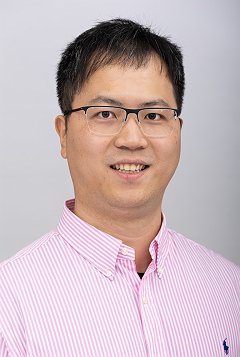
Dr. Stavros Nousias is a researcher at the Chair of Computing in Civil and Building Engineering at the Technical University of Munich , focusing on applications of Artificial Intelligence in the Built Environment . His work bridges Knowledge Representation and Reasoning , Geometry Processing , and Machine Learning to advance construction informatics and digital twinning. Research Interests: AI for building evacuation prediction, technical drawing segmentation, BIM optimization, and respiratory disease modeling. Publications: 15+ peer-reviewed articles on topics including graph neural networks for construction simulations, pulmonary airflow analysis, and heritage site monitoring. Supervised Theses: Guided projects on AI-based BIM command prediction and robotized construction simulation . Labs: Active in the BIM-Lab and Robotic Fabrication Lab . Teaching: Co-instructor for courses like Artificial Intelligence in Engineering and Computation in Engineering 1 .
Prof. Dr. Axel Cyrille Ngonga Ngomo is a Professor at the University of Paderborn, affiliated with the Faculty of Electrical Engineering, Computer Science and Mathematics. He serves as the leader of the Data Science group at the Heinz Nixdorf Institute and the Informatik Rechnerbetrieb (IRB) unit. His primary research focuses on Knowledge Graphs, Semantic Web technologies, and Machine Learning applications in data science. University of Paderborn Faculty of Electrical Engineering, Computer Science and Mathematics Data Science / Heinz Nixdorf Institute Informatik Rechnerbetrieb (IRB) His research spans automated knowledge extraction, description logic learning, and explainable AI systems through dynamic data federation. Recent work explores convolutional embeddings for complex knowledge graphs and adaptive retrieval augmented generation architectures. Current projects include SAIL (Sustainable Life Cycle of Intelligent Sociotechnical Systems), TRR 318 (Constructing Explainability), Colide (Co-training and co-regulation for industrial data), 3DFed (Dynamic Data Distribution and Federation), and SFB 901 (On-The-Fly Computing). Contact details include offices at Fürstenallee 11 (Room F1.225) and Technologiepark 6 (Room TP6.3.106) in Paderborn, Germany. Consultation hours are available by appointment.
Zhen Dong is an Associate Professor at Fudan University, China, specializing in software engineering with a focus on software reliability and security, particularly in mobile computing. Previously, he was a PostDoc and Senior Research Fellow at the National University of Singapore under the guidance of Abhik Roychoudhury. His educational background includes: PhD in Computer Science from Heidelberg University (2017), advised by Prof. Artur Andrzejak Dr. Dong's research centers on developing techniques and tools for improving software reliability and security. His work spans mobile application testing, Android security, flaky test detection, and vulnerability localization. He has made significant contributions to the field of software testing and analysis, with a particular emphasis on practical applications for mobile systems. His research bridges theoretical foundations with real-world software engineering challenges. Analysis of Dr. Dong's recent publications reveals a strong focus on leveraging AI/ML techniques for software engineering tasks, particularly using LLMs for test automation and program analysis. His work consistently addresses critical challenges in mobile computing, especially Android application reliability and security. There's a clear trajectory toward more sophisticated analysis techniques, from traditional testing methods to AI-driven approaches. His notable scientific achievements include: ACM Distinguished Paper Award at ICSE'20 Best Paper Award at AsiaCCS'21 (1/370 submissions) ASE'22 Distinguished Reviewer Award Dr. Dong serves on the Board of Distinguished Reviewers for ACM Transactions on Software Engineering and Methodology and has been an active member of numerous program committees for top software engineering conferences including ICSE, ASE, and ISSTA. His service to the academic community extends to reviewing for prestigious journals such as IEEE Transactions on Software Engineering and Methodology and ACM Transactions on Software Engineering and Methodology. His research has been supported through various academic channels, enabling him to maintain an active lab focused on software testing and analysis, particularly for mobile platforms. The lab has produced numerous tools and techniques that have influenced both academic research and industrial practice in software reliability.
Yiling Lou is an incoming Assistant Professor at the Siebel School of Computing and Data Science, University of Illinois Urbana-Champaign (starting Spring 2026), currently serving as a Pre-tenure Associate Professor at Fudan University. Previously a Postdoctoral Fellow at Purdue University under Prof. Lin Tan, Dr. Lou holds a Ph.D. and B.S. in Computer Science from Peking University supervised by Prof. Lu Zhang and Prof. Dan Hao. Research interests span Software Engineering synergized with Artificial Intelligence and Programming Languages , specifically focusing on LLM4Code, Agent&SE, Vulnerability Detection, and Software Testing/Debugging. Current projects include AgentIssue-Bench for agent system maintenance and INFERROI for enhancing static analysis with LLMs. Research trends show increasing integration of LLMs with traditional SE techniques, particularly in code generation (ClassEval, CodeGen4Libs), debugging (interactive runtime comparison), and vulnerability detection. Recent work emphasizes practical applications in agent systems and resource leak detection. ACM SIGSOFT Distinguished Paper Award (ESEC/FSE 2023) IEEE TCSE Distinguished Paper Award (ICSME 2021) Advises a large research group including 7 Ph.D. and 8 MS students at Fudan University, actively recruiting for UIUC starting Fall 2026. Leads the LLM4Code workshop series and serves on numerous program committees including ICSE, ASE, and FSE. Currently organizing research on Code Agents, Code LLMs, and AI&Security with strong industry relevance. Coordinates the Siebel School research group at UIUC focusing on the intersection of AI and Software Engineering, with particular emphasis on developing robust agent systems for code maintenance and security applications.
Mary Ann Tan is a PhD student and Junior Researcher at Karlsruhe Institute of Technology (KIT) and FIZ Karlsruhe – Leibniz Institute for Information Infrastructure, working within the Information Service Engineering group and the Institute of Applied Informatics and Formal Description Methods (AIFB). Her academic background includes: PhD candidate at KIT/FIZ Karlsruhe (2020–present) MSc in Computational Linguistics, Ludwig-Maximilians University, Munich (2018–2020) MSc in Computer Science (NLP specialization), De La Salle University, Manila (2002–2004) BSc in Computer Science, De La Salle University, Manila (1997–2001) Tan's research integrates Natural Language Processing, Knowledge Graphs, and Deep Learning to solve challenges in Cultural Heritage digitization. She develops methods for cross-lingual embeddings, knowledge graph refinement, multimodal search, and transformer-based workflows – transforming legacy cultural data into structured, AI-processable formats. Her work bridges technical AI innovation with practical heritage preservation needs, emphasizing under-resourced languages and multimodal cultural artifacts. Her 11 publications (2021-2025) reveal a cohesive trajectory: starting with bibliographic knowledge graphs (2021), advancing to multimodal art search and audio ontologies (2022-2023), and recently focusing on LLM integration for cultural data and mathematical semantics (2024-2025). This progression demonstrates increasing technical sophistication while maintaining consistent application to cultural heritage challenges. As an active collaborator in large international projects (e.g., the 50+ author Semantic Web and Creative AI report), Tan contributes to team-based research while developing her independent expertise. Her industry experience in software engineering informs her practical approach to research implementation within the Information Service Engineering group.
Yang Li serves as Associate Professor of Marketing and Associate Dean for the MBA Program at Cheung Kong Graduate School of Business (CKGSB). Holding a PhD in Marketing from Columbia Business School alongside dual master's and bachelor's degrees from Columbia and Peking University respectively, he bridges advanced statistical methodologies with practical business applications. His research centers on statistical machine learning and Bayesian nonparametrics applied to consumer behavior analysis, with specialization in online personalization, text mining, and choice modeling. Recent work demonstrates significant focus on fragmented attention economies, ethical AI frameworks, and NFT network dynamics, reflecting contemporary digital market challenges. Management Science Marketing Science Journal of Marketing Research Journal of Consumer Research Harvard Business Review Professor Li's publications reveal evolving expertise from foundational pricing elasticity studies toward cutting-edge AI applications in consumer contexts. His work increasingly integrates generative models and graph neural networks to decode complex consumer collection behaviors and digital ecosystem dynamics. Scientific recognition includes being a Finalist for the 2021 Paul E. Green Best Paper Award. Industry impact is demonstrated through executive education programs and strategic consultancies with Tencent, Haier, and Tmall. As Associate Dean for MBA Programs, he oversees curriculum development while maintaining active corporate governance roles on boards of publicly traded companies across China and Hong Kong, directly applying his research insights to strategic decision-making in digital transformation initiatives.
Daniel Kráľ is an Alexander von Humboldt Professor for Discrete Mathematics at Leipzig University and an affiliated member of the Max Planck Institute for Mathematics in the Sciences (MPI MiS). Previously, he held the Donald Ervin Knuth Professorship at Masaryk University in Brno and is also an honorary professor at the University of Warwick, where he was a professor of mathematics and computer science and a member of the Centre for Discrete Mathematics and its Applications (DIMAP). His research addresses various topics at the interface of mathematics and computer science, with primary focus on structural and extremal graph theory, discrete algorithms, and combinatorial limits. The theory of combinatorial limits is an emerging area that provides analytic methods to study large graphs such as social networks, establishing new links between analysis, combinatorics, ergodic theory, group theory and probability theory. His work has been supported by prestigious ERC grants including the CCOSA Starting grant and LADIST Consolidator grant. Dr. Kráľ's scholarly output includes over 150 journal research papers and numerous conference contributions. His recent publications demonstrate continued leadership in extremal combinatorics, graph limits, and structural graph theory, with significant contributions to understanding quasirandomness, Turán densities, and the coloring of complex graph structures. Scientific Recognition: SIAM Fellow (2024) Fellow of the American Mathematical Society (2020) Philip Leverhulme Prize in Mathematics and Statistics (2014) European Prize in Combinatorics (2011) ERC Consolidator grant LADIST (2015-21) ERC Starting grant CCOSA (2010-15) Professor Kráľ has supervised numerous PhD students and postdoctoral fellows throughout his career. His editorial service includes Editor-in-Chief of SIAM Journal on Discrete Mathematics (2017-2022), Co-Editor-in-Chief of Journal of Combinatorial Theory (since 2025), and Managing editor of Advances in Combinatorics (since 2018). He has organized multiple international workshops and conferences including Oberwolfach workshops on Graph Theory and the European Conference on Combinatorics, Graph Theory and Applications (EUROCOMB'23).
Lina Gong is an Associate Professor at the School of Computer Science and Technology, Nanjing University of Aeronautics and Astronautics, China. She holds a Ph.D. in Computer Software and Theory from China University of Mining and Technology (2020) and completed a research visit at Queen's University's Software Analysis and Intelligence Lab (SAIL) under Prof. Ahmed Hassan (2019-2020). Her research focuses on leveraging machine learning to extract insights from software repositories, with emphasis on: ML-enabled defect prediction techniques Code pre-trained models for vulnerability detection Identifier normalization and issue classification Empirical studies of software quality attributes Her recent publications (2023-2025) demonstrate strong trends in applying transformer architectures to code analysis, with increasing focus on supply chain security and cross-platform UI translation. Key venues include IEEE TSE, ACM TOSEM, and ASE. Scientific recognition includes: National Natural Science Foundation of China (2022-2025) Natural Science Foundation of Jiangsu Province (2022-2025) Key National Laboratory Foundation (2022-2023) Excellent Ph.D. Student Award (CUMT) She actively mentors graduate students (14 advisees: 1 doctoral, 13 master's) and serves on program committees for ASE, APSEC, and SANER. Her research is supported by multiple competitive grants focusing on ML applications in software engineering.
Chao Zhang is a Tenured Associate Professor at Tsinghua University, specializing in software security, system security, data security, and AI security. He leads the VUL337 research group and serves as the coach of the Blue-Lotus CTF team. His educational background includes a Ph.D. in Computer Science from Peking University (2008-2013), a B.S. in Mathematical Science from Peking University (2004-2008), and a postdoctoral position at UC Berkeley (2013-2016). Dr. Zhang's research focuses on Software Security , System Security , Data and AI Security , Program Analysis , and Vulnerability Discovery . His work spans binary code analysis, fuzzing techniques, blockchain security, and AI security. His recent publications demonstrate a strong emphasis on developing novel frameworks for vulnerability detection, binary code analysis, and securing AI systems against adversarial attacks. His publication trends show a consistent focus on practical security solutions with increasing attention to AI security challenges. Over the past decade, he has published extensively in top security conferences including IEEE S&P, USENIX Security, CCS, NDSS, and ISSTA, with a significant acceleration in publications since 2020. Tencent CSS TSec Professional Prize (2nd place, 2019) Tencent CSS TSec Breakthrough Prize (1st place, 2018) DARPA Cyber Grand Challenge CFE, 2nd in exploiting (2016) DARPA Cyber Grand Challenge CQE, 1st in defense (2015) Microsoft BlueHat Prize Contest's Special Recognition Award (2012) 5th place in Defcon CTF 2017 2nd place in Defcon CTF 2016 5th place in Defcon CTF 2015 Dr. Zhang leads the VUL337 research group at Tsinghua University, which focuses on vulnerability discovery and security analysis. He also serves as the coach of the Blue-Lotus CTF team and is a member of the V group of LiST. His research has received significant attention in the security community, with numerous publications in top-tier security venues and practical contributions to vulnerability discovery and mitigation techniques.
Dr. Huaming Chen is a Senior Lecturer in the School of Electrical and Computer Engineering at The University of Sydney, Australia. His work focuses on trustworthy machine learning systems, software engineering, and software security. With numerous publications in top-tier conferences and journals, Dr. Chen has established himself as a significant contributor to the fields of AI security and software engineering. Dr. Chen's primary research interests lie at the intersection of software engineering and artificial intelligence, with a strong emphasis on trustworthy AI systems. His work spans several key areas including: Software Security for AI-enabled systems Trustworthy and Responsible AI development Computational biology applications Industrial 4.0 implementations Federated learning and privacy-preserving techniques Large language model verification and uncertainty analysis His research addresses critical challenges in ensuring AI systems are secure, reliable, and ethically sound. Dr. Chen's recent publications demonstrate a strong trend toward addressing security and trustworthiness challenges in AI systems. His work spans multiple domains including software security (particularly for AI systems), trustworthy AI development, and applications in computational biology. A significant portion of his recent work focuses on large language models, examining their vulnerabilities, verification methods, and uncertainty analysis. He also maintains active research in federated learning, adversarial machine learning, and software security techniques. Dr. Chen has received several notable awards and recognitions: 2020 IEEE CIS Student Grant for IEEE WORLD CONGRESS ON COMPUTATIONAL INTELLIGENCE (WCCI) 2017 Student and Early Career Travel Fellowship for The 16th International Conference on Bioinformatics (InCoB 2017) 2017 Student Travel Award for 2017 IEEE World Congress on Services Dr. Chen actively supervises multiple research students working on cutting-edge projects related to trustworthy AI and software security. His current students are exploring topics ranging from blockchain-based governance frameworks to open-source AI security and digital twin platforms. He also serves in numerous committee roles at top conferences including area chair for ACM MM, and PC member for ACM CCS, IJCAI, KDD, and many others. His service as a Guest Editor for journals like Computers & Security and as a Grant Reviewer for UKRI demonstrates his standing in the research community. Dr. Chen organizes workshops focused on Trustworthy and Responsible AI, reflecting his commitment to advancing the field. His research group appears to focus on practical applications of AI security techniques, with projects spanning multiple domains including healthcare, finance, and industrial systems. He maintains active collaborations with researchers across multiple institutions, as evidenced by his co-authorship on diverse publications.
Ajitha Rajan is a Professor (Personal Chair of Software Testing & Verification) at the School of Informatics, University of Edinburgh. She joined the university in December 2012 as a Reader (equivalent to Associate Professor in American terms) and was promoted to Professor in 2024. Prior to her position at Edinburgh, she held postdoctoral positions at Oxford University and Laboratoire d'Informatique de Grenoble in France. She earned her PhD in Computer Science from the University of Minnesota in August 2009 under Professor Mats Heimdahl. Her research focuses on two primary directions: Automated Software Testing (including test input generation, test oracles, and coverage measurement) and Biomedical AI (particularly cancer survival models and interpretability for biological sequences and medical images). Her work has applications in safety-critical systems, blockchains, embedded systems, and medical diagnostics. She has made significant contributions to explainable AI for healthcare applications, especially in lung cancer detection and cancer survival analysis. Her recent publications demonstrate a strong trend toward interdisciplinary research at the intersection of software engineering and biomedical applications. She has numerous publications in top venues including ICSE, ASE, and healthcare-focused conferences. Her work increasingly focuses on making AI systems more interpretable and trustworthy, particularly in medical contexts where model decisions can have life-or-death consequences. ACM SIGSOFT Distinguished Reviewer Award, ISSTA 2025 Best Paper Award at ICHI 2025 Promoted to Professor (Chair in Software Testing & Verification) 2024 SICSA Best Supervisor Award 2024 ACM Distinguished Paper Award 2008 Professor Rajan actively supervises PhD students in both software testing and biomedical AI domains. She leads several funded projects including MANIFEST (a cancer immunotherapy response research platform), a Huawei Joint Lab project on RobustCheck, a Royal Society Industry Fellowship on AutoTest, and the KATY project on clinical knowledge for personalized medicine. Her research group includes current PhD students working on explainable AI for medical image analysis, scenario-based testing for autonomous driving, and protein design applications.
Gabriele Gühring serves as Professor at Esslingen University of Applied Sciences with dual appointments in the Faculty of Basic Sciences (since 2008) and Faculty of Computer Science and Information Technology (since 2021). She currently holds the executive position of Vice President for Research and Transfer (since September 2022), concurrently directing the Department of Research and Transfer while serving on the Science Commission and Honours Committee. Her academic foundation includes: Mathematics and Physics studies at University of Tübingen (1991-1996) Doctoral research on nonautonomous differential equations (1997-1999) Part-time Master's in Mathematical Finance at University of Oxford (2002-2004) Prof. Gühring's research centers on practical AI applications , specializing in anomaly detection systems for industrial infrastructure and multimodal learning for technical documentation. Her work bridges theoretical mathematics with real-world implementations in renewable energy, urban mobility, and medical diagnostics, demonstrating consistent evolution from pure mathematics to cutting-edge machine learning. Analysis of her 14 publications (1999-2023) reveals a strategic pivot from theoretical differential equations to industrial AI solutions. Recent work (2020-2023) focuses on anomaly detection in energy systems (power plants, vehicle fleets), multimodal neural networks for product analysis, and mobility data anonymization , with methodologies spanning spiking neural networks, graph-based approaches, and Bayesian deep learning. While no scientific awards are documented, her leadership in the BMBF-funded Anomob project demonstrates active grant acquisition in data privacy. Administrative responsibilities likely encompass significant mentorship, though no formal advisees are listed in the provided materials. Her research operates through Esslingen's Department of Research and Transfer, fostering cross-disciplinary collaborations between computer science, engineering faculties, and industrial partners in energy, transportation, and healthcare sectors.