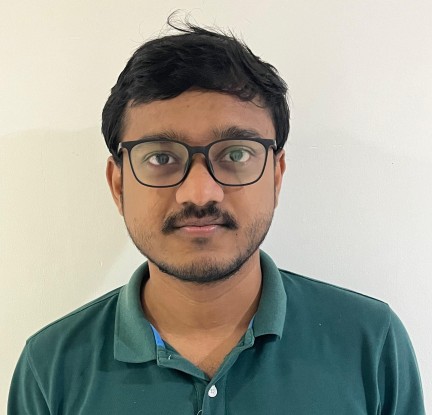
Zihan Zhou is an Assistant Professor at the College of Information Sciences and Technology, Penn State University, specializing in computer vision, machine learning, and 3D reconstruction. His research bridges geometric modeling, image processing, and human-computer interaction, with applications in assistive technology and creative design. Email: zuz22@psu.edu His work focuses on robust face recognition, sparse representation, and vision-language approaches for converting 2D CAD drawings into 3D parametric models. Recent projects include neural rendering for wireframe-to-image translation and data-driven 3D scene modeling. The 15 most recent publications highlight his contributions to end-to-end floorplan generation, depth estimation, trajectory prediction, and structured 3D modeling. These works integrate convolutional neural networks, graph construction, and optimization algorithms. Projects like Building Energy Savings by Tuning Indoor Lighting underscore his interdisciplinary approach, combining computer vision with environmental sustainability.
Annalisa Massini serves as Associate Professor in the Department of Computer Science at the University of Rome "La Sapienza", a position she has held since November 2001 following her appointment as Assistant Professor from 1996-2001. Education: 1989: Degree in Mathematics, University of Rome "La Sapienza" 1993: Ph.D. in Computer Science, University of Rome "La Sapienza" Research Focus: Her scholarly work centers on Mobile sensor networks and Interconnection networks , with significant contributions to Hybrid systems verification . Her research portfolio extends to Parallel computing methodologies, Computer arithmetic techniques, and innovative approaches to Graph drawing , demonstrating comprehensive expertise across theoretical and applied computer science domains. Academic Contributions: Dr. Massini teaches foundational courses including Digital Systems Design (formerly Computer Architecture I), Computer Architecture (formerly Computer Architecture II), and Intensive Computation. She supervises Bachelor's and Master's thesis projects, maintaining office hours by email appointment from her office in Building E (Viale Regina Elena 295), 2nd floor, room 206.
Professor Dr. Tom Hanika is affiliated with the University of Hildesheim , working in the Intelligent Information Systems (IIS) division within the Institute of Computer Science. His research bridges formal concept analysis , machine learning , and knowledge representation , focusing on geometric interpretations of data and explainable AI systems. Research Themes: Intrinsic dimensionality, lattice structures, and hybrid human-AI collaboration Teaching: Offers courses in databases, C++ programming, and semantic technologies Contact: Office (SC.C. 2.03), Phone +49 5121 883-40312, Email via contact form Recent publications highlight his work on geometric data analysis and formal context manipulation , including applications in graph neural networks, ordinal pattern recognition, and conceptual lattice visualization. His Collaborative Hybrid Human AI Learning framework demonstrates practical implementations of these theories. Current projects explore dimensionality resilience in machine learning models and topic flow visualization in academic networks, reflecting his dual focus on theoretical foundations and applied knowledge systems.
Dmitriy (Tim) Kunisky is an Assistant Professor in the Department of Applied Mathematics and Statistics at Johns Hopkins University's Whiting School of Engineering. He is also affiliated with the Data Science and AI Institute, the Department of Mathematics, and the Algorithms and Complexity Group at Johns Hopkins. Dr. Kunisky received his bachelor's degree in mathematics from Princeton University, worked as a software engineer for Google, earned his PhD in mathematics from the Courant Institute at NYU under the supervision of Afonso Bandeira and Gérard Ben Arous, and was a postdoctoral associate in computer science at Yale University before joining Johns Hopkins. His research broadly concerns how probability theory and mathematical statistics interact with computational complexity and the theory of algorithms. He investigates the mathematical phenomena that govern the power and limitations of algorithms processing massive and high-dimensional inputs, drawing on asymptotic statistics, convex geometry, random matrix theory, statistical physics, and representation theory. His work includes studying convex relaxation algorithms on combinatorial optimization problems, computational intractability in high-dimensional statistics, pseudorandomness, and experimental approaches to number theory and combinatorics. His recent publications demonstrate a consistent focus on the intersection of computational complexity, statistical inference, and random matrix theory. There's a clear trajectory from theoretical foundations to practical algorithmic applications, with particular emphasis on information-computation gaps, spectral methods, and the sum-of-squares hierarchy. His work often bridges theoretical computer science with statistical physics approaches. Dr. Kunisky actively advises graduate students at Johns Hopkins, including PhD candidates in Applied Mathematics and Statistics. He has taught courses on Random Matrix Theory in Data Science and Statistics, Probability Theory, Sum-of-Squares Optimization, and Modern Probability for Theoretical Computer Science, demonstrating his commitment to both research and education in mathematical data science.
Sergey Oleksandrovych Sgadov is a Senior Lecturer in the Department of Computer Systems and Networks at Zaporizhzhia Polytechnic National University. With academic activity at the university since 1998, he has established himself as a dedicated educator and researcher in computer science and microprocessor technologies. His institutional affiliation places him within the Faculty of Computer Sciences and Technologies, where he contributes to both teaching and research initiatives. Education: Graduated from Zaporizhia National University in 1993 with honors, specializing in "Solid-state electronics and microelectronics" and receiving the qualification of "specialist". Dr. Sgadov's research spans multiple domains of computer science and engineering. His primary interests include microprocessor programming, application development using Delphi and C++, web programming with .NET technologies, and computer modeling of physical processes. He has made significant contributions to graph theory, particularly in topological graph drawing algorithms and their applications in printed circuit board design. His work bridges theoretical computer science with practical engineering applications, focusing on creating efficient algorithms for complex computational problems. Analysis of his publication record reveals a strong focus on graph theory applications in electronic design automation, microprocessor systems development, and educational tools for computer engineering. His research has evolved from fundamental theoretical work on graph algorithms to practical implementations in microcontroller programming and educational technology. The consistent thread throughout his work is the application of computational methods to solve complex engineering problems, particularly in circuit design and microprocessor systems. Dr. Sgadov teaches courses in microcontroller programming and programming of microcontroller systems, bringing his research expertise directly into the classroom. His teaching methodology likely incorporates practical, hands-on experience with modern microprocessor technologies, reflecting his research interests in ARM Cortex processors and microcontroller applications.
Alexander Wolff is a Professor at the Chair of Algorithms and Complexity within the Institute of Computer Science at the University of Würzburg. His work focuses on graph drawing, computational geometry, and algorithmic complexity, with applications in geographic information systems and network visualization. Chair of Algorithms and Complexity, Institute of Computer Science, University of Würzburg (since 2009) Managing Director, Institute of Computer Science (2011–2013, 2015–2017) Editorial roles in journals like JoCG and JGAA Conference leadership in Graph Drawing (GD) and SOFSEM His research explores geometric graph representations, obstacle numbers, and parameterized complexity. Recent publications address level planarity, polyhedral surface adjacency, and metro map visualization. Collaborative projects include algorithmic quality assurance and interactive industrial network visualization. Wolff’s work bridges theoretical graph algorithms with practical applications, such as optimizing public transport schematics and enhancing data accessibility. He has supervised numerous PhD students and co-authored over 100 publications, with editorial and organizational roles in major computational geometry and graph drawing conferences.
Dr. Stavros Nousias is a researcher at the Chair of Computing in Civil and Building Engineering at the Technical University of Munich , focusing on applications of Artificial Intelligence in the Built Environment . His work bridges Knowledge Representation and Reasoning , Geometry Processing , and Machine Learning to advance construction informatics and digital twinning. Research Interests: AI for building evacuation prediction, technical drawing segmentation, BIM optimization, and respiratory disease modeling. Publications: 15+ peer-reviewed articles on topics including graph neural networks for construction simulations, pulmonary airflow analysis, and heritage site monitoring. Supervised Theses: Guided projects on AI-based BIM command prediction and robotized construction simulation . Labs: Active in the BIM-Lab and Robotic Fabrication Lab . Teaching: Co-instructor for courses like Artificial Intelligence in Engineering and Computation in Engineering 1 .
Professor David Andrews is Professor of Engineering Design in the Department of Mechanical Engineering at University College London (UCL). A globally recognised authority on naval architecture and ship design methodology, he has held continuous academic appointments at UCL since 1980, punctuated by distinguished service in the UK Ministry of Defence where he rose to Director of Frigates and Mine Countermeasures. Since 2000 he has occupied the Chair in Engineering Design at UCL, leading major research initiatives funded by EPSRC, ONR and the EU, and forging strategic industrial partnerships. Education Bachelor of Engineering, UCL (1970) MSc Naval Architecture, UCL (1971) PhD “Synthesis in Ship Design”, UCL (1984) Research Focus Professor Andrews is acknowledged as the world-leading expert in naval ship design methodology, with seminal contributions to early-stage design processes, submarine architecture, trimaran/multi-hull vessels, and distributed ship service systems. His pioneering Design Building Block approach and SURFCON CAD tool have been integrated into industry-standard platforms such as PARAMARINE. Current work addresses energy balance frameworks, computer-aided sketching, and philosophical foundations of engineering design. Across more than 150 publications, a clear trajectory emerges: from fundamental design theory through tool development to practical application in warship, submarine and advanced multi-hull projects. Recent outputs (2021-2024) emphasise automation of early-stage synthesis, network-based modelling of complex distributed systems, and integration of operational availability considerations into concept design. Honours & Awards Fellow of the Royal Academy of Engineering (2000) Fellow of the Royal Institution of Naval Architects (RINA) Fellow of the Society of Naval Architects and Marine Engineers (SNAME) William Froude Medal, RINA (2020) – highest award David W Taylor Medal, SNAME (2021) – lifetime contribution Advising & Grant Leadership Since flexible retirement in 2012 he continues to lecture and supervise MSc projects in Naval Architecture, Marine Engineering and Submarine Design CPD courses. He has led or co-led research grants exceeding £2 million from EPSRC, EU and industry (BAE Systems, Rolls-Royce, BMT, Dstl). These projects have funded numerous CASE studentships and collaborative PhD programmes that bridge UCL and industrial stakeholders. Research Team & Industrial Links Professor Andrews heads the Design Research group at UCL, mentoring successive MoD Professors of Naval Architecture and maintaining active Memoranda of Understanding with BAE Systems and other maritime primes. He chairs the tri-annual International Marine Design Conference’s Design Methodology Panel and has delivered keynote addresses worldwide, uniquely representing non-US expertise at successive US Navy Ship Design Process Workshops.
Holly Fay is an Associate Professor in the Department of Visual Arts within the Faculty of Media, Art and Performance at the University of Regina. Her academic career builds on extensive professional experience including her role as Director/Curator of the Art Gallery of Regina from 2015-2019. Fay holds a Master of Fine Arts from the University of Ulster, Belfast and a Bachelor of Fine Arts from the University of Regina. Fay's research investigates the phenomenological relationship between bodily experience and environmental understanding through painting, drawing, and installation. Her work challenges traditional Western landscape representation by privileging sensory properties and lived perspective over illusionistic space. Current projects explore water systems, cosmic-earthly parallels, and ecological grief through material experimentation with graphite and other media. She examines how consciousness and knowledge emerge from embodied experience within ecological systems rather than purely cognitive processes. Fay's recent artistic output demonstrates consistent engagement with environmental themes through multiple series including Water Graphs (2023-present), Currents (2021-present), and States of Flow (2024). Her work shows increasing focus on material properties of media (particularly graphite as carbon-based matter) to connect earthly and cosmic processes. The Cosmos series (2019-2024) exemplifies this interdisciplinary approach, using layered graphite techniques to visualize energy flows and multidimensional space. Ucross Fellowship Artist Residency (2024) Canada Council for the Arts Research and Creation Grant (2022) SK ARTS Independent Artist Grant (2018) Fay maintains active research funding supporting material experimentation and exhibition production. Her supervision approach emphasizes phenomenological engagement with materials and environment, encouraging students to develop their bodily relationship with subject matter through iterative studio practice. Recent exhibitions including solo shows at Estevan Art Gallery (2024) and Slate Gallery (2024) demonstrate her active professional practice. Fay's work is represented in public collections including the Saskatchewan Arts Board, Mackenzie Art Gallery, and Dunlop Art Gallery. Fay's studio practice encompasses painting, drawing, installation, video, and curation with national and international exhibition history. Her teaching includes studio classes in painting and drawing alongside professional practice seminars that integrate her curatorial experience. Current research trajectories examine plant awareness disparity and ecological freedom through both artistic production and philosophical inquiry.
Ranjit Jhala is a Professor of Computer Science Engineering in the Jacobs School of Engineering at the University of California, San Diego. His research focuses on building reliable computer systems through programming languages and software engineering techniques. His primary research interests include Programming Languages, Formal Verification, and Software Engineering. He draws from and contributes to areas such as Type Systems, Model Checking, Program Analysis, and Automated Deduction, bridging theoretical foundations with practical implementations for real-world software development. Prof. Jhala's publication record shows a consistent trajectory in refinement type systems, evolving from Liquid Haskell to Flux for Rust, while also exploring neurosymbolic approaches to error repair and type error diagnosis. His work demonstrates a commitment to making formal verification techniques accessible to practitioners. He leads the Programming Systems Group at UCSD, mentoring graduate students and collaborating with researchers across the programming languages community. His service includes General Chair roles for POPL 2018 and PLDI 2022, reflecting his leadership position in the field. Prof. Jhala is also known for his mentoring activities, including talks on academic presentation skills and participation in ICFP's mentoring programs for students and early-career researchers.
Jon E. Litland is an Associate Professor in the Department of Philosophy at the University of Texas at Austin, within the College of Liberal Arts. He joined the department in fall 2014 and has established himself as a leading scholar in metaphysics and philosophical logic. From Spring 2022, he has also served as a Professorial Fellow at the University of Oslo. His educational background includes a PhD from Harvard University, which provided the foundation for his research in grounding theory and philosophical logic. Professor Litland's research primarily focuses on metaphysical grounding, particularly addressing logical issues within grounding theory. He has made significant contributions to understanding paradoxes in the logic of ground, mathematical structuralism, and the possibility of defining indiscernible objects. His work often intersects with philosophy of mathematics and logic, exploring how grounding relates to explanation, identity, and the foundations of mathematics. He has developed novel theories such as "collective abstraction" to solve problems in noneliminative structuralism, particularly for nonrigid systems like the complex numbers. Analysis of his publication record reveals a consistent focus on grounding theory, with particular attention to iterated grounding, many-many grounding, and the logical structure of grounding relations. His work demonstrates a progression from foundational questions about grounding to more complex issues involving cycles of ground, bicollective ground, and the relationship between grounding and logical consequence. Litland frequently employs formal methods and draws connections between metaphysics, logic, and philosophy of mathematics, contributing significantly to the technical development of grounding theory. He serves as an editor for the Review of Symbolic Logic, demonstrating his standing in the field of philosophical logic. While specific grant information isn't provided in the available materials, his position as Professorial Fellow at the University of Oslo suggests involvement in collaborative research projects. Professor Litland teaches a range of courses including Introductory Symbolic Logic, Metaphysics, Intermediate Symbolic Logic, and Philosophy of Mathematics, reflecting his expertise across logic and metaphysics. His teaching spans both undergraduate and graduate levels, contributing to the next generation of philosophers working in these specialized areas.
Professor Eyad Elyan is a leading academic and researcher at Robert Gordon University's School of Computing, Engineering and Technology, where he serves as a Professor in Machine Learning and Computer Vision. He is the founder and head of the Machine Vision Research Group, driving innovative research in applied computer vision and deep learning with significant industry impact. Professor Elyan's research focuses on converting complex and unstructured data into knowledge and actionable insights, with particular emphasis on learning from images, videos, and other forms of unstructured data. His work spans engineering diagrams processing, remote inspection for oil and gas installations, intelligent condition monitoring of offshore assets, predictive maintenance, biometric applications, and medical datasets analysis. His expertise in ensemble-based learning and learning from unstructured and imbalanced datasets has been successfully implemented in various real-world applications. Professor Elyan was awarded the UK Knowledge Transfer Partnership Academic of the Year Award in 2023 for his transformative work in developing pioneering AI solutions for the oil and gas sector, and was a finalist for the Scottish Knowledge Exchange Award in 2024. These recognitions highlight his exceptional ability to bridge academic research with practical industry applications. His research has been supported by various public funding bodies including Innovate UK, the Data Lab Innovation Centre, Oil and Gas Innovation Centre (OGIC), NetZero Technology Centre (NTZ), and Historic Environment Scotland. Professor Elyan has supervised twelve PhD students to completion and examined more than fifteen others. He plays an active role in the academic community as a Fellow of the British Higher Education Academy and The International Neural Network Society, and serves as the Scotland Data Lab Innovation Centre Ambassador. Under Professor Elyan's leadership, the Machine Vision Research Group has developed innovative solutions including an end-to-end system for processing Piping and Instrumentation Diagrams (P&ID), AI-driven inspection systems for oil and gas assets, and defect recognition technologies. His work demonstrates a consistent commitment to translating cutting-edge research into practical tools that address real-world challenges, particularly in the energy sector.
Dr. Carlos Francisco Moreno-Garcia is an Associate Professor in Computing at Robert Gordon University (RGU) in Aberdeen, Scotland, UK, affiliated with the School of Computing, Engineering & Technology and the Machine Vision Research Group. His academic journey began with a Bachelor's in Electronic Engineering from Tecnologico de Monterrey, Mexico, followed by a Master's and PhD in Spain at Universitat Rovira i Virgili. Dr. Moreno-Garcia's research spans Pattern Recognition, Computer Vision, Medical Image Analysis, Document Image Analysis, and Systematic Review Automation. His work bridges theoretical AI development with practical applications, particularly in digitizing complex engineering drawings for the Oil & Gas sector, developing medical diagnostic tools for cardiovascular diseases and neonatal pain assessment, and automating systematic literature reviews in healthcare. His recent publications demonstrate strong expertise in attention mechanisms, symbol recognition in technical diagrams, and NLP applications for medical literature analysis. His publication record shows consistent output with 77 documented research outputs, including significant recent contributions in 2024-2025 across high-impact journals and conferences. His work often addresses imbalanced datasets, few-shot learning challenges, and the integration of domain knowledge into AI models. General Chair of BMVC 2023 (elevated to CORE A Conference) Associate Editor of IEEE Transactions on Neural Networks and Learning Systems Co-leader of the Cluster of Machine Learning, AI and Data Science Leader of the Science, Technology and Innovation Pillar and Red Global MX Dr. Moreno-Garcia actively supervises PhD students working on document image analysis, medical applications of AI, and systematic review automation. His research is supported by collaborations with institutions including Universidad Nacional Autonoma de México (UNAM), Jiva.ai, NHS Grampian, and the University of Aberdeen. His lab focuses on real-world applications of computer vision and machine learning, with particular emphasis on healthcare and engineering documentation.
Palash Bera is a researcher at TU Darmstadt, working in the AG Liebchen group. His research interests include theoretical computer science, discrete mathematics, combinatorics, graph theory, graph drawing, computational geometry, network visualization, and information visualization.
Dan McQuillan serves as Chair of the Department of Mathematics and holds the Charles A. Dana Professorship at Norwich University's College of Arts & Sciences. With over twenty peer-reviewed publications across multiple mathematical disciplines, he teaches eighteen courses including Discrete Mathematics and Calculus, emphasizing deep conceptual understanding to simplify complex problems. He earned his Ph.D. and M.Sc. in Mathematics from Western University and B.A. in Mathematics from Carleton University, Canada. McQuillan's research centers on Combinatorics and Topological Graph Theory, with landmark contributions to magic labelings of graphs and crossing numbers of complete graphs. His work bridges abstract algebra, geometric topology, and pedagogical innovation, frequently collaborating with cross-departmental faculty on calculus teaching methodologies and involving undergraduates in tractable yet profound mathematical research. Recent publications demonstrate sustained focus on graph labelings and topological embeddings, revealing patterns where combinatorial structures yield elegant geometric solutions. This trajectory highlights his philosophy of deriving surprising simplicity from apparent complexity, with problems intentionally designed for undergraduate accessibility. As an academic mentor, he initiated Norwich's participation in the William Lowell Putnam Mathematical Competition in 2002 and continues coaching the team. His undergraduate research mentorship has produced four peer-reviewed publications in discrete mathematics, primarily through summer projects on magic graph labelings. He leads the Putnam Competition team and directs student summer research initiatives, fostering collaborative environments where undergraduates contribute directly to publishable mathematical discoveries in discrete structures.