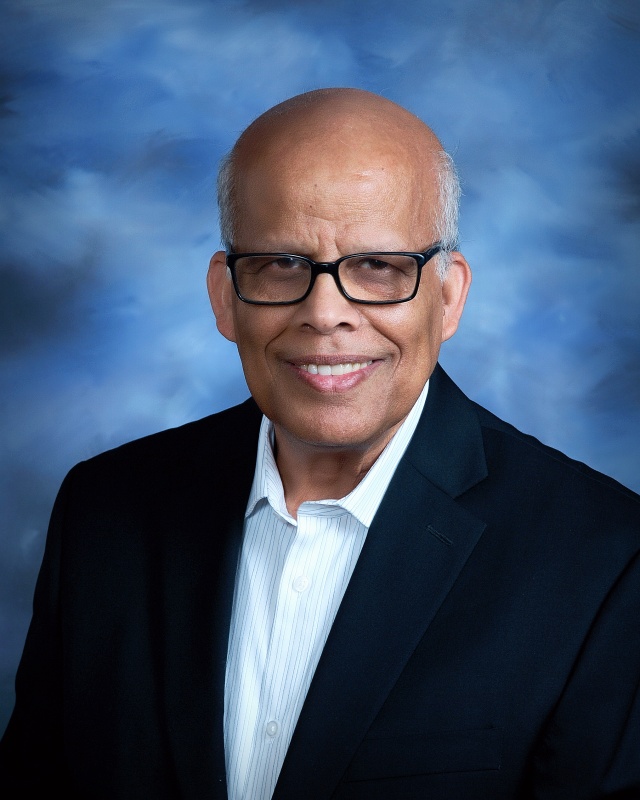
Asish Mukhopadhyay is a Professor in the School of Computer Science at the University of Windsor's Faculty of Science. His research develops algorithms for computational geometry, graph theory, and bioinformatics, emphasizing optimization and approximation techniques. Research focuses on geometric point placement problems, linear graph layouts, density segment analysis, and algorithms for molecular biology applications. Methodologies integrate combinatorial optimization with spatial computing principles. Publications demonstrate consistent focus on geometric embedding, graph algorithms, and molecular structure analysis. Earlier work includes investigations of Ras protein membrane organization and caveolar complex formation. No awards, student advising, grants, or lab affiliations are mentioned in the source text.
Stephane Durocher is an Adjunct Professor at Carleton University and a Professor in the Department of Computer Science at the University of Manitoba, Canada. His primary research focuses on computational geometry, discrete algorithms, and data structures, with applications in geometric optimization and wireless communication models. He holds a PhD from the University of British Columbia (2006). Roles: Adjunct Professor (Carleton), Professor (University of Manitoba) Research: Geometric algorithms, data structures, wireless network models, and algorithm design Teaching: Recent courses include Advanced Data Structures, Computational Geometry, and Automata Theory Labs: Leads the GADA Lab (Geometric Algorithms and Data Structures Laboratory) He has supervised over 20 graduate and undergraduate students, with active collaborations in computational geometry and theoretical computer science. His work is funded by NSERC Discovery and Accelerator grants, and he has served on program committees for major conferences like LATIN, CCCG, and WALCOM.
Patrick Healy serves as an Associate Professor in the Department of Computer Science & Information Systems within the Faculty of Science and Engineering at the University of Limerick. He is an active member of Lero – the Irish Software Research Centre , contributing to Ireland's national software research initiatives. His research spans Information Visualization, Graph Drawing, Combinatorial Optimization, and Routing/Scheduling problems. He specializes in developing algorithms for graph layout, table formatting, and upward planarity testing, with recent work expanding into machine learning robustness, medical AI diagnostics, and occlusion handling in computer vision. His fingerprint analysis reveals deep expertise in digraph theory (100%), planarity (76%), edge optimization (71%), and combinatorial optimization (51%). Current research trends show a significant shift toward applied AI since 2022, with 12 of his 15 most recent publications focusing on neural network robustness, medical diagnostics, and data augmentation techniques. Earlier work established foundations in graph theory and document engineering. He has supervised numerous research projects through Lero and maintains active collaborations across European institutions, particularly in software engineering and AI applications. His laboratory work centers on the Visualisation and Algorithm Design Group at UL, focusing on interpretable AI systems and robust visualization frameworks.
Nikola Nikolov is an Associate Professor in the Department of Computer Science & Information Systems at the University of Limerick. He holds memberships in the Centre for Research Training in Foundations of Data Science, the Data-Driven Computer Engineering Research Centre, and Lero – the Irish Research Centre for Software, reflecting his deep integration into Ireland's national research infrastructure. His research spans Machine Learning, Natural Language Processing, and Graph Drawing, with specialized expertise in deep learning architectures, matrix factorization techniques, and feature extraction methodologies. Current work focuses on multilingual NLP applications for social media analysis, convolutional neural network optimizations, and collaborative filtering systems, demonstrating consistent innovation across computational linguistics and graph theory domains. Analysis of his 2023-2025 publications reveals a dominant focus on combating online toxicity through advanced NLP systems for racism and hate speech detection across multiple languages, alongside significant contributions to computer vision efficiency and recommendation system architectures. His work bridges theoretical advancements with real-world applications in healthcare analytics and autonomous systems. Prof. Nikolov actively contributes to UN Sustainable Development Goals through data science applications while maintaining strong industry connections via research centres focused on software innovation and data-driven engineering solutions.
Mehmet Engin Tozal is Francis Patrick Clark/BORSF Endowed Associate Professor in the School of Computing and Informatics at the University of Louisiana at Lafayette. His research develops machine learning and graph-theoretic methods for cybersecurity, health informatics, and network analysis. Tozal has secured over $1.3M in grants from organizations including MITRE and NSF. His current projects focus on anomaly detection in blockchain transactions, predictive link analysis in computer networks, and healthcare fraud detection using knowledge graphs. He advises multiple doctoral students and teaches courses in data visualization, information assurance, and advanced informatics. His publications span network topology mapping, cybersecurity, and health informatics applications.
Professor Helen Purchase is a Full Professor in the Department of Human Centred Computing at Monash University's Faculty of Information Technology. She holds leadership roles as Director of the Data Visualisation and Immersive Analytics lab and Director of Education for the HCC Department. Previously, she held senior roles at the University of Glasgow (2001-2022) and University of Queensland (1995-2001), receiving multiple teaching awards including Senior Fellowship of the Higher Education Academy (2015). Her academic journey includes a PhD from Cambridge University (1992), MPhil in Computer Speech and Language Processing (Cambridge), and undergraduate studies at Rhodes University, South Africa. Research focuses on human understanding of visual stimuli, pioneering empirical studies in graph drawing usability since 1995. Key contributions include foundational work on mental map preservation in dynamic graphs, evaluation frameworks for visualization effectiveness, and development of PeerWise platform for student-generated assessments. Her 2012 textbook Experimental Human-Computer Interaction remains a key reference in empirical HCI research. Core research areas: Graph Visualization, HCI Methodology, Educational Technology Notable collaborations: Multi-university projects on 3D visualization, pandemic healthcare systems, and multivariate network analysis Lab leadership: Data Visualisation and Immersive Analytics lab at Monash Active in curriculum development, she introduced pioneering HCI courses at University of Queensland and expanded postgraduate programs at Glasgow. Current research explores 3D graph perspectives, cognitive effects of visual bundling, and pandemic-era telemedicine interfaces.
Dr. Tukun Li is a Research Fellow at the University of Huddersfield's Centre for Precision Technologies and EPSRC Future Metrology Hub. He holds visiting professorships at Chengdu University of Information Technology and Huaqiao University. With a BSc from Huazhong University of Science and Technology and a PhD from Huddersfield, his expertise spans ISO GPS standards, AI-driven metrology, and educational technology. He leads projects like the Gongchabang ISO GPS APP (300K+ downloads) and develops national/international standards. His work focuses on Computer-Aided Tolerancing (CAT), knowledge representation (ontologies), and smart manufacturing solutions. Research Interests: ISO GPS standardization and implementation AI applications in metrology Knowledge graph-based systems Ontology engineering EdTech for engineering education Manufacturing quality assurance Grants & Projects: EPSRC Future Metrology Hub (£78K each for two projects) ISO/TR 23605 standard development (international collaboration) National Natural Science Foundation projects (total funding: 12M+ CNY) Awards: Fellow of the Higher Education Academy Lead developer of award-winning Gongchabang APP Lab & Teams: Core member of the Centre for Precision Technologies, collaborating with industry leaders like NIO Inc. and Ametek Taylor Hobson.
Dr. Ahmad Biniaz is an Associate Professor in the School of Computer Science at the University of Windsor. He holds a PhD in Computer Science from Carleton University (2017) and has held academic positions including Assistant Professor (2019-2024), Adjunct Professor at Carleton University (2020-present), and postdoctoral fellowships at the University of Waterloo and Carleton University. His research focuses on Algorithms and Data Structures, Discrete and Computational Geometry, and Graph Drawing. He has authored over 50 publications in top-tier conferences and journals, including SoCG, CCCG, and Algorithmica. Research grants include NSERC Discovery Grants totaling over $250,000 and a University of Windsor startup grant. He has supervised 20+ students and actively contributes to academic service, including organizing programming competitions, serving on departmental committees, and reviewing for major journals/conferences. His work emphasizes geometric algorithms, approximation algorithms, and combinatorial optimization.
Dr. Katerina Potika is an Associate Professor in the Department of Computer Science at San José State University (SJSU), where she has held positions since Fall 2015. Her academic journey includes roles as an Adjunct Lecturer at Santa Clara University (2013-2015) and various teaching positions at institutions in Greece and the U.S. from 2004 onwards. Education: She earned a Ph.D. in Electrical and Computer Engineering (2004) and a Diploma in Electrical and Computer Engineering (1997) from the National Technical University of Athens, Greece. Her doctoral thesis focused on approximation algorithms in optical networks under Prof. Stathis Zachos. Research Interests: Her work spans algorithm design, social network analysis, machine learning, blockchain, computer networks, and graph visualization. Recent projects include analyzing misinformation in infodemics, smart city applications, and community detection in graphs. She leads the 2022-2023 SJSU RSCA grant on network analysis for understanding COVID-19 infodemics. Professional Activities: She serves as a Guest Editor for Big Data Research , a Demo Chair for IEEE BDS 2020, and has organized workshops like the 2013 IEEE International Symposium on Mobile Cloud Computing. She reviews for journals like Algorithms and Future Generation Computer Systems . Teaching: Teaches advanced courses such as Machine Learning on Graphs (CS 276), Social Network Analysis (CS 176), and Data Structures and Algorithms (CS 146). Developed the undergraduate CS 176 course on social network analysis. Grants & Collaborations: Awarded grants including the College of Science RSCA time (2019) and a STCCS-funded project on smart city platforms (2017). Active in mentoring graduate and undergraduate researchers, with over 7 students supervised in recent semesters. Languages: Fluent in Greek (native), English, and German.
William Evans is a Professor in the Department of Computer Science at the University of British Columbia (UBC), affiliated with the Faculty of Science. His research focuses on algorithms, computational geometry, graph theory, and theoretical computer science. He has received multiple teaching awards, including the 2016 and 2004 UBC Computer Science Department Faculty Teaching Awards. Evans has extensively taught courses such as Advanced Algorithms Design and Analysis (CPSC 420), Basic Algorithms and Data Structures (CPSC 221), and Topics in Algorithms and Complexity, including specialized modules like Graph Drawing. His research emphasizes geometric algorithms, optimization, and algorithmic efficiency in dynamic systems. His recent work addresses challenges in scheduling with uncertainty, congestion potential in moving entities, and graph representations in multidimensional spaces. He has contributed to theoretical frameworks for polygon burning problems, turning machines, and morphing graph drawings in 3D. Awards: UBC Faculty Teaching Awards (2016, 2004) Labs/Teams: Not explicitly mentioned, but his research aligns with UBC's computational geometry and algorithms research groups. Future Work: Likely expanding on algorithmic solutions for dynamic systems and geometric optimization problems.
Giorgio Garzino is a Full Professor at the Polytechnic University of Turin, affiliated with the Department of Structural, Building and Geotechnical Engineering (DISEG) and the Interdepartmental Centre R3C - Responsible Risk Resilience Centre. He serves as a Building Program Management Advisor and holds roles in collaborative agreements with public institutions. His teaching responsibilities include courses on urban resilience design, sustainable urban refurbishment, and climate-responsive heritage analysis within the Master's Degree in Building Engineering. Research interests focus on Urban Resilience, Architectural Drawing, and BIM interoperability. He leads projects on hospital construction modularity, post-war urban transformation, and digital heritage tools. Key collaborations involve the Piedmont Region and healthcare authorities for hospital infrastructure development. Projects include the redevelopment of San Biagio Hospital in Domodossola and the new Alessandria Hospital facility, emphasizing resilience and sustainability. Publications span topics like hospital design optimization, urban vulnerability mapping, and historical preservation. Garzino actively contributes to international conferences on architectural representation and resilient urban planning, integrating technical precision with historical context.
Stefan Felsner is a Professor at the Institut für Mathematik of Technische Universität Berlin , specializing in Algorithmic and Discrete Mathematics . His work focuses on Graph Theory, Combinatorics, Discrete Geometry, and Order Theory. He leads the Discrete Mathematics Group and has been involved in DFG-funded projects on geometric representations of graphs, arrangements, and order geometry. Education & Career: Studied Mathematics at the University of Vienna. Worked as a research assistant at TU Berlin (1988–1993), then at Freie Universität Berlin (1993–2003) before becoming a Professor at TU Berlin in 2003. He earned his Habilitation in 1997 and has held visiting positions in the U.S. and Canada. Research Interests: Graph drawing, geometric graphs, arrangements of lines/pseudolines, order dimension, and combinatorial structures. He authored the book Geometric Graphs and Arrangements and contributes to editorial boards of ORDER and DMTCS . Recent Work: Focuses on contact representations of planar graphs, pseudocircle arrangements, and flip graph connectivity. His recent articles address convex drawings, Hamiltonian cycles in convex graphs, and counting pseudoline arrangements. He actively participates in the Mittagsseminar for discrete mathematics discussions.
Mathieu Jacomy is an Assistant Professor at Aalborg University's Department of Culture and Learning, affiliated with The Techno-Anthropology Lab and MASSHINE. His work focuses on network visualization, digital methods, and the socio-technical dimensions of AI tools. He leads and participates in projects like CD4T (Co-Design for Transitions) and GE-AI (Generative Ethnographic AI), exploring sustainability design, generative AI applications, and Arctic sustainability research. His research emphasizes critical technical practice through tools like Gephi and Gephisto, addressing issues of algorithmic transparency, network interpretation, and human-AI collaboration. Notable contributions include developing the Hyphe web corpus curation tool and analyzing AI self-consistency in LLMs. He has received awards including the Ziman Award (2020) and the ICWSM19 Test of Time Award for foundational network visualization work. Key Projects : Generative Ethnographic AI, Co-Design for Transitions, Arctic Sustainability Mapping Tools Developed : Gephi, Gephisto, Hyphe Awards : Ziman Award (2020), ICWSM19 Test of Time (2019) His work bridges computer science, anthropology, and critical theory, emphasizing ethical and epistemological dimensions of digital tools. Current projects explore LLM ethics, transdisciplinary design, and the role of networks in public discourse.
Erin Chambers is the Snyder Family Mission Collegiate Professor of Computer Science at the University of Notre Dame's College of Engineering, with a concurrent appointment in the Department of Applied and Computational Mathematics and Statistics. She holds a Ph.D. in Computer Science from the University of Illinois at Urbana-Champaign (2008), an M.S. in Mathematics (2006), and a B.S. in Computer Science (2002). Her research focuses on computational topology and geometry, shape analysis, topological data analysis, combinatorial algorithms, and low-dimensional topology. She leads interdisciplinary efforts in algorithm development for geometric and topological challenges, including applications in plant root morphology and medical imaging. Chambers is actively involved in academic leadership, serving as a faculty member in multiple programs within the College of Engineering and contributing to initiatives such as the Grand Challenges Scholars Program. Education: Ph.D. Computer Science (UIUC, 2008), M.S. Mathematics (UIUC, 2006), B.S. Computer Science (UIUC, 2002) Research Interests: Computational topology, geometric algorithms, topological data analysis, and interdisciplinary applications in biology and engineering Affiliations: Concurrent Professor in Applied and Computational Mathematics and Statistics, member of the Engineering Innovation Hub, and contributor to NSF-funded collaborative research Her work bridges theory and practice, addressing problems such as shape comparison, data visualization, and algorithmic stability in geometric contexts. She has published extensively on topics like Reeb graphs, Fréchet distances, and homotopy-based metrics. Chambers also emphasizes education and mentorship, engaging in programs that integrate engineering with business practices and global challenges.
Edward Scheinerman is a Professor in the Department of Applied Mathematics and Statistics at Johns Hopkins University's Whiting School of Engineering. He currently serves as the Vice Dean for Special Projects, previously holding roles such as Vice Dean for Graduate Education and Chair of the Department of Applied Mathematics and Statistics. He is a Fellow of the American Mathematical Society and the Institute of Combinatorics and its Applications. His research focuses on discrete mathematics, including graph theory, random methods, and partially ordered sets. He is renowned for inventing random dot product graphs, which model social and biological networks. His work bridges theoretical mathematics with practical applications in networks and algorithms. Scheinerman authored multiple influential books, including Mathematics Lover’s Companion and textbooks like Invitation to Dynamical Systems and Mathematical Notation . He has received teaching awards such as the Distinguished Faculty Award and the Robert B. Pond, Sr. Excellence in Teaching Award. His academic journey includes a B.A. in Mathematics from Brown University (1980), and M.S. and Ph.D. from Princeton University (1981, 1984). He joined Johns Hopkins in 1984.