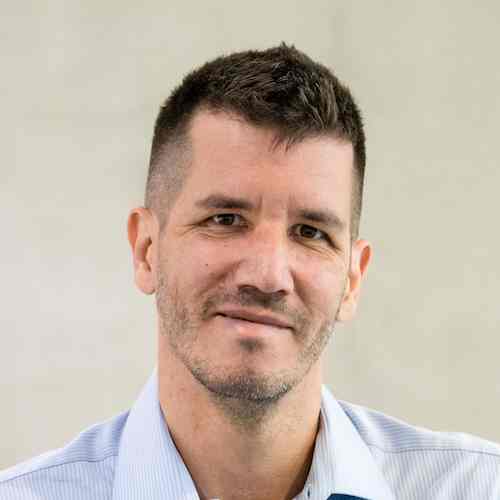
Kord Eickmeyer is a Lecturer at Technische Universität Darmstadt in the Department of Mathematics, specializing in the mathematical logic group. He holds a PhD in mathematics from Humboldt University Berlin and has held postdoctoral positions at TU Darmstadt (2011–2017) and the National Institute of Informatics in Tokyo (2011–2013). His research focuses on finite model theory, graph structure theory, and computational complexity, particularly in descriptive and parameterized complexity, as well as randomization and derandomization techniques. Research interests include exploring the boundaries of computational complexity through logical frameworks, analyzing graph structures for efficient algorithm design, and investigating the role of randomness in computation. His work bridges theoretical computer science and mathematical logic, with applications in algorithm design and formal methods. Publications span topics from model-checking on ordered structures to gap-planar graphs and randomized logics. Collaborations include prominent institutions like the National Institute of Informatics and Humboldt University Berlin. No scientific awards are explicitly listed, but his extensive academic contributions reflect a strong research trajectory. Advising and grants are not detailed in the provided text, though his academic career includes supervision roles during his PhD and postdoctoral phases. His involvement with the mathematical logic group at TU Darmstadt highlights collaborative research efforts in foundational areas of computer science and mathematics.
Helmholtz Institute for Pharmaceutical ResearchGermany
Jilles Vreeken is a Professor of Computer Science at Saarland University and tenured faculty at the CISPA Helmholtz Center for Information Security, where he leads the Exploratory Data Analysis research group. He is also an ELLIS Fellow and Faculty of the Saarbrücken Unit on AI and ML. His work bridges theoretical foundations with practical applications in causal inference, unsupervised learning, and exploratory data analysis. Dr. Vreeken's research focuses on developing theory and algorithms for answering fundamentally exploratory questions about data: "what is going on in my data?", "what causes what and how?", and "what can we learn from this model?" without making unnecessary or unjustified assumptions. He takes a principled approach based on information theory to identify what is worth knowing, then develops efficient algorithms for extracting useful interpretable results. His work spans causal inference under realistic conditions (including hidden confounding, selection bias, and non-i.i.d. data), summarizing complex data and models in understandable terms, and combining these threads to create more robust and useful models across diverse data types. His recent publications demonstrate a strong trend toward causal discovery in increasingly realistic settings, including non-stationary time series, event sequences, and scenarios with hidden confounders. He has made significant contributions to federated learning, interpretable machine learning, and pattern mining. His work consistently applies information-theoretic principles to develop methods that are both theoretically sound and practically useful for extracting insights from complex data. Dr. Vreeken has received numerous prestigious awards including: IEEE ICDM'18 Tao Li Award for Excellence in Research IEEE ICDM'18 Best Paper Award UdS-CS'15 Busy Beaver Teaching Award ACM SIGKDD'11 Best Student Paper Award ACM SIGKDD'10 Doctoral Dissertation Runner-Up Award ECML PKDD'09 Best Student Paper Award As an advisor, Dr. Vreeken has mentored numerous doctoral researchers to completion, including Dr. Osman Ali Mian, Dr. David Kaltenpoth, Dr. Boris Wiegand, Dr. Sebastian Dalleiger, Dr. Janis Kalofolias, Dr. Jonas Fischer, Dr. Alexander Marx, Dr. Panagiotis Mandros, Dr. Kailash Budhathoki, Dr. Roel Bertens, Dr. Koen Smets, and Dr. Michael Mampaey. He has secured significant research funding as PI for multiple projects including "AI for Prediction and Therapy Guidance in Acute Stroke" (HAICU, 2025-2028), "Neuro-Explicit Models of Language, Vision and Action" (RTG, DFG, 2023-2028), and "Crushing Antimicrobial Resistance using Explainable AI" (HAICU, 2021-2024). Dr. Vreeken leads the Exploratory Data Analysis (EDA) research group at CISPA, which focuses on developing theory and algorithms for discovering novel insights from data, learning inherently interpretable models, and drawing reliable causal conclusions. The group has produced numerous influential algorithms and frameworks in causal inference, pattern mining, and exploratory data analysis, with applications spanning healthcare, materials science, and cybersecurity.
Prof. Dr.-Ing. André Borrmann is an academic leader at the Technical University of Munich (TUM) , where he has headed the Chair of Computing in Civil and Building Engineering since 2011 (formerly Computational Modeling and Simulation). He serves as Director of the TUM Georg Nemetschek Institute - AI for the Built World since 2025 and Spokesperson for the Leonhard Obermeyer Center since 2013. Research Interests Artificial Intelligence in Civil Engineering Digital Twinning Building Information Modeling (BIM) Pedestrian Dynamics Knowledge Representation Construction Simulation His work focuses on AI application across the built environment lifecycle - from generative design to maintenance prediction - with significant contributions to BIM standardization and buildingSMART International IFC extensions. He co-authored the German Ministry of Transport BIM Roadmap and led the BIM4INFRA2020 project. Awards include the 2024 Konrad Zuse Medal and multiple best paper awards at international conferences.
Dr. Holger Eichelberger is part of the Academic Staff in the Software Systems Engineering (SSE) department at the University of Hildesheim's Institute of Computer Science. He is affiliated with Faculty 4: Mathematics, Natural Sciences, Economics and Computer Science. His roles include membership in the Managing Committee of the Institute of Computer Science and the Committee for Student Scholarships. He has extensive experience in model-based software development, Industry 4.0 platforms, and performance engineering. Research Interests: Software Engineering for adaptive systems, Asset Administration Shells (AAS), IIoT platforms, MLOps, container orchestration, and open-source tools like EASy-Producer and SPASS-meter. His work focuses on bridging research and industrial needs, particularly in smart manufacturing and edge computing. Publications highlight contributions to IIoT platform analysis, AI integration in Industry 4.0, and performance benchmarking of communication protocols. He has organized conferences like ICPE and SSP and reviewed for top journals such as IEEE Transactions on Software Engineering. Key projects include the IIP-Ecosphere platform and contributions to standards like AAS. Collaborations involve institutions like the University of the West Indies and industry partners through funded projects like BMBF AI-Lab HAISEM. His research emphasizes reproducibility, interoperability, and scalable solutions for industrial challenges.
Torsten Ueckerdt is an Interim Professor in the Algorithmics I group at the Institute of Theoretical Informatics, Karlsruher Institut für Technologie (KIT). He has held academic positions since 2012, including postdoctoral roles and habilitation in Discrete Mathematics. His research focuses on combinatorial objects like graphs, posets, and hypergraphs in geometric settings, exploring structural properties, colorings, and geometric representations. Holds a PhD from TU Berlin (2011) and habilitation from KIT (2017). Professional service includes editorial roles (Annals of Combinatorics) and program committees for conferences like Graph Drawing, SoCG, and EuroCG. Supervised numerous students across Bachelor's, Master's, and diploma theses. Research interests span structural graph theory, geometric graph theory, Ramsey theory, discrete geometry, and combinatorial games. Active in graph drawing and algorithm design, with contributions to queue layouts, graph representations, and optimization problems like cartograms and wind farm cabling.
Prof. Stephen Kobourov is a Professor in the TUM School of Computation, Information and Technology at Technische Universität München (TUM). Previously, he held positions at the University of Arizona from 2000 to 2024, progressing from Assistant Professor to Full Professor, and served as Deputy Director of the Data Science Institute. His expertise lies in algorithm design, computational geometry, and graph visualization, with over 250 publications and significant funding from NSF, ONR, and USDA grants. Education: BS in Computer Science and Mathematics from Dartmouth College (1995), PhD in Computer Science from Johns Hopkins University (2000). Research focuses on efficient algorithms for graph drawing, visualization techniques for networks, and geometric algorithms. Notable contributions include work on stress metrics in graph layouts, hypergraph representations, and non-Euclidean visualization frameworks. He has co-chaired committees for ALENEX, IEEE PacificVis, and GD, and serves as an editor for JGAA, CGTA, and IEEE TVCG. Awards include the Fulbright Distinguished Chair (2015–2016), Humboldt Research Fellowship (2011–2014), and NSF Career Award (2006–2011). His recent work explores multi-layer network visualization, AI-driven graph analysis (e.g., MLLMs perception), and graph embeddings in non-Euclidean spaces. Advising and grants: Extensive grants from NSF and other agencies support his research. He has advised numerous students and collaborates internationally, contributing to labs like the Data Science Institute and initiatives such as the Institutional Knowledge Map (KMAP). Visualization projects include MetroSets (metro map-style set visualization), Wooly Graphs (knitting pattern frameworks), and tools for interactive network analysis. His work bridges theoretical algorithms with practical applications in science and technology.
Joachim Baumeister is a Professor at the Chair of Computer Science VI - Artificial Intelligence and Knowledge Systems within the Institute of Computer Science at the University of Würzburg's Faculty of Mathematics and Computer Science. While his primary employment since September 2010 has been at denkbares GmbH, a company specializing in knowledge-based systems, he continues to regularly give lectures at the university. His research focuses on Semantic Information Systems, Knowledge Graphs, Deep Learning applications, Natural Language Processing, and Knowledge-based Configuration for Industry 4.0. Professor Baumeister's work bridges theoretical AI research with practical industry applications, particularly in knowledge-based configuration systems and semantic technologies. His recent publications (2020-2024) reveal a strong emphasis on product configuration systems, semantic knowledge representation, regulatory document processing, and knowledge-based systems. His research has evolved from foundational work on semantic wikis and knowledge engineering to more recent applications involving deep learning and large language models, demonstrating adaptability to emerging technologies while maintaining focus on practical knowledge representation problems. Professor Baumeister's work demonstrates significant contributions to case-based reasoning, knowledge configuration, and semantic technologies, with applications spanning regulatory compliance, industrial configuration systems, and document processing. His current research areas include: Semantic Information Systems and Knowledge Graphs Deep Learning for Image Recognition and Language Understanding Knowledge-based Configuration for Industry 4.0 Natural Language Processing Intelligent Personal Assistants and Chat Bots Though specific students aren't listed in the provided information, Professor Baumeister actively invites students to contact him regarding projects, bachelor theses, and master theses in his areas of expertise. His work at denkbares GmbH focuses on the design, implementation, and evolution of knowledge-based systems and semantic information systems.
Martin Gronemann is a researcher at the Institute for Computer Science , University of Cologne, Germany. His work focuses on graph algorithms , graph drawing , and network visualization , with projects like the Open Graph Drawing Framework (OGDF) and GEODUAL (Geometric Duality). He has taught courses including Computer Science II and Efficient Algorithms , and led seminars on research-oriented programming in C++ . Research Interests: Graph Algorithms Graph Drawing Network Visualization Computational Geometry Book Embeddings Queue Layouts Publications highlight his expertise in structural graph theory, geometric representations, and algorithm engineering. Recent work includes advancements in map graphs of bounded treewidth , strictly-convex planar drawings , and NP-completeness of DAG page-number recognition . Projects: OGDF - Open Graph Drawing Framework GEODUAL - Geometric Duality Teaching: Lecture on Computer Science II (WS 18/19) Exercises for Efficient Algorithms (SS 17, WS 11/12, WS 10/11, WS 13/14, WS 16/17)
Rhenish Friedrich Wilhelm University of BonnGermany
Petra Mutzel is a Professor of Computer Science at the University of Bonn. Her research focuses on graph algorithmics, temporal networks, and combinatorial optimization with applications in data science and bioinformatics. She holds a PhD in Computer Science from the University of Cologne (1994) and a Diplom in Mathematics from the University of Augsburg (1990). Her work emphasizes algorithmic solutions for complex graph problems, including temporal graph analysis, graph learning, and optimization frameworks for real-world networks. She has contributed to open-source libraries like Tglib for temporal graph processing and frameworks like Scaffold Hunter for medicinal chemistry. Her research spans theoretical foundations and practical implementations, with notable contributions to graph drawing, vehicle routing optimization, and protein complex analysis. Mutzel’s recent publications (2022-2025) explore temporal network dynamics, robust combinatorial optimization, and scalable graph kernel methods. She actively engages in academic leadership, organizing conferences such as WALCOM 2022, and serves on editorial boards for journals in algorithms and computational geometry.
Dr. Johannes Zink is a Post-Doc researcher at the Chair of Efficient Algorithms (Prof. Kobourov) at Technical University of Munich (TUM), Campus Heilbronn since October 2024. Previously, he was a Post-Doc at University of Würzburg (2023-2024) and completed his PhD there under the supervision of Prof. Alexander Wolff. His research focuses on graph drawing, computational geometry, and algorithmic complexity problems. Zink's research interests span multiple areas within theoretical computer science, with particular emphasis on graph drawing algorithms, computational geometry problems, and complexity analysis. His work often involves finding efficient algorithms for geometric representations of graphs, analyzing the segment number of planar graphs, and developing techniques for polyline simplification. He has made significant contributions to understanding upward planar drawings, tangle complexity, and level planarity problems. His publication record shows a strong trend toward geometric graph representations, with many papers focusing on visualization techniques, algorithmic solutions for drawing problems, and complexity analyses. His research combines theoretical insights with practical applications, particularly in visualization systems and geometric data processing. Awards and Recognition Multiple 1st place wins at Graph Drawing Live Challenges (2018, 2020, 2023, 2024) PhD prize from Lower Franconian Memorial Year Foundation (2024) PhD prize from University of Würzburg Institute of Computer Science (2023) Deutschlandstipendium scholarship (2015-2017) Bachelor's thesis prize from University of Würzburg (2016) Zink has supervised numerous bachelor's and master's theses, demonstrating his commitment to mentoring the next generation of researchers. His teaching portfolio includes courses on computational geometry, advanced algorithms, and graph visualization. He has also served on program committees for major conferences including EuroCG 2025 and GD 2023, reflecting his standing in the academic community.
Stefan Zellmann is an Associate Professor and Principal Investigator of the DFG Project 'VTV-AMR' at the Institute of Computer Science , University of Cologne. His research focuses on the intersection of large-scale scientific visualization and high-performance computing, particularly in developing real-time rendering algorithms for adaptive mesh refinement (AMR) data. He leads projects such as ExaBrick (AMR rendering framework) and Visionaray (cross-platform ray tracing library). Education & Roles: Completed his PhD in 2014 on 'Interactive High-Performance Volume Rendering'. Currently teaches courses on graphics processor architectures and programming, including Practical Computer Science: Architecture and Programming of Graphics and Coprocessors . Research Interests: Direct volume rendering, physically based rendering, AMR visualization, GPGPU computing, and FPGA programming. His work emphasizes low-latency interaction and efficient algorithms for supercomputers/multi-GPU systems. Awards: Honorable Mention @EGPGV 2020, Best Paper Awards @EGPGV 2018 (for Rapid k-d Tree Construction ), @VDA 2017 (for Ray Clipping ), and @PDCS 2012 (for Distributed Volume Rendering Architecture ). Key Projects: ExaBrick (AMR rendering), Visionaray (ray tracing), Virvo (volume rendering library), and HPSC TerrSys (high-performance computing in terrestrial systems). Grants & Services: Co-Chair of IEEE LDAV 2022 Posters, Program Committee member for IEEE VIS and EGPGV. Regular reviewer for journals/conferences like TVCG and IEEE VR. Labs/Teams: Part of the Center for Data and Simulation Science (CDS), focusing on visualization algorithms for exascale computing and large-scale scientific data.
Irene Parada is an Assistant Professor and Serra Húnter Fellow at the Universitat Politècnica de Catalunya (UPC BarcelonaTech), Spain, where she is affiliated with the Department of Computer Science in the College of Mathematics and Computer Science. She is a member of the Research Group on Discrete, Combinatorial and Computational Geometry, contributing to both theoretical and applied aspects of geometric algorithms. Her academic background includes a PhD in Computer Science from Graz University of Technology (2019), a Master’s in Advanced Mathematics and Mathematical Engineering from UPC (2015), and a Bachelor’s in Mathematical Engineering from Universidad Complutense de Madrid (2014). She has held postdoctoral positions at the Technical University of Denmark, TU Eindhoven, and Utrecht University. Her research lies at the intersection of computational geometry, graph drawing, and algorithmic robotics. She investigates geometric graph representations, reconfiguration of modular robots, crossing numbers, and motion planning algorithms. Her work combines theoretical depth with practical applications in robotics and visualization. Her recent publications, appearing in top venues like SoCG, GD, ESA, and Algorithmica, reveal a strong trend toward geometric graph theory, reconfiguration problems, and algorithmic complexity. Topics include optimal compaction of sliding cubes, upward planar embeddings, and Fréchet-based trajectory analysis. Best paper award at EuroCG 2022 Best paper award at ICALP 2021 Excellent Course Evaluation at TU Eindhoven (2020/2021) She has advised and collaborated with numerous researchers in the field, though no formal students are listed. She has taught courses in Numerical Computing, Algorithms, Data Structures, and Motion in Robotics at UPC, Utrecht University, and TU Eindhoven. She has not received public mention of grants, but her Serra Húnter Fellowship and Margarita Salas postdoctoral position indicate competitive funding support. She is actively involved in the Research Group on Discrete, Combinatorial and Computational Geometry at UPC and collaborates extensively with researchers across Europe, particularly in Austria, the Netherlands, and Germany.
Roman Pflugfelder is a Marie Curie Fellow and active researcher at the Technical University of Munich (TUM), where he is affiliated with the Chair for Computer Vision and Artificial Intelligence in the School of Computation, Information and Technology. He simultaneously holds a postdoc position at the Technion in Israel under Prof. Michael Lindenbaum and serves as a lecturer at TU Wien. Currently on leave from a Scientist position at the AIT Austrian Institute of Technology in Vienna, Pflugfelder focuses on solving occlusion challenges in machine and human vision through his Marie Curie project 'Video De-Occlusion'. His research spans object tracking and detection, motion analysis, object recognition, and visual learning, with strong emphasis on practical applications in video surveillance systems. Pflugfelder has developed notable technologies including traffic monitoring systems based on competitive learning, the CMT tracker using consensus of parts, and indoor localization with non-overlapping security cameras. His work bridges theoretical computer vision with real-world implementation, having been deployed by governmental organizations and companies. Analysis of his recent publications (2022-2025) reveals a consistent focus on multi-object tracking, satellite imagery analysis, and occlusion handling in visual recognition systems. His work shows progression from traditional tracking methods toward more sophisticated deep learning approaches for satellite video analysis and temporal modeling to address occlusion challenges. The publications span top-tier venues including CVPR, ICCV, ECCV, and NeurIPS, demonstrating his standing in the computer vision community. Marie Skłodowska-Curie Fellowship (2022) IEEE/CvF WACV Best Paper Prize (2014) Multiple reviewer awards (2016 - Journal of Image and Vision Computing, 2017 - Journal of Pattern Recognition, 2019 - CVPR) Pflugfelder supervises Master's students at TUM and previously managed a team of six researchers at AIT, coordinating the strategic 'Mobile Vision' program. He co-initiated the VOT challenges and workshop series in 2012, contributing significantly to benchmarking in visual object tracking. His research often involves interdisciplinary collaborations across European institutions and Israel, with strong emphasis on translating theoretical advances into practical surveillance applications. As part of the Dynamic Vision and Learning Group at TUM under Prof. Laura Leal-Taixé, Pflugfelder works within a vibrant research ecosystem focused on cutting-edge computer vision problems. His current project investigates how temporal information in video sequences can overcome limitations of single-image recognition systems, drawing inspiration from cognitive science concepts like visual persistence and anorthoscopic perception.
Prof. Dr. Till Tantau is a Full Professor of Theoretical Computer Science at the University of Lübeck , Germany. He has served as Dean of Studies for the Faculty of Technology and Natural Sciences (MINT sections) since 2008 and chairs the Scientific Advisory Board of the German National Computer Science Competition from 2014. His research focuses on computational complexity, parameterized algorithms, and bioinformatics, particularly logspace problems and descriptive complexity theory. Born 1975 in Berlin, Germany 1994–1999: Studied at TU Berlin 1999–2005: Research Assistant at TU Berlin 2003: Doctorate in Natural Sciences (Dr. rer. nat.) at TU Berlin 2004: Research stay at ICSI, Berkeley with Richard Karp 2005: Appointed W2 Professor at University of Lübeck 2015: Promoted to W3 Professor (highest professorial rank in Germany) His research interests include: Computational Complexity: Logspace problems, weak cardinality theorems, and structural similarities across computation models Parameterized Algorithms: Color coding, kernelization techniques, and parallelization of fixed-parameter tractable problems Bioinformatics: Haplotyping problems under perfect phylogeny models Descriptive Complexity: Logical characterizations of computational problems Graph Algorithms: Shortest/longest paths in series-parallel graphs and smoothed analysis of binary search trees Publications since 2000 demonstrate expertise across theoretical computer science, with 15 recent works focusing on parameterized complexity, parallel algorithms, and applications in bioinformatics. He contributes to algorithmic metatheorems, color coding techniques, and kernelization for hitting set problems. Scientific Awards & Scholarships : 1992: Federal winner of German computer science competition 1993: Silver medal at International Olympiad in Informatics 1993: German National Academic Foundation scholarship 1994: Dr. Habbena Prize for Abitur excellence 1999: Erwin Stephan Prize, TU Berlin 2002: Best student paper award at MFCS 2003: GI Dissertation Prize nomination 2007–2021: Heliprof Teaching Awards (5x recipient) His teaching includes courses on algorithm design, complexity theory, LaTeX/TikZ, and theoretical computer science. He chairs the Scientific Advisory Board of the German National Computer Science Competition and participates in academic governance as Dean of Studies.
Professor Klaus-Dieter Althoff is a faculty member at the University of Hildesheim, working within the Intelligent Information Systems Division of the Mathematics, Natural Sciences, Economics & Computer Science school. His research focuses on applying artificial intelligence techniques, particularly case-based reasoning (CBR), to architectural design support systems and knowledge management applications. His research interests center on Case-Based Reasoning methodologies , AI-assisted architectural design , semantic building information modeling , and knowledge representation systems . Althoff's work bridges computer science with practical applications in architecture, developing systems that automate and enhance early-stage design processes through machine learning and case-based approaches. Analysis of his recent publications (2021-2024) reveals a strong trend toward integrating deep learning with traditional case-based reasoning for architectural applications. His research increasingly focuses on autocompletion of architectural spatial configurations , BIM (Building Information Modeling) enhancement , and explainable AI for design support . The work spans theoretical CBR methodology development and practical implementations in architectural design tools. Althoff maintains active research collaborations across disciplines, with publications spanning architecture, computer science, and cybersecurity applications of case-based reasoning. His work demonstrates consistent methodological development in CBR frameworks like FLEA and SEASALT, while expanding into new application domains including network security and fitness training systems.