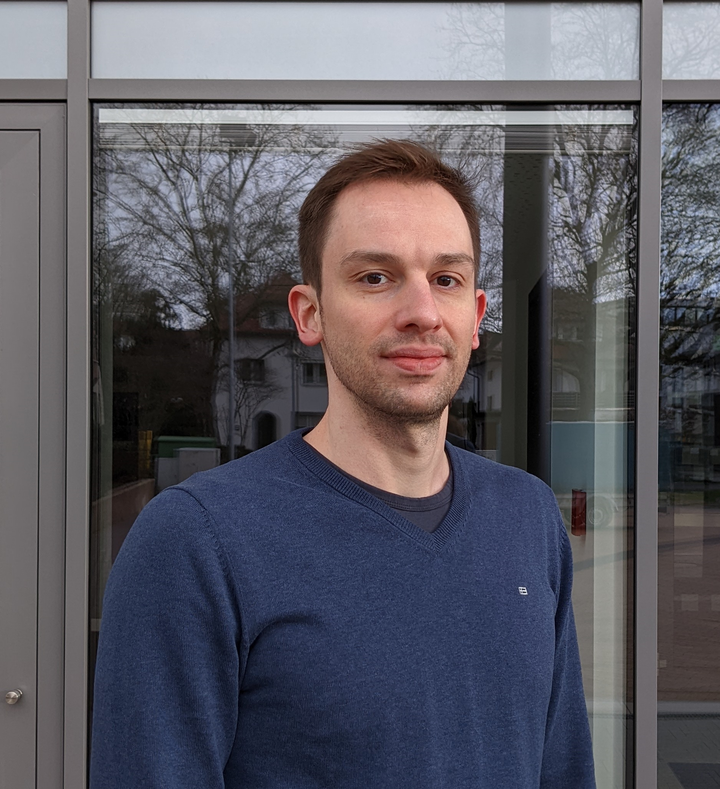
Ralph Peeters is a Postdoctoral Researcher at the Data and Web Science Group within the University of Mannheim . He specializes in entity matching, data integration, and web-based systems. His research explores the application of large language models and deep learning techniques to improve product matching and knowledge graph construction. Focus areas: Entity Matching, Data Integration, Large Language Models Teaching roles: Course Creator/Lecturer for LLM-based Agents, TA for Data Mining, Web Mining, and Web Data Integration (2019–2025) Collaboration: Works under the supervision of Prof. Dr. Christian Bizer Recent publications highlight his work on benchmarks like WDC products and SOTAB, which leverage schema.org annotations and semantic web technologies for improving data quality and integration at scale. His research combines traditional NLP techniques with modern deep learning approaches.
Hongrae Lee is a researcher specializing in database systems, natural language processing, and data mining. His work bridges structured data management with language models, focusing on tasks like natural language to SQL translation, similarity joins, and efficient data processing. His research interests include: Database query optimization and similarity search Language model applications for text generation and hallucination correction Web data curation and structured data ecosystems Cloud storage optimization and distributed systems Hongrae Lee's recent publications (2022-2023) highlight trends in large language models (LLMs) for dialogue applications, attributed text generation, and acronym disambiguation with weak supervision. Earlier work (2016-2007) established foundational techniques in database scalability, LSH-based similarity estimation, and geographical data thinning. He has collaborated extensively with researchers at institutions like Google, Seoul National University, and University of British Columbia on projects such as WebTables, LaMDA, and Google Fusion Tables. His contributions span both theoretical advancements (e.g., variance-aware query optimization) and practical systems (e.g., CloudRAMSort, T5-based disambiguation).
Jason Clark is a Lecturer and Lead for Research Informatics at Montana State University (MSU) Library, where he directs digital scholarship initiatives and researcher services. His work integrates library science with technology, focusing on semantic web development, metadata, digital libraries, and information systems. Lead, Research Informatics, Montana State University (2020–present) Head, Special Collections & Archival Informatics, MSU (2017–present) Head, Library Informatics & Computing, MSU (2014–2017) Digital Initiatives Librarian, MSU (2005–present) His research interests include information retrieval, metadata and semantic web, machine learning for user experience, digital libraries, and interface design. He emphasizes practical applications of technology in libraries, such as improving search UX, building knowledge graphs, and enabling web-scale discovery through structured data. His recent publications reflect a strong trend in leveraging semantic web technologies, APIs, and user data to enhance library services. Themes include privacy-aware service design, dataset search, citation harvesting, and responsive/mobile library applications. His work bridges theoretical information science with real-world implementation. Participatory Approaches for Designing and Sustaining Privacy-Oriented Library Services (2020) Building a Dataset Search for Institutions (2019) Citations as Data (2017) The Open SESMO Project (2017) Linked Data is People (2017) Clark has advised on digital library projects and taught courses on information technology tools. He has authored influential books such as Responsive Web Design in Practice (2015) and Building Mobile Library Applications (2012), contributing significantly to library technology practice. His career began in software development before transitioning into library informatics, giving him a unique interdisciplinary perspective. He is actively involved in building digital infrastructure at MSU, including web services, APIs, and metadata systems. His leadership in digital access and computing reflects a long-term commitment to innovation in academic libraries.
Philippe Rigaux is a Professor at the Conservatoire national des arts et métiers (CNAM) in Paris, France, where he conducts research at the CÉDRIC laboratory (Centre d'études et de recherche en informatique et communications). His academic career spans over 25 years with continuous publication output from 1995 through 2024, demonstrating sustained research activity in computer science with a specialized focus on music information retrieval and database systems. Rigaux's research interests center on the intersection of music and computer science, particularly in music score processing, representation, and querying. His work explores graph-based approaches to music representation, topological querying of music scores, and quality assessment in digital music libraries. He has made significant contributions to the development of tools and frameworks for music information retrieval, including the GioQoso quality assessment tool and the FACETS exploration system for large symbolic music collections. His research often bridges theoretical database concepts with practical music applications, focusing on scalable solutions for music content search and pattern matching. Analysis of his recent publications (2018-2024) reveals a consistent research trajectory focused on improving music information systems through innovative database techniques, graph theory applications, and quality assessment methodologies. His work shows increasing emphasis on multimodal music sources, collaborative music digitization, and advanced representation techniques for rhythm and structure. Rigaux frequently collaborates with researchers across Europe, particularly on projects related to digital music libraries and music information systems. Rigaux has contributed to major projects including NEUMA (a collaborative digital score library), CollabScore (integrating optical recognition with multimodal music sources), and GioQoso (a quality assessment tool for music notation). His research has been published in prestigious venues including Data and Knowledge Engineering, International Journal on Digital Libraries, and proceedings of the International Society for Music Information Retrieval (ISMIR).
Dr. Danupon Na Nongkai is an Associate Professor in the Division of Theoretical Computer Science at KTH Royal Institute of Technology's School of Electrical Engineering and Computer Science. His research focuses on theoretical computer science, with specialization in graph algorithms for dynamic and distributed environments. Supported by prestigious grants including the Swedish Research Council's VR Young Researcher Grant (2015) and the European Research Council's Starting Grant (2016), his work spans approximation algorithms, communication complexity, game theory, verification, theoretical databases, quantum algorithms, and social network analysis. PhD in Algorithms, Combinatorics, and Optimization (ACO) from Georgia Tech (2011) Co-winner of Principles of Distributed Computing Doctoral Dissertation Award (2013) Research Interests: Dr. Na Nongkai investigates fundamental problems in graph theory and algorithm design, particularly in dynamic, distributed, and quantum computing paradigms. His research connects theoretical computer science with practical applications in network processing, optimization, and complexity analysis. Article Trends: Recent publications demonstrate expertise in near-linear time algorithms for shortest paths, cut problems, and connectivity in diverse computational models. Key themes include cross-paradigm optimization (dynamic/static, distributed/parallel, quantum), expander decomposition applications, and submodular function analysis. Scientific Recognition: FOCS 2022 Best Paper Award ERC Starting Grant recipient VR Young Researcher Grant PODC Doctoral Dissertation Award Advising & Grants: As a principal investigator, Dr. Na Nongkai has mentored numerous researchers through collaborative publications with 85 co-authors. His group's funding includes competitive national and European grants for cutting-edge algorithm research.
Martin Pekár Christensen is a Research Fellow at the Department of Computer Science , The Technical Faculty of IT and Design , Aalborg University . His work focuses on Semantic Data Lakes , Semantic Search , and Table Semantics , with an emphasis on efficient algorithms for data discovery. Research Trends : His recent publications (2024-2025) address semantic table search in large-scale data lakes, including benchmark datasets for evaluation and novel methods for query optimization. These works intersect Computer Science , Knowledge Graphs , and Information Retrieval . Collaborations : He collaborates internationally with researchers like Antonia Leventidis and Katja Hose. His 2025 publication at EDBT and 2024 contribution to SIGIR highlight cross-institutional teamwork. Research Datasets : Christensen co-developed the Semantic Table Search Dataset (Zenodo, 2023) and the RDF2Vec Embedding Generator (Zenodo, 2022), both open-access and widely cited.
Professor Torben Bach Pedersen at Aalborg University's Department of Computer Science within The Technical Faculty of IT and Design is a leading expert in Data Engineering, Artificial Intelligence, and Energy Systems. With over 394 publications and 19 completed projects, he directs research at the Daisy – Center for Data-intensive Systems and leads innovations in energy flexibility and smart grid technologies. Key research areas: Data Warehousing, AI/ML, Energy Systems, Smart Grids Major projects: domOS (Smart Building OS), FEVER (Virtual Power Plants), DiCyPS (Cyber-Physical Systems) His research spans data-intensive systems, AI applications in energy management, and smart infrastructure development. Recent work focuses on transformer-based network AI and energy flexibility metrics. Scientific recognition includes: Æresdoktor (Honorary Doctor) at TU Dresden (2021) Best Paper Award Runner-Up (2019) WWW 2017 Best Demo Award Best Poster Award World Smart Grid Forum (2013) Member of Danish Academy of Technical Sciences (2013) As principal investigator and supervisor in 17 PhD projects, he advances AI-driven solutions for 6G wireless systems, smart buildings, and energy market optimization.
Adrien BOIRET is a contractual lecturer-researcher affiliated with INSA Centre Val de Loire and associated with the LIFO (Laboratoire d'Informatique Fondamentale d'Orléans). His work focuses on data privacy, semantic graph databases, and formal methods. Key Research Areas: Data Privacy, Graph Databases, Semantic Web, Differential Privacy, and Large Language Models (LLMs). His recent publications emphasize privacy-preserving data transformations , graph sanitization , and LLM-driven text anonymization . Collaborative efforts highlight interdisciplinary work in database systems and AI ethics. Contact: adrien.boiret@insa-cvl.fr
Daniel Hummer serves as an Associate Professor in the Department of Geology at Southern Illinois University, teaching courses including Mineralogy, Ore Deposits, and Earth's Deep Interior. His research program investigates fundamental thermodynamics and kinetics of mineral formation across diverse geological conditions, with emphasis on mineral stability, crystal structure evolution, and Earth's chemical history. Education: B.S. in Chemistry, Iowa State University, 2004 B.S. in Geology, Iowa State University, 2004 Ph.D. in Geoscience, Penn State University, 2010 Dr. Hummer's research integrates experimental, computational, and data-driven approaches across four primary domains: (1) Predictive mineral discovery through the Carbon Mineral Challenge, which identified 31+ new carbon-bearing species; (2) High-pressure mineral compression modeling using ion-based compressibility frameworks; (3) Development of MinKin software for quantifying mineral-fluid reaction kinetics; and (4) Reconstruction of Earth's redox evolution via transition-metal mineral occurrence databases. His work bridges mineral physics, geochemistry, and data science to address planetary-scale questions. Analysis of his publication record reveals strong thematic continuity in mineral ecology and data-intensive methodologies, with significant contributions to carbon mineral systems, manganese redox chemistry, and computational mineralogy. Key trends include network analysis of mineral associations, fractal distributions in crystallography, and planetary habitability assessments through hydrothermal mineral studies. Scientific Awards: No major scientific awards listed in available information Dr. Hummer leads active research projects supported by collaborations with Penn State, Oak Ridge National Lab, Brookhaven National Lab, Carnegie Institution, and international partners. While specific grant details aren't provided, his work on mineral discovery and kinetics modeling demonstrates sustained external funding. His Carbon Mineral Challenge initiative exemplifies large-scale collaborative science involving global mineralogical networks. His research teams include geoscientists from Johns Hopkins, Rensselaer Polytechnic Institute, and University of Arizona, focusing on mineral occurrence databases and redox evolution studies. Current fieldwork targets thallium-arsenic deposits in North Macedonia for novel mineral discovery, while computational efforts expand MinKin's capabilities for complex mineral reaction systems.
José Luis Zechinelli Martini is a full-time Professor in the Department of Computing, Electronics and Mechatronics at the School of Engineering, University of the Americas Puebla (UDLAP), serving as Academic Coordinator of the Bachelor's Degree in Computer Systems since 2002. A regular member of the Mexican Academy of Computing (2016-present), his career spans over two decades with significant contributions to distributed data management and cloud computing research. His educational background includes: PhD in Computer Science, Université Grenoble I Master's Degree in Information and Communications Systems, Université Grenoble I Bachelor of Computer Systems Engineering, University of the Americas, Puebla Dr. Zechinelli Martini's research centers on integrating Big Data collections across heterogeneous infrastructures through spatiotemporal query languages for distributed multimedia retrieval. His work bridges efficient data management , ambient systems , and cloud architectures with emerging focus on decolonial AI and inclusive urban computing . Recent projects emphasize ethical resource allocation in federated learning and climate change history analysis in Latin American contexts. His 2020-2024 publications reveal a strategic shift toward societally impactful applications , combining data science with environmental sustainability (GREENHOME energy monitoring), historical analysis (LACLICHEV climate archives), and urban equity. Key trends include decolonial frameworks for AI fairness, data lake architectures for natural sciences, and inclusive pipeline design through computational creativity, demonstrating cross-disciplinary integration of computer science with social and environmental domains. While no specific awards are documented, his Mexican Academy of Computing membership and leadership in internationally funded projects signify professional recognition. He has coordinated major research initiatives funded by CONACyT, ECOS-ANUIES, European Community FP7, and Microsoft. Academically, he shaped curriculum and student development through the Disciplinary Committee on Student Affairs (2006-2016), Graduate Committee, and Honors Program Committee, while promoting critical thinking through practical pedagogical strategies. As lead researcher in the GALILEAN project on "Just in Time" cloud architectures (LIRIS CNRS/University of Arizona collaboration) and former head of the Franco-Mexican Laboratory's Database Group (2008-2020), he directs teams advancing distributed data processing for massive datasets with international scientific impact.
Daniel Hashimoto is an Assistant Professor in the Department of Surgery at the Perelman School of Medicine, University of Pennsylvania. He directs the Penn Computer Assisted Surgery and Outcomes (PCASO) Laboratory, a multidisciplinary research group bridging surgery, computer science, and robotics. He also holds appointments in the School of Engineering and Applied Science, focusing on General Robotics, Automation, Sensing, and Perception. His research centers on applying artificial intelligence (AI), computer vision, and robotics to enhance surgical decision-making and education. Key areas include intraoperative data analysis, digital health literacy, and automated feedback systems for surgical technique improvement in clinical and simulated environments. Recent publications highlight his work on AI-driven surgical video analysis, federated learning for medical data, and ethical considerations in robotic surgical training. The PCASO Lab collaborates on validating AI tools for procedures like cholecystectomy and endoscopic myotomy while addressing data quality and privacy frameworks. Scientific Awards: Linda Pechenik Montague Investigator Award (Perelman School of Medicine) Daniel mentors student researchers such as Vivek Singh, Aarush Sahni, and So Hee Ahn, who contribute to projects on robotic procedures and surgical education. The PCASO Lab emphasizes interdisciplinary collaboration between clinicians, engineers, and data scientists.
Thomas Zeume is a Professor for Logic and Formal Verification at Ruhr University Bochum since 2020. Previously, he served as a Scientific Assistant at TU Dortmund's Faculty of Computer Science from 2009 to 2020. His work bridges computational logic with database theory, complexity theory, and formal verification, while also innovating in educational technologies for formal foundations of computer science. Research Focus: Dynamic Complexity Theory: Classifying logical query languages for evolving databases. Formal Verification: Designing logics for software/hardware verification and XML/graph databases. Educational Technologies: Developing the Iltis system for interactive learning in formal logic and computational reductions. Publications and Contributions: His research spans dynamic complexity, two-variable logic, and CS education tools, with key works in Journal of the ACM , LICS , and SIGCSE TS .
Assoc. Prof. Petya Asenova, PhD, is a permanent faculty member at New Bulgarian University's Bachelor's Faculty since 2001, holding the rank of Associate Professor in the Department of Informatics. She has served as Director of bachelor's programs in Informatics and Network Technologies, Director of the Master's program in IT Project Management, Head of the Department of Informatics, and Dean of the Bachelor's Faculty. Her academic credentials include: Bachelor's degree in Computational Mathematics from Plovdiv University "P. Hilendarski" Master's degree in Mathematics Education from Plovdiv University "P. Hilendarski" Master's degree in Informatics from Sofia University "St. Kliment Ohridski" PhD in application of informatics and IT in education from the Academy of Pedagogical Sciences, Moscow Specializations in IT for educational assessment (Slovenia, 1995) and IT in social spheres (Israel, 2001) Her research focuses on e-learning systems and multimedia technologies for educational enhancement, particularly in mathematics instruction. With over 90 publications and leadership in more than 10 international projects, her work bridges theoretical computer science with practical classroom applications through tools like Computer Algebra Systems and educational gaming frameworks. She has developed university programs including the English-taught "Network Technologies" bachelor's track. Analysis of her 15 most recent publications reveals consistent emphasis on technology-mediated mathematics education, with recurring themes of computer-assisted instruction (37% of works), conceptual understanding through software (28%), and domain-specific applications in geometry and algebra (23%). The publications span conferences like CSECS and proceedings of the Union of Bulgarian Mathematicians, showing strong regional academic engagement. No scientific awards or fellowships were documented in the source material. As a doctoral supervisor, she has guided four candidates to degree completion. Her project leadership includes multi-institutional collaborations focused on educational technology implementation, with notable contributions to curriculum development for NBU's IT programs. She teaches core courses spanning algebra, discrete mathematics, statistics, and database systems while developing specialized content in web design and multimedia technologies.
Yatsko Oksana Myroslavivna is an Associate Professor at the Department of Computer Science, Chernivtsi National University named after Yuriy Fedkovych. She holds a Candidate of Pedagogical Sciences degree (specialty 13.00.02 - theory and methods of teaching informatics) and has been certified as an Associate Professor since 2022. Her research focuses on computer-oriented methodological systems for teaching computer disciplines, with specializations in data mining for business applications, game theory implementation in economic decision-making, web technologies development, and algorithm design. She actively contributes to educational literature with multiple textbooks on Discrete Mathematics, Operations Research, Web Technologies, and Systems Modeling. Her professional engagements include membership in the Bukovina Information Technology Cluster, Chernivtsi Mathematical Society, and participation in international conferences like SPIE Optical Engineering and Correlation Optics. She has completed advanced certifications in machine learning, data visualization, and online education technologies from Prometheus, SoftServe, and other institutions. Her publications demonstrate expertise in strategic business analysis, cross-platform decision support systems, and educational software development. The 15 most recent works (2023-2024) cover data structures, game theory applications, web development tools, and polarization-based biomedical diagnostics. She serves as an expert for Ukraine's Ministry of Education and National Agency for Quality Assurance in Higher Education.
Shawn Bowers is a Professor in the Department of Computer Science at Gonzaga University, with prior roles as an Associate Project Scientist at the UC Davis Genome Center and Postdoctoral Researcher at the San Diego Supercomputer Center. His educational background includes: BS in Computer Science from the University of Oregon MS and PhD from the OGI School of Science & Engineering at OHSU Dr. Bowers' research centers on conceptual modeling and data provenance in scientific workflows, with significant contributions to ontology-based frameworks for ecological data semantics through NSF-funded projects like Semtools and SONet. His work bridges computer science with environmental science to enhance data discovery and integration. His publication record reveals a sustained focus on workflow provenance systems, including the development of the Query Language for Provenance (QLP) and visualization tools for workflow dependencies. These contributions demonstrate interdisciplinary applications spanning ecological research, e-science, and data management infrastructure. Dr. Bowers maintains extensive research collaborations with UC Davis (30 shared outputs), the National Center for Ecological Analysis and Synthesis (9 outputs), and the San Diego Supercomputer Center (9 outputs), supported by NSF grants including Kepler/CORE and Processing PhyloData. He teaches undergraduate courses in software development and database management systems at Gonzaga University.