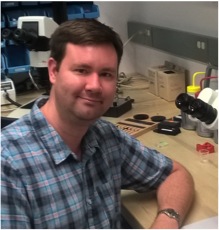
معرفی
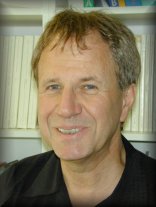
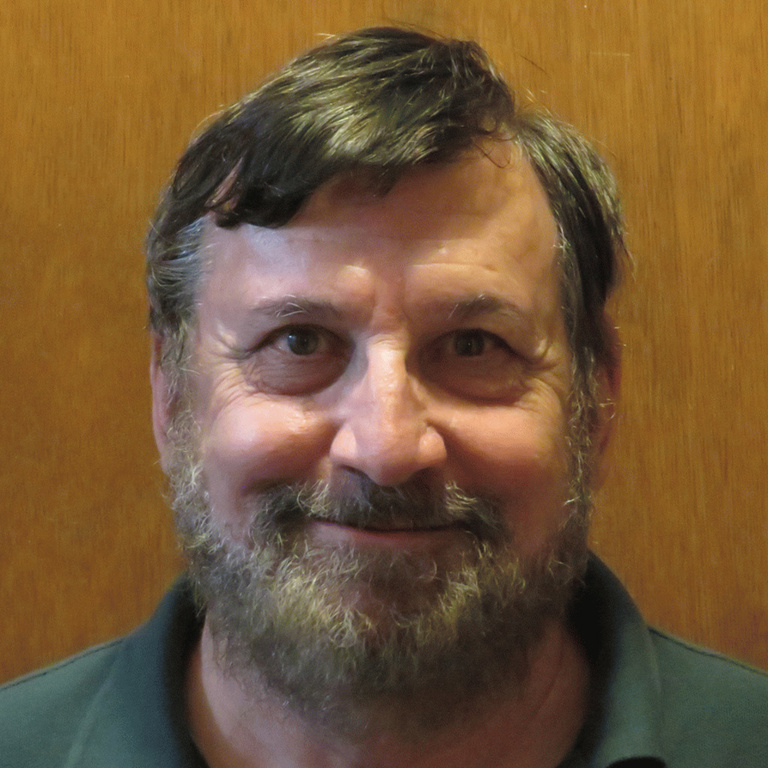
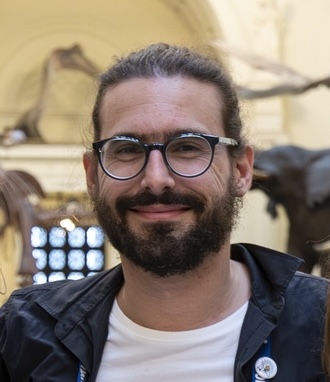
Daniel Hummer serves as an Associate Professor in the Department of Geology at Southern Illinois University, teaching courses including Mineralogy, Ore Deposits, and Earth's Deep Interior. His research program investigates fundamental thermodynamics and kinetics of mineral formation across diverse geological conditions, with emphasis on mineral stability, crystal structure evolution, and Earth's chemical history.
Education:
- B.S. in Chemistry, Iowa State University, 2004
- B.S. in Geology, Iowa State University, 2004
- Ph.D. in Geoscience, Penn State University, 2010
Dr. Hummer's research integrates experimental, computational, and data-driven approaches across four primary domains: (1) Predictive mineral discovery through the Carbon Mineral Challenge, which identified 31+ new carbon-bearing species; (2) High-pressure mineral compression modeling using ion-based compressibility frameworks; (3) Development of MinKin software for quantifying mineral-fluid reaction kinetics; and (4) Reconstruction of Earth's redox evolution via transition-metal mineral occurrence databases. His work bridges mineral physics, geochemistry, and data science to address planetary-scale questions.
Analysis of his publication record reveals strong thematic continuity in mineral ecology and data-intensive methodologies, with significant contributions to carbon mineral systems, manganese redox chemistry, and computational mineralogy. Key trends include network analysis of mineral associations, fractal distributions in crystallography, and planetary habitability assessments through hydrothermal mineral studies.
Scientific Awards:
- No major scientific awards listed in available information
Dr. Hummer leads active research projects supported by collaborations with Penn State, Oak Ridge National Lab, Brookhaven National Lab, Carnegie Institution, and international partners. While specific grant details aren't provided, his work on mineral discovery and kinetics modeling demonstrates sustained external funding. His Carbon Mineral Challenge initiative exemplifies large-scale collaborative science involving global mineralogical networks.
His research teams include geoscientists from Johns Hopkins, Rensselaer Polytechnic Institute, and University of Arizona, focusing on mineral occurrence databases and redox evolution studies. Current fieldwork targets thallium-arsenic deposits in North Macedonia for novel mineral discovery, while computational efforts expand MinKin's capabilities for complex mineral reaction systems.