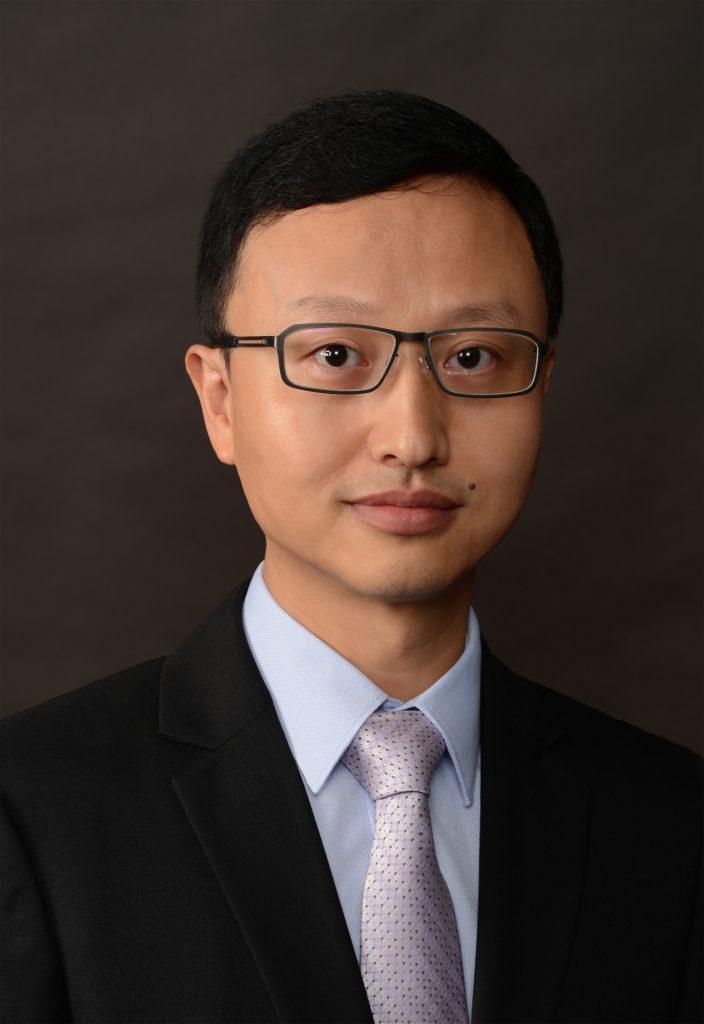
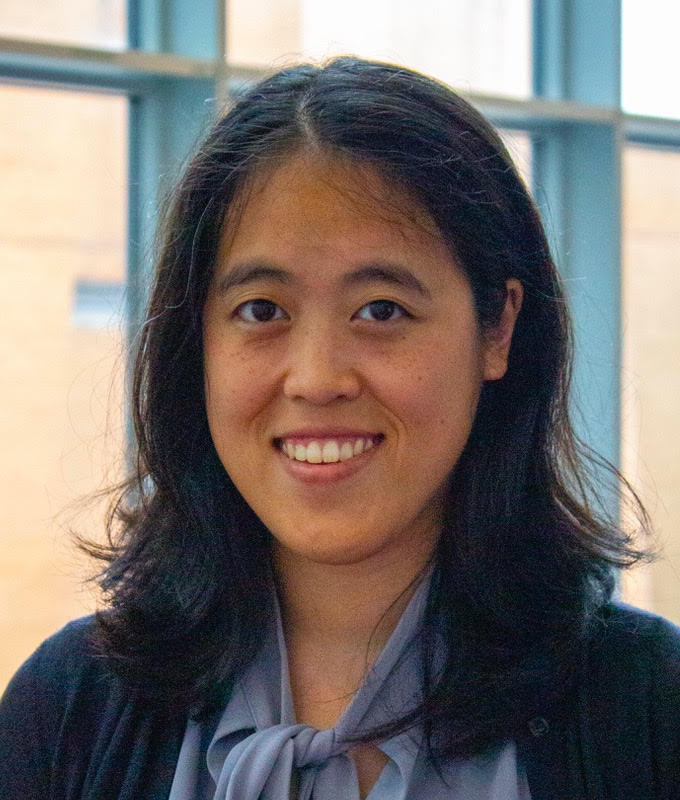
Daswin De Silva is a Full Professor of AI and Analytics at La Trobe University, Australia, and Deputy Director of the Centre for Data Analytics and Cognition (CDAC). He also holds an Adjunct Professor position at Lulea University of Technology, Sweden. His expertise spans AI ethics, algorithm development, and applications in healthcare, energy, and education. He leads major initiatives like the La Trobe Energy AI Platform for net-zero emissions and the OptusU AI Micro-credentials program. Education: PhD in AI (Monash University, 2011). Awards include the Australian Awards for University Teaching (2021), Vice-Chancellor’s Teaching Award (2019), and Mid-Career Research Excellence Award (2018). Editor of five journals including IEEE Transactions on Industrial Informatics and Springer Discover AI. Research focuses on generative AI, ethical AI systems, and vector symbolic architectures. Recent work includes AI applications in healthcare diagnostics, energy efficiency, and smart cities. He has secured AU$14M in research funding and supervised 15 PhD completions with 10 current students. Leadership roles include Deputy Chair of La Trobe’s Research & Graduate Studies Committee and chairmanship of IEEE committees on Responsible AI and Web/Information Systems. Keynote speaker at global conferences like IEEE HSI, INDIN, and ETFA. Media engagements include ABC News, Forbes, and The Conversation.
PD Dr. Kaspar Riesen is the Head of the Pattern Recognition Group at the Institute of Computer Science, University of Bern. His research focuses on graph-based methods for pattern recognition, with applications in document analysis, environmental modeling, and healthcare. Key interests include graph matching, neural networks, and spatio-temporal modeling. His work spans structural pattern recognition, graph embeddings, and keyword spotting in historical documents. Recent projects involve river network analysis using graph regression and hypoglycemia prediction via LSTM-GNN hybrid models. Publications emphasize graph theory advancements, such as normalized graph compression and geometric similarity learning. Collaborations include developing specialized algorithms for automated error detection and improving decision-making in simulated sports. Labs/Teams: Pattern Recognition Group (PRG) at the University of Bern.
Tiziano De Matteis is an Assistant Professor in the @Large Research group at Vrije Universiteit Amsterdam's Faculty of Science, Department of Computer Systems. He also holds an affiliation with the Network Institute. His research focuses on overcoming post-Moore architecture challenges through parallel and distributed computing, high-performance systems, energy efficiency, and FPGA applications. Previously, he was a PostDoc at ETH Zurich's SPCL Group and earned his MSc/PhD from the University of Pisa. Education PhD in Computer Science, University of Pisa MSc in Computer Science, University of Pisa Research Interests Post-Moore architectures for distributed ecosystems Energy-aware parallel computing High-level abstractions for parallel software development FPGA-based hardware acceleration Data stream processing and distributed systems Recent Research Trends Recent work emphasizes: Data center risk analysis and sustainability Optimizing microservices and distributed scheduling LLM model offloading to NVMe storage Python-based data-centric programming productivity GPU interconnect performance in supercomputing Grants & Projects Participates in the EU-funded 'Extreme and Sustainable Graph Processing' project (2023-2025), exploring scalable graph algorithms and energy-efficient computing systems. Teaching Accelerator-Centric Computing Ecosystems Computer Organization Distributed Systems Systems Seminar
Bettina Kemme is a Professor in the School of Computer Science at McGill University, Montreal, Canada. She leads the Distributed Information Systems Lab (DISL) and specializes in large-scale data management, distributed systems, and cloud computing. Her academic roles include teaching COMP 512 (Distributed Systems) and COMP 421 (Database Systems). Education: Diplom (M.Sc. equivalent) in Computer Science, Friedrich-Alexander University, Erlangen, Germany (1996) PhD in Computer Science, Swiss Federal Institute of Technology (ETH), Zurich, Switzerland (2000) Research Interests: Distributed systems, cloud-native data management, in-database analytics (AIDA project), monitoring-as-a-service frameworks, and scalable pub/sub systems for online games. Current projects focus on integrating machine learning with databases, cloud performance monitoring using SDN, and sustainable data systems for data science. Lab & Collaborations: Leads the Distributed Information Systems Lab (DISL) with active projects in distributed databases, cloud computing, and game systems. Collaborates on EU-Canada initiatives like the SustainSys program for sustainable data infrastructure. Advising: Supervises PhD and M.Sc. students in topics like monitoring frameworks (Mona ElSaadawy), in-database ML (Winnie He), and distributed systems (Maximilian Schiedermeier). Alumni include over 50 researchers from PhD candidates to undergraduate researchers.
Wout Weijtjens is a Research Fellow at Vrije Universiteit Brussel, affiliated with the Acoustics & Vibration Research Group in Applied Mechanics. His research focuses on structural health monitoring (SHM) of offshore wind turbines, fatigue analysis, and vibration-based damage detection using advanced signal processing and machine learning techniques. Current projects include FIRMEST (fatigue assessment of offshore wind turbine substructures) and FOOS (Forced Oscillations in turbines). His research interests span: Operational modal analysis for offshore structures Machine learning applications in SHM Fatigue life prediction under environmental variability Sensor networks for infrastructure monitoring Wind turbine dynamics under harsh conditions Recent publications demonstrate a consistent focus on developing predictive maintenance frameworks through multivariate sensor data analysis, uncertainty quantification in SHM systems, and validation of computational models against full-scale field measurements. Article trends emphasize machine learning integration with physical models for improved fatigue life assessment. Awards and recognitions include: Best Paper Award (2nd place, 2022) Poster Award (2017) Solvay Award (2015) As principal investigator on multiple grants including VLADBC7 and VLADBC9 projects, he supervises PhD candidates in vibration-based SHM and leads experimental validation at OWI-Lab's Large Climate Chamber. His team develops IoT monitoring solutions for civil infrastructure through the SMART TOWERS initiative.
SHEN Lei is a researcher at the National University of Singapore (NUS), affiliated with the Department of Physics. With a PhD in Physics from NUS, he specializes in Multiscale Modeling and Simulation and Materials Informatics , leveraging machine learning and computational methods for advanced materials discovery. Research Focus: Density functional theory, molecular dynamics, finite element analysis, and data-driven design of materials. Teaching: Modules include Mechanics and Waves (PC1433), Applied Quantum Mechanics (PC2130B), and Mechanical Properties of Materials (ESP2109). His work spans spintronics, ferroelectricity, and energy storage materials, with recent publications on interatomic potentials, sliding heterostructures, and battery anodes. He has received the Teaching Commendation Award and declined the Lee Kuan Yew Postdoctoral Fellowship . Notable Trends: Recent articles emphasize machine learning in materials science, van der Waals heterostructures, quantum transport, and medical image analysis. Subfields include Rashba spin-orbit coupling, piezoelectric tensor modeling, and defect-informed neural networks. Scientific Awards: Teaching Commendation Award (AY15/16; AY16/17) Lee Kuan Yew Postdoctoral Fellowship (2014) (declined)
Jose Walteros is an Associate Professor in the Department of Industrial and Systems Engineering at the School of Engineering and Applied Sciences, University at Buffalo. His research focuses on Large-Scale Optimization, Integer Programming, Multilevel Optimization, Logistics, Interdiction, and Defense Applications. PhD, Industrial and Systems Engineering (2014), University of Florida MSc, Industrial Engineering (2007), Universidad de los Andes, Bogotá BS, Industrial Engineering (2005), Universidad de los Andes, Bogotá Dr. Walteros' work spans critical applications in security, energy systems, and humanitarian logistics. His research includes interdiction games, stochastic programming for infrastructure resilience, and graph partitioning algorithms. His group GAMMA has mentored numerous graduate students who have successfully defended dissertations and moved to prestigious postdoctoral positions at institutions like Carnegie Mellon University and University of Pittsburgh. As part of the University at Buffalo faculty, Dr. Walteros contributes to seminar series and student mentoring programs. His group has received recognition for student service and teaching excellence, with advisees receiving multiple UB ISE Student Service and Leadership Awards and Teaching Awards.
Alin Deutsch is a Professor of Computer Science at the University of California, San Diego (UCSD), specializing in database systems, graph databases, and formal verification. He has contributed significantly to research areas including query optimization, data integration, and privacy-preserving systems. His work spans theoretical foundations and practical implementations, such as the Linked Data Benchmark Council (LDBC) and the TigerGraph database system. He co-authored over 100 papers and has been involved in major conferences like SIGMOD and VLDB. Research interests include graph query processing, parallel computing, data-centric business processes, and automated system verification. Recent work focuses on scalable hybrid analytics and graph databases. Deutsch is also active in database education, co-authoring a paper on UCSD's database curriculum. He has led projects in privacy-aware systems, such as policy-aware location-based services, and contributed to tools like CLIDE for interactive query formulation in service-oriented architectures. His collaborations involve industry partners like TigerGraph and academic institutions globally.
Anees Baqir is an Assistant Professor of Data Science at Northeastern University London, affiliated with the CoMENS Faculty's Data and AI department. He is also a research fellow at the Complex Human Behavior (CHuB) lab at Fondazione Bruno Kessler (FBK), Trento, Italy, contributing to the European-funded AI-CODE project studying misinformation and polarization in social media. His research focuses on analyzing online information dynamics, polarization, and machine learning applications in healthcare, crime prediction, and language processing. Education details are not explicitly provided here, but his work bridges computer science and social sciences through interdisciplinary projects. He is part of the Complex Systems Society and collaborates globally, leveraging Northeastern University's transnational network across 13 campuses in the UK, US, and Canada. Research interests include: (1) Misinformation spread and polarization in digital ecosystems, (2) Machine learning for health analytics and behavioral prediction, (3) NLP innovations for Urdu and multilingual content analysis, (4) Spatio-temporal crime modeling for smart cities, and (5) Computational social science methods for political and societal dynamics. His recent publications span 2020–2025, exploring topics like Twitter-based PTSD detection, Urdu language processing systems, and AI-driven crime prediction. His work frequently intersects technical methodologies with societal impact, such as analyzing polarization in Pakistan’s political discourse or developing frameworks for university course scheduling. He holds no explicitly listed academic awards but is actively involved in research initiatives addressing global challenges like misinformation and public health surveillance. His advisory roles and grant activities are not detailed here, though his CHuB lab affiliation suggests collaborative funding opportunities. Key affiliations include the CHuB lab (FBK, Italy), Complex Systems Society, and Northeastern’s global network. He contributes to projects like AI-CODE, focusing on federated social media analysis and European misinformation trends.
Alex Kontorovich is a Distinguished Professor of Mathematics at Rutgers University, where he holds the academic rank of Professor. His primary affiliation is with the Department of Mathematics, School of Arts and Sciences. He currently serves as Managing Editor of the Journal of the Association for Mathematical Research and is Executive Director of Rutgers MathCorps . During the 2024-2025 academic year, he is on leave, visiting Princeton University and the Institute for Advanced Study (IAS). Kontorovich's research focuses on automorphic forms, homogeneous dynamics, harmonic analysis, and number theory, with interdisciplinary connections to data science and machine learning. His work bridges pure mathematics with computational aspects, including sphere packing geometry and arithmetic dynamics. He has held distinguished visiting roles, such as the 2020-21 Distinguished Visiting Professor for the Public Dissemination of Mathematics at the National Museum of Mathematics (MoMath), where he contributed to academic content and exhibits. His academic career includes teaching advanced courses like Graduate Complex Analysis, Automorphic Representations, and History of Mathematics. Notable awards include the Simons Foundation Fellowship, von Neumann Fellowship at IAS, and Alfred P. Sloan Research Fellowship. Grants include multiple NSF awards (regular, CAREER, FRG) and a Binational Science Foundation grant. His research explores topics like spectral gaps, thin groups, and applications of modular forms to equidistribution problems. Kontorovich’s scholarly contributions extend beyond academia: he serves on the Scientific Board of Quanta Magazine , advises the Lean Focused Research Organization , and participates in editorial and strategic roles across institutions. His work emphasizes the interplay between theoretical mathematics and computational methods, shaping modern research in number theory and dynamics.
Mahsa Salehi is a Senior Lecturer in the Department of Data Science & AI at Monash University’s Faculty of Information Technology. She holds a PhD in Computer Science from the University of Melbourne and previously served as a postdoctoral researcher at IBM Research Australia. Her research focuses on data mining, machine learning, and time series analysis, with applications in healthcare, cybersecurity, and smart grids. Education: PhD in Computer Science, University of Melbourne (2016) MSc in Software Engineering, Amirkabir University of Technology (2009) BSc in Information Technology & Computer Engineering, Amirkabir University of Technology (2008/2006) Her key research interests include multi-dimensional time series analysis, anomaly detection, brain-inspired machine learning, and non-stationary data learning. She has led or contributed to over 40 research outputs, including high-impact papers on anomaly detection frameworks (e.g., CARLA) and EEG representation learning (EEG2Rep). Her work bridges theoretical advancements with practical applications, such as detecting urinary anomalies in seniors and securing smart grid systems against cyberattacks. Dr. Salehi has secured significant grants, including AU$246K from ARENA (2019–2021) and AU$30K from Emotiv Research (2022–2024). She is an Associate Editor of the ACM Transactions on Knowledge Discovery from Data and has been recognized with awards like the ICDM 2022 Best Paper Runner-Up and IBM’s Manager’s Choice Award (2016). Grants & Projects: Privacy-Preserving Machine Learning (CSIRO Next Gen, 2023–2027) AI for Clean Energy & Sustainability (Monash, 2023–2027) Deep Learning for Brain EEG Analysis (PhD Top-Up, 2022–2025) Her contributions extend to editorial and patent activities, including roles at IBM Research and collaborative projects with industry partners like Emotiv.
Jennifer Tang is a Postdoctoral Associate at the Massachusetts Institute of Technology (MIT), holding dual appointments in the Institute for Data, Systems, and Society (IDSS) and the Laboratory for Information and Decision Systems (LIDS). She conducts her research under Professor Ali Jadbabaie, focusing on interdisciplinary problems at the intersection of information theory, network science, and social dynamics. Her position is temporary as she actively seeks a permanent academic role through the 2025 job market. Her academic credentials include: Ph.D. in Electrical Engineering and Computer Science from MIT, advised by Professor Yury Polyanskiy Bachelor of Science in Engineering (B.S.E.) in Electrical Engineering from Princeton University, with independent work supervised by Paul Cuff Dr. Tang's research program centers on theoretical and applied aspects of information theory, including channel capacity, quantization, and data compression. She investigates prediction and estimation in high-dimensional settings, data analytics for complex systems, and mathematical modeling of social dynamics and inference in multi-agent networks. Her work employs tools from statistics, optimization, and network theory to address challenges in communication, decision-making, and societal systems, with particular emphasis on opinion dynamics under social pressure and efficient representation of probability distributions. Analysis of her publication record reveals consistent contributions to information-theoretic limits, social network modeling, and compression techniques. Her works frequently appear in top venues like IEEE Transactions on Information Theory and major conferences (ISIT, CDC, ACC), demonstrating expertise in bridging theoretical foundations with real-world applications in networked systems and societal challenges. Her scientific achievements have been recognized with: Best Student Paper Award at IEEE International Symposium on Information Theory (ISIT) 2022 Best Student Paper Award at IEEE Machine Learning for Signal Processing (MLSP) 2022 Student Competition Winner at the Shannon Centennial Celebration Dr. Tang maintains an active teaching portfolio, having served as instructor for MIT 1.022: Introduction to Network Models (Spring 2025) and teaching assistant for multiple core courses including 6.008 (Introduction to Inference), 6.041/6.431 (Probabilistic Systems Analysis), 6.437 (Inference and Information), and 6.439 (Statistics, Computation and Applications). She also contributed to the MIT Women's Technology Program as a Mathematics Instructor during summer 2017. Her research is embedded within MIT's Laboratory for Information and Decision Systems (LIDS) and Institute for Data, Systems, and Society (IDSS), two premier interdisciplinary laboratories fostering collaboration on data-driven decision-making, societal challenges, and foundational theory in information and systems.
Pietro Manzoni is a Professor of Computer Engineering at the Polytechnic University of Valencia (UPV), Spain. He holds a Master's from the University of Milan (1989) and a Ph.D. from Politecnico di Milano (1995). His research focuses on IoT, edge computing, and wireless networks, with emphasis on TinyML, LPWAN, and edge-cloud systems. He coordinates the Computer Networks Research Group (GRC) and is active in IEEE committees. Education includes a Master's in Computer Science (Università degli Studi di Milano, 1989) and a Ph.D. in Computer Science (Politecnico di Milano, 1995). He interned at Bellcore Labs (USA, 1992–1993) and ICSI (USA, 1994). Research interests span IoT applications, resource-constrained devices, and distributed systems. His work prioritizes empirical validation through prototypes. Teaching includes courses on Networks and Security, Intelligent IoT Systems, and IoT fundamentals in Spanish programs. Publications emphasize IoT protocols, UAV swarms, and TinyML. No scientific awards listed, but over 130 theses advised. Coordinates GRC projects and contributes to editorial boards and conferences.
Dr Tianning Li is a Lecturer in Computing at the University of Southern Queensland's School of Mathematics, Physics and Computing. Affiliated with the School of Agriculture and Environmental Science, their research focuses on biomedical engineering, signal processing, and machine learning applications in clinical settings. Dr Li holds a PhD from USQ, an MAccFin from Adelaide, and a BISM from Nanjing. Core research interests include EEG signal analysis for anesthesia monitoring and epilepsy detection, with emphasis on developing novel signal processing techniques like spectral entropy analysis, synchroextracting transforms, and federated learning approaches. Their work bridges machine learning innovations with clinical diagnostics, addressing challenges in real-time medical signal interpretation and healthcare data efficiency. Recent publications (2021-2025) emphasize advancements in anesthesia depth assessment algorithms, seizure prediction methodologies, and lossless signal compression. Research trends reflect a strong focus on integrating neural networks (CNN-LSTM, 1D CNN) with traditional signal analysis frameworks to enhance clinical decision-making accuracy. No scientific awards are listed, but Dr Li maintains active research collaborations through affiliations with multiple departments. Supervision activities are not detailed in available records, though their work likely involves student contributions to biomedical computing projects. ORCID: 0000-0001-5142-8654 .
Teresa Anna Steiner serves as an Assistant Professor in the Department of Mathematics and Computer Science at the University of Southern Denmark, specializing in algorithmic research with emphasis on privacy-preserving computational methods and theoretical computer science. Her research centers on differential privacy mechanisms, where she investigates trade-offs between data utility and privacy guarantees through rigorous analysis of noise injection techniques like Laplace and Gaussian distributions. She extends this work to dynamic graph databases requiring real-time privacy protections and develops novel text indexing approaches for regular expression pattern matching, contributing to foundational advancements in algorithm design for sensitive data environments. Recent 2025 publications reveal a cohesive research trajectory focused on practical implementations of differential privacy across diverse data structures, with particular attention to variance optimization in noise mechanisms, edge-level privacy in evolving graphs, and efficient indexing for textual pattern recognition. These works collectively address critical challenges in balancing computational efficiency with robust privacy guarantees in modern data systems. No scientific awards were documented in the available information. Details regarding student advising or research grant funding were not specified in the provided materials.