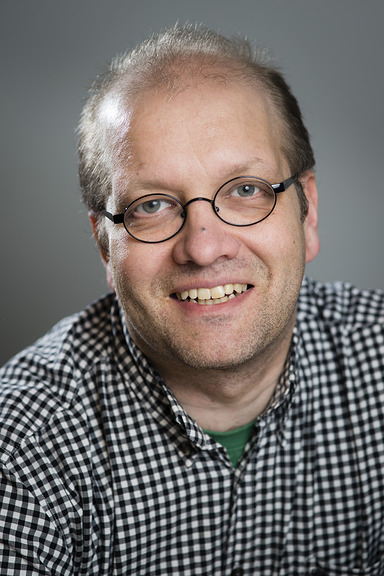
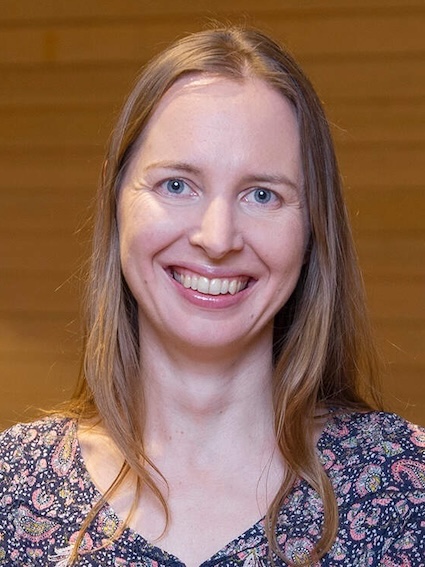
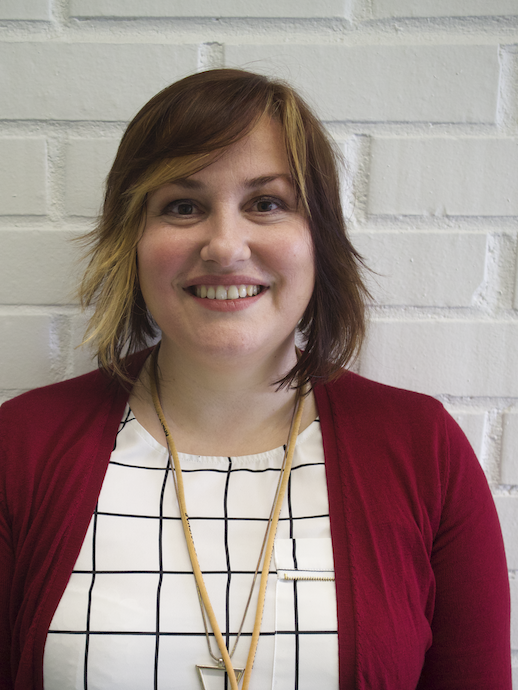
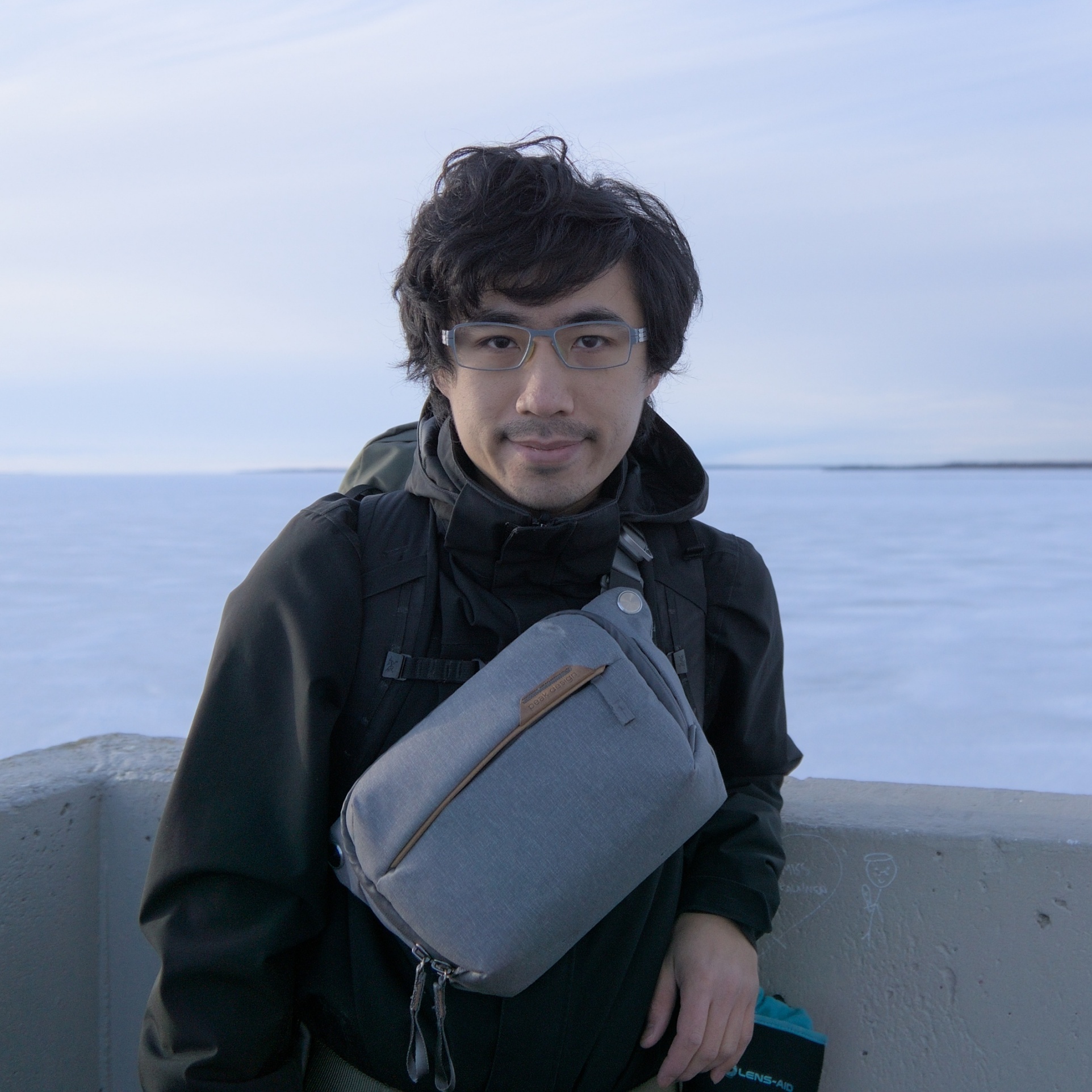
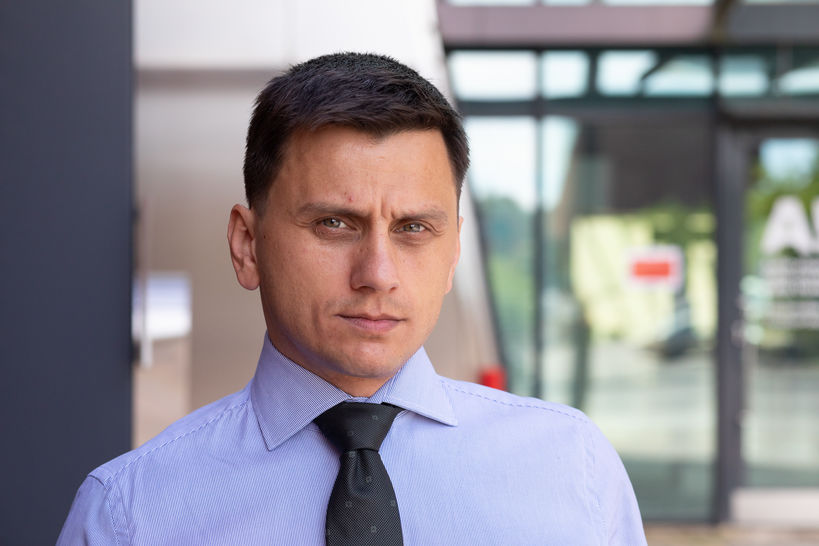
Niko Oinonen is a Visiting Professor at the Department of Applied Physics , Aalto University, specializing in scanning probe microscopy and atomic force microscopy (AFM) techniques. His research focuses on integrating machine learning with nanoscale surface analysis to automate tip functionalization, image interpretation, and structure discovery. Collaborations include researchers from Aalto University and international institutions. Research Trends: Recent work emphasizes computational methods for AFM image analysis, automated microscopy workflows, and machine learning-driven molecular reconstruction. Publications span journals like ACS Nano , Computer Physics Communications , and Science Advances . Contact: Email: ext-niko.oinonen@aalto.fi
Diego Parente Paiva Mesquita serves as a Visitor (Faculty) in the Department of Computer Science under Professor Samuel Kaski's research group. His work bridges theoretical and applied machine learning with emphasis on scalable probabilistic systems. His academic credentials include: Doctor of Technology in Computer Science (awarded December 16, 2021) Bachelor of Computer Science from the Brazilian Ministry of Education (awarded August 23, 2016) Mesquita's research focuses on advancing graph neural networks, Bayesian inference, and incomplete data handling. His fingerprint reveals strong contributions to probabilistic modeling (60% Approximates), random variable analysis (53%), and machine learning systems (50%), with particular innovation in neural network architectures (44%) for complex data structures. Recent publications (2022-2024) demonstrate a cohesive trajectory toward parallelizable machine learning frameworks. Key themes include temporal graph representation learning, embarrassingly parallel Monte Carlo methods, and thin/deep Gaussian process hybrids—addressing critical scalability bottlenecks in probabilistic AI while maintaining theoretical rigor.
Tomi Janhunen is a Professor in Computing Sciences at Tampere University, part of the Faculty of Information Technology and Communication Sciences. His expertise spans Artificial Intelligence, Logic Programming, and Theoretical Computer Science. He actively contributes to academic leadership roles, serving on boards of the Finnish Association of Computer Science and Finnish Artificial Intelligence Society. His research focuses on Answer Set Programming (ASP), probabilistic reasoning systems, explainable AI, and optimization techniques applied to cybersecurity and maintenance scheduling. Key grants include the XAILOG and AI-ROT projects funded by the Research Council of Finland. Notable achievements include three prestigious awards: Best Paper Awards at the European Conference on Logics in AI (2021) and International Conference on Logic Programming (2023), and the Harold Boley award for system description (2022). Dr. Janhunen’s work emphasizes practical applications of declarative programming paradigms. Recent projects include Plingo—a probabilistic ASP system—and cybersecurity compliance frameworks in DevSecOps environments. His contributions bridge theoretical advancements with real-world challenges in AI security and industrial optimization.
Kunal Bhattacharya is a Visiting Professor in the Department of Computer Science at Aalto University, affiliated with the Kaski Kimmo group. His research spans interdisciplinary domains within complex systems, data science, and social dynamics. Education: Doctoral Degree in Natural Sciences from Jadavpur University Research Interests: Focused on complex networks , data science , and statistical physics , he investigates human sociality, decision-making in agent-based systems, and mobility patterns during pandemics. His work bridges computational modeling, behavioral science, and cybersecurity applications. Scientific Contributions: Recent publications address cyber domain knowledge graphs , COVID-19 mobility networks , self-propelled particle aggregation , and lifespan friendship dynamics . Media coverage highlights his insights into social network evolution and urban human activity patterns .
Florian Adriaens is a Postdoctoral Researcher in the Department of Computer Science at the University of Helsinki, specializing in data mining, graph algorithms, and theoretical computer science with significant contributions to algorithmic fairness and network analysis. His work bridges theoretical foundations and practical applications in complex graph structures. His core research interests include: Data Mining Graph Algorithms Network Analysis Algorithmic Fairness Theoretical Computer Science Adriaens has published 15 peer-reviewed articles from 2017-2025 in top venues including KDD and WWW, demonstrating evolving expertise from foundational graph problems (diameter minimization, signed graph clustering) to cutting-edge hypergraph optimization and fairness-aware diversification. Recent publications (2024-2025) show increased focus on cardinality-constrained hypergraph cuts, multilayer correlation clustering, and fair representative selection, reflecting growing complexity in his research trajectory. His collaborative work includes researchers like Gionis, Tatti, and Wang, indicating strong interdisciplinary connections within the data mining community. Contact: florian.adriaens@helsinki.fi | ORCID
Timo Poranen is a Lecturer at Tampere University's Faculty of Information Technology and Communication Sciences in the Department of Computing Sciences. He focuses on software engineering practices, artificial intelligence applications, and educational technology development. His research spans: AI integration in software development workflows Accessibility and usability in digital platforms Requirements engineering methodologies Collaborative software project management Algorithmic graph theory DevOps and cloud-native systems Recent work examines AI-driven assessment tools, accessibility testing frameworks, and networked educational practices in Finland. He contributes to capstone project guidance and teaches software development fundamentals. Key trends in his 2023-2025 publications: AI-assisted coding patterns Accessibility evaluation metrics Service desk optimization Open-source project dynamics Cloud system monitoring
Mikko Kivelä is an Associate Professor in the Department of Computer Science at Aalto University, where he also obtained his doctoral degree. He holds an Academy Research Fellowship and is affiliated with the School of Science (SCI). His research focuses on network science, complex systems, and their applications in social, transportation, and biological networks. Kivelä’s work emphasizes multilayer networks, temporal dynamics, and the integration of network structure with content analysis. Academic Rank: Associate Professor Primary Affiliation: Aalto University Research Groups: Complex Systems (Cxsys), Multilayer Network Analysis He completed his Master’s degree at Helsinki University of Technology (2009) and his PhD at Aalto University (2012). His research investigates how network structures influence processes like disease spread, polarization, and social dynamics. Notable projects include the Generalized Network Representation Methods for Polarization (AoF Fellow Salary) and the CON-NET project on online misbehavior detection. His research outputs span network science fundamentals, algorithm development (e.g., pymnet library), and applied studies on mobility, vaccination strategies, and geopolitical events. Media coverage highlights his work on pandemic modeling and cross-border mobility impacts. Kivelä’s current grants include Academy of Finland and EU funding for projects addressing human security and algorithmic trust.
Juho Rousu is a Professor in the Department of Computer Science at Aalto University. His research focuses on developing machine learning methods for computational and data science, with a strong emphasis on kernel methods, structured prediction, and applications in metabolomics, biomedicine, and synthetic biology. He leads efforts in multi-view learning, sparsity-driven models, and optimization techniques for complex data analysis. Key research areas include drug combination prediction, metabolite identification, and biomarker discovery through canonical correlation analysis. His work integrates chemical reaction analysis, graph learning, and deep learning approaches to tackle challenges in systems biology and precision medicine. Recent projects involve scalable methods for drug synergy modeling and computational tools like MassSpecGym for molecular discovery. Rousu’s methodologies often bridge algorithmic innovation with real-world applications, such as improving protein production in biotechnology and optimizing metabolic flux analysis. His contributions span from foundational machine learning theory to practical software tools like CamOptimus and SIRIUS 4. He collaborates across disciplines to address challenges in environmental microbiology, clinical diagnostics, and systems pharmacology. His research has been applied to critical areas like tuberculosis drug efficacy prediction and metabolic network reconstruction, demonstrating impact in both academic and industrial contexts. Despite no listed awards here, his extensive publication record reflects sustained leadership in computational science and its biomedical applications.
Heikki Mannila is a Professor of Computer Science at Aalto University, with a focus on algorithms for data analysis, data mining, and machine learning. He previously held the title of Academy Professor (2004–2008) and served as Vice President for Research and Education at Aalto University (2009–2012) and President of the Academy of Finland (2012–2022). His research emphasizes the interplay between theoretical computer science and practical applications in fields like environmental science, linguistics, and paleontology. Education: Ph.D. in Computer Science, University of Helsinki, 1985 Research Interests: Algorithmic methods for data analysis and mining Machine learning applications across disciplines Interdisciplinary collaborations in paleontology, linguistics, and environmental science House of AI initiative for AI-driven multidisciplinary research Recent Work: Recent publications explore multilinear transforms, Hadamard decomposition problems, and applications in recommendation systems and environmental data analysis. His work bridges theoretical foundations and real-world problem-solving. Awards: Academy Professor of Finland (2004–2008) Grants & Labs: Initiator of the House of AI at Aalto University Past leadership roles in national research policy and funding Collaborations: Worked with institutions like TU Wien, Max Planck Institute, Microsoft Research, and Nokia Research, emphasizing cross-sectoral innovation.
Kaie Kubjas is an Associate Professor at Aalto University in the Department of Mathematics and Systems Analysis, School of Science. Since 2024, she has held a tenured position, following a tenure-track role from 2017–2024. She earned her PhD in Mathematics at Freie Universität Berlin (2013) under Professors Christian Haase and Klaus Altmann, with postdoctoral research at institutions including the Max Planck Institute and MIT. Her research focuses on applied nonlinear algebra, algebraic statistics, and their applications in biology (e.g., phylogenetics and 3D genome reconstruction), as well as matrix/tensor decompositions. She has organized major events like the European Women in Mathematics General Meeting 2022 and the 2025 workshop on Algebraic Statistics and Multistate Models. Kubjas serves on editorial boards of journals like SIAM Journal on Applied Algebra and Geometry and Annales Fennici Mathematici . Recent work includes advances in log-concave maximum likelihood estimation, 3D genome reconstruction, and structured matrix decompositions. Her students, such as Olga Kuznetsova (Second Place MEGA 2021 Poster Award winner), have contributed to these areas. She regularly contributes to seminars like the Algebra and Discrete Mathematics at Aalto, fostering interdisciplinary collaboration.
Milica Todorovic serves as an Associate Professor in the Department of Materials Science within the Faculty of Science and Engineering at the University of Turku (UTU). She leads the Materials Informatics Laboratory (MIL) and heads the Modern Industrial Materials MSc track. Her institutional roles include Vice-director of the Sustainable Materials and Manufacturing (SUSMAT) UTU profiling area, Vice-chair of COST Action CA22154 DAEMON, Vice-leader of the Human-Centric Artificial Intelligence for Sustainable Future (HAIF) Doctoral Training Network, and Co-lead of Finnish Centre for AI (FCAI) Highlight E. Her research integrates artificial intelligence algorithms with first-principles simulations to optimize functional materials and device performance. The MIL group develops data-driven solutions spanning aerosol research, chemical engineering of bio-based materials, and experimental-computational integration. Current projects focus on battery recycling optimization, magnetic materials design, perovskite engineering, and atmospheric aerosol analysis using Bayesian optimization and active learning techniques. Her work demonstrates significant interdisciplinary reach across computational chemistry, nanotechnology, and sustainable engineering. Scientific contributions include: Development of AI workflows for materials discovery Bayesian optimization frameworks for adsorption structure prediction Question answering systems for materials literature mining Data-efficient methods for molecular property prediction Her teaching portfolio includes advanced courses in Data Visualisation and Analysis, Simulations and New Materials, and Machine Learning for Materials Science. She actively contributes to European research networks through DAEMON and FCAI initiatives, driving collaborative efforts in data-driven materials engineering.
Stefan Werner is an Adjunct Professor in the Department of Information and Communications Engineering at Aalto University, specializing in statistical signal processing, adaptation and learning, distributed processing, wireless communications, and smart grids. He is an active member of the Risto Wichman Research Group. Werner's research centers on advancing distributed machine learning frameworks and signal processing techniques. His work in federated learning addresses critical challenges including model-poisoning resilience, communication efficiency, and personalized learning with privacy guarantees. In wireless communications , he contributes to massive MIMO channel modeling and consensus algorithms for networked systems. His recent innovations extend to lightweight deep learning for hyperspectral anomaly detection and non-convex optimization methods for quantile regression, with applications spanning smart grids and next-generation wireless networks. Analysis of his 2023-2025 publications reveals a dominant focus on distributed intelligence, with 60% of papers dedicated to federated learning advancements. Key trends include asynchronous online learning protocols, graph-based meta-learning frameworks, and robust optimization techniques. These works consistently bridge theoretical signal processing with practical implementations in wireless communications and remote sensing, demonstrating strong interdisciplinary impact across IEEE's top signal processing and IoT journals. Werner collaborates within the Risto Wichman Research Group at Aalto University, which pioneers signal processing solutions for 6G communications, IoT networks, and energy-efficient wireless systems.
Russell W. F. Lai is an Assistant Professor at the Department of Computer Science , Aalto University , focusing on the algebraic aspects of public-key cryptography and their applications to security and privacy. His research intersects mathematical foundations with practical cryptographic protocols . Research Areas: Cryptography Security Privacy Public-Key Cryptography Algebraic Cryptography Recent work includes advancements in lattice-based cryptography , with applications to updatable encryption , threshold signatures , traitor tracing , and verifiable delay functions . Key techniques involve Learning with Errors (LWE) and Short Integer Solution (SIS) problems. Scientific Awards: The Andreas Pfitzmann - PETS Best Student Paper Award Runner Up (2022) for "On Defeating Graph Analysis of Anonymous Transactions"
Alexandru Paler serves as an Associate Professor in the Department of Computer Science at Aalto University, Finland, where he leads research in quantum software development. His work focuses on designing compilers and optimization frameworks for quantum circuits, with emphasis on quantum error correction implementation and fault-tolerant quantum computing systems. Based in Espoo at Konemiehentie 2, he maintains active research collaborations through the university's quantum computing initiatives. Dr. Paler's research spans quantum circuit compilation, quantum error correction (particularly surface codes and QLDPC codes), and quantum software optimization. His team develops high-performance quantum compilers for neutral atom architectures and modular superconducting systems, addressing critical challenges in resource estimation and fault tolerance. The Quantum Operating Systems (QUANTUM) research group he contributes to explores scalable quantum software frameworks that bridge theoretical algorithms with practical hardware constraints, with significant work on graph-state compilation and reinforcement learning for circuit optimization. Analysis of his 15 most recent publications (2023-2025) reveals concentrated efforts in quantum compiler design, error correction scalability, and hardware-aware quantum software. Key trends include machine learning applications for decoder optimization, novel approaches to measurement-free error correction, and queuing theory models for fault-tolerant circuit analysis. His work consistently addresses the practical barriers to large-scale quantum computing through compiler innovations and resource-efficient circuit design. Dr. Paler actively participates in the Quantum Operating Systems (QUANTUM) research group within Aalto's Department of Computer Science, focusing on Algorithms and Theoretical Computer Science. This team develops quantum software infrastructure for next-generation quantum hardware, with current projects including Pandora (ultra-large-scale circuit compilation), quantum circuit caching mechanisms, and standardized cell approaches for neutral atom systems. Their research directly supports the transition from theoretical quantum algorithms to executable, error-resilient quantum programs.
Augusto Modanese is a Postdoctoral Researcher in the Department of Computer Science at Aalto University. His research focuses on distributed computing, quantum computing, and computational models like cellular automata and fungal automata. He investigates local problems in tree networks, quantum advantage limitations, and sublinear-time algorithms. Research Trends: Recent publications emphasize distributed quantum computing, algorithmic equivalence between quantum and classical models, and computational complexity in constrained topologies. Key themes include probabilistic cellular automata, graph coloring, and bio-inspired computing frameworks.