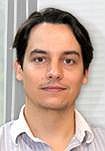
Bruno C. d. S. Oliveira is an Associate Professor at the University of Hong Kong , Department of Computer Science. His research focuses on Programming Languages , Modularity , and Type Systems , particularly exploring intersections of Functional and Object-Oriented Programming . He leads the HKU PL Group and actively supervises PhD/MPhil students. Research Interests: Type systems for modularity, subtyping, intersection/union types, gradual typing, polymorphism, and language design. Key Contributions: Unified functional and object-oriented paradigms via object algebras, advanced iso-recursive subtyping theory, and developed practical solutions for the expression problem. Scientific Awards: Distinguished Artifact Award (OOPSLA 2024) Editors' Choice Award (The Art, Science and Engineering of Programming, 2019) Best Paper Awards at ECOOP 2012, Modularity 2016, and TFP 2007 Advising: Supervised 14 PhD/MPhil students between 2007–2024. Students research topics like type inference, visitor frameworks, and disjoint polymorphism.
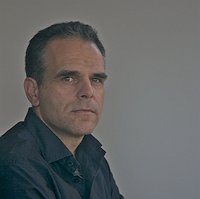
Vasco T. Vasconcelos is a Professor at the University of Lisbon, affiliated with LASIGE (Laboratory of Computer Science and Informatics). His research focuses on programming languages, type systems, and concurrency, particularly in session types and their applications to functional and parallel programming. Academic Rank: Professor Affiliation: LASIGE, University of Lisbon Vasconcelos has extensively contributed to session type theory, including context-free grammars, asynchronous communication, and gradual typing. His work bridges theoretical formalisms and practical implementations in functional languages like FreeST. He has served on program and steering committees for conferences such as POPL, SPLASH, and ECOOP, and has presented keynotes, including the Mooly Fest at ETAPS 2019. Vasconcelos also mentors students and participates in academic panels, though no specific advisees are listed here.
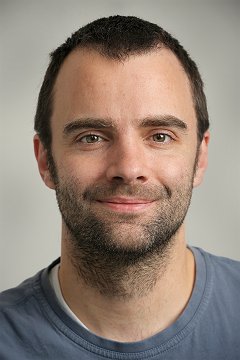
Arthur Azevedo de Amorim is an Assistant Professor in the Department of Computer Science at the Golisano College of Computing and Information Sciences, Rochester Institute of Technology (RIT). He holds a Ph.D. from the University of Pennsylvania, advised by Benjamin Pierce and Cătălin Hrițcu, with postdoctoral work at Boston University and Carnegie Mellon University. His undergraduate studies were at the University of Campinas (Unicamp) and École Polytechnique (Polytechnique). His research focuses on improving software security through formal verification, programming languages, and type systems. Key areas include cryptographic protocols, compartmentalization techniques for secure compilation, and formal semantics. Notable projects include Cryptis (separation logic for cryptographic protocols) and SECOMP (formally verified compartmentalizing compiler). Arthur teaches courses such as Programming Language Concepts and Programming Language Theory at RIT. He actively contributes to open-source projects like the Coq proof assistant and maintains the Deriving library for generic instance generation in Coq. His recent work emphasizes formal methods for secure systems, with publications in top venues like POPL, CCS, and ICALP. He advises several graduate and undergraduate students on topics ranging from formal verification to programming language design.
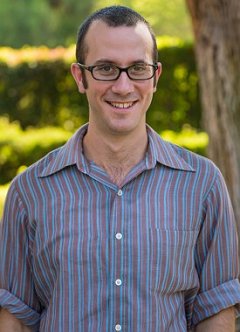
Stephan Arlt is a researcher at the Chair of Software Engineering, Institute of Computer Science, University of Freiburg. His research focuses on Software Testing and Program Analysis, with contributions to tools like Gazoo and Joogie. He has published extensively on topics including GUI testing, infeasible code detection, and formal verification techniques, appearing at venues like ICST, ISSTA, and CAV. His work emphasizes practical and automated methods for improving software reliability and verification efficiency. He has advised multiple students on projects such as Parameterized GUI Tests and Automated Grey-box Testing. His teaching spans courses like Software Testing, Model-based Testing, and Program Verification, reflecting his expertise in both theoretical and applied software engineering. Key contributions include developing Gazoo for generating GUI test cases and Joogie for analyzing Java programs. His research trends highlight advancements in automated testing strategies, formal verification, and optimizing test suite reduction techniques.
Dominique Devriese is a researcher affiliated with Vrije Universiteit Brussel , specializing in Secure Compilation, Capability Machines, Functional Programming , and Dependently-typed Programming . His work bridges theoretical foundations with practical applications in programming language design and security verification. Active contributor to top-tier conferences like POPL, ICFP, and PriSC Program Committee member for CPP, CoqPL, and Haskell tracks Session Chair for Type Systems and Verification sessions His research explores secure calling conventions, parametricity, and capability safety, often leveraging formal methods and type theory to ensure robust system behavior. Recent publications focus on Cubical Agda, CHERI architecture, and gradual typing. Though no awards or students are explicitly listed, his contributions to program committees and co-located events like PriSC and WGT highlight his academic engagement.
Michael Greenberg is a researcher at Stevens Institute of Technology. He actively contributes to programming language design, static analysis, and formal methods, with a focus on Datalog, SMT solvers, and type systems.
Tim Nelson serves as an Associate Teaching Professor in Brown University's Department of Computer Science, teaching core courses including Software Engineering (CSCI 0320/1340) and Logic for Systems (CSCI 1710/1950Y) alongside foundational computing courses. His academic credentials feature a PhD and MS from Worcester Polytechnic Institute (2013, 2010), BS from Worcester State University (2007), and AA from Diablo Valley College (1999). Research focuses on formal methods education, specifically developing tools like Forge to address student misconceptions in linear temporal logic while bridging theoretical formal methods with practical software engineering through property-based testing and model validation techniques. Analysis of his 15 most recent publications (2022-2025) reveals consistent emphasis on educational interventions: adaptive tutors for logic learning, lightweight diagramming systems, and cognitive approaches to model-finding output dominate his scholarly output. No information regarding PhD advisees or research funding sources appears in the provided materials. Lab affiliations or collaborative research teams remain unspecified in the available documentation.
Amal Ahmed is a Professor and Associate Dean for Graduate Programs at the Khoury College of Computer Sciences , Northeastern University , USA. Her research focuses on correct and secure compilation , safe language interoperability , and logical relations , with a strong emphasis on bridging high-level abstractions to low-level code. Education : PhD in Computer Science, Princeton University. Her work addresses challenges in multi-language systems , gradual typing , and type-preserving compiler design , leveraging formal semantics and logical relations to ensure security and correctness. Recent projects include advancements in WebAssembly interoperability and probabilistic separation logic . Amal's research has resulted in 15 recent publications spanning areas like semantic realizability , modal logic , and parametricity in gradual typing . She mentors a dynamic research group including postdocs, PhD, and undergraduate students, and has contributed extensively to program committees and workshops in programming languages, including POPL, ICFP, and OOPSLA. Labs/Teams : Leads the SILC (Secure Interoperability, Languages, and Compilers) group and contributes to the Northeastern Programming Research Lab .
Yanhui Li is an Assistant Professor at the Software Institute of Nanjing University, specializing in AI software testing and empirical software engineering. Holding a PhD from Southeast University, he actively contributes to both research and teaching in software engineering for AI systems. Institution: Nanjing University, Software Institute Academic Rank: Assistant Professor Teaching: Discrete Mathematics (2023-2025), Data Structure and Financial Algorithm (2016-2024), Advanced Algorithm (2024-2025) His research focuses on AI Testing and Debugging , Mutation Testing , and Empirical Software Engineering with applications in deep learning systems. Key areas include developing testing methodologies for machine learning fairness, word sense disambiguation models, and natural language inference systems. His work bridges theoretical formal methods with practical software analysis techniques to improve AI system reliability. Analysis of recent publications (2023-2025) reveals strong emphasis on testing deep learning components (40% of works), mutation testing adaptations (25%), and empirical studies of software engineering practices (20%). His research increasingly integrates causal analysis with traditional testing techniques, particularly for fairness evaluation in ML systems. 2019 Nanjing University 'Most Loved Teacher' Award (top 9 university-wide) 2020 Nanjing University 'Most Loved Teacher' Award (top 7 university-wide) 2022 & 2024 'Best Course' recognition for Data Structure and Financial Algorithm Dr. Li actively advises students and leads multiple research projects including National Natural Science Foundation funding for 'Semantic based testing data efficacy measurement for deep learning models'. His group recruits PhD and master's students specializing in AI software engineering, with emphasis on testing/debugging AI systems and empirical studies of AI development practices. Current projects include model-based code generation with Nanjing University of Aeronautics and Astronautics and Huawei-funded research on mixed-language programming environments.
Matteo Cimini is an Assistant Professor in the Miner School of Computer & Information Sciences at the Kennedy College of Sciences, University of Massachusetts Lowell. He teaches courses in programming languages, algorithms, and computer science foundations across multiple semesters from 2017 through 2025. Dr. Cimini earned his Ph.D. in Computer Science from Reykjavik University (2012), where his dissertation focused on Contributions to the Meta-Theory of Structural Operational Semantics. He also holds an M.S. in Computer Science from the University of Bologna (2008). His research centers on programming language theory, with particular expertise in formal methods, type systems, and language semantics. Dr. Cimini's work bridges theoretical foundations with practical language design, focusing on verification, gradual typing, and concurrency. His research has been published in top-tier programming languages conferences including POPL, ICFP, and PLDI. Dr. Cimini's recent publications demonstrate a strong focus on language-oriented programming, with his "Lang-n-X" series of systems exploring innovative approaches to language design, verification, and analysis. His work often combines theoretical rigor with practical implementation, creating tools that enable new ways of working with programming languages. Best Paper Award at TAP 2023 for "Testing Languages with a Languages-as-Databases Approach" Dr. Cimini actively mentors students, with recent advisees including Ph.D. student Joan and master's student Eswar, who successfully defended a thesis on Lang-n-Prove. He serves on program committees for numerous prestigious conferences including IFL 2025, SLE 2025, FORTE 2025, ICE 2025, and has been involved with conferences dating back to 2015. Dr. Cimini leads the development of the "Lang-n-X" series of systems, which includes tools like Lang-n-Prove (for language proofs), Lang-n-Send (for language communication), and Lang-n-Assert (for language logics). These systems form an integrated framework for language design, verification, and analysis, representing a cohesive research vision that has evolved through consistent publication output.
Daniel R. Licata is an Associate Professor at Wesleyan University and a leading researcher in type theory, category theory, and functional programming. He earned his PhD from Carnegie Mellon University in 2011 and completed a postdoctoral fellowship at the Institute for Advanced Study (2012–2013). Research Interests : Type theory, category theory, logic, functional programming, cost analysis, and education. Teaching : He frequently teaches Functional Programming and has organized programming language summer schools. Research Trends : His work bridges homotopy type theory, directed type systems, and formal verification. Key contributions include gradual type theory, mechanized proofs in synthetic homotopy, and frameworks for substructural and modal logics. He often explores connections between type theory and computational mathematics. Service : He has served on program committees for POPL, ICFP, and CPP. He co-organized NEPLS at Wesleyan and contributed to the Twelf Wiki and tutorial projects.
John Boyland is a Professor in the Department of Computer Science at the University of Wisconsin-Milwaukee (UWM), within the College of Engineering & Applied Science. He focuses on enabling programmers to enhance software efficiency and safety through research in programming languages, compilers, concurrency, and logic. His work includes static analysis techniques for detecting complex programming errors and formal methods for concurrency control. Education: PhD in Computer Science, University of California, Berkeley (1996) MS in Computer Science, University of California, Berkeley (1989) BS in Computer Science, University of California, Davis (1987) Research Interests: Boyland’s research emphasizes fractional permissions for resource management, static checking of concurrency, and compiler design. He has contributed to frameworks like SASyLF and tools for formal verification of programming languages. His work bridges theory and practice, addressing challenges in software correctness and efficiency. Publications: His recent work spans formal methods, concurrency control, and type systems. Notable themes include fractional permissions for concurrency safety, gradual typing, and compiler optimizations. Awards: NSF CAREER Award (2000) Phi Beta Kappa (1987) Herbert A. Young Medal (1987) Putnam Math Competition Honorable Mention (1986) Advising & Grants: Boyland has advised six student groups and received a prestigious NSF Career grant. He has also contributed to projects like Molhado, an architectural software configuration management system.
Michael Greenberg is an Assistant Professor in the Department of Computer Science at Stevens Institute of Technology's Schaefer School of Engineering. His research develops formal methods for practical systems, focusing on POSIX shell semantics, gradual typing, and network programming abstractions. He has received multiple awards including a Distinguished Paper Award at PLDI 2022 and Most Influential Paper for Flapjax (OOPSLA 2009). Dr. Greenberg's work spans programming language theory, executable semantics for shell scripting, and software-defined networking. His publications demonstrate strong integration of theoretical foundations with systems applications, particularly in improving shell script reliability and developing network verification frameworks. Recent work includes Kleene algebra extensions and parallelization techniques for shell scripts. He holds a PhD in Computer Science from the University of Pennsylvania (2013) and BA degrees in Computer Science and Egyptology from Brown University (2007). Dr. Greenberg actively contributes to program committees for PLDI, OOPSLA, and POPL, and serves on the POPL Steering Committee (2021-2024).
Prof. Tijs van der Storm is a Full Professor in Software Engineering at the University of Groningen's Faculty of Science and Engineering. He holds a position as Senior Researcher at CWI. His expertise spans Computer Science and Software Engineering, focusing on programming languages, domain-specific languages, and language engineering. He is affiliated with the Bernoulli Institute and contributes to the Software Engineering department. Research Interests: Tijs van der Storm specializes in programming languages, software development methodologies, domain-specific languages, and model-driven engineering. His work emphasizes language design, tooling for software ecosystems, and interactive programming frameworks. He explores challenges in polyglot systems, schema evolution, and exploratory programming environments. Publications: His recent work includes frameworks for polyglot debugging (PolyDebug), studies on polyglot software development, and schema evolution techniques. Articles address both foundational and applied aspects of programming language design and software engineering practices. Awards: He has received prestigious awards such as the Distinguished Artifact Award (2021), SCAM Most Influential Paper Awards (2019), and Best Vision Paper Award (2018). These recognize his contributions to software engineering and language technologies. Advising and Collaborations: While specific student names are not listed, his research involves collaborations with institutions like CWI and international colleagues. Projects often involve tool development and empirical studies in software ecosystems. Labs and Teams: His work is part of the Bernoulli Institute's Software Engineering group, focusing on language engineering and software system design. He contributes to open-source tools like Rascal and frameworks for domain-specific language development.
Philip Wadler is a Professor of Theoretical Computer Science in the Laboratory for Foundations of Computer Science at the School of Informatics, University of Edinburgh, a position he has held since 2003. He is also a Senior Research Fellow and Area Leader in Programming Languages at IOHK. His career includes prior academic roles at the University of Glasgow and research positions at Bell Labs and Avaya Labs. He is a principal designer of the Haskell programming language and a leading figure in programming language theory. Education: B.S. Stanford University (1977), Ph.D. Carnegie-Mellon University (1982), Postdoc Oxford University (1983–1987) Wadler's research focuses on the intersection of logic, types, and programming languages. His work has profoundly influenced functional programming, type systems, concurrency, and formal methods. Key contributions include the design of Haskell, the development of the blame calculus for gradual typing, Featherweight Java as a formal model, and the Links language for web programming. He has also worked extensively on XML standards (XQuery, XSLT) and the Curry-Howard correspondence, most notably through his widely acclaimed article "Propositions as Types". His current research, supported by an EPSRC Programme Grant, explores session types and concurrency. His recent publications (2015–2025) reveal a consistent focus on type theory, particularly blame calculus, gradual typing, session types, and formal verification for blockchain and smart contracts. There is a strong emphasis on logical foundations, parametricity, and the application of theoretical concepts to practical systems, especially in the context of modern programming challenges like concurrency and distributed systems. SIGPLAN Distinguished Service Award, 2016 ACM Fellow, 2007 Fellow, Royal Society of Edinburgh, 2005 Wolfson-Royal Society Research Merit Award, 2004–2009 Most Influential POPL Paper Award 2003 (for 1993) Best Paper Award, SBMF 2018 Wadler has advised numerous PhD and Master's students and has been actively involved in the academic community through editorial roles (e.g., Journal of Functional Programming, Journal of Financial Technology), program committees for major conferences (POPL, ICFP, HOPL), and leadership in ACM SIGPLAN. He has led significant research projects such as the EPSRC Programme Grant 'From Data Types to Session Types' and has contributed to outreach and education through extensive lecturing, tutorials, and public talks. He is associated with key research groups including the Laboratory for Foundations of Computer Science at Edinburgh and the ABCD project, and collaborates with institutions and industry partners on topics ranging from programming language design to blockchain technology.