معرفی
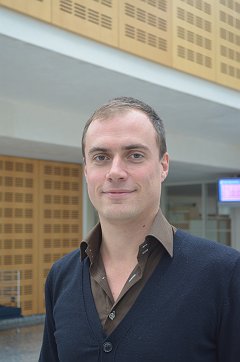
Matteo Cimini is an Assistant Professor in the Miner School of Computer & Information Sciences at the Kennedy College of Sciences, University of Massachusetts Lowell. He teaches courses in programming languages, algorithms, and computer science foundations across multiple semesters from 2017 through 2025.
Dr. Cimini earned his Ph.D. in Computer Science from Reykjavik University (2012), where his dissertation focused on Contributions to the Meta-Theory of Structural Operational Semantics. He also holds an M.S. in Computer Science from the University of Bologna (2008).
His research centers on programming language theory, with particular expertise in formal methods, type systems, and language semantics. Dr. Cimini's work bridges theoretical foundations with practical language design, focusing on verification, gradual typing, and concurrency. His research has been published in top-tier programming languages conferences including POPL, ICFP, and PLDI.
Dr. Cimini's recent publications demonstrate a strong focus on language-oriented programming, with his "Lang-n-X" series of systems exploring innovative approaches to language design, verification, and analysis. His work often combines theoretical rigor with practical implementation, creating tools that enable new ways of working with programming languages.
- Best Paper Award at TAP 2023 for "Testing Languages with a Languages-as-Databases Approach"
Dr. Cimini actively mentors students, with recent advisees including Ph.D. student Joan and master's student Eswar, who successfully defended a thesis on Lang-n-Prove. He serves on program committees for numerous prestigious conferences including IFL 2025, SLE 2025, FORTE 2025, ICE 2025, and has been involved with conferences dating back to 2015.
Dr. Cimini leads the development of the "Lang-n-X" series of systems, which includes tools like Lang-n-Prove (for language proofs), Lang-n-Send (for language communication), and Lang-n-Assert (for language logics). These systems form an integrated framework for language design, verification, and analysis, representing a cohesive research vision that has evolved through consistent publication output.