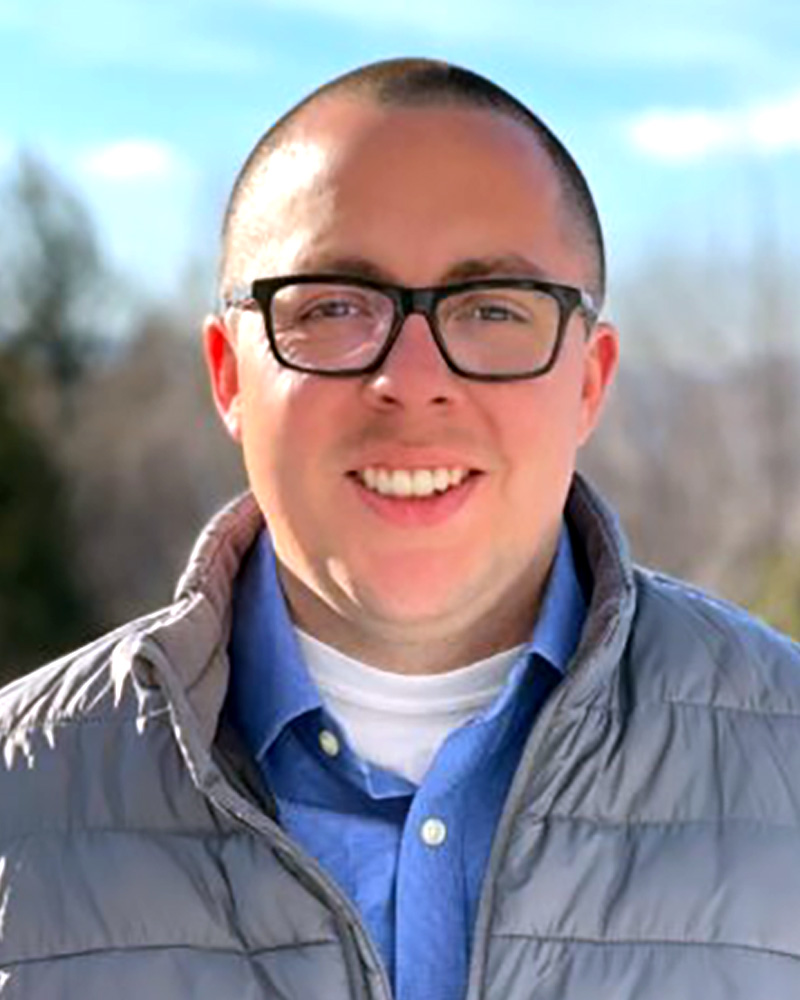
Casey Rodriguez is an Assistant Professor in the Department of Mathematics at the University of North Carolina at Chapel Hill. His academic career includes prior roles as a CLE Moore Instructor and NSF Postdoctoral Scholar at MIT. He holds a Ph.D. in Mathematics from the University of Chicago, advised by Carlos E. Kenig, and advanced his research collaboration with Gigliola Staffilani during his postdoctoral tenure. Fields of Interest: Partial Differential Equations, Mathematical Physics, Continuum Mechanics Email: crodrig@email.unc.edu Research Focus: His work centers on theoretical and mathematical advancements in continuum mechanics, particularly non-classical models like Cosserat rods and gradient continua. These frameworks extend traditional elastic and viscoelastic theories to model complex phenomena such as fracture mechanics and multi-mode deformations in thin rods through geometric and analytical approaches. Scientific Awards: NSF Postdoctoral Scholar CLE Moore Instructor Grants: He serves as Principal Investigator on NSF grant DMS-2307562 and co-PI on NSF RTG grant DMS-2135998.
Mathias Lerch serves as Lecturer and Head of the Urban Demography Laboratory (URBDEMO) at the School of Architecture, Civil and Environmental Engineering (ENAC) of the Swiss Federal Institute of Technology Lausanne (EPFL). With expertise spanning population dynamics, urbanization, and demographic estimation, he bridges demography with urban planning and environmental science through interdisciplinary research on mortality, fertility, and migration patterns. His research centers on Population and Development, International Demography, and Urban Demography, examining how socioeconomic and environmental factors interact with demographic change. Methodologically, Lerch specializes in data collection, linkage, quality assessment, and advanced statistical modeling for demographic estimation and multi-regional projection, with particular focus on migration systems, fertility transitions, and mortality disparities in urban contexts. Analysis of his 15 most recent publications (2017-2025) reveals consistent investigation into migration patterns across rural-urban continua, fertility transitions in developing regions, and mortality outcomes in urban environments. His work demonstrates methodological innovation through multi-regional projection techniques and large-scale dataset integration, significantly advancing demographic estimation practices and policy-relevant insights for urban population growth. Dr. Lerch currently advises PhD students Beckendorff Dorothee and Du Wenxiu while teaching courses including Urban Demography and Border Forensics at EPFL. His advisory work focuses on training the next generation of demographers in quantitative methods and urban population analysis. As head of URBDEMO, Lerch leads a research team developing systemic frameworks for understanding urban population dynamics. The laboratory's work integrates demographic methods with urban studies to address contemporary challenges in urbanization, migration flows, and sustainable city development through innovative data linkage and modeling approaches.
Prof. Dr. J. Ellers is a Full Professor at the Faculty of Science, Vrije Universiteit Amsterdam , and a member of the Amsterdam Institute for Life and Environment . His research focuses on understanding how an individual’s phenotype is shaped by interactions between genes, genome, and environment , employing molecular, physiological, and experimental tools within an evolutionary framework. Ellers contributes to the Netherlands Society of Evolutionary Biology (NLSEB) as a co-founder and serves as Vice-Chair of the Dutch Biology Council , advocating for biology research and education in the Netherlands. Research Interests: Ellers explores the intersection of evolutionary biology, ecology, and environmental science , with key themes in phenotypic plasticity, urbanization effects on species, trait-based ecology, and adaptive signaling . His work spans soil fauna dynamics, invasive species impacts, and metabolic adaptations , emphasizing interdisciplinary approaches to link mechanisms with ecological and evolutionary outcomes. Recent Publications highlight trends in urban ecology, climate change impacts, and trait evolution . Notable studies examine how noise and light pollution alter animal communication , high-sugar diets affect microbiomes , and robot morphologies reflect biological systems . His research also addresses data interoperability through initiatives like ShareTrait and global soil arthropod assessments . Scientific Contributions: Ellers advocates for open-access publishing and interdisciplinary climate change experiments. His leadership in the Dutch Biology Council and co-founding of NLSEB reflect sustained commitment to scientific policy and community engagement. Supervised 23 PhD theses and teaching courses like Ecosystem Services and Scientific Advocacy underscore his mentorship and educational impact.
Dr. Magdalena Schreter-Fleischhacker works at the Technical University of Munich within the Professorship of Simulation for Additive Manufacturing . Her research focuses on physics-based computational modeling of coupled liquid-powder-gas dynamics in metal additive manufacturing, including melt pool dynamics and powder-gas interactions . She specializes in multi-phase flow modeling using cut-element and diffuse interface methods with continuous/discontinuous Galerkin schemes . She also develops constitutive models for quasi-brittle materials like 3D printed concrete and rock, incorporating anisotropy , gradient-enhanced damage mechanics , and micropolar continua . Her computational work leverages matrix-free algorithms and parallel computing , with significant contributions to the deal.II finite element library . Research Interests Physics-based computational modeling of coupled liquid-powder-gas dynamics in additive manufacturing Multi-phase flow simulation using sharp/diffuse interface methods Advanced constitutive modeling for quasi-brittle materials (rock, soils, 3D printed concrete) High-performance computing and matrix-free algorithms Notable Contributions Development of consistent diffuse-interface models for melt-vapor dynamics Improvements to continuum surface flux models in additive manufacturing Formulation of gradient-enhanced damage-plasticity models for geological materials Principal contributor to the deal.II library (version 9.6) Supervised Student Projects Johannes Resch (2024): DG-based thermo-hydrodynamic melt pool simulations Julian Brotz (2024): DEM-FEM coupling for fluid-powder interaction Andreas Ritthaler (2024): Matrix-free cutDG formulation for complex flows Tinh Vo (2023): Laser modeling for melt pool simulations Scientific Awards ERC Starting Grant recipient
Connie Lovejoy is a Professor in the Department of Biology at Université Laval, Quebec, Canada, specializing in Arctic marine microbial ecology. Her research focuses on microbial biodiversity in polar environments, particularly planktonic microorganisms including phytoplankton, protists, archaea, and bacteria that drive global carbon and mineral cycling. She leads multiple research projects examining Arctic microbial communities and their responses to climate change. Dr. Lovejoy received her B.Sc. from the University of California Davis (1973-1976), followed by a Ph.D. in Oceanography from Université Laval (1998-2002), and completed a postdoctoral fellowship at Institut Ciènces del Mar, CSIC' CMIMA in Spain (2002-2004). Her research interests center on Arctic marine microbes and their ecological roles. She investigates questions regarding microbial abundance, genetic and metabolic diversity, and the factors determining growth and mortality in these organisms. Her work examines how these microorganisms function within changing Arctic ecosystems, particularly in relation to climate change impacts on microbial food webs and biogeochemical cycles. She has pioneered research on microbial communities in permafrost lakes, river-to-sea continua, and under-ice environments. Analysis of her recent publications (2022-2024) reveals consistent focus on Arctic microbial ecology across multiple dimensions: microbial community structure across environmental gradients, biogeochemical cycling in changing environments, evolutionary adaptations of polar microorganisms, and the use of molecular techniques to understand microbial diversity. Her work spans freshwater, brackish, and marine systems, with particular attention to the impacts of climate change on microbial communities and their ecosystem functions. Dr. Lovejoy has secured significant research funding through NSERC and ArcticNet grants, leading projects on Arctic microbial biodiversity, biogeography, and environmental selection. She has been instrumental in major research initiatives including the Canada First Research Excellence Fund Sentinel North project focusing on sentinel microbiomes for Arctic ecosystem health. Her laboratory at Université Laval collaborates extensively with international research teams across Canada, the United States, Europe, and participates in major Arctic research networks. She works closely with the Takuvik research unit, a joint Canada-France research laboratory focusing on Arctic studies.
Norbert Hölzel is a Professor of Ecosystem Research at the Institute of Landscape Ecology, University of Münster, Germany, a position he has held since 2007. His academic career spans over three decades with significant contributions to vegetation ecology, landscape ecology, and ecological restoration. Prof. Hölzel received his Diplom in Physical Geography from Ludwig-Maximilians-Universität München in 1990, followed by his Doctorate in Geobotany from the same institution in 1995. He completed his Habilitation with venia legendi for vegetation ecology and landscape ecology at Justus Liebig University Giessen in 2004. Prior to his current position, he served as a Research Assistant and Research Associate at Justus Liebig University Giessen from 1996 to 2004. Prof. Hölzel's research focuses on Grassland Ecology , particularly the renaturation and sustainable use of species-rich grasslands, and Floodplain Ecology , examining nutrient gradients, flooding dynamics, and river valley species. His work in Restoration Ecology has led to the development of innovative techniques for habitat and species restoration. He also investigates Seed Ecology , including phenology, seed banks, and germination ecology, as well as the Ecology of Rare and Endangered Species , studying habitat requirements and population dynamics. More recently, his research has expanded to examine the Effects of Global Change on landscapes and ecosystems, with specific studies on land use change and landscape dynamics in West Siberia and Kazakhstan. Prof. Hölzel's recent publications reveal a strong focus on global dryland ecosystems, grassland restoration, and the impacts of land use change. His work spans multiple continents, with significant research in Eurasian steppes, European peatlands, and Arctic tundra regions. There's a clear trend toward large-scale, collaborative research addressing pressing environmental challenges such as climate change impacts, biodiversity loss, and sustainable land management practices. His research integrates field ecology with advanced analytical methods, including remote sensing and environmental DNA analysis. Honorary Doctorate from Tyumen University, Russia (April 2017) Editor's Award 'Paper of the Year' from Applied Vegetation Science for the article 'Restoration of a species-rich flood-meadow by topsoil removal and diaspore transfer with plant material' by Hölzel & Otte (2003) Prof. Hölzel has supervised numerous diploma, master's, bachelor's, and doctoral theses throughout his career. He serves in leadership roles within his department, including as Deputy Managing Director of the Institute for Landscape Ecology since 2008 and Chairman of the Commission for Research and Young Scientists since 2009. His research has attracted significant funding for large-scale collaborative projects across Europe and beyond. Prof. Hölzel leads the Biodiversity and Ecosystem Research Group at the University of Münster, which conducts field research across diverse ecosystems from European grasslands to Siberian steppes. The group maintains strong international collaborations, particularly with institutions in Russia, Kazakhstan, and across Europe, facilitating comparative studies of ecosystem dynamics under changing environmental conditions.
Michele K. Nishiguchi serves as Professor in the Department of Molecular and Cell Biology within the School of Natural Sciences at the University of California, Merced. Her research program centers on marine symbiosis evolution, specifically investigating the mutualistic relationship between sepiolid squids and Vibrio bacteria as a model system for understanding host-symbiont specificity, population dynamics, and environmental adaptation. Current affiliations include leadership of the Nishiguchi Lab and active participation in collaborative research initiatives addressing climate change impacts on symbiotic systems. Her primary research focuses on the molecular mechanisms governing squid-Vibrio symbiosis, examining how environmental factors and genetic determinants influence symbiont recognition, competitive exclusion, and cospeciation. Key areas include Vibrio population genetics, biofilm dynamics in host colonization, T6SS-mediated bacterial competition, and thermal stress responses in symbiotic partnerships. Recent work leverages CRISPR-based tools, transcriptomics, and genomic approaches to dissect symbiosis regulation across marine ecological niches. Analysis of her 15 most recent publications reveals a strong emphasis on environmental drivers of symbiosis (47%), molecular mechanisms of host-symbiont interaction (33%), and methodological innovations in symbiosis research (20%). Dominant themes include bacterial competition within host environments, climate change impacts on symbiotic stability, and evolutionary adaptations in symbiont transmission. Her work consistently bridges molecular microbiology with ecological and evolutionary frameworks. Scientific recognition includes: NSF CAREER Award for research on individual variation in dispersal through social landscapes Nishiguchi actively mentors undergraduate and graduate researchers, with 15 documented students in her 2022-2023 lab cohort including UROC and NSF REU participants. Current funding includes the SICBEDU collaborative grant (2024) focused on equity in integrative biology education and the BII: INSITE climate adaptation initiative (2022). Her grant portfolio demonstrates dual commitment to symbiosis research and broadening participation in STEM. The Nishiguchi Lab operates as a multidisciplinary research hub investigating marine symbiosis through molecular, ecological, and evolutionary approaches. Current projects examine biofilm-predator interactions, Vibrio genomics across host species, and climate stress impacts on symbiotic fitness, utilizing the squid-Vibrio model system's experimental tractability for both basic and applied research in microbiome science.
Dr. Stefanos Aldo Papanicolopulos is a Senior Lecturer in the School of Engineering at the University of Edinburgh, specializing in Civil and Environmental Engineering . His research focuses on computational mechanics, micromechanics of materials, and mechanics of generalized continua, with applications to granular materials and strain-gradient elasticity. Education: MEng in Civil Engineering (2002), National Technical University of Athens MSc in Structural Engineering (2004), National Technical University of Athens PhD in Mechanics (2008), National Technical University of Athens Research Interests: Mechanics of generalized continua, including Cosserat and micropolar theories Micromechanical modeling of granular materials using DEM and FEM Strain-gradient elasticity and computational methods Development of efficient finite element and cubature rules Experimental and numerical studies of particle breakage and flow Scientific Awards: Fellow of the Higher Education Academy Grant Collaborations: Active EU-funded projects like TUSAIL (Training In Upscaling Particle Systems) and grants from the Carnegie Trust for Scottish Universities. Key collaborations include the VELaSSCo platform for DEM data visualization.
Dorin Ieşan is a Professor at the Department of Mathematics, Faculty of Mathematics, Alexandru Ioan Cuza University in Iaşi, Romania. Born on April 8, 1941 in Rădăuţi, he graduated from the Mathematics-Mechanics Faculty of Alexandru Ioan Cuza University in 1963 and has remained affiliated with the institution throughout his career. His academic progression includes preparator (1963-1965), assistant (1965-1968), lecturer (1968-1975), associate professor (1975-1981), and Professor (1981-present). He holds a PhD in Mathematics (1969) and is a Corresponding Member of the Romanian Academy. Educational Background: Graduated Mathematics-Mechanics Faculty, Alexandru Ioan Cuza University (1963) PhD in Mathematics (1969) Professor Ieşan's research focuses on the mathematical study of deformable solids mechanics, with particular expertise in elasticity theory, thermoelasticity, and micropolar media. His work bridges theoretical mathematics with mechanical engineering applications, emphasizing rigorous mathematical formulations of physical phenomena in continuous media. His publication record shows consistent output through 2017, with recent work concentrating on chiral materials, strain gradient theories, and porous elastic solids. The research demonstrates evolving complexity from classical elasticity to advanced theories incorporating microstructure, thermal effects, and chiral properties. Key trends include increasing focus on non-classical elastic solids, coupled physical phenomena, and mathematical modeling of complex material behaviors. Scientific Recognition: Simion Stoilow Prize of the Romanian Academy (1974) Corresponding Member of the Romanian Academy Editorial Board, Journal of Thermal Stresses Professor Ieşan has maintained extensive international collaborations, presenting lectures and conferences at institutions including Royal Institute of Technology (Stockholm), University of Catania, University of Rome "La Sapienza," and others across Europe. His work has influenced both theoretical developments and practical applications in solid mechanics, particularly in thermoelasticity and microstructure modeling. He has supervised numerous students and contributed to the advancement of mechanical engineering education through university courses and textbooks.
Dr. Sasa Kovacevic is a Postdoctoral Researcher at the University of Oxford's Mechanics of Materials Lab, joining in September 2023. Previously, he held a Postdoctoral position at Imperial College London (2022). His research focuses on multi-scale and multi-physics challenges in materials processing, with an emphasis on corrosion, degradation, and advanced manufacturing processes. He develops computational models (e.g., phase-field methods) to predict material behavior in extreme environments, spanning nuclear, aerospace, and biomedical engineering applications. Key research interests include computational mechanics, micromechanics, hydrogen embrittlement, and material-environment interactions. His work addresses corrosion mechanisms (e.g., lithium corrosion of steels, biodegradation of magnesium implants) and integrates thermodynamic and mechanical principles. He collaborates with the Mechanics of Materials research group and maintains an active publication record in top journals. Recent studies highlight phase-field modeling of corrosion processes, biocompatible material degradation, and multi-scale material simulations. While no scientific awards are explicitly listed, his contributions to predictive material modeling are notable. He advises in the Mechanics of Materials Lab but has no listed students. His work aligns with Oxford’s Engineering Science Department, focusing on translational research for industrial and biomedical challenges.
Thomas Barthel is an Adjunct Assistant Professor of Physics at Duke University and a Manager of Research Development at the National Quantum Laboratory, University of Maryland . He is affiliated with the Duke Quantum Center and the Pratt School of Engineering . PhD from Rheinisch-Westfälische Technische Hochschule Aachen (Germany) (2009) Research Interests: Dr. Barthel specializes in quantum condensed matter physics and tensor network states for simulating strongly correlated quantum systems . His work spans nonequilibrium dynamics , entanglement scaling , driven-dissipative systems , and stochastic network dynamics with applications to epidemic modeling and quantum computation . He develops entanglement renormalization algorithms like Trotterized MERA to achieve quantum advantage for critical systems. Publications: Recent work focuses on proving the absence of barren plateaus in tensor network optimization, scaling of contraction costs for MERA, and non-Gaussian phase transitions in dissipative quantum models. His tensor network methods enable simulations of quantum criticality and entanglement evolution in large systems. Scientific Awards: Borchers Medal (2010) Schöneborn Prize (2005) Springorum Medal (2005) Doctoral and Student Scholarships from Studienstiftung des deutschen Volkes Advising & Grants: Dr. Barthel advises students in quantum simulation and network dynamics . He has secured NSF and NIH grants for epidemic risk analysis and quantum material studies , alongside IonQ quantum computing credits and Department of Energy funding.
Harm Askes is a Full Professor in the Department of Civil and Structural Engineering at the University of Sheffield. His research focuses on computational mechanics of multiscale materials, particularly in gradient elasticity, homogenization, and metamaterials. He holds degrees from Delft University of Technology (MSc, PhD) and a DEng from the University of Sheffield. His work contributes to UN Sustainable Development Goals through advanced material modeling and structural analysis. Key research areas include wave propagation in heterogeneous media, dynamic homogenization, and fracture mechanics. Collaborations span international institutions, with notable contributions to lattice material mechanics and finite element methodologies. His publications reflect expertise in multiscale modeling, with a focus on bridging microstructural details to macroscale behavior. Dr. Askes has an h-index of 20 and over 1,108 citations. His research integrates computational techniques with experimental validation, addressing challenges in material characterization and structural integrity. Ongoing projects explore stochastic material behavior and the design of advanced composite systems. His academic contributions include editorial roles, supervision of postgraduate research, and development of innovative numerical methods for engineering applications. Theoretical frameworks developed by his team, such as gradient-enriched continuum models, are widely applied in computational mechanics.
Hoang Nguyen is an Assistant Professor at the Department of Mechanical and Construction Engineering, Northumbria University. Previously, he was a Postdoctoral Research Associate at the University of Glasgow, focusing on structural integrity of nuclear power plant components. He holds a PhD from Northumbria University, where his research centered on generalized continua and isogeometric analysis for microstructure behaviors. His expertise spans data-driven material predictions, structural optimization, and high-performance computing. Education: PhD in Civil Engineering (Northumbria University). Research interests include structural engineering, finite element methods, and mechanics of microstructures. He employs advanced computational techniques to address challenges in materials science and structural analysis. Advising and Grants: No specific advisees or grants listed. Active in interdisciplinary research collaborations, particularly in computational mechanics and structural integrity.
Prof. Dr. Paul Steinmann is a full Professor and Chair of Engineering Mechanics (LTM) at Friedrich-Alexander-Universität Erlangen-Nürnberg (FAU), Faculty of Engineering. Since December 2020, he serves as Special Representative for Strategic Development at FAU, supporting academic positioning and research excellence. He is also Director of the Glasgow Computational Engineering Centre (GCEC), UK, reflecting his international leadership. Research Interests: His work focuses on advanced computational and theoretical mechanics, including materials modeling, multiscale and multiphysics problems, fracture mechanics, biomechanics, and finite element methods. He develops robust mathematical and numerical frameworks for complex material behavior under extreme conditions. Publication Trends: His recent research emphasizes cross-scale fracture modeling, phase-field methods, thermomechanical coupling, chemo-mechanical degradation, and configurational mechanics. These reflect a strong trend toward unified, thermodynamically consistent frameworks applicable across engineering and biological systems. Scientific Awards: Fellow Award from IACM (2006) Fellow Award from EUROMECH (2006) Timoshenko Visiting Scholar Award, Stanford University (2007) ERC Advanced Grant (2011) Royal Society Wolfson Research Merit Award (2017) Advising and Grants: As spokesperson for the DFG Research Training Group FRASCAL and former leader of multiple DFG projects, he has supervised numerous PhD students and postdocs. He has secured major grants including the ERC Advanced Grant and led collaborative research across Germany and internationally. He has served on DFG and DAAD committees, contributing to national research policy and funding decisions. Labs and Teams: He leads the Chair of Engineering Mechanics at FAU and is deeply involved in the DFG Research Training Group FRASCAL, fostering interdisciplinary research across mechanics, materials science, mathematics, chemistry, and physics. His international role as Director of GCEC strengthens computational engineering collaborations between FAU and UK institutions.
Prof. Dr. Jack Middelburg is a full professor and head of the Department of Earth Sciences at Utrecht University. His research spans biogeochemistry, marine ecology, and Earth system sciences, focusing on carbon and nitrogen cycling across terrestrial-aquatic continua, sediment diagenesis, and climate change feedbacks. He has published extensively on topics including organic matter dynamics , carbon sequestration , and ocean alkalinity regulation . Key Affiliations: Utrecht University (2009–present), Netherlands Institute of Ecology (1992–2009) Editorial Roles: Associate Editor for Geochimica Cosmochimica Acta , Science Advances , and others Research Focus integrates: Geochemical processes from nanoSIMS analysis to global carbon budgets Climate change impacts on marine and freshwater systems Biogeochemical modeling of early diagenesis (RADIv2 model) Isotope geochemistry applications in sedimentary systems Scientific Recognition: Multiple international fellowships (AGU, European Academy of Sciences) Prestigious awards including the EGU Vernadsky Medal and Scholarship from the Netherlands Organization for Scientific Research