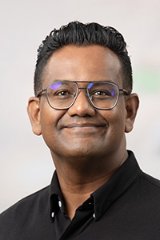
Professor FOONG Sew Bun is an Adjunct Associate Professor at the Department of Information Systems and Analytics, School of Computing, National University of Singapore. He holds dual roles as Chief Technology Officer (CTO) for IBM Singapore and IBM ASEAN Software Group, and previously served as Managing Director at DBS Bank, Deputy Chief Executive at GovTech, and Global Head of Digital Transformation at Standard Chartered Bank. His career spans over three decades in IT leadership, technical architecture, and national-level advisory roles. Education: BSc and MSc in Computer Science from the University of Texas at Austin. Research interests focus on IT architecture patterns, service-orientation, software reuse, enterprise architecture, and fuzzy logic. He has authored/co-authored multiple IBM Redbooks and peer-reviewed publications in AI and software engineering. Awards include the 2016 IT Professional of the Year (SCS), IBM Distinguished Engineer distinction, and leadership accolades from IBM. He chairs the National Infocomm Competency Framework Steering Committee and has held key roles in Singapore's IT policy-making bodies. Teaching includes courses on digital transformation in finance (FT5002) and AI-driven business innovations (IS4261). His professional activities span technical councils, industry certifications, and academic collaborations.
Prof. Dr. Tobias Brandt serves as a Full Professor and Chair of Digital Innovation and the Public Sector at the University of Münster's School of Business and Economics. His academic journey includes roles as Assistant Professor at Rotterdam School of Management (2016-2021) and Research Assistant at the University of Freiburg (2011-2015). He co-founded Geospin GmbH in 2016 and holds memberships in VHB, INFORMS, and AIS. Research Interests: Brandt focuses on digital innovation in public sectors, sustainable urban systems, e-government, and platform ecosystems. His work bridges information systems and operational research to address challenges in mobility, energy, and public service delivery. Recent projects include developing tools for sustainable urban planning, digital platforms for elderly care, and leveraging AI for crisis management. Notable Projects: Current initiatives include the PIONEER II Master's program on public innovation, SMARD-Gov (LLMs for government decision-making), and comuneo (digital sustainability management platform). Completed projects include INNO4S (integrating sustainability in business education) and studies on pandemic-driven digitalization in public administration. Awards: RSM Teaching Award (2020), Daniel H. Wagner Prize (2020), IBM Faculty Award (2016). Grants: €5M+ secured from EU Erasmus+, DFG, and German Federal Ministry of Research. Labs/Teams: Leads the Chair of Digital Innovation & Public Sector, collaborating with ERCIS (European Research Center for Information Systems). Active in GovTech and digital sustainability initiatives.
Leif Sundberg serves as an Associate Professor (docent) in Informatics at Umeå University and maintains a part-time research position at Mid Sweden University. He is affiliated with the Department of Informatics at Umeå University and the Department of Communication, Quality Technology and Information Systems at Mid Sweden University. Dr. Sundberg holds leadership roles as Deputy Forum Leader for the Forum for Digitalization (FODI) and is an active member of the Risk and Crisis Research Centre (RCR) and the Swedish Center for Digital Innovation (SCDI). His academic background includes BA degrees in Philosophy and Media & Communication Science from Umeå University, an MA in Education from Mid Sweden University, and a PhD in Information Systems completed at Mid Sweden University in 2019. He served as a postdoctoral researcher at Umeå University during 2021-2022, was appointed senior lecturer in January 2023, and received his docent (associate professor) qualification in September 2024. Dr. Sundberg's research program centers on the complex relationship between digital technology and societal structures, particularly examining AI management, digital governance frameworks, and risk society dynamics. His work critically analyzes how digitalization transforms public sector values, decision-making processes, and risk landscapes, often employing philosophical perspectives to explore deeper implications of technological change in governance contexts. His research has made significant contributions to understanding the tensions between technological optimism and practical implementation challenges in government settings. Analysis of his recent publication portfolio reveals several key research trajectories: the application of generative AI in government contexts with attention to resilience implications; critical examinations of government technology narratives and their relationship to uncertainty; investigations into the practical challenges of implementing machine learning in public sector environments; development of frameworks for understanding the digital risk society; exploration of citizen-centric approaches to digital government; and application of public value perspectives to enterprise architecture in government settings. Generative AI applications in government resilience Critical analysis of technology narratives in public administration Machine learning implementation challenges in public sector Digital risk society theoretical frameworks Citizen-centered digital government approaches Public value perspectives on government IT architecture Dr. Sundberg's scholarly work has been published in prestigious journals including Government Information Quarterly, Safety Science, Journal of Strategic Information Systems, and Information Polity. His research has informed academic understanding of digital government strategies, e-participation mechanisms, and the philosophical dimensions of technological change in public administration, while also providing practical insights for policymakers and government practitioners. As an educator, Dr. Sundberg has supervised students in the Industrial Organization and Economics program and has developed innovative approaches to teaching machine learning using no-code AI platforms. He currently serves as an international contact person at the Department of Informatics, facilitating global academic collaborations, and participates actively in the GovTech Challenges graduate school, contributing to the development of next-generation digital government researchers and practitioners.
Johann Laux is a British Academy Postdoctoral Fellow at the Oxford Internet Institute, University of Oxford, specializing in the legal, ethical, and social dimensions of artificial intelligence and big data. He concurrently serves as a non-residential fellow at Berlin's GovTech Campus since 2024 and contributes legal expertise to the 'Human in the Loop? Autonomy and Automation in Socio-Technical Systems' project at the Humboldt Institute for Internet and Society (HIIG). His educational background includes: Doctorate in Law (thesis: institutional design of courts), University of Hamburg Multiple law degrees, University of Hamburg Master's in Politics and Governance, London School of Economics and Political Science Philosophy studies, King's College London Visiting Scholar tenure, University of California, Berkeley Laux's research centers on effective human oversight mechanisms for AI systems within socio-technical frameworks. He investigates governance models balancing automation with human autonomy, particularly in digital welfare states and algorithmic decision-making contexts. His work bridges legal theory, technology ethics, and policy design to address emergent challenges in AI regulation. Key accolades include: British Academy Postdoctoral Fellowship (current primary appointment) Emile Noël Fellowship at New York University GovTech Campus Fellowship (non-residential, Berlin) Supported by prestigious fellowships, his research avoids traditional grant descriptions but emphasizes real-world impact through media engagement. Though not formally documented as an advisor, his lab affiliations drive collaborative scholarship. At Oxford, he operates within the AI & Society Lab while contributing to HIIG's autonomy-focused project, positioning him at the intersection of academic research and policy implementation for emerging technologies.
Di Yang is a researcher at the London School of Economics (LSE), affiliated with the Department of Health Policy. He holds a PhD in Health Policy and Administration from Penn State University. His work focuses on health inequality and socioeconomic determinants of health in low- and middle-income countries, particularly in India, China, and Nepal. Yang's research evaluates government policies and interventions' impacts on health equity and well-being, with recent projects involving machine learning to analyze health determinant elasticity and cost-effectiveness of social investments. He collaborates with Dr. Zlatko Nikoloski on universal healthcare assessments in Pakistan and Bangladesh. Key research interests include policy impact evaluation, social determinants of health, and applications of machine learning in public health. His recent studies explore health insurance reforms in China, antibiotic dispensing practices in Nepal, and livestock ownership's role in anaemia reduction in Sub-Saharan Africa. Yang also examines governance challenges in Africa, including anti-corruption reforms, digital governance innovations, and legislative effectiveness in Kenya and Zambia. Yang's work bridges empirical analysis and policy design, emphasizing evidence-based approaches to address systemic inequalities. His collaborations with international teams highlight cross-disciplinary methods, combining quantitative techniques with qualitative insights from policy implementation contexts. Current projects include digitalization of social safety nets for older persons in Kenya and blockchain applications for public accountability in governance systems.
Shireen Santosham is a Lecturer in Management at Stanford Graduate School of Business, specializing in Political Economy. She holds roles as Executive Director of the Nextdoor Kind Foundation and Head of Social Impact at Nextdoor. Her career includes leadership in digital equity initiatives, including serving as Chief Innovation Officer for San Jose, where she spearheaded the Digital Inclusion Fund. Santosham holds a BA/BS from the University of Pennsylvania, an MPA from Harvard Kennedy School, and an MBA from Harvard Business School. Education: BA in International Relations, University of Pennsylvania (2001) BS in Finance, Wharton School, University of Pennsylvania (2001) MPA in International Development, Harvard Kennedy School (2009) MBA, Harvard Business School (2009) Research Interests: Focuses on technology's societal impact, digital equity, and urban innovation. Her work spans global digital divides, gender access disparities, and smart city strategies. Recent efforts include advancing vertical farming through Plenty and advocating for equitable broadband access. Awards: Top San Francisco Changemaker (Builtin) Moxie Award (Builtin) Top 25 GovTech Doers, Dreamers & Drivers (twice) Top 50 Women in Tech (StateScoop) Grants & Advising: Secured multimillion-dollar partnerships in San Jose to address the digital divide. Advises on ag-tech sustainability and urban food systems through Plenty's expansion projects like the Compton farm initiative. Collaborates with global organizations like the GSMA on gender equity in technology. Labs/Teams: Leads Stanford's Future of Cities course, integrating her public-sector and corporate experience. Active in policy advocacy through roles like Council on Foreign Relations membership and UN conference participation.
Umi Hsu (pronouns: they/them) is an Adjunct Assistant Professor in Media Design Practices at ArtCenter College of Design and teaches digital analytics strategy at USC Marshall School of Business. They also serve as a digital strategist and senior project coordinator at the City of Los Angeles Department of Cultural Affairs, leading design strategy and digital initiatives that bridge arts, technology, and civic engagement. Hsu holds a PhD in Critical and Comparative Studies in Music from the University of Virginia, with an ethnographic dissertation examining identity articulation and community formation among Asian American musicians in indie rock music scenes. Their academic journey includes a Mellon Digital Scholarship Postdoctoral Fellowship at Occidental College's Center of Digital Learning + Research and an ACLS Public Fellowship, establishing their foundation in public humanities and digital scholarship. As a strategic designer and public humanist, Hsu's research spans digital ethnography, sound-based community practices, public humanities, and open access publishing. Their work explores the intersection of technology, arts, and civic life with a focus on equity and inclusion. Notable projects include the civic sound data initiative LA Listens, which examines sensory, social, and ecological aspects of Los Angeles streets, and Movable Karaoke, a Metro-funded project exploring collective mobility experiences in LA. Hsu has also produced the queer history podcast Periodically Queer for One Institute and developed the Days of Rage Web Exhibit, which received an Awwwards honorable mention. Hsu's academic contributions reflect a consistent engagement with digital methodologies and community-centered approaches, with publications spanning gender studies, urban sound cultures, and digital public humanities. Their work demonstrates how digital tools can enhance community engagement and cultural preservation while addressing issues of accessibility and representation. ACLS Public Fellowship National Endowment for the Arts Fellowship Shuttleworth Foundation Fellowship GovTech Award LA Metro Funding Awwwards Honorable Mention for Days of Rage Web Exhibit Government Technology Outstanding IT Award for Neighborhood Arts Profile IDC SmartCities North America Award Finalist As an educator, Hsu has taught undergraduate courses in music, gender studies, and media practice since 2007 at institutions including University of Virginia and Occidental College. At ArtCenter, they lead graduate workshops on design research and advise MFA students in Media Design Practices. Hsu founded Lab at DCA, a digital literacy incubator for city staff, demonstrating their commitment to building digital capacity within municipal government. Their leadership extends to advising organizations including Arts for LA, LA Counts, Cultural Research Network, Center for Cultural Innovation, and Society of Ethnomusicology.
Jessica Breaugh is a Senior Lecturer at ESCP Business School in Berlin, focusing on business and society with expertise in corporate social responsibility and ethics. Her multidisciplinary research spans public management, government digitalization (DigiLot), and tech-public sector partnerships (GovTech). She has published in journals like Government Information Quarterly and Public Management Review , winning the 2021 Best Article in Public Personnel Management Journal. She contributed to the Horizon 2020-funded TROPICO project and CIVICA initiatives on Digital Altruism and Digital Public Values. Her academic background includes Psychology, Politics, and International Affairs, informing her research on organizational behavior in digital governance contexts. Current affiliations include the CIVICA-funded Digital Public Values project, exploring public values in public-private collaborations. Research Themes: Public Sector Innovation, Tech Ethics, Digital Transformation Key Projects: TROPICO (Horizon 2020), Digital Public Values (CIVICA)
Dr Clare Llewellyn is a Lecturer in Governance, Technology, and Data at the University of Edinburgh's School of Social and Political Science. Her research focuses on cross-disciplinary methodologies in GovTech, leveraging natural language processing, machine learning, and big data analytics to study social media dynamics and political issues such as Brexit. She has developed longitudinal data collection strategies to analyze public opinion shifts and collaborates across disciplines including informatics, linguistics, and social work. Her work includes managing one of the largest Brexit-related Twitter datasets, addressing challenges in data storage and visualization. Notable projects include the Lothian Diary Project, examining language use during the pandemic, and enhancing exhibition scholarship through knowledge graphs. She has also contributed to teaching innovations in text mining during lockdown, emphasizing digital badges and pair programming. Key research themes include neuropolitics of identity, social media ethics, and the application of data science to governance. Her projects span migration policy dialogues, mental health monitoring via big data, and cultural heritage integration with social media.
Dr. Keegan McBride is a Departmental Research Lecturer in AI, Government, and Policy at the Oxford Internet Institute (OII), part of the University of Oxford. His research focuses on digital government, AI in public administration, and digital innovation. He holds an MSc in e-Governance Technologies and a PhD from Tallinn University of Technology. Education: MSc in e-Governance Technologies and Services (Tallinn University of Technology) PhD in Public Administration (Tallinn University of Technology) Research Interests: Interoperability, AI in public services, digital transformation, open government data, and digital wellbeing. His work emphasizes co-creation of public services and the ethical implications of AI adoption in governance. Key Projects: Bureaucracy and Artificial Intelligence : Examines AI's impact on public sector bureaucracies. Research Programme on AI, Government and Policy : Supports interdisciplinary AI governance research. Teaching: MSc SSI Course Director and instructor for courses like 'Artificial Intelligence for Policymaking'. Supervises students such as Yvonne Lee. Publications: Focus on AI governance, digital transformation barriers, and global case studies like Estonia and Japan. Recent works include analyses of AI's electoral impact and open-source AI security.
Jeremy Crow is an Associate Professor at Monash Business School and Head of Innovation at Next – Reece Group. He specializes in entrepreneurship, innovation, and technology ventures. Previously, he served as Head of New Ventures at Superseed, focusing on building products and businesses in the built environment. His work spans kidtech, agtech, and govtech through co-founded ventures. Jeremy leads the postgraduate unit Creativity and Entrepreneurship (BEX5411) and is a delivery partner for the Fastrack programme, emphasizing hands-on problem-solving and venture development. His approach combines academic rigor with industry application, fostering innovation across multiple sectors. Jeremy’s professional roles highlight his dual focus on academia and industry leadership. Beyond Monash, he actively contributes to corporate innovation through his current role at Reece Group and past leadership at Superseed. He prioritizes actionable outcomes and team-driven growth in his projects and teaching. Though no formal grants or awards are listed, his career trajectory underscores recognition for entrepreneurial impact and innovation in emerging technologies.
Moritz Kleinaltenkamp is a scholar of organisational theory and consultant affiliated with the Hertie School and Freie Universität Berlin. He holds a PhD from the Hertie School (Summa Cum Laude), MSc Technology Policy from University of Cambridge, MSc Economics from Peking University, and BSc Political Science from Freie Universität Berlin. His research focuses on organisational development of emerging technologies (blockchain/AI), GovTech innovation ecosystems, and temporal dynamics in organisations. Practically, he led the Insights & Intelligence division at PUBLIC, a GovTech firm, and contributes to executive education programs. Awarded scholarships from German Academic Scholarship Foundation, Academy of Management, and institutions including Yenching Academy and University of Turin. His work bridges academic research with public sector strategy and technology policy.
Tadas Limba is a Full Professor at Mykolas Romeris University (MRU) and a Visiting Lecturer at the International Management School (ISM). He leads the Joint Study Programs with South Korea and the Study Program Branding and Advertising Management. His expertise spans over 20 years in Disruptive Technologies, Data Protection, Cybersecurity, Cryptocurrency, E-Business, E-Government, and Startup Development. He actively contributes to research, with over 70 scientific publications and involvement in international consortia such as the National Joint Doctorate in Management (4 Lithuanian Universities) and the International Joint Doctorate Law, Science and Technologies (LAST-JD) led by Bologna University. Tadas Limba emphasizes ethical leadership, academic excellence, and international collaboration, having visited institutions like Dongseo University (South Korea), Communication University of China, and Arizona State University (USA). Awards: Fellow of New Westminster College of Canada Teaching Focus: Technology and Cybersecurity Management (Course Code: MNG286) Grants/Consortia: Member of LAST-JD and National Joint Doctorate in Management No specific labs or teams are explicitly mentioned in the provided information.
Nitesh Bharosa is a Professor at the Faculty of Technology, Policy and Management, Delft University of Technology, specializing in the Department of Information and Communication Technology. His research spans GovTech, public sector innovation, and digital governance with focus on quantum-safe transitions and digital identity systems. His expertise covers digital infrastructures, trust services, data wallets, and post-quantum cryptography, with significant contributions to circular economy compliance monitoring and ethical AI integration in public sector risk management. Recent work addresses quantum-safe transition challenges through organizational readiness models and policy frameworks. 2024 publications reveal concentrated research on quantum-safe transitions, highlighting implementation challenges, organizational readiness assessment, and ethical AI integration in government systems. His work bridges technology, policy, and management to secure critical infrastructure against quantum computing threats. Major recognitions include: Best Management Paper Award at dg.o 2022: 23rd Annual International Conference on Digital Government Research Best Paper Award (2009) ECHO Award (2005) Prof. Bharosa has supervised doctoral research and serves on editorial boards for Government Information Quarterly and previously for Information Systems Frontiers. His leadership extends to the Sociaal-Economische Raad (SER) since 2024, driving policy development in digital government and quantum-safe transitions.
Peter Öhman is a Professor and subject representative of business administration at Mid Sweden University, where he also serves as the center director of the Center for Research on Economic Relations (CER). Based in Sundsvall, he is affiliated with the Department of Economics, Geography, Law and Tourism (EJT). His academic work spans accounting, auditing, and financial sectors, with a focus on relationship and behavioral issues within these fields. Öhman's research primarily focuses on relationship and behavioral issues in accounting and auditing, extending to banking and real estate industries. His recent work explores digital transformation in finance, including fintech adoption, robo-advisors, and digital payment systems. He examines how trust, emotions, and behavioral factors influence financial decision-making among consumers, advisors, and institutions. His research also addresses sustainability accounting, ESG performance measurement, and the impact of AI and machine learning on financial reporting and auditing practices. The interdisciplinary nature of his work bridges traditional accounting research with contemporary digital transformation challenges. His publication record demonstrates a clear trend toward digital finance and technology adoption in financial services. Recent articles analyze mobile banking applications, robo-advisors, digital payment methods, and the integration of AI in financial decision-making. His work combines traditional accounting and auditing research with contemporary digital transformation challenges, particularly examining consumer behavior, trust formation, and performance measurement in evolving financial ecosystems. Öhman's research increasingly incorporates machine learning methodologies for analyzing financial controversies and performance metrics. Member of Swedish National Audit Office's scientific council Member of Supervisory Board of the Swedish Auditors' Inspectorate Active member of international editorial boards Regular reviewer for prominent accounting and finance journals Recipient of multiple educational awards Professor Öhman leads multiple doctoral projects and has supervised numerous PhD candidates. His research is supported by various projects including "Accounting and auditing transformation," "Digital Banking and Finance," "GovTech Challenges Graduate School," and "Lifelong learning and organisational development." He has received national recognition for his educational contributions and maintains active collaborations with researchers across Europe and Asia, particularly evident in his co-authored publications with international colleagues. As director of the Center for Research on Economic Relations (CER), Öhman oversees a research environment focused on economic relations, accounting, and finance. The center produces regular research reports and collaborates with industry and government bodies. His leadership extends to coordinating research projects on lifelong learning, organizational development, and digital transformation in financial services, positioning CER as a key player in Swedish economic research. Öhman's work with the BUFFL-project demonstrates his commitment to innovative educational approaches that bridge academic research with practical business applications.