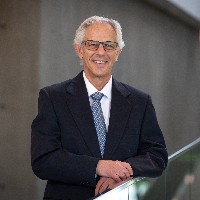
Prof. Dr. Tobias Hagen is a Professor of Economics and Quantitative Methods at Frankfurt University of Applied Sciences since 2010. He directs the Research Lab for Urban Transport (ReLUT) and serves as speaker for the Promotionszentrum Mobilität und Logistik. His research bridges data science, applied econometrics, and policy evaluation in transportation contexts. Academic Background: Studied Volkswirtschaftslehre at Goethe Universität Frankfurt PhD (Dr. rer. pol.) in 2005 from Johann Wolfgang Goethe-Universität Frankfurt am Main Research focuses on data-driven transportation analysis using GPS trajectories, parking search modeling, and AI applications. Key projects include start2park (parking search prediction), DZweI (urban digital twins), and MaKoMo (mobility cohort effects). His work aligns with UN SDGs 1, 3, 9, 11, and 13. Scientific Contributions span parking violation modeling (2023), semantic trajectory clustering (2022), and entropy balancing for commuting pattern decomposition (2025). He pioneered open-source tools like TessPy for geographical tessellation. Awards Dissertationspreis der IHK Frankfurt (2005) Actively supervises PhD candidates Jonas Hamann, Nicole Reinfeld, and Siavash Saki. Collaborates with institutions like Bundesministerium für Digitales und Verkehr, KfW Bankengruppe, and European Central Bank through research projects.
H. Wesley Perkins, Ph.D. , is Professor of Sociology in the Department of Anthropology and Sociology at Hobart and William Smith Colleges in Geneva, New York. He is a leading scholar in the fields of social norms, college student health, and substance abuse prevention. Perkins directs several major research initiatives, including the Alcohol Education Project , the Post-Collegiate Life Project , and the Youth Health & Safety Project . Education: B.A. in Sociology, Purdue University; M.Div., Yale University Divinity School; M.A. and Ph.D. in Sociology, Yale University. Perkins is internationally recognized for pioneering research on peer misperceptions of alcohol use and for developing the social norms approach to prevention. His work has influenced national and international policy and has been cited in major media outlets such as The New York Times , CNN , NPR , Time , and Newsweek . He has delivered over 500 lectures and workshops and has served as a consultant to numerous institutions and government agencies. His research spans alcohol and drug abuse prevention , forgiveness and health , post-collegiate life transitions , bullying , and family and gender roles . His recent publications reflect a strong longitudinal focus, with recurring themes in adult development, stress, well-being, and moral psychology. Articles highlight innovative applications of the social norms model across diverse populations, including college students, military personnel, and adolescents. Scientific Awards and Recognition: Faculty Prize for Outstanding Scholarship, HWS (1993) Faculty Prize for Outstanding Service, HWS (1997) U.S. Department of Education Model Prevention Program Award (1999, 2005) Outstanding Service Award, Network of Colleges and Universities (1999) Community Collaboration Award, Success for Geneva’s Children (2016) Perkins has secured significant grant funding for his projects and has advised numerous student researchers. He is frequently invited to speak at national and international conferences and has testified before the U.S. Senate on campus alcohol abuse. He leads interdisciplinary research teams and collaborates with institutions globally. His work continues to shape public health interventions and higher education policy.
Alfonsina Buonicontro is a Researcher in the Department of Humanities (DIPSUM) at the University of Salerno, Italy, where she conducts interdisciplinary research at the intersection of linguistic typology, cognitive linguistics, and language education. Her work focuses on motion event encoding, covert linguistic strategies, and pedagogical models for teaching general linguistics and text comprehension. Her research interests include: Linguistic and lexical typology, especially in Romance languages Motion event semantics and syntax (verb-framed vs. satellite-framed languages) Covert encoding and inferential meaning in motion expressions Constructional semantics and Gestalt theory in language interpretation Development of annotation tools like Modeg for motion event analysis Pedagogical innovation in linguistics education and reading comprehension Her recent publications reveal a strong focus on diachronic and cross-linguistic analysis of Italian, French, Spanish, Latin, and Ancient Greek, with an emphasis on how meaning is constructed beyond explicit lexical items. She explores how learners interpret motion and cohesion in texts, contributing to both theoretical linguistics and applied educational practices. Scientific contributions include: Development of the Modeg (MOtion DEcoding Grid) annotation tool for systematic motion event analysis Experimental educational project LeCo for enhancing reading comprehension in secondary schools Pioneering studies on boundary-crossing events in Romance languages Analysis of Source/Goal asymmetry in classical languages Proposals for top-down, semantics-first models in teaching linguistics Buonicontro actively publishes in peer-reviewed journals and conference proceedings, often in collaboration with scholars such as Claudio Iacobini and Debora Vena. While no formal list of advisees is provided, her involvement in educational projects suggests mentorship and curriculum leadership roles. She maintains a presence on academic platforms including ORCID, ResearchGate, and Academia.edu, indicating ongoing scholarly engagement.
Frederick Kaefer is an Associate Professor of Information Systems at the Quinlan School of Business, Loyola University Chicago. His research emphasizes machine learning, ethical data use, and societal impacts of algorithms. He previously directed the Master of Science in Information Systems Management program and was recognized as Outstanding Graduate Faculty Member of the Year. Kaefer holds a PhD in Management Information Systems from the University of Iowa, along with an MBA and BS in Mathematics/Computer Science from Loyola University Chicago. Key research interests include wireless communication technologies, network security, and decision support systems. He actively contributes to professional organizations such as the Association for Information Systems (AIS) and INFORMS. Kaefer has taught over 15 courses spanning undergraduate and graduate levels, including programming, telecommunications, and global IT strategy. His award-winning work includes 'Data for Societal Good' and 'Teaching Data for the Greater Good,' integrating Ignatian pedagogical principles. He has received grants for research exploring ethical AI applications and cybersecurity solutions. Kaefer is affiliated with Loyola's UX & Biometrics Lab and contributes to the Behavioral Lab, focusing on human-centered technology design.
Piotr Niewiadomski is a Senior Lecturer in Human Geography at the School of Geosciences, University of Aberdeen, where he has been a faculty member since 2012. He is affiliated with the Department of Geography & Environment and serves as Director of the MSc in Sustainability Transitions. He holds a PhD in Economic Geography from the University of Manchester and has advanced degrees from the University of Newcastle upon Tyne and the University of Lodz. Education: MA, Geography of Tourism and Hotel Business, University of Lodz (1999–2004) MA, Human Geography, University of Newcastle upon Tyne (2005–2006) PhD, Economic Geography, University of Manchester (2006–2011) His research focuses on the globalization of services, particularly the global production networks (GPNs) of transnational corporations in tourism, hospitality, and aviation. He investigates how these networks interact with local institutional contexts and influence economic development, especially in Central and Eastern Europe. His work also explores post-communist transformations and sustainability transitions in tourism. He teaches courses such as GG3576 Globalisation, GG4574 Human Geography Field Course, and GG5557 Governance and Political Economy of Sustainability. His recent publications, particularly in Tourism Geographies , emphasize sustainability transitions, niche innovations in tourism, and the evolution of tourism systems in regions like the Outer Hebrides. He co-edited a special issue on sustainability transitions in tourism and authored the book Tourism in Post-Communist States: Central and Eastern Europe . Scientific Recognition: Associate Editor, Tourism Geographies: An International Journal of Tourism Place, Space and Environment Piotr Niewiadomski supervises undergraduate and postgraduate dissertations and leads key modules in both undergraduate and postgraduate programs. He is actively involved in research on sustainable tourism and regional development and contributes to academic discourse through editorial and collaborative research roles. He is also associated with research centers focusing on sustainability and environmental partnership management.
Andrea Bonezzi is an Associate Professor of Marketing at the Leonard N. Stern School of Business, New York University, where he has been a faculty member since 2012. His office is located in Tisch Hall, 40 West Fourth Street, New York, NY 10012. Education: Ph.D. in Marketing, Kellogg School of Management at Northwestern University M.S. in Business Administration, Bocconi University, Italy B.S. in Business Administration, University of Parma, Italy Professor Bonezzi's research centers on judgment and decision-making, with a strong emphasis on the psychological mechanisms influencing consumer attitudes toward artificial intelligence and the motivational patterns in goal pursuit. He explores how self-uniqueness affects receptivity to medical AI and investigates the dynamics of social transmission of information. His work bridges consumer psychology and marketing strategy, contributing to both academic and practical understanding of consumer behavior. His recent publications appear in top journals such as the Journal of Consumer Research , Journal of Marketing Research , Journal of Consumer Psychology , and Psychological Science . A key theme across his research is the identification of psychological barriers and facilitators in consumer decision processes, particularly in the context of emerging technologies and goal-directed behavior. Scientific Awards: No awards mentioned in the text. Professor Bonezzi advises students and contributes to academic mentorship, though specific advisees are not listed. There is no mention of research grants or funding sources in the provided text. He is affiliated with NYU Stern’s research ecosystem, potentially contributing to centers such as the Center for Behavioral Research, though no direct lab or team leadership is specified.
Mohammed Sharaf Shaiban is a Senior Lecturer at the School of Business, Monash University, Sunway Campus, Malaysia, where he has been serving since 2011. He is actively engaged in research and teaching in the fields of Islamic and commercial finance, banking, and corporate finance. He is a certified Public Accountant and a member of the American Accounting Association and the Yemen Certified Accountants Association. His research interests include stock price informativeness , Islamic banking and finance , commercial banking , financial institutions , and bank stability . His work contributes to the United Nations Sustainable Development Goals, particularly those related to sustainable economic growth and responsible consumption in financial systems. The recent trend in his publications shows a strong focus on comparative studies between Islamic and conventional banks, especially in the context of Malaysia and oil-dependent economies. His research often investigates risk transmission, resilience, performance measurement, and sustainability in financial systems, utilizing advanced econometric techniques and panel data analysis. He has received the Best Paper Award at the 21st Malaysian Finance Association Conference in 2019. His scholarly impact is reflected in citations and readership on platforms like Mendeley and Scopus. Dr. Shaiban is currently supervising PhD students and is involved in active research projects, including Fostering Financial Sustainability: Exploring Factors Influencing Loan Repayment Behavior among B40 and M40 Consumers (2025). He has previously led and contributed to research on Shariah-compliant firm performance and liquidity in Islamic banks. His teaching includes courses such as Commercial Banking and Finance , Introduction to Islamic Banking and Finance , and Money and Capital Market . He has extensive industry and government experience, having served as Vice General Manager (CEO) of the Yemen Corporation for Grains and Foreign Trade. His interdisciplinary approach bridges academic research with real-world financial governance and sustainability challenges.
Peter Thornton is a Visiting Fellow at Cranfield School of Management, Cranfield University, specializing in executive development and leadership programmes. He concurrently serves as an Associate Industrial Fellow at the University of Cambridge, Institute for Manufacturing, leveraging 15+ years of industry experience from Mercedes-Benz UK and the Rover Group. His academic credentials include: B.Eng (Hons) in Engineering MBA from Warwick University Postgraduate Certificate in Teaching, Learning & Assessment in Higher Education from Cranfield University Thornton's expertise centers on designing executive development frameworks that align organizational processes with business goals, integrating British Psychological Society Level A/B certified assessment methodologies. His work bridges engineering principles with behavioral psychology in corporate leadership contexts. Current initiatives include directing Cranfield's Breakthrough Leadership Programme and co-developing the UK Government Project Leadership Programme since 2015 through his consultancy practice.
Jianguang Bao is currently a Royal Society Newton International Fellow at the University of Manchester's Materials Engineering department. Previously, he held an Associate Professor position at the University of Science and Technology Beijing (USTB) from June 2023 after completing a presidential postdoc fellowship at Beihang University. He earned his PhD from the University of Nottingham in 2021, focusing on X-ray microtomography and full-field image correlation for thermomechanical analysis of high-temperature materials. His research bridges mechanics with materials science, advanced characterization techniques, and structural engineering. Key areas include additive manufacturing (AM) process-microstructure-property relationships, defect-induced fatigue in AM metals, and extending the service life of complex components. He has secured £402k as principal investigator and over £400k as co-investigator from funders like the Royal Society and China's National Natural Science Foundation. Bao's work addresses UN Sustainable Development Goals related to sustainable infrastructure and industrial innovation. His expertise spans fatigue analysis, defect characterization, and high-temperature material behavior. Collaborations include institutions across China and the UK, with active research networks in materials engineering and mechanical systems.
Tsen Vei Lim is a Research Fellow at the University of Cambridge's Department of Psychiatry and a Junior Research Fellow at Wolfson College. A cognitive neuroscientist specializing in computational psychiatry, he investigates neurocognitive dysfunctions associated with substance use disorders through computational modeling and neuroimaging. University of Bath - BSc in Psychology (2017) University of Cambridge - PhD in Psychiatry (2022, under Prof Karen Ersche) His research focuses on mapping neurocomputational profiles of substance use disorders using behavioral paradigms, computational modeling, and neuroimaging techniques like fMRI. He examines mechanisms of reinforcement learning impairments, habitual behavior, and decision-making deficits in cocaine, amphetamine, and opioid use disorders. Recent publications address topics like atomoxetine's effects on impulsivity, delay discounting analysis, and neurochemical correlates of habit formation. His work combines computational neuroscience with translational approaches to identify treatment targets. Griffith Edwards Academic Fellow (2024, SSA) Current projects investigate the computational and biological substrates of risky decisions in addiction using multimodal methodologies.
Susana Torío López is a full Professor at the Department of Educational Sciences, University of Oviedo. Her research focuses on family education, parenting styles, social pedagogy, and sustainability in education. She has authored over 57 journal articles and 7 books, with a strong emphasis on longitudinal studies and program evaluations. Her work frequently addresses issues of family dynamics, gender roles, and educational policy. Affiliations: University of Oviedo (since at least 2001), Faculty of Education Key collaborations: Carmen María Fernández García, María del Carmen Rodríguez Menéndez, Omar García Pérez Research interests span parenting theories, adolescent development, and educational interventions. Recent work explores pro-sustainability behaviors in adolescents and parental influence on SDG 12 compliance. She has directed four doctoral theses, including studies on parental education and sustainability practices. Her articles consistently address themes like positive parenting, resilience in adversity, and pandemic-era teaching practices. She has pioneered programs like 'Construir lo Cotidiano' for parental education, emphasizing family collaboration and co-responsibility.
Prof. Dr. Dominik Petko is a Full Professor of General Didactics and Media Didactics at the University of Zurich's Institute of Education since 2019. He previously served as Professor and Dean for Research and Development at the Schwyz University of Teacher Education (2013-2019) and as Professor at the University of Teacher Education Central Switzerland Schwyz (2003-2013). From 2020-2024, he directed the Teacher Education Programme for Upper Secondary Education at the University of Zurich. His educational background includes: 2017: CAS Governance and Leadership in Higher Education, University of Zurich 2004: PhD in Social Sciences, University of Göttingen (Dr. disc. pol., summa c. l.) 1999: Master in Pedagogy and ev. Theology, University of Göttingen (with honors) 1989-1999: Studies of Pedagogy and ev. Theology in Göttingen, Zürich, Sao Leopoldo 1989: Baccalaureate at the Elsa Brändström Gymnasium in Hannover (Germany) Prof. Petko's research focuses on teaching methodology and educational technology, with particular emphasis on teachers' technology-related skills and beliefs, technology integration in schools, game-based learning, digital technologies in teacher education, and media education. His work bridges theoretical frameworks with practical applications in educational settings, examining how digital transformation affects teaching practices, student engagement, and educational outcomes across various school contexts. His recent publications reveal a strong focus on the TPACK framework (Technological Pedagogical Content Knowledge), digital transformation in secondary education, and the impact of emerging technologies like AI on teaching and learning. His research spans both general and vocational education contexts, with particular attention to how personal and contextual factors influence technology integration in schools. Prof. Petko has received numerous prestigious awards for his work: 2024: Outstanding Poster Award at EdMedia 2024 2023: SITE Judi Harris Research into Practice Award 2023: Best of Swiss Apps Award, Silver in Extended Reality 2022: SITE TPACK SIG Ann Thompson Excellence in Research Award 2016: Best Paper Award at GMW 2016 2010: Best of Swiss Web Award, bronze in Innovation and Public Affairs Prof. Petko currently supervises multiple doctoral students working on topics related to digital transformation in education, including Vito Candido, Tessa Consoli, Zoi Dellios, Judit Martínez Moreno, Maria-Luisa Schmitz, and Thomas Wicki. His research has been supported by significant grants including projects funded by the Swiss National Science Foundation (DigiTraS II project), Mercator Foundation (perLen project), and other national education initiatives. He has led several major research projects examining technology integration in schools and digital transformation in teacher education. Prof. Petko leads the Chair of General Didactics and Media Didactics at the University of Zurich, which includes researchers like Tessa Consoli, Eliana Brianza, Hanna Laura Hampe, and Katharina Neumann. His team has developed innovative educational tools including the ClassVRoom app, which won a Silver Award in the Extended Reality category at Best of Swiss Apps. The team collaborates extensively with schools, educational institutions, and technology developers to create evidence-based approaches to technology integration in education.
Dr. Zsuzsika Sjoerds is an Assistant Professor at the Department of Cognitive Psychology, Leiden University, within the Social and Behavioural Sciences faculty. Her research integrates behavioral paradigms, neuroimaging (MRI, EEG), and computational modeling to investigate human decision-making, cognitive control, and psychiatric disorders such as addiction and obsessive-compulsive disorder. She is also a dedicated advocate for open science, co-founding the Open Science Community Leiden and chairing the Stand Up For Science movement in The Netherlands. Education : Clinical Neuropsychology (VU University Amsterdam), PhD in Psychiatry (VU University Medical Center, 2013). Research Interests focus on the neural mechanisms underlying goal-directed behavior, impulsivity, and behavioral flexibility, with applications in computational psychiatry and neuroimaging. Scientific Advocacy includes organizing the Dutch March For Science (2017) and promoting transparency and communication in academic systems. Key Achievements : NWO Rubicon grant recipient for stress and cognitive control research in alcohol dependence.
Prof. Dr. Guido Grunwald is a Professor of Business Administration specializing in Marketing and Market Research at the Faculty of Management, Culture and Technology, Osnabrück University of Applied Sciences (Campus Lingen, Germany). With a doctorate in economics from the University of Osnabrück (2008) and prior academic roles at the University of California Riverside, he bridges theoretical expertise with practical insights from his work in EU regulatory frameworks and BMBF-funded innovation projects. Research Interests: Focus on sustainability transformation in higher education institutions, relationship marketing, stakeholder integration in sustainable partnerships, crisis management in CSR contexts, and sustainable buyer behavior analysis. Academic Leadership: Active member of the Academy of Marketing Science (AMS) and American Marketing Association (AMA), with editorial roles at Organizations and Markets in Emerging Economies and peer-review contributions to journals like Journal of Marketing Communications and Strategic Change . Awards: Recognized with two practice-oriented promotion awards for applied research in sustainability and marketing. Publications: Over 100 peer-reviewed articles in journals such as Journal of Cleaner Production , Corporate Reputation Review , and Sustainability Science , alongside 10 monographs on sustainability marketing and relationship-oriented strategies.
Richard Perlow serves as Dean and Professor in the Department of Management and Organizations at MacEwan University's School of Business in Edmonton, Alberta. His academic career centers on organizational dynamics, human resource systems, and individual performance within workplace contexts. Perlow's research specializes in counterproductive work behaviour, employment discrimination, and individual differences in performance. He investigates how leadership relationships, demographic factors, and cognitive abilities shape workplace conduct and outcomes. His work bridges industrial-organizational psychology with practical HR applications, particularly examining discrimination mechanisms related to religion, gender, and race in employment settings. His publication timeline (1992-2024) reveals consistent focus on workplace behavior drivers, with recent studies (2024) analyzing counterproductive behavior through leader-member exchange theory and discrimination predictors based on Muslim gender identity. Earlier works explored cognitive aspects of skill acquisition (2018), assessment methodologies (2012), and foundational predictors of employment discrimination (2001), demonstrating longitudinal commitment to understanding systemic and individual factors in organizational behavior.