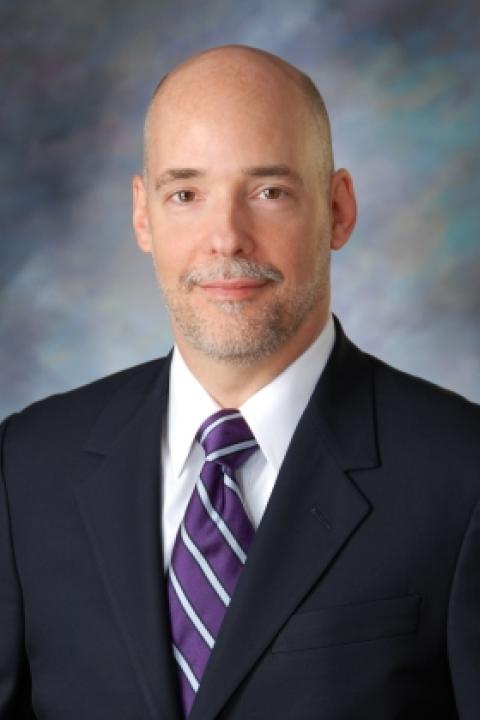
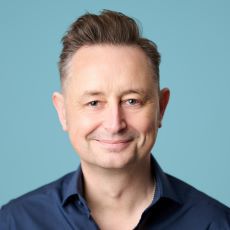
Sven Werner is a Senior Professor at Halmstad University's Academy of Entrepreneurship, Innovation and Sustainability. His expertise lies in district heating and cooling systems, with a focus on decarbonization, energy efficiency, and fourth/fifth generation technologies. He has authored foundational textbooks, such as Energiförsörjning: En introduktion till vårt energisystem , and contributed to international platforms like DHC+ and the IEA's Low-Temperature District Heating Annex. His research includes pioneering the concept of 'Fourth Generation District Heating' and analyzing global heating/cooling demands. Key achievements include over 50 short courses for industry professionals and presentations across 20 countries. Current projects include a book on the world history of district heating. Research Highlights: Low-temperature systems, renewable integration, and thermal storage. Impact: Most-cited article on district heating (Annex X Final Report, 2014), cited every six hours in 2021. International Contributions: Co-developed the Pan-European Thermal Atlas (PETA) and advised the EU Energy Council on energy efficiency. Werner's work bridges academia and industry, emphasizing practical solutions for sustainable energy systems. His publications span journals, conference papers, and policy guides, addressing topics like heat distribution costs, industrial heat recovery, and smart grid technologies.
Professor Alan Sangster is Chair in Accounting History at the University of Aberdeen's Business School, where he is actively engaged in research, teaching, and supervision of PhD students. His work centers on the historical evolution of accounting systems, particularly double-entry bookkeeping, and the pedagogical aspects of accounting education. University: University of Aberdeen School: Business School Position: Chair in Accounting History Email: alan.sangster@abdn.ac.uk Alan Sangster holds a BA in Business Studies, MSc in Operational Research, PhD in Accounting Education, and is a Chartered Accountant (CA). His academic journey reflects a deep commitment to understanding the historical roots of modern accounting practices. His research interests encompass Accounting History , Business History , and Accounting Education , with a focus on medieval and Renaissance accounting systems, the work of Luca Pacioli, digital methodologies in historical research, and ethical issues in accounting scholarship. He advocates for rigorous historical methodology and critical reassessment of established narratives. The 15 most recent publications highlight a sustained and influential research trajectory in accounting history, with a strong emphasis on the origins and diffusion of double-entry bookkeeping, digital transformation of archival research, and critical reflections on historiography. His work bridges historical analysis with contemporary pedagogical and ethical concerns in accounting. Professor Sangster has received numerous accolades recognizing his exceptional contributions: 2022: Outstanding Accounting Educator Award (American Accounting Association) 2022: Outstanding Contribution to Accounting & Finance Education Award (British Accounting & Finance Association) 2021: Barbara D. Merino Award for Excellence in Accounting History Publication 2015: Hourglass Award (Academy of Accounting Historians) 2014: Premio Enrique Fernández Peña de Historia de la Contabilidad 2013: Life-Time Achievement Award (British Accounting and Finance Association) He serves as Editor-in-Chief of Accounting Education (Routledge), Deputy Chair of the BAFA Accounting History SIG, and Trustee of The Academy of Accounting Historians. These roles underscore his leadership and influence in shaping the field globally. Although no specific students or grants are mentioned, his active supervision of PhDs and extensive publication record indicate a vibrant research program. He is not associated with any lab or team in the provided text, but his collaborative publications suggest active academic networks.
Harvey NEO is a Professorial Research Fellow at Singapore University of Technology and Design (SUTD), leading the Cities and Urban Science programme at the Lee Kuan Yew Centre for Innovative Cities (LKYCIC). He holds a PhD in Geography from Clark University, USA, and previously served as an Associate Professor at the National University of Singapore (NUS). His research focuses on urban sustainability, citizen-centric urban science, and nature-society interactions. He is the Southeast Asian editor for Human Geography and Frontiers in Sustainable Cities , and sits on multiple international advisory boards. Key roles include Director of SUTD's Master in Urban Science, Policy and Planning programme, and co-leader of the Tote Board's Future Ready Society initiative. Education: PhD, Graduate School of Geography, Clark University (2007); MSc, Geography, NUS (2002); BA (Hons), NUS. Research interests emphasize urban futures, participatory governance, and environmental policy, with a focus on Southeast Asian cities like Ho Chi Minh City, Jakarta, Manila, and Phnom Penh. His work bridges academia and practice through projects on electric vehicle policies, urban heat adaptation, and 3P+ (People, Public, Private + Academia) partnerships. Publications span urban mobility, pandemic responses, and eco-city development, reflecting a commitment to interdisciplinary solutions for sustainable urbanization. He has secured grants from Singapore’s Social Sciences Research Council and Housing Development Board, fostering collaborations across sectors to address societal challenges. Labs/Teams: LKYCIC's Urban Environmental Sustainability Programme and the Future Ready Society Initiative, which integrate research with policy and community action.
Professor Crystal Abidin is a prominent digital anthropologist and ethnographer specializing in influencer cultures, social media pop cultures, and internet fame dynamics. She holds a Professorship at Curtin University's School of Media, Creative Arts and Social Inquiry, alongside roles as Director of the Influencer Ethnography Research Lab and Deputy Director of the Korea Research Centre. Her research spans 100+ publications, 12 special issues, and 6 authored/edited books, with a focus on Asia Pacific contexts. Key roles include: ARC DECRA Fellow (2019-2024) Editor-in-Chief of Media International Australia Founder of TikTok Cultures Research Network Associate Investigator at the Centre of Excellence for the Digital Child Her research interests emphasize: Influencer labor and platform governance Cross-cultural digital practices Activism and identity expression online Children's media engagement Notable awards include WA Young Tall Poppy Science Award (2022), Forbes 30 Under 30 Asia (2018), and Pacific Standard's Top Thinkers Under 30 (2016). Her work frequently addresses: Ethical concerns in influencer marketing Platform-specific content creation Racial and gender dynamics in social media Global-local interplay in digital cultures Current initiatives include advancing TikTok cultures research and co-editing interdisciplinary volumes on influencer marketing and digital child safety.
Eric Y. Drogin is an Adjunct Professor and Honorary Professor with dual expertise in clinical psychology and law. He is affiliated with Harvard Medical School, serving on the staff of the Forensic Psychiatry Service at Beth Israel Deaconess Medical Center, and is involved in the Harvard Longwood Psychiatry Residency Training Program. He also teaches at the University of New Hampshire School of Law and lectures internationally at Prifysgol Aberystwyth (formerly University of Wales) in both Psychology and Law. His work integrates mental health and legal systems through research, education, and practice. Education: Doctor of Philosophy (Ph.D.) in Clinical Psychology – Hahnemann University Juris Doctor (J.D.) – Villanova University School of Law Dr. Drogin's research interests center on the intersection of psychology, psychiatry, and law, particularly in forensic assessment, expert testimony, ethics, and mental disability law. His work emphasizes multidisciplinary approaches to legal and clinical challenges, supporting both mental health professionals and attorneys. He regularly presents continuing education seminars across North America, Europe, Asia, and Australia. His scholarly publications span criminal and civil law applications of psychological evidence, guardianship evaluation, forensic assessment standards, and the role of mental health professionals in court. These works reflect a consistent focus on improving legal processes through scientific rigor and ethical practice. Scientific Honors and Professional Recognition: Fellow of the American Psychological Association Fellow of the American Academy of Forensic Psychology Diplomate, American Board of Forensic Psychology Diplomate, American Board of Professional Psychology Life Fellow, American Bar Foundation Dr. Drogin has held leadership roles in major professional organizations, including President of the American Board of Forensic Psychology, Chair of APA committees on Legal Issues and Professional Practice, and Co-Chair of the ABA’s Behavioral & Neuroscience Law Committee. He serves as Editor-in-Chief of The Journal of Psychiatry & Law and has co-authored over 250 publications. While formal student advising is not detailed, his instructional roles in residency programs and trial workshops indicate active mentorship. He is a key figure in advancing forensic psychology through education, policy, and interdisciplinary collaboration.
Professor Martin Coppack is a Professor of Practice in Financial Inclusion and Consumer Policy at the University of Birmingham's School of Social Policy and Society, affiliated with the Centre on Household Assets and Savings Management (CHASM). His work focuses on advancing consumer-centric policies, particularly for low-income and vulnerable groups, with significant contributions to regulatory frameworks in essential services. He holds multiple advisory roles, including memberships in the HM Treasury Financial Inclusion Committee and the Pay.UK End User Advisory Committee. Education: MSc Consumer Studies, Syracuse University, 1998 Diploma in Special Education, College of Preceptors, 1996 Post Graduate Certificate of Education (Further Education), Keele University, 1995 BSc (Hons) Human Ecology, Bath Spa University, 1994 Research Interests: Eliminating the poverty premium in essential services Consumer vulnerability and inclusive design in financial systems Advocacy for regulatory policies prioritizing vulnerable consumers His publications highlight systemic issues in financial services, advocating for equitable access and policy reforms. He has led impactful initiatives, such as the Big Lottery Fund’s £31.7 million financial inclusion program and Fair By Design’s work on the poverty premium. Grants & Advisory Roles: Directed the Fair By Design initiative, shaping UK policy debates on fairness in essential services. Consulted widely with regulators, governments, and NGOs on consumer rights and financial inclusion. Labs & Teams: Active contributor to CHASM, focusing on household financial resilience and policy innovation.
Matt Ratto is a full Professor in the Faculty of Information at the University of Toronto , where he also serves as Associate Dean, Research . He is a faculty affiliate of the Climate Positive Energy Institute , the Schwartz Reisman Institute for Technology and Society , and an SDG Fellow with the Sustainable Development Goals Institute . His work bridges critical theory and digital innovation , focusing on the social production of knowledge through emerging technologies. His research explores critical making and socio-technical systems , with applications in 3D-printed prosthetics (deployed in Cambodia, Tanzania, and Uganda), AI-driven healthcare solutions , and climate justice in computing . He has received over $6 million in funding, including two Canada Grand Challenge grants , and founded organizations advancing equitable technology access. Ontario Minister of College and Universities’ Award of Excellence (2020) Bell Canada Usability Labs Chair in Human-Computer Interaction (2018–2023) He supervises students such as Olivia Doggett and Sarah Gram , with past advisees including Brian Sutherland and Dan Southwick . His Critical Making Lab fosters interdisciplinary collaboration, and he teaches courses like INF2241: Critical Making and INF351: Information Design Studio .
Lindell Bromham is a Professor at the Research School of Biology , Australian National University, focusing on evolutionary biology, cultural evolution, and interdisciplinary research. Their work spans genomic mutation rates to global linguistic diversity, with notable projects on language endangerment and Galton’s problem in cross-cultural studies. Broad research themes: evolutionary biology, cultural evolution, macroecology, linguistics Key contributions: interdisciplinary funding disparities, language evolution models, parasite-culture interactions Recent articles emphasize language endangerment risk factors, methodological innovations in cross-cultural analysis, and population size effects on language evolution. Awards include Eureka Prize Finalist (2021) and media recognition in Nature and New Scientist . Supervises students in evolutionary and linguistic research.
Matteo Magnani is a Professor in the Division of Computing Science at the Department of Information Technology, Uppsala University. He leads the Uppsala University Information Laboratory and is a founding member of the Uppsala University Computational Social Science Lab. His research spans network science, artificial intelligence, data science, and computational social science, with a focus on social data mining and multilayer networks. PhD in Computer Science, University of Bologna, 2006 Graduated with honours in Information Sciences, University of Bologna, 2002 Studies in Computer Science at University of Marne la Vallée and Imperial College London Matteo Magnani's research interests include social network analysis, multilayer and probabilistic networks, community detection, visual analytics, and the application of AI to digital media and climate communication. His work bridges computer science and social sciences, particularly in analyzing online discourse and digital intermediaries. He has contributed significantly to the understanding of network structures, uncertainty in networks, and the ethical dimensions of algorithmic analysis. His recent publications highlight trends in fairness in community detection, visual saliency in network layouts, emotional reactions to climate visuals online, and deep learning applications in social media. Topics frequently involve YouTube, Twitter, and online public debates, using advanced network and machine learning methods. Rotary Prize for best student of the Science Faculty Best Paper Award Funniest Presentation Award Best Poster Award Pedagogical Prize from UTN Distinguished University Teacher (Sweden) Docent title (Sweden) Magnani has supervised numerous students and collaborated widely, particularly with Luca Rossi, Alexandra Segerberg, and Davide Vega. He has secured funding from major sources including VR, H2020, STINT, and MIUR. He leads active research labs focused on information systems and computational social science, fostering interdisciplinary collaboration and innovation in network-based research.
Marios Koutsias is a Senior Lecturer at Essex Law School, University of Essex, specializing in EU Commercial Law, Company Law, and Data Protection. He holds an LLB from Aristotle University of Thessaloniki, an LLM in EU Law from the University of Essex, an MA in Politics and International Relations from King's College London, and a PhD in Law from the University of Essex. Prior to his academic career, he practiced as a lawyer on Greek Law and European Union Law in Thessaloniki and Brussels, and remains a member of the Thessaloniki Bar Association, Greece. His educational background includes: LLB from Aristotle University of Thessaloniki, Greece LLM in EU Law from University of Essex MA in Politics and International Relations from King's College, London PhD in Law from University of Essex Dr. Koutsias' research focuses on Company Law, Corporate Governance, Comparative Company Law, European Union Law with a special emphasis on the Internal Market, and Privacy and Data Protection. His work critically examines shareholder primacy versus stakeholder theory, the influence of national cultural identities on corporate governance frameworks, and the evolving landscape of data protection regulations in the digital economy. He has made significant contributions to understanding how Brexit might reshape European corporate governance paradigms and the tensions between commercial interests and privacy rights in global trade. His publication record reveals a strong interdisciplinary approach, connecting theoretical legal concepts with practical commercial applications. The research trends show increasing focus on post-Brexit regulatory alignment, stakeholder governance models, and data protection challenges in international commerce. His most recent 2025 article argues that Brexit should not sever UK-EU privacy regulatory connections to protect both trade interests and human rights. Dr. Koutsias supervises PhD students in Law with expertise in corporate governance frameworks across different jurisdictions. His current supervisees include Tioluwani Comfort Tioluwani and Iman Abdulrahman M Alfaraj, while he has successfully guided seven PhD students to completion since 2016, including Christina Gkampitsaki (awarded January 2024) and Tioluwani Comfort Tioluwani (awarded December 2023). His teaching responsibilities encompass Company Law (LW225), Law of the European Union (LW302), Final Year Research Project (LW304), Introduction to the Law of the European Union (LW430), Industry Placement (LW811), and Data Protection Law in the Digital Age (LW656). He has secured research funding including the 2019 Mondaq KTP 2 grant from Innovate UK. Dr. Koutsias has co-authored three significant books: 'Company Law in the New Europe' and 'The Nature of Corporate Governance: The Significance of National Cultural Identity' (both Edward Elgar Publishers), and 'Company Law' by Palgrave with Professor Janet Dine, which is considered one of the leading textbooks in the field. He also serves as a Specialist Contributor to Gore Brown on EU Company Law publications, demonstrating his recognized expertise in this specialized area.
Dr. Caglar Ezikoglu is a Lecturer in International Relations at the School of Social Science and Humanities, University of Wolverhampton (FABSS). He holds a PhD in International Politics (Aberystwyth, 2019) and an MA in European Politics (Sussex, 2013). His academic journey spans institutions including Leeds Beckett University (Visiting Lecturer, 2023-2025), University of Birmingham (Teaching & Research Fellow, 2023-2025), and Cankiri Karatekin University (Lecturer, 2019-2023). Education: PhD, International Politics, Aberystwyth University (2014-2019) MA, European Politics, University of Sussex (2012-2013) MA, Political Science, Ankara University (2009-2012) BA, Political Science, Ankara University (2005-2009) Ezikoğlu’s research synthesizes populism , authoritarianism , and political behavior with a regional focus on Turkey , the Middle East , and comparative historical studies (e.g., Ancient Rome). His work interrogates themes such as democratic erosion , religious freedom , and media’s role in political hegemony . Recent publications (2024-2025) bridge political theory , comparative case studies , and public policy analysis , often critiquing authoritarian trends in Turkey and beyond. His upcoming book compares Catonism in Rome to Erdogan’s populism , while a 2024 article in Intellectual Discourse examines economic voting behavior collapse in Turkey. Scientific Awards: Nominated for BISA Early Career Excellence Teaching Prize (2024) Nominated for PSA Sir Bernard Crick Teaching Prize (2024) Awarded British Academy’s GLOBAL TALENT VISA (Exceptional Promise, 2025) Received a Turkey Fellowship (2023-2024) Awarded BISA Conference Bursaries (2015-2017) He serves as Co-Convenor for the PSA International Relations Specialist Group and Editor for Open Theology (Web of Science Q1). As a Country Expert for V-Dem (2021-2025) and Senior Commissioning Editor for E-International Relations (2017-2020), he contributes to global academic networks.
Professor Ian Cousins is a leading researcher in the Department of Environmental Science at Stockholm University, specializing in the study of persistent organic pollutants, particularly per- and polyfluoroalkyl substances (PFAS). With over 200 peer-reviewed publications and recognition as a Highly Cited Researcher in 2018 and 2020, his work has significantly influenced environmental policy and scientific understanding of chemical pollution. BSc (Hons) in Chemistry, University of York (1989) Master's in Environmental Management, University of Surrey (1991) PhD in Environmental Science, Lancaster University (1998) Prof. Cousins' research focuses on the sources, transport, fate, and exposure pathways of contaminants in the environment, with particular emphasis on PFAS. His work combines experimental and modeling approaches to investigate how these persistent chemicals move through ecosystems, with recent studies examining sea spray aerosol transport of PFAS and their global distribution. His research has contributed to understanding PFAS as a planetary boundary issue, demonstrating that environmental contamination by these substances has exceeded safe operating limits. Prof. Cousins' extensive publication record shows a clear trend toward addressing the complex challenges of PFAS pollution, including their environmental behavior, risk assessment methodologies, regulatory frameworks, and the application of the essential-use concept for phasing out non-essential PFAS applications. His work spans fundamental environmental chemistry to policy-relevant research that has directly influenced European environmental decision-making. Highly Cited Researcher (2018, 2020) Listed among 30 EU politicians and professionals with greatest impact on European environmental policy (2023) Associate Editor of Environmental Science and Technology (2020-present) Associate Editor of Environmental Au (2021-present) Prof. Cousins actively supervises master's students focusing on organic pollutants and has coordinated major research projects including PERFORCE3, a Europe-wide doctoral training program on PFAS, and ZeroPM, targeting PFAS and persistent, mobile substances. His research has been supported by multiple European Union Horizon 2020 grants, reflecting the significance and impact of his work on global environmental challenges. He leads a research group that works closely with analytical chemists to better understand the behavior of PFAS and other contaminants, contributing to the development of evidence-based approaches for managing chemical pollution and protecting environmental and human health.
Rima Alaifari is currently an Assistant Professor for Applied Mathematics at ETH Zürich , where she works on applied analysis, inverse problems, and scientific machine learning. Her research emphasizes stability analysis and regularization of inverse problems, applied harmonic analysis, phase retrieval, and operator learning. She is an associated member of the ETH AI Center and will transition to a full professorship at RWTH Aachen University in 2025 as Chair of Analysis and its Applications. Education : PhD in Mathematics (2010–2014, Vrije Universiteit Brussel); MSc in Applied and Industrial Mathematics (2005–2010, Johannes Kepler University) Research Focus : Stability estimates for inverse problems, phase retrieval in wavelet/Gabor transforms, operator learning with neural networks, and deep learning robustness. Article Trends : Her recent work bridges harmonic analysis with machine learning, focusing on phase retrieval stability, adversarial perturbations in imaging, and mathematically grounded neural operator frameworks like ReNO and CNO. Advising : She has supervised PhD students like Tandri Gauksson and Matthias Wellershoff. Former postdoctoral researchers include Francesca Bartolucci (now at TU Delft) and Jesse Railo (Finnish Inverse Prize winner).
Jan Aart Scholte is Professor of Global Transformations and Governance Challenges at Leiden University, with joint appointments in the Faculty of Social and Behavioural Sciences and the Faculty of Governance and Global Affairs. He leads Leiden’s interfaculty GTGC programme, focusing on global governance dynamics. Research Interests : Globalization, polycentric governance, legitimacy in international systems, global democracy, civil society, and Internet governance. Grants : Funded by Ford Foundation, German Ministry of Education, Global Challenges Foundation, Nuffield Foundation, and others. His recent publications emphasize multistakeholder legitimacy, data governance, and polycentrism in global affairs. He teaches courses on governing a global world and supervises PhD candidates in related fields. Labs/Teams : Collaborates with the Legitimacy in Global Governance (LegGov) programme and regional internet governance networks in Africa, Asia-Pacific, and Latin America.
Yan Gu is an Associate Professor of Mechanical Engineering at Purdue University, located in West Lafayette, Indiana. He is affiliated with the School of Mechanical Engineering within the College of Engineering. His research focuses on legged locomotion, humanoid and quadrupedal robots, wearable robotics, hybrid dynamical systems, control systems, state estimation, and dynamics. He leads the TRACE Lab and has been recognized with prestigious awards including the NSF CAREER Award (2021) and multiple teaching accolades. Gu holds a Ph.D. from Purdue University (2017) and a B.S. from Zhejiang University, China (2011). His work emphasizes robust control strategies for legged robots in dynamic environments, including adaptive ankle torque control, time-varying foot-placement algorithms, and state estimation techniques for non-inertial surfaces. His recent publications explore multimodal datasets in animal-robot interaction and the stabilization of quadrupedal locomotion on accelerating platforms. His research has been supported through grants such as the NSF CAREER Award, and his contributions span both theoretical advancements in hybrid control systems and practical applications in wearable robotics and exoskeleton design. Gu’s TRACE Lab serves as a hub for innovative robotics research, addressing challenges in robot-environment interaction and dynamic stability.