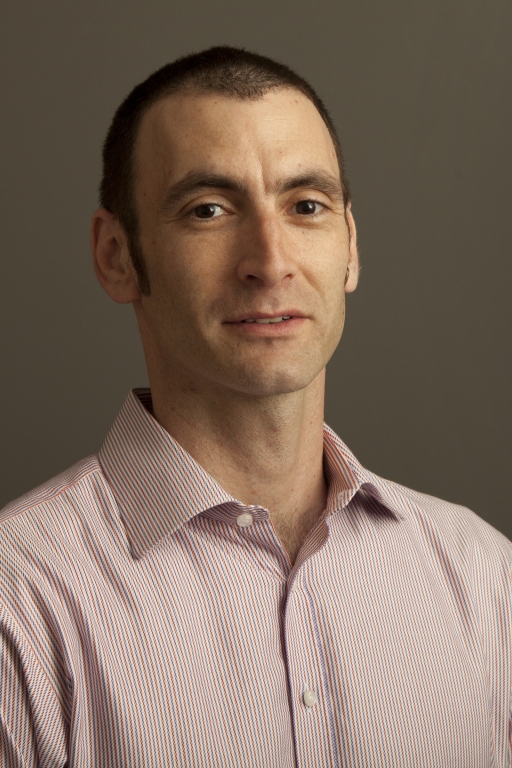
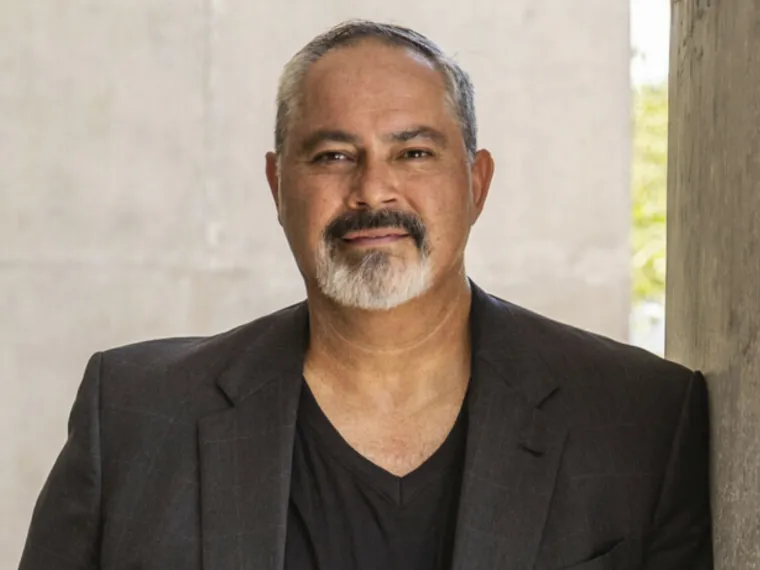
Tony Porter is a Professor in the Department of Political Science at McMaster University , Canada. He specializes in global governance and business regulation , with a particular focus on financial regulation , digital technologies , and the organizational effects of time in governance systems. Research Highlights : Currently leads SSHRC-funded research on the interplay of geopolitics and cross-border infrastructures related to digital currencies , GPS systems , and global supply chains . Co-editor of the Handbook of Business and Public Policy (2021) and author of multiple influential books on transnational financial governance. Academic Contributions : Published 15+ articles since 2014 on topics ranging from big data governance to cybersecurity policy . Key research areas include algorithmic governance , transnational temporalities , and benchmarking networks . Educational Background : BA in Political Science from McGill University MA and PhD in Political Science from Carleton University Teaching Roles include graduate courses on Global Governance , Digital Democracy , and Political Economy , along with undergraduate courses on Globalization and International Relations .
Iris D. Tommelein serves as the Roy W. Carlson Distinguished Professor in the Civil and Environmental Engineering Department at the University of California, Berkeley's College of Engineering, where she directs the Project Production Systems Laboratory (P2SL). A globally recognized pioneer in Lean Construction, she has revolutionized architecture-engineering-construction (AEC) practices through research, industry workshops, and leadership since co-founding the Lean Construction Institute in 1997. Her educational foundation spans multiple disciplines: Ph.D. in Civil Engineering (Construction Engineering and Management), Stanford University, 1989 M.S. in Computer Science (Artificial Intelligence), Stanford University, 1989 M.S. in Civil Engineering (Construction Engineering and Management), Stanford University, 1985 B.S. (5-year degree) in Civil Engineer-Architect, Vrije Universiteit Brussel, Belgium, 1984 Professor Tommelein's research centers on transforming construction processes through Lean principles and digital innovation . Her work pioneers takt planning for workflow reliability, industrialized construction for labor and sustainability challenges, and mistakeproofing to eliminate errors. She integrates digital twins , AI , and optimization to develop practical decision-support systems for supply chains, logistics, and production management. Recent focus includes modular offsite construction and Industry 4.0 applications. Analysis of her 2023-2025 publications reveals intensifying research on takt planning maturity models and industrialized construction feasibility , with growing emphasis on mass timber automation and visual management systems. Her work consistently bridges lean theory with practical implementation across megaprojects, subcontracting networks, and heavy civil engineering. Her exceptional contributions have earned: Lean Pioneer Award (Lean Construction Institute, 2015) National Academy of Construction induction (2019) PPI Technical Achievement Award (2022) Robert B. Harris Award (University of Michigan, 2024) ASCE Construction Management Award (2024) - first woman recipient in 51 years Through the P2SL, she leads industry-collaborative research on production system design, mistakeproofing frameworks, and digital transformation. Her grant-funded projects develop assessment tools for industrialized construction adoption and takt planning methods adaptable to diverse project types. She actively mentors graduate students and drives knowledge transfer via workshops and the annual Construction Innovation Day. The Project Production Systems Laboratory (P2SL) operates as a global hub for construction innovation, partnering with owners, contractors, and suppliers to implement lean production systems. Current initiatives include developing serious games for mistakeproofing training, optimizing work density methods for heavy civil projects, and creating digital twins for real-time construction management.
David Kanter is an Associate Professor of Environmental Studies at New York University and Chair of the International Nitrogen Initiative. His research focuses on nitrogen pollution, food security, sustainable development, and climate change, emphasizing interdisciplinary approaches including Earth systems modeling, economic analysis, and legal frameworks. He holds a B.Sc. in Chemistry and Law from the University of Bristol (2009), and an M.A. and Ph.D. in Science, Technology, and Environmental Policy from Princeton University (2012 and 2014). Prior to NYU, he was a Postdoctoral Research Fellow at Columbia University’s Earth Institute. His work bridges science and policy, addressing global nutrient governance challenges and agri-food system transitions toward Sustainable Development Goals. He teaches courses on environment-society interactions, environmental policy, and regulatory frameworks. His publications span topics like nitrogen cycling, climate mitigation strategies, and policy design for sustainable agriculture. He actively engages in international initiatives like the International Nitrogen Management System to coordinate global nitrogen policies.
Pauliina Patana is an Assistant Professor at Georgetown University's Edmund A. Walsh School of Foreign Service and core faculty in the BMW Center for German and European Studies. She holds a PhD in Political Science from Cornell University and previously served as a Democracy Postdoctoral Fellow at Harvard Kennedy School's Ash Center. Her research focuses on European political transformations, including globalization's impact on party politics, populism's rise, political representation in diverse societies, and climate change politics. She is writing a book analyzing why populist radical right parties thrive in certain local contexts. At Georgetown, she teaches courses on EU politics, populism, and electoral political economy. Education: PhD in Political Science, Cornell University. Prior affiliations include Harvard Kennedy School as a postdoctoral fellow. Research interests emphasize party politics, populism, political behavior, and the intersection of political economy with electoral dynamics. Her work bridges macro-level structural changes (e.g., economic restructuring, migration) with micro-level voter behavior. Recent studies explore how residential constraints and political geography influence support for populist radical right parties in France and Finland. Awards: Democracy Postdoctoral Fellowship (Ash Center/Harvard Kennedy School). Her research also extends to inclusive education policy, social service integration for vulnerable groups, and mental health policy analysis across Nordic countries. She collaborates internationally on projects analyzing cross-sectoral service delivery innovations. Labs/Teams: Active contributor to the BMW Center's initiatives on European studies and global governance. Engaged in interdisciplinary collaborations linking political science with urban studies and public health.
Ben Halpern is a Professor at the Bren School of Environmental Science & Management and Director of the National Center for Ecological Analysis and Synthesis (NCEAS) at UC Santa Barbara. He holds a PhD in Ecology from UCSB and a BA in Biology from Carleton College. His research focuses on marine ecology and conservation planning, with expertise in cumulative impact assessments, marine reserves, and the Ocean Health Index. He has led global projects on ocean health, biodiversity threats, and sustainable aquaculture, collaborating with institutions worldwide. Notable roles include co-founding the Conservation Aquaculture Research Team (CART) and serving as a part-time Chair in Marine Conservation at Imperial College London (2013–2018). Research interests span marine biodiversity conservation, climate change impacts on ecosystems, and the integration of ecological and social data into policy. His work emphasizes interdisciplinary approaches to address environmental challenges, such as mapping wastewater impacts, evaluating aquaculture sustainability, and developing tools for marine spatial planning. Awards include the Smith Fellowship Program (sponsored by The Nature Conservancy) during his postdoctoral work. He teaches Bren School courses, mentors graduate students, and leads collaborative research teams. Current projects include analyzing climate change effects on aquaculture and advancing the Ocean Health Index framework to support global conservation efforts.
Professor Phil Purnell is a Professor of Materials and Structures at the School of Civil Engineering, University of Leeds. His expertise spans materials science, infrastructure systems, circular economy, and interdisciplinary research. He leads projects addressing decarbonization, waste-to-resource systems, and sustainable construction materials. His roles include Deputy Head of School and advisor to UKRI, DEFRA, and the UK Government’s Circular Economy Taskforce. He holds visiting positions at the Royal College of Art and University of Cambridge. Education: PhD, BEng (Civil), and teaching qualifications (PCPCE, ACTLHE). His research focuses on circular economy applications in textiles, offshore wind, and foundational industries. Notable projects include the Textiles Circularity Centre, Yorkshire Circular Economy Living Lab, and Complex Value Optimisation for Resource Recovery (C-VORR). He advocates for systemic approaches to sustainability, integrating economic, technical, and environmental values. Research outputs emphasize decarbonization pathways, material lifecycle assessments, and robotics in infrastructure management. Collaborations with industry and policy bodies drive practical solutions for resource efficiency. His work bridges engineering, economics, and environmental science to address global challenges like waste management and climate change.
Jonathan Zinman is the R. Stephen Cheheyl Professor of Economics at Dartmouth College, affiliated with the John Sloan Dickey Center for International Understanding. He holds academic advisory roles at Innovations for Poverty Action (IPA) and is a research affiliate with J-PAL, NBER, and ideas42. His work bridges behavioral economics and household finance, focusing on consumer decision-making, financial product design, and policy applications. Zinman earned his B.A. from Harvard College and Ph.D. from MIT. Research emphasizes experimental methodologies to study lender-consumer interactions, financial inclusion, and behavioral biases. He collaborates with global policymakers (e.g., CFPB, Federal Reserve) and private-sector firms to design interventions improving financial outcomes. Key areas include microfinance, payment systems, and financial literacy. Teaching includes undergraduate finance courses emphasizing real-world applications and behavioral economics frameworks. Notable contributions include seminal work on payday lending dynamics, savings behavior interventions, and measurement of consumer decision-making heterogeneity. His work appears in top journals like Review of Economic Studies , Journal of Finance , and Nature .
Prof. Dr. Menelaos Gkartzios is a distinguished academic affiliated with the Department of City and Regional Planning at Middle East Technical University , with extensive experience at institutions including Newcastle University , Izmir Institute of Technology , and University College Dublin . He has served as a Visiting Professor at Tongji University and contributes to editorial boards such as Habitat International and Journal of Rural Studies . Education: PhD in Regional & Urban Planning, University College Dublin (2008) MSc in Environmental Resource Management, University College Dublin (2003) MAgrSc in Agricultural Economics & Rural Development, Agricultural University of Athens (2002) PGCert in Advanced Studies in Academic Practice, Newcastle University (2014) Research Focus: His work bridges sustainable rural development , urban-rural dynamics , and the cultural dimensions of place-making . Key themes include counterurbanisation , rural mobilities , and artistic practice in planning . Publication Trends: Recent articles and books examine climate-driven migration , community co-creation , and rural housing paradoxes . His scholarship spans interdisciplinary frameworks, merging rural sociology , geography , and planning theory . Leadership Roles: He co-leads the AESOP Thematic Group on Rural Planning and contributes to global planning discourse through edited volumes like The Routledge Companion to Rural Planning .
Lawton Robert Burns is the James Joo-Jin Kim Professor and Professor of Healthcare Management at the Wharton School, University of Pennsylvania . He serves as Co-Director of the Roy and Diana Vagelos Program in Life Sciences and Management and Chairperson of the Health Care Systems Department since 2008. His career spans academic roles at the University of Chicago, University of Arizona, and University of Wisconsin. Education: PhD in Sociology, University of Chicago (1981) MBA in Health Administration, University of Chicago (1984) MA, University of Chicago (1976) BA, Haverford College (1973) Dr. Burns specializes in healthcare organization design , strategic change , and supply chain dynamics . His work examines hospital-physician relationships , integrated delivery systems , and market forces in healthcare. His recent publications analyze Pharmacy Benefit Managers (PBMs) , Group Purchasing Organizations (GPOs) , and strategic implementation failures. Notable awards include the Arthur Anderson Distinguished Visitor (2001), Edwin Crosby Memorial Fellowship (1992-93), and Udall Fellowship (1990-91). His research has been featured in Knowledge at Wharton , LDI News , and American Political Science Review . Dr. Burns co-authors works with experts like David Dranove and Stephen Shortell , focusing on clinical integration , retail supply chains , and global healthcare models (India, China).
Leandro "Leo" Pongeluppe serves as an Assistant Professor of Management at the Wharton School of the University of Pennsylvania, holding the distinguished position of Leonard J. Horwitz Faculty Scholar. His academic journey culminated with a PhD from the Rotman School of Management at the University of Toronto, positioning him at the forefront of research at the intersection of business and societal challenges. Pongeluppe's research program centers on understanding how organizational design and governance mechanisms influence the achievement of United Nations Sustainable Development Goals. His work spans multiple continents and contexts, with field research conducted in Brazilian favelas, the Amazon rainforest, worldwide desalination plants, and African HIV/AIDS treatment clinics. Methodologically, he employs innovative mixed-methods approaches that combine econometric causal inference with ethnographic techniques to tackle complex socio-environmental challenges. His publication portfolio reveals a consistent focus on stakeholder management within contexts of socioeconomic development and environmental sustainability. The research demonstrates how businesses can effectively address global challenges through strategic stakeholder engagement, showing particular promise in environmental conservation efforts and inclusive business models. His work on the Amazon rainforest reveals how companies like Natura have successfully preserved forests through stakeholder alignment, while his favela research exposes the complex social consequences of economic mobility. Wharton AI & Analytics Initiative Research Funding (2024) Wharton Teaching Excellence Awards (2023-24) Wiley Blackwell Outstanding Dissertation Award (Academy of Management, 2023) Multiple Best Paper Awards from Strategic Management Society and Academy of Management conferences Wharton Global Initiatives and ESG Initiative Funding (2023) Prior to his academic career, Pongeluppe co-founded Insper Metricis, a research group focused on socio-environmental impact evaluation, where he contributed to Brazil's first Social Impact Bond in partnership with São Paulo State Government and international development institutions. His professional experience also includes three years as an associate researcher at the Accenture Institute for High Performance, working on inclusive innovation projects across Brazil, China, Ghana, India, Mozambique, Nigeria, and South Africa. This practical experience deeply informs his scholarly work and teaching approach, particularly in his course on Managing Established Enterprises which addresses strategic challenges facing incumbent firms.
Helen Jarvie is a Professor of Water and Global Environmental Change at the University of Waterloo, Canada. She holds adjunct and visiting professor positions at the University of Arkansas (Fluvial Sciences), Plymouth University (Environmental Chemistry), and the University of Tokyo (Water Quality Science), and is a UK Centre for Ecology & Hydrology Fellow. Her research centers on river-system biogeochemistry, with intense focus on nutrient (phosphorus and nitrogen) cycling, eutrophication, and water quality across watershed-to-global scales. She investigates how climate variability, land-use change, and human activities drive water-quality impairment, and develops strategies for improved nutrient stewardship to build resilience in water resources. Her work uniquely bridges the critical tension between phosphorus-dependent food security and water-quality protection, given phosphate rock's non-renewable status. Analysis of her 2015-2019 publications reveals dominant trends in phosphorus dynamics research, spanning watershed management, global phosphorus budgets, and the water-energy-food nexus. Key themes include unintended consequences of agricultural conservation practices on soluble phosphorus loads, stoichiometric responses to hydrologic extremes, and sustainable phosphorus stewardship frameworks addressing eutrophication while ensuring resource security for future food production.
Sergio Carrera serves as Senior Research Fellow and Head of the Justice and Home Affairs Unit at the Centre for European Policy Studies (CEPS), a prominent Brussels-based think tank. Additionally, he holds the position of Adjunct Professor at the Paris School of International Affairs (PSIA) in SciencesPo, France, where he contributes to academic teaching and research in international affairs. Dr. Carrera's academic background includes a Ph.D. on immigration and citizenship from Maastricht University (The Netherlands), an LL.M. in European, Comparative and International Law from the University of Maastricht, and a Law Degree from Universidad de Salamanca in Spain. His extensive educational foundation in European and international law underpins his expertise in EU justice and home affairs policy. His primary research interests focus on EU justice and home affairs (JHA) law and the Area of Freedom, Security and Justice policy, with particular emphasis on migration, asylum, citizenship, and Schengen policies. Dr. Carrera's expertise also extends to EU criminal justice law and police cooperation, examining their impacts on data protection, privacy, and the rights of the defense. His work consistently addresses the intersection between security measures and fundamental rights within the European context. Dr. Carrera has produced an extensive body of scholarly work, with over 190 published publications according to the available information. His recent research has particularly focused on EU-US data transfers, rule of law challenges in the context of migration management, global asylum governance, and the evolving landscape of EU security policy. His publications demonstrate a consistent concern with ensuring that security and migration policies uphold fundamental rights and the rule of law. Among his notable contributions are policy analyses on the European Green Deal's implications for climate policy, assessments of the EU's response to the Ukraine crisis, and examinations of the impact of the Trump administration on EU security policy. His research often bridges academic analysis with practical policy recommendations for EU institutions. Dr. Carrera leads and participates in numerous research projects addressing critical issues in EU policy. Current initiatives include "Reclaiming our past, rebuilding our future: new approaches to fighting antigypsyism" (2024-2026) and the "Study on Mapping Civil Dialogue Practices in the EU Institutions" (2024-2025). Previous significant projects include "Global Asylum Governance and European Union's Role" (ASILE, 2019-2023), "Pan-European Response to the ImpactS of COVID-19" (PERISCOPE, 2020-2023), and "IT tools and methods for managing migration FLOWS" (ITFLOWS, 2020-2023). His work has been commissioned by various EU institutions, including the European Parliament's Policy Department for Citizens' Rights and Constitutional Affairs, demonstrating the policy relevance and impact of his research. Dr. Carrera's expertise is frequently sought for task forces addressing timely issues such as EU-US data transfers, digital justice, and cross-border cooperation in criminal matters.
Vincent Dufour-Décieux is a researcher at the Professorship for Energy and Process Systems Engineering at ETH Zürich , focusing on developing computational methods for material screening in separation processes and global net-zero transitions. He earned his Master's in Materials Chemistry from Ecole Polytechnique (France) and a PhD in Materials Science from Stanford University , where he pioneered statistical methods combining Kinetic Monte Carlo and random graph theory to study planetary diamond formation. Research Highlights: Application of Classical Density Functional Theory (cDFT) for 100x faster adsorption property predictions in porous materials Development of science-based definitions for "hard-to-abate" emissions to guide climate action prioritization Integration of Coulombic interactions in cDFT for CO2 adsorption accuracy Article Trends : His work spans computational materials science (cDFT, random graph theory) and climate policy analysis, with recent publications in Joule , AIChE Journal , and Physical Review E . These studies emphasize scalable solutions for carbon capture, material screening efficiency, and accurate thermodynamic modeling. Collaborations : Active in international conferences (FOA15, MolMod, Gordon Research Conference) and cross-institutional projects with teams at Stanford, ETH Zürich, and industry partners.
Dr. Paul Melendez serves as a University Distinguished Outreach Professor at the University of Arizona's Eller College of Management within the Department of Management and Organizations. He has held this position since 1996 and currently leads the Center for Leadership Ethics as its Founder, while also serving as Lead Faculty for Academic Programs and Interim Director of Executive Education. His educational background includes an EdD from the University of Arizona with a specialization in privatization. Dr. Melendez specializes in organizational ethics , business ethics , and international business , with significant contributions to ethical decision-making frameworks and transformational leadership. His research emphasizes practical applications in global corporate environments, as evidenced by his consulting work with multinational entities including DP World, BHP Billiton, and Grupo Bal. His distinguished recognition includes: University Distinguished Outreach Professor Eller College Outstanding Business Management Faculty Award Undergraduate Faculty Member of the Year Departmental Outstanding Undergraduate Teaching Award Neville Cramer Faculty Award Dean's Course Innovation Grant University Team Award for Excellence Dr. Melendez secured the Dean's Undergraduate Course Innovation Grant and contributed to the University Team Award for Excellence through curriculum development. His extensive consulting practice demonstrates significant real-world impact, advising executive leadership at major international corporations on ethical transformation and innovative strategy. Previously, he served as Assistant Dean for Executive Education and Assistant Department Head. The Center for Leadership Ethics operates as his primary research hub, driving initiatives that integrate cutting-edge ethics education with corporate outreach programs to reshape organizational culture globally.
Stefanie Haustein is an Associate Professor at the University of Ottawa’s School of Information Studies. She co-directs the Scholarly Communications Lab (ScholCommLab), a research group focused on digital-era scholarly communication. Her affiliations include the Institute for Science, Society and Policy (ISSP), the Centre for Journalology at the Ottawa Hospital Research Institute, and the Centre interuniversitaire de recherche sur la science et la technologie (CIRST) at Université du Québec à Montréal. Her research centers on scholarly communication, bibliometrics, altmetrics, and open science. She explores open access, data sharing, academic publishing models, and the role of social media in scientific dissemination. Her recent work examines APC pricing, diamond OA identification, OpenAlex database evaluation, and pandemic research engagement. Stefanie holds a PhD in Information Science from Heinrich Heine University Düsseldorf and Master’s degrees in History, American Linguistics/Literature, and Information Science. She previously conducted postdoctoral work at École de bibliothéconomie et des sciences de l'information (EBSI), University of Montreal, and worked as a research analyst at Science-Metrix and Forschungszentrum Jülich. The ScholCommLab, under her co-direction, investigates multifaceted aspects of scholarly communication, including reward systems, citation patterns, and digital workflows. Her supervision of Madelaine Hare (expected 2027) reflects her commitment to mentoring emerging scholars.