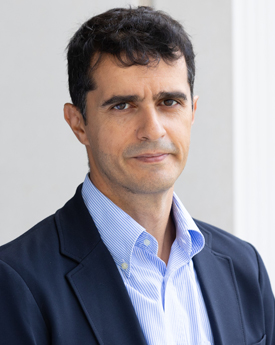
Antti Koistinen is a Doctoral Researcher at Aalto University's School of Chemical Engineering, Department of Bioproducts and Biosystems. He holds a Master's degree in Engineering and Technology from Aalto University. Research Interests Koistinen specializes in material science and bioproducts, focusing on cellulose-based materials, composite materials, and sustainable technologies. His work intersects with UN Sustainable Development Goals (SDGs) through advancements in bioproducts and biosystems. Publications & Activities Koistinen's research output centers on cellulose processing, pore structure analysis, and nanocellulose applications. Recent work explores thermomechanical pulps and polylactic acid composites, with a focus on material characterization techniques like differential scanning calorimetry and enzymatic hydrolysis. Scientific Awards Granted funding (personal grants) in 2023 Presentations Koistinen has presented at international conferences on topics such as kraft pulp reactivity assessment and cellulose dissolution in alkaline solvents. His collaborations span countries and institutions, reflecting a global network in bioproducts research.
Assoc. Prof. Dr. Osman Kaan Erol is affiliated with Istanbul Technical University , where he serves in the Department of Control and Automation Engineering . His primary research focuses on optimization algorithms and their applications in engineering systems. Doctorate in Control and Computer Engineering Teaching and research at Istanbul Technical University since 2003 Industry experience at BEKO Electronics (2000-2003) and ABC CEDETAŞ (1995-2000) Research Interests include: Big Bang-Big Crunch optimization algorithm Differential Evolution methods Heuristic and metaheuristic approaches Applications in structural engineering, control systems, and transportation Search space reduction techniques Hybrid algorithm design Publication Trends show a consistent focus on optimization algorithms ( Big Bang-Big Crunch , Differential Evolution ), with applications spanning airport operations , structural design , and preventive control . His work emphasizes algorithm hybridization and convergence improvements. Project Leadership includes: Industrial data collection systems AI-assisted service systems for concrete plants Hydrophore control systems under ERP regulations Electrically heated underwear design
Professor Paul Ashwin is a leading scholar in higher education at Lancaster University , specializing in the educational role of universities, curriculum design, and policy impacts on teaching quality. His work bridges global and local perspectives, focusing on transforming student understanding and promoting societal equality. Professor of Higher Education, Lancaster University Deputy Director, Centre for Global Higher Education (2020-2024) Joint Editor-in-Chief, Higher Education journal Co-Editor, Bloomsbury book series on Student Experiences Research Interests center on: Curriculum design for transformative learning Higher education policy analysis Student and academic experiences Social justice in educational systems Knowledge engagement mechanisms Quality measurement frameworks Recent Publications demonstrate longitudinal studies across disciplines (chemistry, chemical engineering, sociology) and countries (UK, South Africa, USA), with a focus on knowledge agency, curriculum equity, and policy-practice alignment. Key themes include: Student transformation through disciplinary knowledge Critique of marketization in education Curriculum design for social justice International comparative studies Employability and graduate outcomes Teaching excellence frameworks Scientific Awards : Elected member of Academia Europaea PhD Supervision includes students researching: Rose Doherty Chris Lambert Onur Orkut Puiyin Wong Projects include international collaborations like: Understanding Knowledge Student Agency (Chemistry/Chemical Engineering) Graduate Experiences of Employability and Knowledge (GEEK) South African undergraduate pathways research
Professor Yadvinder Malhi is a leading ecosystem scientist at the University of Oxford , holding the Professor of Ecosystem Science chair at the Environmental Change Institute (ECI) within the School of Geography and the Environment. He also serves as Jackson Senior Research Fellow at Oriel College , Director of the Leverhulme Centre for Nature Recovery , and President of the British Ecological Society . Active researcher in tropical and temperate forest dynamics Advises UK and Scottish governments on nature restoration Global research across Amazon, Andes, Africa, and UK Research Focus: Malhi investigates how terrestrial ecosystems respond to global atmospheric changes, with emphasis on tropical forests , climate change adaptation , and nature-based solutions . His work integrates field physiology, remote sensing, and ecosystem modeling, notably through the GEM and RAINFOR networks. Recent Trends: Recent publications highlight cross-disciplinary approaches combining terrestrial laser scanning , trait-based ecology , and social-ecological analysis . Research spans from Arctic tundra to tropical coral reefs , with growing emphasis on UK nature recovery and global carbon cycling . Scientific Recognition: 2025: Ramon Margalef Prize in Ecology 2023: Fellow of the Royal Society (FRS) 2022: British Ecological Society President-Elect Academic Leadership: As Programme Leader of the Ecosystems & Biodiversity Research group and member of the ECI , Malhi mentors 24 graduate students while directing large-scale initiatives like the Wytham Woods monitoring station. His lab develops innovative tools for ecosystem assessment through projects like GEM Field Manual and TLS2trees algorithms.
Nicholas Shapiro is an Associate Professor in the Department of Society & Genetics at the University of California, Los Angeles (UCLA), within the School of Life Sciences. His multidisciplinary research focuses on chemical contamination, climate change, and environmental justice, often collaborating with communities impacted by environmental hazards. He co-founded the Environmental Data and Governance Initiative (EDGI) in 2016 and leads a lab examining environmental health in carceral institutions. DPhil, Anthropology, University of Oxford MPhil, Medical Anthropology, University of Oxford BA, Global Public Health and Anthropology, Bard College Shapiro's research spans environmental health, carceral geography, and toxic exposures. He designs interventions like bio-phyto air remediation systems and smartphone-based formaldehyde testing apps. His work critiques environmental governance and regulatory policies, particularly during the Trump administration, and explores intersections between settler-colonialism, climate change, and the concept of "toxic homes." His recent publications highlight environmental justice in prisons, smartphone-based pollution monitoring, and the sociopolitical impacts of data governance. These works emphasize interdisciplinary approaches, blending technology, anthropology, and public health to address systemic environmental inequities. Scientific Awards 2017 Outstanding Contribution to Making and Doing, Society for the Social Studies of Science 2017 J. Franklin Jameson Archival Advocacy Award, Society of American Archivists 2015 Cultural Horizons Prize, Society for Cultural Anthropology Shapiro co-founded EDGI and collaborates with communities on grassroots environmental monitoring. His lab develops tools for air quality assessment and investigates health disparities in carceral settings, merging activism with scientific rigor to advocate for policy reforms.
Neda Haj Hosseini is a Senior Lecturer and Associate Professor in Biomedical Engineering at Linköping University's Department of Biomedical Engineering (IMT) . She contributes to teaching courses like TBMT56 - Medical Technology and TBME08 - Biomedical Modeling and Simulation , while leading research initiatives in AI-driven cancer diagnostics and biomedical optics. Research Focus: Development of AI methods for cancer diagnostics, optical coherence tomography (OCT) applications, and fluorescence spectroscopy in surgical guidance Affiliations: Center for Medical Image Science and Visualization (CMIV) , Analytic Imaging Diagnostic Arena (AIDA) , Swedish Medical Technology Association Recent Research Trends demonstrate expertise in applying deep learning to: Pediatric brain tumor classification using multimodal imaging Optical biopsy techniques for intraoperative decision support Automated biomarker quantification in histopathology Medical imaging data integrity and algorithm validation Scientific Awards include grants from: Joanna Cocozza Foundation (2022) Swedish Childhood Cancer Foundation (2024) Academic Leadership involves mentoring students in projects such as: "Multiple Instance Attention-based Learning for Brain Tumor Classification" "Vision Transformers for Multiclass Brain Tumor Tissue Classification" "Reaction-diffusion Models for Image-driven Tumor Simulation"
Yuqing Wang is a Postdoctoral Researcher in the Department of Computer Science at the University of Helsinki, Finland, actively contributing to software engineering research with expertise in anomaly detection for microservices and test automation maturity. Contactable via yuqing.wang@helsinki.fi and phone +358505934630/+358294151310, Wang participates in major EU and Academy of Finland projects including LUMI AI Factory (2025-2028) and MuFAno (2023-2026). Research focuses on two interconnected domains: anomaly detection in cloud-native systems using meta-learning for cross-system log analysis and trace categorization, and test automation maturity assessment frameworks. Recent work pioneers datasets like LO2 for microservice API anomalies and tools like LogLead for integrated log processing, while earlier studies establish quantitative links between test automation maturity and product quality in open-source ecosystems. Publications reveal an evolving trajectory from foundational test automation maturity models (2018-2020) toward advanced AI-driven anomaly detection (2024-2025), with 2022-2023 bridging both domains through empirical studies on agile practices and maturity impacts. Current work emphasizes cross-system generalization and multimodal fusion for microservice reliability. No scientific awards are documented in available sources. Wang contributes to two significant grants: the EU Horizon Europe LUMI AI Factory developing AI service infrastructure (2025-2028), and the Academy of Finland MuFAno project advancing multimodal anomaly detection for microservices (2023-2026). These projects drive collaboration with industry partners on real-world system reliability challenges.
David J. Brenner serves as Higgins Professor of Radiation Biophysics in Radiation Oncology and Environmental Health Sciences at Columbia University Medical Center. He directs both the century-old Center for Radiological Research and the Radiological Research Accelerator Facility (RARAF), leading interdisciplinary teams focused on radiation applications in medicine and safety. BA in Physics from Oxford University (1974) MSc in Radiation Physics from University of London (1976) MA in Physics Philosophy from Oxford University (1979) PhD in Physics from University of Surrey (1980) His research spans dual aspects of radiation: therapeutic applications in cancer treatment and risk assessment across diverse scenarios. Key initiatives include advancing carbon-ion therapy for pancreatic cancer, developing safe far-UVC light for pathogen elimination, and investigating low-dose radiation risks from medical imaging to nuclear terrorism. His team leverages RARAF's unique capabilities for mechanistic studies of radiation effects. Publications reveal dominant themes in radiation biophysics, with significant contributions to biodosimetry (RABiT platform), UV disinfection technology, and cancer risk modeling. Recent work emphasizes translational applications including medical countermeasures for radiation exposure and precision radiation oncology techniques. National Academy of Sciences Nuclear and Radiation Studies Board member National Council on Radiation Protection and Measurements member Radiation Research Society Failla Gold Medal recipient (2011) Oxford University Weldon Prize for mathematical biology (2015) Robert D. Moseley Award for Radiation Protection in Medicine Brenner leads multiple NIH-funded projects including biodosimetry development and UV disinfection research. His mentorship extends through directing Columbia's Radiological Research Accelerator Facility and training programs in radiological sciences. Current lab efforts focus on carbon-ion therapy mechanisms and 222-nm UV applications against drug-resistant pathogens, with active collaborations across oncology, microbiology, and physics disciplines.
Dr. Thomas Lancaster is a Principal Teaching Fellow in the Department of Computing at Imperial College London, part of the Faculty of Engineering. He specializes in academic integrity, generative AI's impact on education, and combating contract cheating. His roles include Associate Dean at Staffordshire University and leadership positions at Coventry University and Birmingham City University. His research spans ethical AI use, plagiarism detection, and educational policy. He has authored numerous articles on cheating prevention and technology's role in academic integrity. His Orcid identifier is 0000-0002-1534-7547, and he can be reached at t.lancaster@imperial.ac.uk. Research Interests: Lancaster focuses on the intersection of technology and academic ethics, including generative AI's implications for student work, digital watermarking, and social media's role in enabling cheating. He advocates for staff-student partnerships to strengthen integrity frameworks and has pioneered methodologies for detecting source code plagiarism from online repositories. Publications: His recent work highlights global comparisons of cheating industries, the evolution of AI-driven cheating threats, and policy development to address historical misconduct. He emphasizes practical solutions for institutions, such as leveraging AI tools ethically and enhancing detection systems. Professional Contributions: As a leader in computing education, Lancaster has improved placement-year support for students and developed strategies to address transnational education challenges. His work on the SEEPAI project in Southeast Europe underscores his global impact.
Ram Mudambi is the Frank M. Speakman Professor of Strategy at Temple University’s Fox School of Business and Management. He holds a central role in strategic management and international business research, with prior faculty appointments at the University of North Carolina, Case Western Reserve University, and the University of Reading (UK). His work bridges economic geography, innovation studies, and global strategy. Research interests focus on the geography of innovation, emphasizing migration, ethnicity, gender dynamics, and global value chain governance. He has contributed to understanding how spatial factors influence innovation ecosystems, multinational enterprise strategies, and regional development. Mudambi’s interdisciplinary approach integrates microeconomic theories with macro-level institutional analysis. He serves as a Consulting Editor for the Journal of International Business Studies and the Journal of World Business, and as Area Editor for the Journal of International Business Policy. His research appears in top-tier outlets like the Journal of Political Economy, Management Science, and Strategic Management Journal, alongside practitioner-focused articles in Harvard Business Review and Sloan Management Review. Awards: Fellow of AIB (20XX), Fellow of EIBA (20XX) Teaching: Courses include Strategic Management, International Business Strategy, and Global Research Methodologies Media Engagement: Featured in The New York Times, The Atlantic, and NPR His recent work explores digitalization’s impact on globalization, global value chain resilience, and the strategic implications of restrictive immigration policies. Mudambi’s research also addresses sustainability linkages in global cities’ innovation systems.
Maria Antoniak is a Visiting Professor in Computer Science at the University of Colorado Boulder, with an upcoming tenure-track appointment as Assistant Professor starting Fall 2025. She holds affiliations with both the Department of Computer Science and the Department of Information Science. Her research bridges Natural Language Processing (NLP), cultural analytics, and healthcare, emphasizing interdisciplinary collaboration with humanities and clinical fields. Education: PhD in Information Science from Cornell University (advisor: David Mimno), MA in Computational Linguistics from the University of Washington, and BA in Liberal Studies from the University of Notre Dame. She completed postdoctoral work at the Pioneer Centre for AI (Copenhagen) and was a Young Investigator at the Allen Institute for AI. Research focuses on narrative analysis (e.g., birth stories, online healthcare communities), NLP tool reliability, and ethical AI applications. Her work includes developing tools like Riveter for power dynamics analysis and Little Mallet Wrapper for topic modeling. Current projects explore cultural contexts in LLMs and maternal healthcare narratives. Teaching includes courses on NLP for Cultural Analytics and guest lectures globally. She organizes initiatives like the AI for Humanists workshop series and maintains resources for computational humanities. Maria advocates for inclusive academia through initiatives like Grads for Gender Inclusion in Computing and Ukrainian academic support efforts. Her upcoming roles include faculty appointments at CU Boulder and active participation in global conferences (e.g., ACL, COLING). Research spans computational humanities, healthcare informatics, and AI ethics, with a focus on societal impact and methodological rigor.
Benjamin C. Flores is a Professor of Electrical and Computer Engineering at the University of Texas at El Paso (UTEP) , where he has built an internationally recognized career spanning advanced radar signal processing and large-scale STEM education initiatives. He directs the UT System Louis Stokes Alliance for Minority Participation (LSAMP) and the Bridge to the Doctorate Program , managing more than $40 million in funded projects aimed at increasing access and success for Hispanic and other under-represented students in STEM disciplines. Education: While specific degrees are not listed in the provided text, Dr. Flores’s faculty appointment and extensive technical expertise in radar and chaotic systems imply advanced training in electrical engineering. Research Interests: Radar & Signal Processing: high-resolution radar, inverse synthetic aperture radar (ISAR), range-Doppler processing, micro-Doppler analysis, bistatic radar, chaotic wideband signal design, neural-network-based classification of radar jamming signals. Antenna Engineering: fractal antennas, 3-D printed antenna prototyping, anechoic chamber measurements. STEM Education & Diversity: evidence-based retention strategies for non-traditional and Hispanic students, peer-led team learning, graduate mentoring, systemic change models for faculty diversity. Publication Trends: Dr. Flores’s recent articles (2021-2025) reveal two dominant thrusts—(1) cutting-edge radar/chaotic signal processing and joint radar-communication systems, and (2) rigorous, data-driven studies on broadening participation in STEM, with emphasis on mentoring, social networks, and program evaluation at Hispanic-Serving Institutions. Scientific Awards & Honors: Texas STAR Award – Texas Higher Education Coordinating Board (2005) ABET President’s Diversity Award (2006) Presidential Award for Excellence in Science, Mathematics, and Engineering Mentorship (2010) Grants & Leadership Roles: Principal Investigator & Project Director, Model Institutions for Excellence Initiative (1999-2007) Principal Investigator, UTEP PUENTES Program (US Dept. of Education, 2010-2015) Principal Investigator & Director, UT System LSAMP & Bridge to the Doctorate Program (since 2005) Laboratory & Facilities: Dr. Flores’s research group utilizes UTEP’s anechoic chamber and rapid-prototyping laboratories for antenna design and characterization, while also housing real-time radar test-beds and analog-computer platforms for chaotic oscillator experiments.
Megan Konar is an Associate Professor in the Department of Civil and Environmental Engineering at the University of Illinois Urbana-Champaign. Her research focuses on water resources, virtual water trade, and the intersection of food systems with climate change and sustainability. She has contributed to interdisciplinary studies on groundwater depletion, supply chain resilience, and the socio-hydrological dimensions of water scarcity. Her work bridges engineering, environmental science, and policy analysis. Notable research areas include analyzing virtual water flows in global trade networks, evaluating the impacts of climate shocks on agricultural systems (e.g., in Zambia and China), and assessing resilience in US agri-food transportation infrastructure. She leads projects on food-energy-water nexus dynamics and has developed datasets mapping food flows and irrigation patterns across the United States and China. Key Awards: AGU Fellow (2024) James B. Macelwane Medal (2024) NSF CAREER Award (2019) Walter L. Huber Civil Engineering Research Prize (2022) Her collaborative research extends to global partnerships, addressing water governance challenges and sustainable development goals. Recent work highlights the dual pressures of groundwater depletion and contamination in China, resilience strategies in perishable food networks, and equity considerations in wasted food models.
Professor Efthymios Pavlidis is a faculty member in the Department of Economics at Lancaster University Management School (LUMS). He holds the rank of Professor and specializes in macroeconomics, international finance, and time series econometrics. His research focuses on housing market dynamics through collaborations like the International Housing Observatory (with the Federal Reserve Bank of Dallas) and the UK Housing Observatory. He is a Fellow of the Higher Education Academy, reflecting his commitment to academic excellence in teaching and research. His research interests include speculative bubble detection, real estate price forecasting, and testing parity conditions in financial markets. Pavlidis actively supervises PhD students in applied time series econometrics, emphasizing practical applications in financial markets and housing economics. He is involved in numerous academic activities, including organizing conferences and workshops such as the Dynare Conference and the Lancaster Economics Seminar. Key contributions include developing econometric methods for detecting market exuberance and analyzing real exchange rates. His work bridges theoretical econometrics with practical policy implications, particularly in housing and energy markets. Pavlidis collaborates internationally, evidenced by his participation in global academic networks and institutions like the European Economic Association and the Royal Economic Society. His teaching includes the course ECON222 Intermediate Macroeconomics I, and he maintains an office in the Management School (B015), with weekly office hours on Tuesdays. A comprehensive overview of his research and projects is available at his personal webpage: https://sites.google.com/view/etpavlidis/ .
Farah Magrabi is a Professor of Biomedical and Health Informatics at Macquarie University's Australian Institute of Health Innovation. She holds a BE (Hons 1) from the University of Auckland and a PhD in Biomedical Engineering from the University of New South Wales. Her research focuses on the safety and effectiveness of digital health and AI technologies, with notable contributions to patient safety standards, including the ISO/TS 20405 specification. She has been recognized with awards such as the Sax Institute’s Research Action Award (2015) and the Telstra Health Brilliant Women in Digital Health Award (2021). Magrabi’s leadership roles include co-chairing the Australian AI Alliance’s Working Group on Safety, Quality, and Ethics, and the 2023 Medinfo World Congress. She advises the Australian Digital Health Agency and contributes to global initiatives like the OECD’s Global Partnership for AI (GPAI). Her work spans policy development, clinical decision support systems, and AI ethics. Key projects include the NHMRC Centre of Research Excellence in Digital Health’s Safety Research Stream and evaluations of AI in clinical settings. Her research outputs emphasize AI governance, healthcare resilience, and climate change adaptation. Notable collaborations include studies on pandemic responses, generative AI in pain management, and digital health usability. Magrabi’s interdisciplinary approach bridges engineering, informatics, and policy to advance safe and equitable healthcare technologies.