Clinical Associate Professor Keith Ong is affiliated with the University of Sydney’s Northern Clinical School, specifically within the Department of Clinical Ophthalmology & Eye Health. His clinical specialty is Ophthalmology, with a focus on corneal endothelial health, glaucoma surgery outcomes, and cataract surgical techniques. His research addresses critical areas such as postoperative ocular toxicity, intraocular lens calculations, and infection control in eye surgeries. Dr. Ong’s publications (2011–2023) consistently explore topics like corneal endothelial changes post-trabeculectomy, refractive error management post-cataract surgery, and antibiotic prophylaxis strategies. Recent work emphasizes optimizing surgical techniques to reduce complications, such as BAK-induced corneal toxicity and IOL power calculation accuracy in LASIK patients. His work demonstrates a focus on improving surgical safety and precision, with studies evaluating alternative antibiotic delivery methods and laser therapy impacts. No awards or grants are explicitly noted in the provided text, but his contributions to clinical practice and surgical protocols are evident through his publication record.
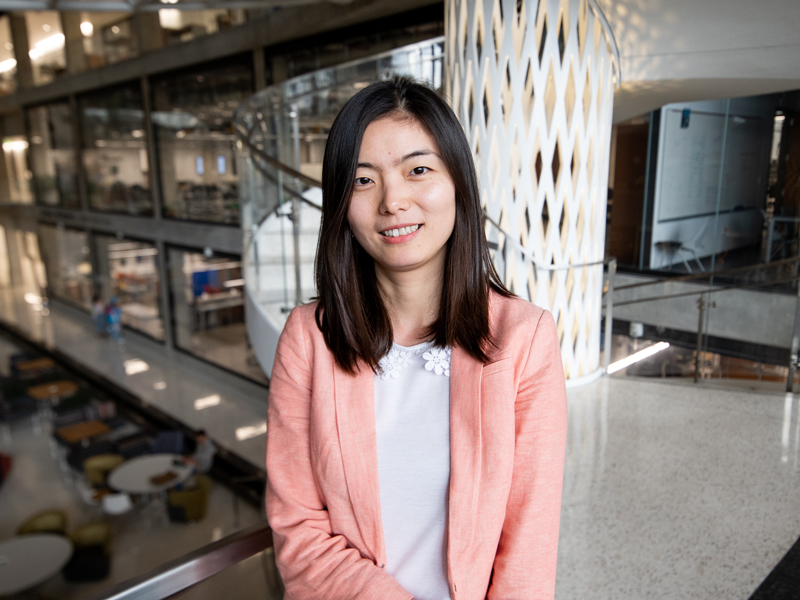
Yunlan (Emma) Zhang is an Assistant Professor in the Department of Civil, Architectural, and Environmental Engineering at the University of Texas at Austin, part of the Cockrell School of Engineering. Her research focuses on architected materials, deployable structures, nature-based solutions, and extraterrestrial materials. She holds a B.S. from The Ohio State University (2012), M.S. and Ph.D. from Purdue University (2014, 2019), and completed a postdoc at the University of Oxford (2022). Her work bridges mechanical metamaterials with biomedical and environmental applications, including deployable medical devices and sustainable infrastructure. Education: B.S., The Ohio State University, 2012 M.S., Purdue University, 2014 Ph.D., Purdue University, 2019 Postdoc, University of Oxford, 2022 Her research interests emphasize biomimetic materials inspired by natural systems (e.g., avian feathers) and their translation into engineered solutions. Current projects include developing lightweight superalloys for aerospace, shape-memory materials for medical devices, and artificial reefs for marine conservation. She leads the UT Metamaterials and Advanced Structures Lab (UTMASLab), accessible at https://sites.utexas.edu/utmaslab/ . Recent publications explore novel applications of architected materials in healthcare, disaster-resistant structures, and environmental sustainability. Her work frequently appears in top journals across mechanical engineering, materials science, and biomedical engineering disciplines.
Gary M. Shaw is the Rosemarie Hess Professor and Professor (Research) at Stanford University , with courtesy appointments in the Department of Epidemiology and Population Health and Department of Obstetrics & Gynecology - Maternal Fetal Medicine . He serves as Co-PI of the March of Dimes Prematurity Research Center at Stanford and PI of the California Center for Finding Causes and Preventives of Birth Defects . His research focuses on the Epidemiology of birth defects Gene-environment interactions in perinatal outcomes Nutritional factors in reproductive health . He has developed machine learning approaches for precision parenteral nutrition and predictive models for preterm birth, while investigating persistent metabolomic signatures following hypertensive pregnancy disorders. Shaw's recent work explores Climate change impacts on reproductive health Maternal-fetal immune interactions Epigenetic mechanisms in perinatal disease with applications of multiomics to neonatal intensive care units. As a member of Bio-X and the Maternal & Child Health Research Institute , he contributes to translational research networks while serving as Associate Editor for Birth Defects Research and American Journal of Medical Genetics . He supervises Med Scholar Project student Richard Liang Doctoral co-advisor for Saskia Comess and Richard Liang Master's advisor for Lenae Joe while leading the Division of Neonatology as Associate Chair for Clinical Research (2012-2025). His laboratory work integrates Metabolomic profiling Proteomic analysis Computational modeling Machine learning for biomedical data to advance neonatal care through precision medicine approaches.
California State University, Los AngelesUnited States
Jung Soo Lim is an Assistant Professor in the Department of Computer Science at California State University, Los Angeles, within the College of Engineering, Computer Science, and Technology. He earned his B.S. from Cal State LA and M.S. and Ph.D. from UCLA, returning to his alma mater as a part-time lecturer in 2014 before transitioning to a full-time assistant professor role in 2019. Education: B.S. (Cal State LA), M.S. (UCLA), Ph.D. (UCLA) His research focuses on Internet of Things (IoT) , Cyber-Physical Systems , Wireless Networking , Software Engineering , and Medical Computing . He has active projects in IoT applications for healthcare, urban safety, and wastewater monitoring, including the Center for Inclusive Computing (CIC) Transfer Pathways Project. Recent publications highlight interdisciplinary work bridging IoT, healthcare diagnostics, and smart city infrastructure. Notable topics include stroke detection algorithms , IoT communication protocols , and sensor-based environmental monitoring . Scientific Awards: Outstanding Senior at Cal State LA (1997) He teaches core computer science courses such as Computer Programming Fundamentals and Analysis of Algorithms, and actively mentors graduate students. His lab focuses on developing embedded systems and IoT solutions for real-world challenges.
Alex V. Levin, M.D., M.H.Sc., serves as Professor in the Department of Ophthalmology at the University of Rochester School of Medicine and Dentistry, holding the Adeline Lutz - Steven S.T. Ching, M.D. Distinguished Professorship. He concurrently holds joint appointments in the Center for Visual Science and the Department of Pediatrics, Genetics. As Chief of the Flaum Eye Institute's Pediatric Ophthalmology and Ocular Genetics team and Chief of Clinical Genetics at URMC, he leads cross-functional teams comprising ophthalmologists, optometrists, pediatric specialists, geneticists, nurses, and genetic counselors. Medical Degree: Jefferson Medical College Residency: Pediatrics at Children's Hospital of Philadelphia Residency: Ophthalmology at Wills Eye Hospital Fellowship: Pediatric Ophthalmology and Strabismus at Toronto's Hospital for Sick Children Masters of Health Science in Bioethics: University of Toronto (2001) Dr. Levin's research spans ocular genetics and gene therapy, children's vision screening, pediatric glaucoma/cataract/uveitis, ocular manifestations of child abuse, and bioethics. His work integrates clinical expertise in pediatric anterior segment eye conditions with scientific investigation into genetic eye diseases. He maintains the only simultaneous US Board Certifications in pediatrics, ophthalmology, and child abuse pediatrics worldwide. Analysis of his 15 most recent publications reveals predominant focus on genetic eye disorders (73%), with significant emphasis on retinal hemorrhage patterns in trauma (13%) and pediatric glaucoma (7%). His research demonstrates consistent translational application from basic science to clinical practice, particularly in ocular genetics and abusive head trauma diagnostics. Resident Guardian Award (2022) Edward A. Jaeger and John B. Jeffers Citizenship Award (2020) Albert Marquis Lifetime Achievement Award (2018) Al Biglan Medal in Pediatric Ophthalmology (2014) Ray E. Helfer Society Award for Child Abuse Research (2011) With over 35 years of experience and hundreds of peer-reviewed publications, Dr. Levin has secured funding from the National Institutes of Health, Canadian Institute of Health, and private foundations. His research portfolio demonstrates exceptional continuity in pediatric ophthalmology and ocular genetics, with recent emphasis on deep learning applications for retinal hemorrhage analysis and international registry development for childhood glaucoma. He has established comprehensive vision screening programs for underserved urban populations and pioneered ethical frameworks for genetic testing in pediatric ophthalmology. Dr. Levin directs the Ocular Genetics Program at URMC, which provides multidisciplinary care through the Pediatric Ophthalmology and Ocular Genetics team. His laboratory investigations focus on nascent chromatin structure in fibrosis and protein modeling for inherited retinal diseases, with active collaborations across the Montalcino Aortic Consortium and Sturge-Weber Foundation research networks.
Prof. Dr. Orkun Müftüoğlu is a Professor at Koç University Hospital (2015–present) and previously at Medipol University School of Medicine (2013–2015). He completed subspecialty training in Cataract & Refractive Surgery (Baylor College of Medicine, 2003), Vitreoretinal Surgery (Duke University, 2006), and Advanced Refractive Surgery (Instituto Alicante, 2007), with over 20,000 surgical cases to his credit. Education: Cataract, Cornea & Artificial Cornea, Refractive Surgery: University of Texas Southwestern Medical Center (2007–2009) Vitreoretinal Surgery: Duke University (2006) Cataract & Refractive Laser Surgery: Baylor College of Medicine (2003) Ophthalmology Residency: Ankara University School of Medicine (1999–2003) Medical Education: Ankara University (1993–1999), Baylor College of Medicine (1999) Clinical Expertise: Specializes in complex cataract surgery, refractive procedures (myopia/hypermetropia/astigmatism), corneal disease management (including keratoconus), glaucoma, artificial cornea, and vitreoretinal surgery. Holds American Medical License (USMLE-ECFMG) and has performed one-on-one surgeries in the U.S. Scientific Recognition: Awarded first prizes by the American Academy of Ophthalmology and ESCRS. Active member of Turkish Ophthalmological Association, American Academy of Ophthalmology, and ESCRS committees for education and young ophthalmologists.
Igor Rudan is Professor of International Health and Molecular Medicine at the University of Edinburgh, serving as Co-Head of the Centre for Global Health within the Usher Institute, part of the College of Medicine and Veterinary Medicine. His academic position is described as a 'Personal Chair of International Health & Molecular Medicine' at the Deanery of Molecular, Genetic and Population Health Sciences. His research interests include: Genome-Wide Association Studies Genetics and Genomics Genetic Divergence Meta-Analysis Single Nucleotide Polymorphism research Systematic Reviews in global health Epidemiology of respiratory diseases Health inequalities and social determinants of health Professor Rudan's recent publications reveal a strong focus on the intersection of molecular medicine and population health. His work spans genetic epidemiology, pandemic response research, and health equity studies, with particular emphasis on understanding how genetic, social, and environmental factors interact to influence health outcomes across diverse populations. His research frequently employs large-scale genomic analyses combined with population health approaches to address global health challenges. His scientific recognition includes: NIHR Impact Prize (2025) for respiratory disease research RSE Mary Somerville Medal (2023) Professor Rudan leads and collaborates on numerous international research projects including EQUI-RESP-AFRICA (improving respiratory health outcomes in Africa), the NIHR Global Health Research Unit on Respiratory Health (RESPIRE-2), and documentation of the EQUIST tool's global impact. His work often involves large-scale data analysis and international collaborations across multiple continents, positioning him at the forefront of global health research that bridges molecular medicine with population-level health interventions.
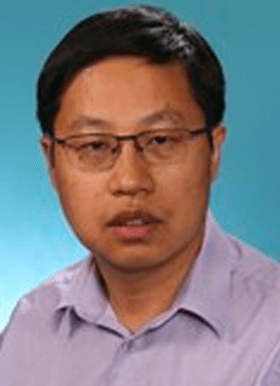
Lei Liu, PhD, is a Professor of Biostatistics, Medicine, and Statistics and Data Science at Washington University in St. Louis. He holds positions in the Roy and Diana Vagelos Division of Biology & Biomedical Sciences (DBBS), the Institute for Informatics, Data Science and Biostatistics (I2DB), and the Center for Biostatistics and Data Science (CBDS). His research focuses on biostatistical and data science methods, including survival analysis, longitudinal data modeling, and machine learning applications in healthcare. He collaborates with clinicians across disciplines like cardiology, ophthalmology, and addiction medicine. Dr. Liu’s work emphasizes high-dimensional omics data analysis, medical cost modeling, and joint multi-outcome models. He is an Associate Editor of Biometrics and a former member of the NIH Biostatistical Methods and Research Design Study Section. He mentors underrepresented minority researchers through the NHLBI PRIDE program.
Dr. Ali Yetisen is a Senior Lecturer in the Department of Chemical Engineering at Imperial College London and serves as Director of the Centre for Biochemical Sensors. He specializes in developing biophotonic medical devices, biochemical sensors, and optical materials for applications in medical diagnostics, therapeutics, and imaging. His research focuses on creating wearable and implantable sensors for real-time biomarker monitoring, including projects on contact lens sensors for ocular diagnostics, microneedle patches for glucose monitoring, and holographic bandages for wound assessment. Education : PhD in Chemical Engineering and Biotechnology, University of Cambridge (2011–2014) MEd in Education, Imperial College London (2020–2023) B.S. in Mechanical Engineering, University of Arizona (2010) His research interests span nanotechnology, biomedical engineering, and photonics, with a focus on translating innovations into clinical solutions. Notable work includes engineering living biosensors for dermal tattoos and quantum dot-based lateral flow assays for rapid disease detection. He has held roles such as Tosteson Fellow at Harvard University and currently serves as Warden of Parsons Hall at Imperial College. Research Trends : Recent publications emphasize wearable biosensors, AI-integrated diagnostic systems, and point-of-care technologies. His team’s work bridges engineering and medicine, addressing challenges in diabetes management, glaucoma monitoring, and mental health biomarkers. Advising & Grants : While specific student names or grant details are not listed, his leadership in the Centre for Biochemical Sensors indicates active mentorship of researchers. The Centre collaborates with global academic and industrial partners to advance healthcare technologies. Labs & Teams : The Centre for Biochemical Sensors, housed in Imperial’s Faculty of Engineering, fosters interdisciplinary research with a focus on patient-centric design and open innovation. It includes a Management Board, Researcher Network, and External Advisory Board to drive impactful collaborations.
Lucca Geurts is a Senior Lecturer at the Faculty of Industrial Engineering Sciences at KU Leuven, where he is affiliated with the Department of Computer Science. He serves as chairman of the Leuven Centre for Accessible Health Technology, subdivision head of Subdivision 3, Campus Group T Leuven, and Head of Education of the OC Innovative Health Technology. Additionally, he is an active member of DigiSoc – KU Leuven Institute for Digital Society. His research focuses on Technology for Tangible and Playful Interactions, particularly in healthcare applications. Dr. Geurts leads numerous research projects including therapeutic games for children with visual disorders, flexible activity measurement systems, intimate interactive systems, and early-stage glaucoma screening platforms. His work bridges human-computer interaction with accessible health technology, emphasizing user-centered design principles and practical healthcare solutions. Dr. Geurts' publication record demonstrates a consistent trajectory from fundamental interaction techniques to applied healthcare contexts. His recent work shows increasing sophistication in squeeze interactions, emotion regulation through tangible interfaces, and medical applications of interactive technology. The research trends indicate a growing focus on accessible medical diagnostics, therapeutic applications, and user experience in healthcare technology. As an educator, Dr. Geurts teaches across multiple domains including Electronics, Computer Architectures, Health Entrepreneurship, Sensors and Circuits for Healthcare Applications, and Extended Reality. His educational leadership extends to Master's theses and internships in health engineering, reflecting his commitment to training the next generation of healthcare technologists. Committee for Culture, Art and Heritage Faculty Council of Industrial Engineering Sciences Evaluation Committee of the Faculty of Industrial Engineering Sciences POC Advanced Education Faculty of Industrial Engineering Sciences Secretary of the OC Innovative Health Technology Departmental Council for Computer Science Interfaculty Council for Global Development (as substitute member) Dr. Geurts maintains an active research profile with numerous publications in top-tier human-computer interaction conferences and journals. His work shows a clear progression toward increasingly impactful healthcare applications, with strong emphasis on accessibility and user experience in medical technology development.
Dustin D. French, PhD, serves as Professor in Ophthalmology and Medical Social Sciences (Determinants of Health) at Northwestern University's Feinberg School of Medicine. His dual appointments bridge clinical ophthalmology with population health research, focusing on healthcare system optimization through economic and policy analyses. Dr. French's educational foundation includes: PhD from The Ohio State University (2001) His research program centers on health economics and outcomes research , with signature expertise in: Comparative and cost-effectiveness methodologies Health informatics and big data applications Health services research and policy evaluation Addressing health disparities in diabetic eye care and rural communities Recent publications reveal a strategic focus on AI-driven clinical decision support and resource optimization, with 2025 studies examining glaucoma identification algorithms, nursing home quality metrics, microhematuria diagnostic pathways, and pediatric obesity interventions. Dr. French's scholarly impact is recognized through prestigious awards: International Society for Pharmacoepidemiology Outstanding Reviewer Award (2016, 2010) Department of Veterans Affairs Distinguished Service Award (2016) International Society for Pharmacoepidemiology Distinguished Article Award (2006) His leadership in health services research extends to mentorship and grant-funded initiatives targeting healthcare quality improvement, particularly in diabetic eye care access for minority populations. Institutional affiliations include the Center for Diabetes and Metabolism, IPHAM's Center for Health Services & Outcomes Research, and NUCATS, where he contributes to translational research infrastructure.
Luigi Bruno is an Associate Professor of Machine Design at the Department of Mechanical, Energy and Management Engineering (DIMEG), University of Calabria. He has held this position since 2014, following 12 years as an Assistant Professor at the same institution and Visiting Professorships at IIT Gandhinagar (2012), University of Alabama at Birmingham (2013-2017), and Free University of Bozen-Bolzano (2021). 1999 : Master's in Mechanical Engineering, University of Calabria (110/110 cum laude) 2003 : PhD in Mechanical Engineering, University of Pisa His research interests span: Experimental Mechanics : Pioneering speckle interferometry for micro-displacement measurement and residual stress analysis. Materials Science : Elastic characterization of anisotropic materials, biomedical applications of soft substrates, and 3D-printed composites. Biomedical Engineering : Mechanical behavior of biological tissues, ocular biomechanics, and dental implant material testing. Recent research trends focus on: Integrating artificial muscles into rehabilitation devices Advancing full-field optical measurement via microCT/DVC Optimizing 3D printed polymer adhesion for industrial components Exploring neuronal biomechanics on soft surfaces Scientific contributions include: CS2007A00010 patent for dual-focus speckle interferometers Deputy Editor of Optics and Lasers in Engineering (2019-present) Guest Editor for special issues on optical methods in experimental mechanics and nanobiotechnology Academic leadership extends to coordinating Mechanical Engineering committees (2021-present), serving on editorial boards, and organizing international conferences like AIAS National Conference (2018). He has secured multiple MIUR research grants and industry collaborations with Alfagomma, 3DNA, and Ferrovie della Calabria. His laboratory, Mechanics of Materials and Structures , supports both research and teaching activities with advanced optical measurement systems and computational tools for mechanical design.
Robert Gore, MD is a Clinical Assistant Professor in the Department of Emergency Medicine at SUNY Downstate College of Medicine. He earned his medical degree from SUNY Buffalo in 2002 and completed his residency training at Cook County Hospital in Chicago, IL. Dr. Gore's professional interests focus on Youth Violence prevention, Resident Education methodologies, International Health initiatives, and Diversity in medical practice. His research spans multiple disciplines including emergency medicine, respiratory medicine, immunology, and global health. Analysis of Dr. Gore's publication history from 2002-2024 reveals a strong focus on respiratory conditions (particularly asthma), immunology, and clinical education. His recent work has concentrated on severe asthma treatments, biologic therapies, and health disparities in global contexts. He has contributed to significant studies including the UK Severe Asthma Registry and clinical exome sequencing projects for immune phenotypes. Dr. Gore maintains active clinical and research engagement across multiple medical specialties, with publications appearing in high-impact journals including Nature, Journal of Allergy and Clinical Immunology, and European Respiratory Journal.
Jill Rotruck, MD, is an Assistant Professor of Ophthalmology and Visual Science at Yale School of Medicine, where she serves as a Fellowship-trained pediatric ophthalmologist and adult strabismus specialist at the Yale Eye Center. Her clinical practice encompasses comprehensive pediatric ophthalmology, strabismus in children and adults, amblyopia, nasolacrimal duct obstruction, pediatric cataracts, eyelid disease, and various other pediatric ophthalmic conditions. BS in Biology and BA in Music from Shepherd University MD from West Virginia University School of Medicine Internship in Internal Medicine at West Virginia University Ophthalmology Residency at California Pacific Medical Center Pediatric Ophthalmology and Strabismus Fellowship at Duke Eye Center Dr. Rotruck's research program focuses on advancing pediatric vision care through innovative approaches including binocular treatments for amblyopia, application of optical coherence tomography in pediatric eye disease, and pediatric ocular infection management. She is particularly interested in developing telehealth solutions for pediatric ophthalmology, having contributed to research evaluating vision screening devices during the pandemic to enhance patient convenience while maintaining quality care. Her work on improving amblyopia treatment outcomes has been influential in shaping AAPOS guidelines. Dr. Rotruck serves on the American Association of Pediatric Ophthalmology and Strabismus Vision Screening Committee and contributes to EyeWiki as an editorial board member. She is actively involved in resident education and international medical outreach initiatives. American Academy of Ophthalmology Fellow (2018) Alpha Omega Alpha (AOA) Honor Medical Society Membership (2011) John E. Prescott Award for Academic Excellence (2009) Joseph McMurran Scholar (2006) Phi Kappa Phi National Honor Fraternity Member (2006) Through her clinical work, research, and teaching, Dr. Rotruck is dedicated to improving pediatric vision outcomes and quality of life for children with eye conditions. She emphasizes the importance of early vision development, noting that 'Helping to ensure that children are set up to develop the best vision they can has repercussions that impact so many aspects of their daily experience throughout their lifetime.'
Joseph van Batenburg-Sherwood is a Lecturer in Biofluid Mechanics at Imperial College London's Department of Bioengineering (Faculty of Engineering). He leads the vBS Lab and holds a Royal Academy of Engineering Research Fellowship (2017–2022). His research focuses on biofluid dynamics, particularly in microvascular diseases, intraocular pressure regulation, and ventilator design for resource-limited settings. Education: MEng in Mechanical Engineering, King’s College London (2005–2009) PhD in Biofluid Dynamics, University College London (2009–2013) Research interests include experimental techniques for microscale biological flow analysis, with specializations in: Red blood cell dynamics in microvascular diseases Aqueous humor flow mechanics in glaucoma Ventilator design optimization Benchtop perfusion systems (e.g., iPerfusion) Publications emphasize translational research in ocular fluid dynamics and medical device innovation. Notable contributions include consensus guidelines for outflow facility measurement protocols and MMP-3-based glaucoma therapies. Advising: No listed advisees. Grants: Unspecified in provided text. Labs: vBS Lab at Imperial College London's White City Campus.


.png)