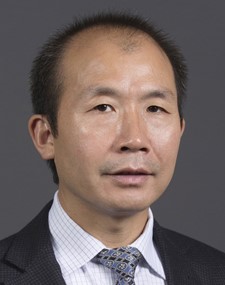
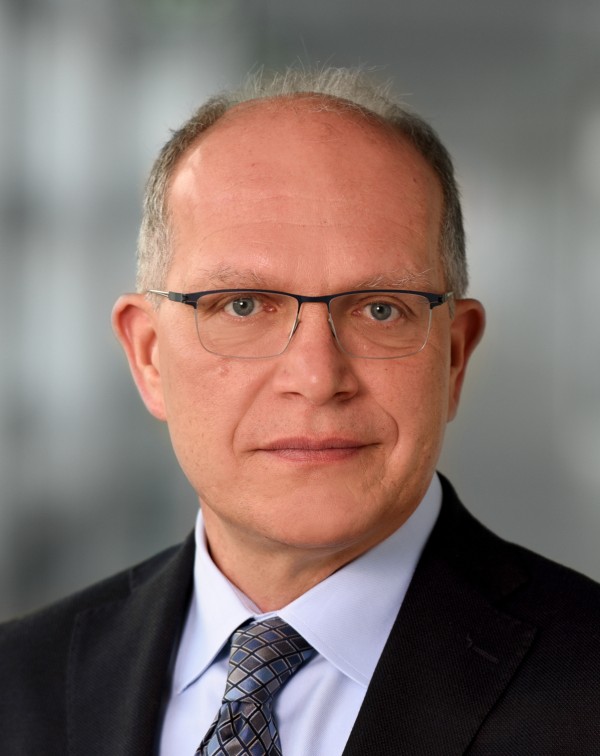
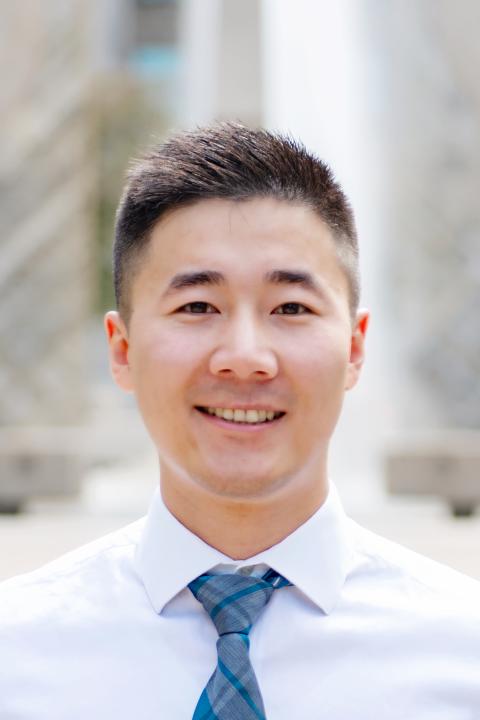
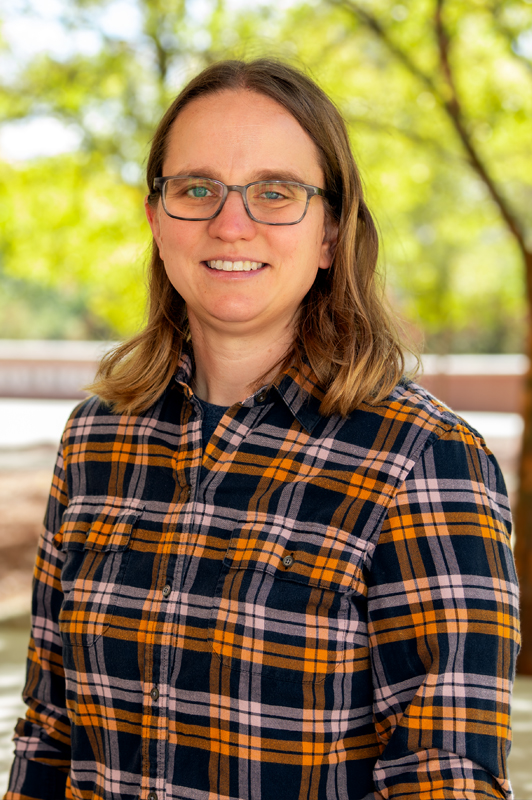
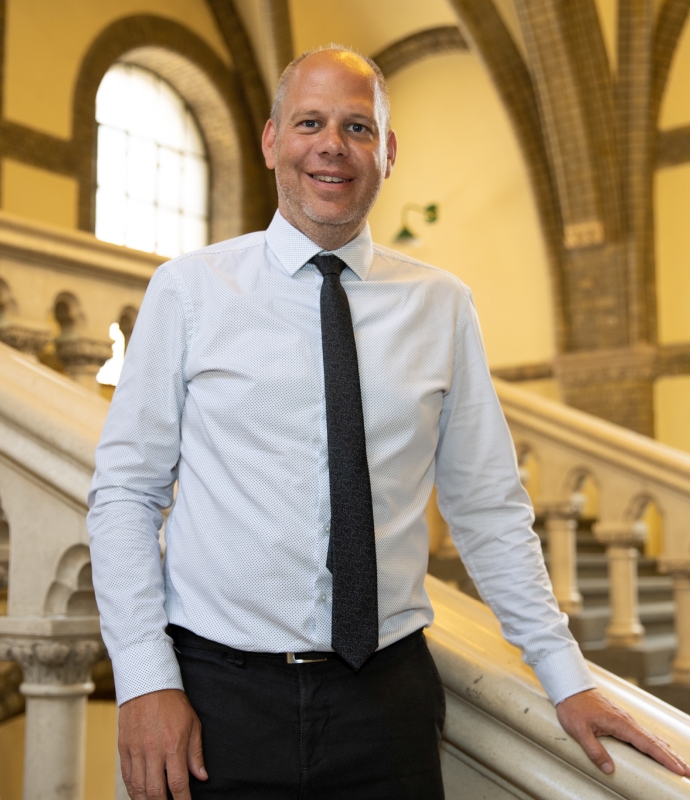
Michel Bruneau is a SUNY Distinguished Professor at the University at Buffalo's Department of Civil, Structural and Environmental Engineering within the School of Engineering and Applied Sciences. His research focuses on earthquake-resistant design, blast-resistant structures, multi-hazard engineering, and seismic evaluation of infrastructure. He has authored influential books such as The Blessings of Disaster , exploring disaster resilience and societal adaptation. Bruneau's career includes leadership roles in NSF-funded research centers and over 20 prestigious awards for engineering innovation. Beyond academia, he has published novels and composed music, blending technical expertise with creative pursuits. Education: PhD (1987), MS (1984) in Structural Engineering from UC Berkeley; BS in Civil Engineering from Université Laval (1983). Research emphasizes resilient infrastructure, including seismic retrofitting of bridges and buildings. His work bridges engineering, policy, and sociology, advocating for proactive disaster preparedness. Notable contributions include advances in buckling-restrained braces and composite plate shear walls for structural resilience.
Guruswami (Ravi) Ravichandran is the John E. Goode, Jr., Professor of Aerospace and Mechanical Engineering at the California Institute of Technology (Caltech). He has held roles including Director of the Graduate Aerospace Laboratories (2009–2015), Division Chair of Engineering and Applied Science (2015–2021), and currently serves as the Booth Leadership Chair (2015–2021). His academic journey includes a B.E. from the University of Madras (1981), followed by advanced degrees from Brown University (Sc.M. in Solid Mechanics, Applied Mathematics, and Ph.D. in 1987). He joined Caltech as an Assistant Professor in 1990, advancing through ranks to his current endowed chair. Ravichandran’s research focuses on deformation mechanisms, dynamic material behavior, wave propagation, and biomaterials. His work bridges micro/nano-scale mechanics with macroscopic material responses, including studies on composites, active materials, and cellular systems. Recent breakthroughs include insights into cell mechanics through mechanical topology and shock compression dynamics in advanced materials. Key achievements include the 2023 ASME Timoshenko Medal, 2024 Brown Engineering Alumni Medal, and election to India’s National Academy of Engineering and Academia Europaea. His experimental methodologies, such as 3D velocity measurements via stereo imaging, advance diagnostics in high-strain-rate mechanics. Ravichandran has pioneered shock compression studies in metallic alloys and polymeric lattices, contributing to energy absorption and failure prediction in aerospace systems. Leadership roles include steering interdivisional research at Caltech’s Graduate Aerospace Laboratories and fostering interdisciplinary collaborations. His work has implications for next-gen materials in aerospace, biomedical engineering, and geomechanics.
Federica Sandrone is a Lecturer at the School of Architecture, Civil and Environmental Engineering (ENAC) at École Polytechnique Fédérale de Lausanne (EPFL), where she also serves as a Scientist at the Laboratory of Experimental Rock Mechanics (LEMR) within the Institute of Civil Engineering. Her academic career spans over 15 years with continuous contributions to tunnel engineering and rock mechanics research. Her research focuses on the intersection of rock mechanics and tunnel engineering, with particular expertise in tunnel pathology analysis, TBM performance in challenging geological conditions, and long-term tunnel behavior. Sandrone's work bridges theoretical analysis with practical engineering applications, addressing real-world problems in tunnel infrastructure management and maintenance. Her research methodology combines field investigations, laboratory testing, and numerical modeling to understand complex geomechanical behaviors. Analysis of her recent publications reveals a consistent focus on tunnel inspection methodologies, TBM performance prediction in difficult ground conditions, and the long-term behavior of tunnel structures. Her work has evolved from fundamental tunnel pathology studies to more advanced applications involving GIS integration, probabilistic modeling, and modern inspection techniques including laser scanning and image analysis. Engineer at SBB-Infrastructure (2008-present) responsible for Tunnels Management and Maintenance Assistant for Tunnel Engineering courses (2007-present) PhD supervision including Erika Paltrinieri's 2015 thesis on TBM performance Development of tunnel inspection methodologies and condition assessment procedures Her teaching activities include courses in Rock Mechanics and Underground Construction, where students learn about the mechanical behavior of rock materials, tunnel excavation and support design, planning and management of underground works, and risk assessment in tunnel construction.
Xiong Zhang is a Professor in the Department of Civil, Architectural and Environmental Engineering at Missouri University of Science and Technology (Missouri S&T), with additional affiliation to the Center for Intelligent Infrastructure. His research focuses on advanced geotechnical engineering methodologies addressing unsaturated soils, frozen ground, and infrastructure resilience. His educational background includes: Ph.D. in Civil Engineering from Texas A&M University Dr. Zhang's research spans critical geotechnical domains with emphasis on: Development of advanced laboratory techniques for rapid geomaterials characterization Constitutive modeling of hydro-mechanical behavior in unsaturated soils Numerical simulation of climate-soil-structure interactions Slope stability analysis and soil stabilization methods Frozen ground engineering applications Recent publications (2022-2025) reveal a strong trend toward innovative measurement techniques, particularly photogrammetry and computer vision for soil specimen analysis during triaxial testing. His work consistently addresses unsaturated soil mechanics challenges while expanding into practical infrastructure solutions like wicking geotextiles for pavement systems and permafrost region engineering. His scientific recognition includes: 2016 International Innovation Award in Unsaturated Soil Mechanics from the International Society for Soil Mechanics and Geotechnical Engineering As an active mentor and researcher, Dr. Zhang serves on editorial boards including the Canadian Geotechnical Journal and Geomechanics and Engineering. He holds leadership positions in international committees such as TC106 Unsaturated Soils and the ASCE GI Shallow Foundation Committee, demonstrating significant professional engagement. His work with the Center for Intelligent Infrastructure supports advanced infrastructure development through cutting-edge geotechnical research.
Bozidar Stojadinovic is a Full Professor and Chair of Structural Dynamics and Earthquake Engineering at ETH Zürich's Department of Civil, Environmental and Geomatic Engineering. He leads the Institute of Structural Engineering and previously held professorships at UC Berkeley and the University of Michigan. His research focuses on community disaster resilience, seismic design, and experimental methods like hybrid simulation. Education: PhD in Civil Engineering, UC Berkeley (1995) MS in Civil Engineering, Carnegie-Mellon University (1990) BS in Civil Engineering, University of Belgrade (1988) Research Interests: Performance-based probabilistic resilience evaluation of civil infrastructure. Earthquake engineering, including seismic isolation and response modification techniques. Development of experimental testing methods, such as hybrid simulations for dynamic structural analysis. Awards: ICE Journal John Henry Garrood King Medal (2023) ACI Chester Paul Siess Award (2017) NSF CAREER Award (1999) Teaching & Advising: Teaches courses on seismic design and structural dynamics at ETH. Advised 49 doctoral students to date. His work integrates advanced methodologies to enhance structural resilience against natural hazards. Labs/Teams: Leads ETH's Institute of Structural Engineering, advancing research in seismic protection and infrastructure resilience through experimental and computational innovations.
Kate Ritterbush is an Associate Professor in the Department of Geology & Geophysics at the University of Utah, where she has been a faculty member since July 2015. She was promoted to Associate Professor in July 2022 after serving as an Assistant Professor from 2015-2022. Her research focuses on marine ecological transitions across geological time scales, with particular emphasis on the fossil record of mass extinctions and animal-environment interactions. Dr. Ritterbush earned her BS in Environmental Science from California Lutheran University in 2006, followed by a PhD in Earth Sciences from the University of Southern California (2008-2013) under the supervision of David Bottjer. She completed a NASA postdoctoral research position at the University of Chicago working with Michael Foote and Arnie Miller before joining the University of Utah faculty. Her research interests span multiple areas of paleontology and earth sciences: Marine ecological transitions over large spatial and temporal scales Role of marine invertebrates in habitat development and marine chemistry Sedimentary and fossil record of mass extinctions Critical transitions in biogeography Small scale animal-environment interactions Dr. Ritterbush's recent publications demonstrate expertise in cephalopod paleobiology, particularly ammonoids, with applications to understanding hydrodynamics, buoyancy control, and evolutionary responses to mass extinction events. Her work often combines computational modeling with traditional paleontological analysis to reconstruct the life habits of extinct organisms. She has received significant research funding, including an ongoing NSF grant titled "Fossil Ammonoids Reveal Open Ocean Ecology in Deep Time" (2020-2026) and a previous American Chemical Society grant on "Permian Spiculites" (2016-2019). Her scientific contributions have been recognized through numerous publications in high-impact journals such as Nature Communications, Scientific Reports, Paleobiology, and Palaeontology. Dr. Ritterbush is actively involved in mentoring students and has led numerous field programs. She teaches courses including "Evolving Earth" and "Wasatch in the Field," and has organized research experiences for undergraduates focused on ammonite motility modeling.
Dr. Liang Cui is an Associate Professor at the University of Surrey , affiliated with the School of Sustainability, Civil and Environmental Engineering and Institute for Sustainability . With a PhD from University College Dublin (2006) and BE (1st honor) from Tsinghua University (2002) , his career spans geotechnical research and education since joining Surrey in 2009. Key roles: Undergraduate Programme Leader (2020-2022, 2023-on), MSc Programme Leader for Advanced Geotechnical/Civil/Structural Engineering (2022-2023) Professional memberships: Chartered Engineer (CEng), Member of Institution of Civil Engineers (MICE), Fellow of Higher Education Academy (FHEA) His primary research focuses on numerical modeling (DEM/FEM) for geotechnical applications including offshore wind foundations , geothermal energy systems , methane hydrate exploitation , and extra-terrestrial soil mechanics . Secondary interests involve material characterization of polymeric foams , porous media , and biological tissues . Recent 15 publications (2023-2025) demonstrate expertise in soil-structure interaction for renewable energy infrastructure, thermal feedback in groundwater heat pumps, and hypothesis-driven DEM simulations for lunar/martian environments. Collaborative projects span institutions including Tsinghua University , University of Bristol , and Indian Institute of Technology Bhubaneswar . Scientific Awards: Sustainability Fellow (University of Surrey, 2023) Chartered Engineer (CEng) and MICE FHEA for educational contributions Dr. Cui supervises 7 postgraduate researchers and contributes to teaching modules in soil mechanics and energy geotechnics. His work addresses challenges in hybrid marine energy systems , needleless drug delivery , and seismic resilience of critical infrastructure.
Giuseppe Buscarnera is a Professor of Civil and Environmental Engineering at Northwestern University, serving as the Director of Graduate Studies. He holds affiliations with the Theoretical and Applied Mechanics Graduate Program . His research focuses on geomechanics , particularly the multi-physical processes in geomaterials that impact natural hazards and infrastructure design. Buscarnera earned his B.S. and M.S. in Civil Engineering from Politecnico di Milano and a Ph.D. in Geotechnical Engineering from Politecnico di Torino. Before joining Northwestern, he held postdoctoral positions at Politecnico di Milano and collaborated with MIT, the University of Sydney, and others. His key research interests include constitutive modeling of geomaterials, mechanics of unsaturated soils, chemo-mechanics of porous rocks, material stability theory, fracture mechanics in granular systems, and landslide forecasting. His work integrates theoretical mechanics, constitutive modeling, and computational methods to address societal challenges like natural hazard mitigation and sustainable energy technologies. Buscarnera has received significant recognition including the NSF CAREER Award (2013) and ALERT PhD Prize (2011) . He actively serves as a reviewer for International Journal of Numerical and Analytical Methods in Geomechanics and Géotechnique Letters , and is a member of the Italian Geotechnical Association (AGI) and ISSMGE. In advising, he has mentored over 10 graduate and undergraduate students in projects related to landslide modeling, granular mechanics, and material degradation. His lab employs multi-scale approaches combining continuum thermodynamics, particle-scale models, and DEM analyses. Current research emphasizes particle fragmentation, chemical interactions in porous media, and regional subsidence prediction through multi-scale frameworks. The Buscarnera Research Group collaborates internationally and uses advanced tools like X-ray tomography and computational simulations to study geoenvironmental processes. Former members now hold academic and industry roles, including Assistant Professor at IIT Kanpur and positions at GEI Consultants.
Dr. Lydell Wiebe is a Professor and Acting Chair of Civil Engineering at McMaster University. He specializes in earthquake engineering, structural dynamics, and seismic resilience, focusing on controlled rocking systems and steel structures. His research group combines large-scale experiments and advanced modeling to enhance building resilience in seismic regions. Dr. Wiebe holds a BASc (2005) and PhD (2013) from the University of Toronto, and an MSc in Earthquake Engineering from the ROSE School in Italy (2008). He serves as Chair of CSA S16 Working Group 9 (Seismic Design) and is Vice-President of the Canadian Association for Earthquake Engineering. His teaching awards include the McMaster University Faculty of Engineering Teaching Excellence Award (2017) and the McMaster Students Union Award for Excellence in Teaching (2014, 2017). He teaches courses on structural analysis, seismic design, and civil engineering fundamentals. Research Focus: Seismic resilience, self-centering systems, and masonry innovation Professional Roles: Editorial Boards of the Journal of Earthquake Engineering and Canadian Journal of Civil Engineering His research emphasizes transforming seismic resilience into a routine design outcome, with applications in steel braced frames and masonry systems. Recent work addresses foundation design, energy dissipation mechanisms, and probabilistic risk assessment for critical infrastructure. Awards: GJ Jackson Fellowship, HA Krentz Research Award Key Projects: Controlled rocking braced frames for low-seismicity regions, resilient masonry systems
Fei Han is an Assistant Professor in the Department of Civil and Environmental Engineering at the University of New Hampshire, affiliated with the College of Engineering and Physical Sciences. His research focuses on advanced sensing technologies, artificial intelligence, computational mechanics, decision-making systems, deep learning, optimization, plasticity, and soil mechanics & foundations. He teaches courses including Soil Mechanics, Geo-Environmental Engineering, and Foundation Design. His work integrates machine learning with geotechnical engineering to address challenges in infrastructure resilience, sustainable development, and disaster mitigation. Education : Ph.D., Purdue University M.S.C.E., Purdue University B.S., Huazhong University of Science Key Research Trends : Recent publications emphasize data-driven modeling for infrastructure systems (e.g., transfer learning for monopile foundations, deep reinforcement learning for equitable bridge maintenance), optimization algorithms (multi-objective genetic algorithms), and marine geology advancements. His work bridges computational methods with practical geotechnical challenges, addressing scour management, soil-structure interaction, and sustainable engineering solutions. Grants & Advising : No specific grants or student advisees are listed, though his courses suggest involvement in mentoring senior theses (e.g., CEE 799H). His research collaborations involve institutions like INDOT and international co-authors. Labs & Teams : Active in UNH’s geotechnical and environmental engineering research groups, focusing on sensor fusion, deep learning applications, and sustainable infrastructure systems.
Dr. Jaan Pu is an Associate Professor at the University of Bradford, UK, affiliated with the School of BEACI within the Faculty of Engineering & Digital Technologies. He holds visiting scientist roles at Tsinghua University and Nanyang Technological University. His research focuses on numerical and experimental approaches to water engineering challenges, including sediment transport, turbulence modeling, and flood dynamics. Dr. Pu serves as Associate Editor for Frontiers in Environmental Science and Frontiers in Built Environment , and editorial roles in other journals. His work integrates computational tools (e.g., Delft3D, MATLAB) with experimental techniques (ADV, PIV) to study flows in rivers, coastal areas, and urban environments. Research interests include turbulence structures around bridge piers, scour reduction mechanisms, and environmental hydraulics. Teaching areas cover Water Engineering, Fluid Dynamics, and Mechanics. His publications span 73 works addressing topics from coral reef protection to sedimentation in rainwater systems. Professional activities include editorial board memberships, conference organizing, and peer review for high-impact journals.
Frances O'Donnell is an Associate Professor in the Department of Civil and Environmental Engineering at Auburn University, where she leads the Auburn Ecohydrology Lab. Her research focuses on ecohydrology, emphasizing vegetation-water cycle interactions, stormwater management, and ecosystem restoration with applications in geographically isolated wetlands and transportation infrastructure resilience. Education: Ph.D. in Civil and Environmental Engineering, Princeton University B.A. in Organismic and Evolutionary Biology, Harvard University Research Interests: Dr. O'Donnell investigates soil moisture dynamics and evapotranspiration processes to develop green infrastructure solutions for stormwater management. Her work integrates field measurements, hydrological modeling, and remote sensing to quantify ecosystem services of wetlands and improve climate resilience in water systems. Key projects examine forest restoration impacts on groundwater and sustainable practices for agricultural pollution mitigation. Publication Trends: Recent publications (2023-2025) reveal three dominant themes: landslide prediction along Alabama highways using soil moisture thresholds, sediment/nutrient dynamics in agricultural wetlands under climate change, and cost-optimization tools for green infrastructure. International collaborations in Haiti address drinking water accessibility, while Arizona watershed studies analyze forest management effects on water balance. Scientific Awards and Grants: NASA Research Grant for Geographically Isolated Wetlands USDA-NIFA Foundational and Applied Science Program Grant ($500,000) Advising and Collaborations: Dr. O'Donnell mentors graduate students through thesis research with real-world applications, including permeable pavement design tools and UAV-based water quality monitoring. She collaborates with NASA, USDA, and NOAA on federal projects, and her students publish in journals like Water Environment Research while securing positions at Virginia Tech and Geosyntec Consultants. Laboratory: The Auburn Ecohydrology Lab conducts field experiments in Alabama watersheds and Haiti, utilizing sensor networks, hydrological models, and drone technology to advance understanding of water-ecosystem interactions for sustainable infrastructure planning.
Professor Byron Byrne holds the Ørsted/Royal Academy of Engineering Research Chair in Advanced Geotechnical Design at the University of Oxford. He serves as Professor of Engineering Science (Civil Engineering), Fellow of St Catherine's College, and Co-Director of the EPSRC Supergen Offshore Renewable Energy Hub. His career spans academic leadership, industry collaboration, and innovative research in offshore geotechnical engineering. Education: BE(Hons) in Civil Engineering, University of Western Australia BCom in Commerce, University of Western Australia DPhil in Engineering, University of Oxford (Rhodes Scholar) Byron’s research focuses on soil-structure interaction for offshore foundations, particularly monopiles, suction caissons, and jacket piles supporting offshore wind turbines. His work combines experimental field/laboratory testing with theoretical modeling to develop practical design guidance. Key projects include PISA (industry-funded monopile research), ALPACA (chalk foundation studies), and collaborations with Ørsted and TechnipFMC. Current emphasis includes cyclic loading behavior, scour protection, and real-time monitoring applications. His scientific awards include the Crampton Prize (2023), BGA Medal (2022/2020), Fleming Award (2017), and multiple teaching accolades. His supervision spans 13 CDT students and 18+ graduate researchers, with completed projects on topics like pipeline buckling, soil liquefaction, and suction caisson installation. Byron also leads consultancy activities through Oxford University Consulting, working with industry leaders like Ørsted and Arup.
Marco Martino Rosso is a Research Fellow at the Department of Structural, Building and Geotechnical Engineering (DISEG) at the Polytechnic University of Turin, where he also serves as an external lecturer and teaching assistant in both DISEG and the Department of Mathematical Sciences (DISMA). He is affiliated with the Doctoral School (SCDOTT) and completed his PhD under the supervision of Professor Giuseppe Carlo Marano. His academic work bridges civil engineering with advanced computational methods, focusing on structural health monitoring, optimization, and machine learning applications. His research interests center on Structural Health Monitoring , Machine Learning in Civil Engineering , Earthquake Engineering , Structural Optimization , Operational Modal Analysis , and AI-driven diagnostics for infrastructure. He applies deep learning, neural networks, and hybrid modeling techniques to problems such as damage detection, post-earthquake assessment, tunnel and bridge monitoring, and dynamic analysis of timber and concrete structures. His recent publications, spanning from 2023 to 2025, demonstrate a strong trend toward integrating artificial intelligence with structural engineering, particularly in automating modal analysis, optimizing structural forms, and enhancing seismic resilience. These works appear in journals like Mechanical Systems and Signal Processing , Computers & Structures , and Bulletin of Earthquake Engineering , as well as in proceedings of international conferences such as IOMAC and EWSHM. Marco Rosso has not received any explicitly mentioned scientific awards in the provided text. However, his extensive publication record and active role in research projects indicate strong recognition in his field. He has contributed to teaching as a course collaborator in subjects including Dynamic Identification of Structures , Statistics , Construction Techniques , and Safety Assessment and Retrofitting of Structures . He has also been involved in the ARTISTE 2025 Summer School, indicating engagement in advanced training programs. While no formal lab or team name is specified, his frequent collaborations with researchers such as Angelo Aloisio, Giuseppe Carlo Marano, and Jonathan Melchiorre suggest he is part of a vibrant research group focused on intelligent structural systems and data-driven engineering at Politecnico di Torino.
Mahler András , Associate Professor at the Faculty of Engineering (Budapest University of Technology and Economics), specializes in Geotechnical Engineering and Soil Mechanics within the Department of Engineering Geology and Geotechnics . His research integrates numerical modeling and empirical testing to address geotechnical challenges in infrastructure and construction materials. Department: Engineering Geology and Geotechnics Email: mahler.andras@emk.bme.hu Courses: Soil Mechanics, Geotechnical Finite Element Analysis, Numerical Methods in Geotechnics Research Focus Mahler's work emphasizes: Geotechnical Testing : CPT-Vs correlations, hypoplastic parameter calibration, and permeability studies. Material Behavior : Analysis of rolled asphalt, concrete seepage, and collapsible soils. Seismic Applications : Liquefaction hazard assessment and seismic fragility of embankments. His recent publications highlight advancements in soft clay characterization , asphalt modeling , and sustainable soil stabilization using sewage sludge ash. Awards Építő250 Scholarship