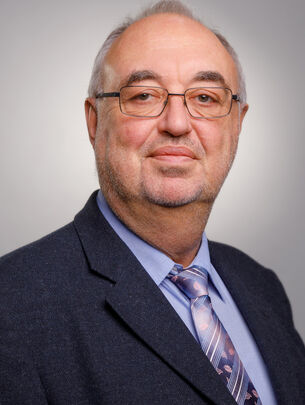
Giuseppe Pedone is a Visiting Professor in the Department of Civil and Environmental Engineering at Imperial College London, Faculty of Engineering. His research focuses on Civil Engineering and Environmental Engineering, with specific emphasis on slope stability, climate-soil interactions, and hydro-mechanical processes in clay soils. His publications highlight expertise in coupled hydro-mechanical modeling clay slope dynamics vegetation-atmosphere-soil interactions permeability in fissured clays climate-driven landslide mechanisms field-based case studies in Southern Italy Current work integrates numerical simulations, field data, and seasonal hydrology to improve landslide risk assessment frameworks.
Jamie Kirkpatrick is an Associate Professor in the Department of Earth and Planetary Sciences at McGill University. He holds a PhD from the University of Glasgow (2008) and an MGeol from the University of Leeds (2003). His research focuses on the deformation of Earth's crust, particularly faults and shear zones formed during tectonic plate movement. Research interests include structural geology, fault mechanics, microstructural analysis, and tectonics. His group employs field observations, microstructural analysis, and experimental work to understand rock deformation processes during earthquakes. Dr. Kirkpatrick teaches courses in Structural Geology (EPSC303), Tectonics (EPSC350), and Advanced Structural Geology (EPSC503). He has supervised undergraduate researchers including Dana Šilerová (fault roughness) and Arvid Gonzales (Canadian Cordillera mantle xenoliths), both recipients of McGill Faculty of Science SURA awards.
Prof. Frank Otto is a Professor of Geoengineering at Technische Hochschule Georg Agricola, leading the Department of Georesources and Process Engineering and the Geotechnical Engineering and Post-Mining Laboratory. His expertise spans geotechnical engineering, environmental protection in mining, and methane emission control. He has held his position since 1996 and teaches subjects like soil mechanics, hydromechanics, and geotechnical project work. His research focuses on post-mining land reuse, slope stability, and innovative technologies such as high-pressure injection methods and geotextile applications. Education: Holds a Dr. rer. nat. (Doctor of Natural Sciences) in a field related to geotechnics. Research interests include geotechnical surveys, environmental geotechnology, and sustainable land management. He has developed patents in soil stabilization, fiber-reinforced construction materials, and methane mitigation systems. Professional memberships include the German Society for Geotechnical Engineering (DGGT) and the International Society of Environmental Geotechnology (ISEG). His international collaborations are evident in his work across Germany, Austria, and Poland. Key contributions include advancing methods for stabilizing embankments, remediating sludge ponds, and preventing methane emissions from coal seams and landfills. His work integrates environmental protection with mining operations, emphasizing sustainable practices in resource extraction and post-mining landscapes.
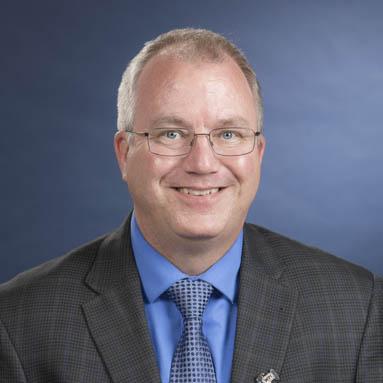
Seokyon Hwang, Ph.D., is an Associate Professor at Lamar University, specializing in Construction Project Management. He holds a Ph.D. in Civil Engineering from the University of Illinois at Urbana-Champaign and has over six years of construction field experience as a project engineer/superintendent. His research focuses on probabilistic modeling, BIM integration, sensor technologies, and organizational sustainability, with over 20 publications and a book in these areas. Education: Ph.D. in Civil Engineering, University of Illinois at Urbana-Champaign Research Interests: Statistical modeling of longitudinal data Computer simulation for process dynamics BIM and sensor technologies in construction Resilience engineering for infrastructure systems His work bridges engineering and technology, emphasizing practical applications in construction safety, cost analysis, and sustainable practices. Teaching Contributions: Teaches courses like Construction Planning and Scheduling and Construction Project Management in Lamar’s MBA program. Emphasizes career development and collaborative learning, fostering student resilience through real-world projects. Advising & Grants: While no advisees are listed, his research has received attention for innovations in infrastructure resilience and automated inspection techniques. Active in grant proposals for BIM integration and drone-based monitoring systems. Labs/Teams: Engaged in interdisciplinary projects involving UAV technology, AI, and smart infrastructure systems, collaborating with industry partners to advance practical solutions.
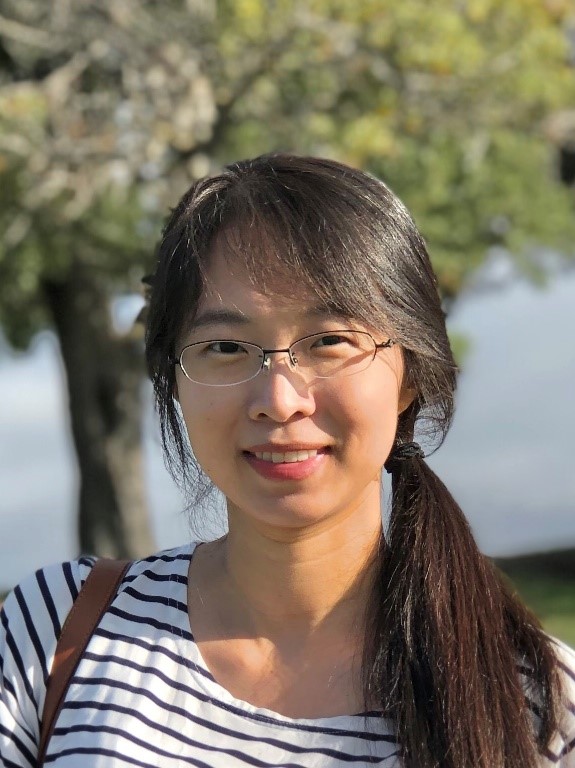
Qingyun Li is an Assistant Professor in the Department of Geosciences at Stony Brook University, where he has been a faculty member since 2021. His research focuses on experimental geochemistry, synchrotron X-ray techniques, and reactive transport modeling to study water-rock interactions in energy and environmental systems. Key areas include: biogeochemical reactions during subsurface energy storage, contaminant transport in groundwater, and coupling of chemical and mechanical alterations in rocks. Dr. Li holds a B.S. in Environmental Sciences from Peking University (2011) and a Ph.D. in Energy, Environmental, and Chemical Engineering from Washington University in St. Louis (2016). He conducted postdoctoral research at Stanford University and the SLAC National Accelerator Laboratory, advancing his expertise in mineral nucleation and geochemical modeling. His research lab, the Energy and Environmental Geochemistry Laboratory, explores three core themes: (1) water-rock interactions in geotechnical systems (e.g., geothermal energy, CO2 sequestration), (2) mineral nucleation and growth (e.g., barite, lithium carbonate), and (3) geochemical tools for environmental remediation (e.g., nitrogen/phosphorus reduction in Long Island groundwater). Recent work emphasizes shale-fluid interactions in hydraulic fracturing and the geochemical impacts of underground hydrogen storage. Publications highlight interdisciplinary approaches to understanding subsurface processes, including reactive transport modeling of mineral scaling, synchrotron-based imaging of shale alteration, and geochemical controls on cement deterioration under CO2 exposure. His research bridges laboratory experiments, field observations, and computational modeling to address challenges in energy sustainability and environmental protection.
Doug Todd Petkie is a Professor and Department Head of Physics at Worcester Polytechnic Institute (WPI). He holds affiliations with the Electrical & Computer Engineering department and leads the Laboratory for Education and Application Prototypes (LEAP@WPI/QCC), part of the AIM Photonics initiative. His roles include fostering academic-industry collaboration, teaching, and mentoring students in MS/PhD programs. Education: PhD in Physics from The Ohio State University (1996) BS in Physics from Carnegie Mellon University (1990) Research Interests: Photonic Integrated Circuits (PICs) for sensing applications Millimeter-wave and terahertz science, including molecular spectroscopy and imaging Physics education innovation, including teacher preparation and active learning His work bridges theory and practice, emphasizing experiential learning and interdisciplinary projects at WPI. Key Contributions: LEAP@WPI/QCC: Develops photonics technologies with industry/government partners Advocacy for integrating research with teaching, particularly in photonics and terahertz sensing Leadership in WPI’s Value Creation Initiative (VCI) for entrepreneurship in physics Labs & Affiliations: Signature Science and Sensing Lab Member of American Physical Society, AAPT, and SPIE
Michael Bertolacci is a Senior Lecturer in Mathematics and Statistics at the University of Western Australia. His research tackles large-scale spatio-temporal problems, particularly in environmental statistics and carbon cycle modeling. He co-developed the WOMBAT framework for global carbon flux inversion and contributed to the UNFCCC Global Stocktake. Recent projects include GeoWarp for subsea sediment analysis and probabilistic forecasting for maritime engineering. Bertolacci collaborates internationally on climate data initiatives, with work featured in high-impact journals like Earth System Science Data and the Journal of the American Statistical Association .
Sourav Das is a Senior Lecturer in Statistics and Data Science at Curtin University's School of Electrical Engineering, Computing and Mathematical Sciences, within the Faculty of Science and Engineering. His research focuses on statistical methodology for spatio-temporal processes, with applications to natural hazards (landslides, tropical cyclones) and epidemiology. He has held academic positions at James Cook University (2017-2023) and research roles at institutions including the University of Melbourne and National University of Singapore. Key research areas include time series analysis, spatial statistics, and computational methods for environmental and health data. Notable work includes developing models for tropical cyclone frequency using periodogram regression and applying machine learning to landslide monitoring. He actively mentors students, including Mr. Yihong Mei who secured a national scholarship for polar ice research. Professional memberships include the Royal Statistical Society and Statistical Society of Australia. His recent publications span interdisciplinary topics from climate science to mental health policy analysis, demonstrating a commitment to both methodological innovation and real-world applications.
Mahfoud TAHLAITI is a Researcher Lecturer at ICAM's Nantes campus, focusing on eco-materials, sustainable construction, and concrete durability. His work emphasizes recycling construction materials, analyzing alkali-silica reactions, and developing biocomposites. He collaborates internationally on projects involving structural health monitoring and material lifecycle assessment. Research interests include eco-materials synthesis, recycled aggregate utilization, and advanced modeling of material behavior. He explores innovative solutions for construction waste management and sustainable infrastructure through interdisciplinary approaches combining material science, environmental engineering, and computational methods. Recent studies highlight his contributions to biocomposite development using plant fibers, structural health monitoring via fiber optic sensors, and enhancing concrete durability through chemical treatments. His work bridges academic research with industrial applications, addressing challenges in construction material sustainability and environmental impact reduction.
Nikolaos Depountis is an Assistant Professor at the University of Patras, Department of Geology within the Faculty of Science. His educational background includes a BSc from the University of Patras, and MSc and PhD degrees from Cardiff University, UK. Research interests center on geotechnical challenges including landslide mechanisms, soil erosion modeling, and coastal vulnerability assessment. His work integrates field studies with geospatial technologies, focusing on: Geotechnical investigations for infrastructure projects Physical/mechanical properties of geological materials Landslide monitoring and early-warning systems Coastal erosion quantification using multi-sensor approaches Geohazard assessment in archaeologically sensitive areas Publication analysis reveals strong emphasis on geohazard prediction (75% of recent works) with methodological focus on GIS, remote sensing, and 3D modeling. Coastal processes and soil erosion constitute 60% of research outputs since 2020. Teaching responsibilities include Engineering Geology, Rock Mechanics, Geotechnical Engineering, and specialized courses on natural hazards and marine geology.
Dyaa Hassan is an Assistant Lecturer in Engineering Project Management at the CEES School of Engineering. His research focuses on sustainable construction practices, environmental impact mitigation, and innovative solutions for the construction industry aligned with UN Sustainable Development Goals. He specializes in addressing challenges such as waste management, financial risk in construction projects, and the adoption of modern materials and technologies like passive housing systems and geofoam composites. Research Interests: - Sustainable construction materials and practices - Waste management strategies in construction - Financial risk analysis in engineering projects - Policy implementation for sustainable development - Cross-country comparisons of construction industry challenges - Digital technologies in construction inspection and BIM adoption His recent work highlights trends in UK construction innovation, including feasibility studies for passive housing, analysis of migrant labor impacts, and barriers to modular construction adoption. Articles emphasize practical solutions for environmental and economic sustainability across diverse regions like India, Lebanon, and Canada. Advising and grants details are not explicitly documented in the provided texts. Collaborations span international teams focusing on geotechnical engineering, policy analysis, and technology integration in construction sectors.
Michael Lim is Professor of Mechanical and Construction Engineering at Northumbria University. His research examines interactions between environmental processes, materials, and infrastructure, with emphasis on coastal erosion, permafrost degradation, and landslide hazards. He directs projects on real-time slope monitoring, Arctic coastal dynamics, and low-cost IoT sensing. Fieldwork spans Svalbard, Alpine regions, and Canadian permafrost zones. His methodological innovations include particle image velocimetry and deep learning for material analysis. Recent publications address climate impacts on coastal systems, Indigenous-led environmental monitoring, and concrete material science. Collaborative work emphasizes community-based solutions for Arctic sustainability. Lim teaches geotechnical surveying, hazard management, and climate resilience. His lab focuses on field instrumentation and predictive modeling of geomorphological change.
Dr. Kamran M. Nemati is a Professor of Practice in the Department of Civil, Structural and Environmental Engineering at the University at Buffalo. His research focuses on advanced concrete materials, structural engineering mechanics, and materials science. He is a licensed Professional Engineer in the State of New York and has extensive experience in construction technology and geotechnical engineering. Education: PhD, Civil Engineering (Structural Materials), University of California, Berkeley MCP, Transportation Planning, University of California, Berkeley ME, Civil Engineering (Geotechnical and Construction Engineering), University of California, Berkeley Research interests include fracture mechanics of concrete, nanotechnology applications in construction materials, and innovative pavement technologies. His work spans from material microstructure analysis to large-scale infrastructure projects, emphasizing durability and sustainability. Recent publications highlight advancements in concrete technology, fiber-reinforced materials, and statistical modeling of material properties. His research trends focus on optimizing construction processes, enhancing material performance, and addressing challenges in urban infrastructure development. Labs/Teams: His research is integrated with the Department’s structural engineering and materials science initiatives, though specific lab affiliations are not detailed.
Matteo Ciantia is a Senior Lecturer in Civil Engineering at the University of Dundee, specializing in Soil Mechanics and Geotechnical Engineering. He holds a PhD from Politecnico di Milano (2013) and has held postdoctoral positions at UPC Barcelona and Imperial College London. His research focuses on offshore geotechnics, computational geomechanics, and granular material behavior, supported by over £1.1M in grants. He serves on editorial boards for Géotechnique and Proceedings of the ICE Geotechnical Engineering , and chairs ISSMGE Technical Committees TC105 and TC211. Research interests include discrete element analysis, soft rock mechanics, and geohazard mitigation. Notable awards include the ISSMGE Bright Spark Award (2019) and IACMAG Promising Investigator Nomination (2021). He teaches modules on computational mechanics, geotechnical design, and advanced soil mechanics. Current projects explore offshore renewable energy foundations, rock anchoring systems, and granular material failure mechanisms. His work contributes to UN Sustainable Development Goals related to sustainable infrastructure and climate resilience. Collaborations include institutions like Imperial College London and international conferences such as Engineering in Chalk 2018.
Dr Laszlo Csetenyi is a Researcher in Civil Engineering at the University of Dundee, specializing in sustainable construction materials, cement technology, and fungal bioremediation. His work contributes to UN SDGs through low-carbon concrete innovation and waste utilization. He has received the Scottish Knowledge Exchange Award for collaboration with Moock Environmental on toner powder applications. Research Focus: Cement additives, fly ash, fungal mineral recovery, and geotechnical engineering. Notable Projects: Feasibility of Recovered Toner Powder, low-carbon concrete development. His recent research includes 4D pile installation modeling and semi-adiabatic calorimetry for cement analysis. Collaborations span international institutions, with publications in journals like Journal of Thermal Analysis and Calorimetry and Magazine of Concrete Research . Awards: Scottish Knowledge Exchange Award (2018). He actively participates in editorial roles for Journal of Materials in Civil Engineering and Construction and Building Materials , and hosts academic visitors to advance research in civil engineering.