معرفی
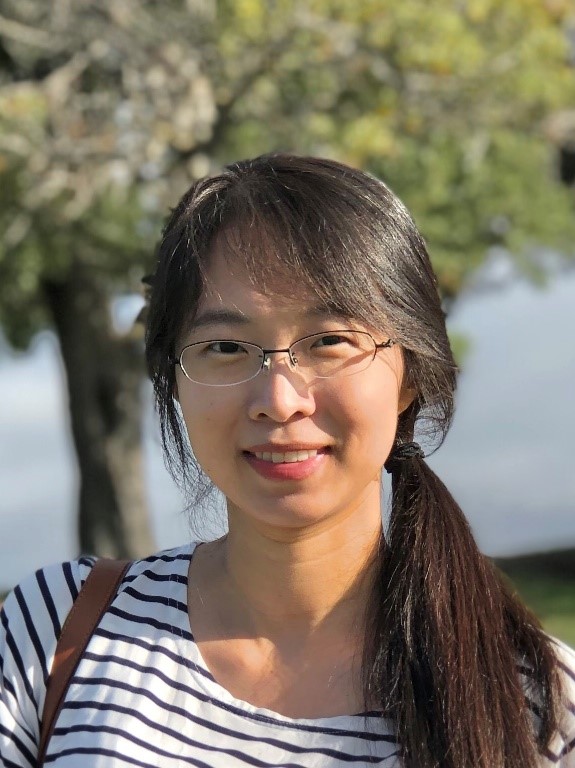
Qingyun Li is an Assistant Professor in the Department of Geosciences at Stony Brook University, where he has been a faculty member since 2021. His research focuses on experimental geochemistry, synchrotron X-ray techniques, and reactive transport modeling to study water-rock interactions in energy and environmental systems. Key areas include: biogeochemical reactions during subsurface energy storage, contaminant transport in groundwater, and coupling of chemical and mechanical alterations in rocks.
Dr. Li holds a B.S. in Environmental Sciences from Peking University (2011) and a Ph.D. in Energy, Environmental, and Chemical Engineering from Washington University in St. Louis (2016). He conducted postdoctoral research at Stanford University and the SLAC National Accelerator Laboratory, advancing his expertise in mineral nucleation and geochemical modeling.
His research lab, the Energy and Environmental Geochemistry Laboratory, explores three core themes: (1) water-rock interactions in geotechnical systems (e.g., geothermal energy, CO2 sequestration), (2) mineral nucleation and growth (e.g., barite, lithium carbonate), and (3) geochemical tools for environmental remediation (e.g., nitrogen/phosphorus reduction in Long Island groundwater). Recent work emphasizes shale-fluid interactions in hydraulic fracturing and the geochemical impacts of underground hydrogen storage.
Publications highlight interdisciplinary approaches to understanding subsurface processes, including reactive transport modeling of mineral scaling, synchrotron-based imaging of shale alteration, and geochemical controls on cement deterioration under CO2 exposure. His research bridges laboratory experiments, field observations, and computational modeling to address challenges in energy sustainability and environmental protection.