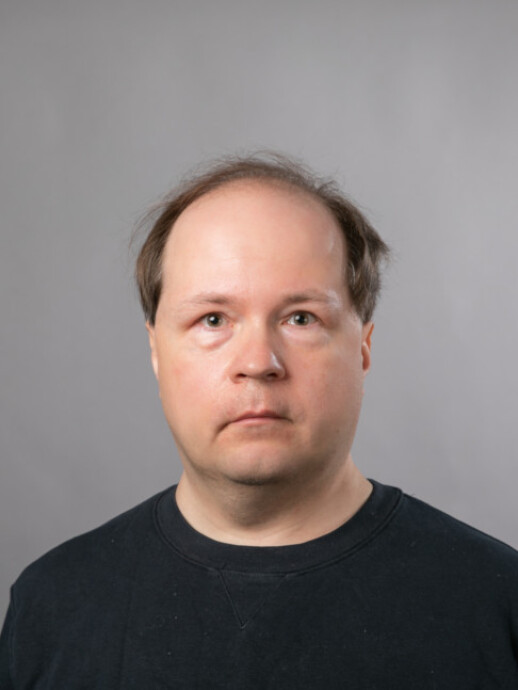
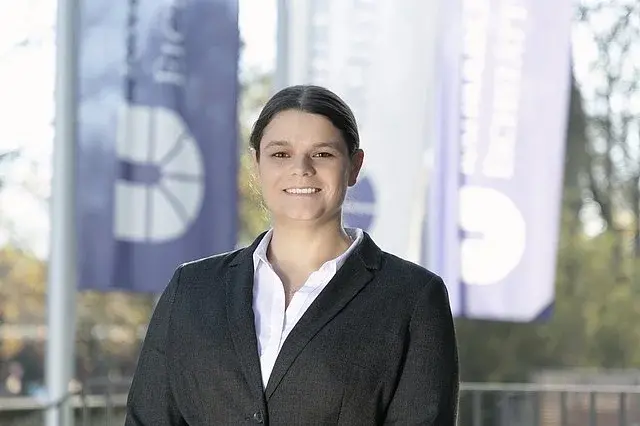
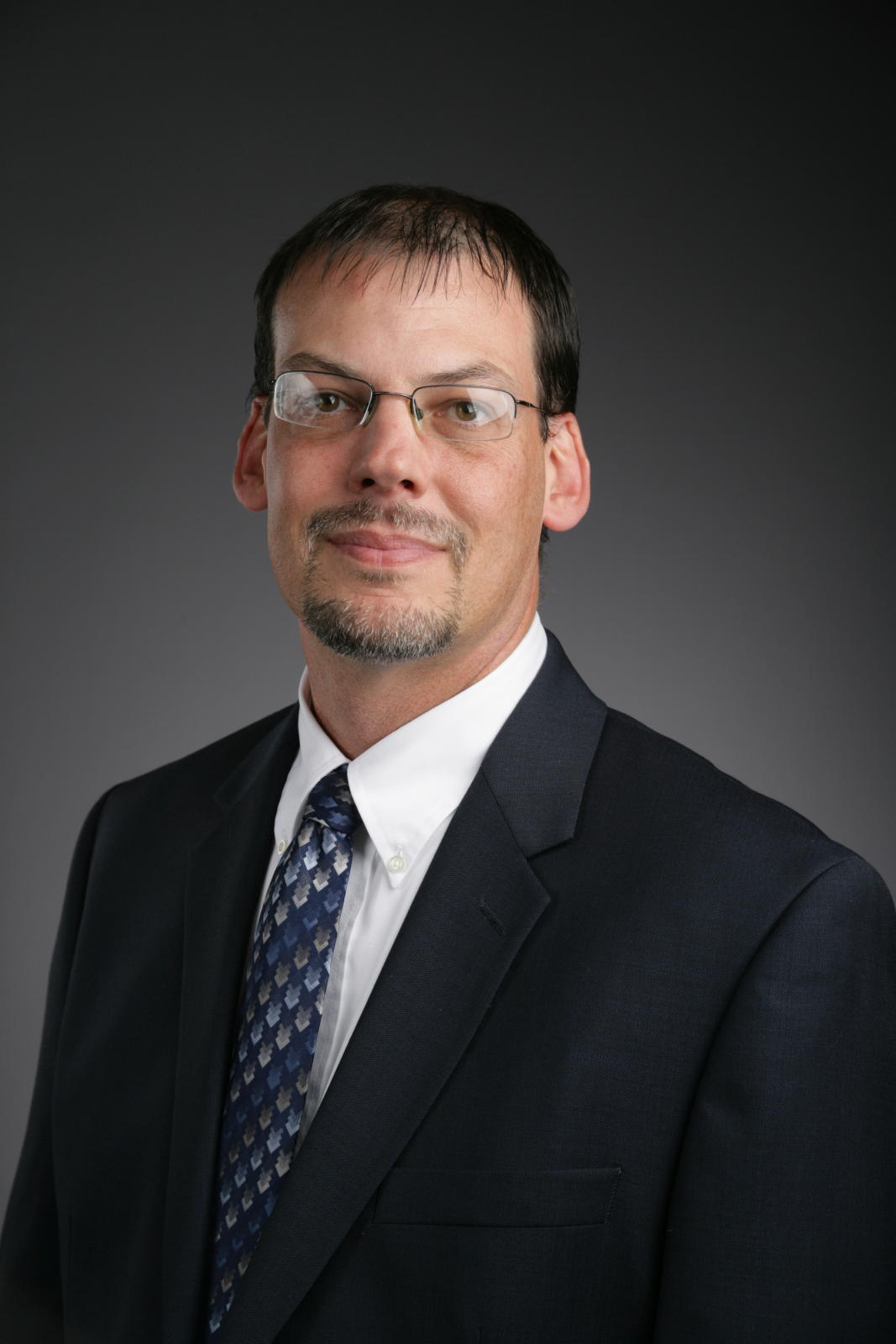
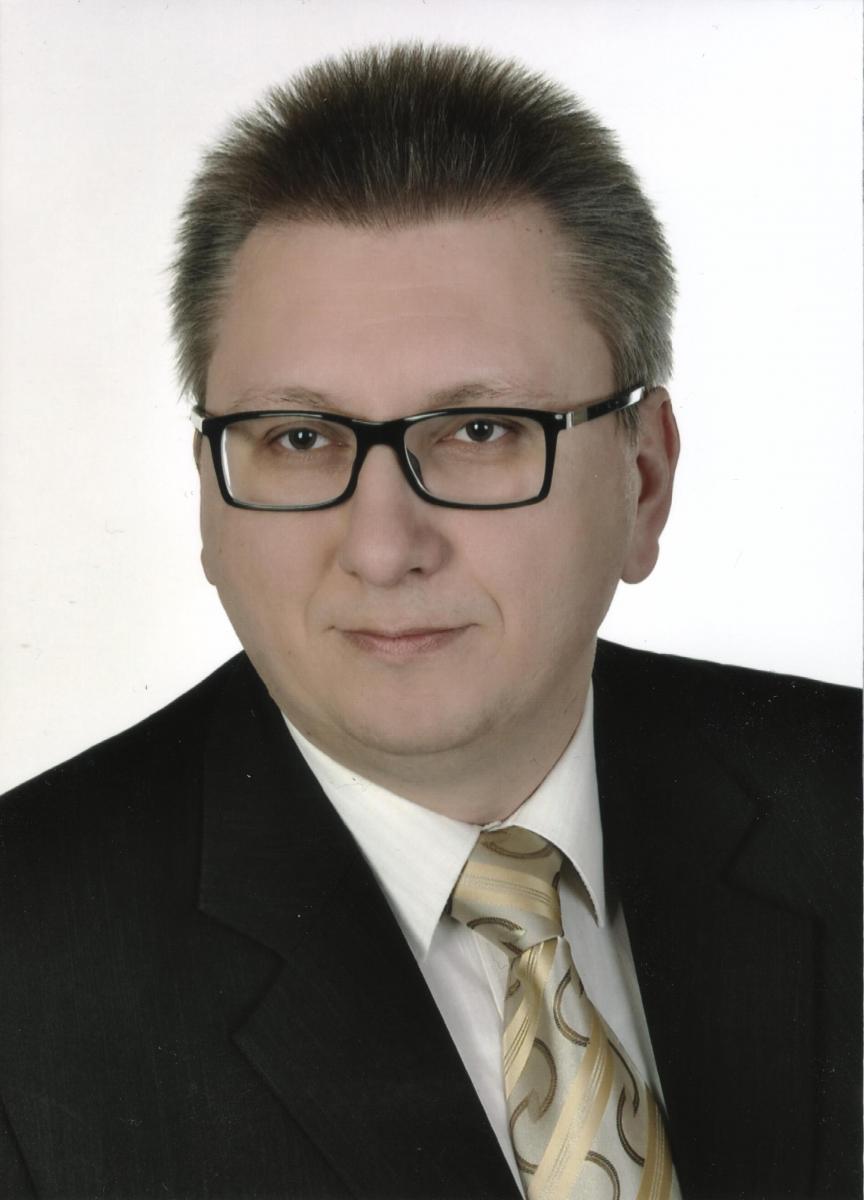
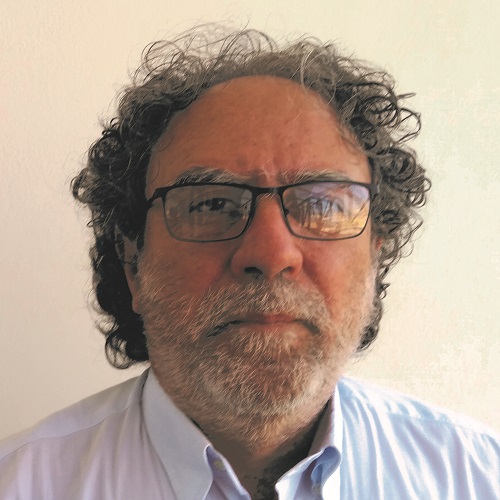
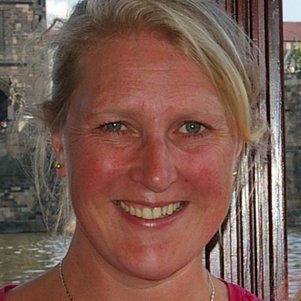
Wenceslao Gonzalez Manteiga is a Professor at the Department of Statistics, Mathematical Analysis and Optimization within the Faculty of Mathematics at the University of Santiago de Compostela. He leads the MODESTYA research group focusing on optimization, decision, and statistical models with applications in functional data analysis and spatial statistics. Research Interests: Nonparametric regression, functional data analysis, goodness-of-fit tests, missing data, spatiotemporal modeling, and bootstrap techniques. Publications: Over 157 peer-reviewed works since 1985, including influential papers on functional regression, small area estimation, and censored data analysis. Email: wenceslao.gonzalez@usc.es Collaborations: Extensive work with researchers like Ingrid Van Keilegom, Rosa Crujeiras, and Manuel Febrero-Bande, with applications in finance, biostatistics, and geological modeling.
Janusz Wynalek is an academic staff member at the Faculty of Civil Engineering, Wrocław University of Science and Technology, affiliated with the Department of Geotechnology, Hydro Technology, and Underground and Hydro Engineering. His research focuses on geostatistical analysis and monitoring of displacements in hydrotechnical and geotechnical structures using geodetic data. His research interests include: Geostatistical modeling of structural displacements Spatial-temporal analysis of hydrotechnical facilities Geodetic monitoring for infrastructure diagnostics Prediction of vertical settlements and structural risks Applications of geospatial data in civil and urban engineering His recent publications demonstrate a consistent focus on displacement forecasting, structural health monitoring, and risk assessment of hydraulic and civil infrastructure. The works span from foundational geodetic modeling to applied disaster impact analysis, particularly after the 1997 flood event. His methodological approach integrates geostatistics, spatial interpolation, and time-series analysis to assess structural integrity. Scientific contributions and recognitions: No formal scientific awards or fellowships are mentioned in the provided text. Regarding academic advising and funding: No information is available about students supervised or research grants received. Laboratories and research teams: There is no explicit mention of participation in specific labs, research groups, or collaborative teams within the provided content.
T. Economou is affiliated with the Department of Mathematics and Computer Science at the University of Exeter, UK, where he conducts research at the intersection of statistics and meteorology. His work primarily focuses on modeling extreme weather events, particularly the serial clustering of extratropical cyclones, using climate model outputs and statistical methodologies. His research interests lie in climate statistics , spatio-temporal modeling , and extreme event analysis , with applications to atmospheric dynamics and climate change impacts. He applies advanced statistical techniques to understand patterns in storm occurrences and their variability under changing climate conditions. The two available publications show a strong trend in analyzing extreme meteorological phenomena through rigorous statistical frameworks. His work emphasizes quantifying uncertainty, modeling dispersion in storm counts, and assessing the role of large-scale climate drivers such as the North Atlantic Oscillation. These studies contribute to improving risk assessments related to clustered extreme weather events in Europe and the North Atlantic region. Scientific Awards: No awards mentioned in the provided text. Advising and Grants: There is no information available regarding students advised or grants received. However, his active involvement in CMIP5-based research suggests potential participation in collaborative, funded climate science initiatives. Labs and Teams: While no formal lab or team structure is described, T. Economou collaborates with researchers from institutions such as the University of Reading and the University of Cologne, particularly within the context of multi-model climate analysis and extratropical cyclone dynamics.
Mika Murtojärvi is a Senior Researcher and University Teacher in Software Engineering at the University of Turku. His work bridges research and education in computer science, with a focus on algorithms, machine learning, and software systems. He holds a PhD in Computer Science (2016) and has over a decade of teaching experience. Research Interests: His research spans algorithm development for applications in computational geometry, biomedical informatics, e-learning, and parallel computing. Key areas include survival prediction in cancer, EEG-based neurological classification, GPU-accelerated geographic algorithms, and platform-independent educational tools. His work often integrates real-world data with machine learning and optimization techniques. The recent publications highlight a strong trend in applying algorithmic and machine learning methods to healthcare and environmental challenges. Topics such as survival prediction in prostate cancer, EEG-based Parkinson’s classification, and GPU-optimized coastal algorithms reflect interdisciplinary research at the intersection of computer science, medicine, and geosciences. The use of R packages and e-learning systems also shows a commitment to practical, software-based solutions. Scientific Awards: No awards mentioned in the text. Advising and Grants: Mika supervises BSc theses and has taught various core computer science courses. While specific grants are not listed, his research in biomedical and environmental computing suggests involvement in funded projects. He has contributed to tools like ePCR, indicating software development for research dissemination. Labs and Teams: He collaborates with researchers such as Antti Airola, Tapio Pahikkala, and Jari Björne, suggesting active participation in research teams focused on machine learning and biomedical informatics. His work on GPU algorithms also indicates ties to high-performance computing groups.
Gurjeet Singh is a Researcher affiliated with the Department of Civil and Environmental Engineering (CEE) at Michigan State University’s College of Engineering. His work focuses on advancing soil moisture sensing technologies, remote sensing applications, and geospatial analysis for agricultural and environmental monitoring. He holds a position as a Research Associate, contributing to interdisciplinary projects involving satellite data integration (e.g., SMAP, Sentinel, NISAR missions) and precision agriculture solutions. His research interests include developing low-cost sensor networks, optimizing water resource management through satellite-derived soil moisture products, and analyzing drought patterns in regions like Senegal. He has pioneered methods for uncertainty estimation in soil moisture retrievals and has extensively studied the integration of SAR and optical remote sensing data for hydrological modeling. Recent studies emphasize multi-scale algorithm development for upcoming satellite missions, crop yield prediction under water stress conditions, and improving agricultural drought indices via remote sensing fusion. His work intersects environmental engineering, data science, and climate resilience strategies. Gurjeet collaborates on frameworks for drought hotspot identification, groundwater potential modeling, and precision irrigation optimization. His publications highlight technical innovations in sensor calibration, geostatistical analysis, and machine learning applications for hydrological forecasting. Despite no listed awards, his contributions are evident through impactful peer-reviewed outputs addressing global water and food security challenges.
Kasım Koçak is a Professor at the Department of Meteorological Engineering at Istanbul Technical University. His work focuses on climatology, chaotic systems, and environmental data modeling with applications in Turkey and globally. He has contributed to studies on wind speed analysis, precipitation patterns, and evaporation dynamics using advanced statistical and machine learning methods like Support Vector Regression and fractal geometry. Research Interests: Wind speed persistence and spatial analysis Climate change impacts on precipitation and snowfall Chaotic approaches in hydrological and meteorological prediction Fractal geometry applications in natural phenomena Key Projects: Examining snowfall changes due to global climate change in Istanbul (2023-2024) Application of maximum entropy principles to hydrometeorological processes (2014-2017) Analysis of evaporation-sublimation relationships with meteorological variables (2011-2017) Article Trends: Recent work emphasizes hybrid machine learning models (e.g., SVR, wavelet transforms) for predicting drought indices, river flows, and lake evaporation. He also explores multifractal structures in precipitation and spatial-temporal wind patterns using Bayesian methods.
D. Pedretti is a researcher in the Department of Earth, Ocean and Atmospheric Sciences at the University of British Columbia, Vancouver. They specialize in hydrogeology and groundwater transport modeling, with particular expertise in anomalous solute transport in heterogeneous aquifers. Dr. Pedretti's research focuses on the relationship between aquifer heterogeneity, statistical anisotropy, and mass-transfer parameters in radial convergent flow systems. Their work examines how directional properties of hydraulic conductivity affect the apparent capacity coefficient (β) in multirate mass-transfer models, revealing that β displays anisotropic behavior physically controlled by aquifer directional connectivity. They have developed efficient methods for estimating transport parameters from breakthrough curves and analyzing connectivity patterns in heterogeneous formations. Analysis of their publications shows a strong emphasis on three-dimensional modeling of transport in anisotropic media, with particular attention to the effects of stratification and non-ergodic conditions on solute transport behavior. Their research bridges theoretical modeling with practical applications for groundwater contamination assessment and aquifer remediation. Collaborates extensively with researchers from UPC-Barcelona Tech (D. Fernàndez-Garcia, X. Sanchez-Vila) Works with researchers from University of Notre Dame and Colorado School of Mines Dr. Pedretti's methodological contributions include the development of kernel density estimator approaches for capturing heavy-tailed breakthrough curves and the analysis of point-to-point connectivity in convergent flow systems. Their work provides new insights into connecting upscaled transport parameters with physical aquifer properties, which is critical for improving predictive capabilities of mass-transfer models in advection-dominated transport conditions.
Chelsea Little is an Assistant Professor at Simon Fraser University, affiliated with the School of Environmental Science and Department of Biological Sciences . Her research integrates community ecology and meta-ecosystem ecology to understand ecosystem functioning and organismal interactions. Dr. Little's work examines: (1) how communities assemble through interactions and traits, and (2) cross-ecosystem exchanges via dispersal and resource subsidies. She employs experiments, modeling, and data synthesis in watershed and tundra systems. Her research group utilizes laboratory experiments fieldwork in river networks geostatistical modeling data synthesis to explore biodiversity-ecosystem function relationships and landscape effects on ecological linkages.
Dr. Hongyu Qin is a Lecturer in Civil Engineering at Flinders University's College of Science and Engineering. He holds a PhD from Griffith University, alongside a Master's from Hohai University and a Bachelor's from Zhengzhou University. As Discipline Lead for Civil Engineering Honours/Masters Thesis and Projects, he focuses on geotechnical engineering research, including geomaterial behavior, renewable energy pile foundations, and Measurement While Drilling (MWD). His work integrates industry collaboration, leading to innovations like an Engineering Calculator APP for foundation design. Notable grants include Flinders/Industry co-funded PhD scholarships and CSE Research Schemes. He has supervised students such as Chris Przibilla (2019 University Medal recipient). Recent research explores MWD and Machine Learning applications in geotechnics. Research Interests: Geotechnical Engineering, pile foundations for renewable energy, MWD technology, soil-structure interactions, and transportation infrastructure geotechnics. His projects address challenges in energy pile groups, dynamic pile responses, and slope stability. Key Awards: Flinders University CSE Workshop Support Scheme 2024 Endeavour International Postgraduate Research Scholarship (2006-2009) Griffith University Postgraduate Research Scholarship (2006-2009) Teaching: Coordinates and lectures courses such as ENGR8932 Engineering Geology, ENGR8931 Geotechnical Engineering, and advanced foundation design modules. His teaching emphasizes practical application through workshops like the Investigative Drilling Workshop (2023), fostering industry-academia collaboration.
Professor Nadja Ray leads the Chair of Geomatics and Geomathematics at the Catholic University of Eichstätt-Ingolstadt. She specializes in multiscale modeling of reactive flow and transport in porous media, with a focus on soil systems. Alumnus of Friedrich-Alexander University Erlangen-Nürnberg (FAU), where she earned her doctorate in 2013 and habilitation in 2020 Key research areas: soil microstructure analysis, mathematical modeling for environmental applications, and computational geosciences Her work addresses critical issues in energy sustainability, climate science, and environmental protection through mathematical frameworks that bridge pore-scale and macro-scale soil behavior. Recent publications emphasize 3D microstructure modeling, machine learning applications for soil physics, and DFG-funded projects on rhizosphere dynamics. Awards include the Dr.-Klaus-Körper Prize (GAMM), Faculty Women’s Award (FAU), and FAU Habilitation Prize. She actively collaborates with geoscientists and leads DFG projects on soil systems, while contributing to the newly established Mathematical Institute for Machine Learning and Data Science (MIDS).
Changqing Lu serves as an ERCIM Fellow within the Stochastics department at Centrum Wiskunde & Informatica (CWI), specializing in the integration of spatial statistics and machine learning for environmental risk modeling. Primary research focuses on Dutch fire risk prediction using advanced point process methodologies. Lu's work bridges theoretical statistics with practical applications, particularly through tree-based algorithms like XGBoostPP for intensity function estimation. Key research domains include spatio-temporal point process modeling, environmental variable integration, and data-driven hazard assessment, with emphasis on chimney fire prediction in residential contexts. Recent publications (2022-2025) demonstrate consistent progression toward operational fire risk systems, combining journal articles in Journal of Computational and Graphical Statistics and Annals of Applied Statistics with conference presentations at the ISI World Statistics Congress. The research trajectory shows increasing methodological sophistication in machine learning applications for spatial risk modeling. Scientific recognition includes the competitive ERCIM Fellowship. No student advising records or additional awards are documented in current materials. Lu maintains active research collaboration with M.-C. van Lieshout and contributes to discussion papers in leading statistical journals.
Jonathan Bossenbroek is Professor and Department Chair of Environmental Sciences at the University of Toledo's College of Natural Sciences and Mathematics. Holding a Ph.D. from Colorado State University (2004), M.S. from the University of Wisconsin, and B.S. from Calvin College, he leads significant research in invasion ecology and environmental management. Dr. Bossenbroek directs the Applied Spatial Ecology Lab, which applies landscape ecology theories to investigate invasive species biology, conservation biology, and ecosystem management. His research methodology centers on predictive and geostatistical modeling linked with field and laboratory studies. Current projects focus on zebra mussels, emerald ash borer, yellow perch in Lake Erie, darters in the Ohio River basin, and phytoremediation of contaminated soils. His research interests span invasion ecology, landscape and watershed ecology, modeling dispersal mechanisms, and predicting habitat suitability. Recent publications reveal an evolution from basic ecological modeling to sophisticated interdisciplinary approaches integrating ecological, economic, and social dimensions of environmental management. His work bridges theoretical ecology with practical management applications, particularly in the Great Lakes region, addressing critical issues like species reintroduction, surveillance network design, and bioeconomic risk analysis. Analysis of his publication trends shows progression from early zebra mussel distribution modeling to advanced bioeconomic analyses and contemporary integration of network theory, environmental DNA technology, and spatial modeling. His research has significant policy implications, evidenced by citations in policy sources and news outlets. Dr. Bossenbroek maintains active collaborations with researchers including Christine M. Mayer (8 publications), Song S. Qian, Todd Crail, and William D. Hintz. His work demonstrates strong connections between scientific research and environmental management practices, particularly evident in his recent publications addressing research-management alignment across spatial and temporal scales. The Applied Spatial Ecology Lab serves as his primary research team, bringing together students and researchers to address pressing environmental challenges. Current projects indicate strong partnerships with Great Lakes management agencies and international collaborations, particularly in aquatic invasive species surveillance across the Laurentian Great Lakes.
Dr. Robert Cichowicz, Eng. is a researcher at the Environmental Engineering and Building Installations department of Lodz University of Technology. His work focuses on air quality monitoring, environmental pollution, renewable energy systems, and energy-efficient building design. Research Areas: Air protection, pollutant emissions and dispersion, low-energy buildings, computer-aided heating/ventilation design, worm gear mechanics. Key Projects: Development of smog-monitoring drones, thermal sludge processing analysis, and PM10/CO2 concentration studies in urban and campus environments. Recent publications investigate air pollution dynamics in urban agglomerations, energy efficiency in historic buildings, and the impact of geopolitical/climatic factors on environmental quality. His work combines computational modeling (CFD, geostatistical methods) with field measurements. Technical Expertise: Specializes in numerical analysis of ventilation systems, thermal comfort evaluation, and environmental monitoring technologies. Collaborates with interdisciplinary teams on sustainable infrastructure and pollution mitigation strategies.
Vafeidis Antonios is a Professor at the School of Mineral Resources Engineering , Technical University of Crete, affiliated with the Applied Geophysics Laboratory and Mineral Detection & Identification Department. He specializes in geophysical methods for subsurface imaging, seismic wave propagation, and environmental applications. Research Interests His work focuses on: Simulation of seismic and electromagnetic wave propagation Multichannel surface wave analysis Geophysical signal processing Combined inversion of geophysical data 3D geological modeling for aquifers and archaeological sites Environmental applications including irrigation management and saltwater intrusion Projects & Grants Scientific Leader of DE.F.I.C.I.T. (2019–2022), Crete Region-funded irrigation decision system Lead Investigator for multiple geophysical projects at Souda Naval Base, Heraklion Airport site, and Chania Marinas Principal Researcher in EU-funded cultural heritage and hydrogeological projects Academic Contributions Teaches courses in applied geophysics, seismic methods, and field exercises. Collaborates on interdisciplinary research involving geophysics, hydrology, and archaeology.
Annemarie Muntendam-Bos is a part-time Associate Professor of Induced Seismicity at the Faculty of Civil Engineering and Geosciences , Delft University of Technology , with dual affiliation as Senior Specialist in Induced Seismicity at the State Supervision of Mines (SodM) . She holds a PhD in Geophysics (Seismology) from Utrecht University (2003) and has worked in offshore energy, academia (SRON, TNO), and regulatory roles since 2012.